Suberskin
Basic information
Project Title
Full project title
Category
Project Description
SuberSkin project was directly inspired by Mark Weiser’s vision of ubiquitous and calm computing. The project Suberskin describes an interactive wall combining cork, a low tech material and shape memory alloys, a high tech material. The wall would be composed by several interactive modules, Subertiles. These would visualize information by moving each piece of cork as pixels. The output presented results from input by a mobile phone. Suberskin builds upon portuguese tradicional cork industry.
Project Region
EU Programme or fund
Which funds
Other Funds
Portuguese Science and Technology Foundation (2010)
Description of the project
Summary
SuberSkin project was directly inspired by Mark Weiser’s (1996) vision of ubiquitous and calm computing, which is obtained by inserting computers into environment and making them invisible (Weiser, 1996, 1999). The output in the context of this exploratory project is an original contribution; this is an invention – a new interactive object made of cork. This object uses ubiquotous cumputing principles referring to the humanities and design perspective designated as “materials turn”. This perspective in ubiquotous cumputing recognizes traditional and ancient materials as computable and therefore interactive while also acknowledging code as a material (Wilberg, 2014).
Key objectives for sustainability
The problem tackled was to find links between Portuguese industry, academy, and sustainability as part of research project requirements. Therefore, the proof of concept merges technology, economy and innovation. The device combines cork, Smart Memory Alloy, electronics and software in SuberTile (module) versions. The demonstration proposes a speculative scenario adding technological improvements that make the device fully sustainable. This fully sustainable product is described as speculatice design.
The cork Industry makes an extensive reuse of the material. Leftovers when grainned are applied to other products. This allowed the industry to consolidate a side product industry, with agglomerated cork. The reuses of leftovers become an incidental industrial sustainable practice, having a local, hands on approach in relation with a material.
Cork is 100% sustainable due to two general factors. First, debarking does not affect a tree’s health as the bark grows fully back every ten years; this in turn has the side benefit of giving the tree protection from human harm as it is embedded with social practices and relevant economic revenue. Second, cork is endlessly and continuously reusable. In fact, cork can be thrown into the soil as a fertilizer: it is 100% biodegradable.
As such the protection of the cork tree prevents the soil erosion, retaining CO2. Also, contributes to the use of the autochthonous flora. Other cultural practices, as is the use of nutritional qualities of the acorns contribute to the tree's multifunctionality. As a practice this has been recovered, recently, through a display of culinary applications.
Key objectives for aesthetics and quality
SuberSkin is a responsive surface that works as a screen. The suggestion of an haptic visual feel is given by choosing a natural material, in this case cork. The exploration of aesthetical effects is focused in visual properties – using high contrast between natural cork colors, dark and light brown, and simple movement. The proposal is highly experimental, and ultimately, aims to explore potential routes on cork research, and to recreate, transform the material in an intelligent surface.
Thus, three criteria drives the initial iteration. Firstly, use cork aesthetical characteristics focused in visual properties, secondly, test Smart Memory Alloys as actuator on cork, exploring a high- low tech material interplay, thirdly, to search for new layers of aesthetical experience concerning cork.
The user experience proposed is defined by having a telepresent project. The physical manifestation is made by moving cork. Vertical walls are the perfect and accessible canvas for graphics, and home environments are ideal setting to have surfaces conveying dramatic content. The anticipated end result is to have a conceptual prototype that could open routes to a wider practical application.
Key objectives for inclusion
Co-design (a bottom up point of view), assumes that actors or users can participate and contribute to the design process because they are “experts of their experiences” (Visser F. S., Stappers P. J., van der Lugt, R. & Sanders E. B-N, 2005) Thus, this is a democratic view on design. In the case of current research, of interest is to analyze the contact between traditional economics (scarcity based) and new digital economies. For instance, in the case of cork, as is a bottom up industry, has social-cultural and political dynamics – these are, after all, part of Portuguese history – and part of the production of value.
The choice of a natural material to design an interchangeable system met several objectives. Cork is associated to environmental but also with social-economical factors, which in terms of design program offers an added value. Moreover, the material being biodegradable allows to plan the object’s death and rebirth, by complying to Circular Economy principles, as part of a system design. As such, Suberskin not only approach nature as an ethical imperative but makes a practical demonstration. This gave light to a sustainable project that blends design, economics and technology
On the other hand, considering the system design, this project advocates the inclusion of cork industry in Ubiquitous Computing discussion. This systematic approach to materials can be adapted to other cultural contexts, as site-specific advances in context of the new technologies, industries and computation.
Results in relation to category
Experimentation with materials was inspired by new product research in the context of Portuguese industry. The choice os cork is duo to being a traditional material available in Portuguese industry, but also for the fact that is fully sustainable. Cork is a material with a vegetal origin. Precisely, cork is the wooden tissue that grows from the bulk of a tree, the Cork Oak.
The skin, that stands out, can be said to be a wit of nature, resulting from the tree’s adaptation to the environment. The natural distribution of the oak tree is restricted to the western part of the Mediterranean basin and the adjoining Atlantic coasts (Pereira, 2011). The woody tissue below epidermis of a plant (designated as suber) is exactly what is emphasized in the Latin name given to the tree, quercus suber. The Latin name, suber, explains branding options on the research project.
The feature that makes this oak differ from others offer protection in the environment where it grows. The “montado” (group of Cork Oaks) is exposed to Mediterranean weather, with high temperature amplitudes. In Winter the tree is subjected to mid-moisture, and in Summer temperatures can reach 104 F, 45 C. These dry and high temperatures conditions often lead to forestall fires. The skin thickness provides temperature resistance, elasticity, fungal protection, and is a fire retardant. Cork material, once removed, maintains characteristics that actively serves the tree.
The Ethos of cork extends from historical-cultural to social-economical values. The choice of cork as a material was led by a purist approach to materials, aiming to highlight raw aesthetics, and use the least mixing possible. This aesthetical purism also complies with sustainable practices.
The composition between a Smart Memory Alloy and cork is a hybrid, and a tentative of creating a mutant material, and therefore to be innovative in the context of cork.
How Citizens benefit
As defined by Weiser, Ubiquitous Computing research objectives considers social, cultural, aesthetics issues but also personal experiences and history as determinant while designing intelligent environments. Project Suberskin answers to these requirements by being part of the effort to re-imagine H.C.I. from art and humanities point of view. Weiser also includes personal history in the context of research as relevant which for the designer, as defined by P. Hall (2011), motivates a negotiation between a process of self-transformation, while trying to contribute to society at large.
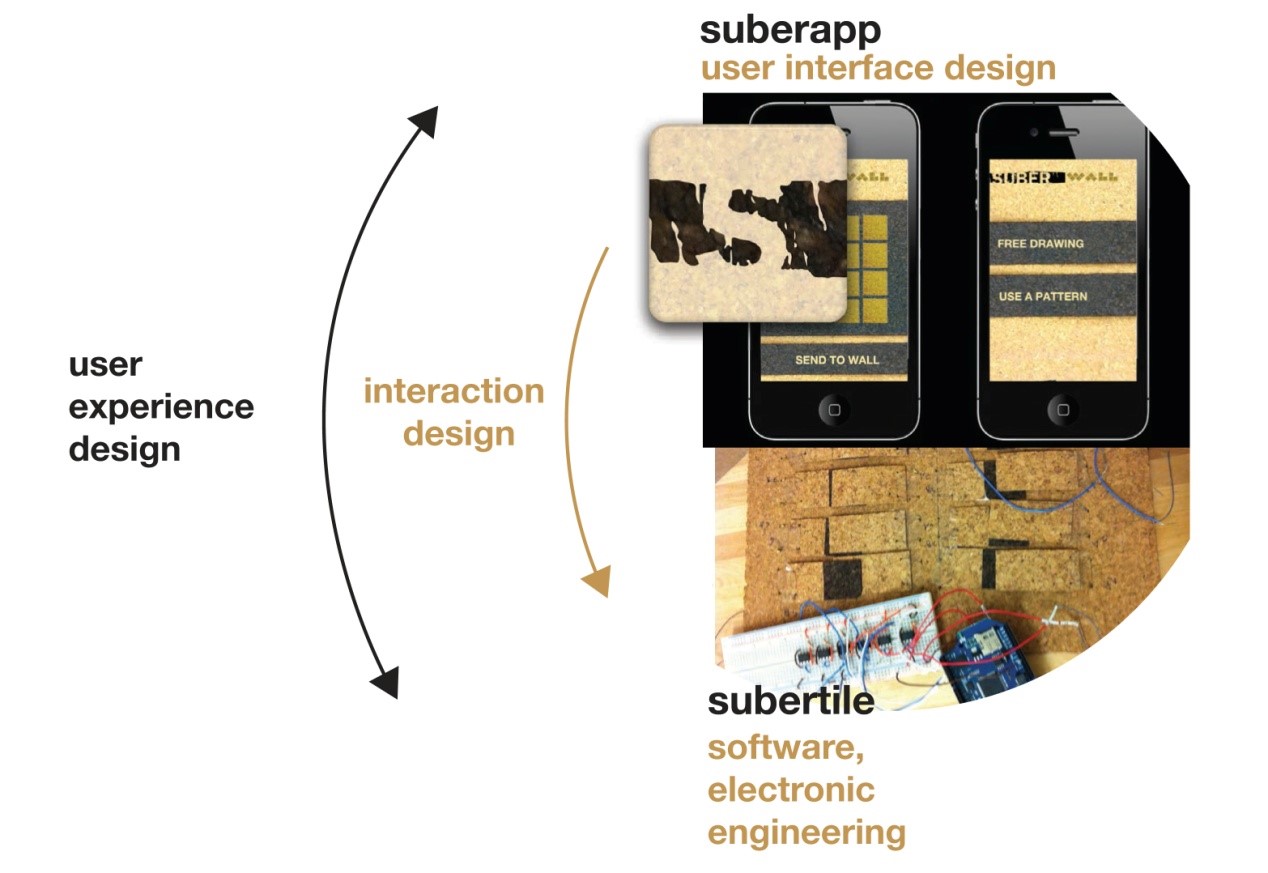
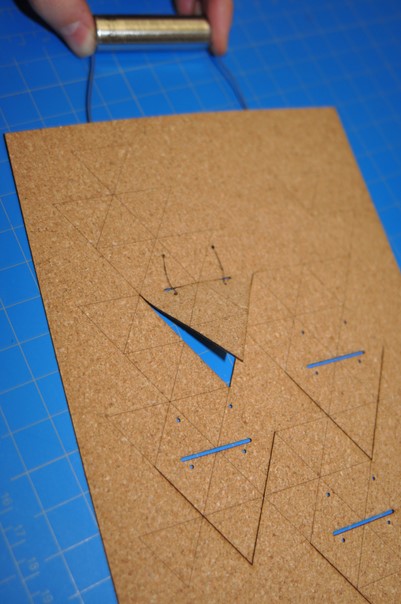
Exploratory work was divided in two separated routes: first, a “materials exploration” and the second, the “digital exploration”. The analysis was focused in cork and Smart Memory Alloys properties and issues regarding the combination of both materials. The “material exploration” used materials sponsored by cork industry Amorim, combined with high tech exploration in smart materials, in the current case, flexinol (Dynalloy industries, 2018). Initial exploratory research was focused in creating a moving cork pixel.
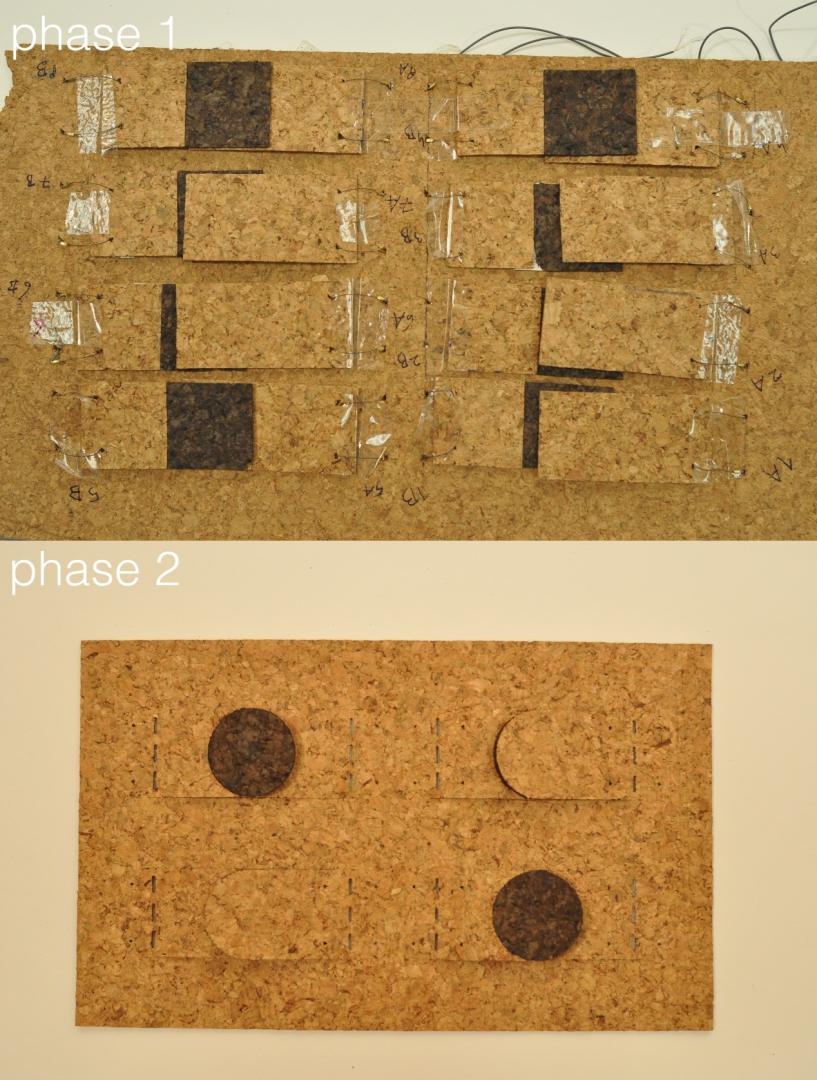
Results on the first phase were: an assembled first cork tile prototype “subertile” (8 suberpixels) with integrated Smart Memory Alloys wires; built an app – SuberApp - activating one pixel; functional system using an android application, arduino board and wi-fi shield; created a functional demonstration prototype “subertile” with one functional pixel.
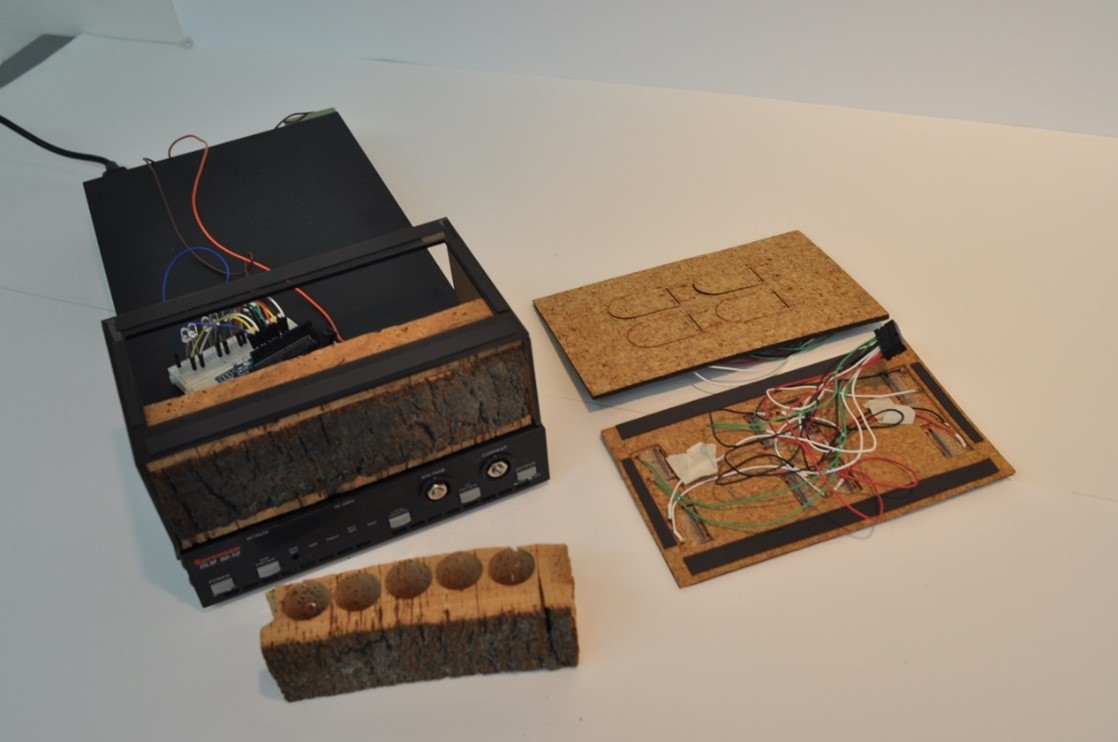
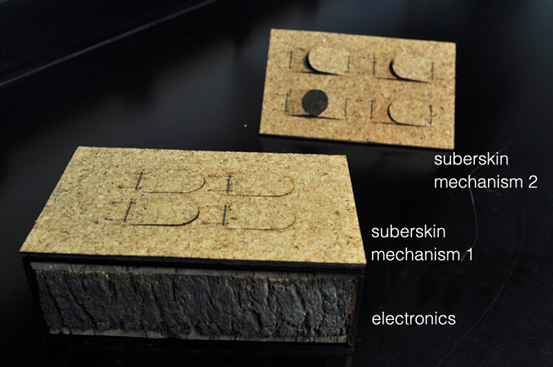
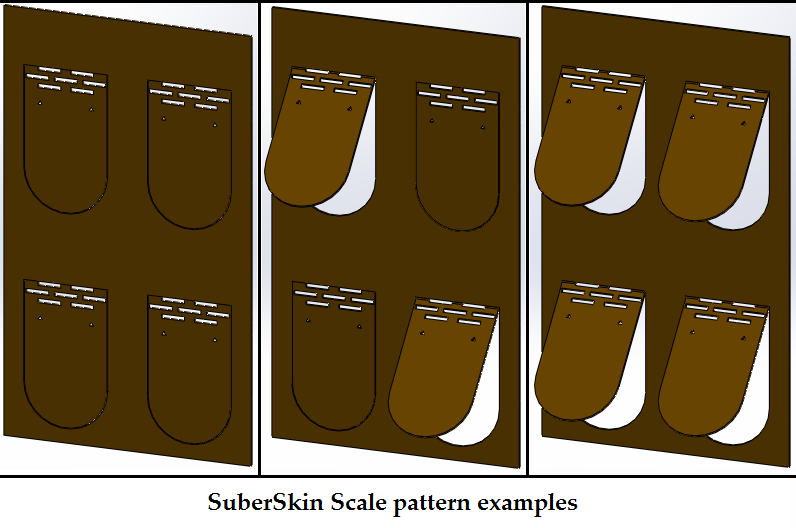
The second phase concerned creating a prototype: SuberTile that changes shape by lifting SuberPixels. The module can be assembled into a surface or wall. This project can be understood in the context of an art-tech, design exhibition draws lines to develop a product. Therefore, one of the objectives of the research is reached: it is a demonstration of the connection between what was defined as art, design, engineering and industry.
Innovative character
This project is also radically new in the context of cork research. Firstly, research addressed natural qualities of the material as potentially mutable. Secondly, the combination of cork with electronics transcends the primary scope of use of the material. In sum, Suberskin: a “cork made” system media was designed towards a human-centered experience, is a new device.
Within cork research context the use of an actuator combined with the material that previously did not exist. Furthermore, the particular use of an Smart Memory Alloy as an actuator, contrasts with precedent quoted kinetic walls. These walls typically use mechanical set-ups as actuators. Smart Memory Alloys have aesthetical and physical advantages. For instance, they reduce complex mechanical structures to a simple wire, while conveying a silent actuation.