De Ceuvel
Basic information
Project Title
Full project title
Category
Project Description
A former ship wharf transformed into a puriifying park and breeding ground for creative and social entrepreneurs. Through the reuse of houseboats, the plant-based soil-purification and the application of integrated sustainable techniques, the development of ‘De Ceuvel’ is an example of a successful marriage between creativity and sustainable, circular urban development.
Project Region
EU Programme or fund
Description of the project
Summary
‘De Ceuvel’ is a sustainable breeding ground for creative and social entrepreneurs. It is situated on the site of a former shipyard. The team of DELVA Landscape Architects / Urbanism submitted the winning plan for the Amsterdam municipality’s ‘De Ceuvel’ competition. Now, it is a bustling community for entrepreneurs and artists who have their offices in Amsterdam’s first circular office park.Through the reuse of houseboats, the plant-based soil-purification and the application of integrated sustainable techniques, the development of ‘De Ceuvel’ is an example of a successful marriage between creativity and sustainable, circular urban development. Through the recycling of materials and the cooperation between many passionate entrepreneurs and volunteers, we have brought life to the concept of ‘De Ceuvel’.
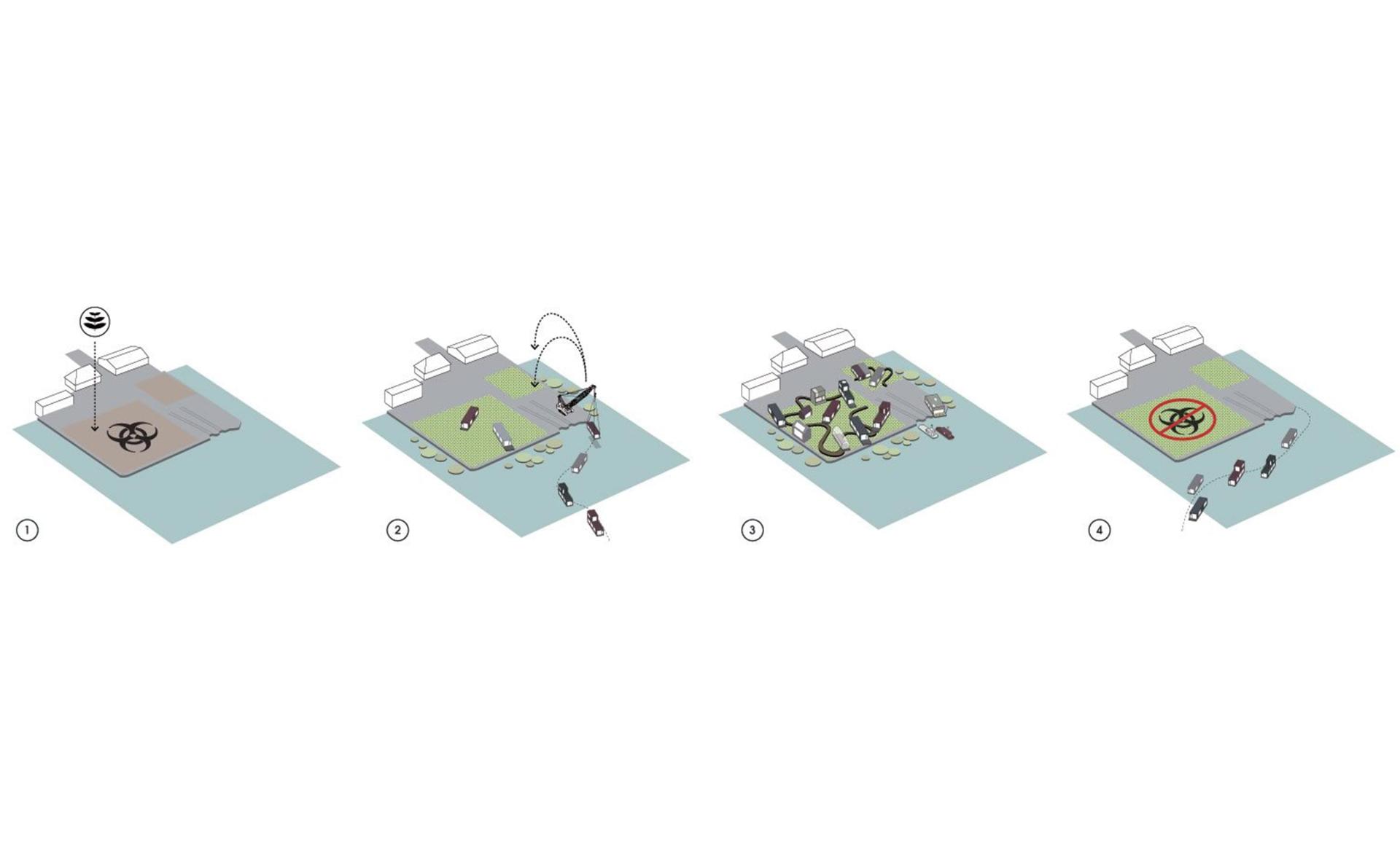
Normally, the site of ‘De Ceuvel’ would be cleaned up mechanically and built upon. The year 2012, in which planned urban developments came to a halt and many areas awaited development, provided opportunities for an innovative, alternative, sustainable, less capital-intensive way of developing. The result is a Cleantech Playground: a testing ground for clean technologies in the builtup environment.
The technique of phytoremediation, in which plants are used to stabilize, take-up or extract contamination, offers an alternative for the costly, unsustainable conventional technology to clean the soil. On the site of ‘De Ceuvel’ this organic way of cleaning the soil results in a working landscape cleaning the soil and producing low-impact biomass.
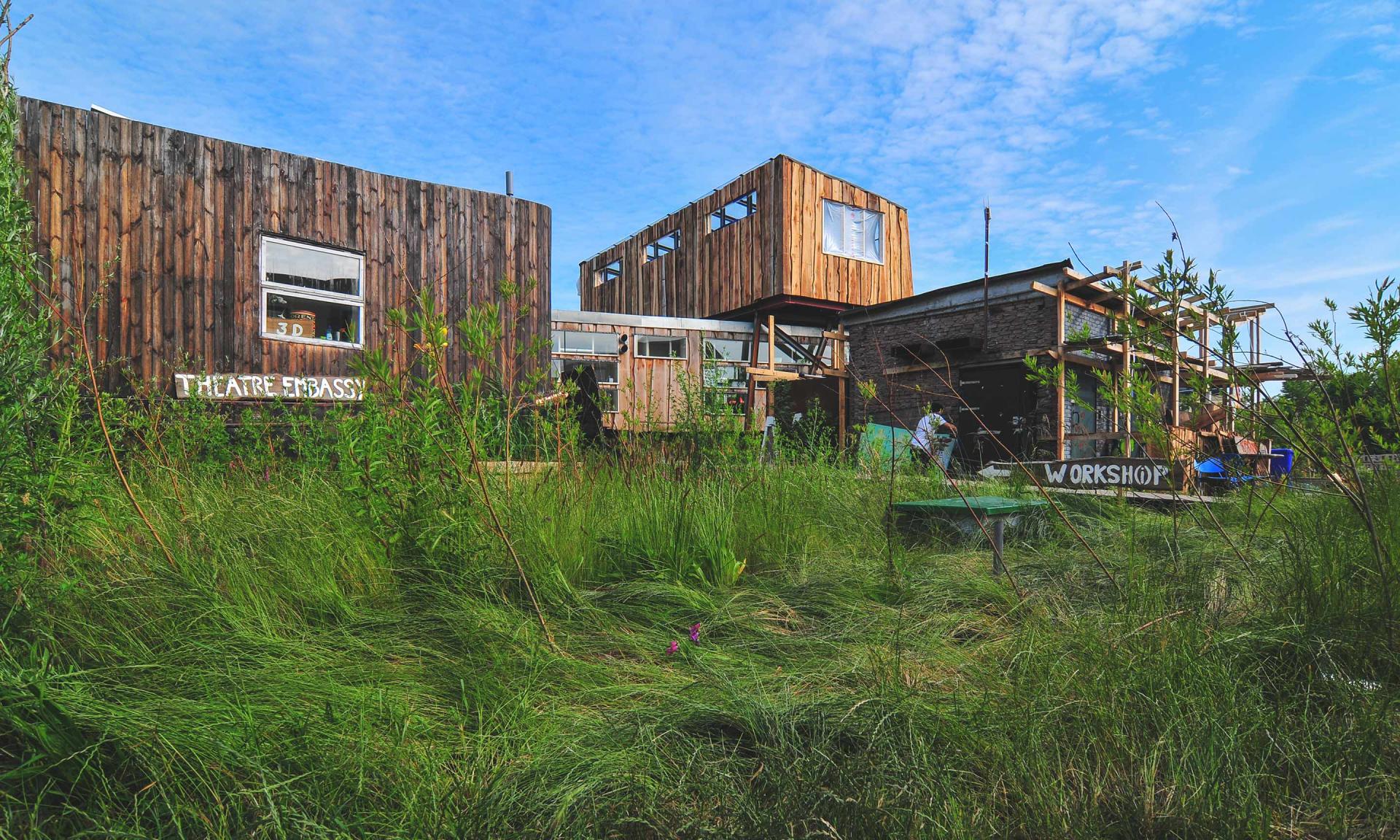
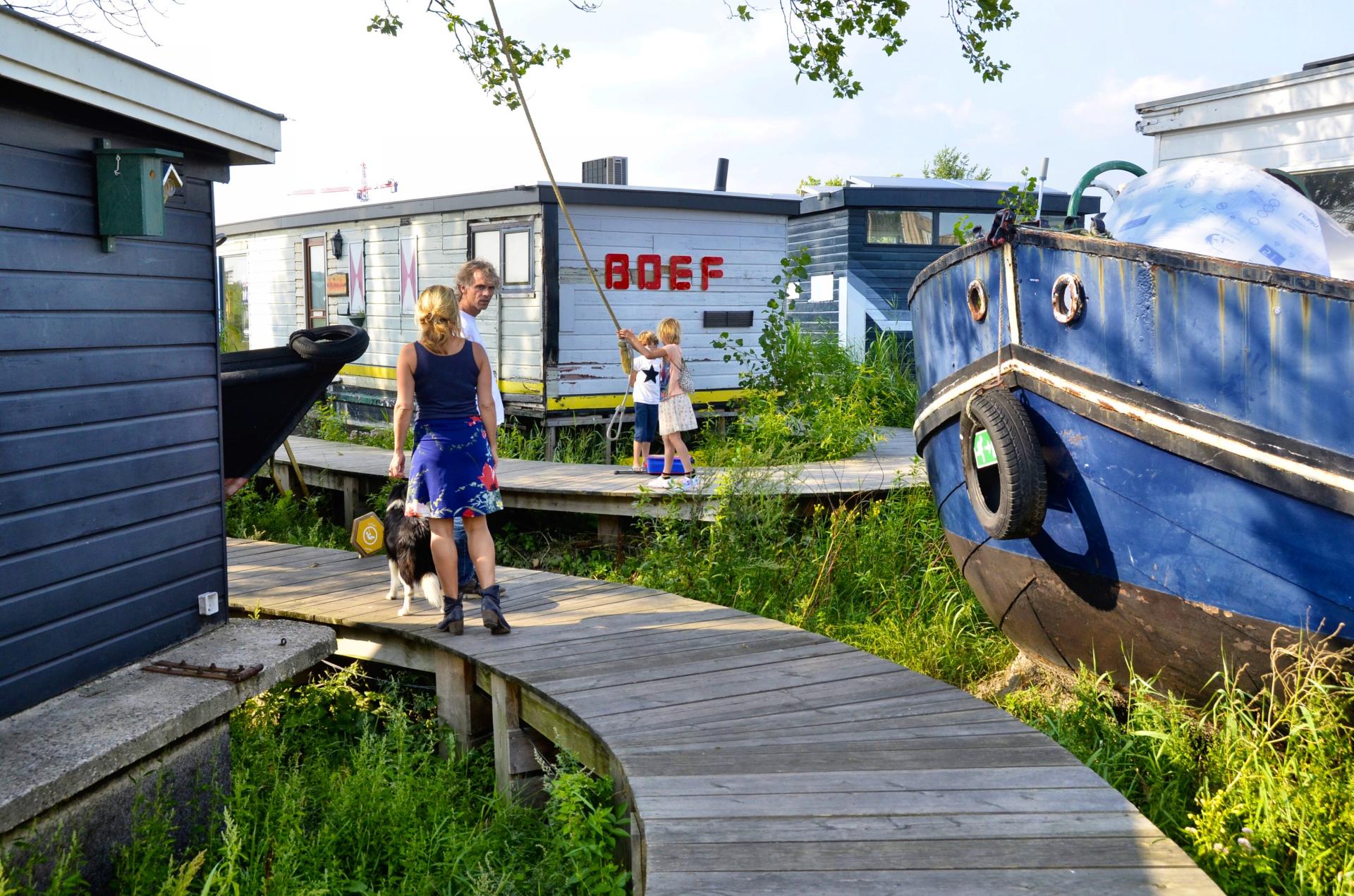
Superannuated houseboats were given a second life by putting them on the land, transformed into 17 sustainable ateliers. It is a test location that provides insight into how we can transform cities from large-scale waste producers into sustainable “metabolic cities” with a circular economy, with success: A large part of the sustainability ambitions have been reached, or will be reached in the foreseeable future
Key objectives for sustainability
Starting point for the realization of the new creative hub ‘De Ceuvel’ was the preexisting pollution of soil and water. By filling the area with polluted dredge and the polluting activities of the ship wharf, the site had been heavily polluted with organic as well as inorganic pollutants. Current techniques used for purification of soil and water are costly, unsustainable and often limited to hiding or moving the pollution to another site. The technique of phytoremediation, in which plants are used to stabilize, take-up or extract contamination from the soil, offers an alternative. On the site of ‘De Ceuvel’ this organic way of cleaning the soil results in a working landscape cleaning the soil and producing low-impact biomass. After ten years, the entire site is returned to the municipality of Amsterdam, significantly cleaner than before and ready for new development.
Houseboats no longer suitable for their original purpose were put on land and transformed into 17 sustainable ateliers. At every step in the development process the highest level of sustainability that was financially viable, was pursued. The boats are insulated and equipped with a sustainable heat system, green roofs and solar cells. Wastewater from the site is purified in bio-filters and nutrients from the waste are re-used for the production of food. Organic waste (from toilets) of visitors and tenants of the boats is converted into energy. A standard connection to the municipal sewer is therefore unnecessary. Research on the purification and low-impact biomass production at ‘De Ceuvel’ is conducted by the University of Ghent (Belgium). A ‘knowledge route’ through the area shows the results of these studies and informs visitors about the sustainable principles of the organic purification and low-impact biomass production at the park. ‘De Ceuvel’ will be a place where researchers, designers, residents, governments, businesses, farmers and students get together to define the future use of the area.
Key objectives for aesthetics and quality
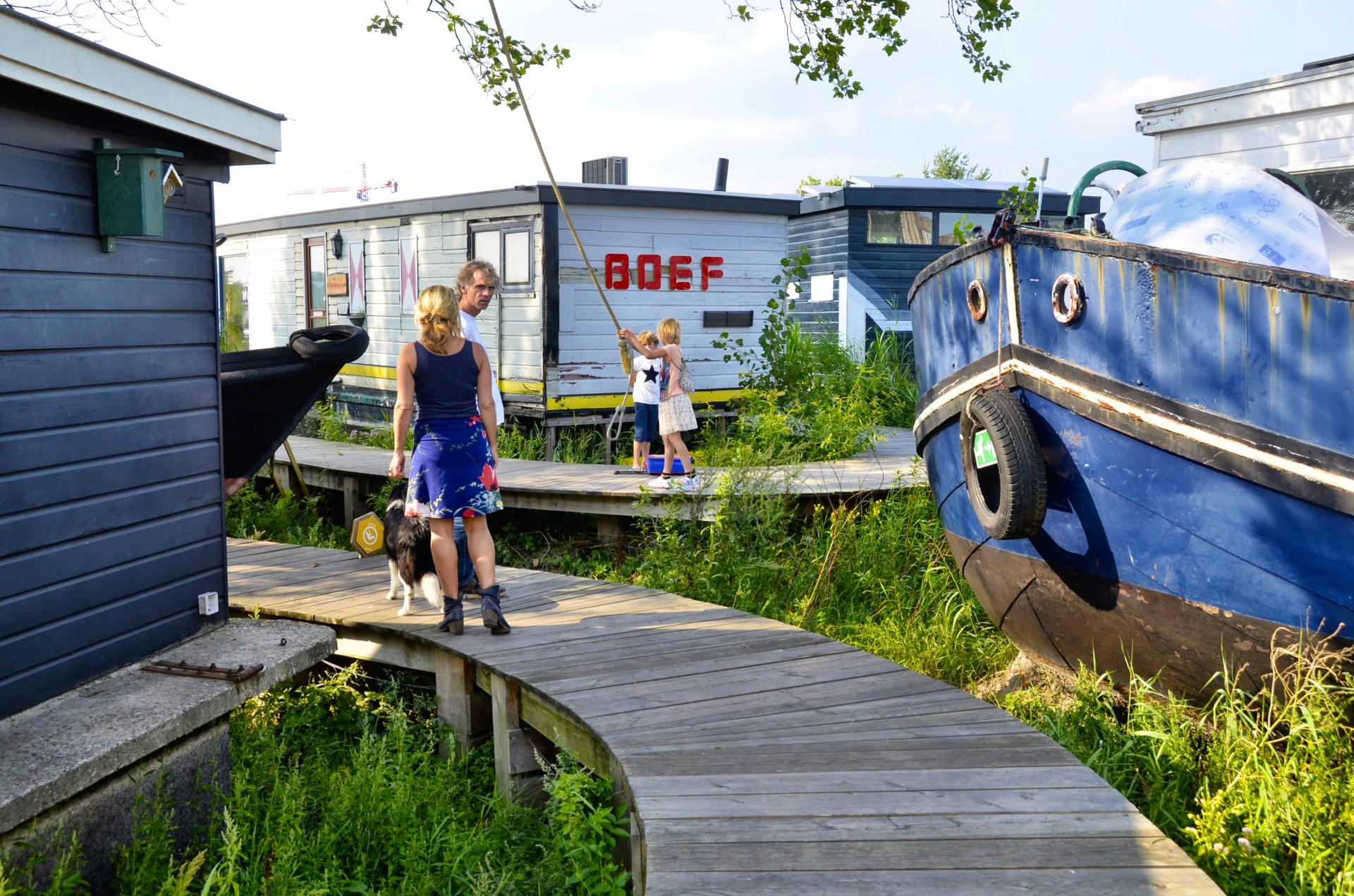
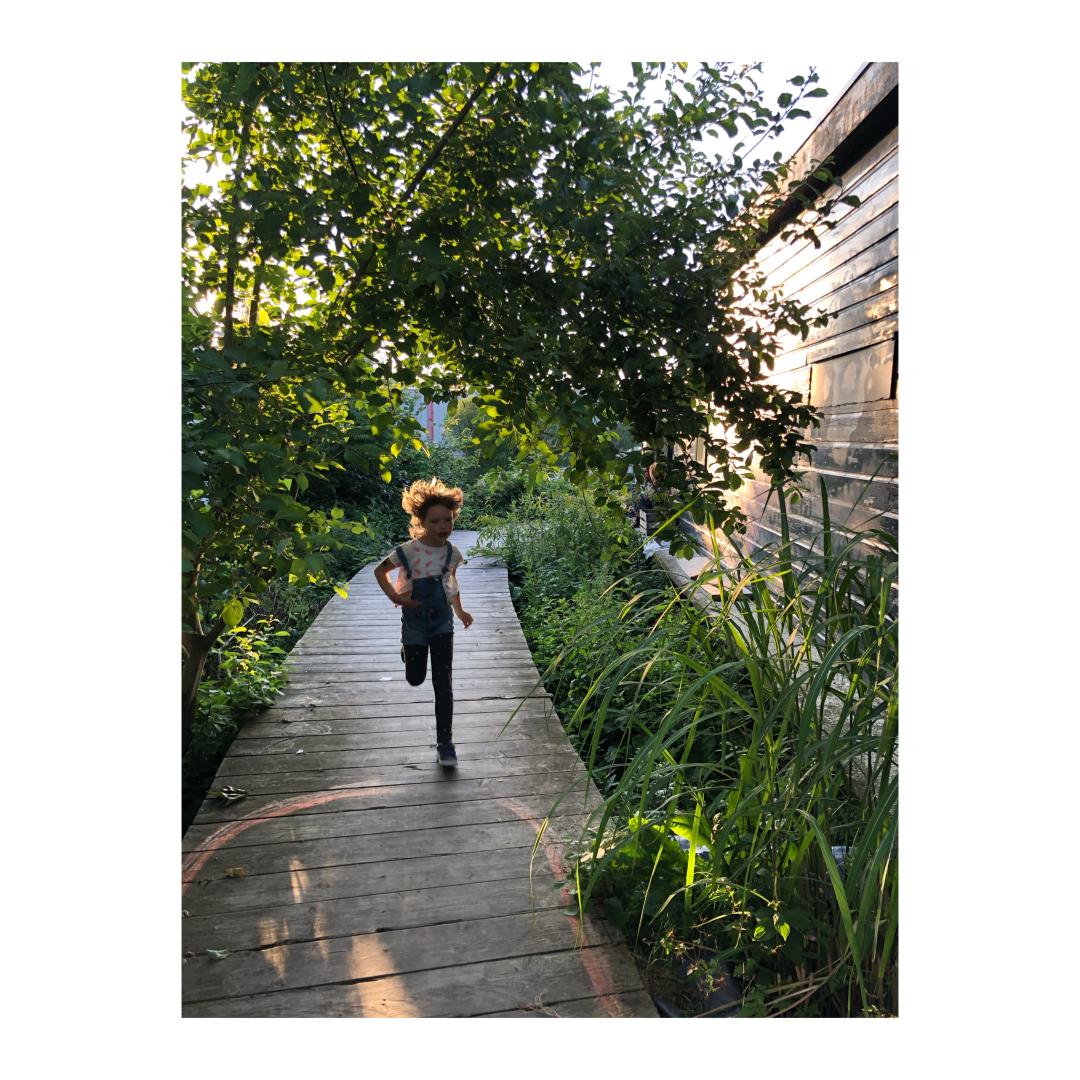
De Ceuvel is a unique and recognizable project of a previously non-existing archetype. The purifying park consists of an undulating green plain of grasses, perennials, short rotation coppice and mature trees for the uptake and degradation of pollution. The plant species are specifically selected for this area; plants that suit the rugged nature of the industrial terrain of Buiksloterham. A raised wooden jetty ensures that there is no direct contact with the polluted soil. The trail winds through the planting and connects the different houseboats. The pruning of the park is not transported elsewhere but remains on the property and is used to create products from biomass. A biomass digester converts biomass into energy that is used in the area. The particular combination of plants represents a new layer in the landscape, which remained hidden before. An alternative approach to pollution transforms the negative history of a place into a positive perspective.
Aesthetic quality, that does not arise from a pictorial, static landscape but is the result of a direct experience of the transformation of this area. Residents and visitors are drawn to the history of the place while they continuously defining future use. The house boats themselves work as a clear reference to the history of the site and Amsterdam as a whole. Their original visual appeal has been retained, yet in their new context they give a surprising atmosphere. Whereas they are usually lined up along the side of a canal, here they create intimacy and wonder. Creatively combining and upgrading common existing elements has created a unique place that stimulates creativity.
Key objectives for inclusion
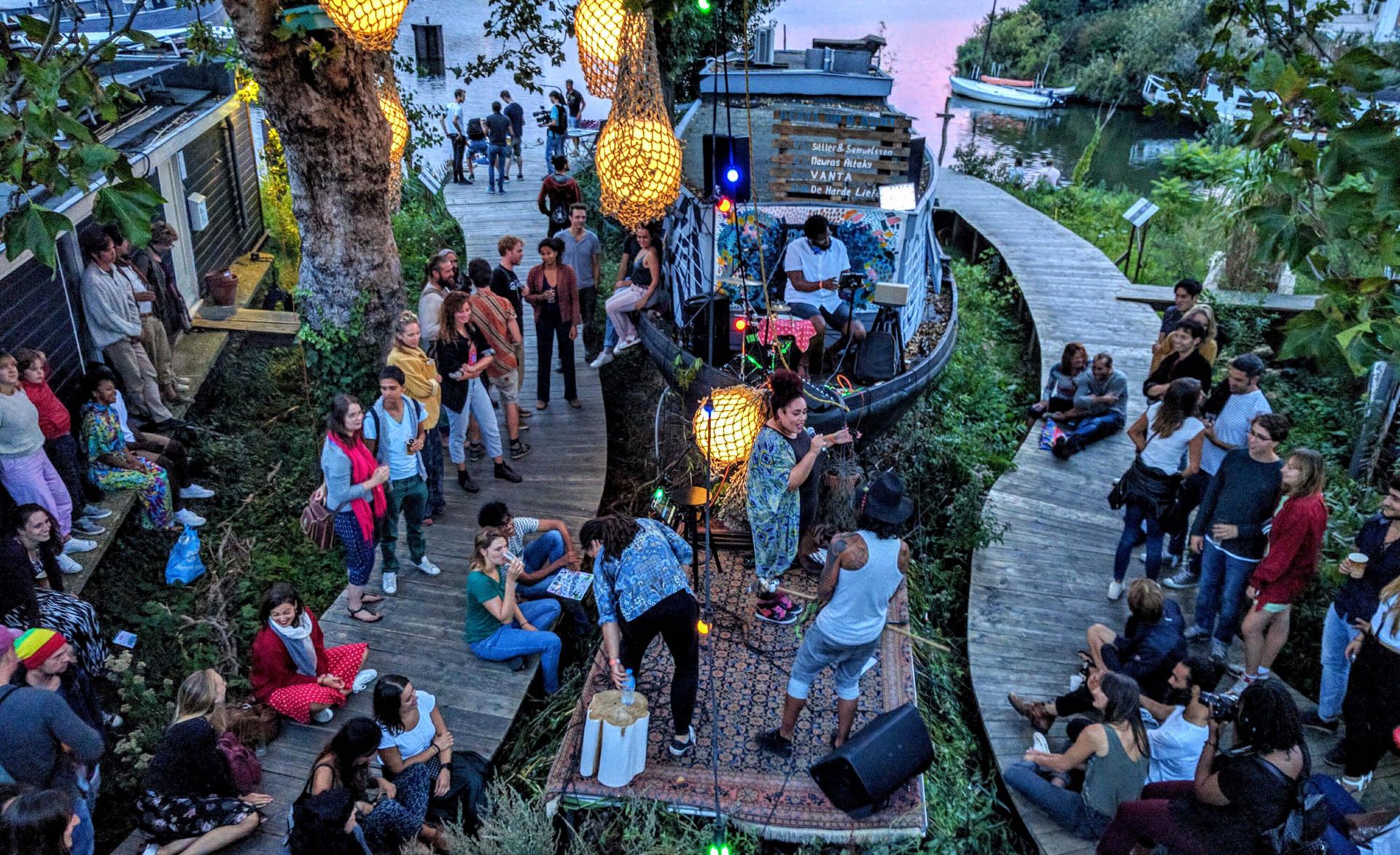
De Ceuvel is located on the edge of a neighborhood that is transforming from an industrial destination to a residential destination. It therefore fulfills a symbolic role as an herald of change. The complex plays an inviting role in introducing residents of surrounding residential areas to the new area. It connects people from the region and introduces them to spatial ambitions. The hospitality industry as part of the area plays an important role in this. Because the high costs of conventional cleaning were eliminated and there was a need to give the area a temporary use during natural treatment, it was possible to create a creative breeding ground at a central location where this is normally not financially feasible. This made the Ceuvel a communal place. It became a meeting place for people who live and work in the area. In its symbolic role, it has also become a place where visitors are inspired and taught about nature-inclusive and circular processes.
Because of its unique appearance, it was also inviting for people from wide surroundings. This provided an economic boost for the area. Moreover, due to its symbolic role and the connection with university research, the place has become an inviting gathering place for people who want to adopt a more sustainable lifestyle or want to learn about this.
Results in relation to category
The initially unattractive location has not been interpreted as a tabula rasa, but has been specifically valued despite the difficult starting points. Negative aspects are not hidden away but named and then chosen as the starting point to make something unique. This honest approach became the basis for a process that pragmatically looked at how sustainable use could be shaped. Houseboats are historically linked to the city of Amsterdam, but with changing housing requirements, they are sometimes no longer suitable for their original purpose. However, this does not mean that they cannot get a new purpose. After sustainable adjustments in areas such as insulation, they were given a new role in which their unique typology and new role as creative studio space reinforce each other. As the boats were mostly in a condition where scrapping was the only option for the owners, instead of that expensive option they were happy to donate their boats for free, becoming contributors to a unique project.
How Citizens benefit
De Ceuvel was an initiative of starting designers and architects and therefore has a unique origin. The innovative approach to such a polluted place would not have competed with the power of large-scale investors under most circumstances. However, the construction crisis, with all its negative aspects, turned out to be an advantage. De Ceuvel has been realized through decisiveness a wide and diverse group of stakeholders and enthusiasts. A significant number of them are neighbors.
De Ceuvel is located on the edge of a neighborhood that is transforming from an industrial destination to a residential destination. It therefore fulfills a symbolic role as an herald of change. The complex plays an inviting role in introducing residents of surrounding residential areas to the new area. It connects people from the region and introduces them to spatial ambitions. The hospitality industry as part of the area plays an important role in this. De Ceuvel has been developed to provide accessible studio space for creative professions. It thus functions as a place where artists and designers come together and can make their work visible to a wide audience.
Innovative character
De Ceuvel arose from an inventive approach to difficult limitations. There were too few financial resourcesavailable to purify the contaminated site in a conventional manner. It was therefore decided to opt for a natural purification process. However, this did not mean that the area could not be given a valuable useful function in the time of purification. The passage of time has been included as a design layer and gave direction for new options. This unique ambition ensured an open approach towards sustainable possibilities. The result is a unique landscape unlike any other. All and all, De Ceuvel, with its literal and figurative grassroots foundation, has pioneered the inner-city application of nature-inclusive design.