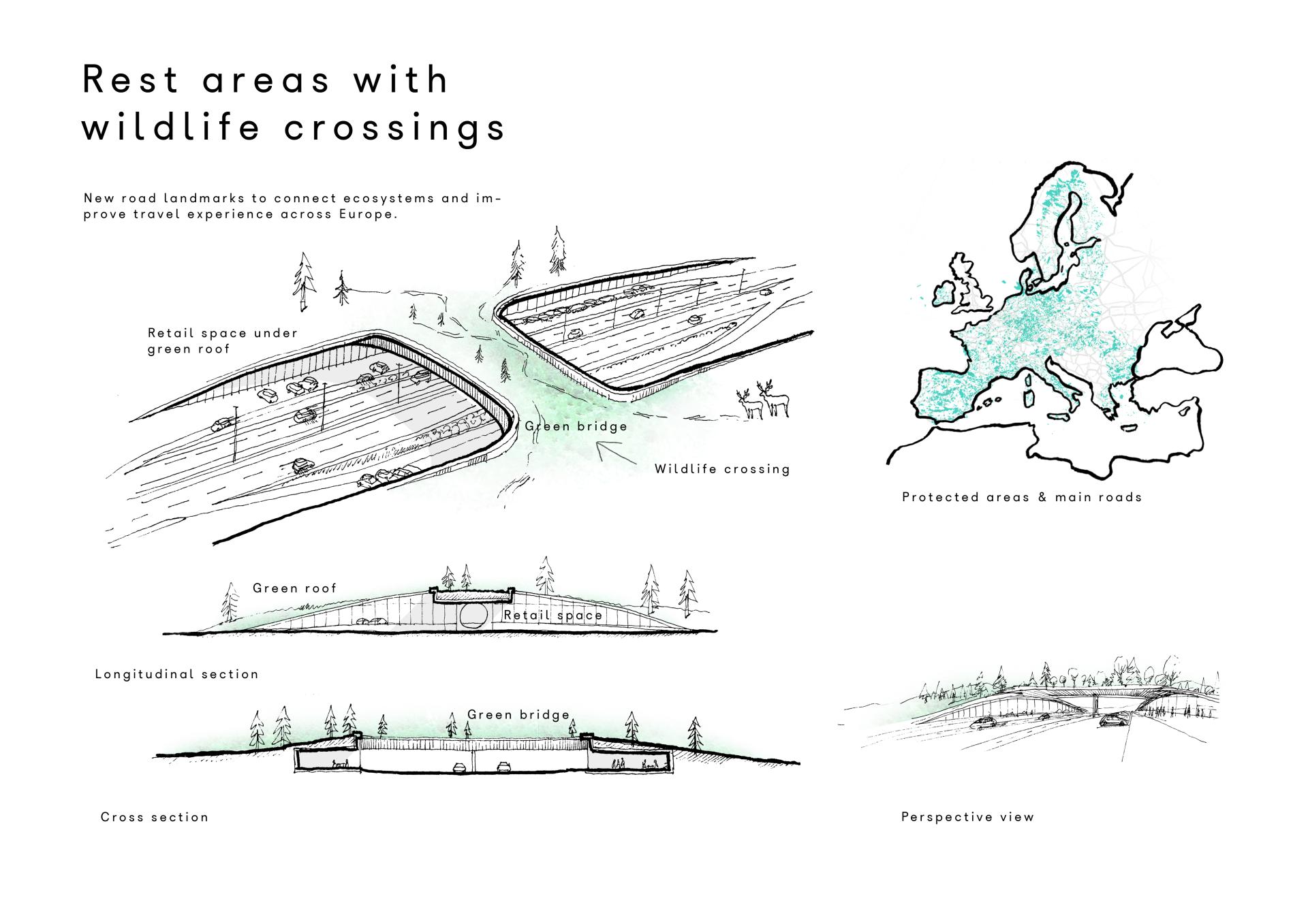
Rest areas with wildlife crossings
Basic information
Project Title
Full project title
Category
Project Description
A rest area with wildlife crossings would be a place to charge electric-powered vehicles, while visitors would be immersed in nature, getting inspired to care for the environment. Buildings would have green roofs to seamlessly link the surrounding natural landscapes. This concept aims at reversing ecosystem fragmentation, amidst the growing extent of transport infrastructure.
Project Region
EU Programme or fund
Description of the project
Summary
Imagine how it will be if European roads have new landmarks. Imagine a rest area with wildlife crossings - a place to charge electric-powered vehicles, while visitors are immersed in nature, getting inspired to care for the environment. Green roofs not only contribute for energy efficiency of retail spaces indoors, but will also seamlessly link the surrounding natural landscapes.
Such rest areas will help reversing ecosystem fragmentation, amidst the growing extent of transport infrastructure. New cross-disciplinary architecture competitions will be proposed for different locations, so that each rest area respects the uniqueness of each place.
Key objectives for sustainability
Rest areas with wildlife crossings will not just connect fragmented ecosystems, providing a safe passage for animals. Such spaces will raise environmental awareness, with visitors immersed in nature. Functional aspects will also be addressed, to make sure that visitors make the best of their time while electric vehicles are being charged. Indoor retail spaces can be energy efficient, with stormwater and grey water reused or sustainable waste management .
Key objectives for aesthetics and quality
Rest areas with wildlife crossings will improve travel experience across European roads. Rather than just stopping by, visitors will learn about the unique landscape patterns in each region. As wildlife observation spots, such rest areas will offer spaces for meditating and to be immersed in nature - thus inspiring visitors to care for the environment.
Key objectives for inclusion
With custom design architectural projects, the new rest areas with wildlife crossings will adapt to every specific location, making sure that all road users will have access to them. Car drivers and bus passengers alike will be welcome to expore the local landscape, for a unique traveling experience. The care for sustainability will also make sure that local species will cross the road or motorway with no hussle, thus protecting biodiversity. Ultimately, European territorial cohesion will benefit with these new landmarks.
Innovative character
Green building solutions have pushed green roof technology beyond. The proposed rest areas with wildlife crossings will make sure that green roofs are used with its full potential, to connect natural spaces and protect biodiversity. Such rest areas will also inspire visitors to care for the environment.