Halle 6 Ouest - Université de Nantes
Basic information
Project Title
Full project title
Category
Project Description
True catalyst for innovation, Halle 6 Ouest is:
- Experiment with the intersection of sciences, skills, disciplines and know-how and promote challenging research to seek solutions to major societal issues over a short period of time
- test and evaluate thanks to 3 lab: the Experience Lab, the Manufacturing Lab, the Digital Learning Lab
- Innovate by setting up multidisciplinary teams around collaborative projects
- Train through alternative pedagogies
- Share these dynamics through events
Project Region
EU Programme or fund
Which funds
Other Funds
FEDER - for equipments
Description of the project
Summary
Located in the heart of the Quartier de la Création on the Ile de Nantes, Halle 6 Ouest is a real catalyst for innovation, with the ambition of becoming a place of research to meet the challenges of tomorrow's society. It brings together internationally renowned researchers, teachers, students, start-ups, artists, engineers and entrepreneurs... 3 labs are located in this 2600m² building, giving the various publics access to cutting-edge technologies thanks to a range of complementary services, from prototyping parts to the study of the user experience.
A strength: a territorial dynamic of urban redevelopment
The "Quartier de la Création" is the name given to the western part of the Île de Nantes, where the landscape has been changing for the past fifteen years. This urban transformation project aims to create a metropolitan and regional cluster around the creative and cultural industries.
As such, this district today brings together :
- numerous companies in the architecture, art, design, media and events sectors, the French Tech Nantes ecosystem (Halle 6 Est), a hotel for innovative companies and a third-party centre
- major higher education establishments (School of Architecture, Cinecreatis Design School, Eco le supérieure des Métiers artistiques, SciencesCom at Médiacampus, School of Fine Arts, etc.)
- numerous facilities (Machines de l'île, la Fabrique, Hab Galerie...)
A real catalyst for interdisciplinarity, Halle 6 Ouest - University of Nantes is located at the heart of this nerve centre and offers a differentiating offer at the crossroads of sciences, skills, disciplines and know-how.
- Halle 6 Ouest is a site for the development of alternative teaching methods.
- Halle 6 Ouest is also a place for promoting research and relations with the socio-economic world. The aim of hosting start-ups and young companies is to encourage the emergence and development of ideas and projects, and to strengthen collaboration with the University's laboratories and researchers
Key objectives for sustainability
The purpose of Halle 6 Ouest is to bring together researchers, students and companies around current societal issues. The facilities and equipment, brought together in 3 labs: a Manufacturing Lab, an Experience Lab and a Learning Lab, are at the service of research and experimentation.
The main themes are the industry and health of the future, but also the intelligent city, the arts, culture and the media.... These are all areas concerned by the ecological and digital transitions, for which the teams of the labs are working in collaboration with the region's professionals and the start-ups based in Halle 6 Ouest.
Among the emblematic projects worked on in Halle 6 Ouest :
- Bâtiprint 3D, which develops solutions for building eco-responsible housing using robotics and 3D printing. Research into new materials based on recycled paper and earth could enable the construction of 100% recyclable houses ?
- The project to build the first biosourced hydrofoil sports catamaran by Armel Tripon (French skipper and winner of the Route du Rhum) by 2025,
- Project for the restoration of the seabed with the company Seeboost: development of an innovative 3D printing process with a custom-made mould to make an underwater reef. The aim is to offer a sustainable and autonomous mooring for pleasure boats, which can also serve as a habitat for marine biodiversity.
- Netflix compression: the innovation is an open-source algorithm that allows for the most accurate compression, while maintaining maximum quality. The aim is to reduce the weight of storage and broadcasting in order to reduce the ecological footprint.
As an innovation incubator, Halle 6 Ouest is intended to bring together and federate players from various disciplines, and have them interact with a view to encouraging the emergence of innovative projects that meet the challenges of tomorrow.
Key objectives for aesthetics and quality
The winning architectural project:
Halle 6 Ouest, whose project management was carried out by the University of Nantes and whose architecture was designed by the firms LIN architect urbanist and F.au, won the Équerre d'argent prize in the "Places of activity" category.
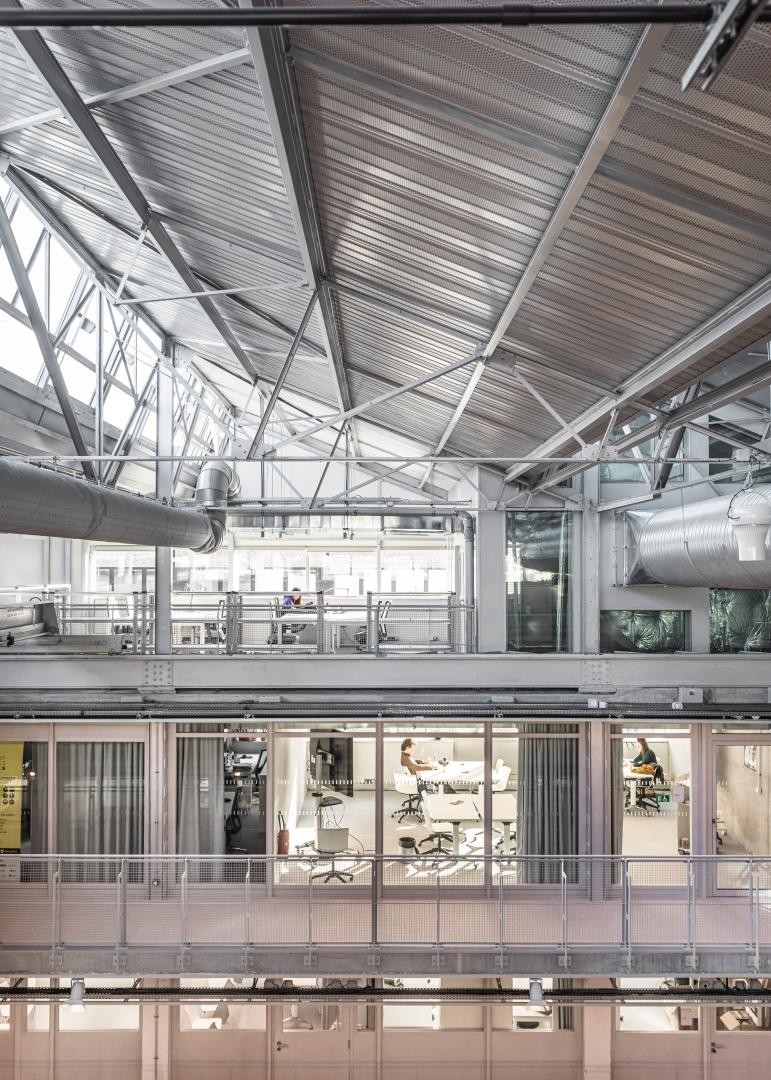
The University of Nantes, the contracting authority, entrusted the Berlin-based architectural firm LIN with the project management of this rehabilitation operation. The architectural approach preserves and enhances the memory of Hall 6, which once housed shipbuilding and heavy engineering workers. This is a highly technical project which has paid particular attention to preserving the original metal frameworks.
A sober and pure architecture with a levitating cube, bringing a lightness to the vanishing point of the long metal gangways. Magnificent perspectives through numerous glazed areas provide users with an open-plan experience.
The jury, composed of architects, architecture critics and developers, said of Hall 6: "This intervention in a former industrial hall has an exceptional final result. The architecture of this building-machine comes in the background of the users, without falbalas. LIN knows how to push back the walls, bring in space and light for a generous result without fuss.
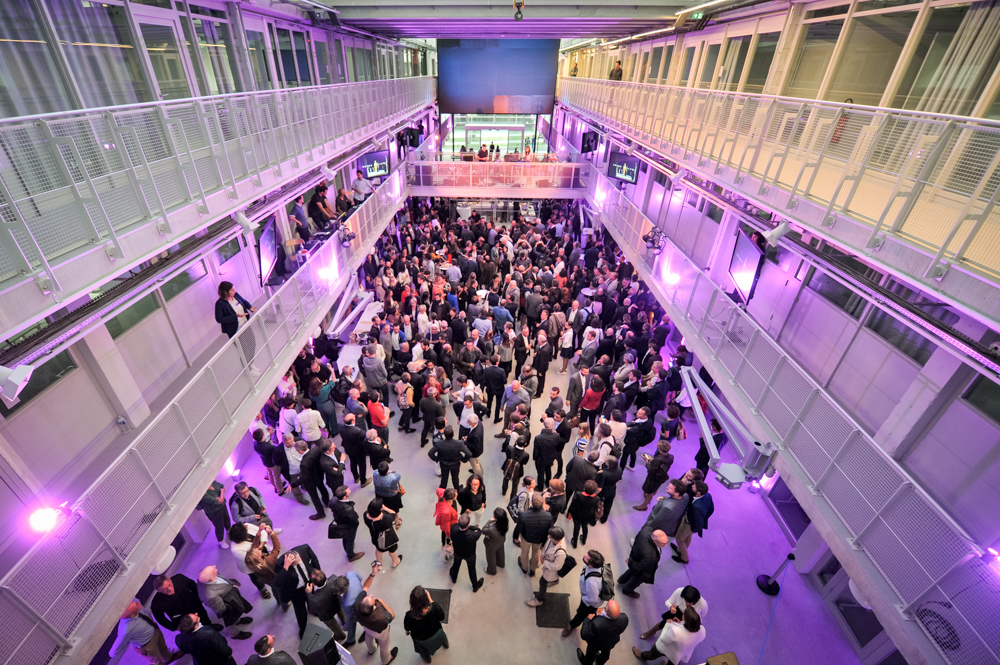
With a large central nave of more than 1000m², Halle 6 Ouest offers large spaces on all floors that are conducive to exchanges and meetings between all the players and visitors. The modularity of the spaces is also a major advantage, allowing for an infinite number of possible uses.
A complete user experience
From the idea to prototyping to the user experience and its evaluation, the building and its range of services have been designed so that each space can meet the specific needs of each stage of the project.
Key objectives for inclusion
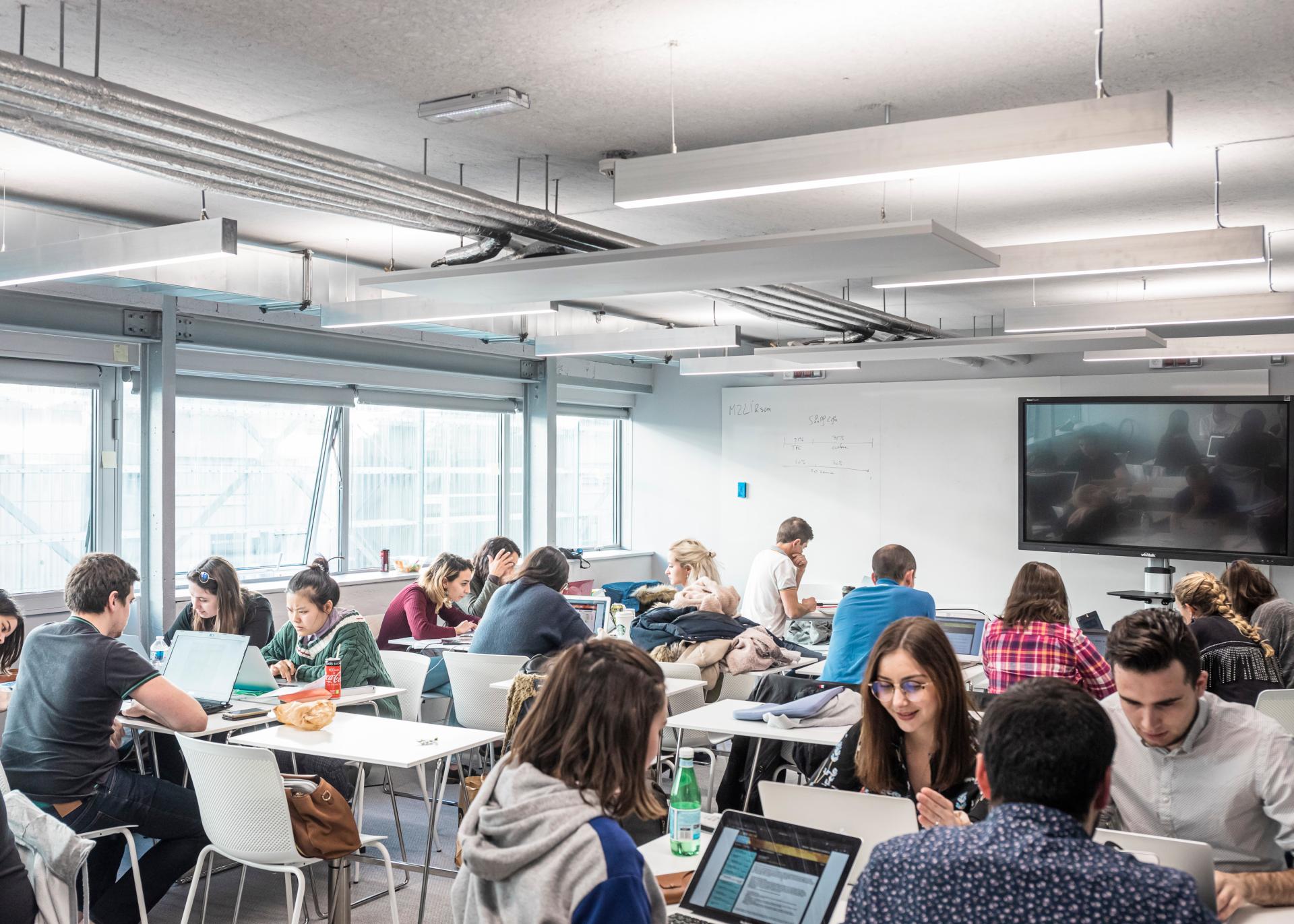
Mixing audiences. Halle 6 Ouest is 200 students, researchers from various disciplines, artists, start-ups and employees of companies working remotely who live together in this hybrid space of 2600m² which is conducive to interdisciplinarity, challenged research, learning by doing and open innovation.
As a tool available to all, the positioning of Halle 6 Ouest-University of Nantes is intended to be transversal and inclusive: all of the divisions and components are invited to use the space to carry out their events, projects or simply to come and work in the common areas.
It is a space open to the socio-economic world of the region. Halle 6 Ouest offers a "Carré Entreprises", a coworking space of about fifty square metres as well as closed offices dedicated to companies. This space is also very popular with researchers from the various laboratories of the University of Nantes, as well as teachers, doctoral students, start-ups, etc.
Halle 6 Ouest is part of the New University project and links with its partners are also a major focus. The key word: decompartmentalisation. Both in its projects and in its governance, Halle 6 Ouest strives to bring together and federate its partners from the New University (CHU, INSERM, Ecole Centrale, Beaux-Arts, Ecole d'Architecture, etc.), its partners from the Quartier de la Création (Stereolux, SAMOA, Ecole de Design, etc.), and its regional partners (RFI, etc).
Finally, Halle 6 Ouest is intended to be multidisciplinary and inclusive in its training offer. 6 professional degrees and a new Master's degree in "Digital Cultures" at the crossroads of several disciplines: human and social sciences, economics, data, technology, design, etc.
Examples of inclusive projects:
- Prototyping of different swab shapes (limiting discomfort for the patient) for the CHU, ARS...
- Hackathon "EU VS VIRUS"
- Interdisciplinary Innovation Platform HIP XP on inclusive housing - objective: to instrument flats for autistic people to live independently.
Results in relation to category
Halle 6 Ouest in the heart of the Quartier de la Création: the University of Nantes' new place of creative friction.
It is also a crossroads hall which, through its architecture and event programming, provokes (daily) meetings between its differents users.
Located right in the centre of the city of Nantes, the Hall benefits from a perfect situation to passage, meetings and exchanges. At the heart of a very dynamic and rapidly expanding district, the Hall is particularly well served (bus, tramway, car park, near railway station).
The architectural project has also given pride of place to conviviality and exchange spaces. On the ground floor, there is a lounge area of over 500m², equipped with contemporary furniture carefully chosen to encourage relaxation and discussion, while more intimate areas allow everyone to sit and work on the walkways. Removable partitions can also be used to tailor the layout to the needs of each individual.
All of the rooms are equipped with large screens and video-conferencing systems, which also makes it possible to combine course formats, conferences and events.
The hall is full of possibilities. Thanks to its modular spaces and furniture, this venue sometimes hosts artists in residence, and at other times serves as an exhibition space, such as the one hosted at the end of 2020 on "Women in the digital world". Equipped with a public Wifi, this third place is accessible to all.
This is precisely the purpose of the events activity. With its 550 m2 agora, its 200 m2 mezzanine and its numerous rooms, Hall 6 West can bring together several hundred people and opens its doors to any professional, institutional or general public event (meetings, training courses, conferences, seminars, trade fairs, cocktail parties, afterworks, etc.). Since its opening last year, some 5,000 people have attended these events! So many moments of exchange and encounters that have enabled the highlighting of innovative local, national and international projects.
How Citizens benefit
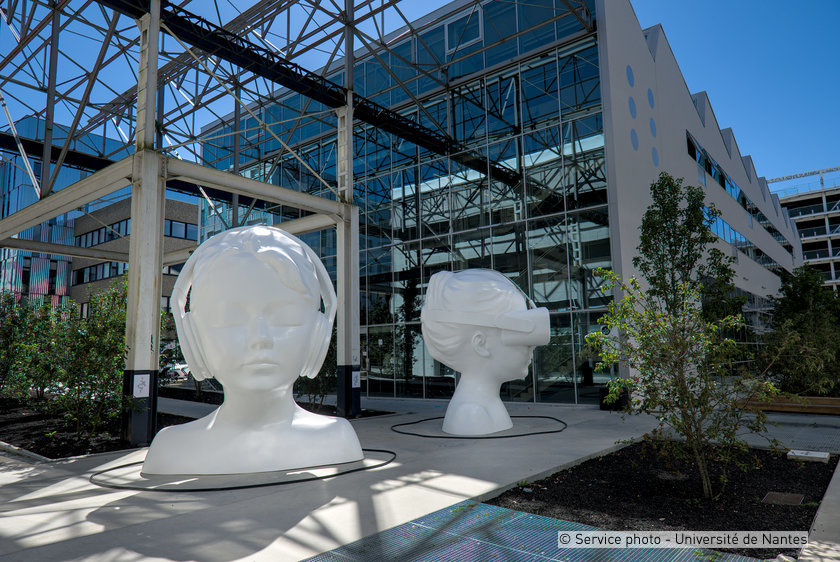
The renovation of the Old Alstom Hall has made it possible to award 1% of the cost for an artistic creation in the public space. A committee composed for personalities from regional and local cultural organisations as well as partners from the Quartier de la Création has been set up (DRAC, FRAC, VAN, QUARTUS, SAMOA...). The work In a Silent Way, by Nathalie Talec, was selected. Two juvenile female figures, with closed eyes and a peaceful expression, emerge from the forecourt. One wears a virtual reality mask, the other a wireless headset. This artwork was inaugurated at the event Nantes Digital Week 2020, and has since been integrated into the famous VAN's green line (a tourist route to discover the cultural stages, the main monuments, the artworks of Nantes' destination). To date, around 25000 visitors have come to admire the artwwork, discovering the Halle 6 Ouest at the same time.
Citizens and civil society have also found themselves involved in projects such as:
- Greening project for Halle 6 Ouest: student projects (Ecole Centrale, Design, University, etc.) aimed at creating modular furniture to green Halle.
- Team of Hackathon “EU VS Virus” composed of researchers, administrators, students, engineers… which will create afun interactive educational kit on hand washing (animated video clip) for children tested in 100 schools of the Académie of Nantes after the lockdown
- Makair project: product resulting from the citizen movement "makers for life" composed of engineers, technicians and other skills around a common subject "how to create a low-cost respirator that can be manufactured anywhere with the means the most common ”- Creation of exchange and communication networks to structure the starting movement, prototyping and manufacture of ventilator parts
- COVID protective visors: production of 23,000 visors distributed to CHUs, health professions, charities in partnership with the Fondation of University of Nantes.
Innovative character
Halle 6 Ouest has been equipped with state-of-the-art facilities:
- the Experience Lab dedicated to the evaluation of the human experience with 5 experimental rooms, a control room, an immersive cube and state-of-the-art equipment (EEG headset, physiological sensors, oculometers, etc.),
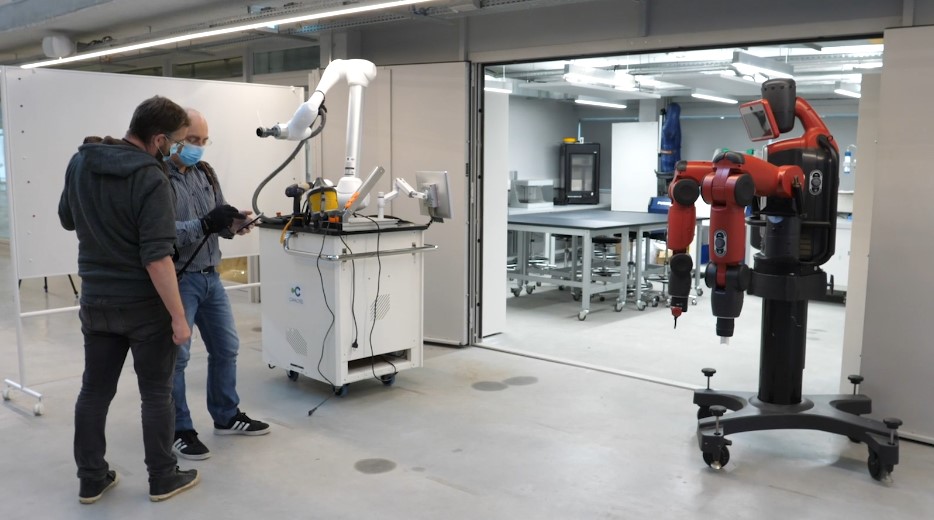
- the Manufacturing Lab, with several new industrial manufacturing workshops including 3D printing, laser and water jet cutting, robotics and cobotics, and electronics for connected objects.
- the Digital Learning Lab equipped to design digital training courses and produce content or any other educational media.
In the Hall, it's learning by doing! Unique in France, this place of experimentation aims to cross disciplines and audiences to accelerate the hybridization of research, training and innovation to solve to current societal challenges. This foresights Hall invites to give mean to science in order to accompagne the climate, digital, democratic, demographic transitions. The aim is to develop innovative projects on the industry and the health of the future, the intelligent, resilient and sustainable city. But it is also a hall of pragmatism that takes the opposite view of the long term (a prerequisite for academic research) to respond to the urgency of certain issues such as the climate or the food of tomorrow.
Building the first bio-sourced catamaran by 2025 in collaboration with Armel Tripon (French skipper and winner of the Route du Rhum), anticipating immune system nutrition for all in collaboration with researchers who are experts in microbiota and starred chefs in France are examples that illustrate the threefold singularity of 'challenged research':
(1) constraining the temporality of projects because the emergency is there,
(2) claiming interdisciplinarity because the problems posed require it by essence and
(3) to cross-fertilise by prototyping and experimenting as soon as possible to make science open, transparent and accessible to the greatest number of people.