Varna Spaces
Basic information
Project Title
Full project title
Category
Project Description
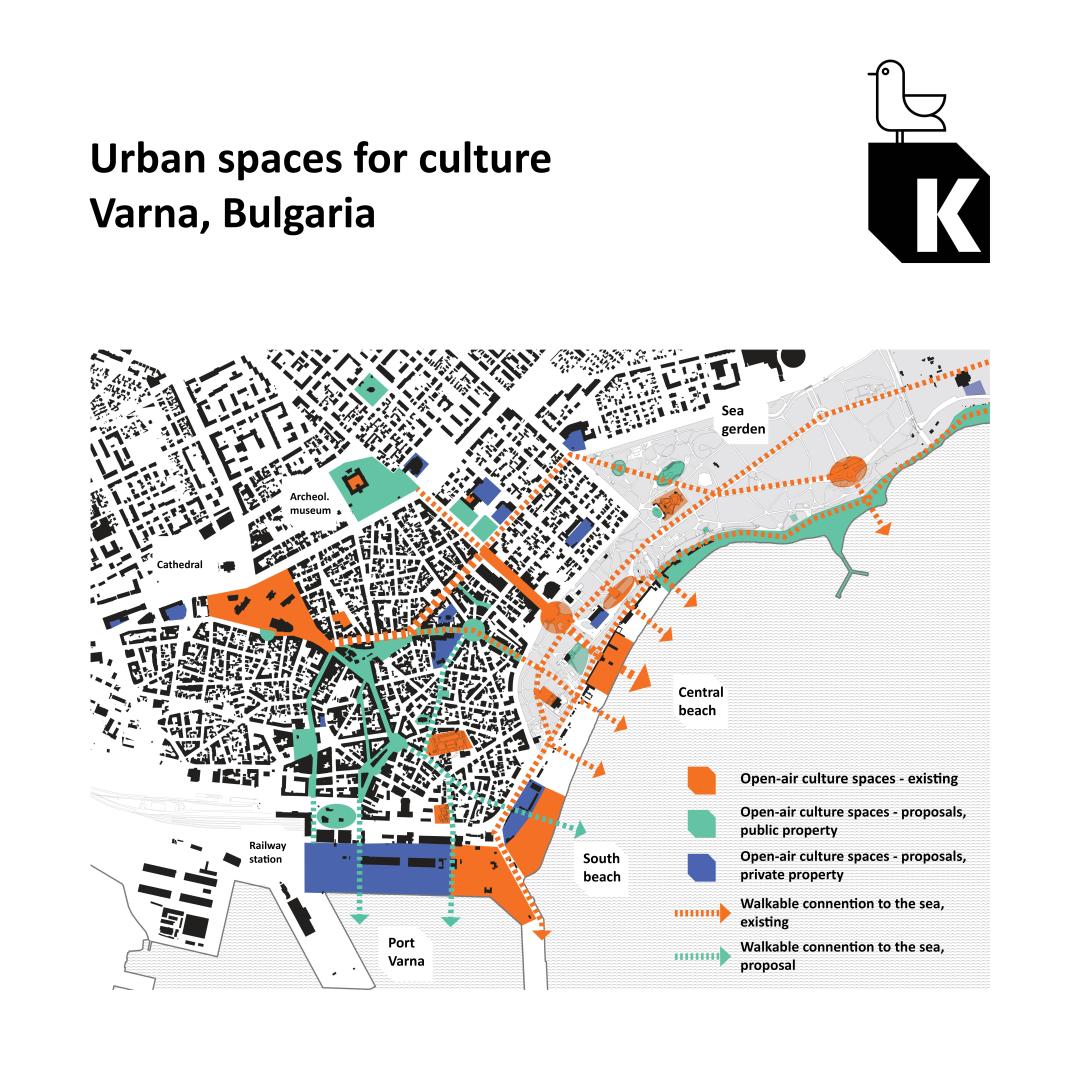
Тhe project "Urban spaces for culture" facilitates the revival of underrated urban spaces in Varna, Bulgaria using the synergy of local art communities, administration, students, young architects and urbanists. It proposes ideas about how cultural and social events can take place outdoors (within the context of a pandemic) and how they can support a process of urban renewal to create a network of highly valued walkable urban spaces that reconnect the city of Varna to its Black Sea shore.
Project Region
EU Programme or fund
Description of the project
Summary
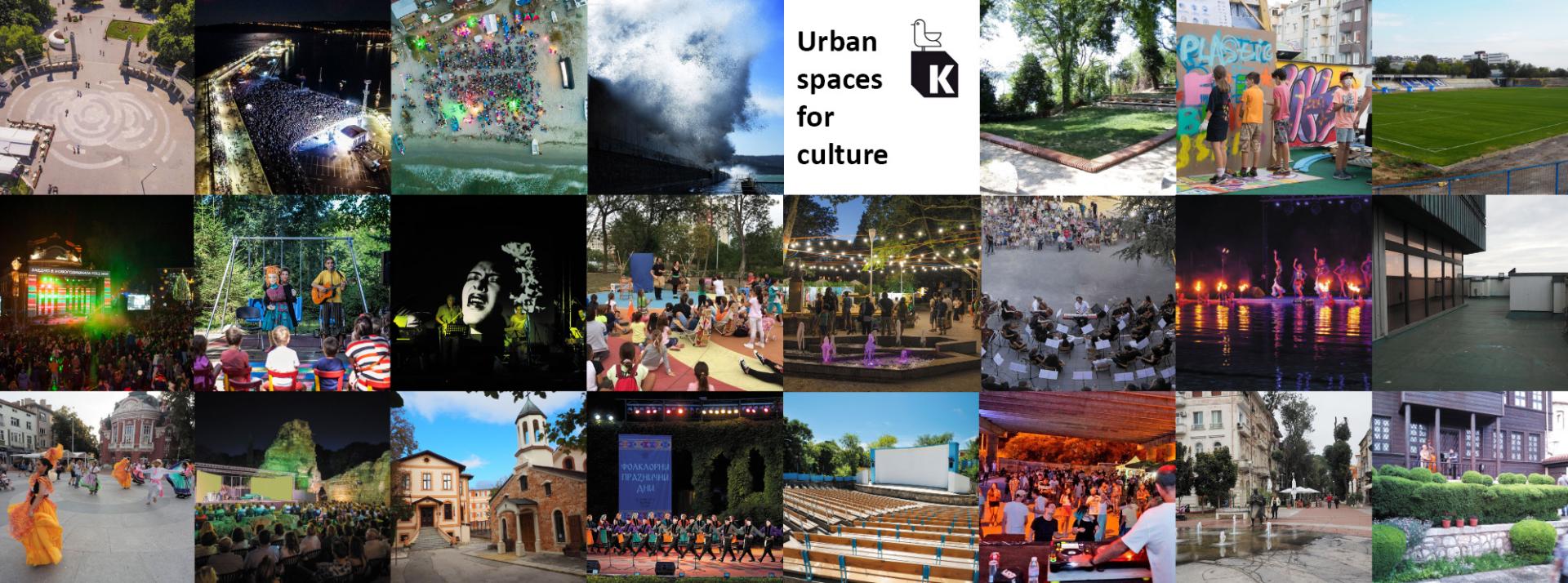
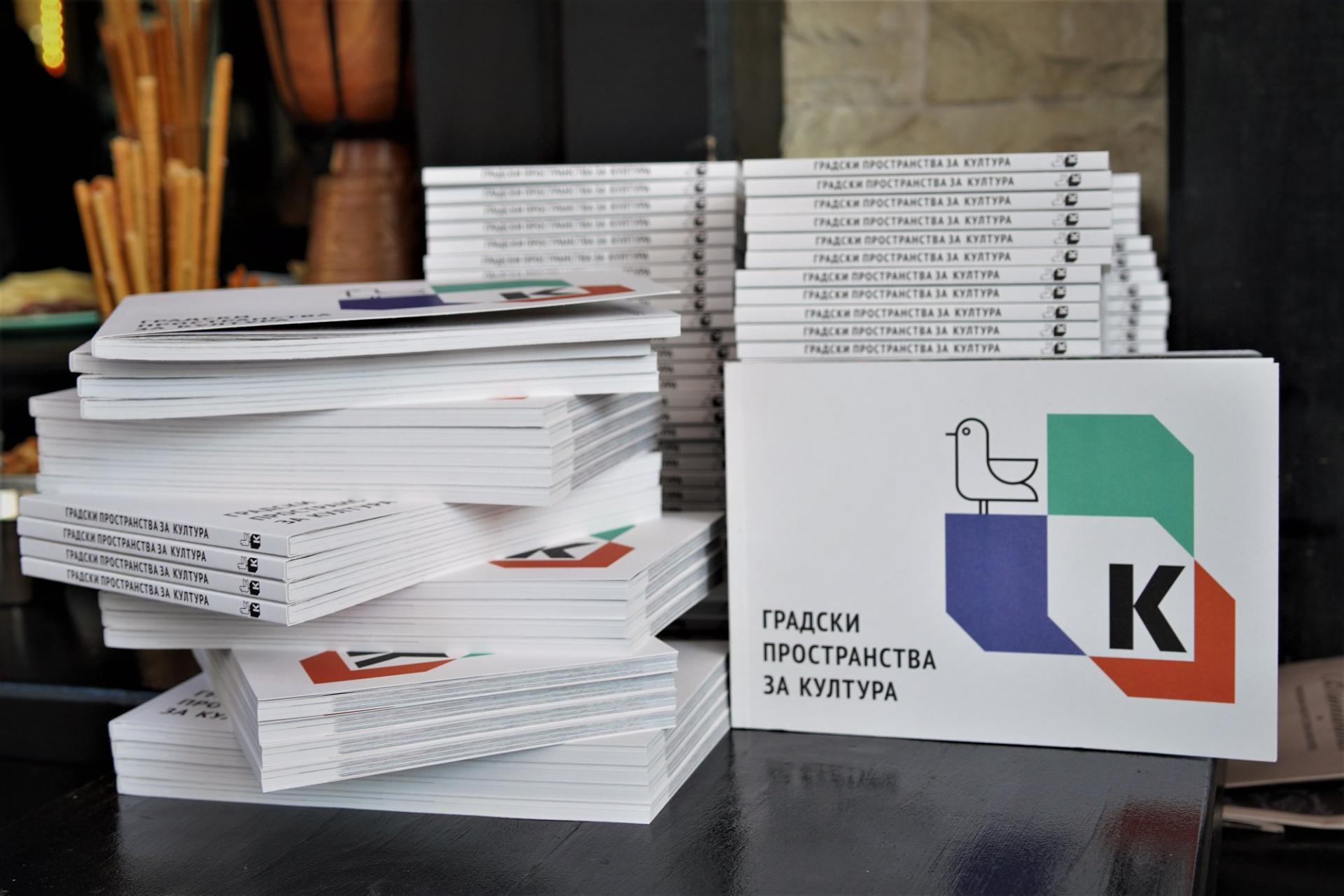
The project "Urban spaces for culture" started in 2020 in Varna. Assigned by an association of local art communities, our team published a catalogue "Urban spaces for culture". The catalogue showed all existing locations for open air events and proposed ideas how cultural events can be held in streets, parks, squares, backyards, car parking lots or underrated urban spaces. It also produced key data about these existing and potential spaces.
Our multidisciplinary team (architects, urbanists, an artist and a culture manager) aimed to inspire local artists to use urban areas in a creative way and engage local authorities to look at our city as a huge open stage for cultural and social events. The city of Varna has many underrated urban areas between the main pedestrian area and the seacoast. The project tries to activate and rehumanize these spaces, while introducing a network of urban stages for culture and social events.
Link to the catalogue: https://issuu.com/varnaspaces
Key objectives for sustainability
Social sustainability:
Objective: facilitate local artists, culture managers and institutions to organize outdoor events which are accessible to different social groups. Observation - when an event happens in public urban spaces people usually feel invited (passively and actively) to be part of it.
Objective: communicate to local authorities the needs for creating and rehumanizing urban spaces at a time when many people have poor access to cultural and social life
Economic sustainability:
Objective: Support local artists to find an alternative for their performances, in time when access to most cultural institutions is restricted.
Objective: Visualize and present to local authorities and local communities the potential economic impact, that a developed network of lively urban spaces could have on the city.
Ecological sustainability:
Popularize the ecological advantages of local outdoor cultural and social events.
Realization: We created visual materials with important key data, showing how streets, urban parks, squares, backyards, parking lots, roofs, etc. can be transformed to outdoor social and culture spaces. We studied all active spaces in the city, when open air events happen regularly and proposed new possibilities. As a result we collected all the proposals in a catalogue "Urban Spaces for Culture". The catalogue became one of the key documents for the organizers of the upcoming 2021 cultural season. The presented ideas were also discussed during the preparation of the next "Integrated city development plan".
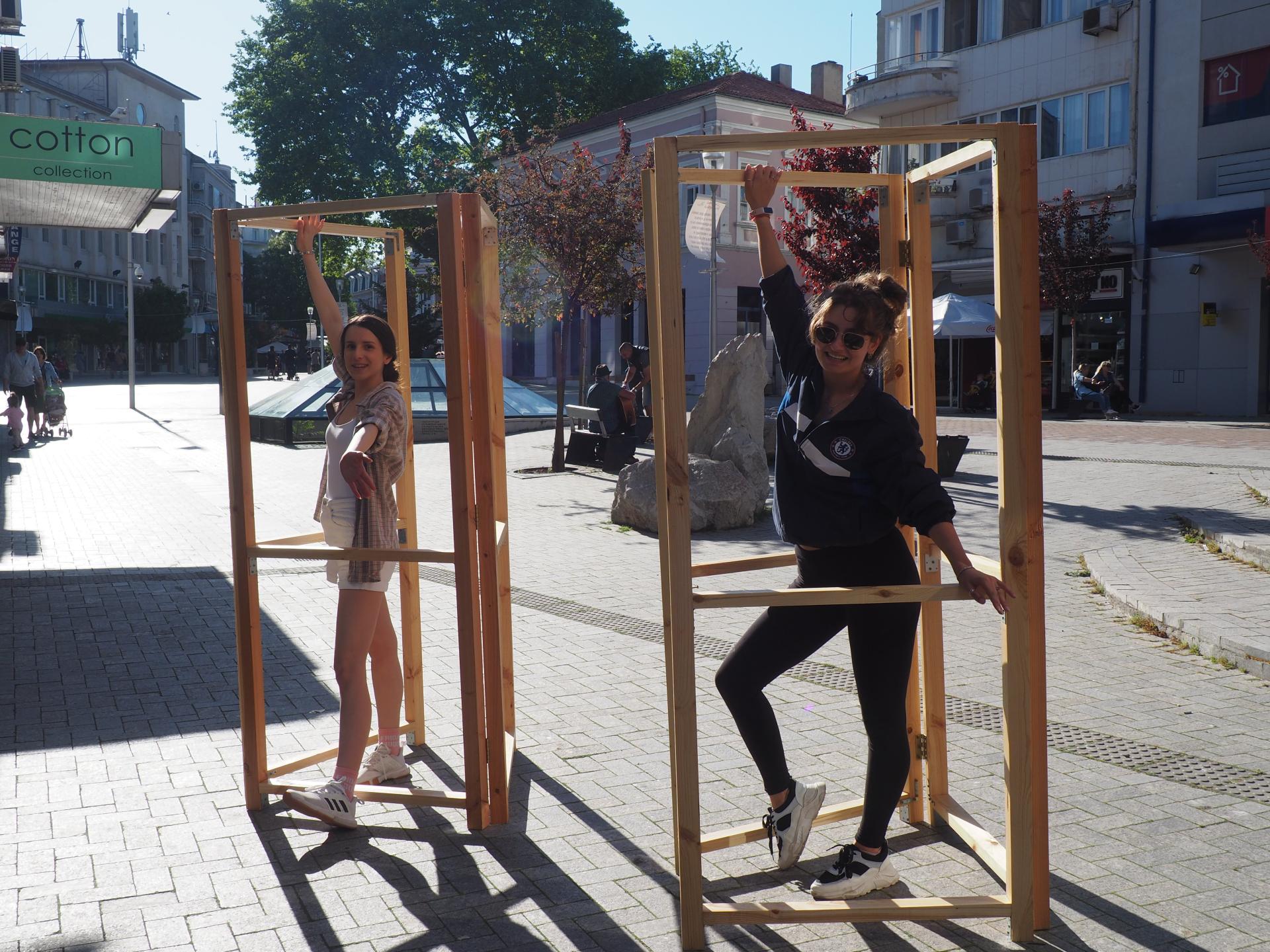
Our team also got invited by the architectural faculty of "Varna Free University" to organize student workshops for a class called "Activate a space". The exhibition of the student works is planned for June and aims to transform an existing parking lot into a new outdoor exhibition space.
Key objectives for aesthetics and quality
Objective: to study and present the potential of creating links between the pedestrian, central part of Varna to the seacoast. To start a conversation about reviving the underrated areas and between city center and the Black Sea. To show inspirations how streets, yards and parking lots can be transformed into enjoyable urban spaces. To communicate in a creative way the story how the human-scaled city center of Varna was invaded by cars and how important it is for it to be revived for human use.
Objective: to test how cultural events can actually happen in the proposed spaces.
Objective: to show how cultural heritage buildings and well designed streets and squares can easily become an "urban stage" for cultural and social events.
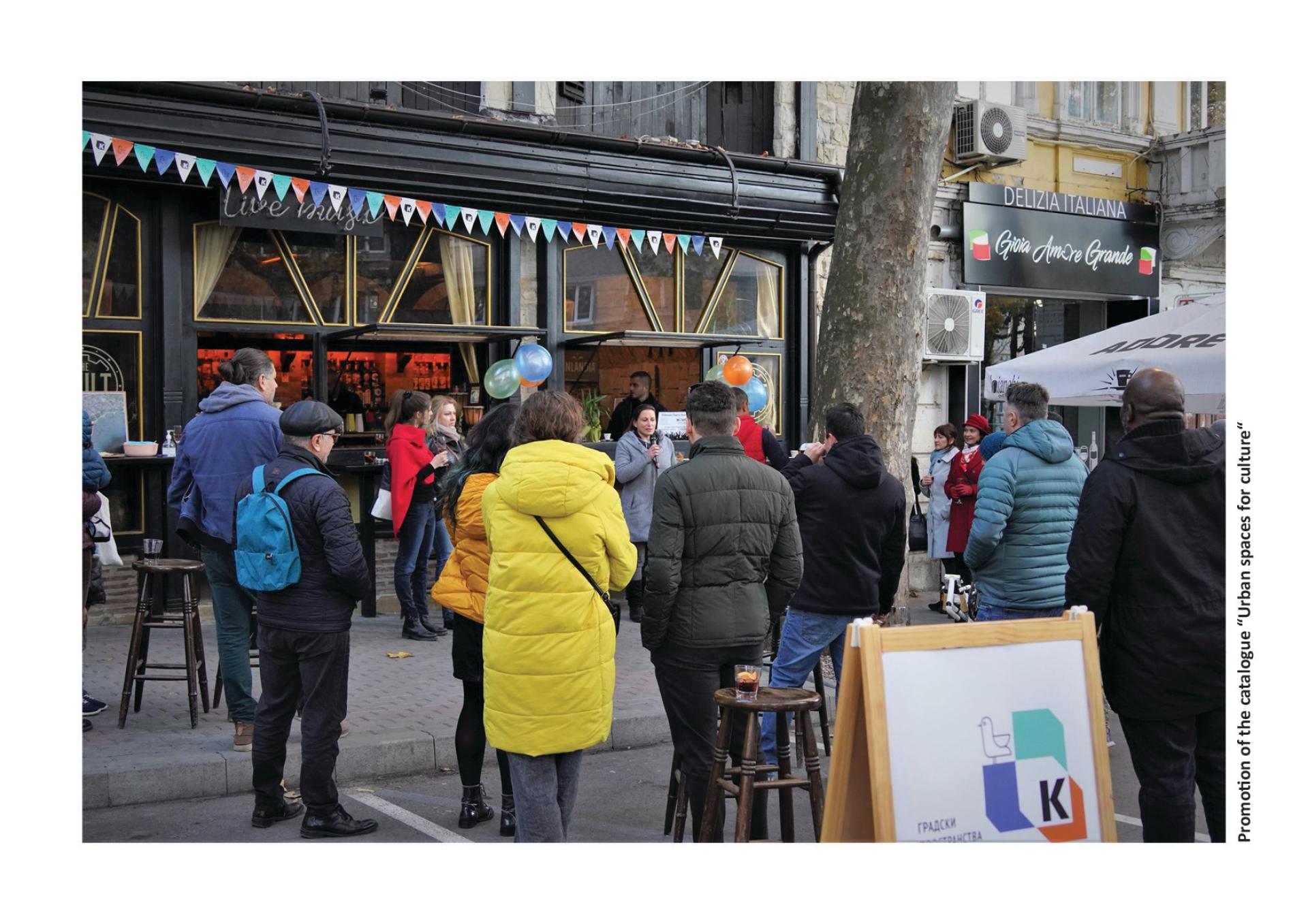
Realization: The promotion of the catalogue happened in the old mainsquare of Varna - "Mussala square". For decades the space has been functioning as a car parking lot. For one afternoon some of the parked cars there were moved and the space was used again as a valued urban square - a place to meet, talk and enjoy being together outside with people from your community. That was a test in real scale how with soft measures an urban space can be transformed and rehumanized.
Key objectives for inclusion
Objective: create opportunities for different people /different ages and background/ to join cultural and social events, to feel being a part of the city community and spend valuable time outside, in quality urban surroundings.
When an event happens outside, people from the neighborhood, or people who are just passing by can be easily involved. That happens in an informal way, so even people who usually don't visit cultural events get involved and passively or actively become part of the performance.
To create more livable and walkable an urban spaces which are safe, secure and inviting.
Realization: The urban studies in the catalogue propose how neglected parts of Varna can be organized in a network of walkable streets and valuable urban hotspots. These studies are now being continued with a group of architecture students from "Varna Free University". These ideas are one of the main topics discussed during the making of the next "Integrated city development plan".
Results in relation to category
The project managed to engage new actors from different communities: artists (Art community Varna), local "Varna Free University", local authorities from the Culture and Strategic planning department, local businesses, communities, kids from a local kindergartens, experts and active young people.
The making of the catalogue was ordered by an association of local art communities, and funded by Municipality Varna, presenting ideas for saving cultural life in the city and stimulating developing better walkable environment and social urban spaces.
The catalogue "Urban spaces for culture" got part of the open call presentations for the 2021 culture calendar, inspiring artists and culture managers to choose outdoor locations for their performances.
The catalogue was recognized as a work document during the strategic planning discussions for the next 7-year integrated plan of Varna, also used by the Chamber of architects.
The catalogue was implemented in the student program of VFU by the chair of the "Architecture and Urbanism" department.
The ideas from the catalogue have started to get tested recently. The summer exhibitions and promotions are happening in places, where culture events have never happened before.
How Citizens benefit
Civil society - local artist associations are a key stakeholder in the project. They are potentially the main actors, who can change the way urban spaces function.
We managed to involve kids from a local kindergarden. Together we hold workshops, testing how children enjoy and experience urban space. The kids also helped our team to personalize the construction for the upcoming exhibition "Activate space".
In the other fields we mentioned out cooperative work with VFU, Chamber of architects and local administration.
Innovative character
The project "Urban spaces for culture" addresses one common solution for disparate problems: poor quality of urban space; lack of possibilities for artists to perform during pandemic; social exclusion during pandemic. The catalogue shows proposals how urban area can be activated through organizing social and cultural events in public spaces.
The catalogue is an effective tool to start conversation with different stakeholders: art communities, local authorities, local artists and businesses. It proposes creative solutions of complex social and spatial problems. It is an important step in creating awareness about quality of urban spaces towards a more substantial change in the city.