VCS HOUSE
Basic information
Project Title
Full project title
Category
Project Description
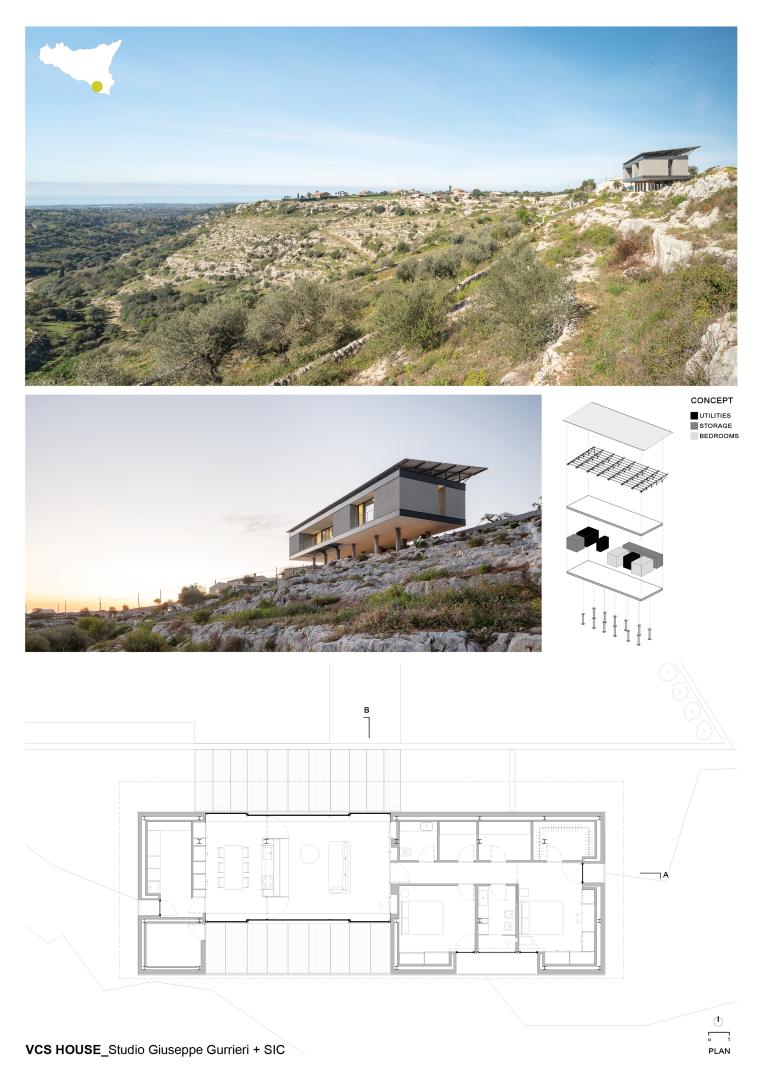
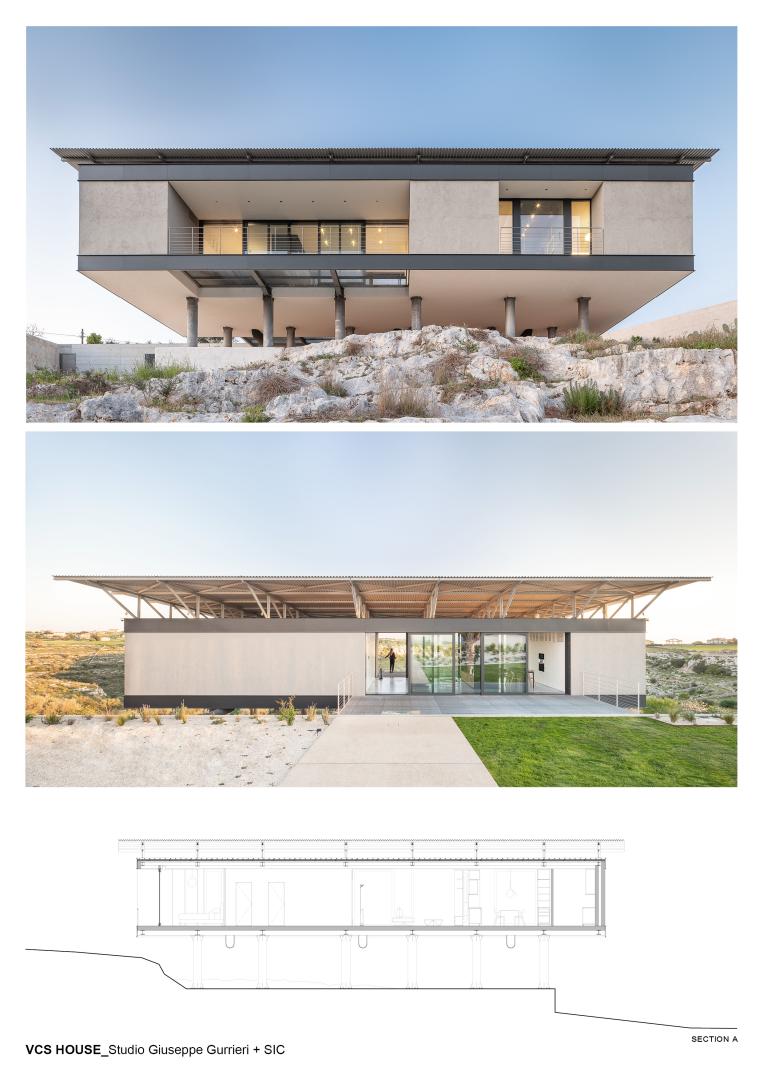
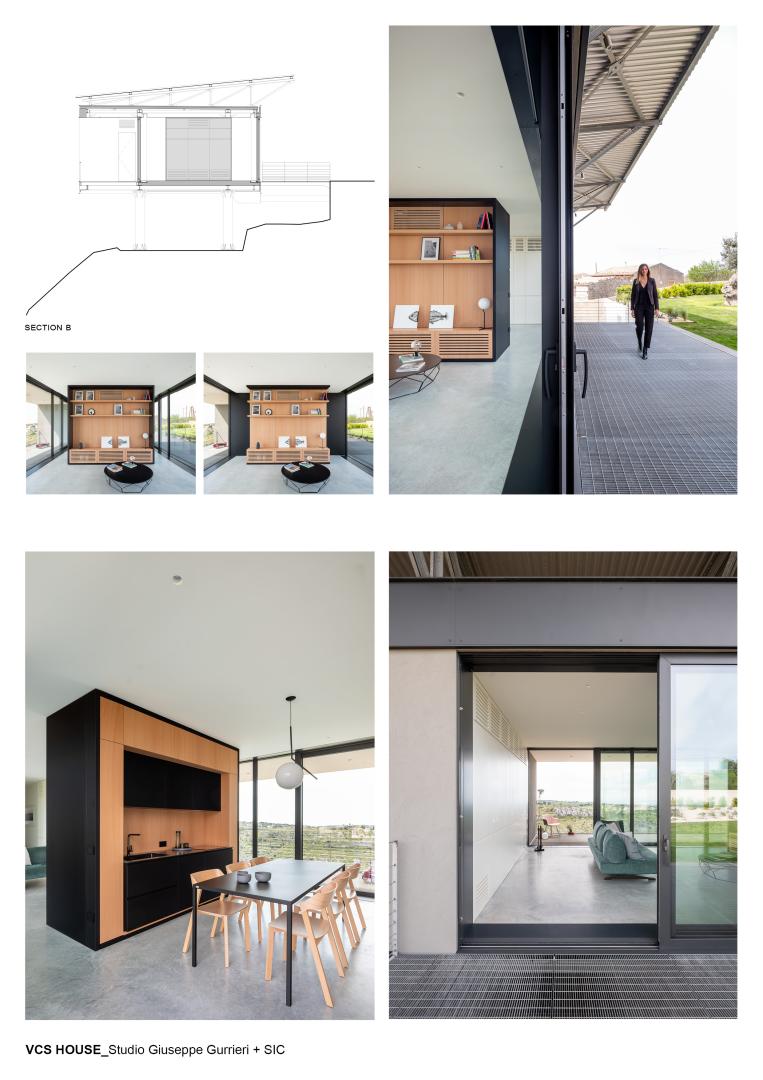
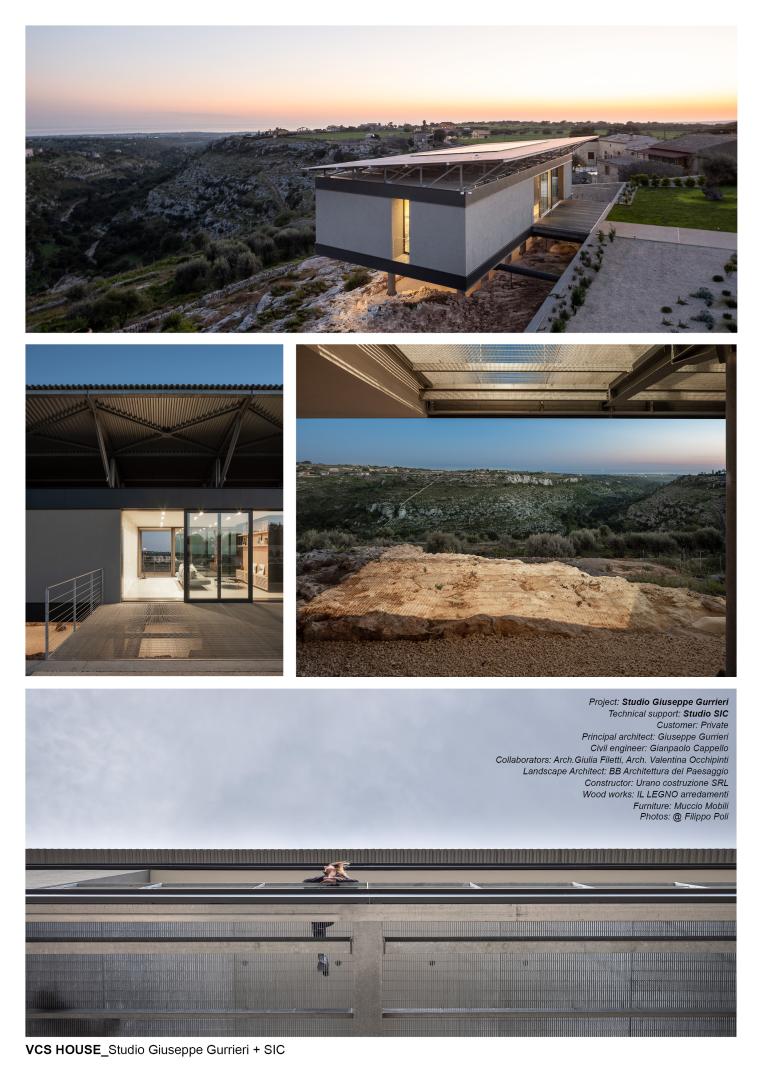
VCS house, located in Modica in an area with high environment friendly allure, stands out suspended in the void. Transparency and lightness are the keys to the project. In fact, the house is completely elevated, resting on pilotis and has an access walkway. It is also characterized by a combination of technological innovation and local construction tradition. VCS house stands out strongly in the surrounding residential anonymity without being out of place but has seemingly always been there.
Project Region
EU Programme or fund
Description of the project
Summary
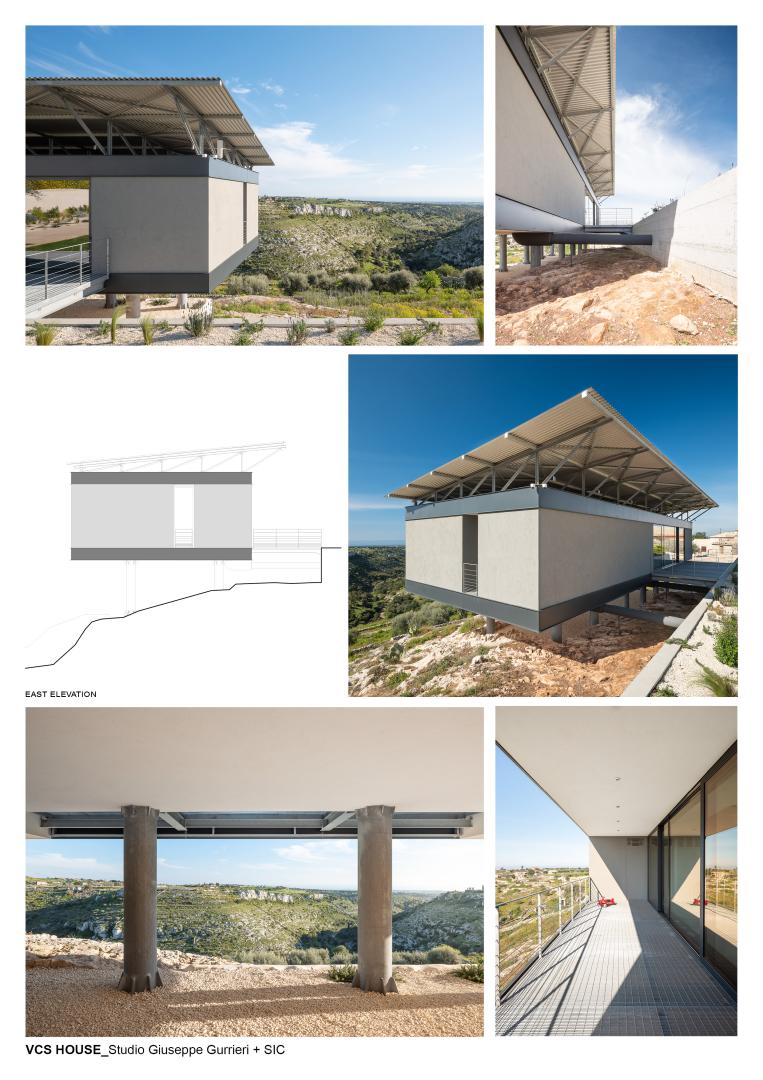
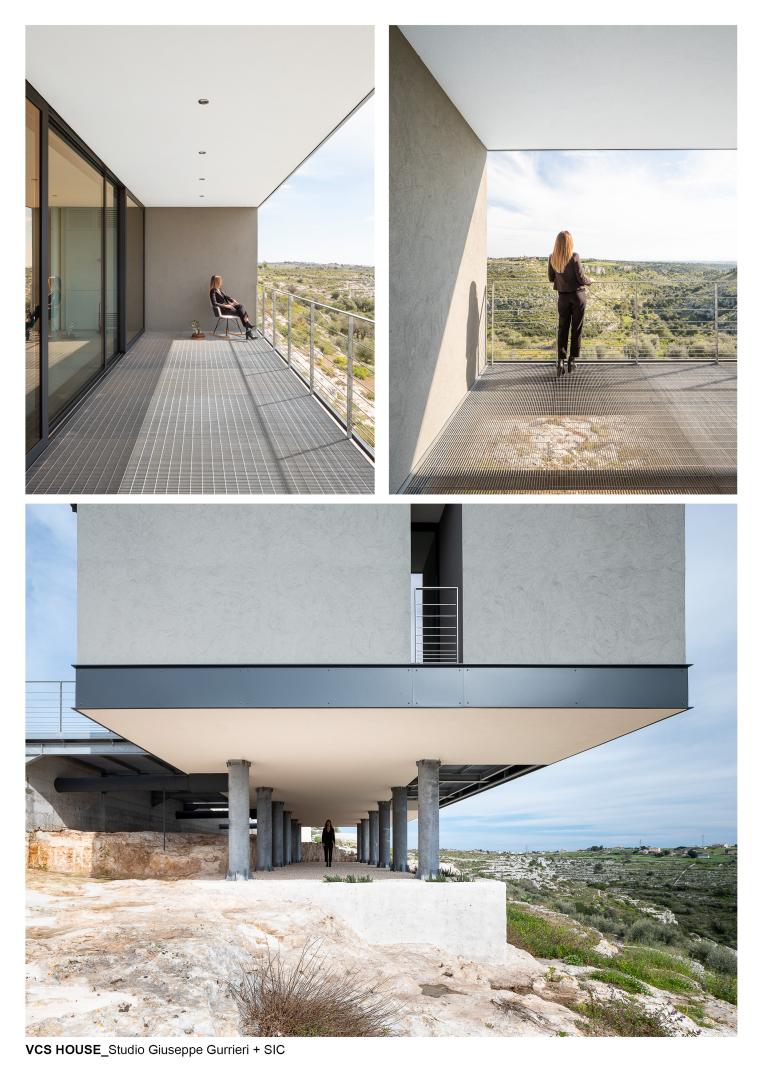
VCS house, located in the Modica countryside, is not far from the city's commercial hub and stands out in the landscape while integrating with it. It is a site consisting of a high landscaping value due to the shape of the land on which it stands, which is characterized by a slight slope that branches off onto a steep escarpment, opening the view toward the blue of the sea. Transparency and lightness are the key points of the project. In fact, the house appears to be completely suspended, built on a steel structure supported by pilotis placed at the lowest level on the ground. The land is cut by a retaining wall characterized by the visible connection to the house systems. This transparency and lightness are further accentuated from the entrance to the house, which can be reached from an Orsogril walkway. The same walkway creates on the opposite side a feeling of emptiness and suspension. The references of the well-known masters of architecture such as Glenn Murcutt and Craig Ellwood, who contributed to the concept of the Casa VCS, are evident. From a compositional point of view, the VCS house is characterized by two slabs that contain volumes of different sizes and functions, while the void between them welcomes the living area. The project plays with emptiness by drawing it in, creating a dimension capable of translating non-tangible space into tangible, ready for life. The combination of technological innovation is also essential, being classified as a Nearly Zero Energy Building, and the local construction tradition. The tradition was found not so much in residential construction as in the agricultural one of the 1930s characterized by raw materials and precarious structures. The constructive method found above all in the roof truss, designed coherently with the rural architecture of the local tradition revisited in a contemporary key. An evident counterpoint between innovation and tradition that, by blending perfectly, makes the VCS house unique.
Key objectives for sustainability
In terms of sustainability, the VCS house is based on key elements that have characterized the entire project both from a functional and aesthetic point of view and an environmental impact. The suspension, which is the main element of the entire project, enables it to significantly reduce the energy loss associated with contact with the ground. The reference to the local construction tradition of the agricultural architecture of the 1930s characterizes the roof truss. The ventilated roof reduces the impact of solar radiation and also allows the positioning of photovoltaic panels. These, together with an accurate thermotechnical study characterized by the use of insulating materials with high thermal performance, thermal break windows, and selective glass, in addition to a dedicated plant engineering study, have allowed us to obtain the NZEB (Nearly Zero Energy Building) classification. VCS house also has a CMV (Controlled Mechanical Ventilation) system that allows for air quality control that helps to reduce heat loss by promoting energy savings and ensuring maximum living comfort. VCS house represents a commitment to sustainability that is absolutely present and integrated with the very concept of architecture.
Key objectives for aesthetics and quality
The key objectives in terms of aesthetics and the quality of the experience beyond functionality are linked to the initial idea for the project, that is, the suspension and the reference to the local construction systems of agricultural buildings of the ‘30s. The VCS house is characterized by a minimal/industrial style aimed at tradition. To create the VCS house, a design was carried out that unifies architecture and engineering, art and function, which through careful positioning of the systems and courageous functional choices transforms the engineering element into the main architectural/aesthetic element. VCS house turns out to be a real suspended house detached from the ground, if not for the pilotis of the steel structure that supports it. The house can only be reached from an Orsogril walkway which accentuates the feeling of suspension. A further example is related to the roof truss that is a strong reference to the location's history and specifically to the local construction tradition of agricultural buildings of the 1930s characterized by raw materials and precarious structures. Here the truss is revisited in a contemporary key and allows the creation of a ventilated roof aimed at the energy function thanks to the positioning of photovoltaic panels. The truss, an industrial element par excellence, becomes one of the main aesthetic elements, in close connection with the other engineering elements that make up the VCS house. Inside, the house has a very accurate minimal/industrial design, characterized by a careful selection of furniture and coverings. The furniture is embellished with custom-designed "hyper furniture" that becomes an element of separation between the living and dining environment, accentuated by the doors integrated into it. In addition to serving as an important aesthetic element, this volume is functional to the tasks of the two environments, as it contains the equipped wall in the living room and the kitchen in the dining room.
Key objectives for inclusion
Located in the Modica countryside, a few kilometers from the city's main commercial hub, VCS house is located on an area mainly made up of single-family houses and agricultural buildings. The project's key objectives in terms of inclusion are linked to the perfect fusion with the surrounding environment. Hence the choice of creating an architecture that refers to the local construction tradition of agricultural buildings of the 1930s allowing the VCS house to bond with the context, standing out strongly without being alien to it. From a naturalistic perspective, the VCS house communicates with nature, placing itself on tiptoe; in fact, it is placed on a pilots structure that follows the profile of the land it sits on without upsetting the site. VCS house manages to bond with the surrounding environment, acting as an intervention aimed at improving what nature has created.
Results in relation to category
Concerning the third category of the New European Bauhaus or the "solution for the co-evolution of the built environment and nature," VCS house stands as a symbolic element dictated by a design concept that is attentive to respect for the site on which it stands. The VCS house project makes it possible not to distort the natural course of the ground, preserving a site with a high landscape value through architecture. VCS house is suspended from the ground thanks to pilots structure, the only element firmly attached to the ground, which means that the planimetric conformations of the original site are not altered and remain protected by occupying it. Nature becomes the protagonist of the house by binding itself to architecture in an abstract way. This is possible thanks to a design aimed at lightness and transparency, obtained through the large windows in connection with each other that allow the landscape to enter inside the house, crossing it, living inside it, expressing itself strongly with its moods and colors and blending with those who live it.
How Citizens benefit
As the VCS house is a private residential building, a small number of people were involved in its construction. The beneficiaries, or the clients of the project, were directly involved in its implementation. The client, Gianpaolo Cappello, is the building's calculator engineer, who, together with Studio Giuseppe Gurrieri, oversaw the structural and plant design and supervised the direction of the works. Other essential figures were involved in the construction of the house, as it was only through a collective effort that it was possible to obtain a quality project. Among these, we find Corrado Serramenti, who took care of the aspect related to the external windows; Il legno Arredamenti regards to the realization of the designed wooden fornitures; Muccio Mobili for the home furnishings that were embellished with well-known design objects; the construction company Urano Construzioni SRL; BB Architettura del Paesaggio who oversaw the gardening design and many other figures who contributed to the creation of the VCS house. Their contribution to the realization of an avant-garde and technologically innovative project is essential, as it is classified as NZEB (Nearly Zero Energy Building). Over time, VCS house aims to set itself as an example for the architecture of the place that becomes itself, together with the people, the real beneficiary.
Innovative character
VCS house is located on a residential area made up of single-family houses and generally anonymous rural architecture. It stands as a new frontier of local architecture, an innovative architecture from a technological and architectural perspective. VCS house lays the foundations of the perfect combination of modern architecture and local construction methods of agricultural buildings from the 1930s. There are clear references to well-known masters of architecture such as Glenn Murcutt and Craig Elwood, who contributed to the avant-garde concept for the VCS house. It stands as a suspended house in perfect synchronicity with the surrounding nature. By placing itself above it thanks to a pilots structure that acts as a base (a clear reference to Le Corbusier), it does not disrupt the natural course of the ground. In its main points, the project sees transparency and lightness, an innovation for the surrounding environment characterized by the strong materiality of the neighboring residential architecture. At the same time, the design choice is never out of place thanks to carefully researching the traditional construction methods of agricultural buildings from the 1930s, revisited in a contemporary key. This choice determines a perfect fusion with the context, embellishing it. From a technological point of view, the VCS house enjoys the NZEB (Nearly Zero Energy Building) classification, setting itself as an example for the architecture that will be subsequently built at a time when it is imperative to aim for an increasingly sustainable design.