ZERO WASTE
Basic information
Project Title
Full project title
Category
Project Description
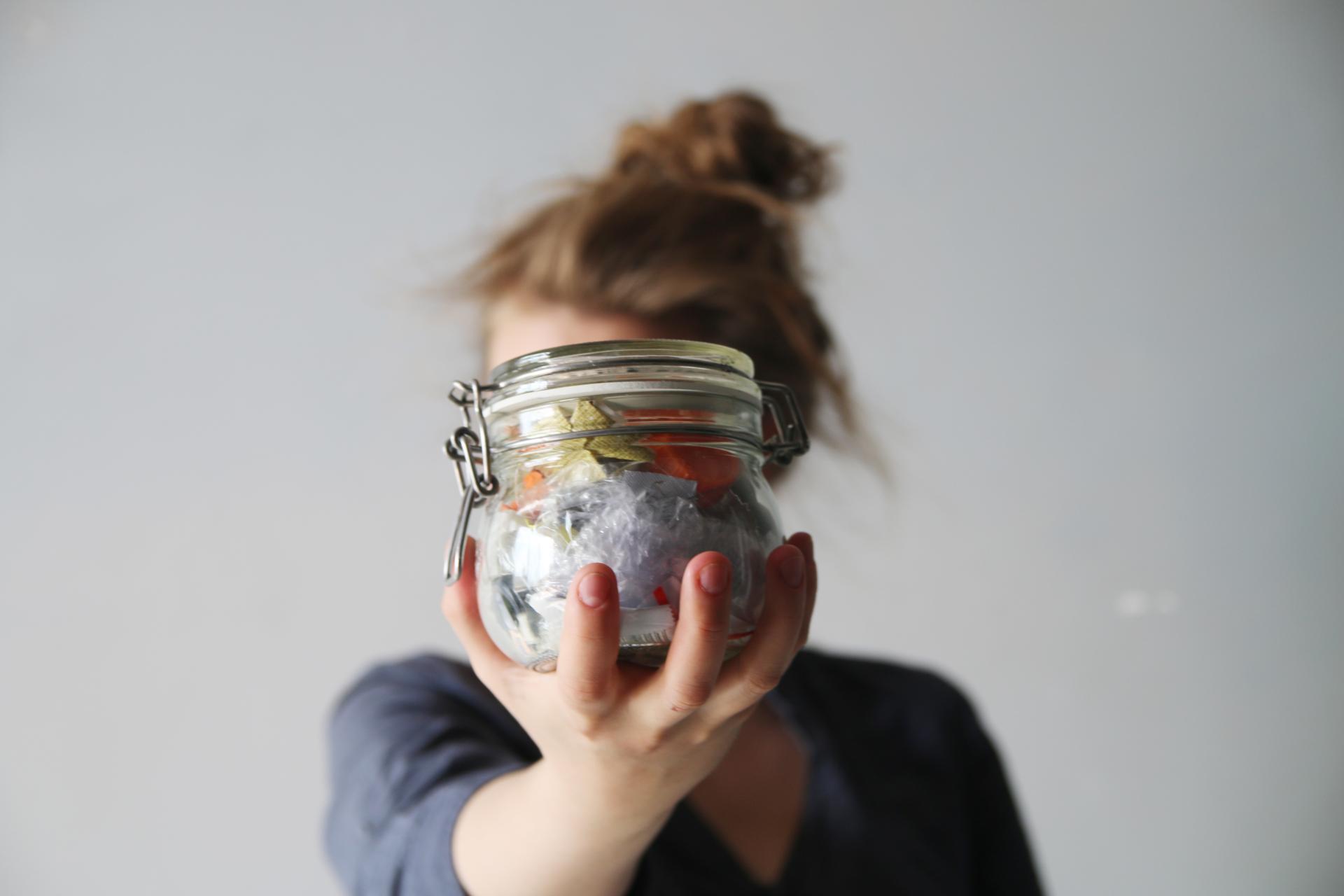
This project is a result of an experimental practice that was aimed at finding a substitute for synthetic plastic using only natural resources which would, later on, form a new cycle of nature. I have tested a number of natural materials as well as their mixtures before I came up with the most suitable solution - biodegradable algae-based material. This new material perfectly holds its shape, is waterproof, and protects the product against possible damage.
Project Region
EU Programme or fund
Description of the project
Summary
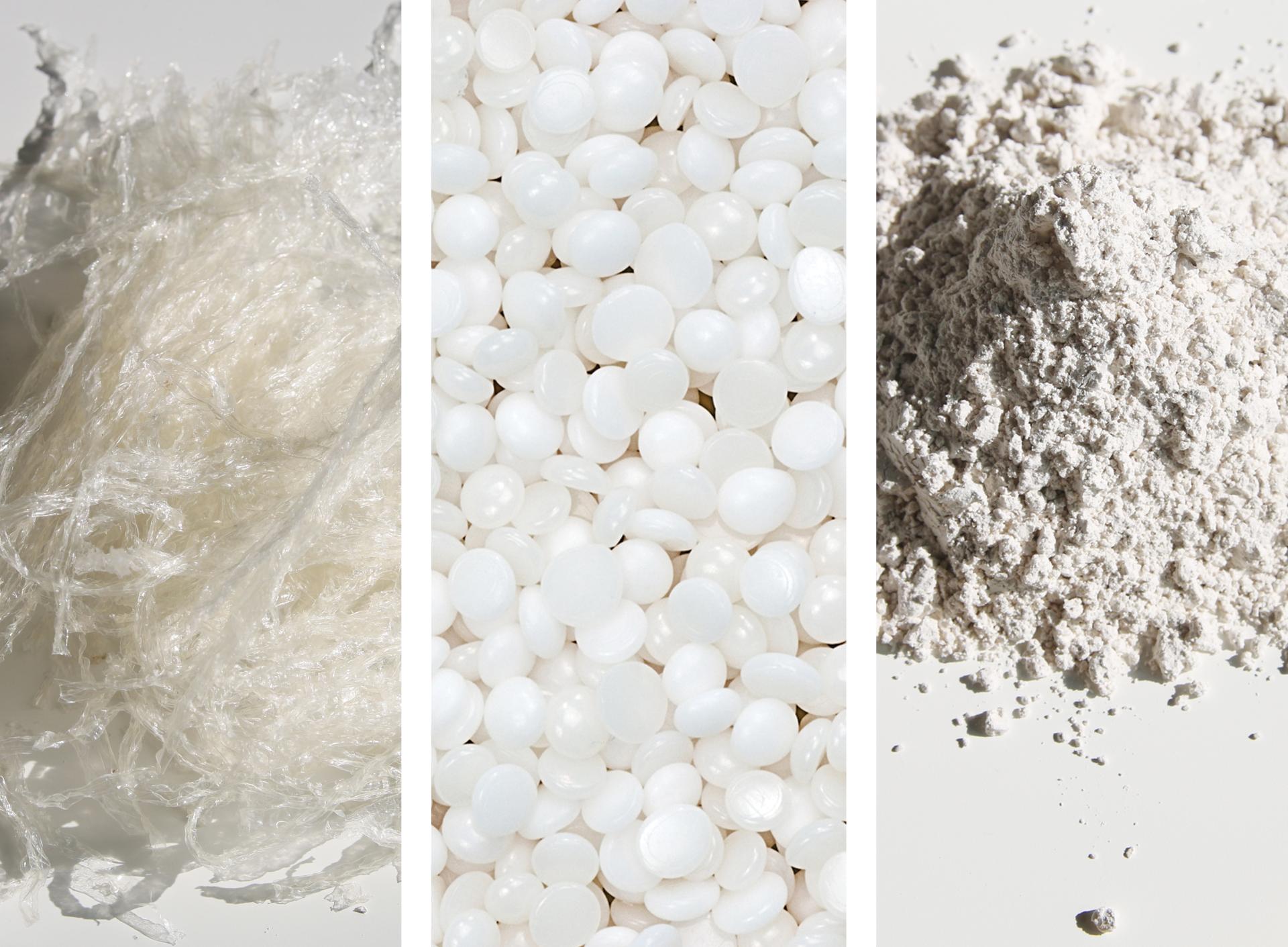
While working on this project I have followed a Zero-Waste philosophy and sought to shed light on an increasingly prevalent problem of environmental pollution. This project is a result of an experimental practice that was aimed at finding a substitute for synthetic plastic using only natural resources which would, later on, form a new cycle of nature. I have tested a number of natural materials as well as their mixtures before I came up with the most suitable solution - biodegradable algae-based material. This new material perfectly holds its shape, is waterproof, and protects the product against possible damage. Made of only three natural ingredients, this material is wholly organic and compostable. After the product is consumed, its packaging can simply be composted or used as a fertilizer. Even if this packaging has been discarded as waste, due to natural processes and micro-organisms it will again become a part of nature, forming new layers of chalk, and will cause no harm to the environment or other forms of life at all.
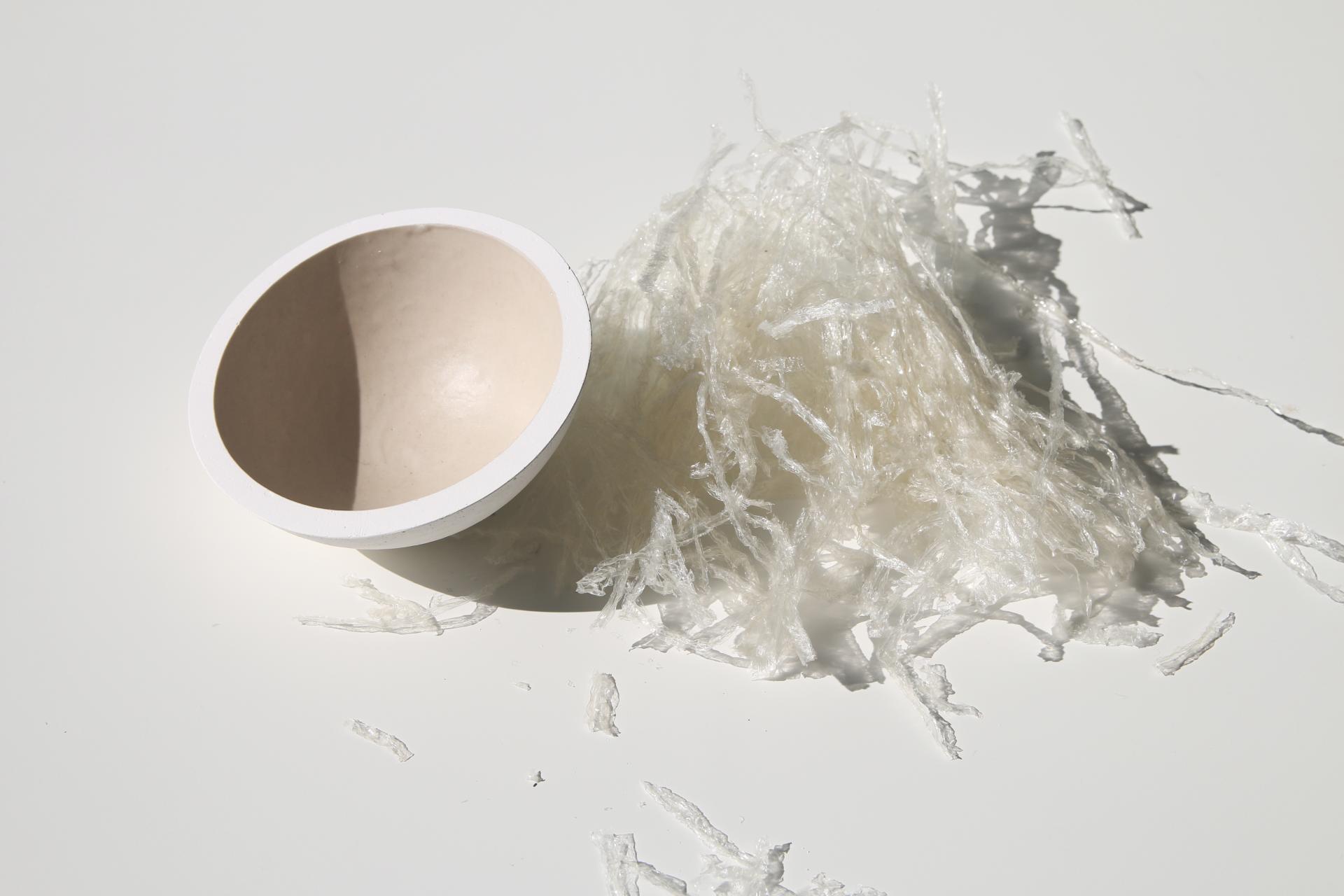
During the practical experiments with the algae material, not only the solid bioplastic material was found. Using a specific freeze-dried processing method of the substance, the biodegradable foam was created. The algae foam works perfectly as a package cushioning material and has a strong potential to change the synthetic polystyrene foam which is very difficult to recycle and which is almost not biodegradable in a natural environment even in thousands of years. This project combines the solid bioplastic packaging prototypes with a biodegradable foam material which together could make the whole product and packaging industry more sustainable.
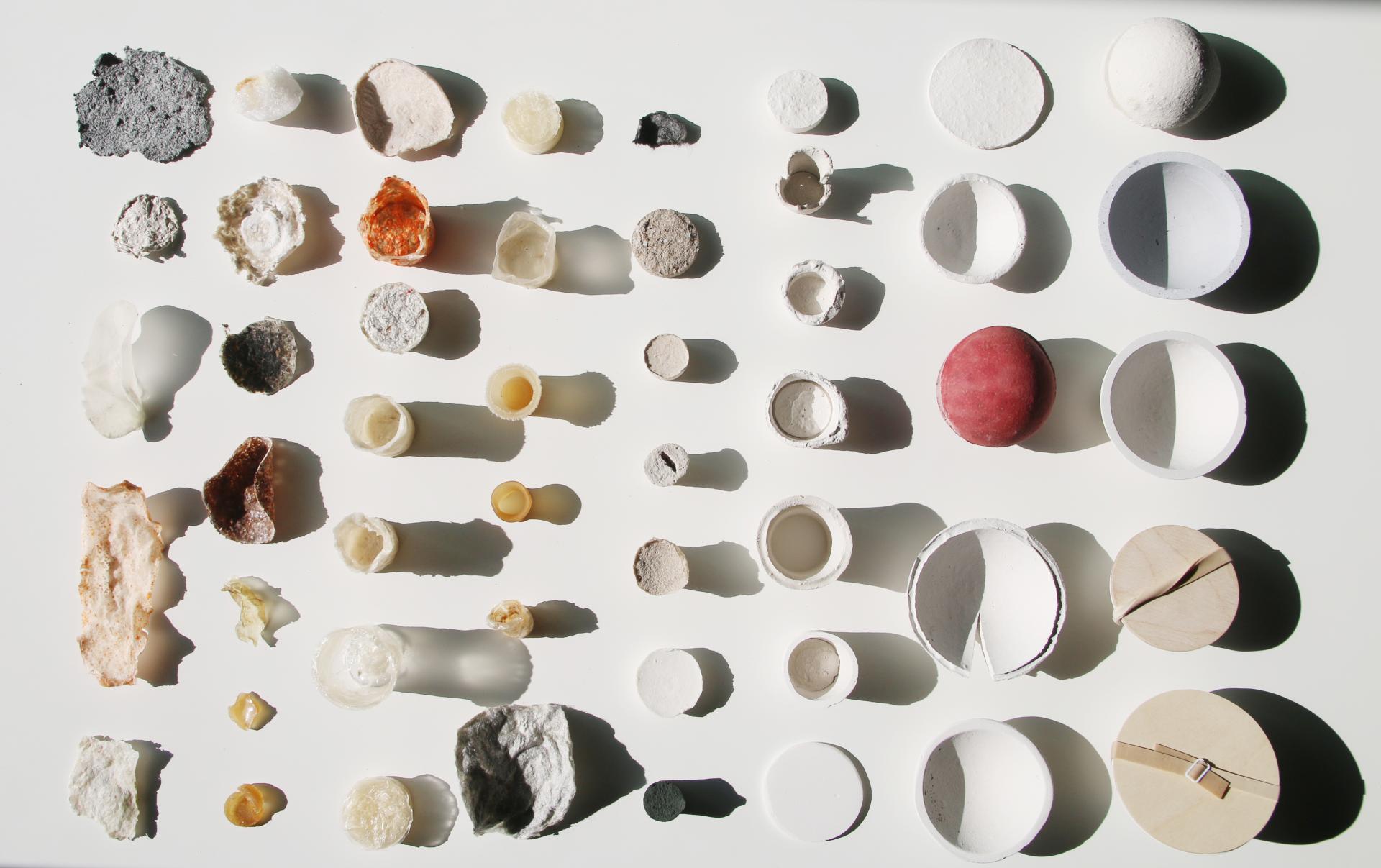
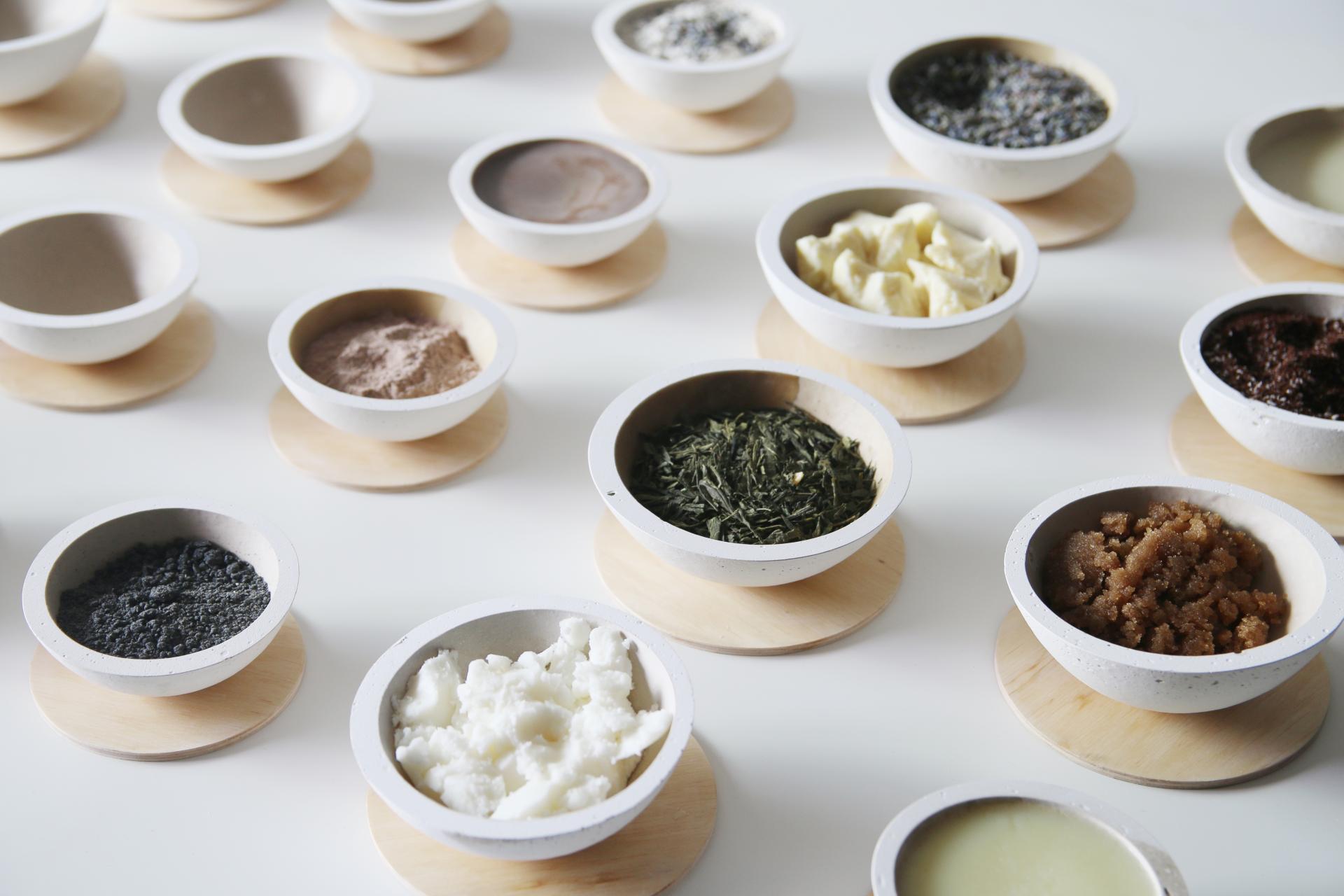
My experiments with materials also figure as an inseparable part of the final solution. This way I want to show the processes that lay behind the final product.
Key objectives for sustainability
What if humans designed products and systems could celebrate human creativity, culture, and productivity? That are so intelligent and safe, our species leaves an ecological footprint to enjoy it, not complain? This project does. It replicates the natural materials cycle. There is no trick - what comes from nature, goes back to nature. The project deals with a growing global population, which increases consumption and waste generation. The use of algae-based biodegradable bioplastic and foam reduces the impact of overall environmental pollution. The materials are easy to recycle, especially the foam, which needs only to be melted down and then moulded again, so the project reduces the economic losses due to untreatable and non-recyclable resources. The project does not compete with global population competition for land which is very important for growing food resources. The main algae binding material is sourced only from marine industry - renewable red and brown algae waste from the seashore. It could also be artificially grown in a sea farms and even produce more oxygen for humans and other life on land to breath while growing; the calcium carbonate could be used only from the seafood industry waste - the crustaceans are the perfect source of natural calcium carbonate, it's a renewable resource and cannot be eat by humans or other animals, etc. The biodegradable solid bioplastic and algae foam could break down very easily and can be industrially composted as organic waste or even used as a natural fertilizer at home.
This project has benefits for an overall human health and reduces an environmental impact of a product, the manufacturing process and the final service. It's not only about sustainable materials and packaging products. It also includes circular economy practices which are the economic systems aimed at minimizing waste and making the most of resources while replicating the natural cycles.
Key objectives for aesthetics and quality
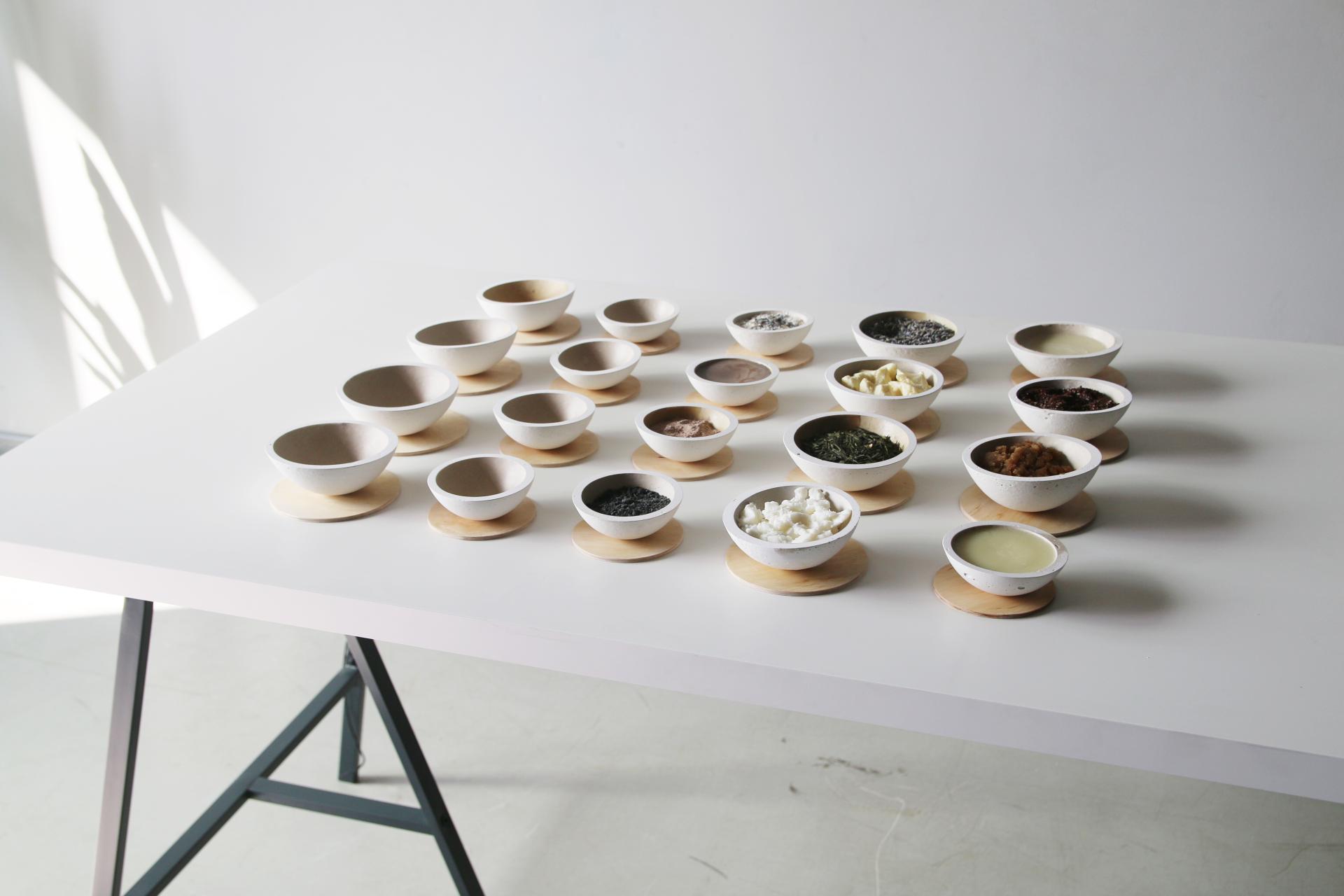
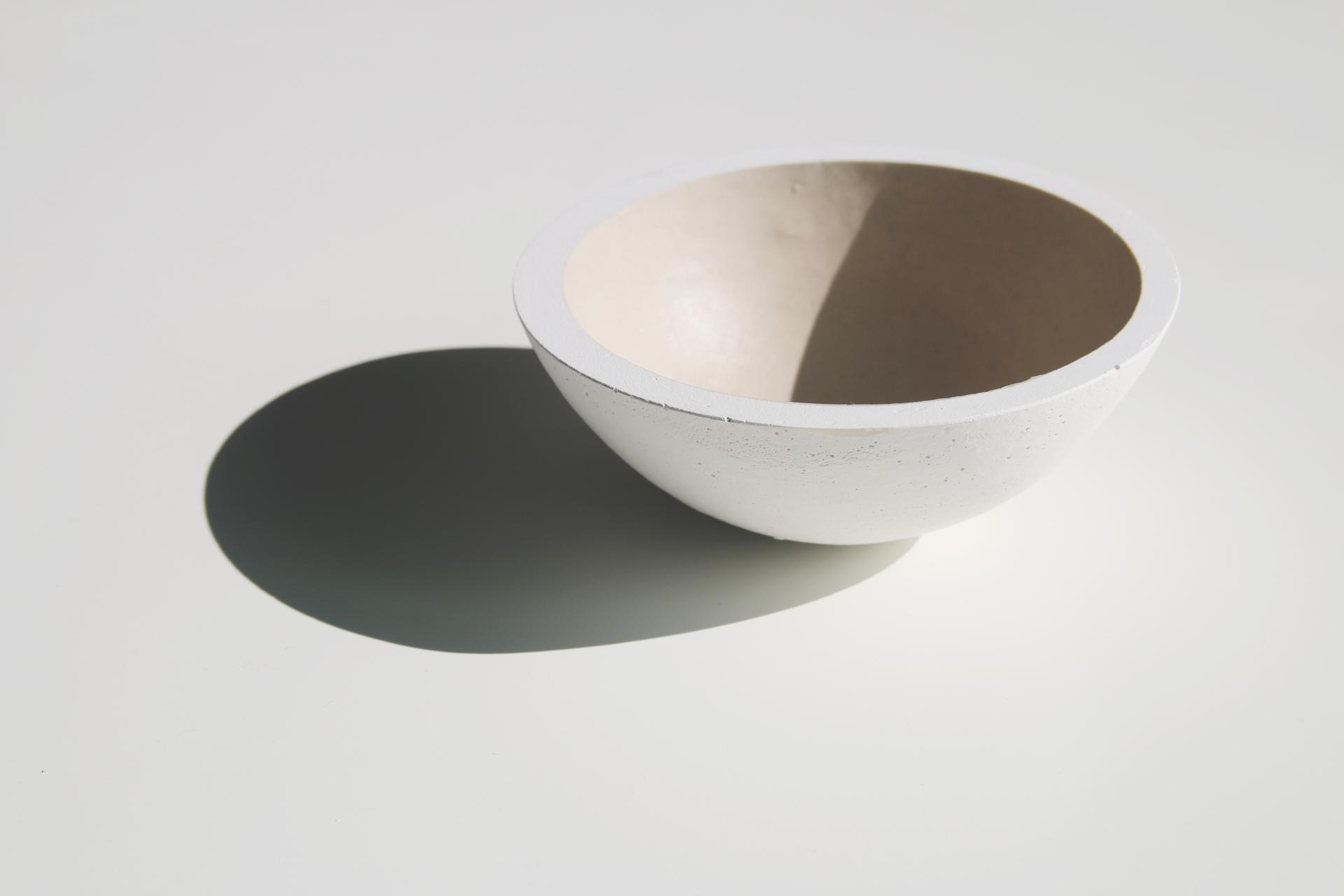
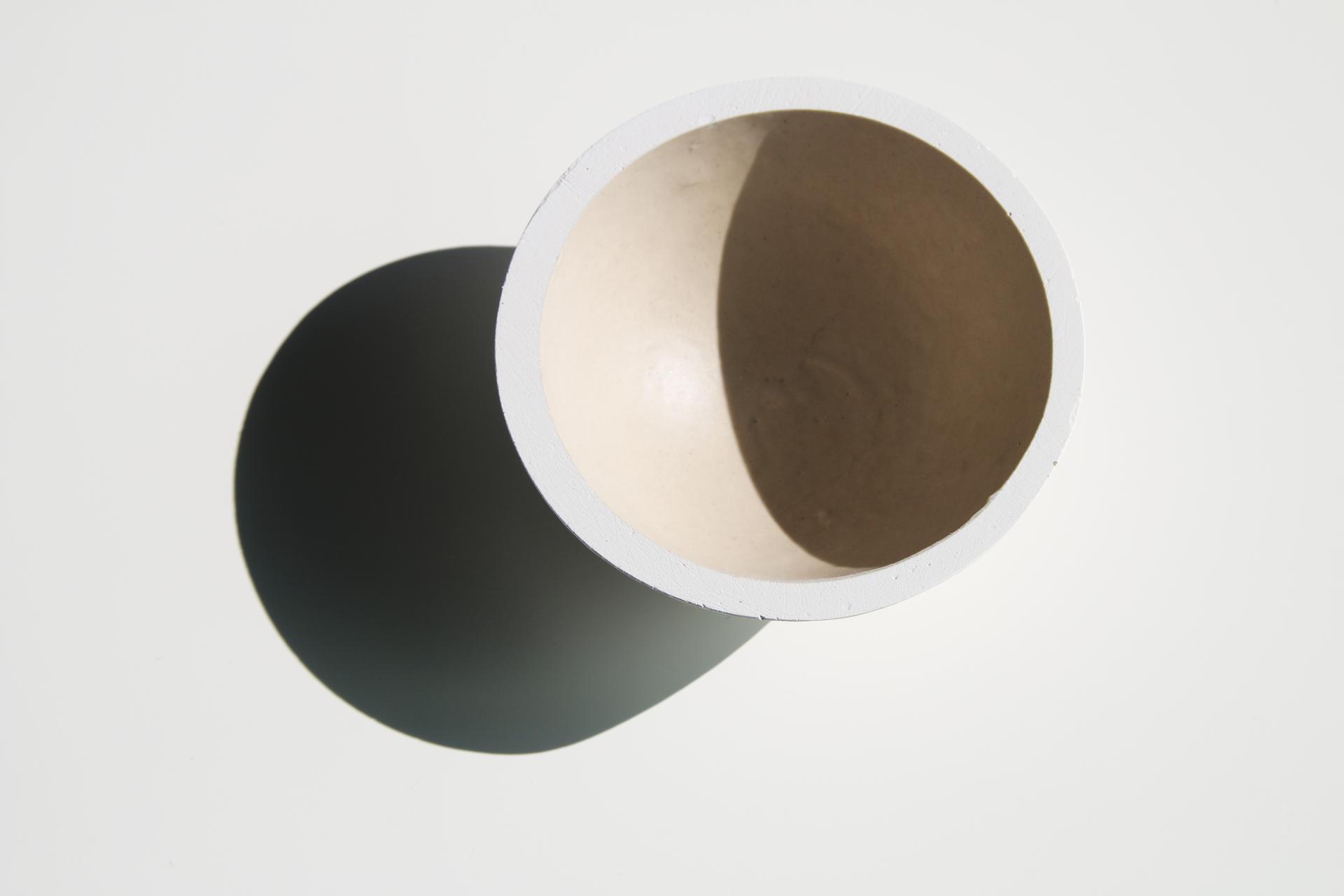
The key objectives of this project in terms of aesthetics is important for human well being. The visual aesthetics is one of the core principles in this project which defines a design's pleasing qualities. To enhance functionality with attractive aesthetics, this algae-based packaging materials has a minimalist design with a simple round shape (the solid bioplastic) and shows the natural organic patterns of nature (algae foam material). The calcium carbonate makes the solid bioplastic packaging bowls white which is the main and the most neutral color in minimalist design. The packaging from the outside is not polished or finished in other technological ways, so it gives the product a very natural texture.
The quality of experience focuses on the entire service experience. It is very important that in this project the customer does not feel guilty about the global pollution or solid waste impact on the planet while using a product and its packaging. So the project increases the customers' psychological health and decreases a climate change depression which is growing very fast, especially between the school-age and young people. This project gives you the opposite experience, because the algae packaging can simply be composted or used as a fertilizer. Even if this packaging has been discarded as waste, due to natural processes and micro-organisms it will again become a part of nature and will cause no harm to the environment or other forms of life at all. So consuming this packaging can even have a benefit to nature while bringing back to Earth the valuable materials and micro-elements for the future transformation processes.
The aesthetics and quality part would be met by not changing the main material ingredients to make it more adaptable for existing industrial technologies, and creating another bioplastic which is not truly biodegradable. The idea is to keep the raw natural materials and simplicity of it.
Key objectives for inclusion
The aim of this project is to rethink the processes of product development, their consumption and life cycles as well as to create and develop strategies for more efficient and sustainable practices in other sectors.
Most of the products at the landfill were made from valuable materials that required effort and expense to extract and make products. Unfortunately, in a landfill their value is wasted. The resources are extracted, shaped into products, sold, and eventually disposed of. There is a very little that you actually consume-everything else is designed for you to throw away when you are finished with it. This project is about materials for a packaging industry, which means it's usually a single use product. We have a huge synthetic materials waste problem, because the disposable products are designed using long lasting materials. This is a crucial mistake in the design industry. This project aims to change it - the biodegradable materials thrown away after use are still useful, because they naturally biodegrade and transform into nutrients and come back into different layers of the Earth, which in the future could become new forms of a future material, food or packaging again. In that way, every consumer contributes to the never-ending world transformation processes and joins the natural material cycle - not standing on top of an anthropocentric world pyramid, but finally going together in a circle with the whole nature.
This project simply goes beyond dealing with issues of waste after it has been created, by addressing problems at the source and by redefining problems by focusing on material design. It includes all the life forms on Earth and creates a new concept of materials and material flows - just the same as in the natural world, where materials circulate in closed-loop cycles, providing new materials for nature.
Innovative character
The innovation in this project reveals in a product materials which are strongly connected with a zero-waste lifestyle. The material compatibility with a wild nature is a key character in this concept. The project resolves one of the most complex world problems of climate change and environmental pollution in the most simplest way - just learning from nature and the natural cycle of materials. Actually, almost all the materials we use today come from nature, and were used by the ancient people thousands of years ago, and it worked perfectly. Now those natural materials are usually synthesized and made more easy to manufacture and more comfortable for people to use. The idea of this concept is that we don't need to change the materials while making them synthetic and harmful for the whole environment and ourselves - we need to change the manufacturing industry and the habits of consuming the products and materials. This project invites people to think differently and to learn how to use raw and natural materials to meet our needs and still keep the environment clean and healthy so that all the life forms on Earth could live together while complementing each other in the natural materials cycle.
Another important innovative idea of this concept is to upgrade this algae-based packaging material. The aim is to create the composite material which would have the same biodegradation properties and would be safe for nature and especially for oceans, but to create it as a potential food for fish and other water animals while adding a natural waste remaining after the production of brewing industry - spent grain. Approximately 3.4 Mtn of spent grain is generated every year in the EU. Due to its high protein and fiber concentration the spent grain would make the algae material as a perfect packaging which could biodegrade in marine environment.