MARCHIVUM
Basic information
Project Title
Full project title
Category
Project Description
The project MARCHIVUM reflects a culture of reconstruction that combines sustainability, aesthetics and inclusion. A former World War II-era bunker has been transformed into a beautiful and both socially and energy smart home for the city’s archive that provides a vibrant place for research, education and exhibitions. The MARCHIVUM’s new top floors, made of glass, provide transparency and create a connection to the residents of the neighbourhood.
Project Region
EU Programme or fund
Description of the project
Summary
Mannheim has long been committed to sustainability. At the start of 2021, the city opened an Office for the “Local Green Deal Mannheim”, which manages the implementation of the green deal at the local level towards a climate-neutral, sustainable and inclusive city. The NEB is about our daily lives, focusing on better living together in more beautiful, sustainable and inclusive places. The city’s MARCHIVUM project reflects exactly these goals. Initially built as a high bunker in the World War II era, the building later served as a depot and reminder of a dark chapter in the city’s history. It was larges ignored and considered an eyesore in the Neckarstadt West district of Mannheim which currently is facing integration challenges.
Between 2016 and 2018, the building was transformed and is now the most promiment example of the rededication of such a historical building for new purposes in the city. The bunker is now home to the MARCHIVUM, the city’s archive. It is a vibrant place with research and educational offerings, as well as an exhibition house. In this way, it makes an important contribution to sustainable urban development.
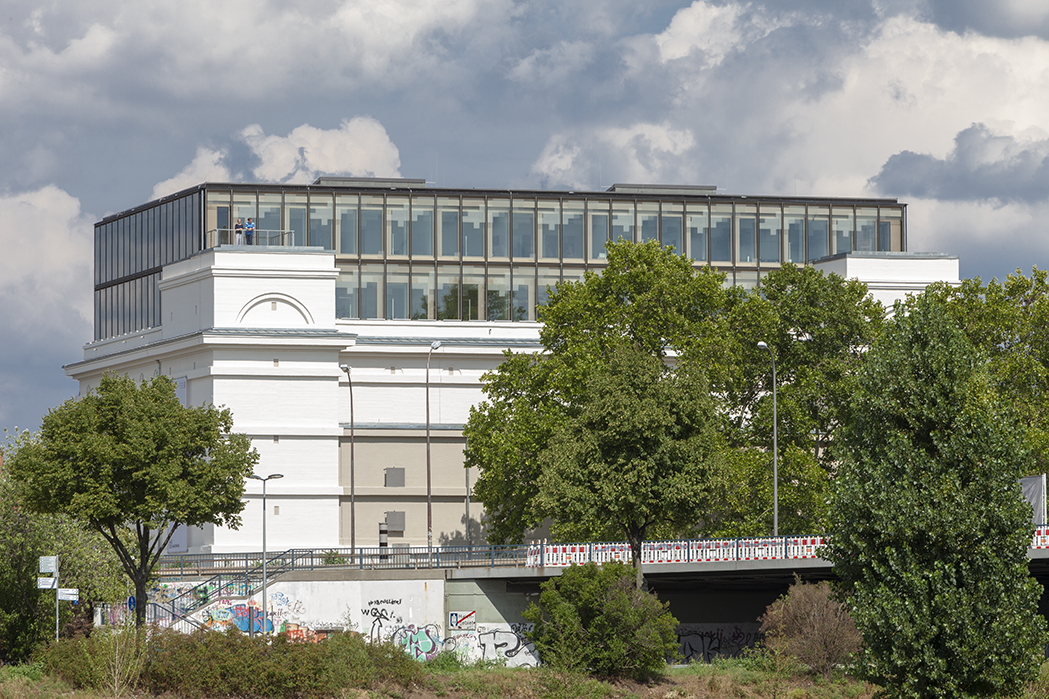
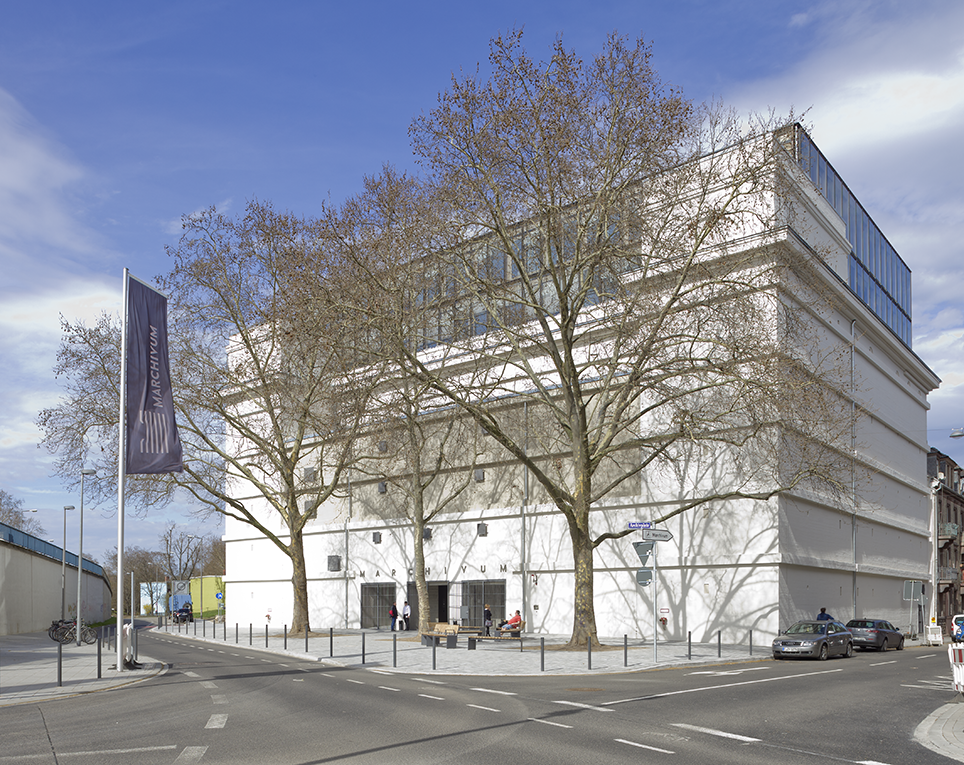
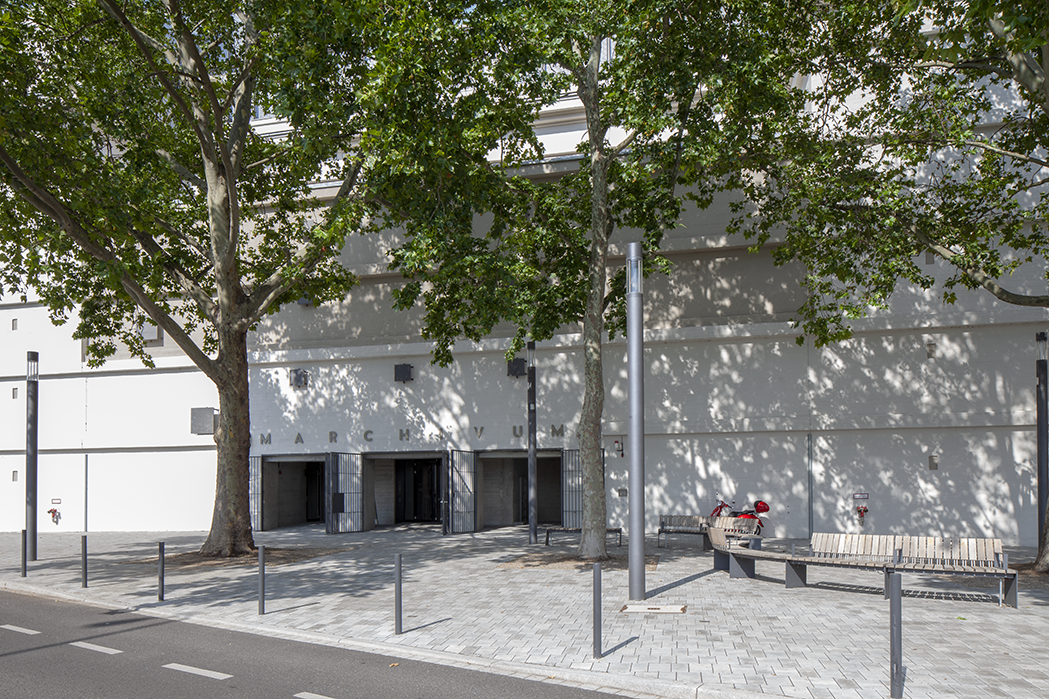
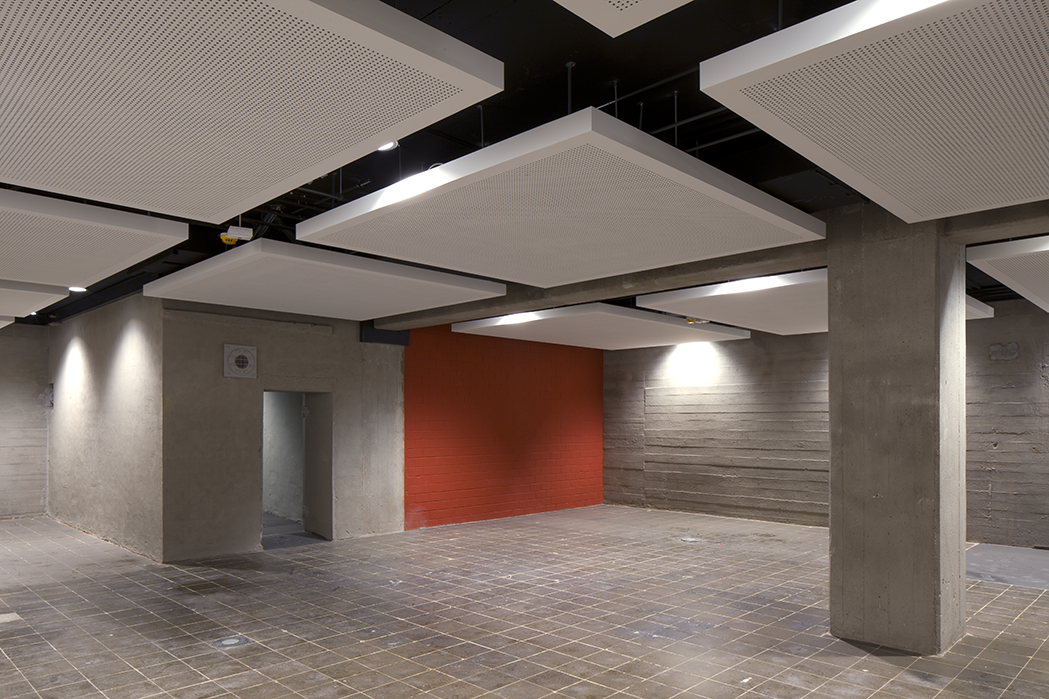
During its conversion, the characteristic interior and exterior appearance were not covered up, instead, they were preserved in the interest of monument protection and the remembrance of the building's history. The first two floors form the exhibition areas for city history and the Nazi Documentation Centre. Above this, there are three floors in which archives from Mannheim's city history are stored. Two new floors were constructed, walled entirely in glass which contain offices and a large hall used for conferences and other events.This glass construction constrasts with the heaviness of the building and opens it up symbolically to the city and its society. The metamorphosis of the bunker into the MARCHIVUM is rounded off by a new public square, which was designed to include existing trees to create a pleasant environment for visitors.
Key objectives for sustainability
The guiding principle of the conversion of the bunker into the MARCHIVUM was characterized by the concept of sustainability. Instead of erecting a new building at a new site with major expenses in materials, the bunker, a historical building that was used insufficiently for many decades, has been restored to life. Changes to the fabric of the historic building were restricted to the essentials, in line with the basic idea of careful and respectful treatment of the structure’s history. Instead of rebuilding the existing interior spaces of the historical building, the required exhibition and storage rooms were adapted to the realities of the space.
Demolition work was essentially limited to the entrance area and the main staircase, which had to be removed in favor of two passenger elevators for barrier-free access for all. The energy concept of the building was also developed in the interest of sustainability. MARCHIVUM obtains more than 60% of its heat from wastewater, using a wastewater sewer running close to the building. The remaining 40% is supplied by district heating. A reduction in energy consumption is ensured by both new levels of the structure, which have a highly isolated triple glazing construction. It should also be emphasized that the existing large-grown trees in the public square have been preserved and make the MARCHIVUM a sustainable place that breathes.
Key objectives for aesthetics and quality
The conversion of the bunker was accompanied by the goal of carefully upgrading the exterior appearance of the aging historical building. On the one hand, the bunker was to retain its special character as a reminder of the dark era in the city’s history, but on the other hand, it should be converted from a sober building to a facility open to the public with a welcoming appearance.The balance was achieved with a new, discreet coat of paint, the addition of two glass levels to the building, as well as the redesign of the public square.
Before the conversion took place, the building was painted with a dark grey paint from 2010, which had caused damage to the concrete with the underlying paint layer from 1980. After removing these coats of paint, the facade was given a new coat of diffusion-open mineral paint on a silicate base, which matches the concrete colour. The idea of restoring the original concrete appearance of the bunker had to be abandoned due to numerous stains.
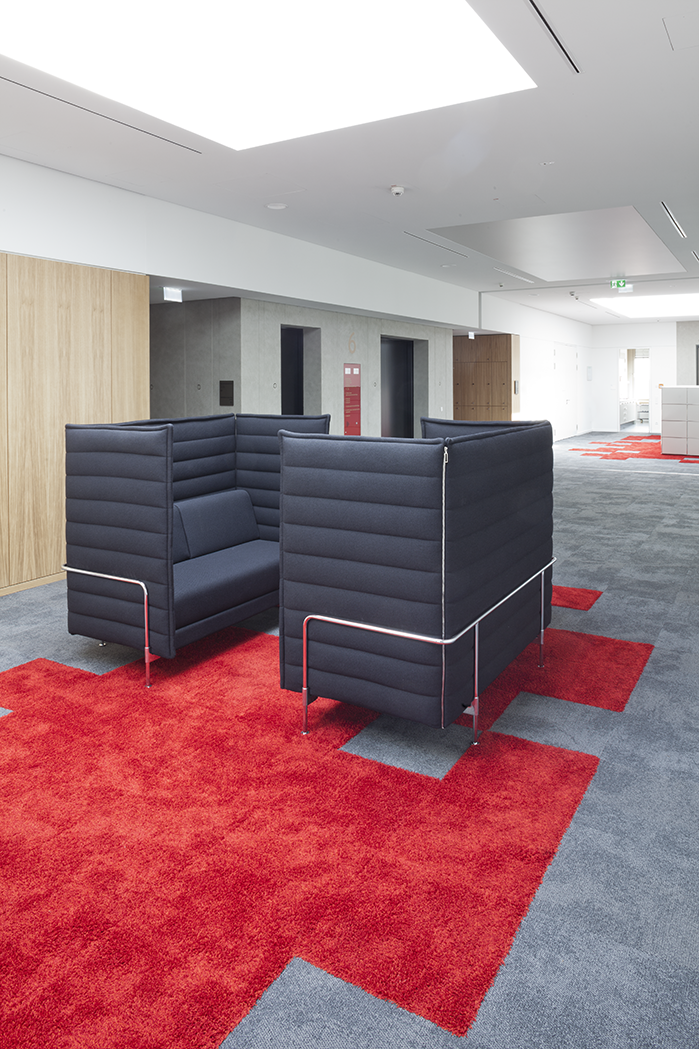
The light-flooded glass upper levels were constructed with the aim of extending the historic building, by taking away the heaviness of the building through transparency and light. Futhermore, in the new rooms, the grey of the concrete is taken up and complemented in a pleasant way with light wood elements and red accents. MARCHIVUM, with its inviting appearance opens itself symbolically to the city and its society.
Key objectives for inclusion
MARCHIVUM is a centre of research, education and cultural life that welcomes people with different backgrounds, levels of education and talents. This is reflected in various ways, for example in group-specific educational offerings, in the integration of simple language and sign-language on the MARCHIVUM homepage, as well as the inclusive offerings of the permanent exhibitions. During the conversion of the bunker, great importance was attached to accessibility. Narrow passages were eliminated, two passenger elevators were installed, and other structural measures were taken to enable accessibility for visitors and staff.
Results in relation to category
Until the bunker was converted for use by the MARCHIVUM, it could not be used due to constructional limitations. Access to the building was only possible via narrow passageways and stairs. The arrangement of the rooms did not allow for use, so that the building was largely ignored and seen as an eyesore in the Neckarstadt West district of Mannheim.
The heritage-listed conversion of the bunker was based on the premise of continuing to use as much of the existing structure as possible and keeping modern interventions to a minimum. In the case of the supplementary building components, the focus was not only on aesthetic quality but also on maximum possible energy efficiency. The MARCHIVUM also attracted a lot of attention from this point of view. The revitalisation of a previously unusable urban space that had been avoided as an anxiety area, resulted in a new and attractive space for the residents of the neighbourhood, from the densely populated streets of Neckarstadt West to an open space and green zone on the banks of the Neckar River.
How Citizens benefit
The bunker is located in Mannheim´s largest district, Neckarstadt West, a vibrant and creative place that currently is facing interrelated education and integration challenges. From an urban planning perspective, the repurposing of the bunker was linked to the goal of providing a positive impulse for the upgrading and revaluation of the district. During the planning process, attention was paid to the involvement of the district's residents at an early stage. This was done through information events, guided tours of the construction site and participatory workshops.
Moreover, the central aspect was the transformation of a space, which was previously avoided, into an easily usable space for public encounters. The ideas developed in several civic dialogues were considered in the planning of the square around the MARCHIVUM.
In addition, efforts were made to cooperate with the nearby Marie Curie secondary school to share knowledge about the historical building, its history and the conversation process of the bunker, through a special teaching unit.
Furthermore, the MARCHIVUM is actively involved in district festivals and other events in Neckarstadt West. It should be emphasised that the construction project has been received very positively by the urban community. Regular free guided tours (temporarily suspended in 2020 due to the Corona situation) are popular amongst residents.
Innovative character
The so-called „Ochsenpferch bunker“ is the largest high bunker in Mannheim and originates from the time of the Second World War. The building was 29,310 cubic metres with a floor area of 6,100 square metres. Above a basement and the first floor there are four floors. The wall thickness is up to 2.00 m and the ceiling thickness is 1.40 m. The bunker served as emergency housing for approximately 7,500 people during the war.
The conversion of the former Ochsenpferch bunker is the most prominent example of the rededication of a historical building in Mannheim to new purposes. The light-flooded glass levels on the top of the building offer additional modern premises for offices and events. An exhibition space for the Nazi Documentation Centre is also included.
The archive serves several purposes simultaneously, as a research and learning site, and a place of rememberence through the the Nazi Documentation Centre. Furthermore, the city history exhibition is seen as an innovative approach in the field. The MARCHIVUM brings together resources and can provide educational experiences for different groups and approaches.
Neckarstadt West, where the bunker is located, is an urban district with the largest stock of listed old buildings. Furthermore it is a multi-layered district and has a high potential of cultural resources with residents from more than 100 nations.
With the MARCHIVUM, the City of Mannheim dedicated itself to a district that is currenty facing integration challenges while simultanesously taking over integrative tasks by offering programming, including classes and lectures, for local residents in the building.
From the perspective of monument and climate protection efforts, the innovative solutions of the MARCHIVUM building are considered exemplary. Not only does the buidling fulfill two complex sets of requirements, it mutually animates them.