Nature not parking
Basic information
Project Title
Full project title
Category
Project Description
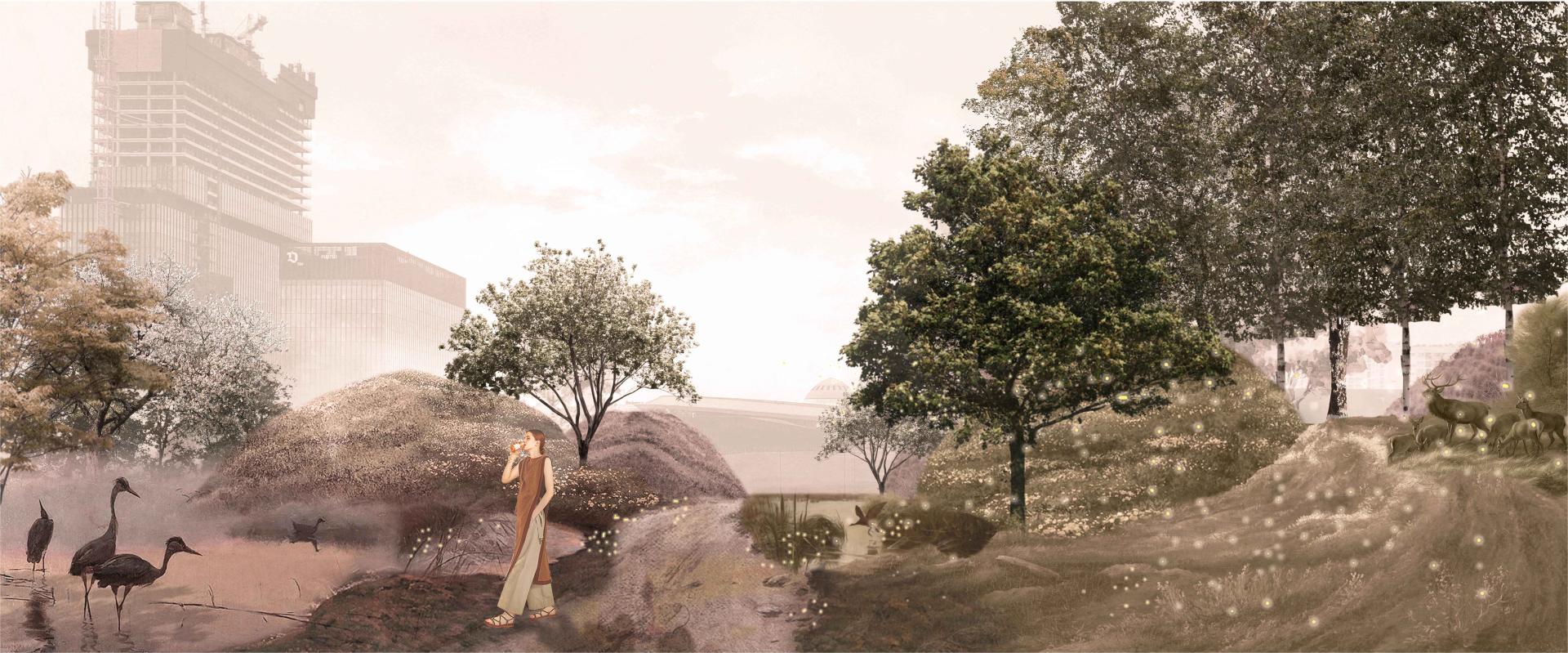
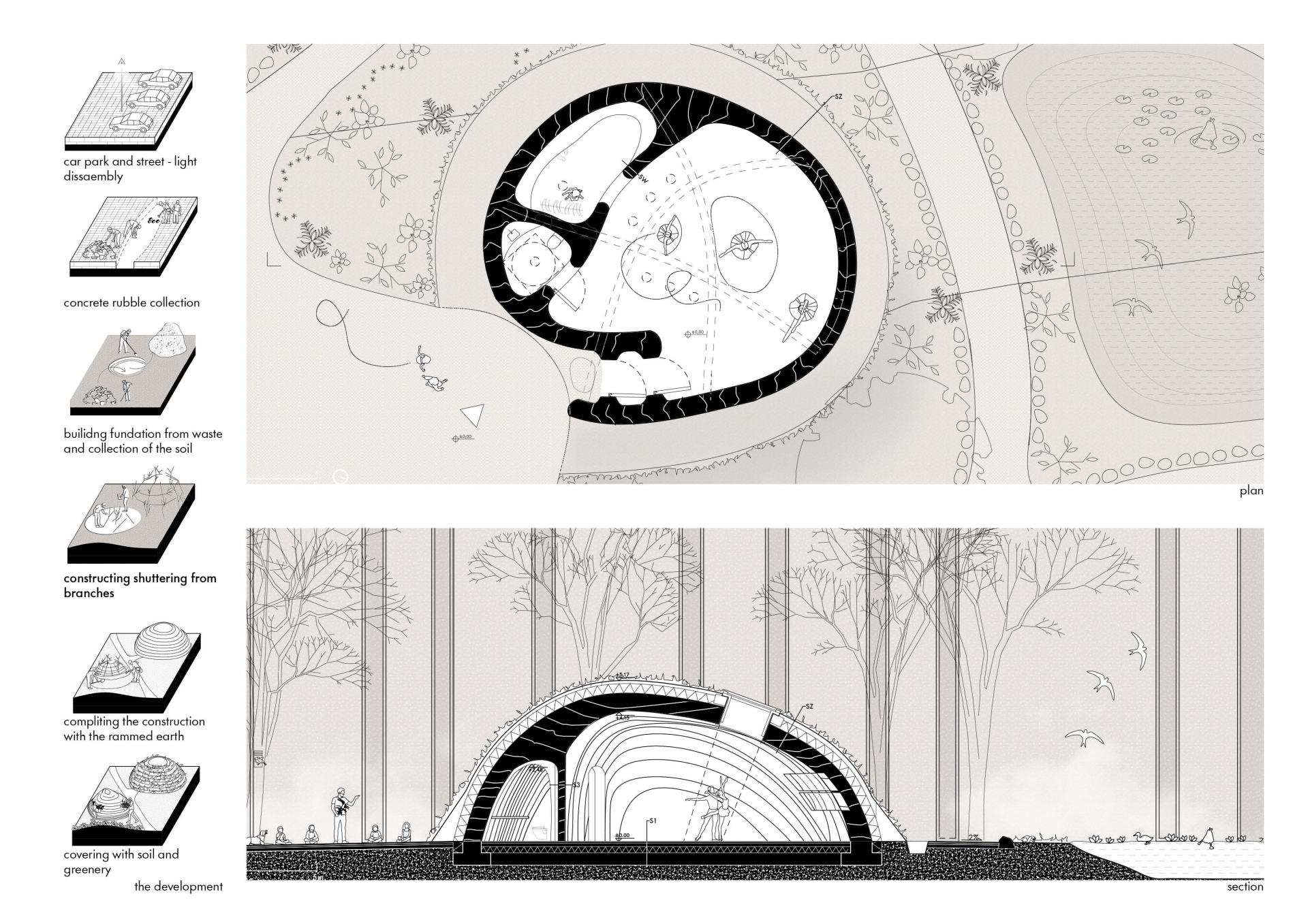
Nature not parking. That is the manifesto. Project is the village formed from the rammed earth. It consists of nine workshop pavilions. The design continues natural topography and transforms the car park ground into biologically active area. It blends into the city skyline. It encourages one to think about the needs of contemporary city.
Project Region
EU Programme or fund
Description of the project
Summary
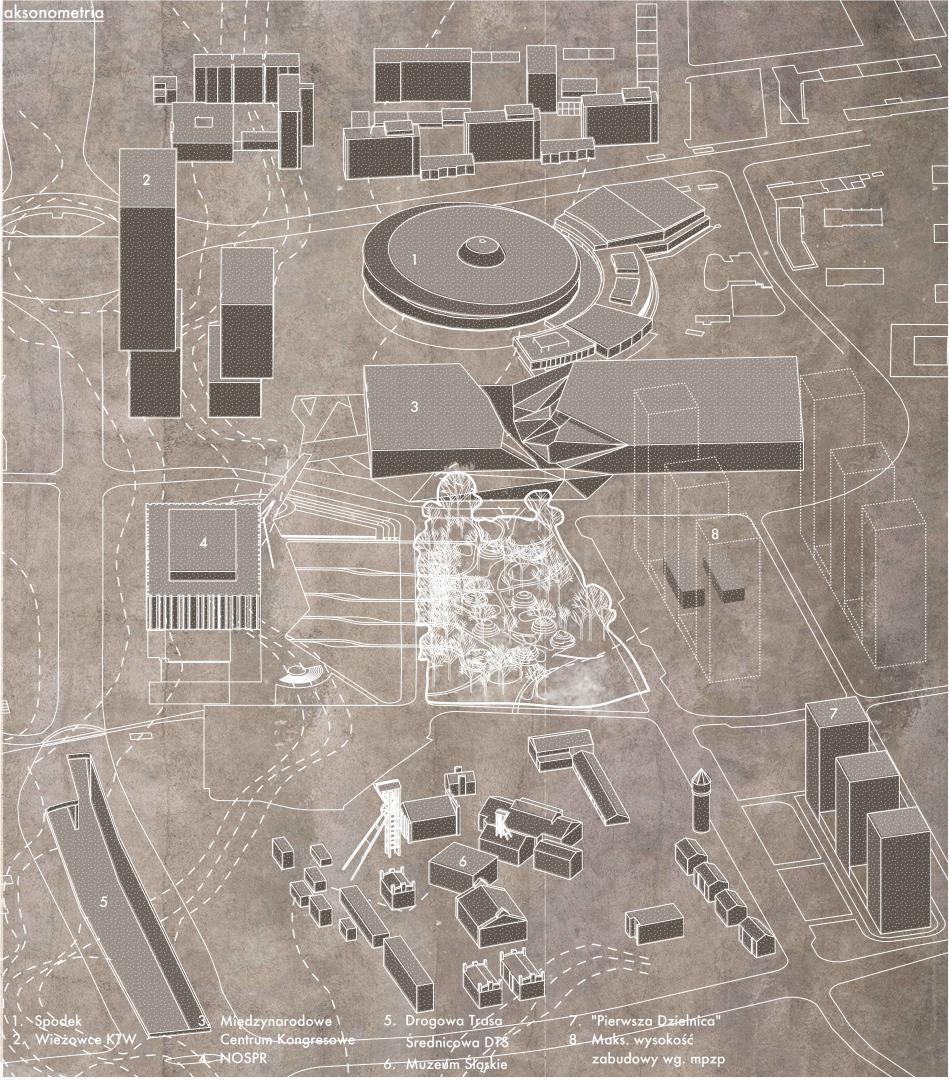
In recent years, the dynamically developing Katowice has been enriched with millions of investments and phenomenal architecture. The largest of them is the constantly expanded Culture Zone. Newly constructed facilities are far from being sustainable, often involving the adaptation of recreational spaces for the benefit of new development buildings. In recent years, I have personally signed a multitude of petitions against tree felling for new housing. I consider myself highly involved person and I have taken part in numerous local initiatives.
The aim of the project is to increase climate awareness by creating a green enclave in the place of the parking lot.
The pavilion layout is empirical. The participant is to experience and realize for himself how his individual and group activities have an impact on the environment. By performing manual and gardening work, it not only reduces the consumption of raw materials, but also develops sensitivity and attachment to the environment. The activity of nature in the parking lot is to create a responsibility in the society for how they live and make them aware of what they really need.
Concerned about the planned investment of a new car park in the very center of the city, I decided to create a manifesto. Nature, instead of a car park, is to be a symbol of what is constantly taken in Katowice. It is the place of the culture of life. The shaped new topography breathes in every inch of its surface. It creates a unique atmosphere and at the same time teaches about the atmosphere. It allows the inhabitants of Katowice to realize what is important to them and what is worth cherishing.
Key objectives for sustainability
Nature not parking aims to draw attention to the problem of the climate crisis. It is a form of opposition to the construction of a new car park in the center of Katowice. It turns the concrete area into a green enclave, supplements the shortage of recreational spaces. It gives the answer to the needs that we do not remember being fascinated with progress. Ultimately, it improves the quality of life by creating a new ecosystem and giving better living conditions to smaller creatures.
The project restores the natural topography of the Cultural Zone and creates a neutral landscape as a counterpoint to the existing complex of technologically advanced architectural structures. The change of an artificial, flat parking lot into a living settlement is to be a manifesto and draw attention to the insufficient amount of greenery in the vicinity of the place of intervention. The designed complex is a re-shaped area thanks to the use of earth as a construction material and covering the pavilions with a layer of earth and greenery.
Building from earth is an alternative to humanity's total dependence on artificial environment and big industry. Although the earth might seem like an innovative building material, it is only a product of a trial process, nowadays diversified thanks to the available and progressing technologies.
Buildings made of earth, built in industrialized countries, use the closed cycle of energy, the natural heat of the earth and solar energy. In addition, they strive for maximum savings in the used building material and energy consumption during operation. The special energetic and plastic properties of the earth create a different living environment than concrete or light industrial slabs. Earth walls live, breathe, and regulate the level of moisture in a natural way - they absorb it and evaporate it.
Key objectives for aesthetics and quality
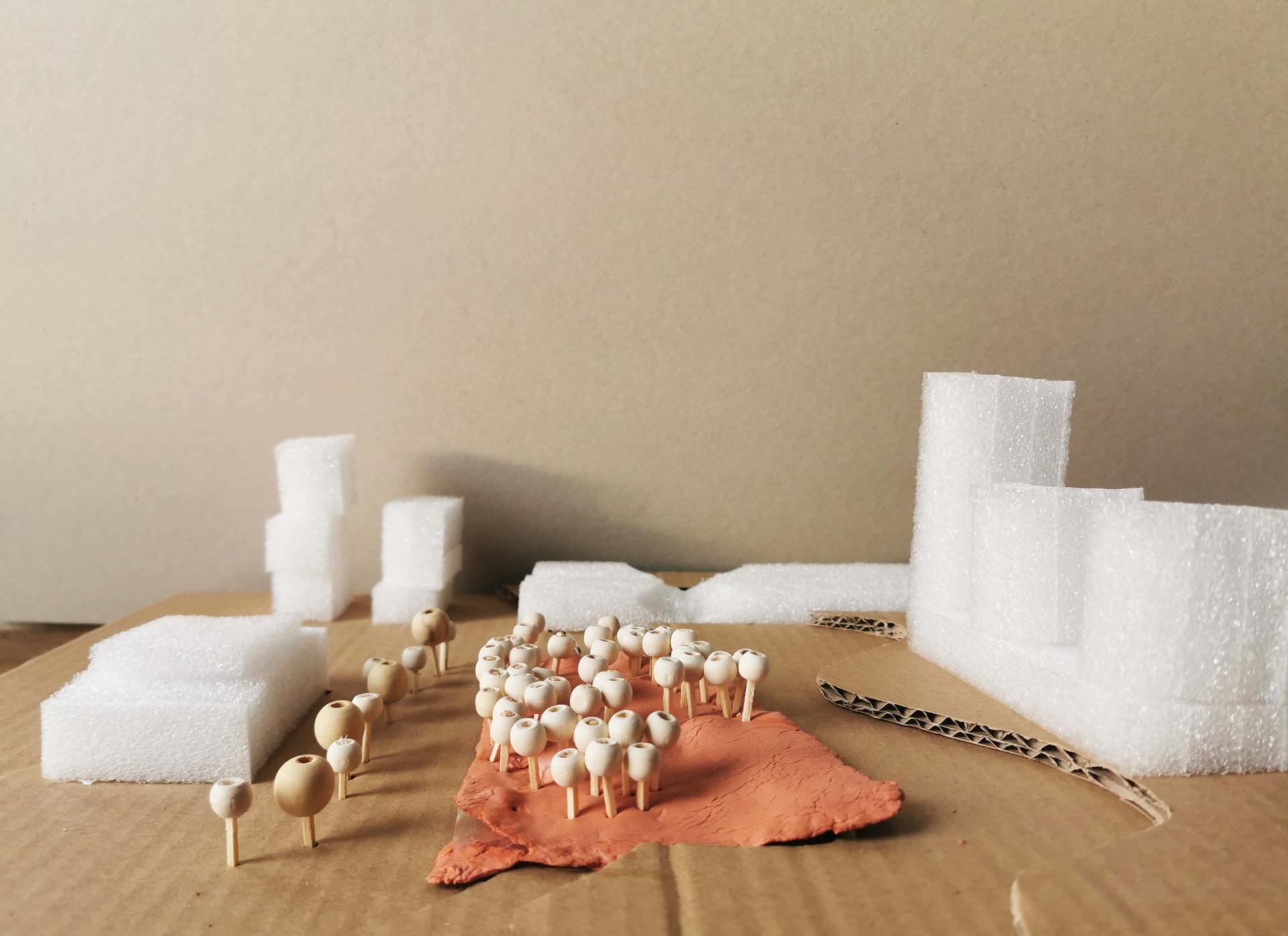
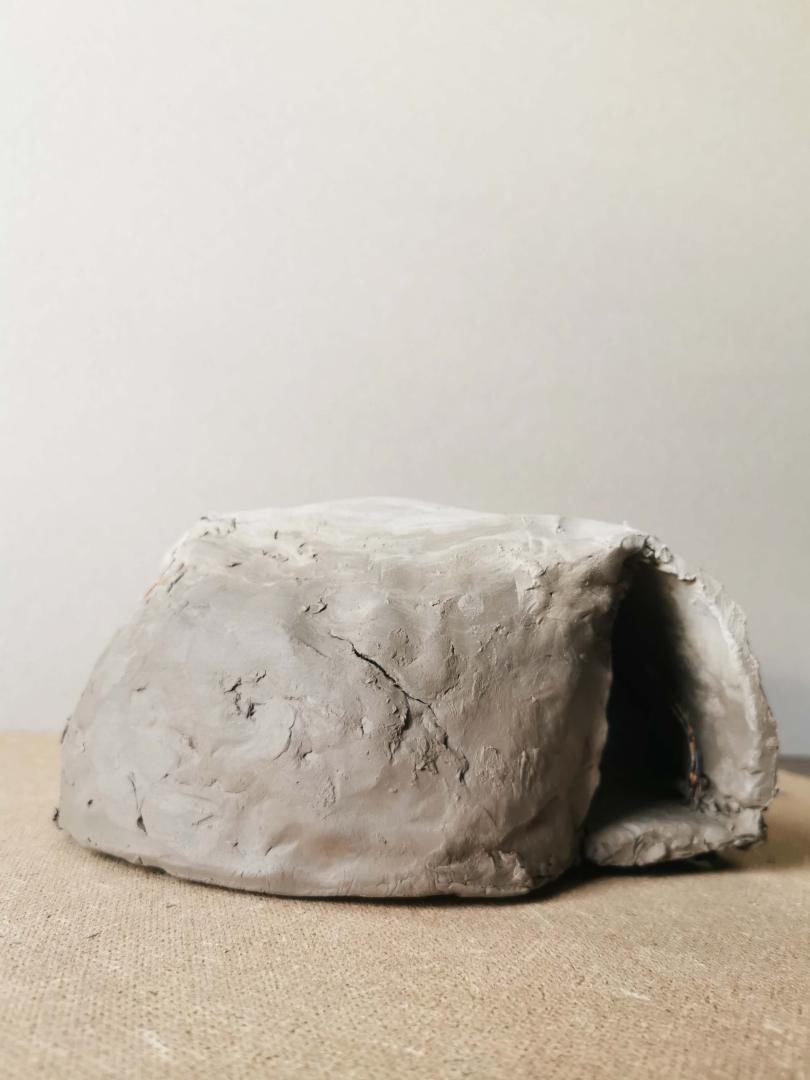
The Nature not parking is the result of methodical work on the model. The mock-ups made of salt mass, clay, dough and paper, which were successively created and subjected to physical phenomena, allowed to create a natural composition of the land development.
The project is a park with nine pavilions built from soil, workshop yards, troughs collecting rainwater, a vegetable and flower garden. The area is characterized by southern exposure, which is an advantage when it comes to growing in this place. Walking alleys connecting the whole complex are covered with a gravel and clay surface, thanks to which this area is alive and biologically active.
Key objectives for inclusion
In the construction process, it is planned to use the land selected for the foundation of the building, which will further strengthen the symbiotic relationship of the pavilion with the surroundings.
On the other hand, high structural, plastic and thermal properties create a sense of security. The techniques of building from the ground support the locality of production and ensure the cultural independence of the region in which such buildings are built.
In the Culture Zone, the main advantage of using this material is the creation, in line with the title of the work, of a new, fully neutral landscape, where architecture blends into it and does not introduce another loudly technologically advanced mass.
Innovative character
Nature in the parking lot is supposed to be almost zero technology. Not only does a concrete slab disappear from the parking lot, which will be used as aggregate in the foundation of buildings, but also lanterns, allowing to reduce light pollution. The team distinguishes four zones that correspond to basic human needs: influence, care, well-being and action. The zone of influence are workshop pavilions with external workshop squares for craftsmen, the care includes the city garden with a warehouse pavilion, social kitchen and oases for animals. In the well-being zone, visitors will have the opportunity to calm down from city noise and take up outdoor activities. The last zone - activities - will focus the activities of municipal activists. The newly shaped area is to be a living settlement where the user rests and takes actions related to the local improvement of the climate. The pavilions designed from the ground combine with the natural tectonics of the Cultural Zone, giving the effect of almost full permeability of this area.