Custom Territory
Basic information
Project Title
Full project title
Category
Project Description
CUSTOM TERRITORY (CT) is a collective of shoe makers, designers and wearers that aims to decentralize the global shoe industry into local territories, where boundaries between designing, making and wearing can blur. In collaboration with local actors CT transforms locally available resources into custom-made shoes that express a contextual design language. Our goal is to develop a network of territories where each territory generates its own custom creations that are designed and made for repair
Project Region
EU Programme or fund
Which funds
Other Funds
Vlaanderen Circulair / Circular Flanders funded 2019 - 2021
Description of the project
Summary
CUSTOM TERRITORY (CT) is a collective of shoe makers, designers and wearers that aims to decentralize the global shoe industry into local territories, where boundaries between designing, making and wearing can blur. In collaboration with local actors CT transforms locally available resources into custom-made shoes that express a contextual design language. Our goal is to develop a network of territories where each territory generates its own custom creations that are designed and made for repair.
CUSTOM TERRITORY FILM. Custom Territory created a scenario that follows a Retake-Remake-Reuse pattern for shoe production. The scenario was translated into a short film that expresses the Custom Territory methodology and design language.
CUSTOM TERRITORY ANTWERP (CTA) is our first case study that applies Retake-Remake-Reuse design pattern to shoe production in the city of Antwerp. Through this local focus Custom Territory develop a proof of concept of a circular, local and inclusive production system for the fashion industry.
Key objectives for sustainability
An estimated 24 million shoes are produced around the world annually generating over 250 billion dollars in revenue. The majority of those shoes and especially sneakers are not designed and built to last. This mass production market follows a take-make-dispose pattern that turns resources into waste with an increasingly faster pace. Within this fast paced economy there is no room for interaction between designers, makers and wearers, resulting in generic products that are unable to connect with the local context and identity. When a new hype comes along it easily replaces the previous one, leaving behind a large amount of unwanted shoes. This lineair process is very lucrative but leaves an enormous footprint on the environment. The limits of this linear system have long been reached but business as usual still prevails.
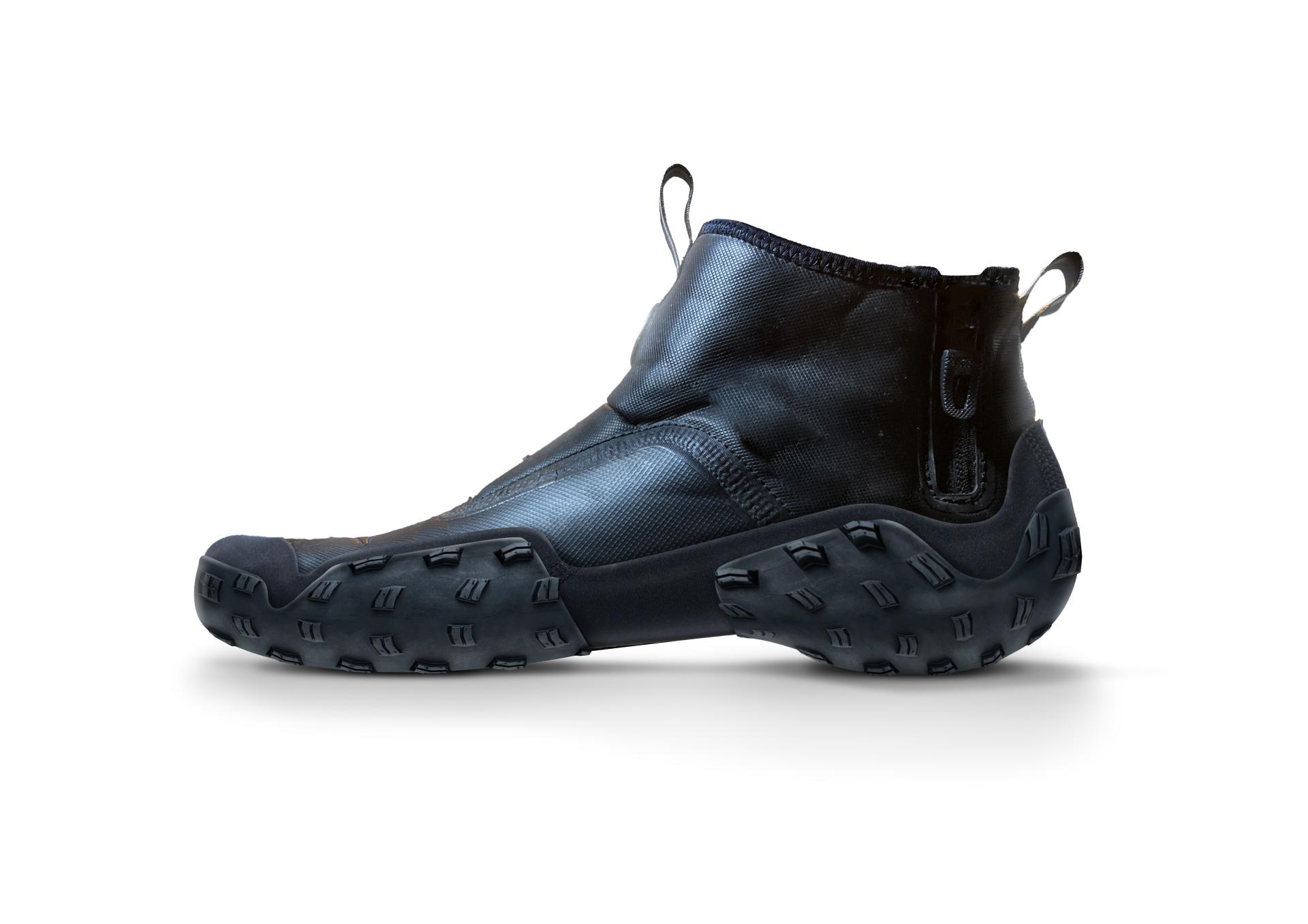
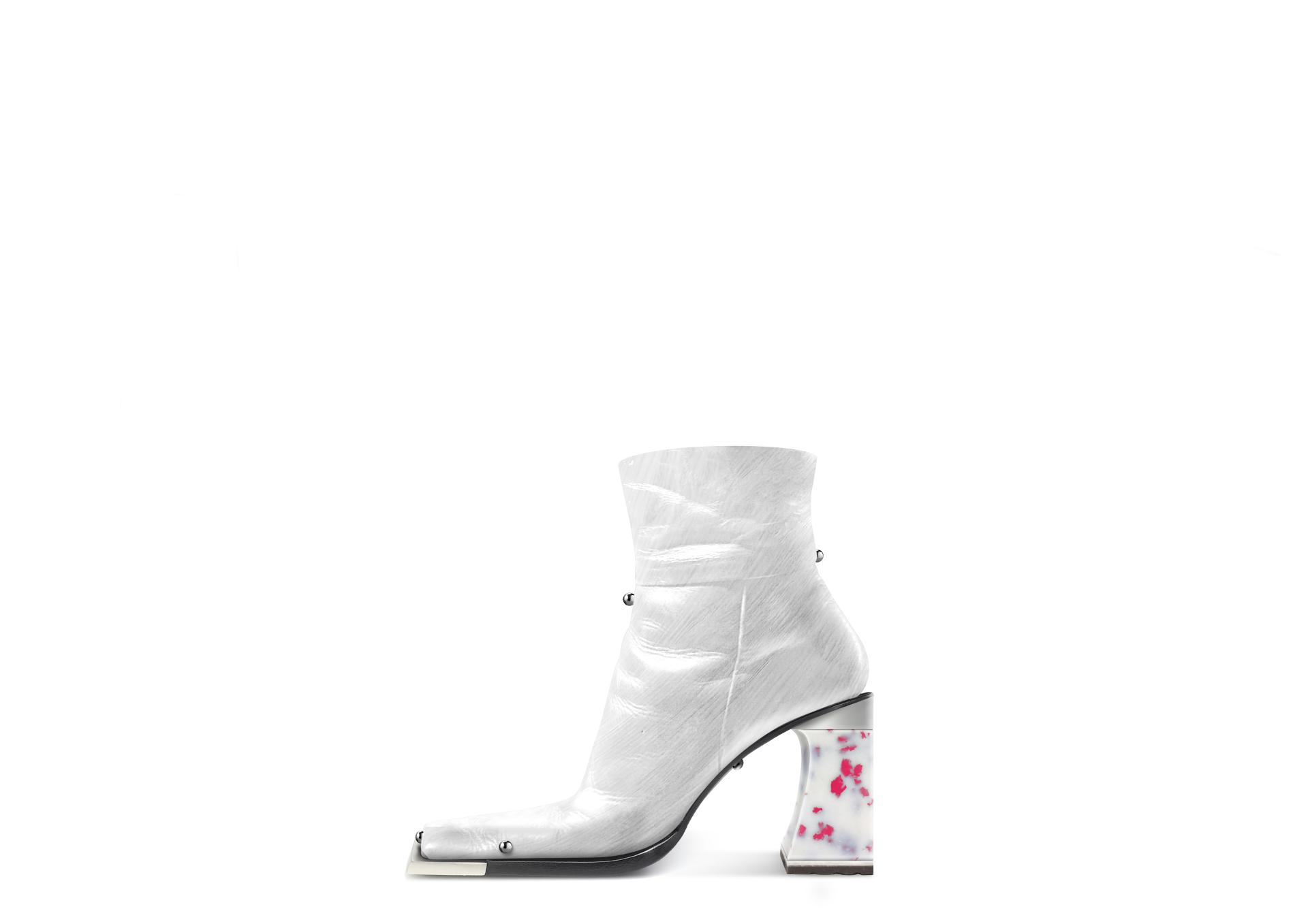
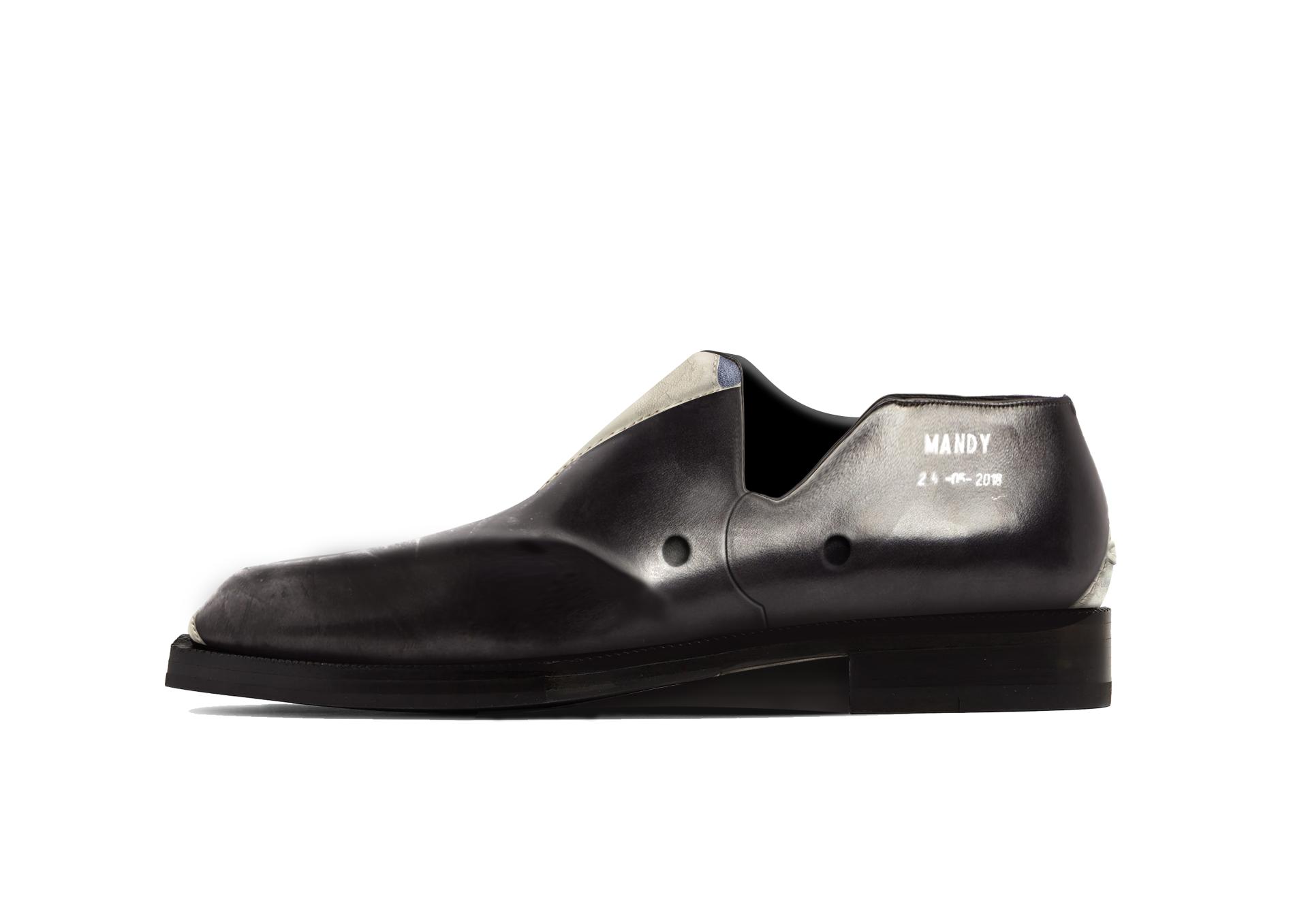
To reach this goal CT developed a Retake-Remake-Reuse system for reproducing worn-out shoes using local available resources. Our circular design process starts with recollecting locally available resources. Worn shoes of local wearers are deconstructed and reconstructed using leather, rubber and plastic off-cuts sourced within the local territory. The reconstruction process was developed in collaboration with classic shoe manufacturer Ambiorix. The classical production method applied to mass produced shoes generates a durable shoe with a hybrid aesthetic that is made for repair.
Key objectives for aesthetics and quality
Although it is clear that the linear model of manufacturing shoes doesn’t offer a sustainable perspective for the future, the system is rooted in our throw-away culture. Transforming that culture requires desirable future images that propose new ways of designing, making and wearing shoes.
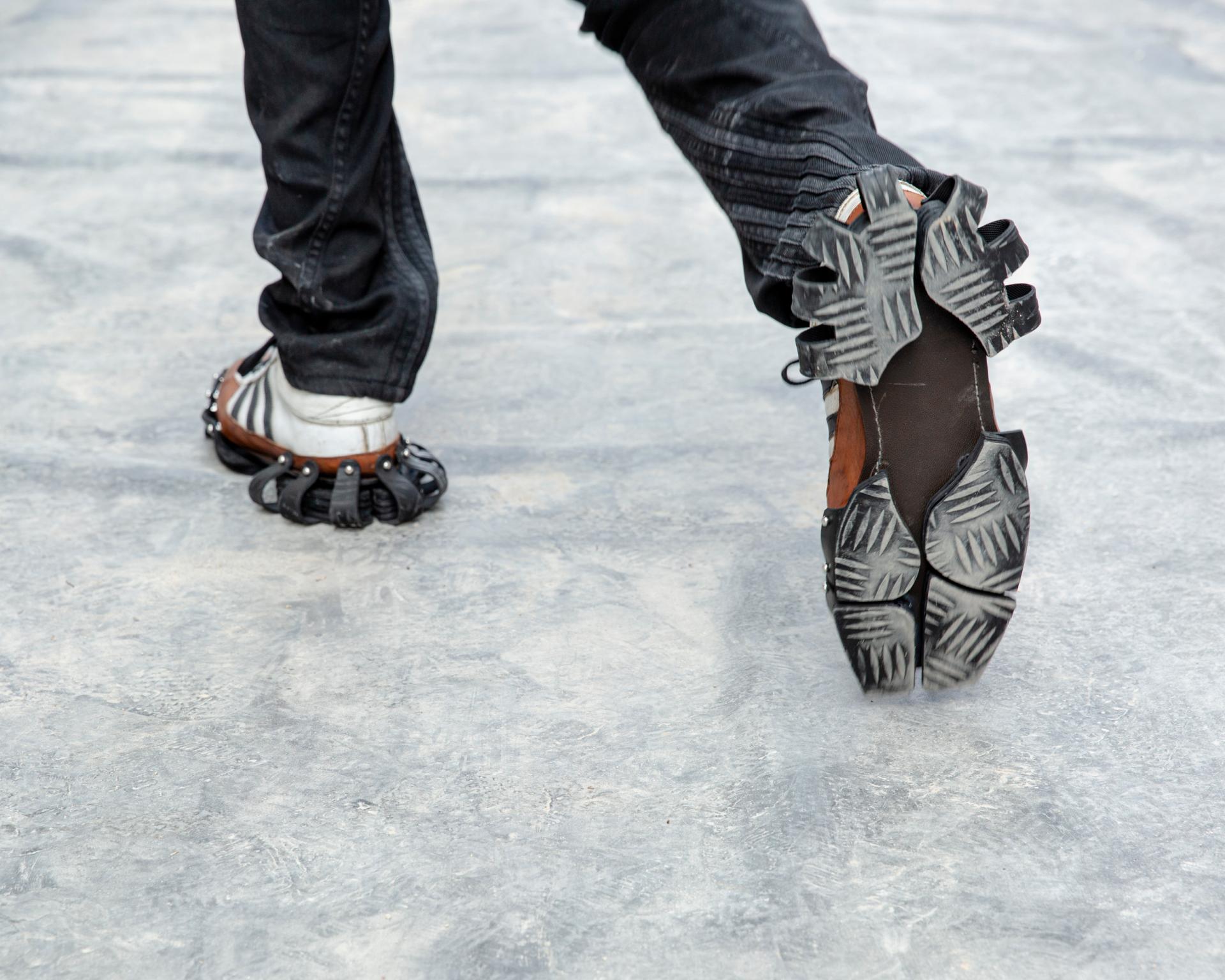
As a first step into a cultural transformation process Custom Territory created a Retake-Remake-Reuse scenario for Shoe production. Retake: sourcing locally available post-consumer and post-industrial materials. Remake: transforming those local resources into shoes. Reuse: wearing shoes that express a post-industrial design aesthetic.
To share this post-industrial design aesthetic, Custom Territory created a short film of an activist shoemaker who follows a circular Retake-Remake-Reuse pattern. The film projects a split screen image that continually loops the Retake-Remake-Reuse actions.
Everything in the CT film (scenography, props, shoes) was produced following the Retake-Remake-Reuse principles.
Key objectives for inclusion
The global scale of the footwear industry literally puts a lot of distance between shoe designers, makers and wearers. Designers have to design for a global market which means their designs have to appeal to a large number of wearers across the globe. Resulting in generic designs that are unable to connect with the local context. The wearer in this system is reduced to a passive consumer who is completely disconnected from the design and making process of the shoe. Which means he or she does not have a genuine connection with the style and identity of the shoes he or she wears. When a new hype comes along the wearer is easily seduced to buy into a new but very temporally aesthetic.
By focusing on a local Scale Custom Territory is able to include the wearer into the design and making process of the shoe. The wearer is invited to literally step into the design and making process of the shoe. Transforming the wearer into a co-designer and maker. Resulting in a final product that generates a true sense of ownership with the wearer.
In our CTA case study we invited three local ambassadors: Joffrey Anane, Liezl Vervloet and Frederik Lizen to participate in our design and making process. This resulted in three unique product stories with a personal connection that represent the city of Antwerp in their own way.
Innovative character
Custom Territory Antwerp is a proof of concept which highlights that local materials, expertise and infrastructures can be reconnected to create a local and circular value chain for the footwear and fashion industry. The challenge is to facilitate a transformation from a global, lineair and generic system towards a local, circular and inclusive industry. That transformation process starts with generating alternative scenarios that represent a desirable future for designers, makers and wearers in the footwear industry. The future challenges for Custom Territory are economical and ecological valorization of the Retake-Remake-Reuse model.

Map of local actors involved in the Custom Territory Value Chain.