New Urban Center in Lliçà d'Amunt
Basic information
Project Title
Full project title
Category
Project Description
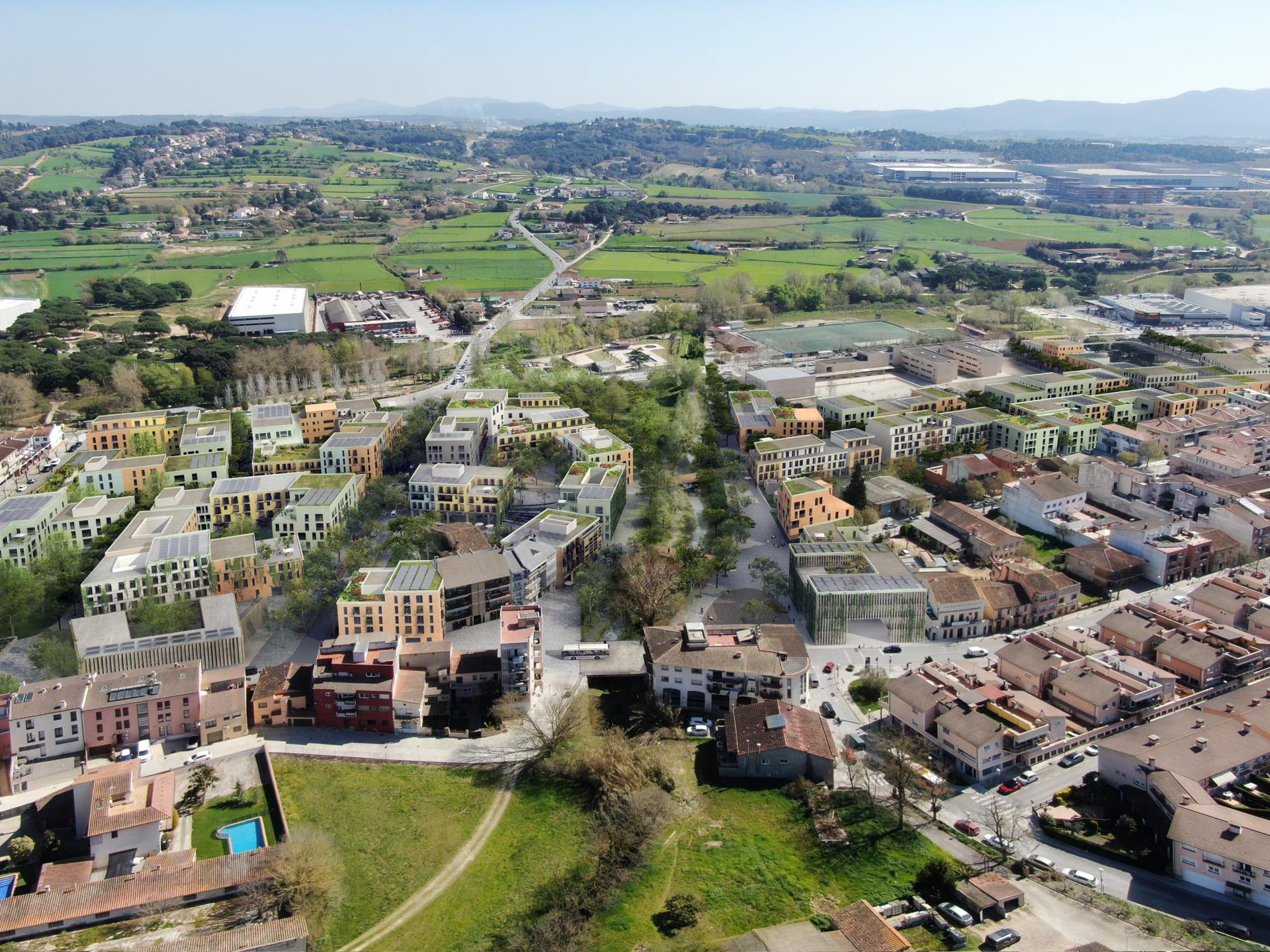
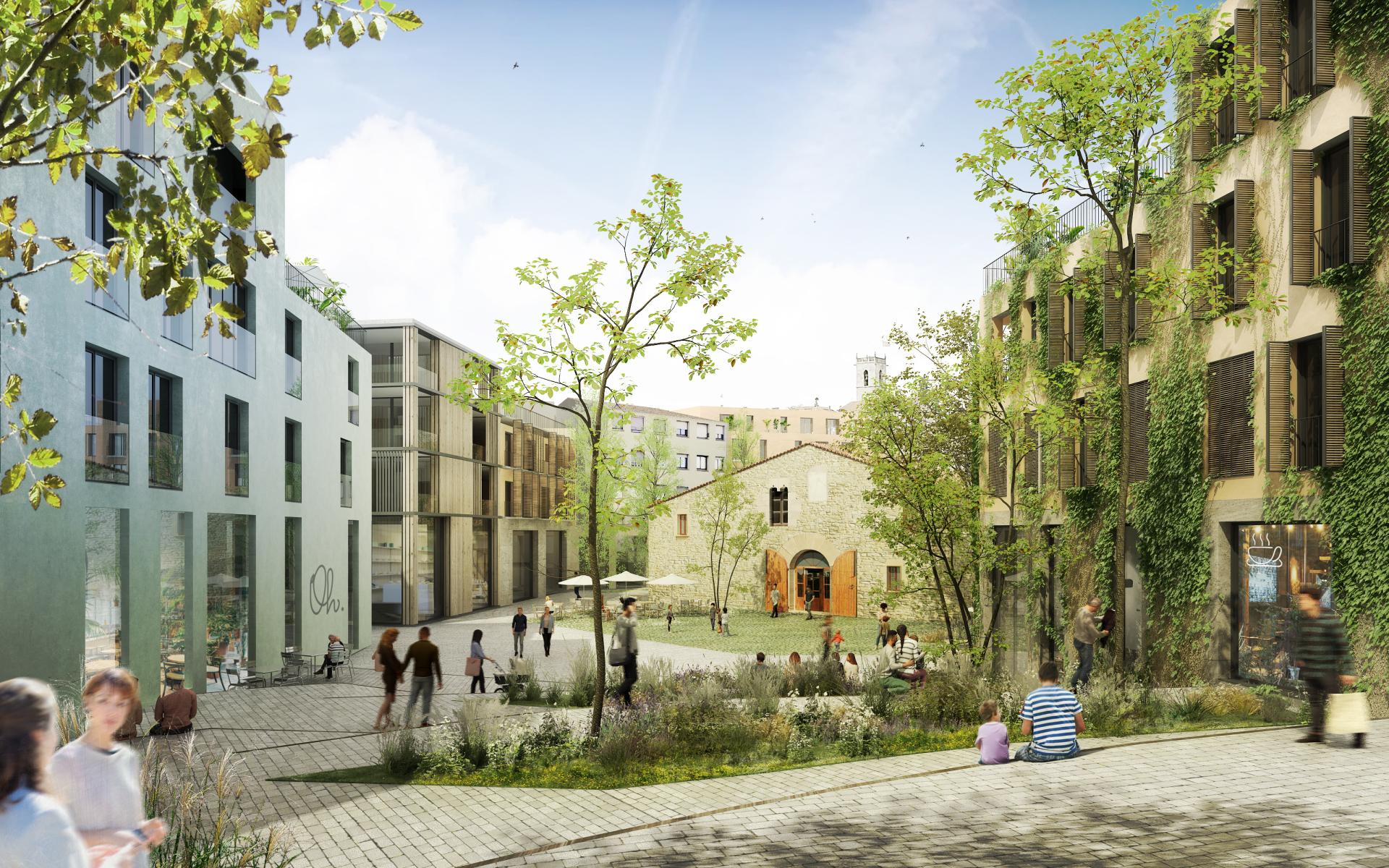
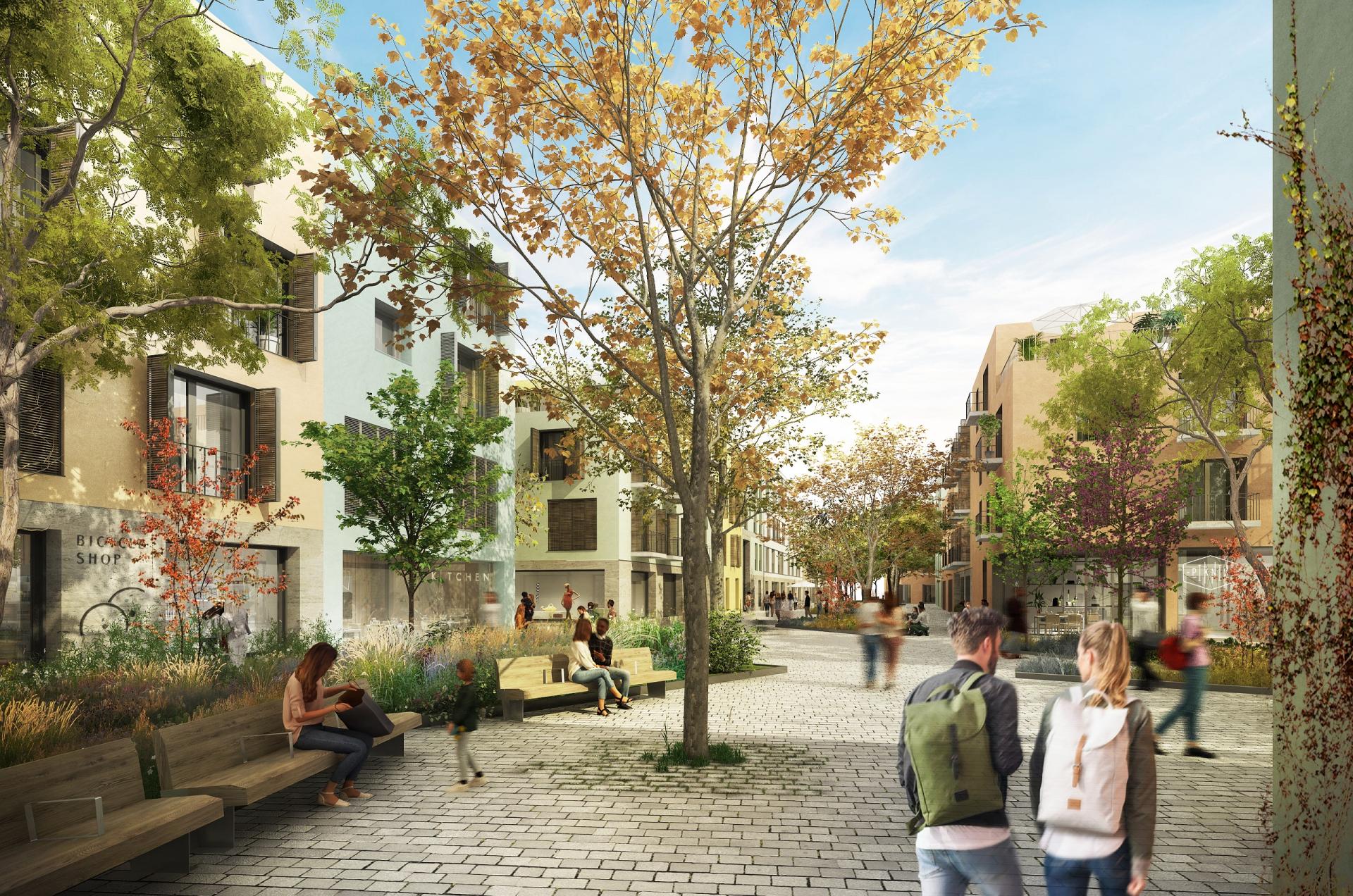
What should an urban center look like under the 2030 Agenda and Urban Agenda? This plan, drafted jointly by citizens, governments and universities, will transform an area pending completion in a small commuter town about 30 minutes from Barcelona into a lively urban center with 750 housing units, retail spaces and activities for residents. Prioritising compact use and local living, cycling and walking, with inclusive public space, ecosystem services and focusing in peolple and sustainability.
Project Region
EU Programme or fund
Description of the project
Summary
The citizen participation process carried out in 2018, with more than 250 people taking part, was decisive in determining the proposal for the Master plan, under the directions of 2030 Agenda.
This has allowed us to create a project collectively that responds to the needs citizens expressed themselves, and also brought users into this space, bringing it to life. The results obtained were based on an extensive consultation to the citizens, local social entities and local government, together with the assessment of technical historical and social experts.
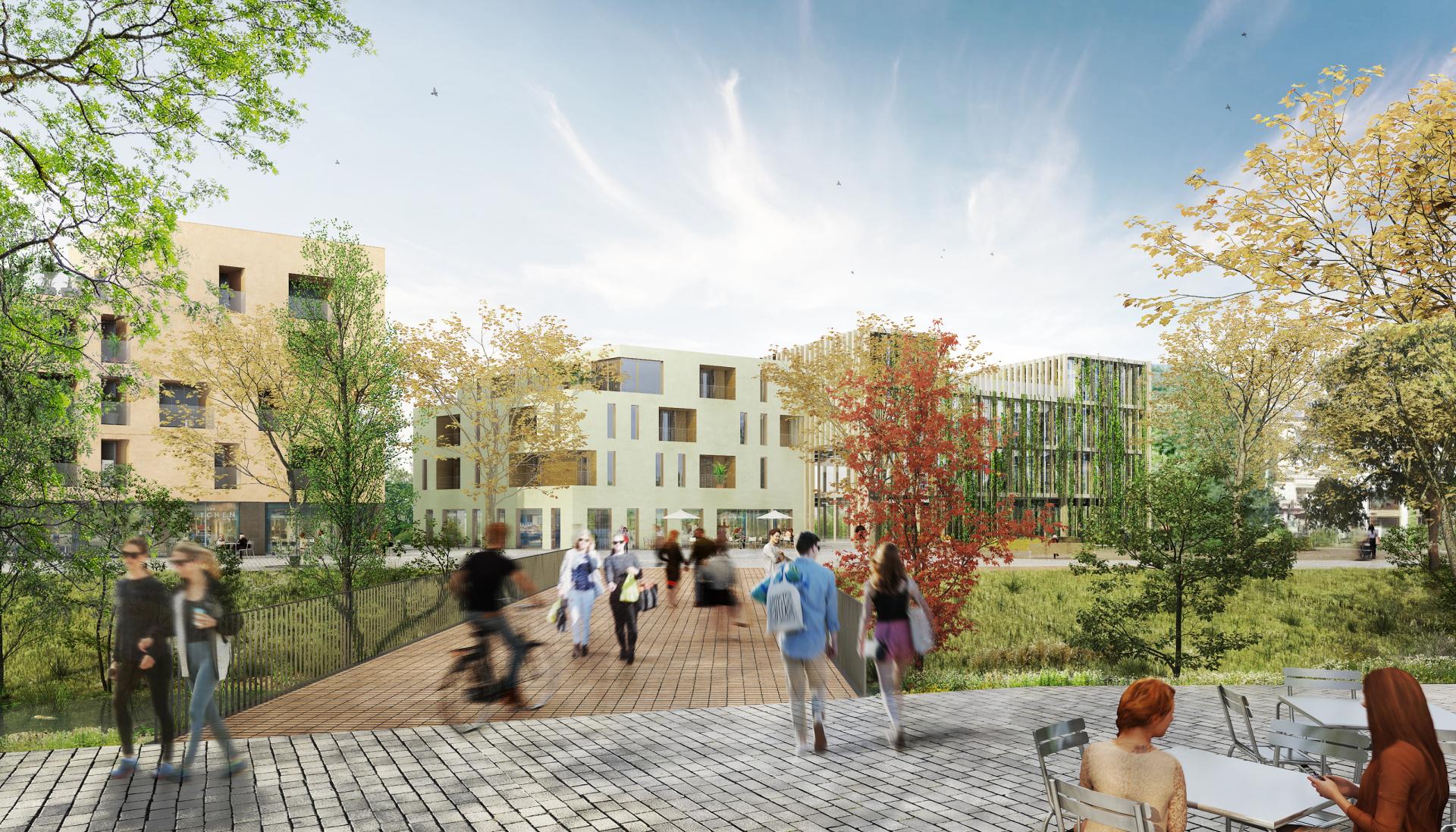
The plan resulting from this consultation set a framework to transform a small town about 30 minutes from Barcelona into a lively urban centre with 750 housing units, retail spaces and activities for residents which could fully meet their needs keeping always a social mind and boosting compact mixed uses and local living, encouraging cycling and walking, as well as caring for the nature and environment.
This project also wants to create an inclusive public space tied to the town’s past, ecosystem services and self-produced energy. In short, an updated city that focuses on people and sustainability.
The citizen participation process was conducted from July to November 2018. In early 2019 the Master plan of the area was approved and included most of the proposals that the study brought to light.
Key objectives for sustainability
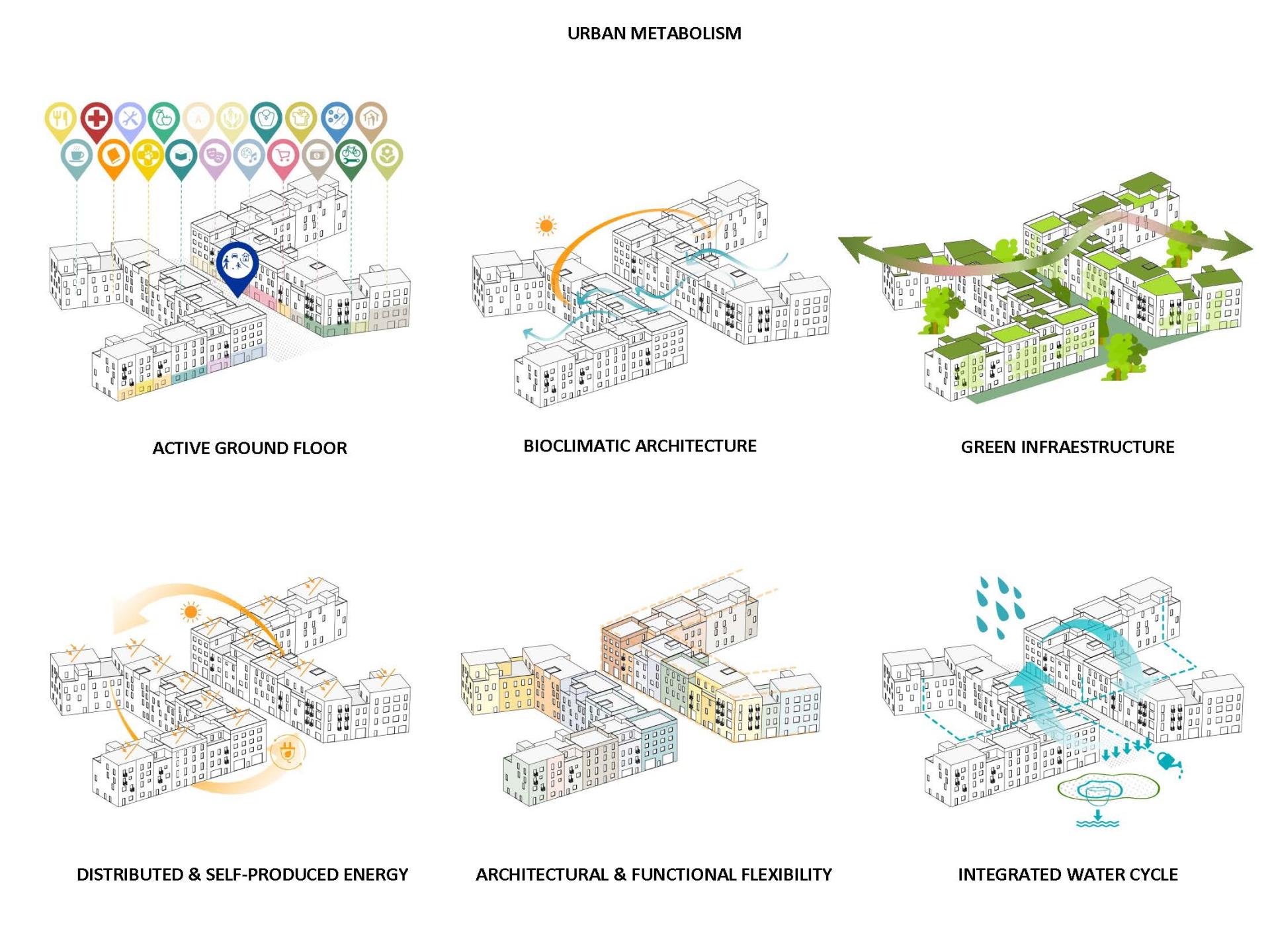
The project proposes an ecosystem-based approach to the water cycle. The streets and public spaces have been designed with SuDS and infiltration basins to refill the water table, as well as collecting and make use of rainwater to water green spaces.
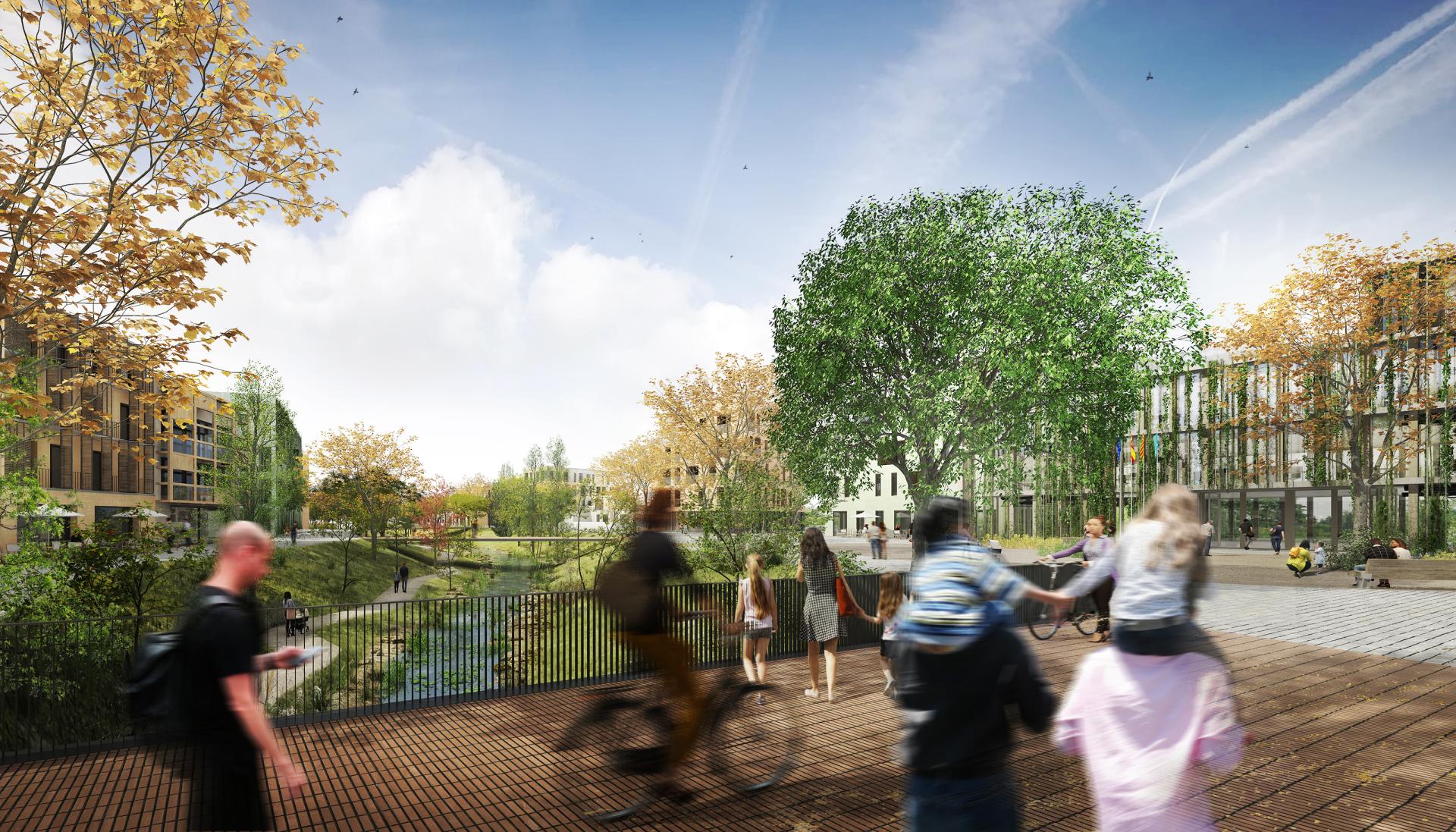
Open spaces are a green infrastructure to preserve biodiversity and integrate the fluctuations of the water cycle. The park around the stream, vegetation on façades and in public spaces help regulate thermal conditions and reduce the urban heat island effect.
The new centre will be zero energy balance, thanks to renewable energy produced on site and in a shared distribution network.
As per the environmental regulations in the approved plan, the new housing must ensure rational, limited use of resources, and implement passive strategies for natural lighting and ventilation. Flexible volumetric regulations are therefore provided so the architecture can find the most suitable approach for the environmental conditions.
Key objectives for aesthetics and quality
Key objectives were to create a lively city that allows citizens to fully live and enjoy their home town without changing its identity. The consultations served to know their concerns, issues and needs to fully design a town centre that meets their requests and thus, reduces the need to travel away from the city to do errands, social relations, education and leisure.
The project also wanted to boost the city uses of green areas and natural spaces. Walking and biking was promoted as well as environmental friendly uses of the countryside of the town.
The project manifested the need and will to respect two traditional farm houses in the town and transform them into social spaces to meet and which also could cater social and educational spaces. It also boosted the church as a reference icon with represents the historical past of this city. The streets and walkabouts of this area were also considered an especially important trait of the city, making them fully accessible to diverse collectives and to all the citizens and uses.
Key objectives for inclusion
The new centre is accessible, on foot or cycle, and due to its central location acts as an intermodal transfer point for an efficient public transport network in a town where 80% of the population currently lives in far-flung subdivisions.
This project will also create 269 social housing units, set aside for groups that are excluded and broadening the types currently available in the town. In order to ensure that these are good quality, well-equipped homes, the orientation, size and flexibility of use have been studied, incorporating a table of social and gender-based requirements.
Most of the contributions of the citizens were applied to the final project. The design was made in the so called “feminist architecture” which integrates the requests of the different collectives and their special needs in terms of accessibility and social spaces to meet and learn.
So, the retail areas were promoted, new association centres were founded on the two old traditional farm houses that were recuperated allowing the people with mobility issues to stay and move freely in the town.
Results in relation to category
The result was a fully renovated city centre, in which citizen participation was integrated and present in every aspect of the daily life. Improved services in the town resulted into a reduction of the need to travel outside the town, so the ecological carbon imprint was reduced. Also the historical heritage and nature was seamlessly integrated, creating a beautiful coherent lively town.
How Citizens benefit
The project was based on citizen participation. Citizens and social entities were consulted to reach a full understanding of their needs and concerns. Up to 250 people from different backgrounds and profiles participated on the assessment in a 3 months process from July to November 2018. From the results of this study we could determine the aspects that were main concerns and needs of the inhabitants of the town and procure a solution that would meet their requests as long as the requirements of a modern city centre, according to the directives set on Agenda 2030 and the Catalan Urban Agenda.
Innovative character
It is innovative to bring in the opinions of the users, so that their needs are met, not only from a technical point of view, but also from a daily life usage. This implied taking a complex assessment and turning it into real actions and solutions that could be incorporated on the Master Plan.
The project is being carried out under the framework of the New Urban Agenda for Cities, a document that calls for a commitment to sustainable urban development and to ensuring the right to the city for all people, reactivating integrated planning. Also taking into account the feminist urbanism line of thinking, which advocates for basing decision-making on the daily lives of all individuals in order to address urban complexity.