Luxembourg Learning Centre
Basic information
Project Title
Full project title
Category
Project Description
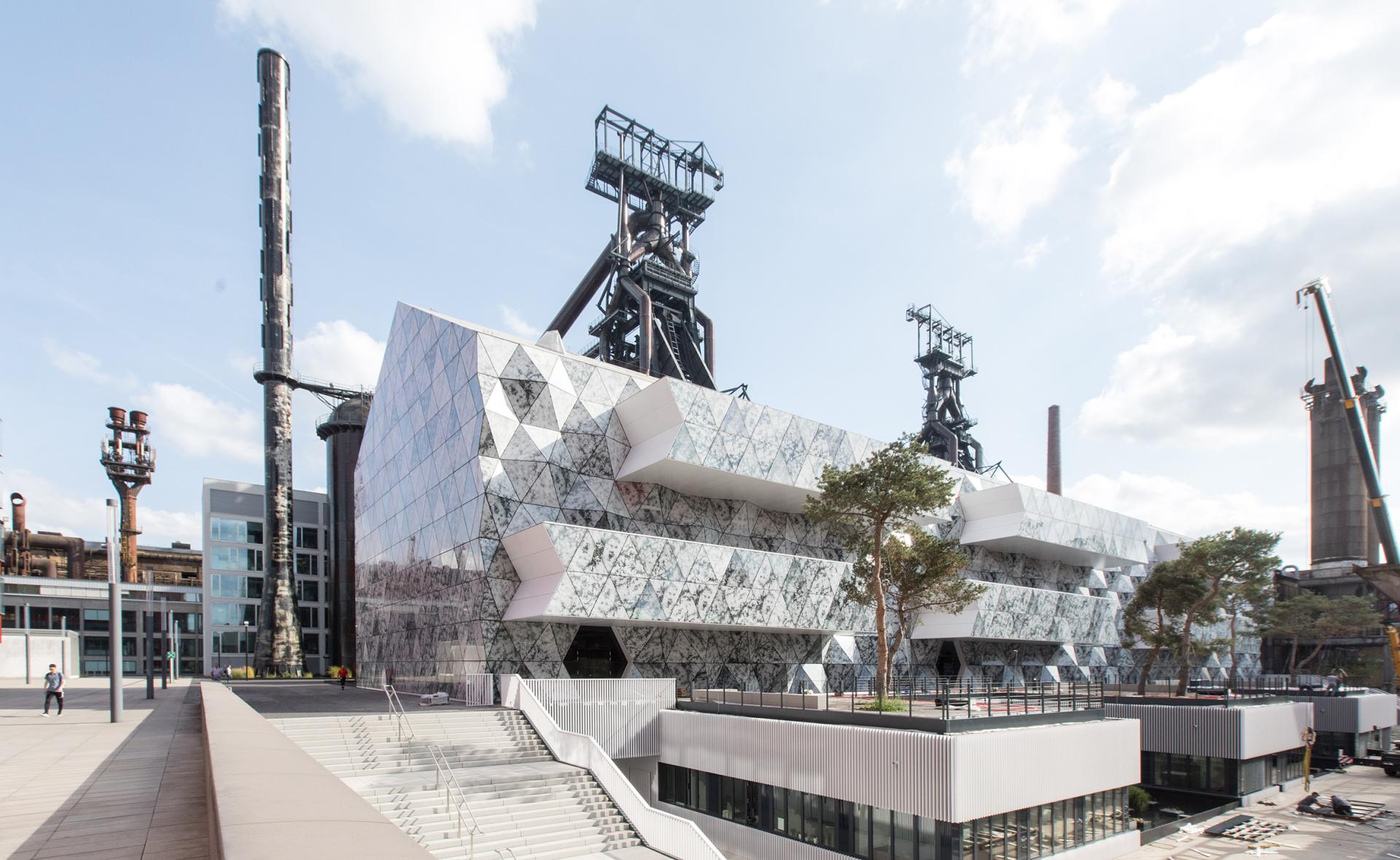
The Luxembourg Learning Centre (LLC) is an example of industrial heritage put into value in the spirit of cultural sustainability and broader urban transformation. Using futuristic design, it was converted into a new inclusive, human-centred venue with social, educational and cultural purpose and is place of exchange of all citizens. Its design – futuristic façade with speckled glass elements - has an emblematic aesthetics, but its function aims for environmental sustainability.
Project Region
EU Programme or fund
Description of the project
Summary
The Luxembourg Learning Centre (LLC) was built in an old industrial hall ("Möllerei") for iron and steel production in Belval (Esch-sur-Alzette). Located in the vicinity of blast furnaces, the hall was once used to store raw materials, coke and iron ore, and to prepare the load for blast furnaces. After the metal production was closed down in 1997, the idea of transforming the industrial wasteland into a university centre started to grow.
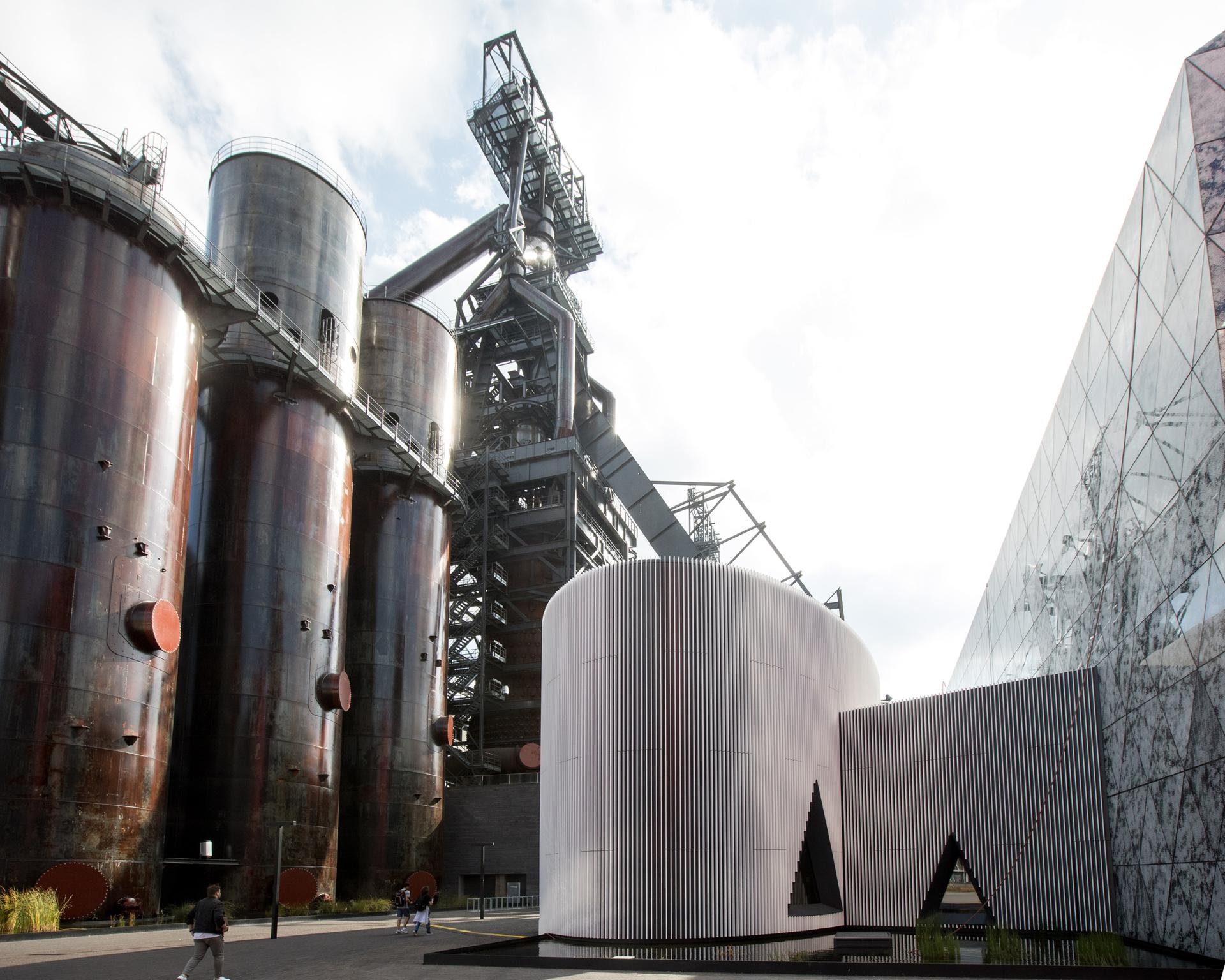
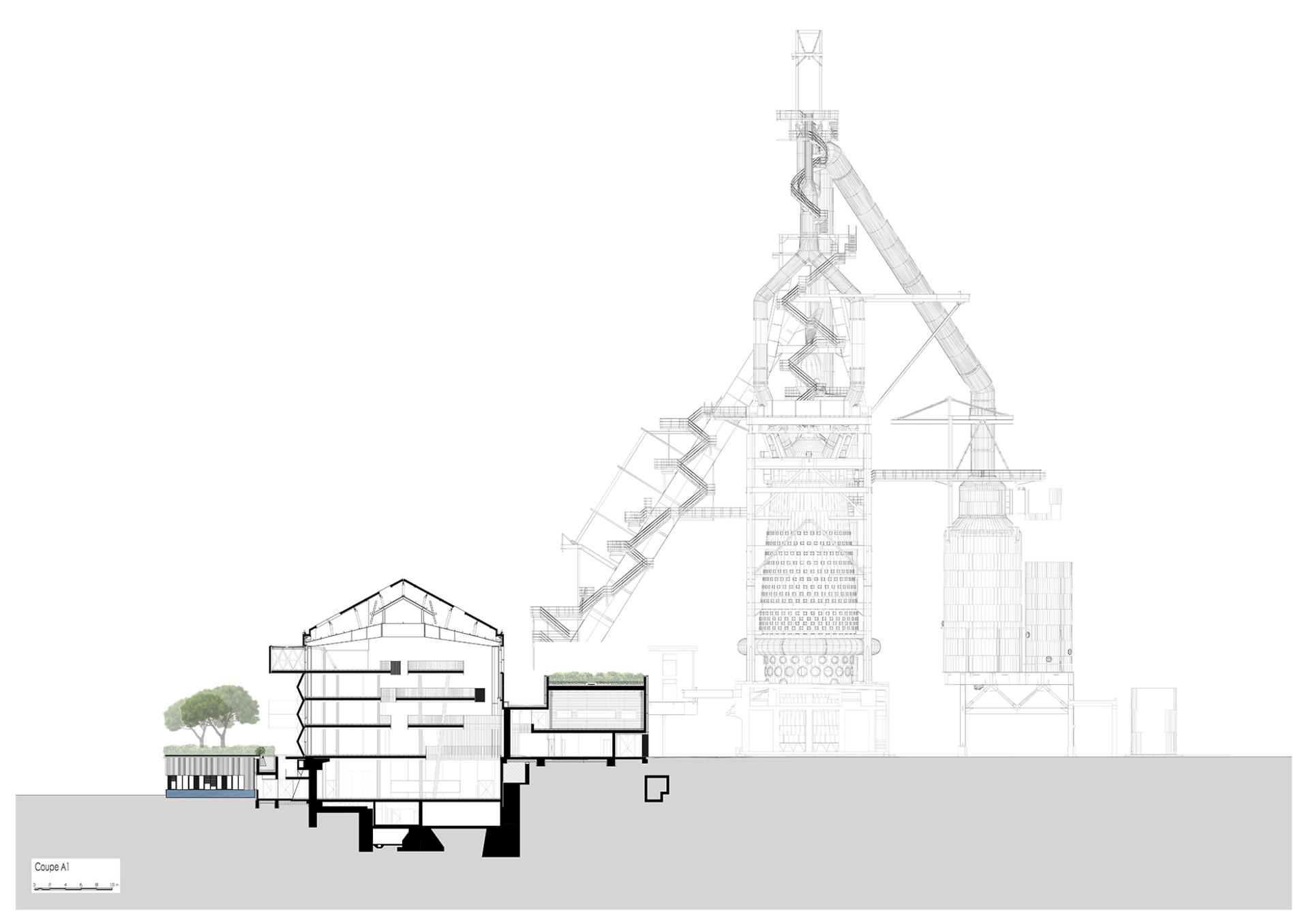
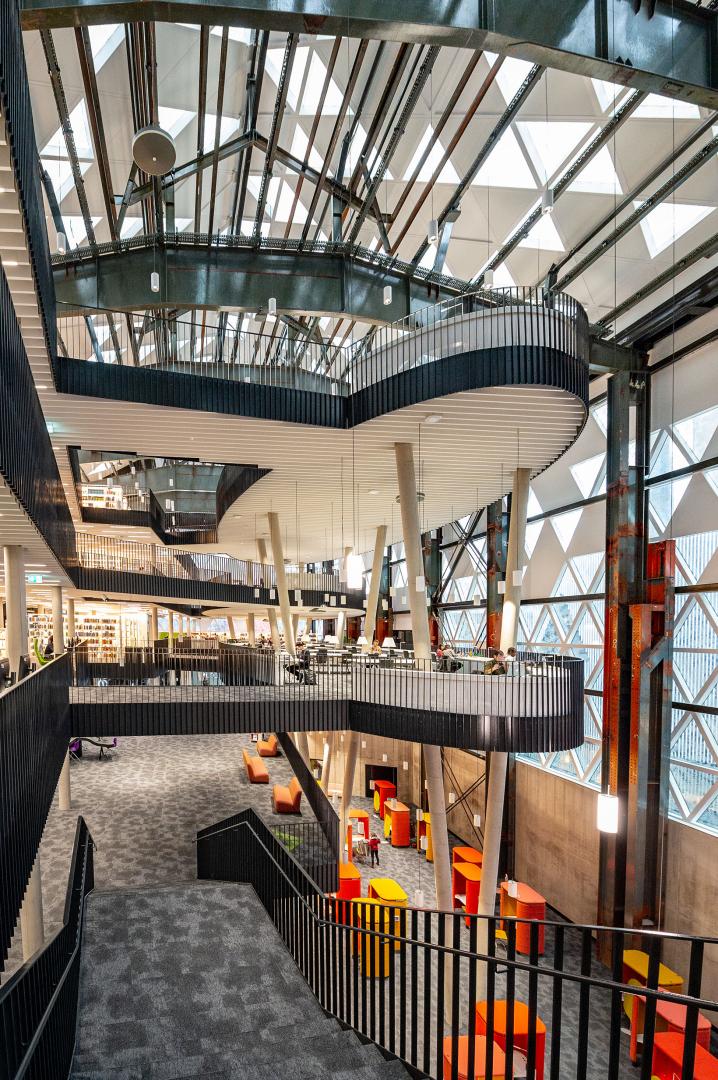
The architects preserved and integrated the existing steel construction of the old industrial hall into a new design, creating a contrast between the part of the remaining building and futuristic, three-dimensional façade. The objective was to preserve the industrial heritage as a culturally and environmentally sustainable option in broader urban transformation.
The construction of the building envelope was made possible by the use of a highly innovative shipbuilding technique. The envelope consists of molded composite profiles with several layers of glass fiber that allow not only the production of special shapes, but also have high mechanical resistance, thermal insulation and airtightness performance.
The new building was built inside the old facility, preserving its principal character. Due to the complex redevelopment, the smelting facility building was also extended to include a day care center and an entrance lobby. The new library provides space for cca 100 000 books for all university departments and serves as a venue for evening functions.
Large open spaces, accessible to the public are presented on five levels, giving the impression of flying plateaus around the ore silo at the foot of blast furnace, which was kept a reminder of Belval‘s industrial past, but also of the country‘s know-how and innovation capacities.
On the roofs of the LCC is the „Jardin du Livre“, a recreational area and open-air reading room, offering an exceptional view of the Academy Square. It is accessible from the LLC or from the café.
Key objectives for sustainability
The LLC is an example of industrial heritage that has been put into value in the spirit of cultural sustainability and broader urban transformation, while its functional solutions contribute also to environmental sustainability.
It was the Terres Rouges, an iron ore rich region in the South of Luxembourg that played a key role in Luxemburg's and Greater Region’s (SaarLorLux) economical and socio-political development. From its beginnings in the mid-19th century, the iron and steel industry developed within short time to the leading economic force in the country attracting workers from entire Europe to work in the prospering sector.
Today, one of Luxemburg's main trading cities, Esch-sur-Alzette is going through a major metamorphosis, while LLC is welcoming thousands of students, teachers and researchers from all over the world, following its tradition as melting pot, fostering once more cultural richness, new ideas and thereby innovation.
The construction of the building envelope and its complex geometry was made possible by the use of a highly innovative construction technique from shipbuilding. The envelope consists of molded composite profiles with several layers of glass fiber that allow not only the production of special shapes, but have high mechanical resistance, thermal insulation and airtightness performance.
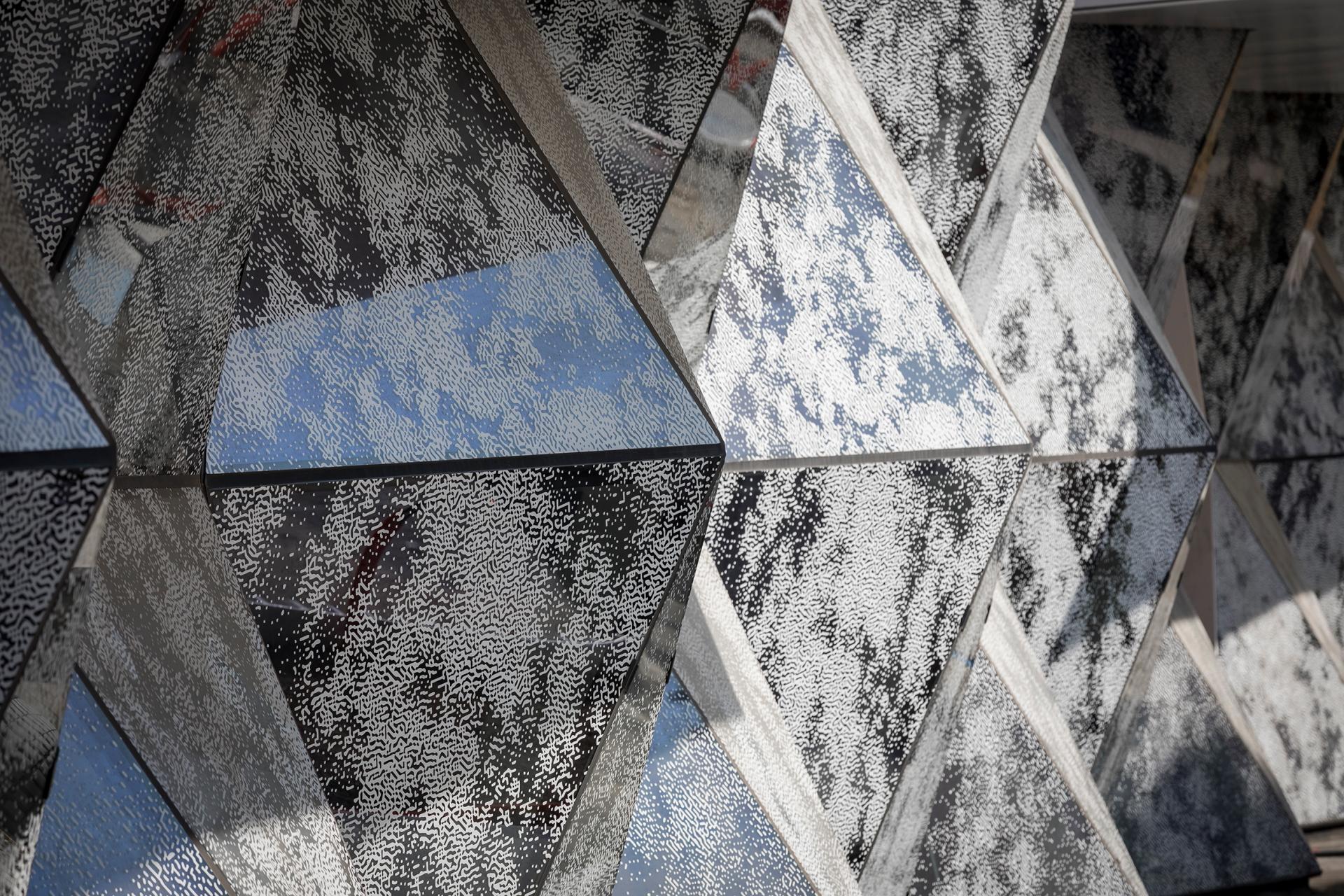
Another special feature is the screen-printed glass, which provides a dual function of protection against the sun by reducing heating and glare. The variable intensity of the silkscreen printing gives the building, seen from the outside and from the distance, a marbled effect. From the inside, the facade is more transparent with a play of open and opaque triangular surfaces.
When designing the façade elements, the architects were inspired by patterns that the former steel production had left as particle deposits on the windows of the former factory. The patterns serve - in addition to aesthetic reasons - to reduce the incidence of light.
Key objectives for aesthetics and quality
The LLC as design sets new standards in building technology, while its futuristic façade with speckled glass elements creates emblematic aesthetical element at the Campus Esch-Belval, offering unique, inspiring experience.
The removal of all functions within the former industry hall leaves the main building to the pure purpose of library. The gained space manifests itself as a void, developing through the entire building, giving a respectful distance to the ore silo. The central staircase serves as architectural promenade.
A void space developing from the cellars to the upper floors is punctuated with “floating” elliptical platforms, giving a space to rest and reflect; the platforms that seem to float in the open space provide study areas and can be used for group work and exchange; scattered green areas create an atmosphere of winter garden inviting all users to individual and collective experience of relaxation, reflection and leisure; this function extends to the café and makes the transition back to the main building.
A multitude of glass hexagons constitute the new envelop to the old industrial hall. The inspiration for the shading pattern was found in the site itself: the crushing of additives to furnish the blast furnaces created dust particles that settled on the hall's windows. These shapes were abstracted and translated into white frost pixels covering the entire facade, varying in degrees of density, thus precisely controlling the incidence of light to the inside of the building.
In order to encourage interaction and communication, the LLC follows a horizontal organization. Three solitary structures, Organs, reveal three functions, forming the library in their enfilade.
In the east, an elliptic shape, a "mouth", represents the entry hall, overlaid with conference and seminar rooms.
In the west, the administration wing offers working spaces to the library's employees, while its rooftop is reserved to the Jardin du livre.
Key objectives for inclusion
The idea of the inclusion of the LLC is four-folded:
first in its approach to cultural inclusion that builds on the old economic and industrial know-how of the region, transforming it into a new inclusive, human-centred venue with social, educational and cultural purpose and is place of exchange of all citizens;
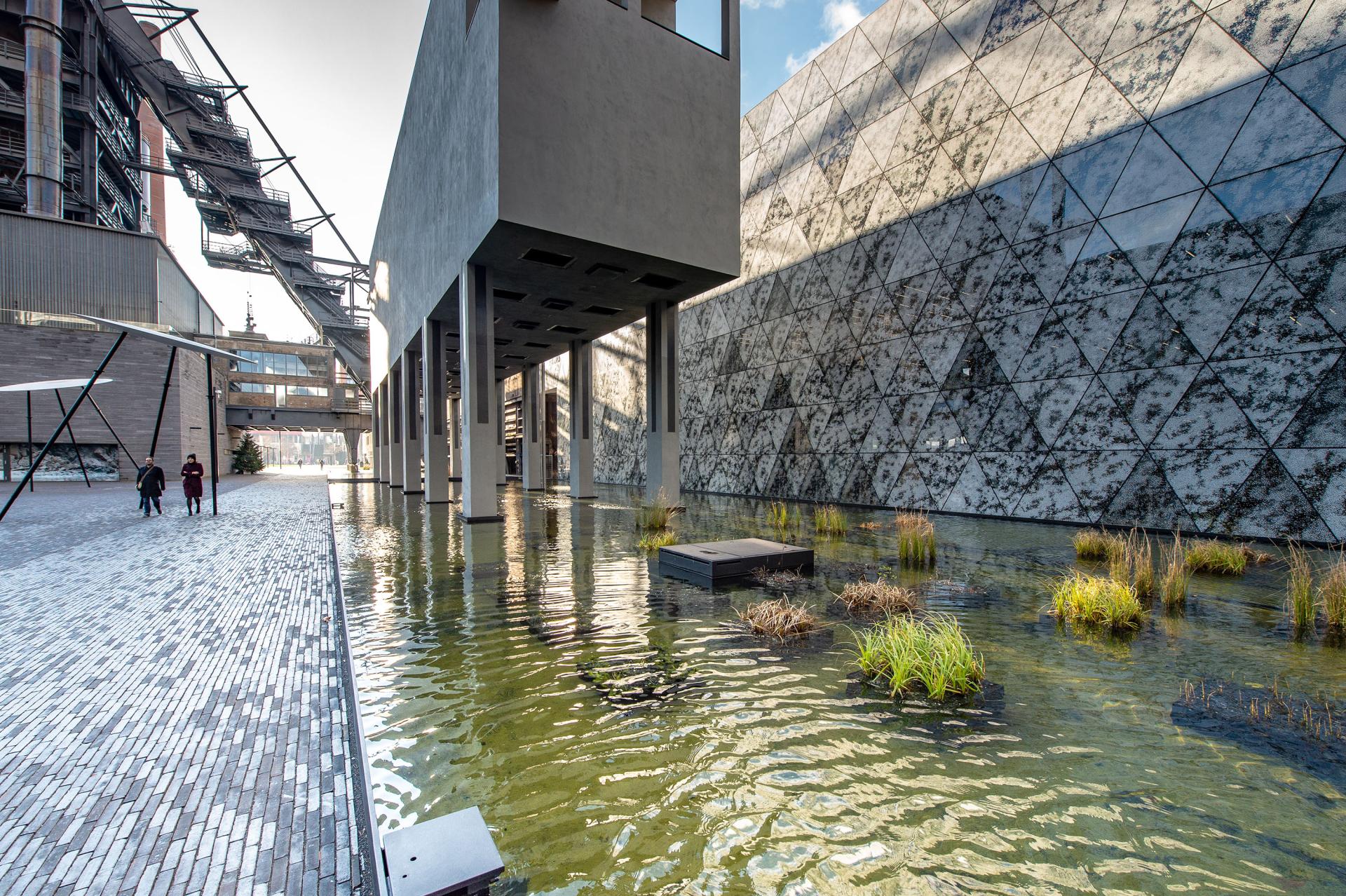
secondly as a part of broader urban transformation – it is a permeable element in the urban context, offering pedestrians a link between the neighbouring squares of the University Campus Esch-Belval; water bodies, street furniture and urban forests act as intermediate scale elements between buildings and users;
thirdly in its horizontal orientation that encourages communication: it is accessed via the elliptical building close to the Place des Hauts Fourneaux; administrative offices are located on the second basement level and are reachable from Place de l'Académie; a pleasant working atmosphere is created by the roof recreation areas;
fourthly in the architecture itself and its functionality –a void space developing from the cellars to the upper floors is punctuated with “floating” elliptical platforms on filigree oblique pillars, giving a space to breath, to see, to think; the platforms that seem to float in the open space provide study areas and can be used for group work and exchange; scattered green areas create an atmosphere of winter garden inviting all users to an individual and collective experience of relaxation, reflection and leisure; this function extends to the café and makes the transition back to the main building.
While the LLC was still under construction, a provisional campus library, the BiblioLab, was opened in the basement of the university's "Maison des Sciences Humaines". The BiblioLab - in addition to the obvious library operation - simultaneously offered architects and project planners space to test and try out service offerings, forms of furnishings and digital services for the planning of the new LLC.
Results in relation to category
The unique innovative urban planning of the Campus Esch-Belval, where LLC is located, aims to showcase its industrial heritage as part of the project for a new urban district and assimilates the elements of the past into an open and public space in which they actively participate by receiving new functions.
The development of this site aimed not only to highlight its historical heritage and to structure itself around it, but also to become a site dedicated to teaching and research. The overarching objective was to create an urban district that offers functionalities and where work, culture, leisure and housing meet to create an attractive living space.
In the context of broader urban transformation, the LLC puts industrial heritage into value in the spirit of cultural sustainability. Using futuristic design, it is converted into a new inclusive, human-centred venue with social, educational and cultural purpose and is place of exchange of all citizens. The LLC cherishes the value of cultural and industrial history of the region and redefines it in the context of new intellectual potential of the Campus. The existing steel construction of the old industrial hall was preserved and integrated into a new design, to stand as a reminder of Belval‘s industrial past, but also of the country‘s know-how and innovation capacities. Raw materials - once coke and iron ore, today knowledge and innovation potential of the Campus - are transformed into a new value for the city, for the region, for the benefit of the entire society and its future.
From its beginnings in the mid-19th century, the iron and steel industry of the region developed within short time to the leading economic force in the country attracting workers from entire Europe to work in the prospering sector. Today, LLC is welcoming thousands of students, teachers and researchers from all over the world, following its tradition as melting pot, fostering once more cultural richness, new ideas and thereby innovation.
How Citizens benefit
During the conception phase, local population and former workers of the steelwork industry were involved in project development. In close collaboration with the Fonds Belval (a public organisation established for the development of the “City of Science, Research and Innovation”) and the National Institution for Monument and Heritage, methodologies and techniques for the conservation of historical structures were developed.
While the LLC was still under construction, a provisional campus library, the BiblioLab, was opened in the basement of the building. The BiblioLab offered architects and project planners space to test and try out service offerings, forms of furnishings and digital services for the planning of the new LLC.
Today, LLC is welcoming thousands of students, teachers and researchers from all over the world, following its tradition as melting pot, fostering once more cultural richness, new ideas and thereby innovation. It is a meeting place also for residents of the area and the EschBelval region and visitors.
The LLC’s architecture invites all citizens for a new experience - it is a permeable element in the urban context, offering a link between neighbouring squares of the Campus; water bodies, street furniture and urban forests act as intermediate scale elements between buildings and users.
A new shell in the archetypal form of a "house" was placed over the existing structure - a "home" for everyone! The architectural form reflects the building's claim to be an accessible and protected space for all. This façade transforms the past - the dust of the "working process" in a new poetic way as a serigraphy to an iconic building.
The building looks outwards and remains accessible to all users in all areas, creating an inviting ambiance. In particular, through the café and the Jardin du Livre, citizents and visitors can enjoy the atmosphere in shades of pine trees and can participate in life of the Campus and the neighborhood through the public square.
Innovative character
The LLC was built using green and digital technologies and for the benefit of the environment and its future users.
LLC is connected to the district heating network and chilled water network. Climatic comfort is completed by a group of air coolers with an adiabatic cooling system allowing the production of chilled water when outside temperatures are below 15°C (free-chilling principle), as well as by two water-condensing chillers for the production of chilled water at 6°C, which ensure dehumidification of archive rooms and constitute a redundancy for the cooling of the computer rooms.
Thermally active concrete slabs with 20 mm diameter polyethylene pipes keep the building at a constant temperature. In summer, the main volume of the LLC is cooled at night by freecooling through to openings placed in the 2nd basement and under the roof. The building has a unique air handling unit to ensure air renewal.
Jardin du Livre covers the building as a green roof on an area of 300m2. Planted water basins adjacent to the LLC function as water retention basins and catch rainwater. This creates a circular ensemble that radiates the sun in summer and has a cooling effect through indirect adiabatic cooling.
Digitization and smart building are key concepts of the LLC. The entire building has geolocation - a tool that recognizes and understands user behavior and allows deployment of staff to be optimally controlled and resources to be conserved. The functionality of the library is fully digital - access control and lending system allows fully electronic research on site and guarantees an external access.
The façade was formed of hexagonal glass elements, those facing west are heavily printed to avoid direct sunlight, while those facing north are open: This creates a regular, diffuse light throughout the building, which is supplemented selectively by a C-Bus and DALI (Digital Addressable Lighting Interface) – Lighting Control System, optimizing and reducing power consumption.