House O
Basic information
Project Title
Full project title
Category
Project Description
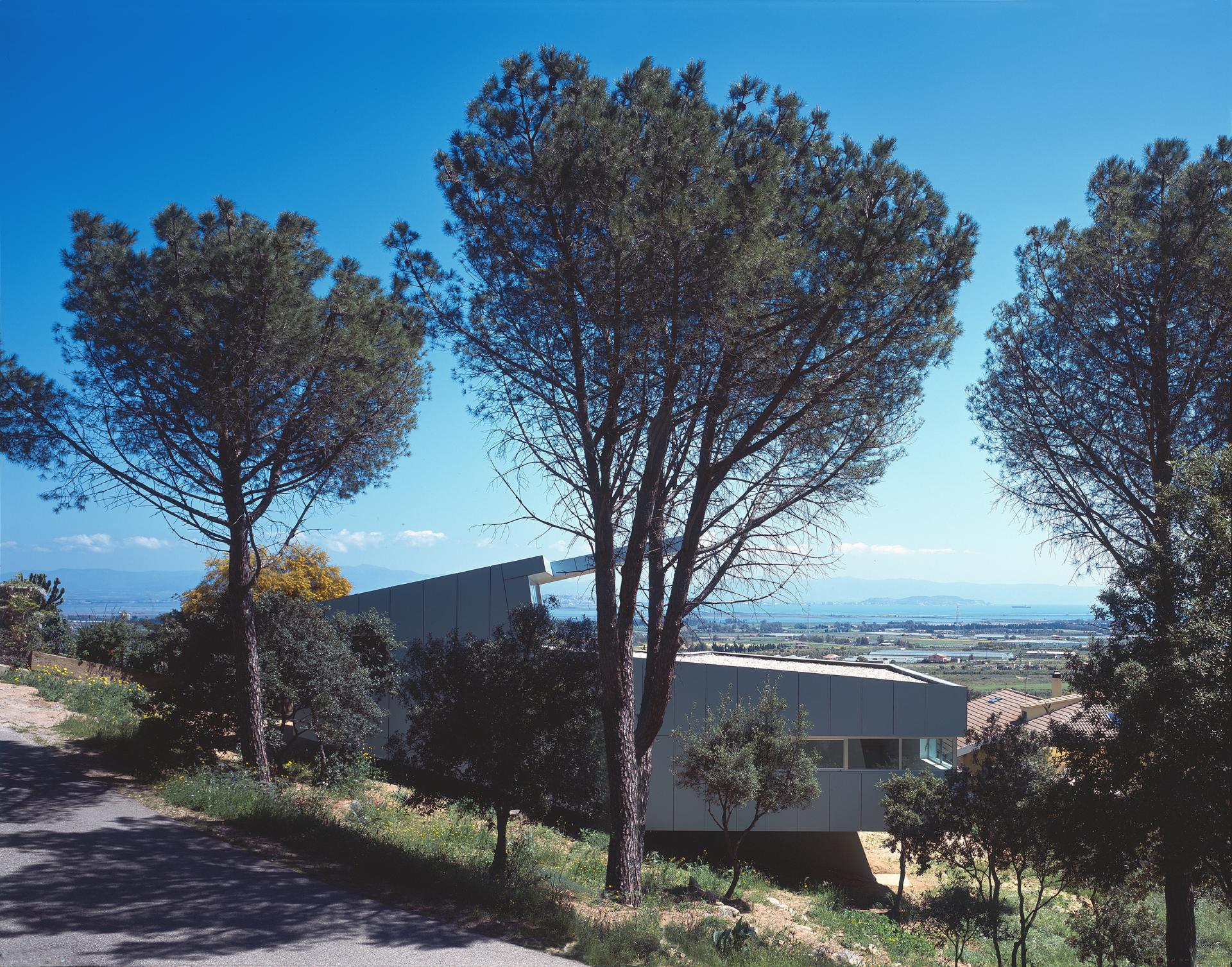
At the foot of Sulcis Mountains, Sardinia, an open land signed by greenhouses and low-density developments, stands as the background for a minimal residential program hosted in an organic macro-cell, adjusted to topography and landscape. Its plastic skin is called upon to emphasize the dialectic relation to the surroundings, suggesting the house's perception as a massive block wrapped by a film, actually veiling its actual tectonics.
Project Region
EU Programme or fund
Description of the project
Summary
At the foot of the Sulcis Massif, in Southwestern Sardinia, the alluvial fan of Capoterra is marked and organized by agricultural fields, greenhouses and low-density residential settlements.
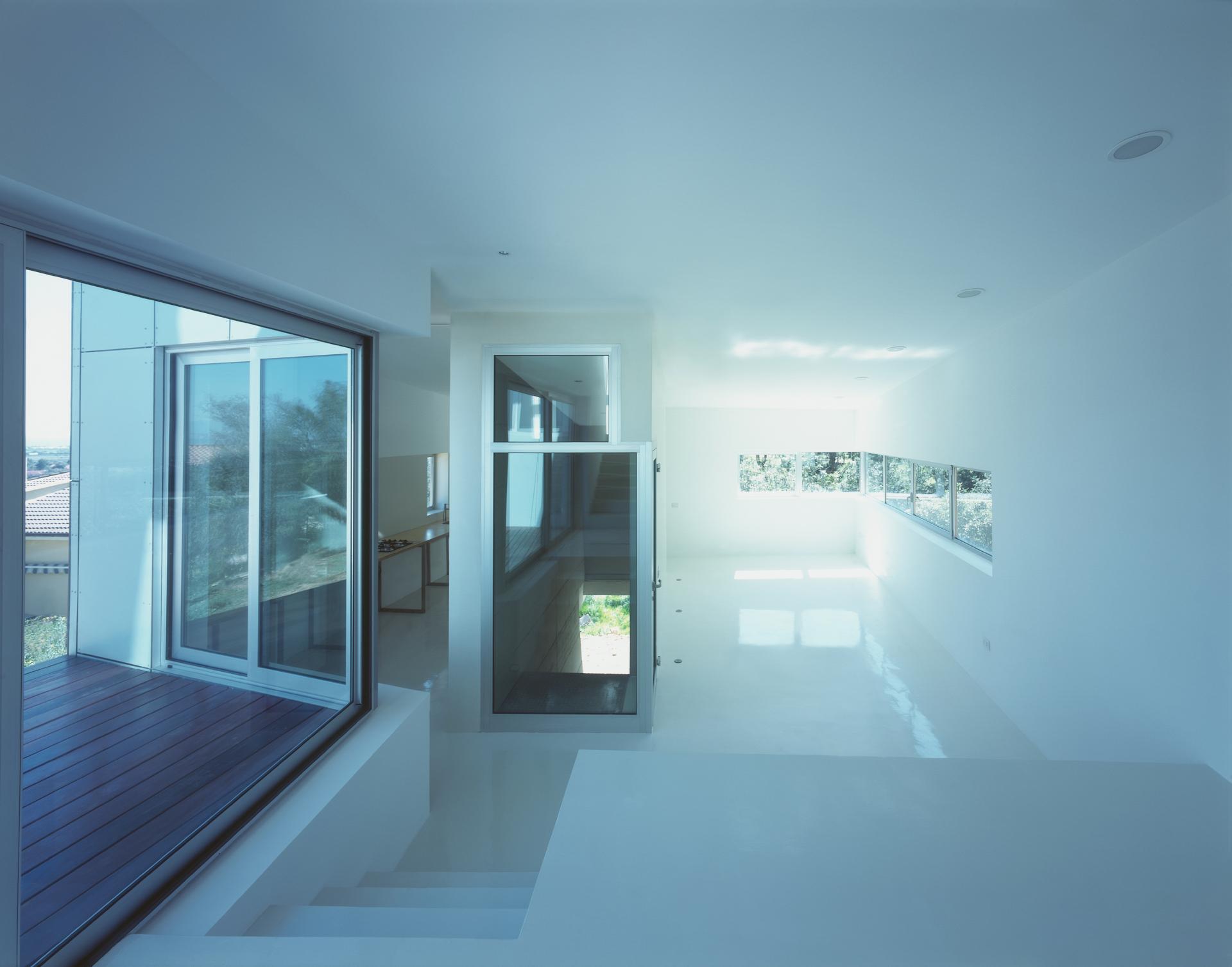
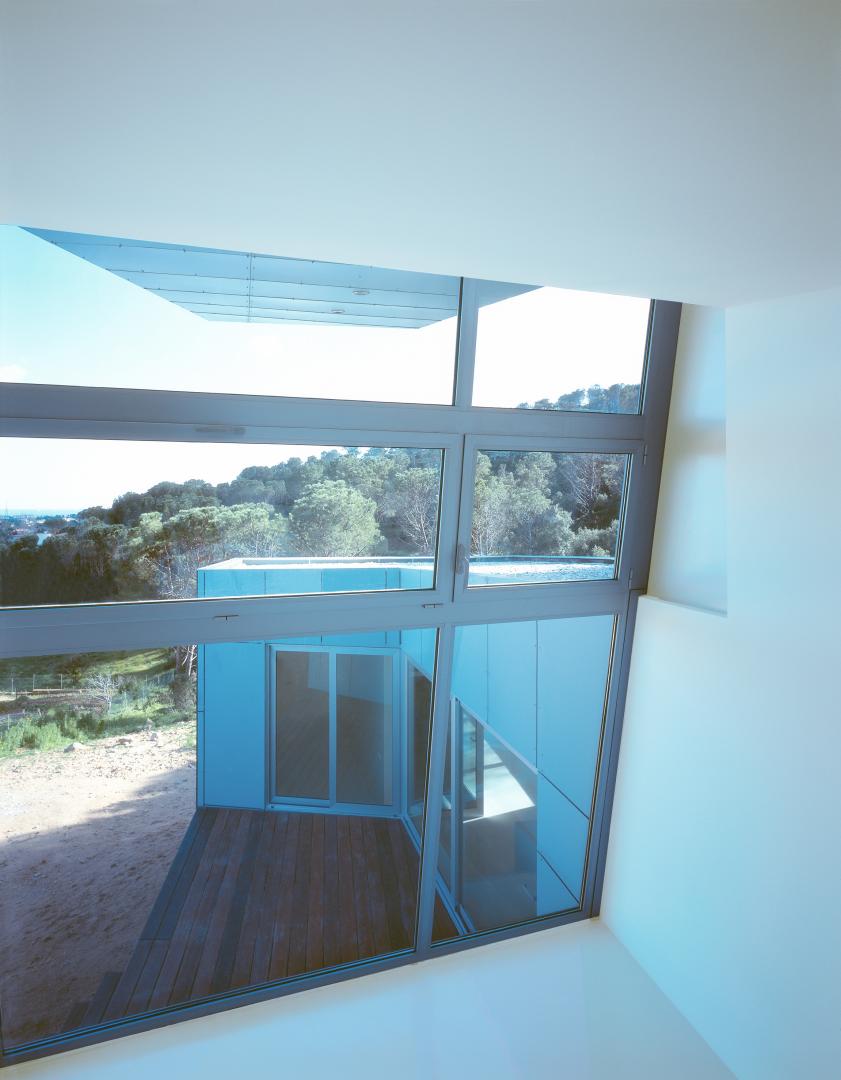
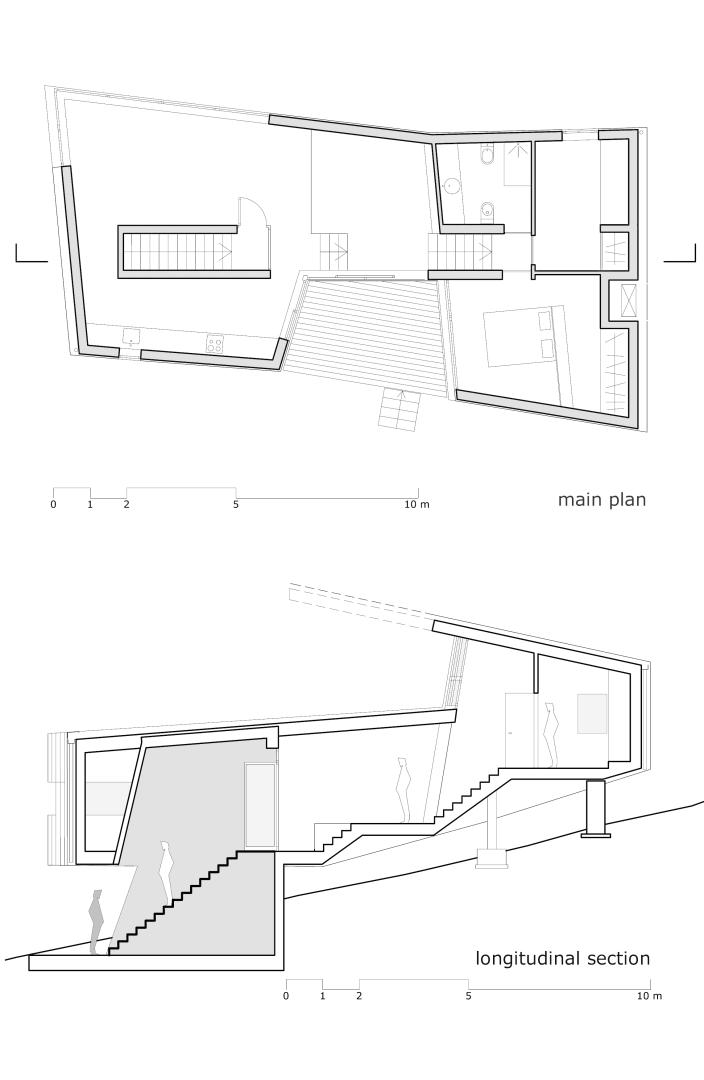
Located on sloping ground on the pines and oaks forest border, the building appears as an extrusion of one of the outcropping granite boulders that occupy the area. This organism changes along the longitudinal section, shapes itself adapting to the slope, bends following the presence of the trees and arches away from the ground to allow the runoff of surface water. While entirely closing towards the windy northwest, it opens to selected views: over the forest in the foreground, over the agricultural plain and the Mediterranean Sea in the background. Articulated by a living program for a young couple reduced to its minimal spatial components, it engages with the landscape and expands the interior space towards a patio that acts -due to a mild climate- as a privileged everyday place.
By observing the relationship between objects and the ground, between the mass and its immediate geographical dominium, House O's design seeks a mediation between the reduction of earlier rationalism and the sensuality of the organic world.
Its outer skin is called upon to emphasize the relationship to the surroundings, extending upwards to cover even the roof and suggesting the house's perception as a massive block wrapped by a film, actually veiling its real tectonic.
Key objectives for sustainability
Its structure mediates the images of a continuous chassis with its actual nature of an assembled object. Put together as an out-of-scale piece of furniture, the building consists of a steel skeleton fixed on concrete blocks. The skeleton is based on two steel structural cages, one resting on the ground in some spots, while the other is hung from a hollow bigger concrete block linked by a third central part which acts as a bridge.
The floors are made of Prefab OSB wood-and-polyurethane slabs, and 25 cm-thick polystyrene panels constitute the exterior walls. The cladding, a light blue laminated board, creates a ventilated façade and shapes its whole image.
Semi-prefabricated work, demonstrating the strength of methods current in America and Northern Europe design, opens the road for an emerging generation of works and procedures, while searching for a sustainable approach that detaches itself from the rhetorical of "local" and "traditional". It demands a new vocabulary and some new compositional approaches in the potential direction of full prefabrication.
Lightness in transportation and easy montage are part of that challenge. In the philosophy of House O, sustainability is not meant to employ traditional or ecological materials to lower cultural impact but is meant to introduce actual control over the amount of energy consumed by the house on the process of building, and over its total life-cycle maintenance. Parameters like passive internal temperature control, high-level insulation, natural ventilation on one side and easy-to-assemble materials, handling methods, patterns of montage and safety on the construction site on the other hand, represent some of the "sustainable" requirements that project has tried to fulfill.
Key objectives for aesthetics and quality
The massive block, covered with a plastic film, links the living cell with the industrial design products as much as it seems only temporarily located on the site. The minimization of spaces and functions allows maximum flexibility of use, according to the needs of users who are loyal to mobility and outdoor living.
The house has a strong relationship with the wider context, on a geographical scale: it dialogues with the most important natural elements, the mountains and the coast, and the agricultural plots of the plain. The careful study of the site allowed to make irrelevant the marginal characteristics of the close environment (neither city nor countryside) by suggesting a relationship with a latent landscape, which awaits to be revealed. A house on the edge that reflects the atmospheric conditions (blue like the sky), attentive to pre-existing vegetation (the interior expands into the green and vice versa) and which enhances the topographic conditions of the site (a skewed rolling block in the steep sloping lot). The volume, almost leavening, decomposes longitudinally into two parts staggered in height: one retains the horizontality and dialogues in counterpoint with the slope, the other rotates following the elevation of the ground. With no external arrangement (walls, driveways, platforms), the building -as abstract as it can- is mostly closed to enhance the mass effect. There are only a few openings to select the views: on one side a horizontal cut measures the slope and opens to the perception of the forest; on the other side, a large patio, connects the space of daily use with the coastal landscape. The architectural object, despite its "futuristic" appearance, actually pursues an almost sacred respect for nature and for the site. The limited contact with the ground allows the slope to be left intact, furthermore, the areas below the overhang offer adequate shaded spaces, without having to add additional elements off the ground (porches or shelters).
Key objectives for inclusion
The building is a private house, so its use is not open to the public.
Despite this, a broad participatory process open to local and regional formal and informal platforms has allowed:
A) to arrive at the result that the lot on which the building stands remained open, without fences, in continuity with the adjacent public green areas
B) that the building was built taking into account the safety equipment of the area against fire (which is not mandatory in th
C) that the neighbors were informed of the actual duration of the construction site (significantly reduced compared to the standard duration for buildings of this size)
D) that the community was prepared with respect to the introduction of an unusual architectural language for the area; significantly reducing potential reject and conflict for its color, cladding materials and shape
Results in relation to category
The Project was developed in a region, Southwestern Sardinia, that is heavily backward in terms of technology and poor in manpower. The aim was to build a residential building using a semi-prefabrication system, minimizing the intervention on the ground and the temporal extension of the construction site. While educating workers and construction firms on an a more advanced and conscious methodology.
As described, the skeleton of the building consists of two structural steel cages, leaning or hanging from some concrete blocks and connected by a third central part as a bridge. The floors are made with OSB sandwich panels and polyurethane foam, while large sintered polyurethane panels, 25 cm thick, were used for the infill walls. The building is entirely clad with an Abet laminate panel for exteriors, mounted at a distance from the wall face in order to create a ventilated façade. These materials were selected, on the one hand, according to their considerable lightness in transport and assembly and, on the other, towards the control of the energy balance of the house.
Consequently, the house has no HVAC systems, and its climate control is strictly passive, accurately trusted to orientation and the above-mentioned construction system.
The uniform skin that covers both walls and roof suggests the reading of the building as a massive block, striped, wrapped in a film, which does not allude to its tectonic consistency but to its plastic character, in search of a specific dialogue with the geographical nature of the site.
How Citizens benefit
The design process was subjected to a rigorous unrestricted discussion procedure open to different platforms of citizens, technicians, administrators and independent experts, both formal and informal.
1)local groups of non-professional neighbours, volunteers aimed to suggest design solutions to fit the new home into the existing context.
2)administrative technicians of both municipal and regional regulatory boards,
3) specialized experts from the State Ministeries, landscape architects, and habitat conservationist consultants.
4) School of Engineers researchers on the mathematical models of the passive house, energy control and material proofs.
Innovative character
1) The house was built to carefully avoid the strong aggression of the soil in the construction site, which is standard in that geographical area; to minimizing the excavation of the hill and to skip the terrain grading operation usually associated with construction in sloped lots.
Such an assembly system has made possible to enhance the control over the construction process, to reduce the passage of means of transport (both of materials and workers), the use of heavy mechanical machinery on site, the lifting of dust and the prolonged noise pollution and the overall habitat destruction.
2) The manufacturing of the building parts in the workshop allowed to minimize waste and the ecological impact of residues.
3) That house fostered the introduction of new methods of construction in the public debate on how to build in areas subject to landscape constraints.
4) That house introduced new methods of design into the public debate on how to conceive new buildings in fragile landscape contexts, both in terms of typo-morphological approach and architectural language and in terms of technological choices and energy sustainability.