The Neighbourhood Home system: MeetEat
Basic information
Project Title
Full project title
Category
Project Description
The Neighbourhood Home is a system of new structures for redevelopment sites within the districts, targeting in particular the suburbs with a tense coexistence of old and new inhabitants. The network aim to foster mutual inclusion to make everyone feel 'at home'.
Each Home will promote activities related to a cultural area (Home of Food, Languages, Clothing, etc.) and will encourage to share traditions and to rediscover that the roots of all people and cultures have always been interconnected.
Project Region
EU Programme or fund
Description of the project
Summary
The Neighbourhood Home system is a Master Degree concept developed at the University of Design “ISIA Roma”. The project address the need for social inclusion between old and new inhabitants in Italian and European cities, and has two goals: to overcome social barriers by fostering mutual acquaintance; and to create a new community of individuals (no longer a strangers-indigenous distinction) by promoting an active participation for the developement of the shared territory.
Through qualitative and quantitative analysis -interviews in the city of Rome and an online survey- the context of intervention was identified: the neighbourhood, perceived as a more familiar environment.
The concept consist of new structures designed on sites to be regenerated, ideally one for each district, a network for dialogue, sustainability and transformation. The medium chosen to convey these intentions is culture: each Home will focus on a cultural area (Food, Music, Languages, etc.) and will propose specific activities that allow participants to share and discover each other's roots, rituals and myths. These assets will raise awareness that, despite their typical expressions, all humans are united by culture, sensitivity and the materials our planet offers. The roots of all peoples have always been interconnected through culture: they are in fact the product of exchange, contamination and migration throughout the history.
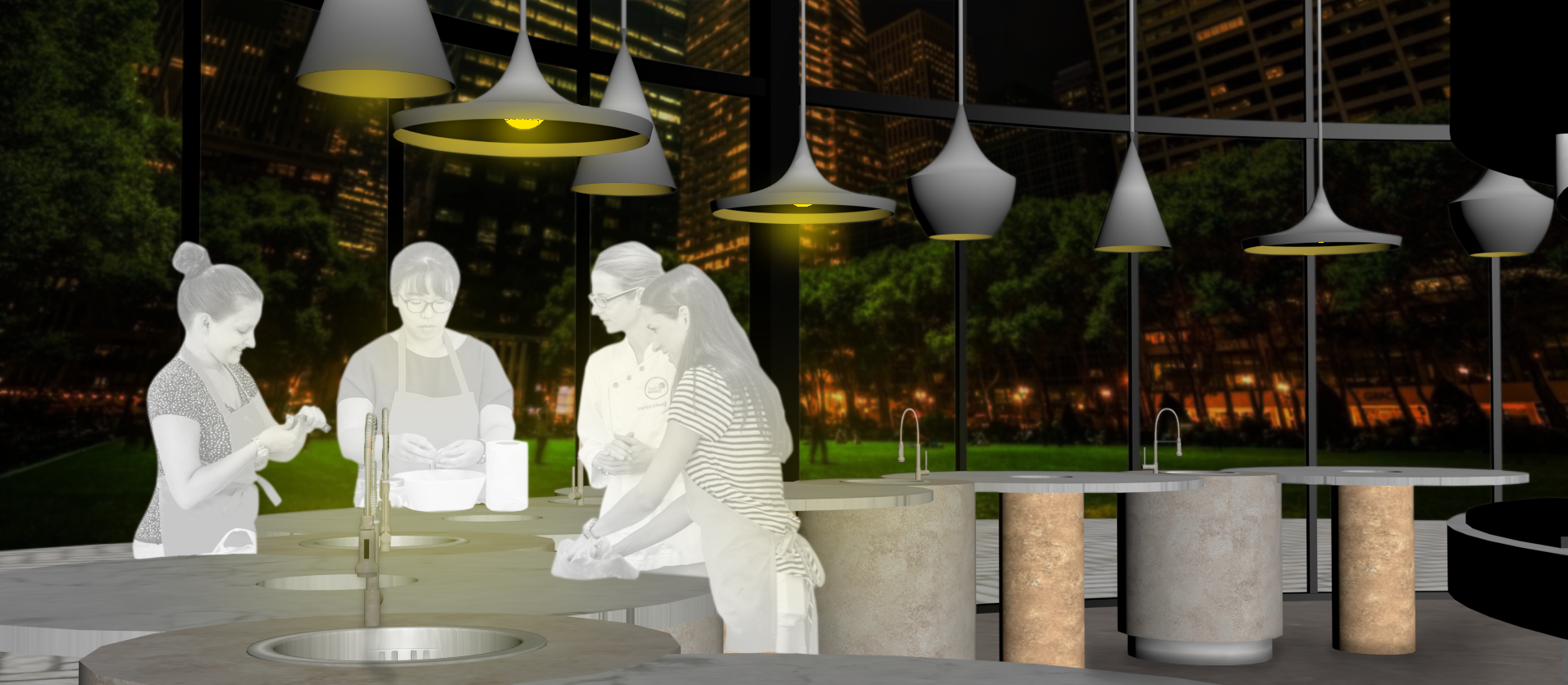
The pilot project is "MeetEat", the Home of Food, that encourages mutual understanding in an informal way through Cooking Classes and Social Eating. On a seasonal basis, the Home will propose an ingredient and those who wish can volunteer to teach a recipe from their roots and traditions. The Home will also hold assemblies and events to develop proposals on how to improve the neighbourhood and to address common issues. Also, it will cultivate a continuous dialogue with other Homes in the city to create further contamination as a virtuous and sustainable network.
Key objectives for sustainability
The issue that the concept address concerns the Social sustainability, with particular attention to the tension that often exists between old and new inhabitants, especially in the suburbs of metropolitan cities.
The major migration phenomenon of our era, due to wars, desertification, poverty and persecution, has seen large numbers of new inhabitants converge on Italy and Europe: they leave their homes and roots and often struggle to find a new place. At the same time, the local inhabitants face new difficulties as a result: their places, habits and the edges of their neighbourhoods and towns change dramatically. They often end up seeing the newcomers as a threat to their own culture, traditions and roots.
Through the project, the aim is to provide neighbourhoods with new environments for their inhabitants, dedicated to raising awareness and engagement with their local area and neighbours, using culture as a medium to bring us all together with inspiration and insights.
Key objectives for aesthetics and quality
Each Neighbourhood Home will present a specific functional and aesthetic design, linked to the peculiar activities that will be hosted.
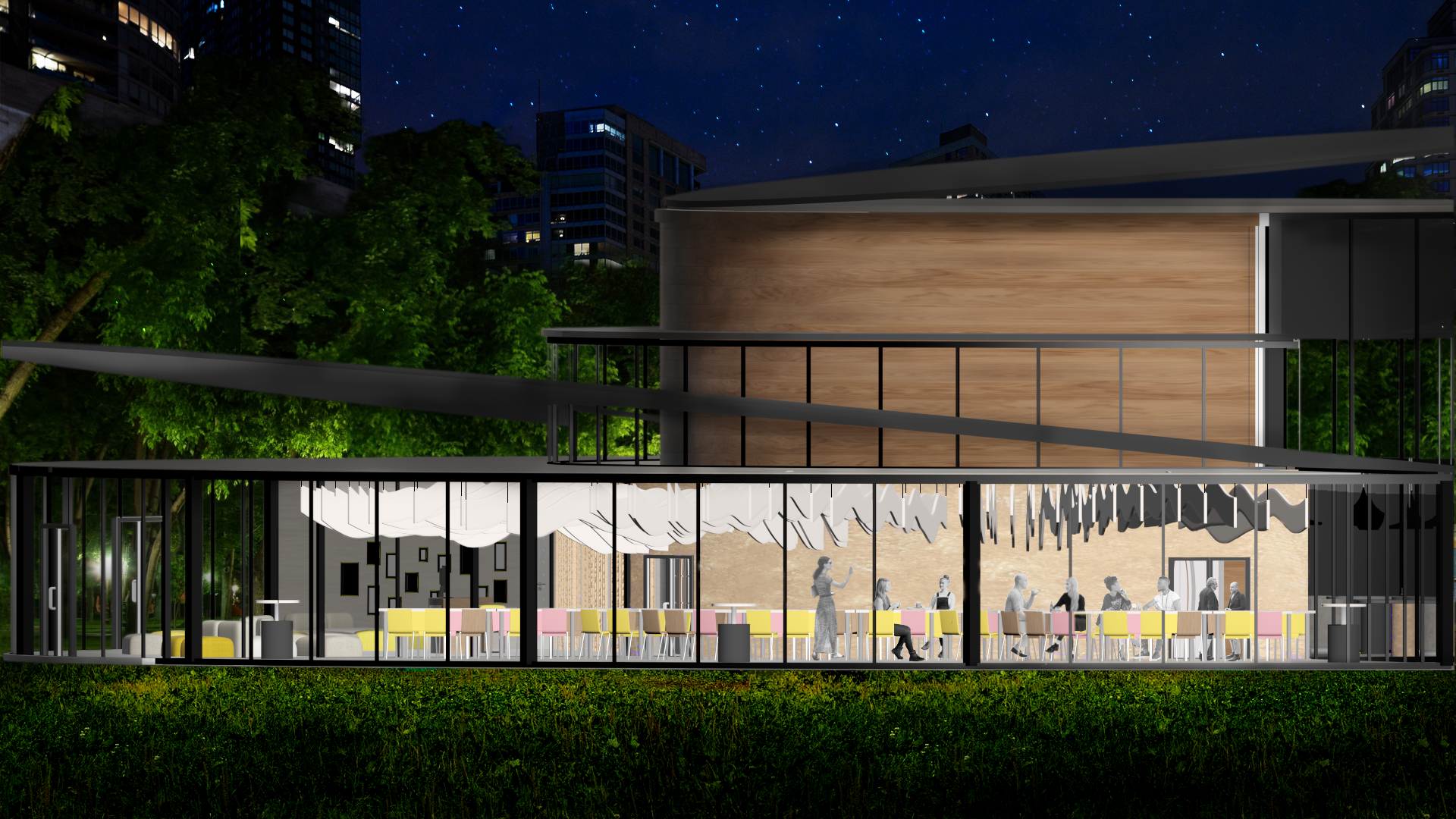
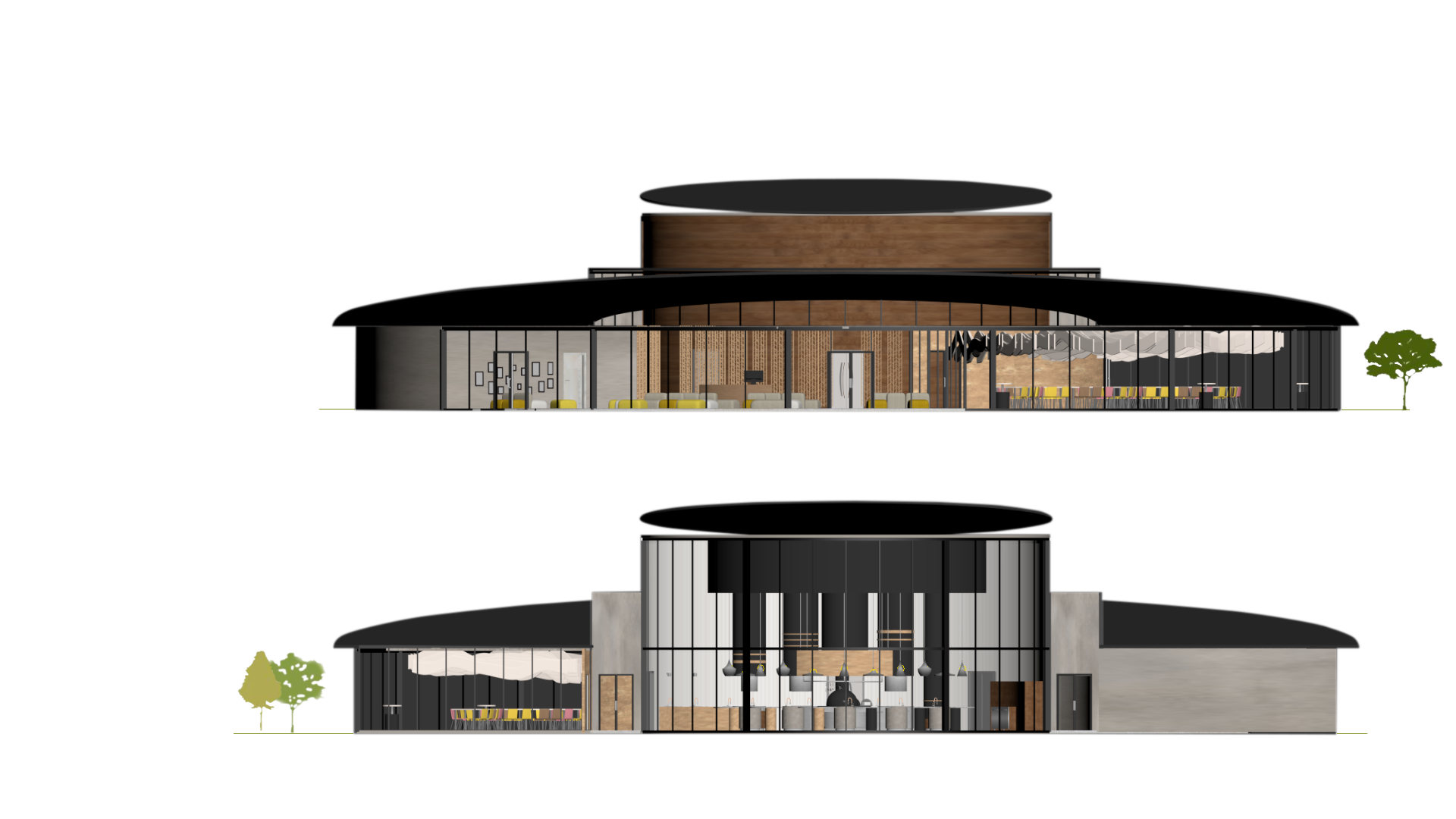
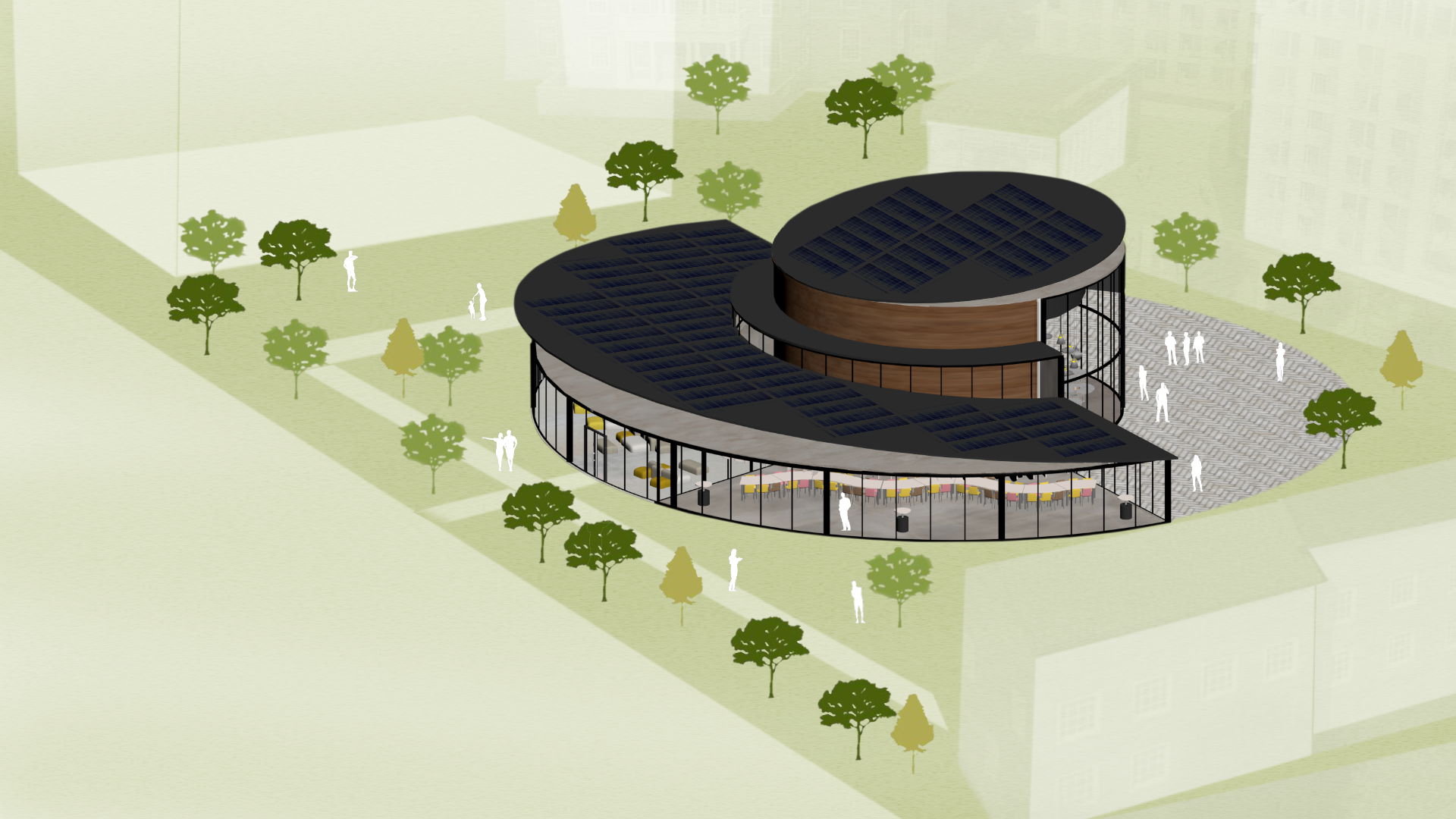
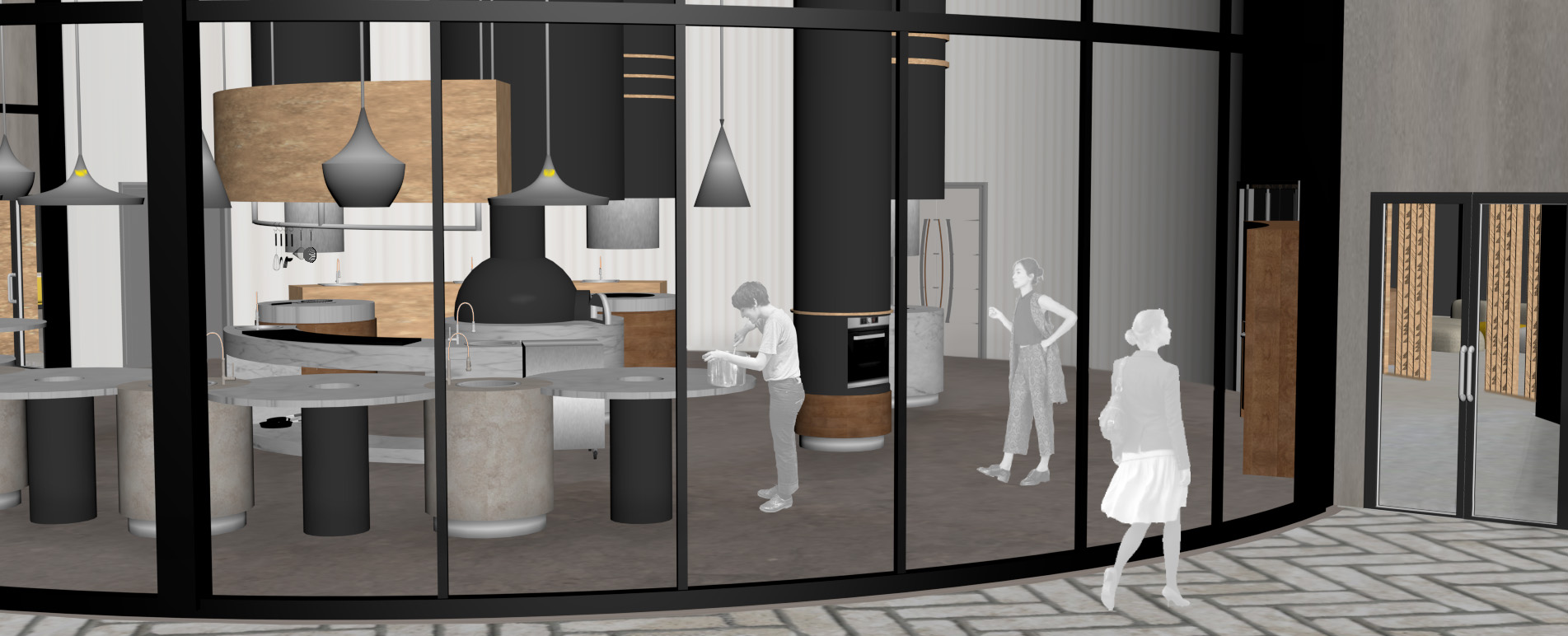
For the 'MeetEat' Home, the pilot project aiming to create inclusion through cooking and sharing food, the architecture is characterised by circular shapes representing the concept of 'containing', like a pot or a cauldron where ingredients are transformed into meals and rituals. The structure is composed of two cylindrical and concentric volumes: the central volume is the Kitchen, which is the core of the experience in this Home. This is the space where the transmission of knowledge, rites and myths takes place. For the design of this area, an innovative organisation of kitchen tools was chosen, following the desire to abstract as much as possible from specific culinary traditions in order to maintain a neutral and open approach. The main distinctive feature concerns the central cooking blocks: oven, grill, fryer, etc., are here identified with the ancient bonfires around which the community gathered to hear the people' myths.
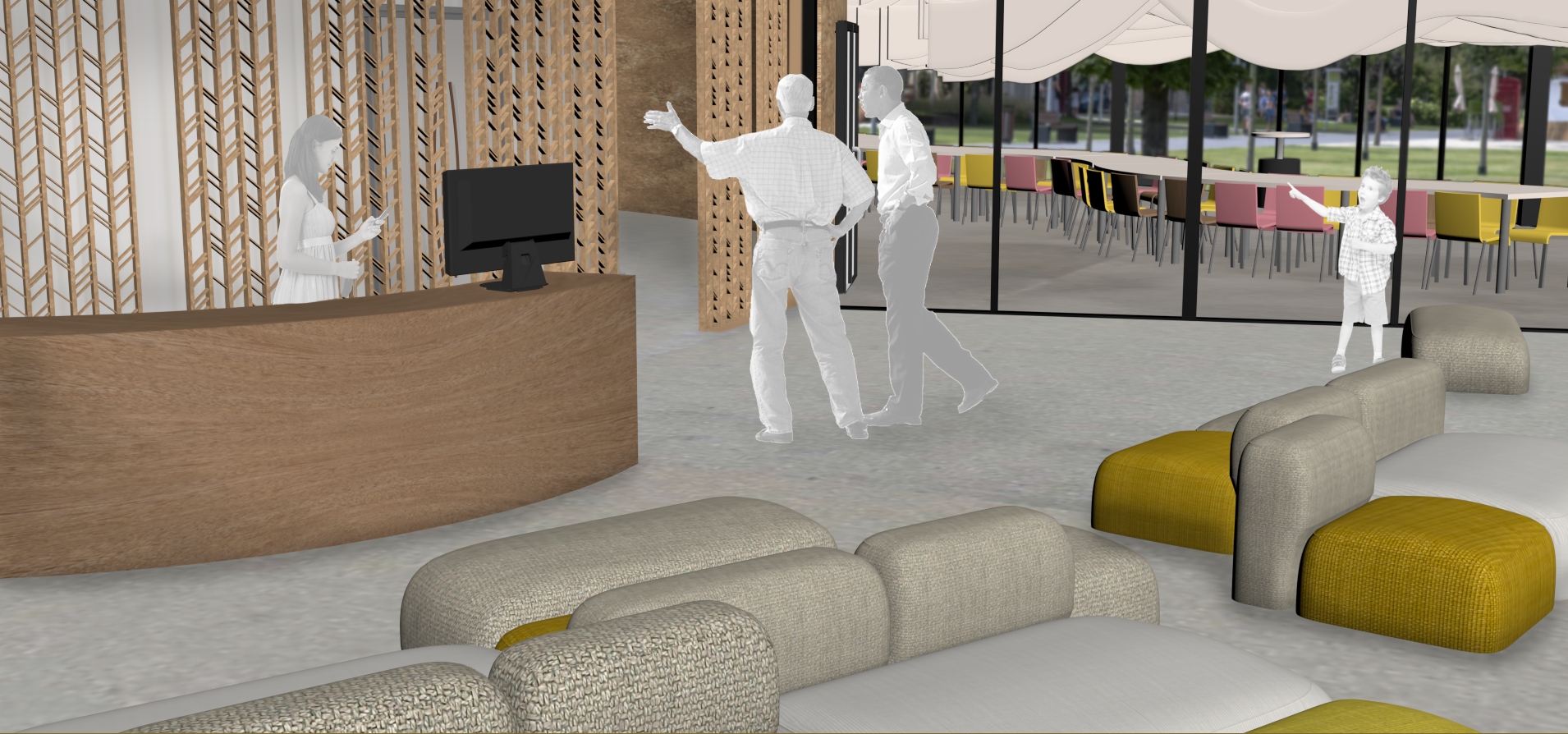
The largest volume surrounding the core contains the initial phase of the experience, the Reception hall, and the final phase, the Social Eating room; the latter has the possibility of opening up and communicate with the courtyard outside, to expand the number of seats at the table in the warmer seasons.
The outer perimeter of MeetEat is almost entirely windowed, to stimulate the passers-by's curiosity and invite to access and participate. The Home is in fact an open place to all who wish to be part of it, responding to the need of every human being to be welcomed, understood, accepted and valued.
(For further information visit: https://drive.google.com/file/d/1YL_imyPv-Izdd01p0RNontRdEggKKpir/view?usp=sharing)
Key objectives for inclusion
The Neighbourhood Home system explores a new way for design to help society: an inclusion not only of foreigners but also of natives in Italian and European cities, to seize the opportunity for urban transformation that is already occurring. The aim is to enable all individuals living in the neighbourhood to rediscover together their curiosity for what is 'different', valuing it as a resource rather than facing it as a threat. The activities in Neighbourhood Homes try to stimulate a new approach to diversity and inclusion: one that does not involve 'fitting in' or 'conforming', in other words denying personal uniqueness in order to be welcomed into an existing community. Instead, the aim of these environments is to raise awareness of the importance of each diversity and each individual, creating a new community in which everyone can find their place and meaning.
As the preliminary research revealed, 'home' is the place everyone needs: familiar and welcoming, a space where you can express yourself freely and without judgement. Every human being considers 'home' the place of the heart, and wishes to take care of it and enrich it with everything can offer. The Neighbourhood Home system wishes to be a 'home' for all, stimulating a new sense of belonging to the territory and new shared values. These environments, in fact, do not live as isolated places, but are designed to settle in the inhabited context and propose themselves as a first and new step towards a positive change in society.
Innovative character
What the Neighbourhood Home system proposes differently from the already existing community centres is the purpose of becoming a network of sustainability within the city: the different structures are not designed to remain limited and exclusive, but rather to establish a dialogue open to contamination, collaboration and support, among themselves and with local inhabitants and businesses.
Each Home, which focuses on a field of culture, can also become, thanks to its innovative nature, a social, architectural and cultural landmark for that district and that city, a place that can also produce and promote excellence in the different cultural and artistic spheres.
Moreover, with their cyclical agenda of activities and their informal and voluntary approach, Neighbourhood Homes offer everyone the opportunity to participate actively, either as a temporary teacher or as a learner, encouraging a turnover of roles and points of view.