Rivaluta Rivalta - Re-value Rivalta
Basic information
Project Title
Full project title
Category
Project Description
“Re-value Rivalta” is a unique multi-stakeholder and collaborative strategic design process aimed at envisaging the future identity and distinctive services of the Rivalta Ducal Palace and its park, in the Italian city of Reggio Emilia. Commissioned by the municipality to a group of co-design researchers of Politecnico di Milano, it involved several organizations from the most representative stakeholders of the city into a creative journey that contributed to a huge urban regeneration project.
Project Region
EU Programme or fund
Description of the project
Summary
“Re-value Rivalta” is a unique multi-stakeholder and collaborative strategic design process aimed at envisaging the future identity and distinctive services of the Rivalta Ducal Palace and its park, in the Italian city of Reggio Emilia. Ideated by researchers of the Polimi DESIS Lab (Design for Social Innovation and Sustainability) of the Design Department of Politecnico di Milano for the Municipality of Reggio Emilia, it was carried out as part of the wider Ducato Estense development project funded by the Italian Ministry of Cultural Heritage.
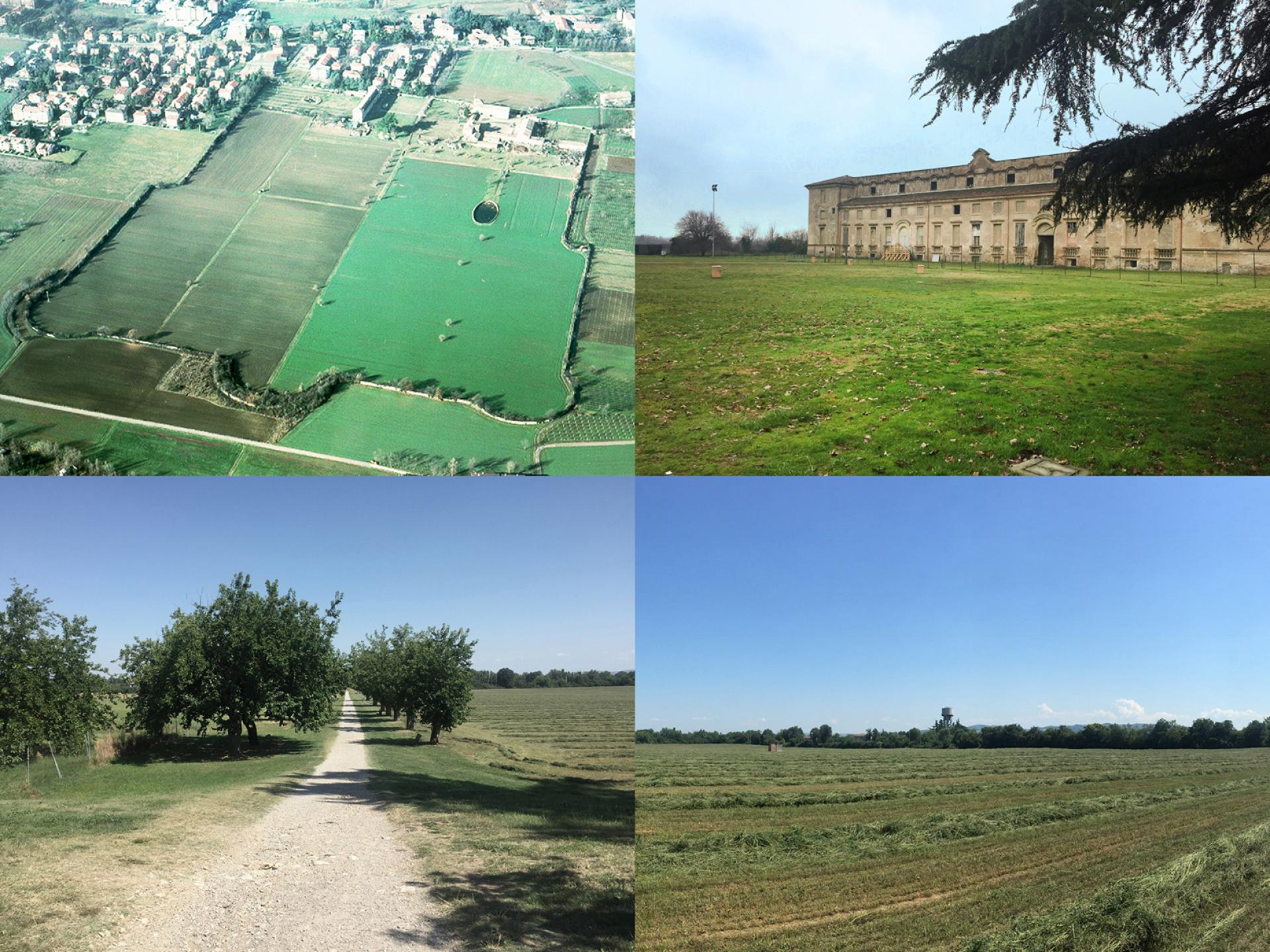
Its objective was to co-design a new identity for the 17th century Reggio Emilia Ducal Palace and its park (26 ha), in the suburb of Rivalta now the subject of a major territorial regeneration project to become a public park.
The project had two main peculiarities: it was a multi-stakeholder process with different local actors who had a say in the area, and it aimed at shaping future scenarios of service ecosystems rather than physical space. The latter was the subject of a landscape design competition, whose briefing was informed by the co-design outputs.
The process followed 4 phases:
1_Generative Listening: involvement of 26 local actors, selected by the municipality, in individual interviews to collect information about the place and get insights about its future.
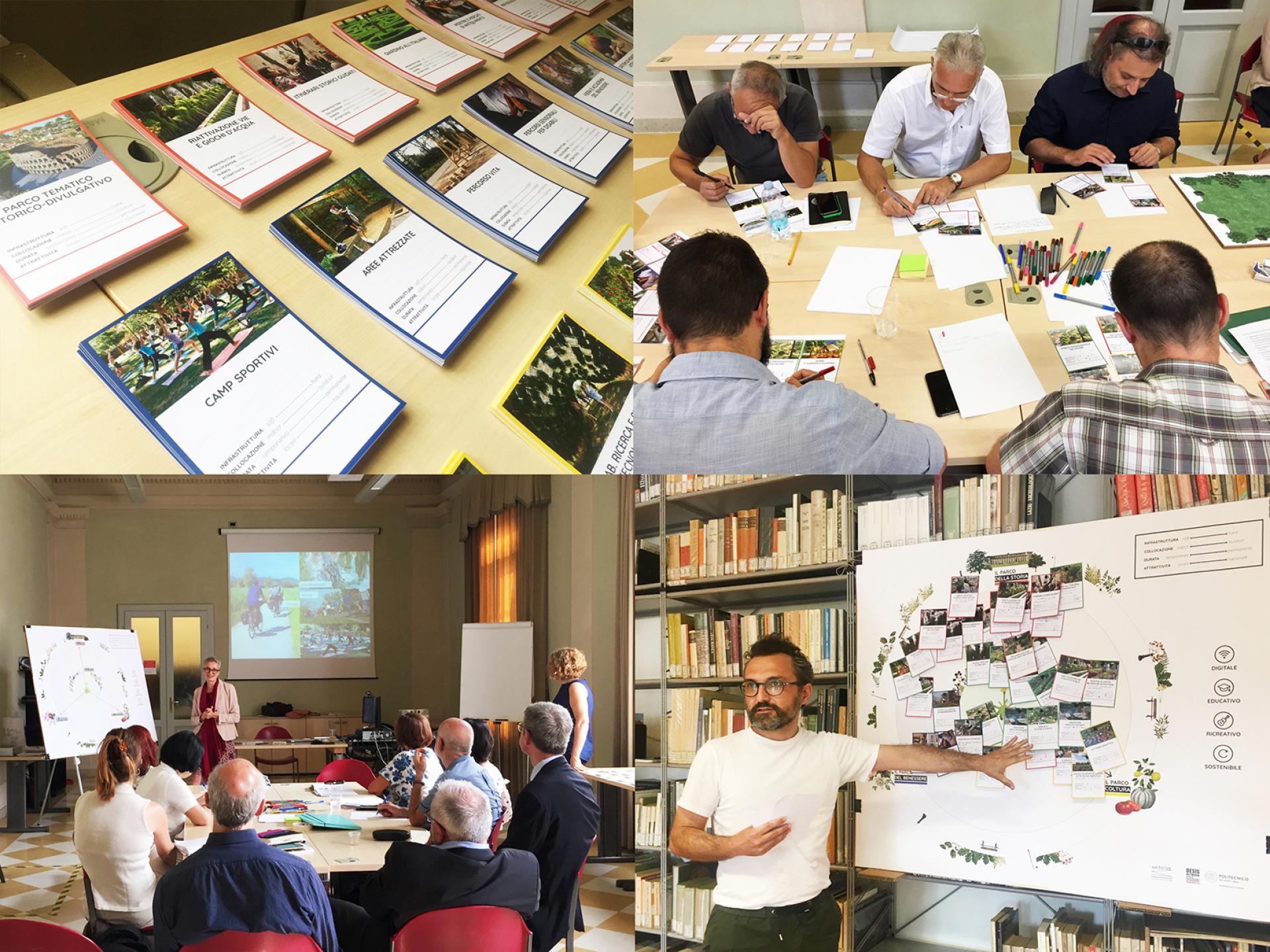
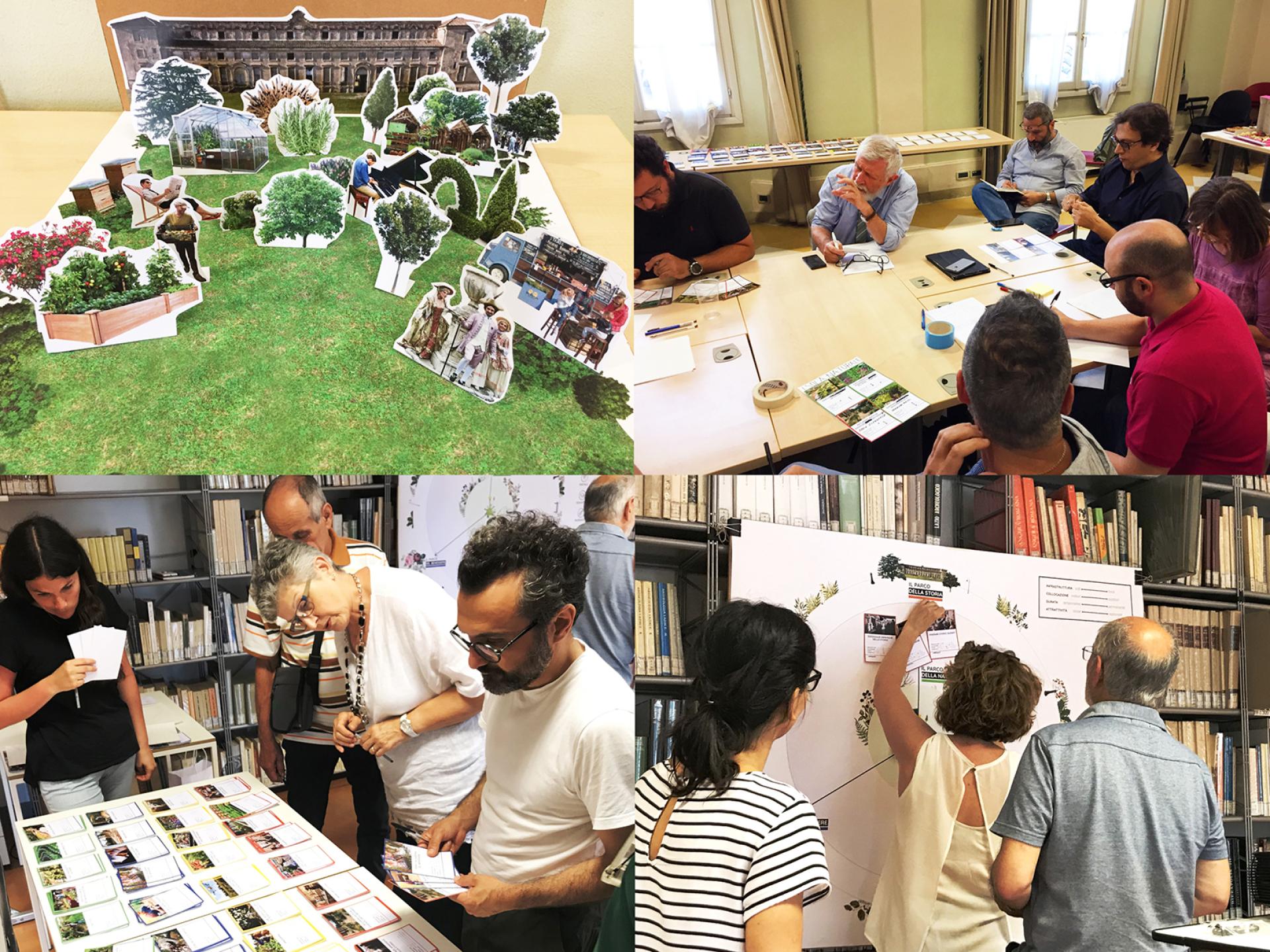
2_Co-design workshops: an intensive programme of workshops with 42 stakeholders to explore multiple service areas.
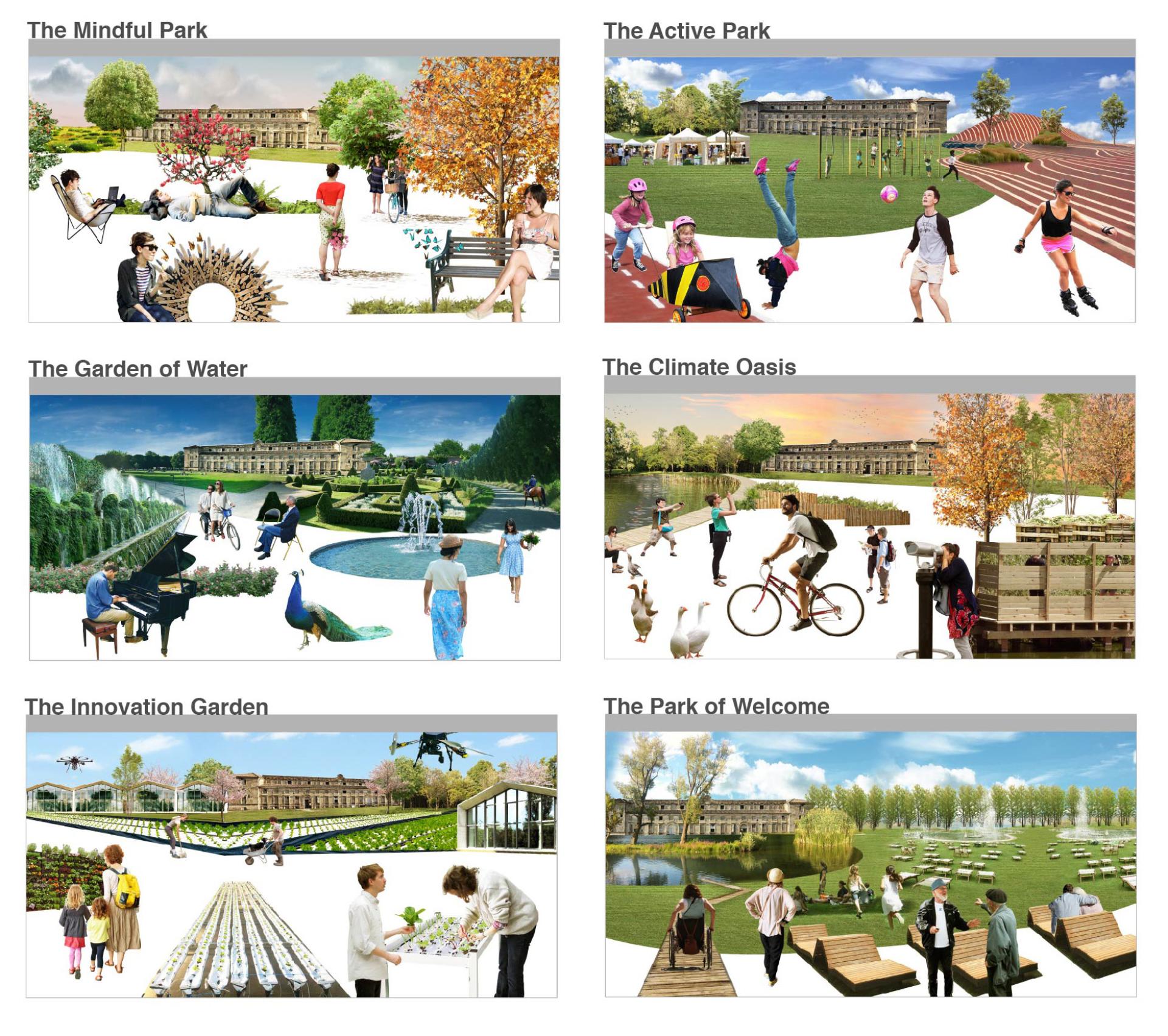
3_Scenario building and link with the international competition: the results of the workshops, in the form of 6 service scenarios, informed the international competition for the park, providing suggestions and orientation to participants.
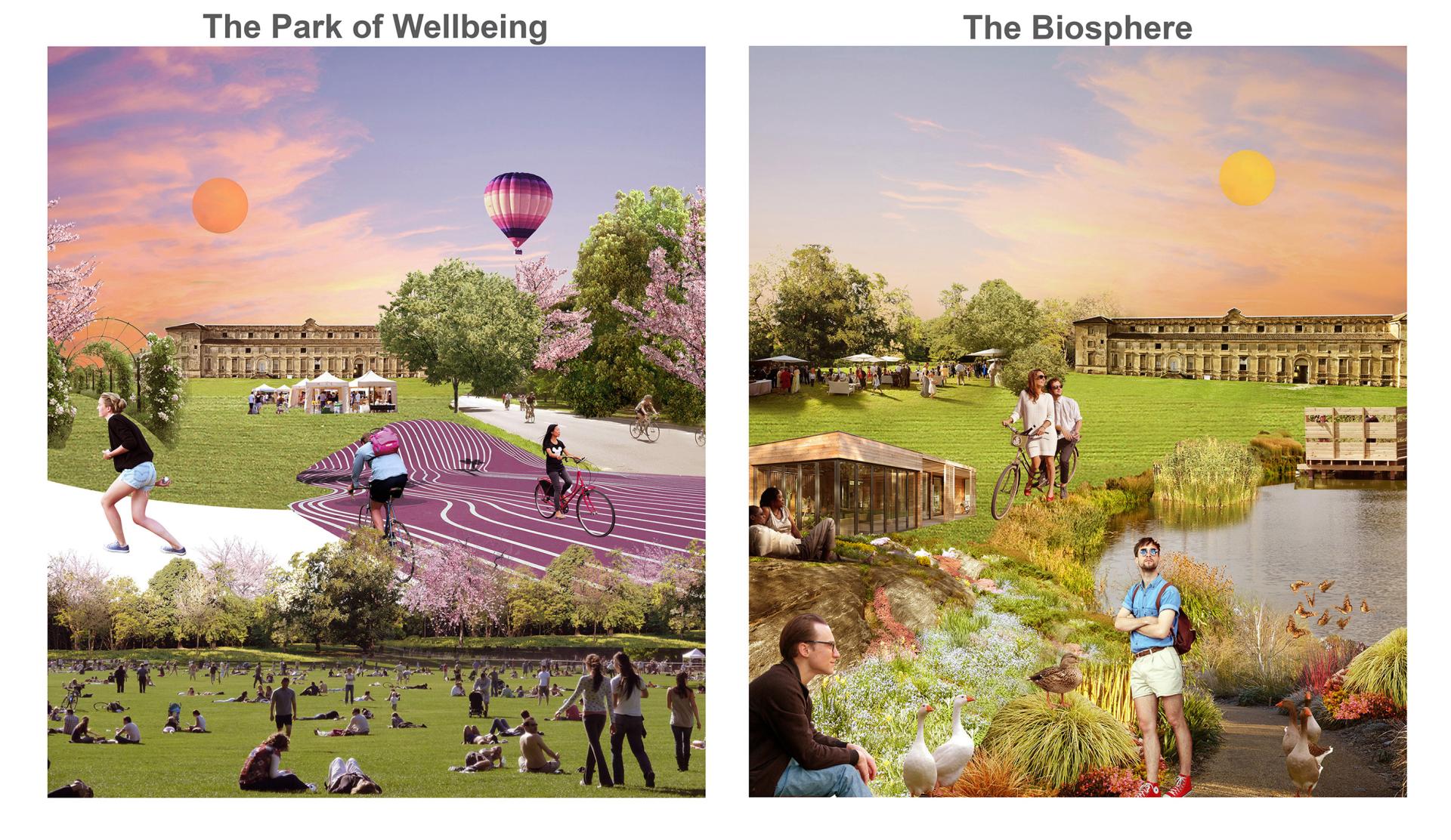
4_Integration of the scenarios into the spatial design project: the winners of the competition (Openfabric, Casana, F&M Ingegneria) were engaged in co-designing a final service ecosystem consistent with their project. This generated 2 alternative macro-scenarios, now the basis for a service masterplan.
Key objectives for sustainability
Re-value Rivalta has produced scenarios that allow achieving a number of objectives in terms of both environmental and social sustainability. These are clearly embodied in the landscape project now in the stage of implementation.
The entire project was created with a key environmental sustainability goal in mind: to preserve and ameliorate the huge 26 hectare green area by providing a range of functions and services that could support the costly maintenance of public green spaces.
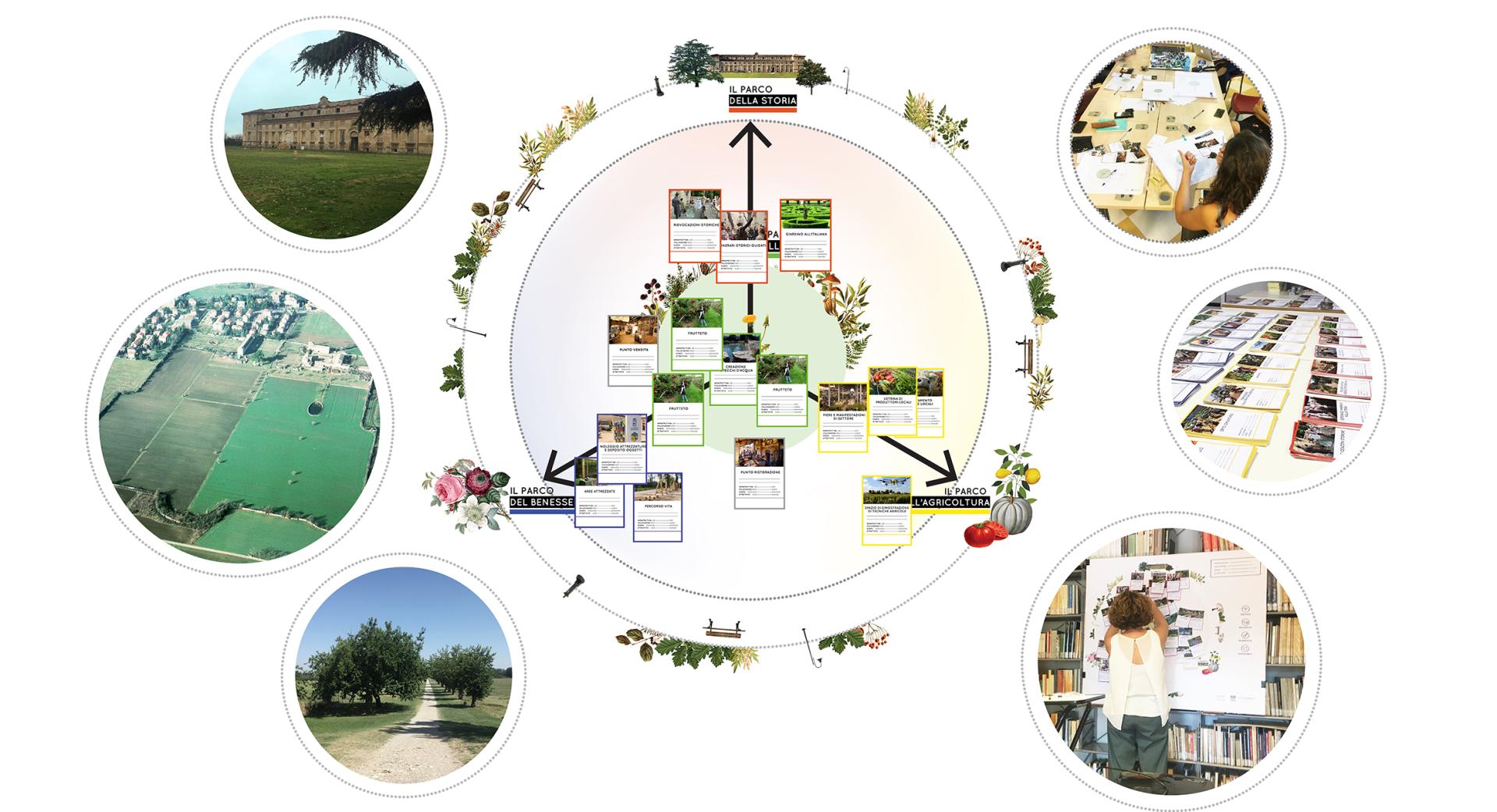
The two macro-scenarios that resulted at the end of the co-design process, in fact, put the environment enhancement at the centre of the project, i.e. the idea was to have a contemporary green oasis for the people of Reggio Emilia as an actual piece of nature within the city. A macro-scenario, called "The Biosphere", focuses on the idea of harmony between man and nature, the reintegration of local fauna and flora species, the activation of services for interacting with nature such as bird watching, gardening and woofing, helping to create a circular ecosystem. The other macro-scenario, called "The Wellbeing Park", focuses on immersion in nature to promote contemplative and active well-being, and build a new idea of health.
The final landscape design of the park actually triggers citizen’s behaviour towards more sustainable patterns and contributes to reaching the wider objective of social sustainability, i.e. the creation of a place that promotes wellbeing, that provides the right infrastructure to support social life and the growth of a community.
Re-value Rivalta reached key objectives in terms of social sustainability not only in its contents, but also considering its process, which started with the idea to understand what people desire and need for the places they live. The co-design process engaged different social parties, taking into account equity and diversity, in order to foster social cohesion and sustainability in the future park and in its collective management.
Key objectives for aesthetics and quality
The care for the aesthetics in the Re-value Rivalta project can be summarised into two main categories: one is related to the aesthetics of the co-design process, the other is connected to the aesthetics of place and landscape, therefore more linked to the actual results of the process itself. Co-design processes differ from general participatory activities precisely for the quality of experience they provide also from an aesthetic point of view, which is an intrinsic goal of the design approach.
According to the participants, the co-design sessions in the Re-value Rivalta process were aesthetically beautiful, in the sense that they were pleasant, colourful and aroused positive emotions. The designers created a number of design-friendly tools in order to facilitate and make participation more pleasant and convivial. These tools were attractive artefacts and visualisations that became powerful means to share, translate and communicate ideas. Aesthetic quality was conceived as an integral part of the whole co-design process and as a key attribute to stimulate the collective imagination.
The design resulting from the Re-value Rivalta process has placed the quality of the aesthetic experience at the centre of the project: the park is a place of harmony between man and nature, conceived with a hybrid character that allows multiple and different uses in a compatible and integrated way. The whole area is designed to allow positive user journeys, with a holistic perspective that includes contemplative and active experiences. It is conceived primarily as a pleasant place where people can meet and do things together, a safe environment whose beauty lies in the overall quality it generates.
Key objectives for inclusion
Re-value Rivalta was a participatory process that included a wide variety of actors: the Municipality of Reggio Emilia selected them among the most significant stakeholders in the cultural and associative sectors and among experts in the technical field.
This was an explicit choice: single citizens from the neighbourhood were not involved in the process, since the municipality had already put in place a set of actions to involve individuals. In the context of the Re-value Rivalta project, the aim was to involve relevant stakeholders who have a say in the Palazzo Ducale and its park: representatives of associations, foundations and institutions and therefore 'entities' rather than individuals, selected with a logic of diversity and who were to represent the aggregate interests of individuals and communities.They were engaged in the initial phase of Generative Listening as well as in the subsequent Co-design workshops.
The idea of consulting representatives of organisations rather than individual citizens helped to amplify the voices of some marginalised groups who, otherwise, would have contributed less effectively to the process, dispersing information and representing personal rather than community interests. In particular, the involvement of a local citizens' association was fundamental in order to gather inputs from the bottom and benefit from their knowledge of the place: this was a group of citizens who were considered to be key participants because they were actually bearers of shared concerns and experts in what they aimed to see implemented. In addition, other similar local associations were involved.
These people were mixed with other participants who covered key-roles in strategic institutions of the city, such as the director of local theatre, university professors, public servants, etc. Such a mix of participants ensured a type of inclusion that also embraces diversity and contributes to build a bridge between “the top-down” and the”bottom-up".
Results in relation to category
Re-value Rivalta is a significant example of how to put in place a strategic process of territorial regeneration adopting methods and tools of co-design and engaging a great variety of stakeholders. The very name of the project alludes to the fact that a neglected area was to be better valued: according to some participants, Rivalta was just ‘a field in which to put hay’, a sort of non-place that lost its role and significance within the city.
Therefore, the idea itself to initiate a territorial regeneration project consulting multiple and diverse stakeholders in a creative way contributes to make Re-value Rivalta an exemplary project that gives access to an underestimated place. It had the merit of putting the renewal of the area at the centre of public discussion, turning this discussion into a strategic conversation.
The winning landscape design project developed by Openfabric, Casana, F&M Ingegneria has incorporated numerous inputs coming from the co-design process: it is a vast flexible space, in which 695 new trees will be planted, creating a hybrid place for different uses and open to everyone.
The deepest political sense of this intervention is to transform the spirit of a place that at ancient times was characterised by exclusivity, regenerating it into a place open to all citizens, a place of freedom and democracy. But, above all, the final winning project was conceived not only as an urban plan, but also as a ‘service masterplan’: the design of a (public) space is informed by the design of (its) services, meaning that the development of specific activities actually builds the identity of a space.
This is crucial when it comes to spaces that are urban commons as Rivalta: places of shared interest, critically important to the urban environment, and perceived by inhabitants as symbolic sites that gives a community its identity and facilitates social interactions. Construction is expected to start in winter 2022 and be complted in 2023.
How Citizens benefit
Re-value Rivalta is a co-design process in which citizen involvement is key. Citizens are not considered only as the final beneficiaries of the project (as they will be users of the area) but fundamental players to be engaged. They have been involved in associated forms and considered as key-experts of the place, a vital resource to include in the participatory process.
Co-design activities were conducted as a form of citizen empowerment with the aim of producing a collective awareness of the place and the possibility to play a key role in designing and changing things, more specifically those services that affect their daily life and community in a place like Rivalta.
This entails empowering people through leadership development and enhancement of their capacity to collaborate with strategic players. People had the chance to participate in public life and to exercise a basic right of democracy, which is a process leading toward more active citizens and a means of generating more efficient and effective interventions in the city.
The impact of citizen engagement in the final project concerns mainly the interlinked combination of functions and services that are included within the landscape and architecture project. The wide spectrum of activities that it is possible to run in the Rivalta park reflects the effort to consider the needs and desires expressed by the organisations involved in the co-design process. Welcoming, hospitality, mobility, food and orientation services are integral parts of the offering system that will characterize the area.
Hence, citizen participation had a significant weight in defining the identity of the place, also because they were not simply involved in a ‘yes or no’ consultation, but they were stimulated to creatively contribute, pushing the boundaries of their imagination and each building on the ideas of the other, in a fruitful effort of collective intelligence.
Innovative character
The innovative character of the Re-value Rivalta project lays in the following aspects:
- the inclusion of multiple and different actors, not only citizens or experts, but the widest range of stakeholders as possible, considering diversity of participants as the key-criterion for inclusion, searching for contamination and reciprocal enrichment;
- the thought provoking approach adopted by design researchers to run the whole process: the aim was to avoid a simple consultation and to manage a creative process that embraces complexity. The work of the researchers consisted in steering, making emerge and then critically and creatively elaborating the needs, desires and the ideas of service arisen during the process;
- the idea to use a co-design process to inform a landscape design international competition, in so far creating the brief for architects and landscape designers.
- the inclusion in the last part of the co-design process of the team of designers that won the international competition and the continuos supervision pf the municipality.
A further innovative element characterising the project is the very idea of conducting a co-design process for a public space from a service-oriented perspective. This is something new in urban planning and also in urban regeneration projects: the inclusion of service design researchers has led to the idea of modelling future service scenarios first and then considering them as a starting point and not an end point.
Hence, this co-design strategy resulted in the development of a comprehensive scenario characterised by an interlinked combination of functions, services, assets and rules to be integrated into the physical development and the spatial design of the site. This is something that in future can lead to the elaboration of a service masterplan to inform and complement the more traditional urban masterplan.