The transformation of Søhusene
Basic information
Project Title
Full project title
Category
Project Description
Through a thorough renovation, Søhusene developed from being a run-down housing department with rental problems to a beautiful and attractive residential area with long waiting lists.
Project Region
EU Programme or fund
Description of the project
Summary
Søhusene (former Riddersborgparken) was established in 1976-1982 and ended up having 414 apartments in various sizes. As the years passed, Søhusene got the reputation that it was a worn out ghetto which led to massive problems in finding new tenants. As a direct consequence of that, Søhusene got financial problems and a challenged composition of residents.
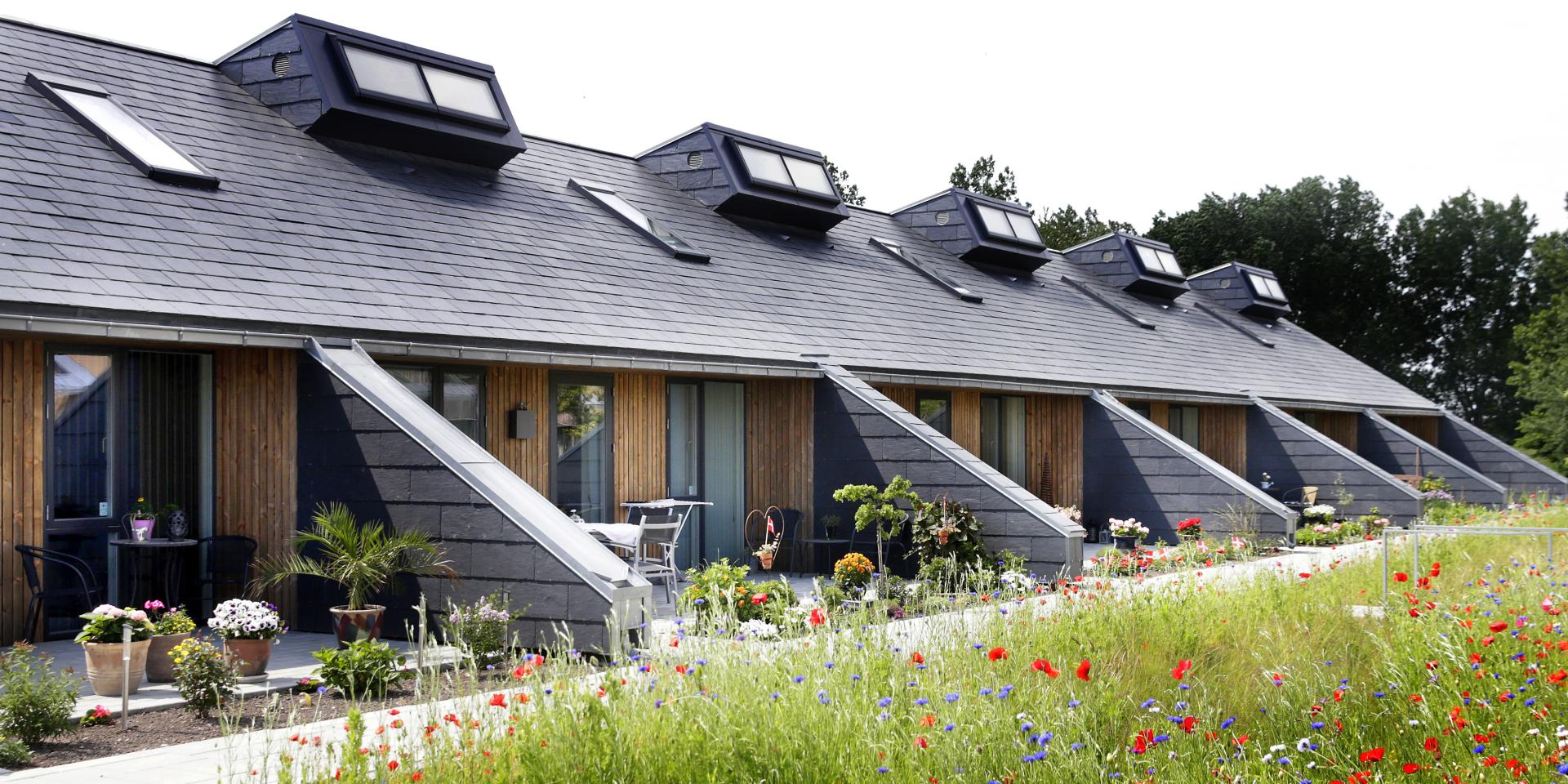
To change the image of Søhusene a numerous initiatives was started but nothing helped the situation. Therefor we decided to renovate and modify Søhusene, but also to reduce the number of housings from 414 to 191. 46 of the original apartments were preserved but renovated and then we added 145 new terraced houses.
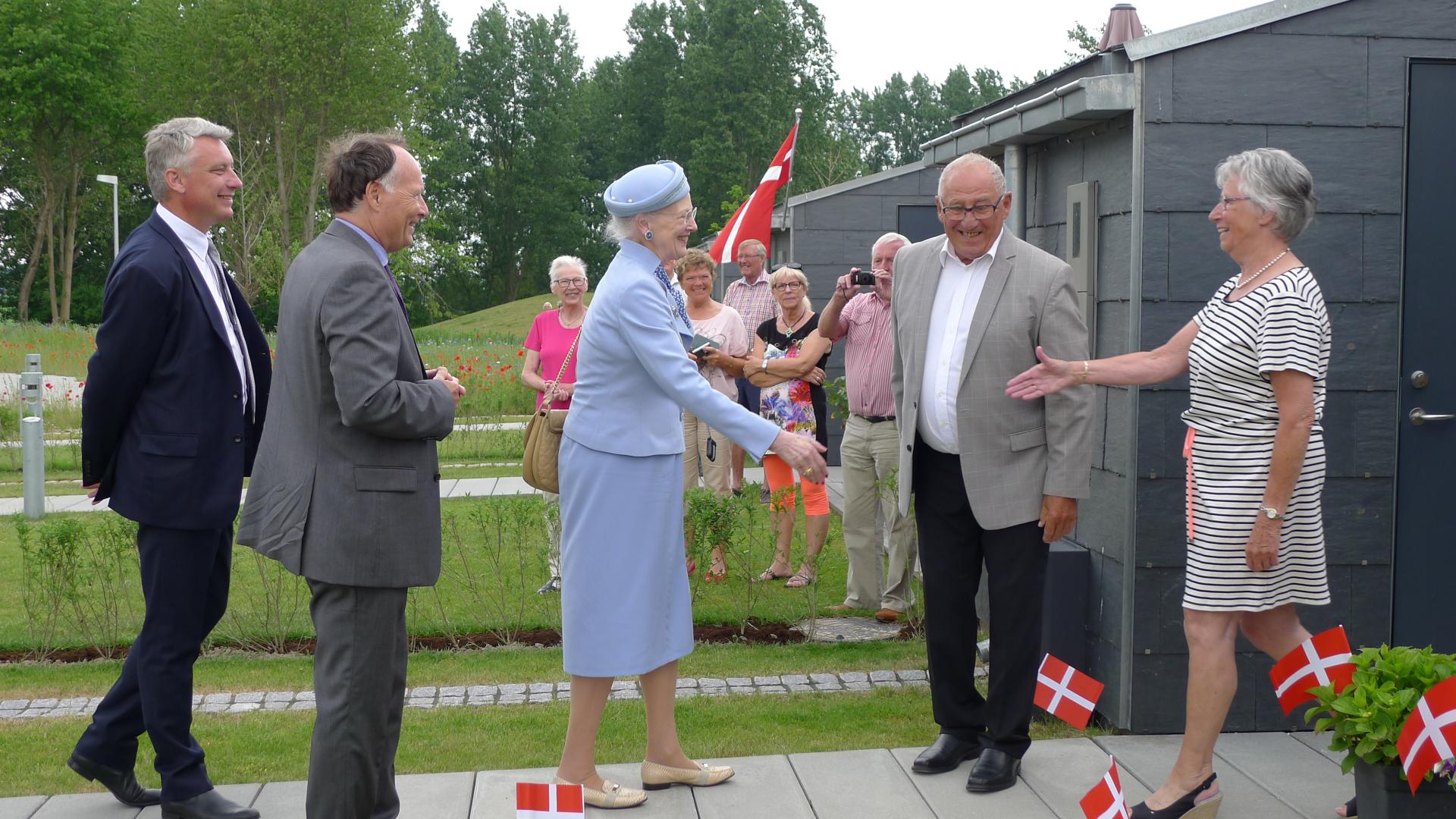
During the whole process we shared information about the renovation, the new terraced houses and the outdoor area with the public. We also arranged different events where the public could come by and see how the project evolved and get a view of the new houses. The result of the renovation and the new houses combined with the branding and storytelling of Søhusene meant that Søhusene became a popular and coveted area where people want to live and is no longer considered a ghetto. Instead of having problems with finding new tenants the waiting list is now long.
Key objectives for sustainability
Two apartment blocks, which stand as the only ones from the previous buildings, have been energy renovated with new highly insulating windows and a new slate roof with built-in solar cells for shared electricity. The new terraced houses, which make up the majority of the renovation, meet Energy Class 2015. The outdoor areas are designed as a local LAR solution.
Key objectives for aesthetics and quality
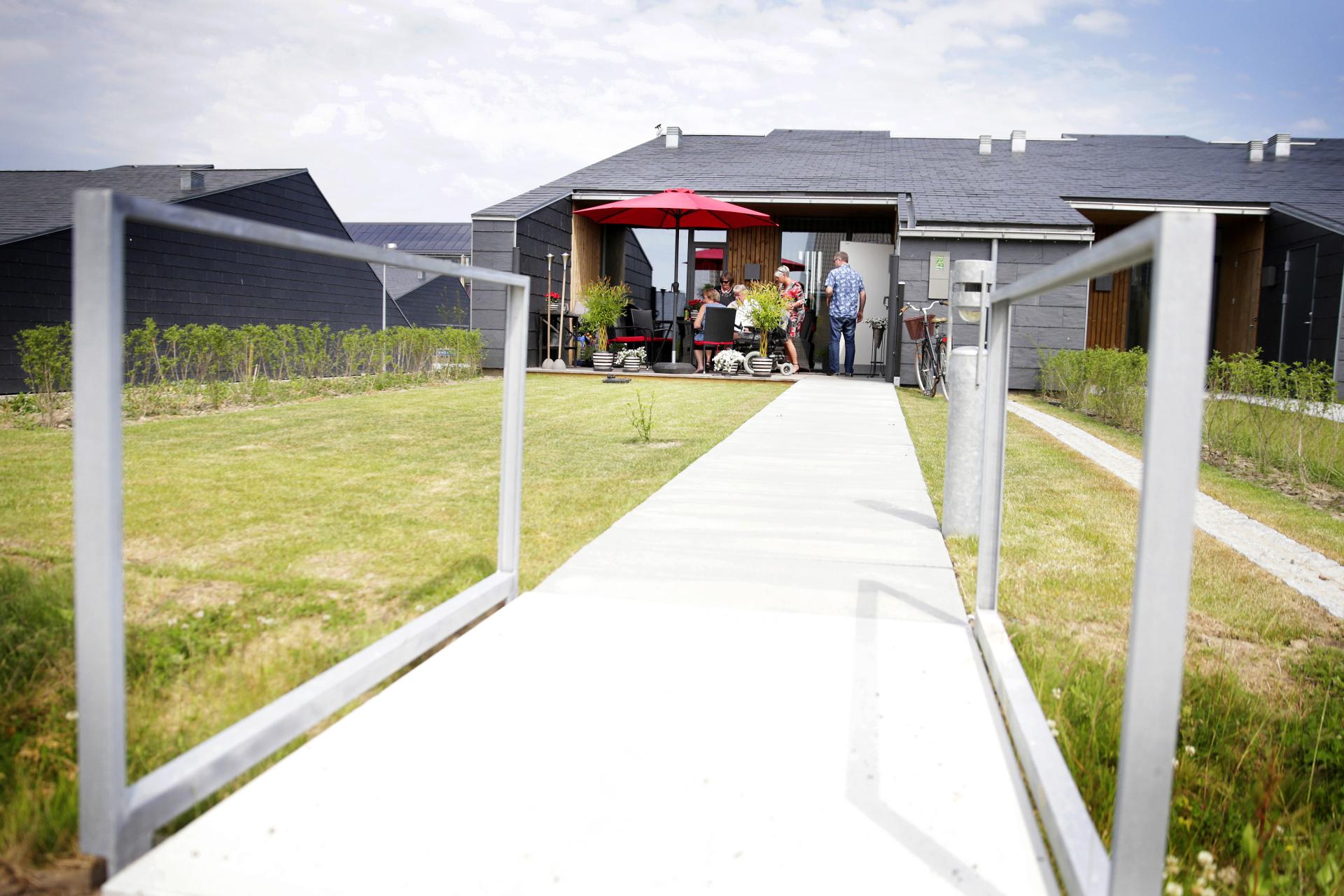
The old three-storey apartment blocks have been replaced by single-storey terraced houses with small gardens on both sides.
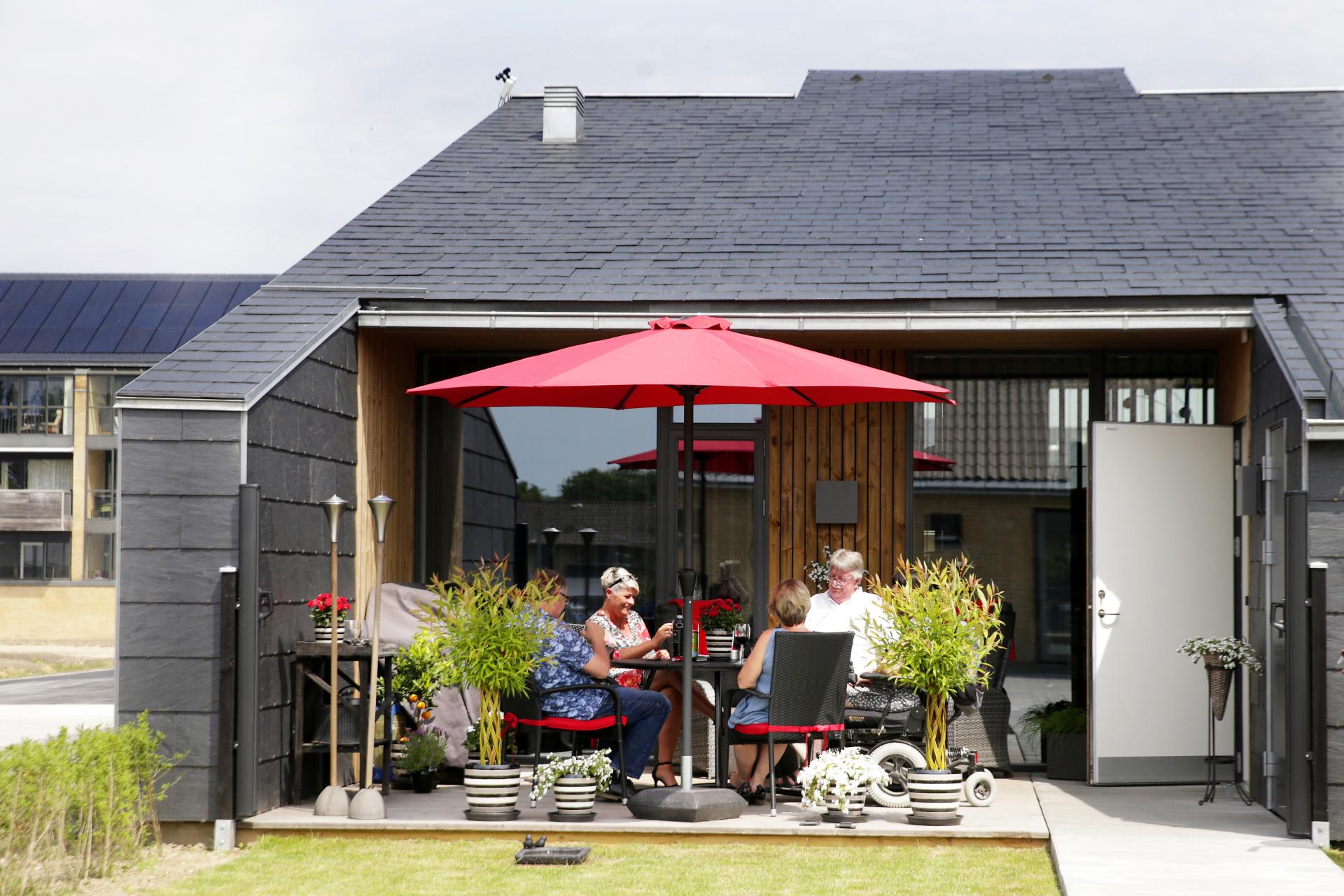
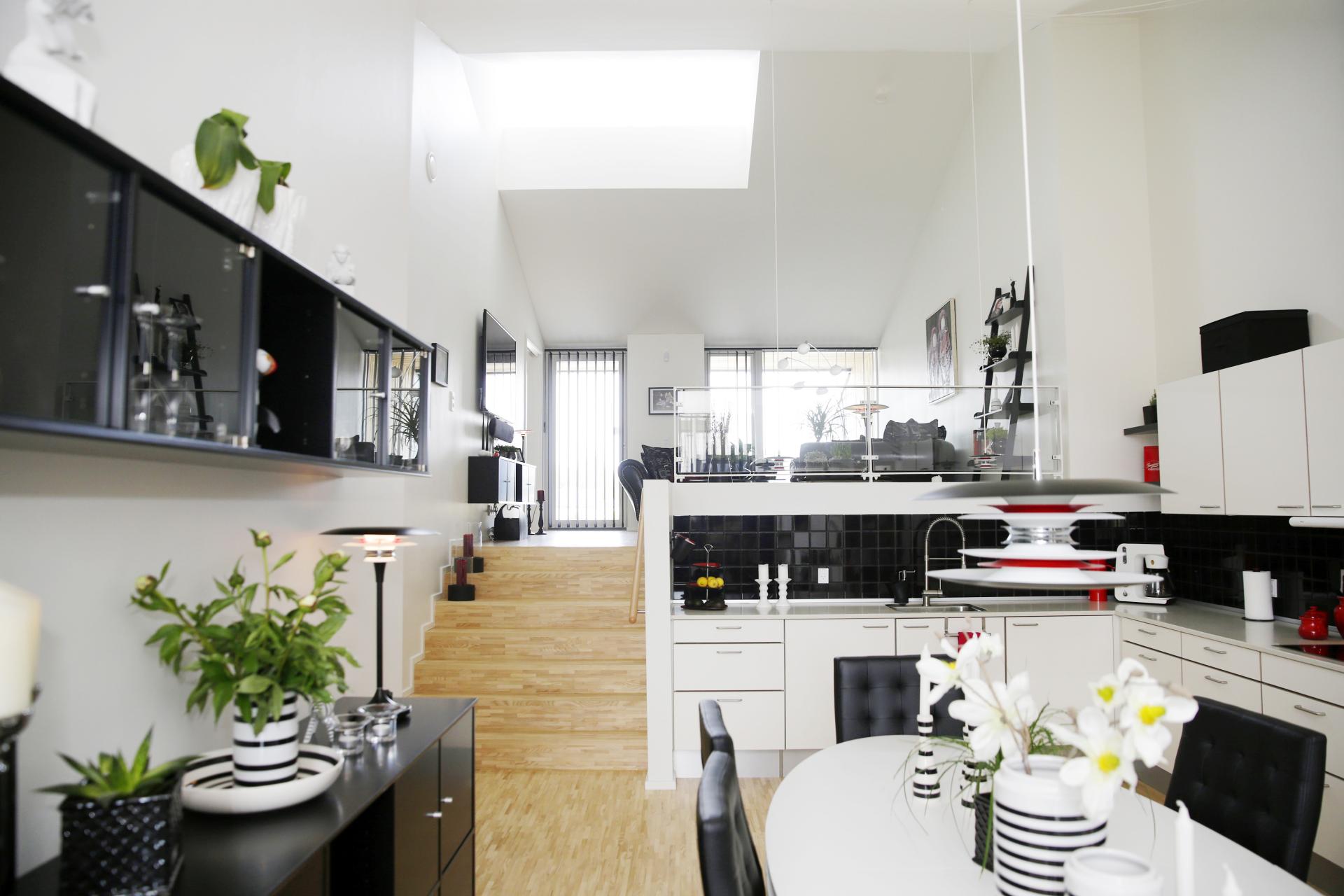
All the homes are very bright and are almost all characterized by their translucent living spaces. The section of the terraced house creates spatial qualities, because in all living rooms the ceiling slopes and there are skylights. All homes have two private outdoor areas, each with its own character. On the entrance side there is a garden and a partially covered terrace in wood, while on the opposite side there is a terrace with tiles.
Søhusene is a good example of a home where you can live your whole life, even when you have children or become ill. Life cycle housing meets up to three standards:
- Level-free access to the home. Elevators in apartment blocks.
- The main rooms are on the ground floor with access without steps or stairs.
- All rooms and the connections between them must have sufficient space conditions, what i.a. translated to make room for a regular wheelchair.
Key objectives for inclusion
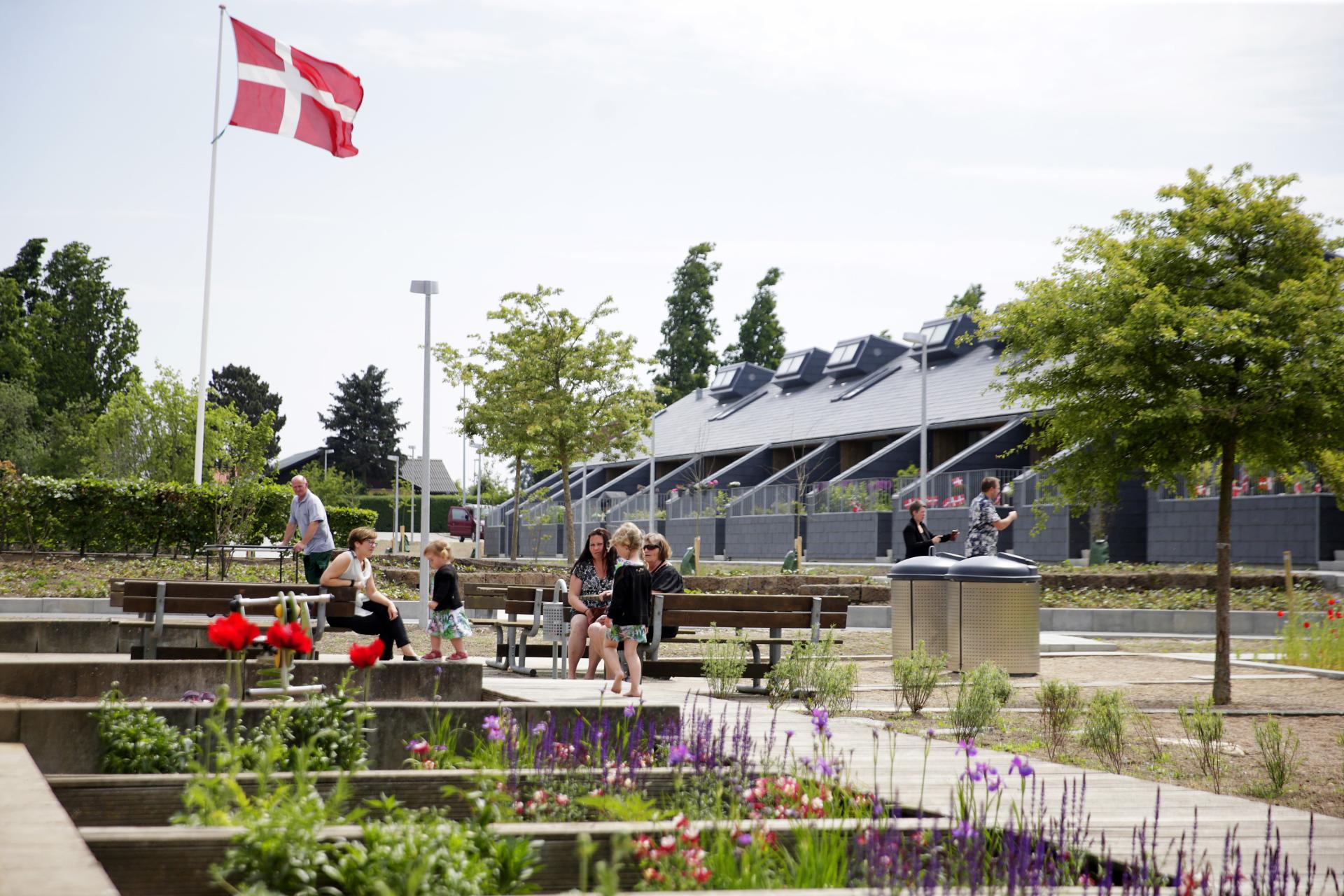
The changed image of Søhusene has not only a positive impact on the residential area itself, but also Nakskov town, as the town is now no longer associated with a run-down ghetto area. At the same time, the beautification of the residential area's outdoor areas is something that the city's citizens also value and use for walks in the area. The outdoor areas designed as English garden towns with LAR solution provide a good opportunity for outdoor living and socializing.
The entire renovation took place in close dialogue with the residents, who have been involved in workshops, committee work on specific solutions in the homes, etc.
Results in relation to category
The housing office Denmark, in collaboration with NAB, has helped to transform a large part of the old Riddersborgparken into the super modern homes Søhusene in Nakskov.
In this connection, Boligkontoret Danmark has conducted two surveys: In November 2016, we conducted a resident survey among the department's residents, and Megafon completed in Dec. 2016 an image survey among Nakskov's other citizens over the age of 18 to follow up on what the transformation to Søhusene has had to do with the department's image in the rest of Nakskov town.
The survey among the residents shows that as many as 95% are satisfied with living in Søhusene and as many as 88% would recommend friends and family to move into Søhusene. In addition, the study shows that the conversion has attracted several tenants who have previously lived in owner-occupied or cooperative housing (25%). Søhusene has thus become an attractive alternative to owner-occupied housing as a form of housing in Nakskov.
The image survey in the city shows that as many as 82% state that the renovation of Søhusene has changed their perception of the neighborhood positively and in continuation of this, 70% believe that Søhusene has become an attractive place to live.
All in all, we can safely conclude that the transformation of Søhusene has been a huge success both among the department's residents, but also for the department's image in general. It was both visionary and rightly identified by the board and the construction department.
It is also the story that an exposed residential area has been transformed into a well-functioning attractive place to live because there has been a local focus on the major transformation of a department. Søhusene is the example of how you can create a new positive residential area, if only you are visionary and energetic enough.
How Citizens benefit
The renovation of Søhusene contains several inclusive tools. First and foremost, a number of resident surveys were conducted with a view to examining the demand for Vestlolland. The residents were also involved through workshops on the interior design of the apartments, house rules and planning of the outdoor areas.
Innovative character
The project is a significant example of how a general renovation project with the right focus and a good process can change not only buildings and outdoor areas, but also the composition of residents, social life, reputation, and economy. The collaboration with local businesspeople is also characteristic and benefits both the residential area and the local area. The beautiful result and the processes around the renovation are used and shown as an example for other housing companies and architects prior to renovation cases.
Today, Søhusene appears as a future-proof residential area, which is both up to date in relation to the standard of the buildings, but also in relation to the future housing wishes of the citizens of Vestlolland. Significant energy savings have been achieved, and in addition, the many processes around the renovation are used as a good example for other architects and housing companies.
The project is a significant example of how a renovation project with the right focus can change not only a housing department's buildings, but also the composition of the residents, image, and finances.
It is especially seniors from the owner-occupied housing market who have sold their detached house and moved into Søhusene, just as the previous surveys predicted, and there is now a waiting list for the homes. The current activities are carried out by committed residents.
Søhusene have gained a completely new image and positive reputation in the local area. Where the area was previously considered by residents and citizens to be a run-down ghetto, it is now considered an attractive residential area with good housing and inviting outdoor areas.