The Station of Being
Basic information
Project Title
Full project title
Category
Project Description
By transforming a bus stop into a more welcoming, safe and less stressful environment for the traveller, the Station of Being, encourages people to use public transport.
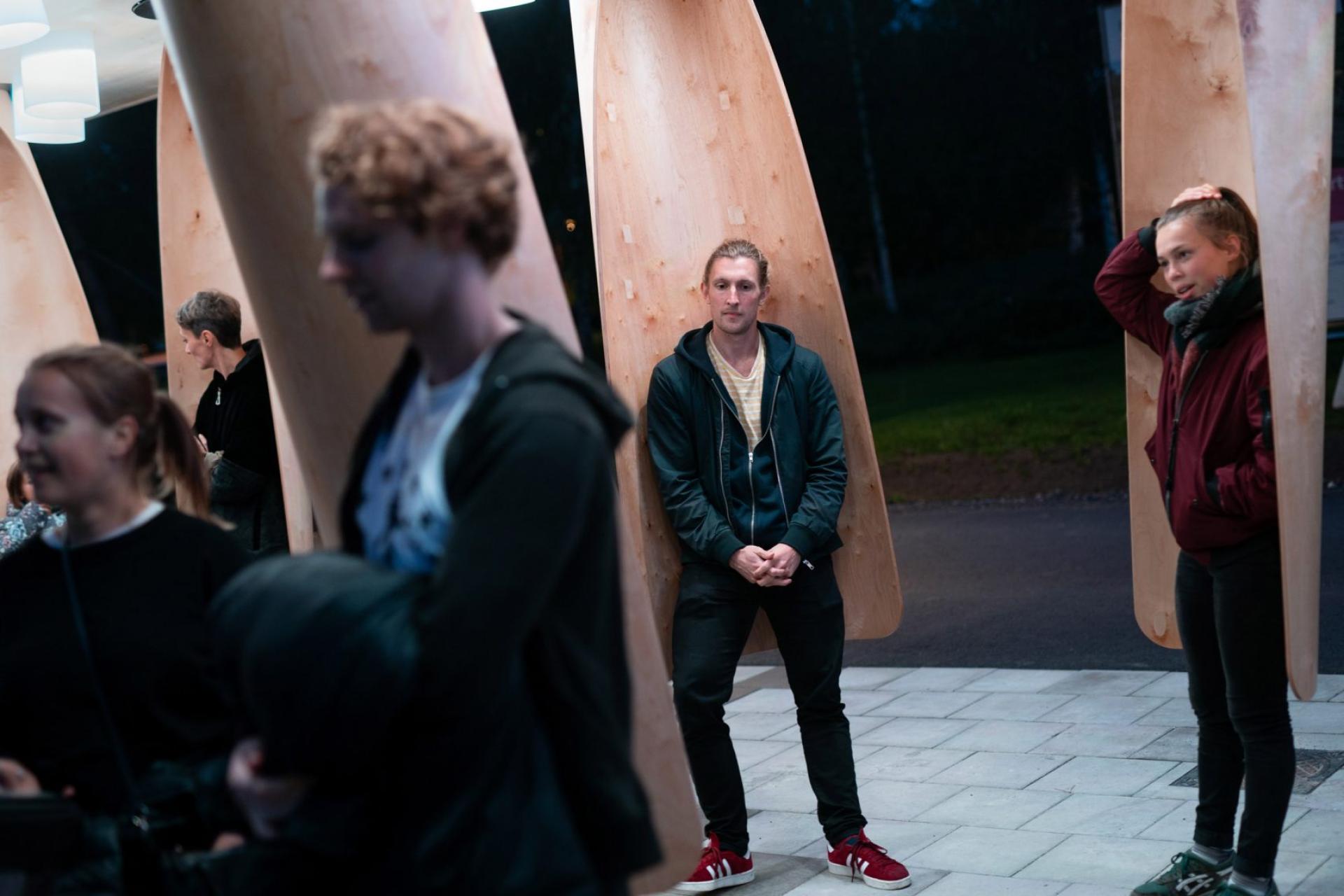
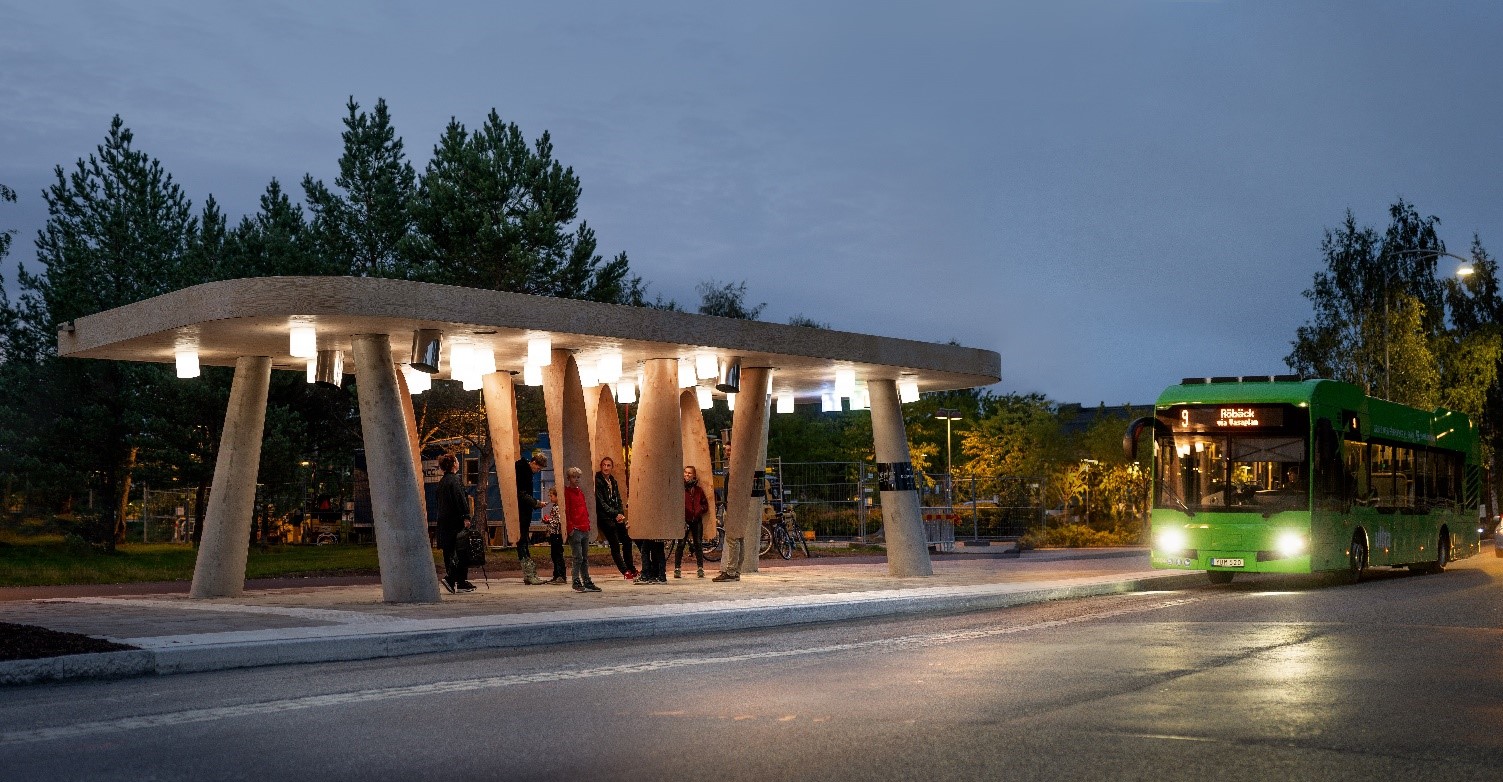
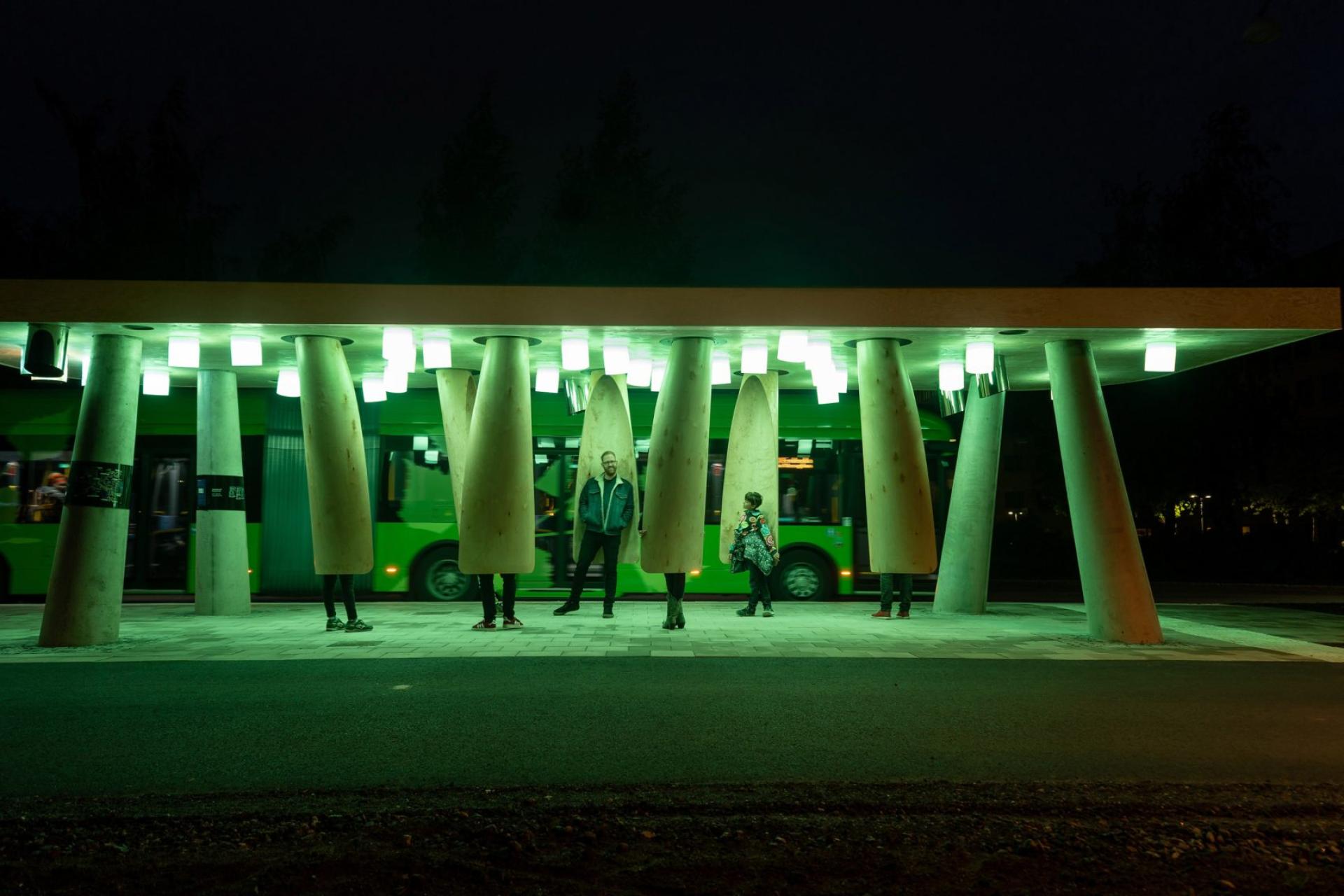
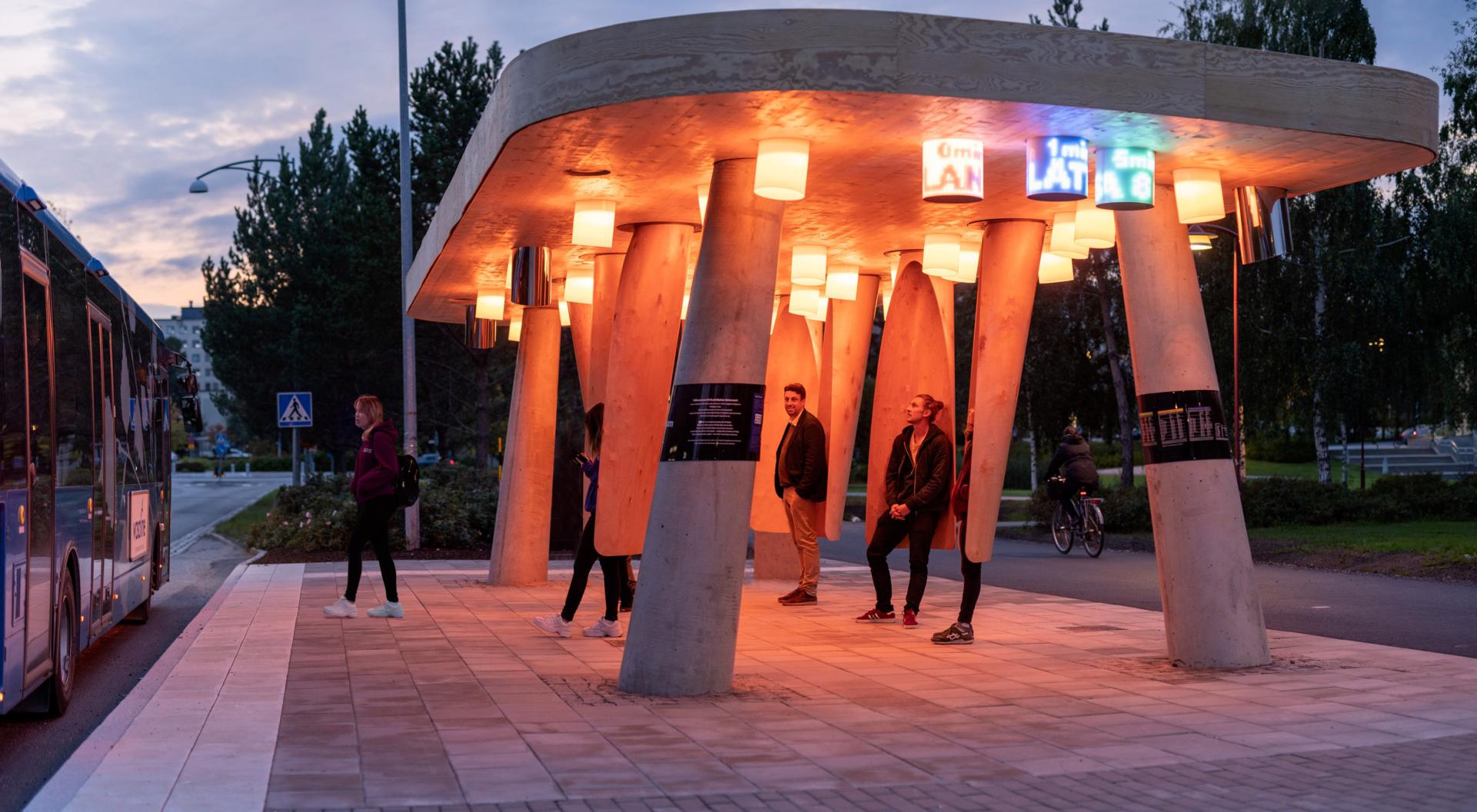
The bus stop’s 'smart' roof uses light and sound to alert travellers that a bus is approaching, and each bus line has its own unique sound. The timber pods within the structure rotate automatically to protect travellers from the weather without requiring any power and allow them to interact by creating social spaces.
Project Region
EU Programme or fund
Which funds
Other Funds
Horizon 2020,European Union’s Horizon 2020 research and innovation programme. Smart Cities and Communities Lighthouse Project RUGGEDISED, 2016 - Currently ongoing project.
Description of the project
Summary
By transforming a bus stop into a more welcoming, safe and less stressful environment for the traveller, the Station of Being, encourages people to use public transport. The bus stop was designed to serve the fully electrical bus fleet in the Smart City of Umeå in Sweden, but more important it was designed in cocreation with the citizens, especially the young students to improve the waiting conditions for passengers using public transport in the cold weather conditions within the region. It has a "smart roof" which contains lighting and speakers that are used to create different atmospheres dependent on the bus that is approaching. The lights and sounds alert passengers to approaching buses so that they can relax and shelter from the wind while waiting, rather than constantly having to keep a look out. The Station of Being looks out for the bus for you – so that travellers can have 'time for just being. The timber pods within the structure, that is made from locally grown timber, rotate automatically to protect travellers from the weather without requiring any power and allow them to interact by creating social spaces. Short movie: https://youtu.be/GsdXOyJvnZM
Key objectives for sustainability
With heat records being broken in the world and the Northern Regions last summer, climate change is a major societal and environmental challenge. The City of Umeå is undertaking various sustainability projects, one of which aims to promote sustainable travel. Yet, with several months of snow per year and temperatures getting down to -30°, buses are sometimes the only alternative to cars. As electric technologies are becoming reliable even in these climatic conditions, Umeå is moving to all-electric buses. Together with the designer they worked to transform the public transport experience, focusing on the bus stations. The Station of Being is a first outcome. Waiting for a bus in Umeå may well mean standing on an icy platform in a cold snowstorm, continuously on the lookout out for the bus, while trying to escape into a mobile phone. Even though with rapid bus frequencies in Umeå it may only be 5-10 minutes, it does not make taking the bus very attractive. It may be no surprise that the design team, together with students of the Umeå Institute of Design, recorded many travellers describing the waiting experience as stressful, wasteful and unpleasant. More surprising were observations of travellers waiting inside, until they saw the bus appearing through the window – and then run mad for it. At the same time the traditional shelters and seats, which ironically are the same as in many places in the world, were left unused, for instance because the bus could not be seen, or because snow had piled up in them.
Key objectives for aesthetics and quality
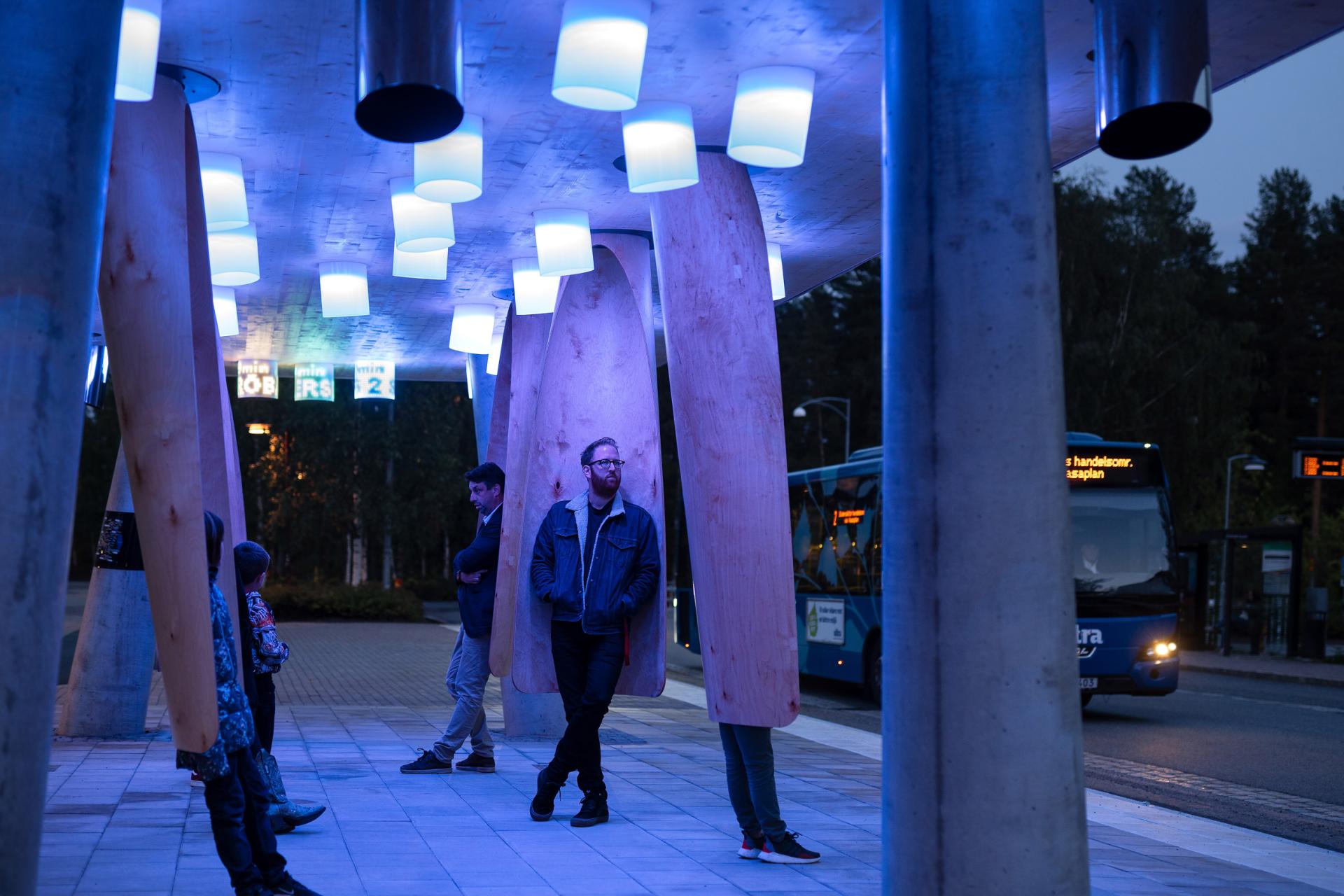
The designers got to understand the desire of commuters to have some time to ‘free the mind’. Being in transit means also transitioning mentally. From a stressful day at work to again a lot going on at home, for instance. The designers realised the potential of turning ‘wasting waiting time’ into getting ‘time to reflect, to feel, to just be’ – which became central for the project. To achieve this, the designers first of all felt that not the travellers, but the station should continuously lookout for buses coming. This resulted in a smart roof, integrating lighting and sounds. These gently inform travellers when a bus is on approach. Every bus line has its own signature: For instance, when bus line 9 to Röback, that hosted local glass makers, is 20 seconds away, ‘glassy’ tones sound through the station and yellow shades appear on the ceiling and on the pavement. This mediascape frees travellers from having to look at the bus and gives them time to ‘just be’ until they are ‘woken up’, while providing a meditative atmosphere to be in.
Secondly, the designers aimed to provide a comfortable space to ‘be’. A seemingly evident solution would have been to build an enclosed space with seats and heating, however the reality proved more complex: The team clearly understood the preference of commuters to be outdoors after a day of indoor work. They also observed that most travellers preferred to stand, move their body or lean against a wall for a few minutes instead of sitting down on an, often cold or snowy, seat. This, in combination with energetic requirements and an ambition of creating an open, accessible space, articulated the design challenge: How to make waiting outside comfortable in a variety of weather conditions – without needing energy?
Key objectives for inclusion
The design process started with a thorough field research, including observations and a multitude of dialouges conducted in cooperation with students (who also were the main target groups). The design team recorded many travellers describing the waiting expericence as boring, wasteful and (during winter) unpleasant. They observed travellers waiting inside their front doors, until they saw the bus appearing through the window – and then run mad for it. To make a space attractive one could easily think of making an enclosed space with heating.
Observations of travellers leaning rather than sitting, and statements from travellers indicating their love for being outside articulated the design challenge: how to make waiting outside comfortable in a variety of weather conditions? This challenge formed a clear contrast with the bus stop as it was: Like at most ordinary bus stops, travellers typically stand on a windy and icy platform, having a peak on the road about every 10 seconds while looking down at their mobile phones. Although seats and shelters are provided, hardly anybody uses these. The priority is to take the bus, and for that it is necessary to be continuously on the lookout for your bus. If you sit down, others block your view. And when you stand inside the shelter, you cannot see the traffic information display. Most people like to have ample personal space – which is difficult to achieve with multiple people in a shelter of only approximately 3x1 meters. The enclosed solution was rejected also for the sake of the sense-of-safety reasons, in this case especially for young women. In the dialogue and design phase the team realised that most women do not feel safe to enter a closed space with to them unknown men – which meant that they ended up staying outside the bus stop in the dark, cold and rainy weather.
Results in relation to category
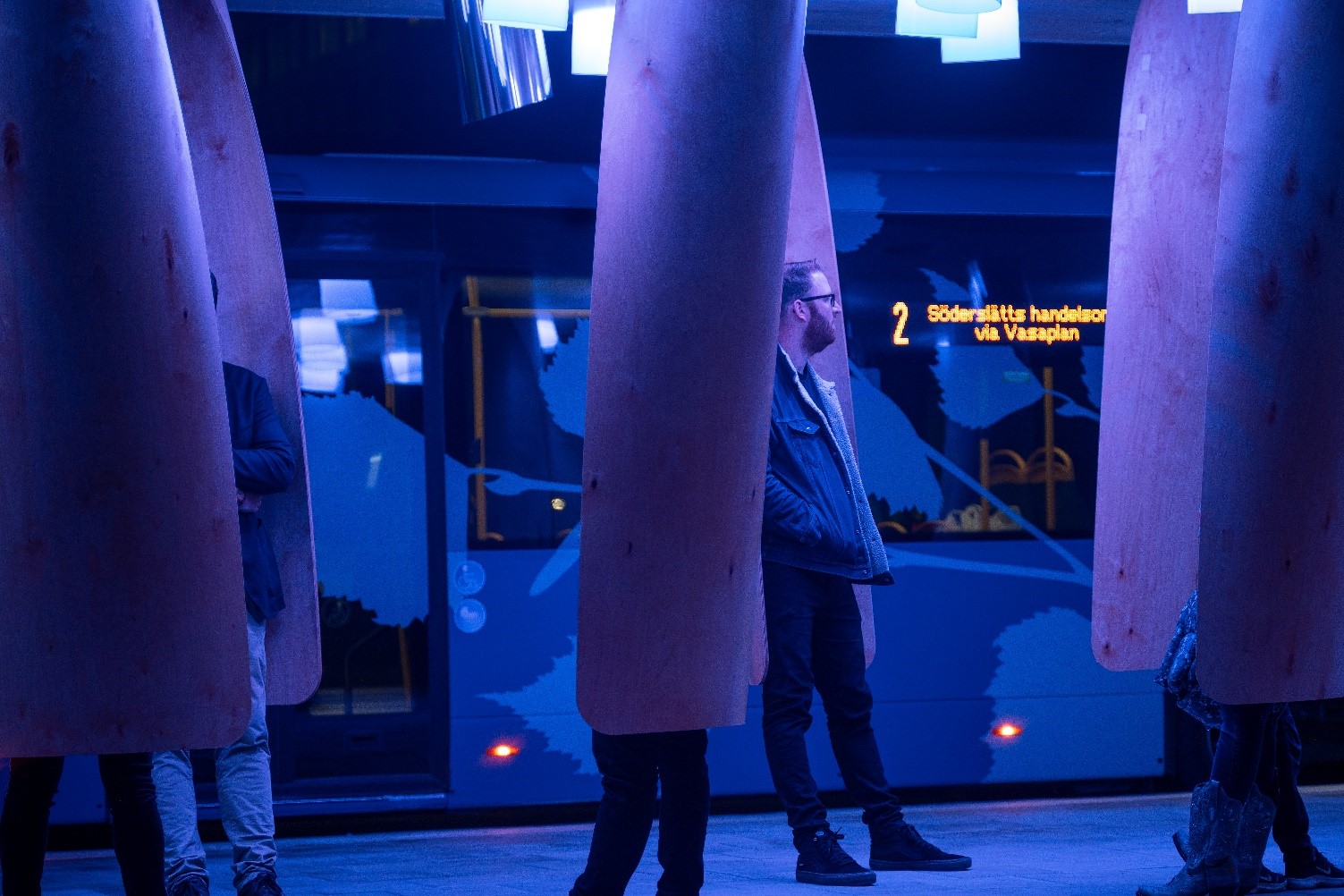
Pods became part of the unconventional answer. The pods, looking like rigid, wooden jackets and hanging from a giant timber roof, invite travellers to lean in them very comfortably. They can be rotated easily, so that one could always stay out of the wind, no matter in which direction the wind blows. In contrast to the traditional shelter, which only gives protection in a few wind directions,. The pods also invite people to move their body and to create various social situations: looking at each other, or keeping others out of the wind. The beauty is that the pods provide comfort and warmth without consuming any power.
The whole construction is largely made out of locally grown and produced timber and consumes a comparable amount of energy to traditional bus stations. The little electrical power needed is provided by the Umea hydropower generator. The designers also paid attention to maintenance: Unlike traditional bus shelters, the snowplough can drive through the station and directly clear it from snow, as the pods move away automatically - making the station accessible, safe and comfortable.
The whole construction is very durable, but at the same time it is possible to dissemble it and move it to another place if needed.
How Citizens benefit
To make the bus stop attractive and a sheltered space, one could easily think of making an enclosed space with heating. But the enclosed solution was rejected for the sake of sense-of-safety reasons, in this case especially for young women. In the dialogue and design phase the team realised that most women do not feel safe to enter a closed space with to them unknown men – which meant that they ended up staying outside the bus stop in the dark, cold and rainy weather. Gender and inclusion aspects were very important in the design. There are more women then men using the public transport in Umeå as well as other cities. So it was natural to let women be the norm – how do they want to use the bus stop and wat will make them comfortable.
Innovative character
- Hanging pods to create a micro-climate for the passengers, which can be turned in any direction by the wind or by choice from the traveller. The pods are placed in such a way so that the bus station, if necessary, can be ploughed with a snowplough. The pods hanging from a giant timber roof, automatically turn in position that allow travellers to lean against them, out of cold wind. “They provide support yet also allows people to keep moving their body”, the designers explain. The pods moreover cater for various social situations: looking at each other, keeping others out of the wind. The beauty is that the pods provide comfort and warmth without consuming any power.
- The meditative light- and soundscape connected to the real-time GPS-system for the buses. The GPS-system updates data every five seconds. Each bus route has its own colour and sound, and data, busnumber and minutes to arrivel, for the incoming buses are additionally displayed on a screen in the bus routes’ own separate colours. The light and sound makes the station more accessible for citizens with a visual impairment or hearing loss. Children who cannot read can learn the colour and sound of their bus.
- A separation of the waiting- and boarding zone to promote faster boarding, made possible by the light- and soundscape