Ceramic DNA
Basic information
Project Title
Full project title
Category
Project Description
Ceramic DNA was created to show that our ceramic crafts are a distinctive asset of Mediterranean design, contributing values like precision, high aesthetic sense, sustainability and expertise.
The project promotes social cohesion by highlighting the value of a community who work to create a unique identity through a heritage associated with our region. It also creates a community that is not only made up of artists and craftsmen, but also stakeholders as industries, schools and museums.
Project Region
EU Programme or fund
Description of the project
Summary
Ceramic DNA was created to show that our ceramic crafts are a distinctive asset of Mediterranean design, contributing values like precision, high aesthetic sense, sustainability and expertise.
The project promotes social cohesion by highlighting the value of a community who work to create a unique identity through a heritage associated with our region. It also creates a community that is not only made up of artists and craftsmen, but also stakeholders as industries, schools and museums.
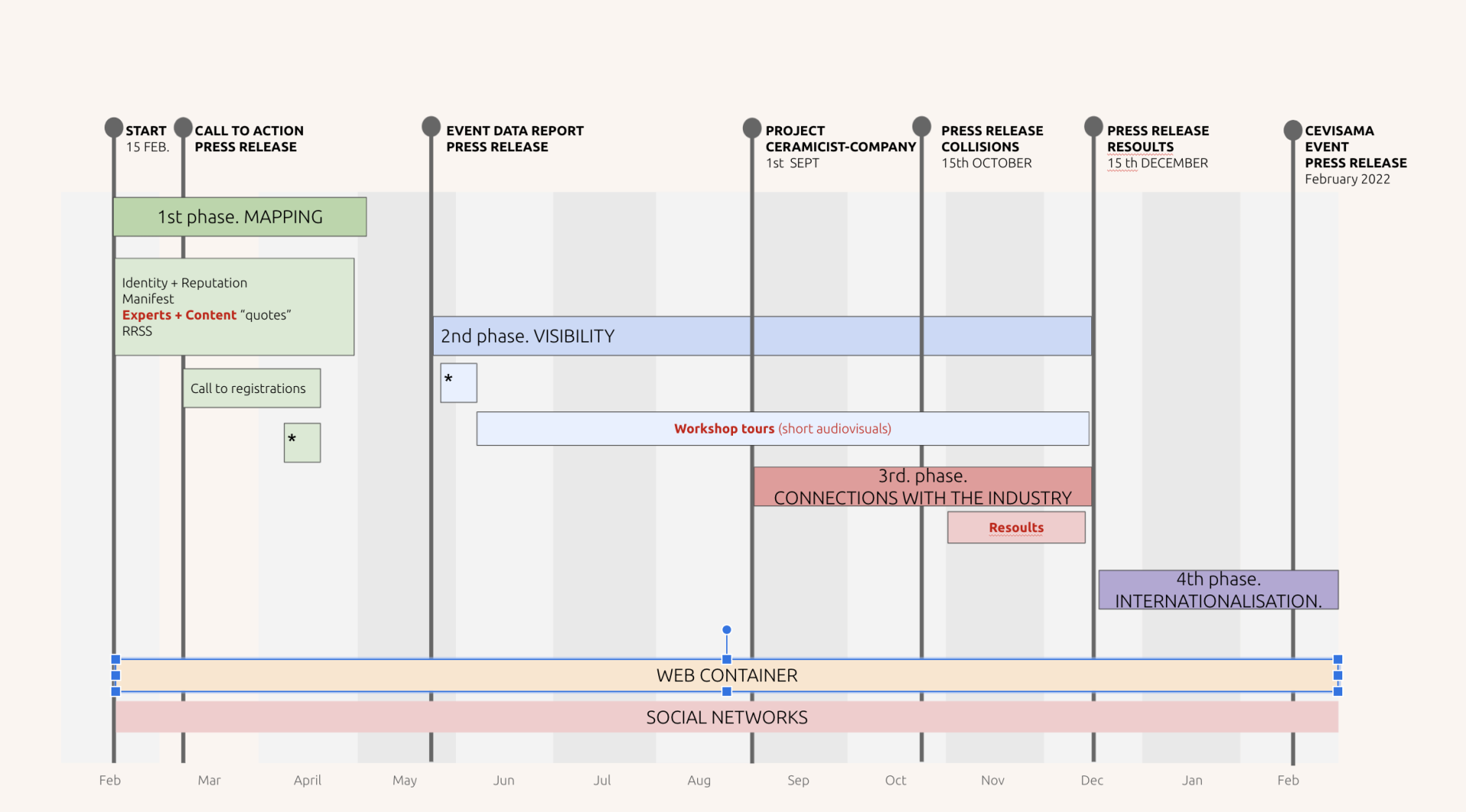
Ceramic DNA consists of four phases that will take place over a year.
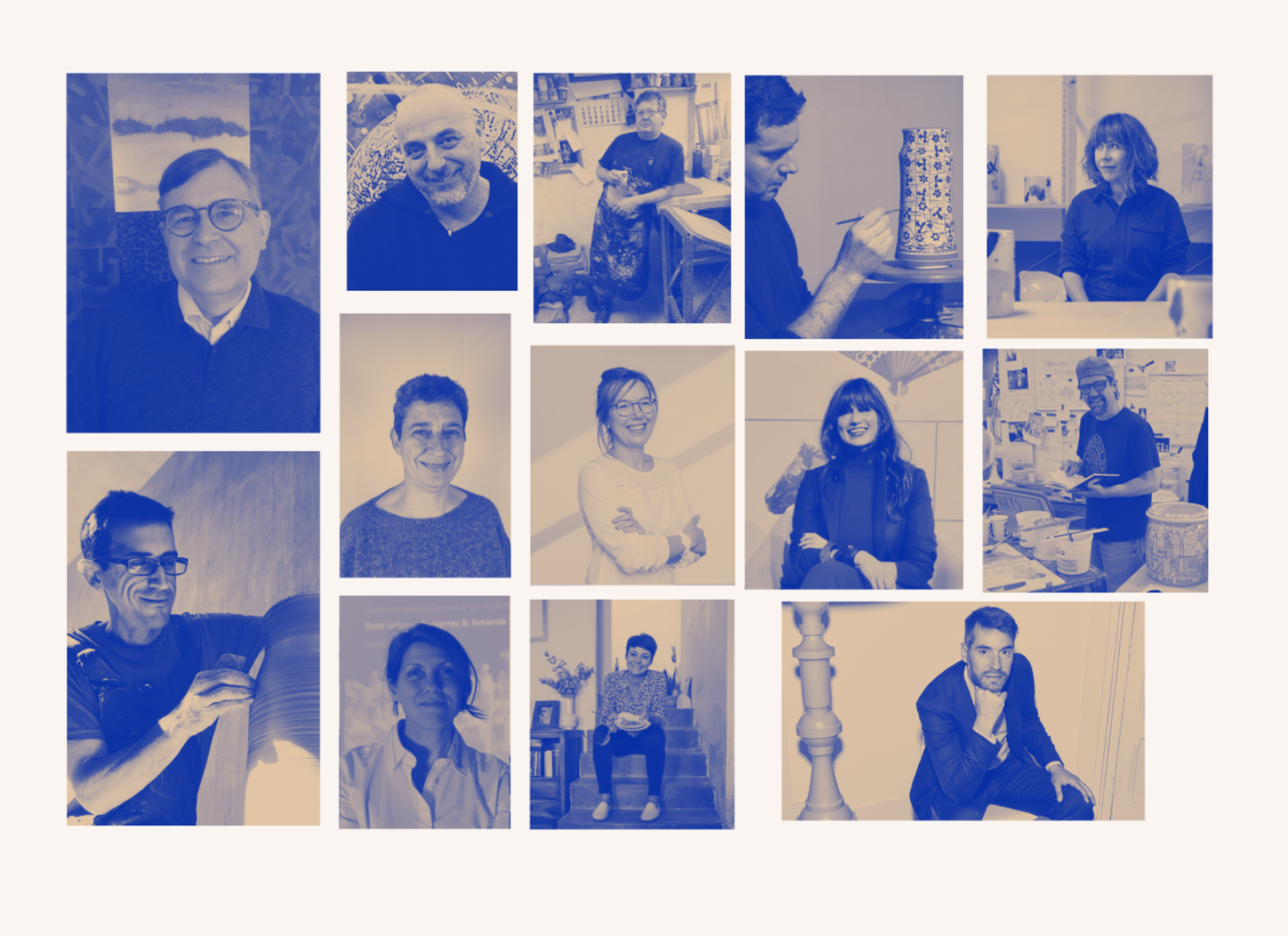
The first is mapping, through which the first map of ceramicists from the region has been created. The candidates have been examined and approved by a committee of 13 experts following previously established quality criteria.
The second phase is about visibility. In it, the map has been publicly presented along with a report of the current state of ceramics in the Valencian region. In this phase, videos of some ceramicists' workshops will also be made. They will be selected based on their contribution to sustainability, the inclusion of women in the sector and the quality of their work. In this way, they will serve as an example of good practice and will be shared on social networks.
In the third phase, there will be encounters between ceramicists and industry in order to establish new collaborative relationships and generate product innovations.
The last phase is the internationalization of the project through our participation in the Cevisama 2022 fair. The media will be invited to a conference where the entire project will be shown through exhibitions and talks with experts.
Throughout the project, the website www.adnceramico.com works as a large container where the contents are collected in order to keep the community informed. Likewise, social networks are being used to increase visibility and reach as many ceramicists as possible.
Key objectives for sustainability
One of the key aspects of Ceramic DNA is to bring the ceramic community together by preserving and raising awareness of traditional ceramic craftsmanship as an asset of our historical legacy, an important aim closely linked with sustainability.
We have created a map featuring leading professionals in ceramic crafts in order to draw public attention to them and put them in contact with other professions, facilitating possible collaborations between complementary worlds such as design, architecture and interior design, among others, thereby creating a community of professionals that transcend ceramics to integrate other related disciplines and generate encounters that provide added value to the region, its economy and citizens.
The professionals were selected by a committee of experts from various disciplines who took into account, among other conditions, the legacy these ceramicists preserve and make available to future generations, through saving and restoring traditional practices.
This work is relevant in terms of sustainability for several reasons. Firstly because we can speak of a zero-kilometre economy, where all members of the value chain are nearby: suppliers of materials; artists and craftspeople with workshops of different sizes; the ceramic industry with which they can form partnerships and collaborations, thanks to the map; professionals from other disciplines such as architecture or interior design with whom new synergies are established; universities and schools, which maintain contact with the industry and train the next generations; and museums, key stakeholders in the preservation of the legacy and the transmission of the values it provides to society as a whole.
In addition, the project highlights the value of the figure of the craftsperson with a small workshop, helping to cultivate economic sustainability for small businesses established in the region, whose existence has, until now, been threatened by large industrial manufacturers.
Key objectives for aesthetics and quality
The Ceramic DNA project is developed as part of the World Design Capital Valencia 2022, and its main objective is to create a long-term international positioning in which it is demonstrated that ceramics is a distinctive asset of of Mediterranean design, helping it to harness the values of precision, mastery, legacy, prestige and identity.
The union of both worlds (ceramic craft and design) helps build a community in which the common language is creativity and the impact that this can have on the region, building links between disciplines and providing value.
Ceramics is an activity in which design and aesthetics are an important part of the raw materials, so it is important to highlight these characteristics in the aesthetics of the project itself. To this end, a unique design has been created for the project. The brand invokes the heritage, origins and legacy of ceramics as the DNA of the design in our region. It also brings together different styles and techniques so that all professionals can feel represented.
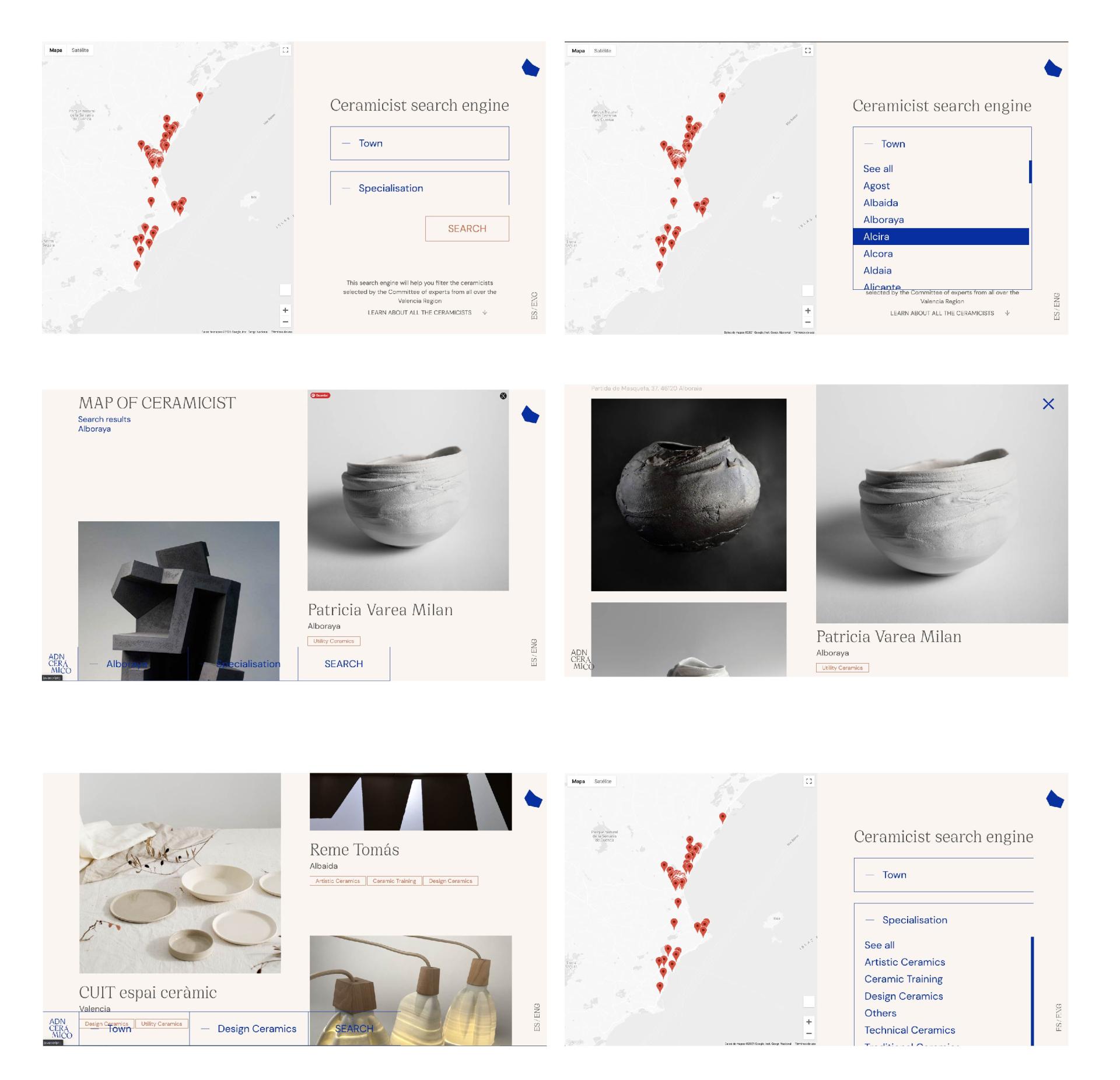
In addition, a website has been designed that compiles the main works of the ceramicists included in the map of professionals. By means of three images, each ceramicist has a showcase where they can display their work to all the professionals interested in creating collaborations and to the general public, thereby highlighting the aesthetics of their creations. In this regard, one criterion used by the committee of experts when selecting the professionals to form part of the mapping is for their work to display substantial aesthetic qualities capable of inspiring future generations of ceramicists to embrace their legacy and perpetuate it.
Furthermore, the brand has been enriched with an audible identity based on the sounds of the ceramics industry. Thus, the potter’s wheel, the tools, the techniques, life in the workshops and raw material factories are some of these sounds that are reflected in the brand.
Key objectives for inclusion
One of the key objectives of the project is inclusion, it being a unifying project where the intended result is the sum of all those involved. Ceramic DNA was created to increase the visibility of ceramicists who have worked and continue to work in the preservation and creation of our craft heritage. This visibility helps create a community of shared interests that presents its value to society.
Creating the map of ceramicists also has the aim of sparking new relationships between small workshops and the ceramics industry, because the latter can take advantage of their creativity and know-how to generate new proposals for the market, and the former can encounter new possibilities for development through collaborations with industry. All these collaborations seek, in turn, to broaden this community by bringing it closer together through quality relationships.
By bringing all the stakeholders together and prompting collaboration between them, an objective of regional cohesion is also achieved as they are brought closer together physically and revitalise common workspaces within towns and cities themselves, since the craft production centres are integrated within the urban areas.
Furthermore, the project seeks collaboration between ceramic artists, teachers, museum managers and other professionals from sectors related to ceramics. In this sense, to demonstrate that it is possible to generate these synergies, the expert committee that considered the applications of professionals who have finally joined the map, is itself made up of versatile professionals, including journalists, academics and designers, to generate a broad vision of the impact of ceramics, and integrate all those who can help to preserve it.
Additionally, through Ceramic DNA, content is being created in social media to encourage the participation of craftspeople and professionals as well as the public, helping to highlight the value of ceramic practice and the legacy it represents for our region.
Results in relation to category
A total of 106 ceramicists were selected in the first mapping, from over 157 submitted applications. The map compiles more than 300 representative images of our current heritage, which are available to everyone on the website www.adnceramico.com.
In addition, a report has been produced by the Research in Cultural Economics area of the University of Valencia (Econcult) in order to provide a current snapshot of the state of the sector and assert its importance in the construction of the region’s heritage, identifying its contribution to society through objective data drawn from the sample of applicants.
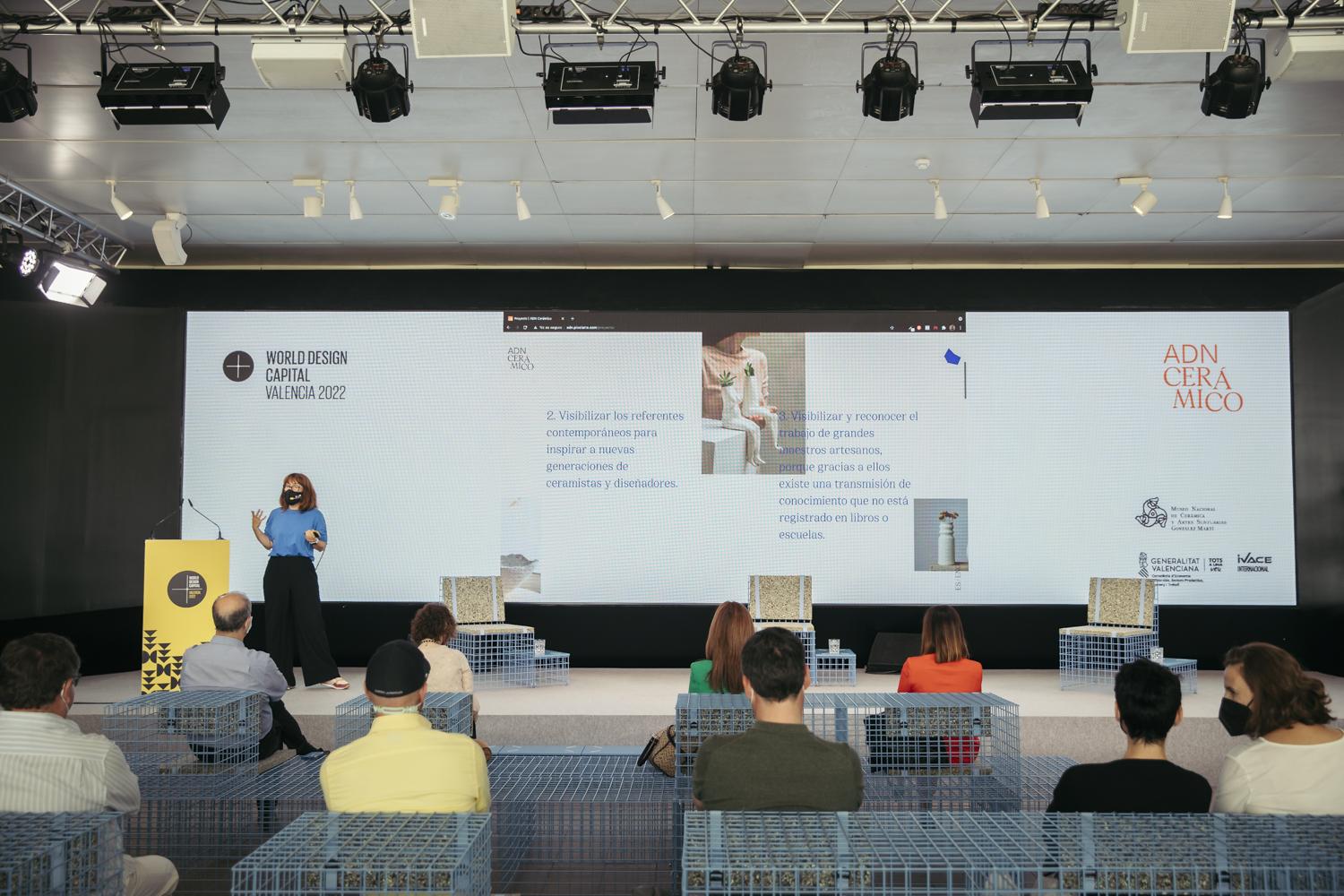
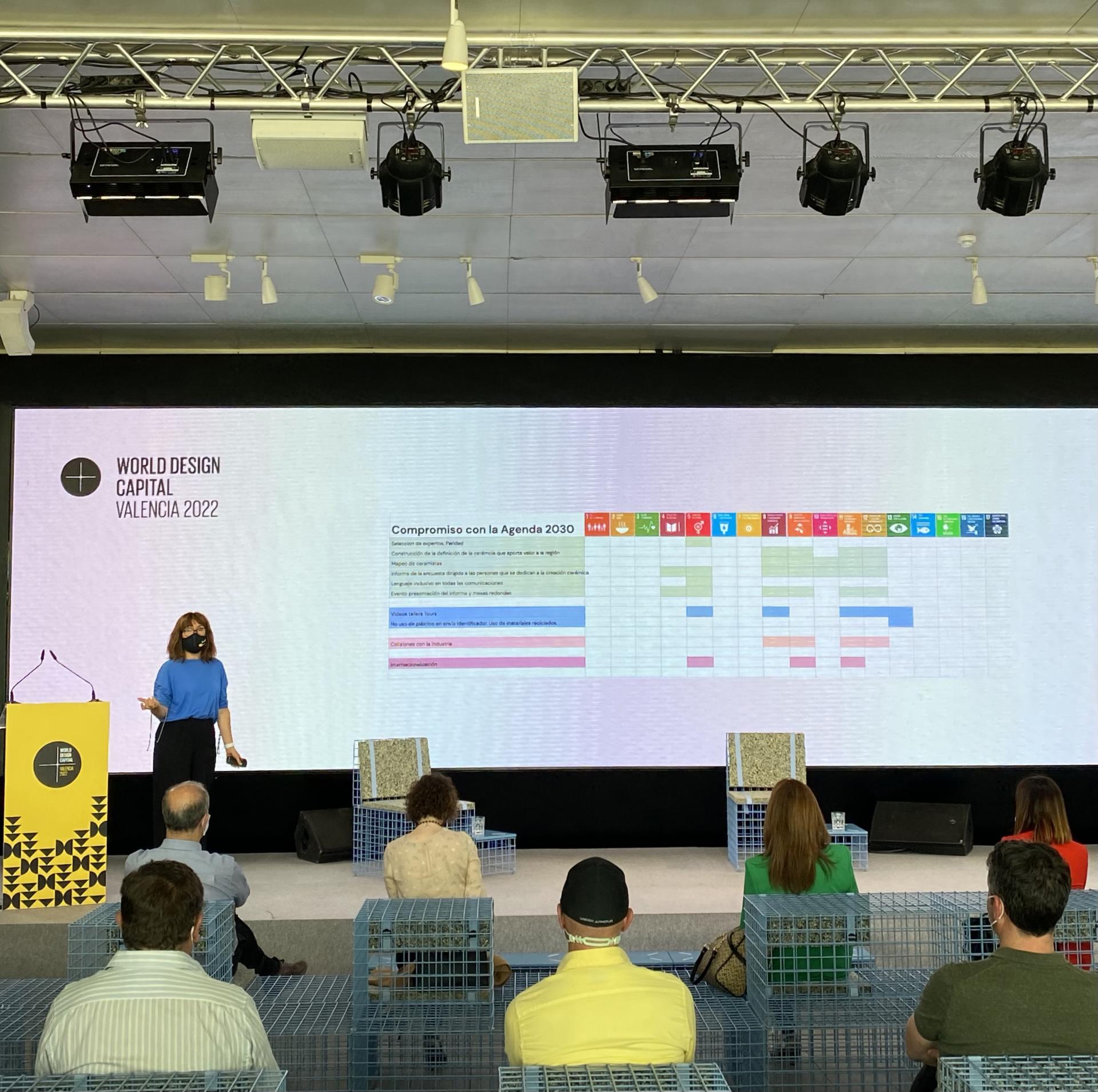
We held an awareness-raising event to present the map and the report, which was attended by prominent figures from politics and the ceramics community, who also attended two round table discussions led by the director of the magazine AD España, a leading publication in the decoration, architecture, art and design sector.
The event was attended by 60 people in person, with more than 150 people connected via streaming, whose engagement resulted in dozens of comments. People also connected from the leading design schools in the cities of Castellón and Valencia and from Manises ceramics school, the most important reference for the sector in the region. The streaming exceeded 1,000 views.
Since the beginning of the project, the media have followed us and provided coverage of our actions. More than 65 media outlets publicised the Ceramic DNA project, with an advertising value of €70,558 and a total audience of 16,010,762.
Ceramic DNA was created with a commitment to align with and promote the SDGs of the 2030 Agenda, especially gender equality, decent work and economic growth, protection of cultural heritage, responsible production and consumption, and climate action.
How Citizens benefit
Civil society benefits because we are working on the long-term positioning of ceramics, which gives value to the region by associating it with an industry with a distinctive economic value. In this same sense, it also manages to generate a sense of belonging and pride that contributes to bringing society together.
The project also adds value to the artistic heritage of the region, and to the craftspeople who work every day in its expansion, modernisation and preservation, generating more visibility and greater appeal for the region.
It offers benefits to small workshops and large industries by generating new relationships and collaborations that increase the value of ceramic production. Small workshops have been involved, participating via their applications to the map of professionals, while industries have collaborated with the project represented by the Technological Institute of Ceramics, an organisation under the authority of the University Jaume I of Castellón (UJI) and the Research Association of the Ceramic Industries (AICE).
It facilitates recognition of professionals who dignify the practice of ceramics through a hallmark they can display in their workshops, awarded for forming part of the map of ceramicists. This hallmark is an endorsement of their good work, enabling citizens to purchase quality products with the values of sustainability, aesthetics and inclusion that are typical of craftsmanship.
Work has also been done to include greater society through communication on social networks. Actions such as encouraging citizens to photograph and share (via the hashtag CerámicaCotidiana) images of ceramics in their environment (objects, streets, plaques, etc.) help to recognise the value of ceramics and design, i.e. their heritage, and to instil a sense of pride and belonging.
Innovative character
Although the Valencian region has a long tradition of ceramic craftsmanship, this is the first time that a map of professional ceramicists has been created under quality standards supervised by a committee of experts.
One of the innovations carried out was in the project’s start-up process, so that the work team, from outside the sector, could understand the importance of the project. The whole team were given their information and work assignments in a ceramics workshop where they learned about the techniques, tools, materials and the entire ceramic repertoire, so they could apply this knowledge to their work.
The gathering of applications was also used to create the first report on the current state of Valencian ceramics. This report was produced by the Economics of Culture and Tourism Research Area of University of Valencia.
Another innovative feature is that it encourages synergies between professionals from different disciplines such as architecture, design, interior design, industrial production and artisan ceramicists; but also schools and museums, fundamental actors in the process of preserving and dignifying the practice of ceramics.
These synergies create relationships based on the values of quality work and creativity, employed to create new products founded on the ceramic tradition for a contemporary and changing market. In the same report mentioned above, the authors considered the professional activity of ceramic crafts to be one of the sectors able to form part of the long-desired process of shifting the Valencian model of production towards activities based on culture and creativity that improve our reduced levels of productivity while, as more and more evidence shows, have an impact not only on economic regeneration but also on the levels of health and well-being of the population and on social cohesion and public participation.
The map has been rendered in an intuitive, usable and practical website in order to build new relationships very simply.