Eventscape: devices for shared rites.
Basic information
Project Title
Full project title
Category
Project Description
Cultural events, in contemporary cities, are no longer an exception but an outstanding practice used as social and economic engines of development. Are events capable of transforming the city? Are they useful in rethinking the public space? We reshape entire neighbourhoods designing architectural devices for events involving the citizens without the medium of consumption. Changing the focus from gentrification to inclusivity we transform an underused street in a place full of devices for events.
Project Region
EU Programme or fund
Description of the project
Summary
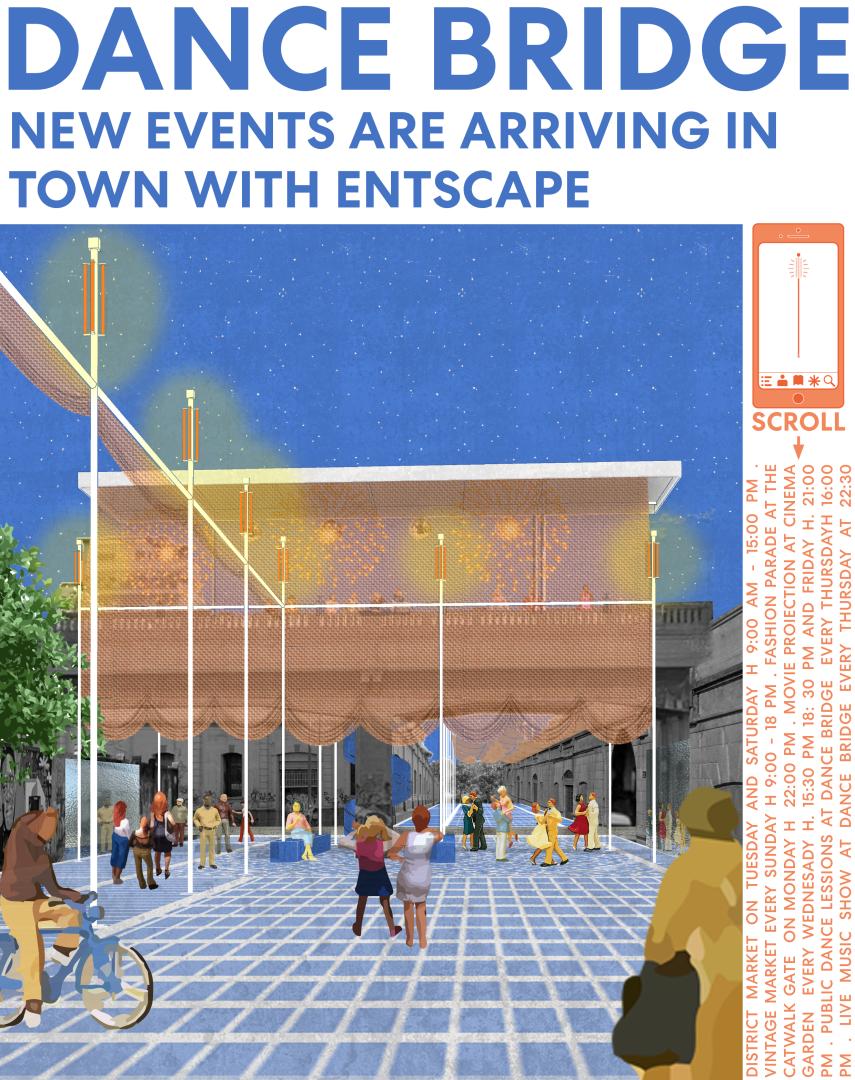
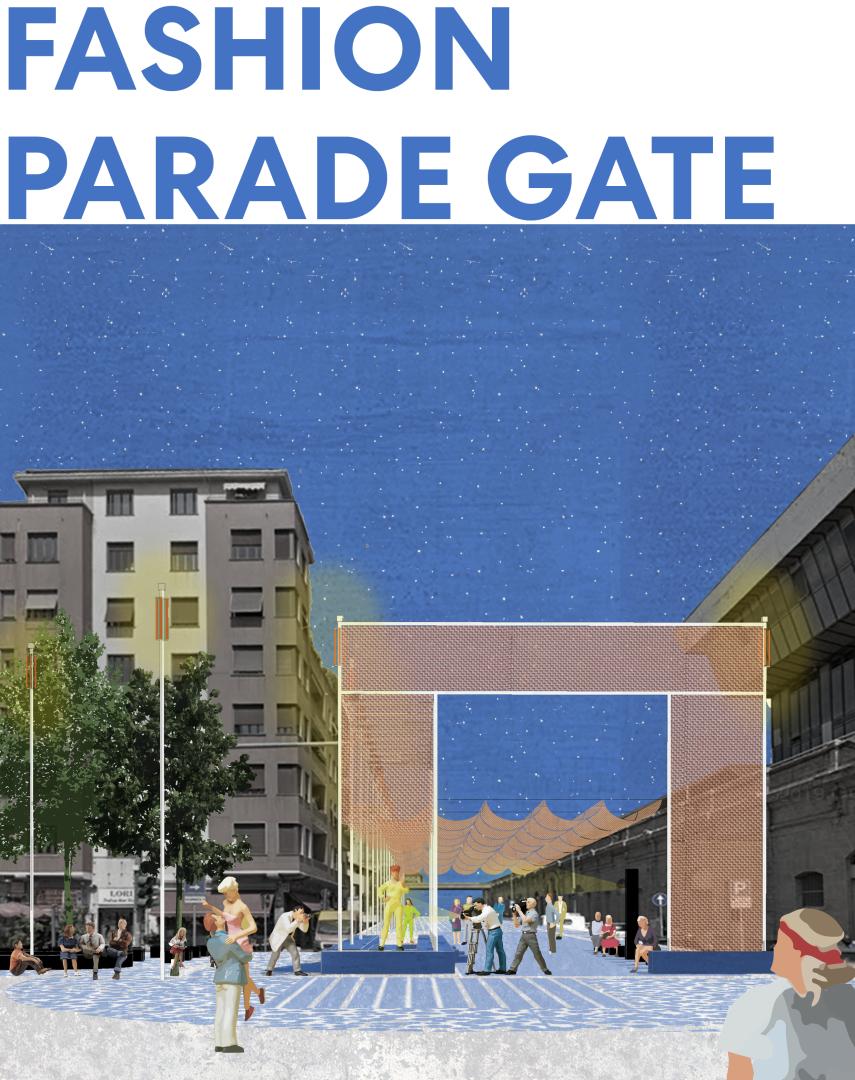
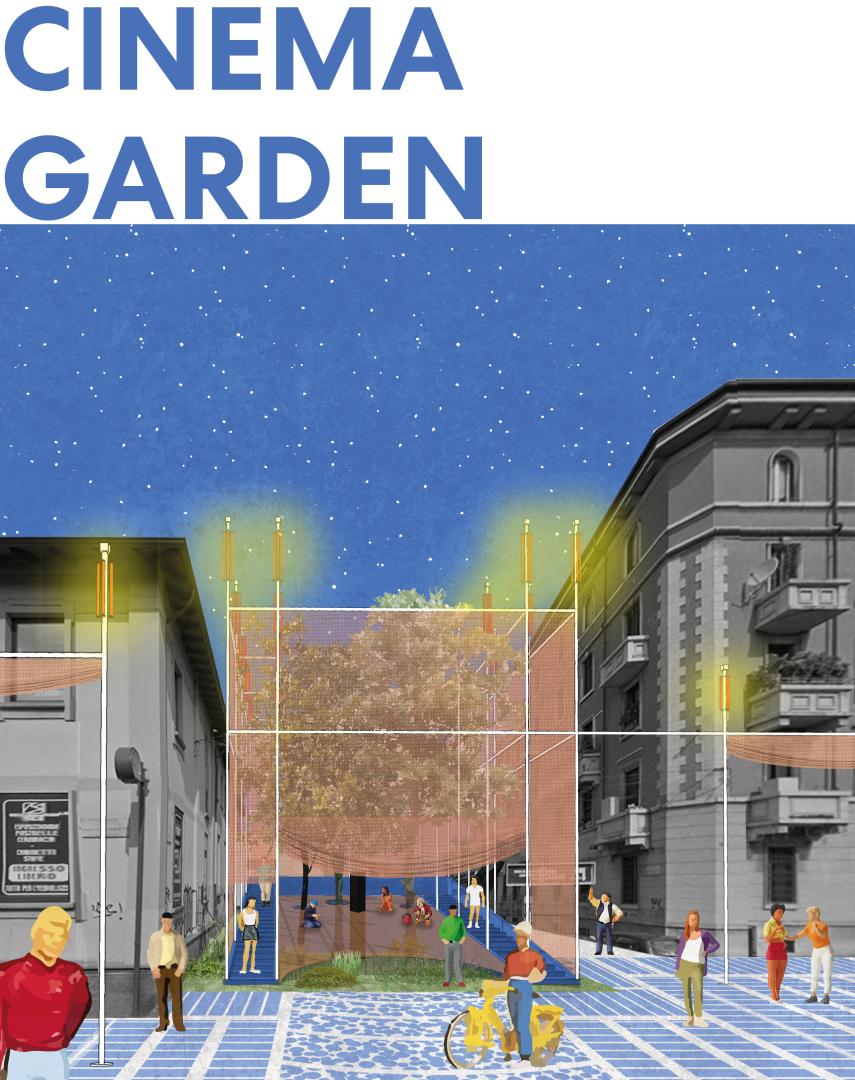
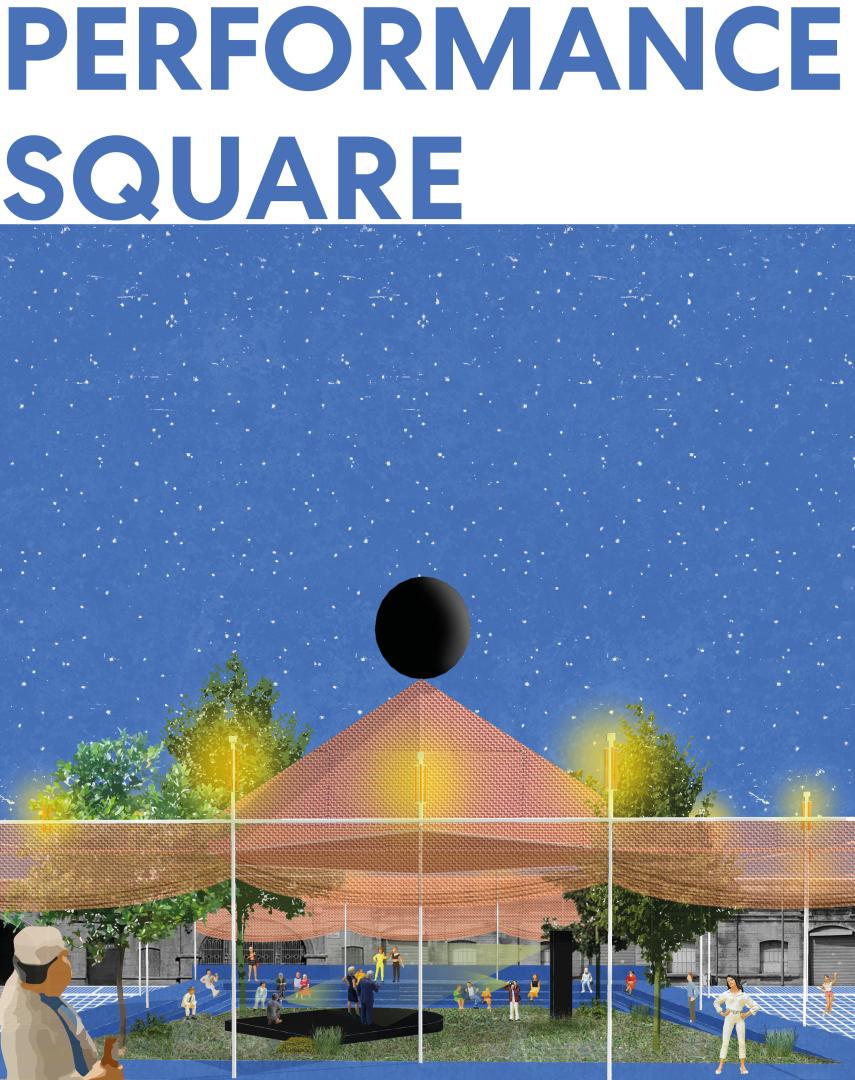
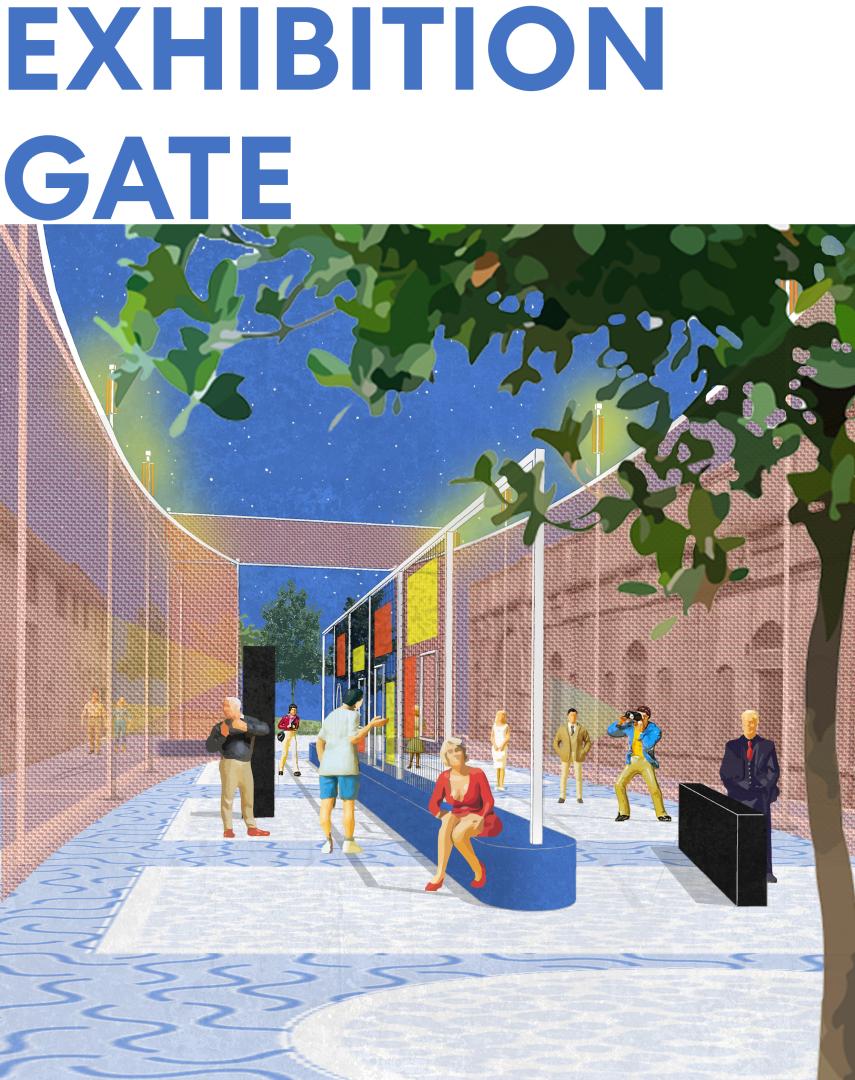
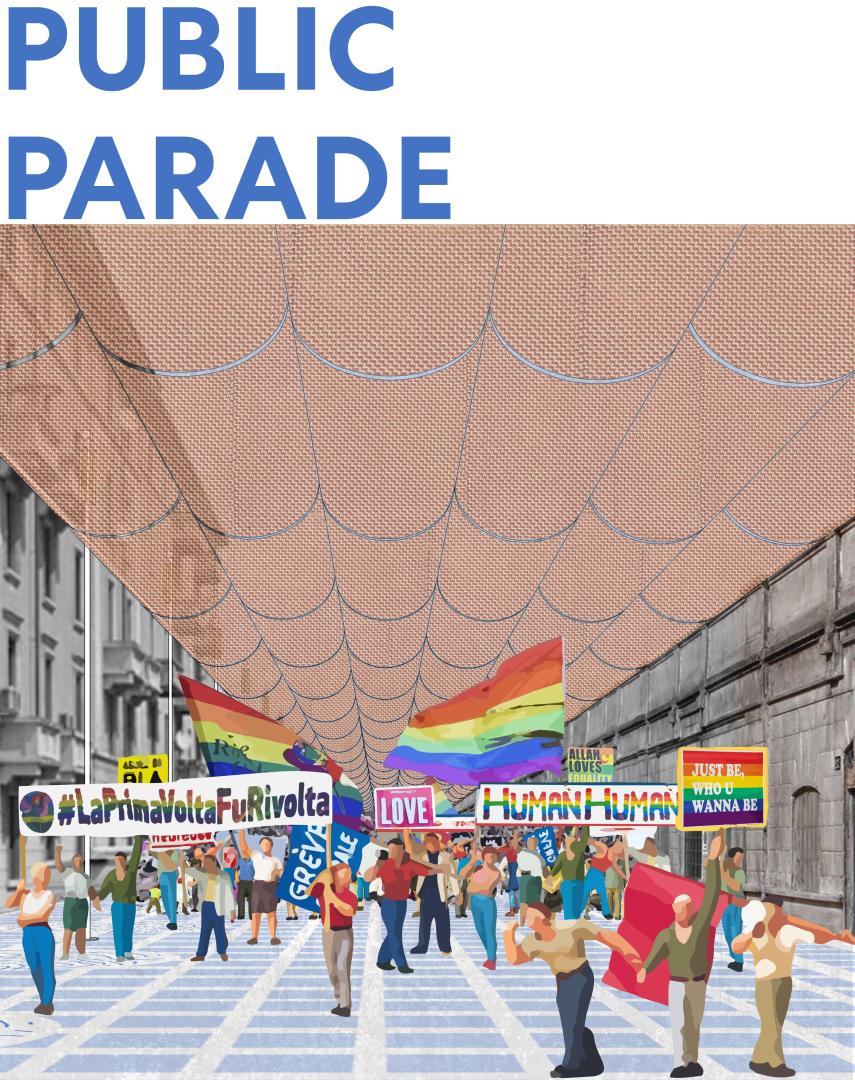
Via Sammartini, the street next to Milan Central Station, is the site area for our proposal. The street has been excluded over the years from the massive urban changes in many parts of the city, therefore we want to propose a strategy that uses the dynamics of participation of cultural events, typical of Milan social life, to redevelop and give new meanings to a street which has had a significant role in the past history of the city. The proposal consists in the installation of a linear infrastructure with specific architectural devices. The infrastructure designed is based on three fundamental elements: re-design the ground, use luminous pillars and moveable curtains. The ground design indicates the new car and pedestrian circulation. The sequence of coloured steel pillars helps to reconstruct an unstitched urban front by re-establishing a dialogue with the facade of the Central Station and enhancing the perspective value of the road axis. With the neon applied to the upper end, the poles perform the function of lighting installation on the entire axis. Along the poles run coloured and moveable tents which, according to the needs, cover entire areas of the road section, delimiting places where specific events are triggered. Five architectural devices designed with the same criterion (luminous pillars with the help of moveable curtains and technological equipment) are grafted onto the linear infrastructure as well. They design the environment in order to propose special events freely activated by the citizens. These devices with distinct functions - a catwalk for fashion shows, an environment for musical events, a cinema, a stage for performance and an outdoor exhibition gallery - provide with the special infrastructure to activate a street of events.
Key objectives for sustainability
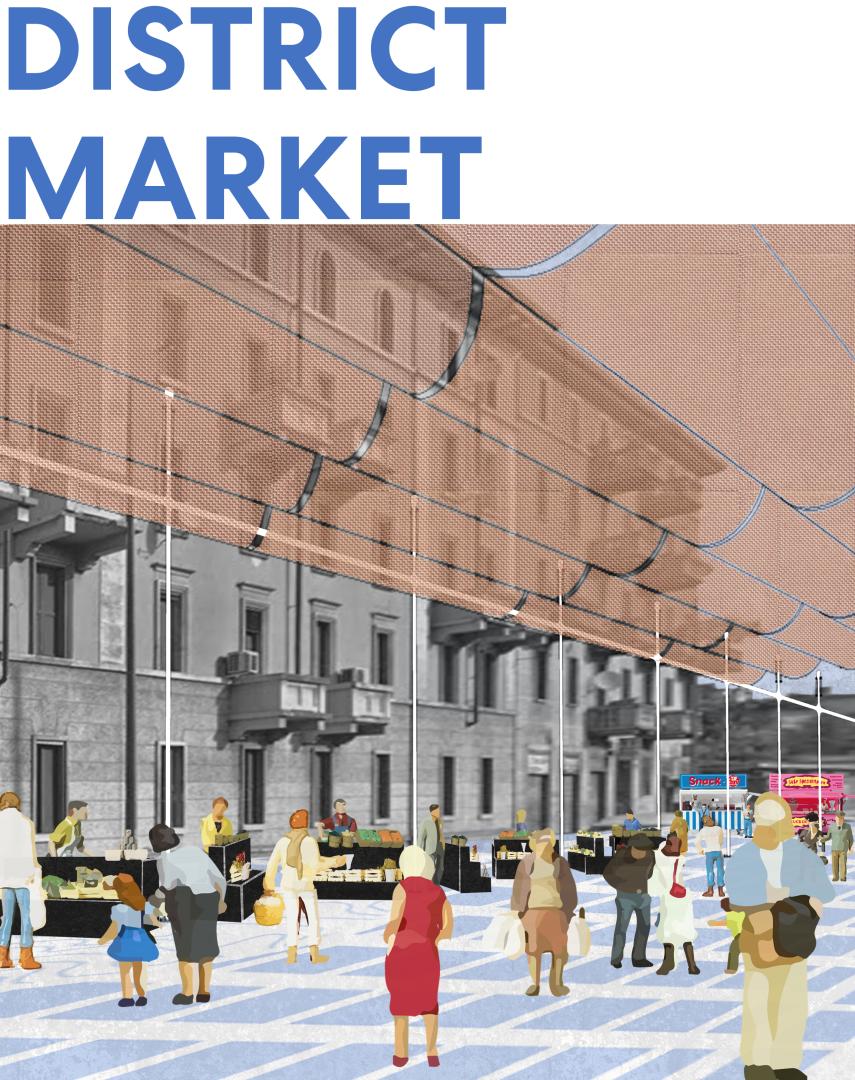
Conceptually adhering to tactical urbanism our idea consists in proposing an urban development process detached from the logic of classical urban planning adopting three main actions. The first one is to avoid demolition: as a light intervention, in our proposal there are no demolition at all but just a real reuse of the urban heritage, transforming it, without the production of waste. We consider the city indeed as an historic artefact that is telling us a multitude of stories, a scenographic hardware ready to host fantastic transformation made by soft interventions. The second action is the prefabrication system with reusable material. We operate reducing working times thanks to the use of prefabricated, recyclable and totally reversible materials, avoiding all the heavy operations that make the urban-construction business one of the most problematic causes of global pollution. On the other hand, the various technological components which the devices are equipped with are active only during the events organised by the citizens, avoiding any useless waste. Moreover most of the functions are activated in an analogical way and just a little part of them need to be powered by electricity, provided by solar energy thanks to the use of photovoltaic panels on the top of each pillar. In this way, the entire life cycle of the intervention is designed to be energetically autonomous. The last action and the most important one at the same time is the promoting of a sustainable economic and social system in the site area. The linear infrastructure is designed in order to be ready to host a huge program of events but at the same time it can be used during the day to host a local market, restoring one of the most important function of the street now not present anymore, encouraging the principles of the 15-minute city for primary consumption as well as for leisure.
Key objectives for aesthetics and quality
The coloured pillars, the lights, the mobile curtains, the technological tools trigger a fantastic transformation of the space plunging the citizens in shared and fantastic experiences just like a contemporary baroque catafalque. Starting from the theoretical assumptions of Bernard Tschumi regarding the theories of “Space, Event and Movement” as well as the design experiences proposed by the architect Andrés Jacque, we propose a project focused on the experience of participation and interaction, where technological and analog tools combine to achieve the same feelings reached by contemporary virtual games. It is a matter of preparing an immersive environment in which everyone can enter completely, remaining enveloped and captured by a landscape of sequences of events. This environmental quality is achieved thanks to the overlapping, repetition, transformation of the same elements used in the project proposal in order to organise a multitude of choreographies, sounds, lights, images and objects in a close relationship one with the others, aiming to wrap and follow the same dynamics and languages of contemporary cultural events. These characteristics refer to what N. Bourriaud calls “Relational Aesthetics”, that is a theoretical horizon in which the focus is the sphere of human interactions and its social context, lasting qualities that form and allow new possibilities for relationships. At the end, the value of the interactive and collective experience favours a sense of belonging and identity that becomes the fundamental element of the recognisable aesthetics of this proposal.
Key objectives for inclusion
The main idea is to bring the organisation of events from private building into public space. In this sense, we are not simply proposing a new background to existing events but we want to allow citizens to express their creative capacity by giving them the opportunity to organise their own events. At the various top-down festivals and reviews managed by municipal administrations or foundations and private companies, we proposed the possibility of organising a series of small-scale initiatives, free to be managed directly by collaboration between citizens and without the ultimate purpose of cities and experiences consumption. We plan to do this by equipping the public space with elements, the already mentioned architectural devices (from single pavilions to the street infrastructure) available in the urban fabric for a free and shared use by the city communities. Through an online agenda, with dates and times available for booking by the various citizens, the activation of the devices takes place partly in an analogue way and partly in a digital one, thanks to the help of an app for smartphone, allowing people to use a series of equipment technologies such as speakers, lights and bluetooth projectors. This allows anyone to generate that transformative charge of the ordinary typical of the event. In this way, multiple objectives are achieved: the redefinition of the identity of certain residual areas, as well as the affirmation of the activities proposed by its inhabitants; the possibility of direct interaction with the public space by the user, who is no longer just a passive spectator but an active part of the transformation process of the city; a resemantization of the exclusionary dynamics of most of today's events that target a selected audience, thanks to the bottom-up organisation of the initiatives.
Innovative character
The post-pandemic situation in which we are about to live has confronted us with the need to rethink the public space given the total insufficiency of its design. This for us is due to the emptying of meaning it has undergone in recent decades in favour of its progressive privatisation. After all, the almost only solution adopted by the municipalities in the post covid period is to grant use of public space to commercial activities, which, although necessary to revive this category, demonstrates how limited the relationship between citizens and the city in which they live is. The innovative nature of the proposal lies in understanding the associative dynamics of metropolitan citizens, from which it emerges that the cultural event is the object par excellence of associated life. It becomes necessary to design part of the public space with respect to this specific program, capable, among other things previously explained such as the redefinition of the identity of a residual space, of touching various topics of interest and reaching various age groups of the population. In addition, the management and use of the various architectural devices will take place through the support of new digital technologies, coordinated by each own smartphone. By developing a specific app according to the format of a social network, a general calendar will be established for the free booking of the space, the dissemination of the program of events, the sharing of the material produced in each event, the search for any collaborations in the development of the event and therefore the connection between citizens from whose meeting new initiatives can continue to spring.