Lilienhof
Basic information
Project Title
Full project title
Category
Project Description
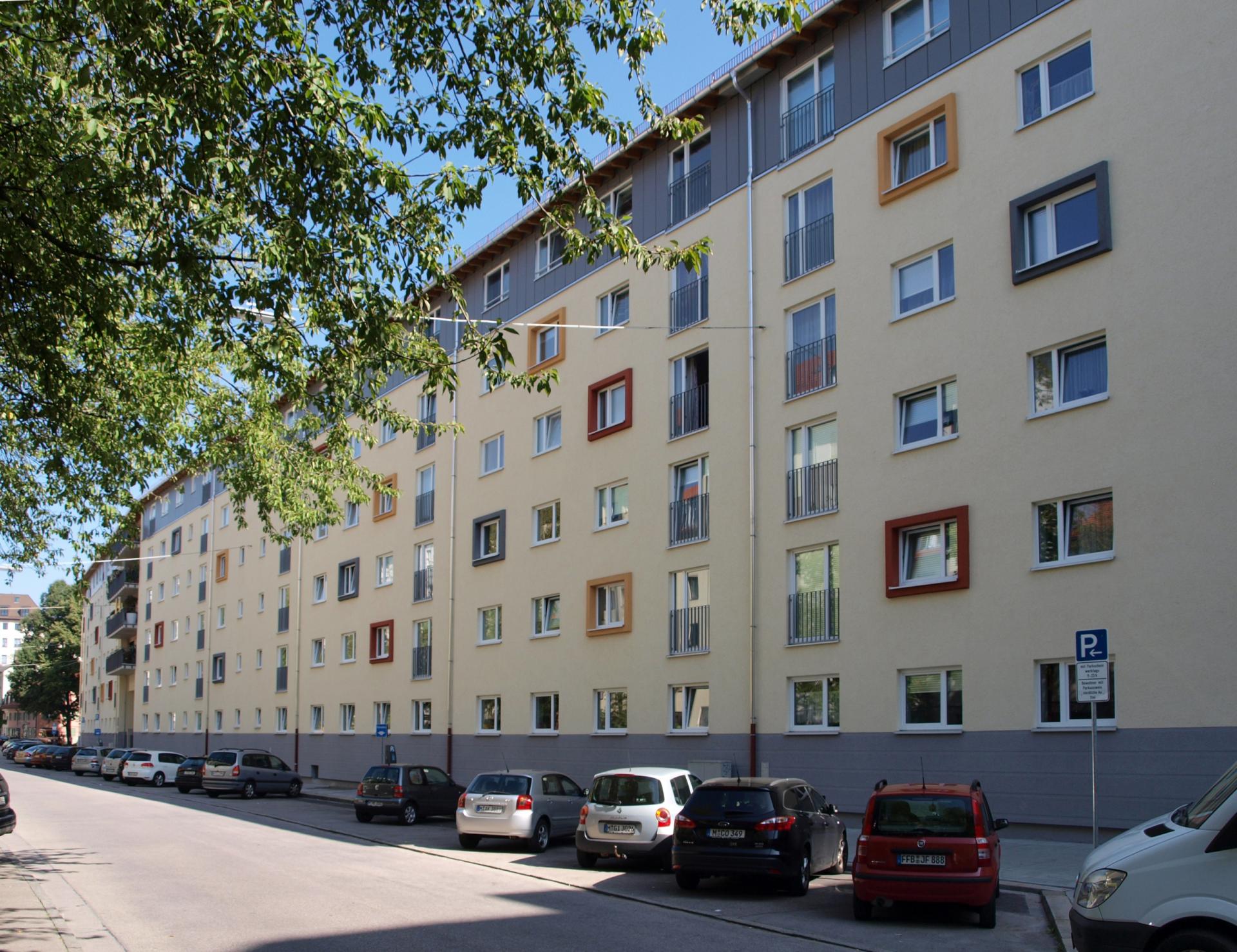
The Lilienhof quarter in Munich was a charming, old residential area with outdated, small, dark apartments with coal stoves and gas flow heaters. GWG München realized a pilot-project, which created a future-oriented quarter. Together with two strong partners, a comprehensive energy concept was developed and implemented. The result was a technically refined, CO2-neutral residential complex with a primary energy requirement of around 50% below the maximum permissible value for new buildings.
Project Region
EU Programme or fund
Description of the project
Summary
With over 30,000 apartments, municipally held GWG Städtische Wohnungsgesellschaft München mbH is one of the largest housing associations in the Munich area. In the tense housing market, GWG München creates high-quality, inexpensive and sustainable apartments and takes care of the renovation and modernization of their facilities. In addition, GWG Munich supports the state capital Munich in urban development with ecological and innovative model projects.
The residential complex „Lilienhof“ in the district Haidhausen-Au in Munich was originally built in 1955 with four three- or five-storey buildings, with basements and not-converted attics. The existing 149 apartments with a total living space of approx. 6,513 m2 had a size between 40 m2 and 65 m2. They were outdated, small, dark apartments mostly heated with single ovens fired with coal or gas. Some apartments had electric heaters or were connected to a gas floor heating. The heating of water was decentralized and mainly provided by gas operated water heaters in each apartment. Between 2011 and 2014 GWG München completed a renovation and densification-project in this quarter.
Aim of this pilot-project was to change the historic quarter to an attractive, future oriented and sustainable residential complex. Together with two strong partners, the Fraunhofer Institute for Building Physics and the Competence Center for Sustainable Building by Ebert Ingenieure, a comprehensive energy concept was developed and implemented. Target was a primary energy requirement for supplying heating and hot water that is at least 50% below the allowable value of the primary energy requirement of a new building (basis EnEV 2009). Additional required residual heat should be generated or compensated by renewable energies. In total, no additional CO2 Emissions should be released, thereby guaranteeing a CO2-neutral energy supply of the quarter.
Key objectives for sustainability
Aim of the project was an energetic refurbishment of the four existing buildings to a primary energy requirement for heating and hot water that is at least 50% below the allowable value of a new building. Additional residual heat should come from renewable energies or be compensated for, thereby guaranteeing a climate-neutral energy supply of the quarter.
The way to a CO2-neutral energy supply - building physics and technical implementation:
Building envelope
- Vacuum insulation of street facade and basement ceiling
- Highly efficient insulation material for external facades (= 0.022 W / mK)
- triple thermal insulation glazed windows
- no additional transmission losses via thermal bridges
- high airtightness
Installation engineering
- Use of geothermal energy via close-to-the-surface geothermal energy
- Gas engine heat pump, utilizing groundwater
- Condensing peak load boiler
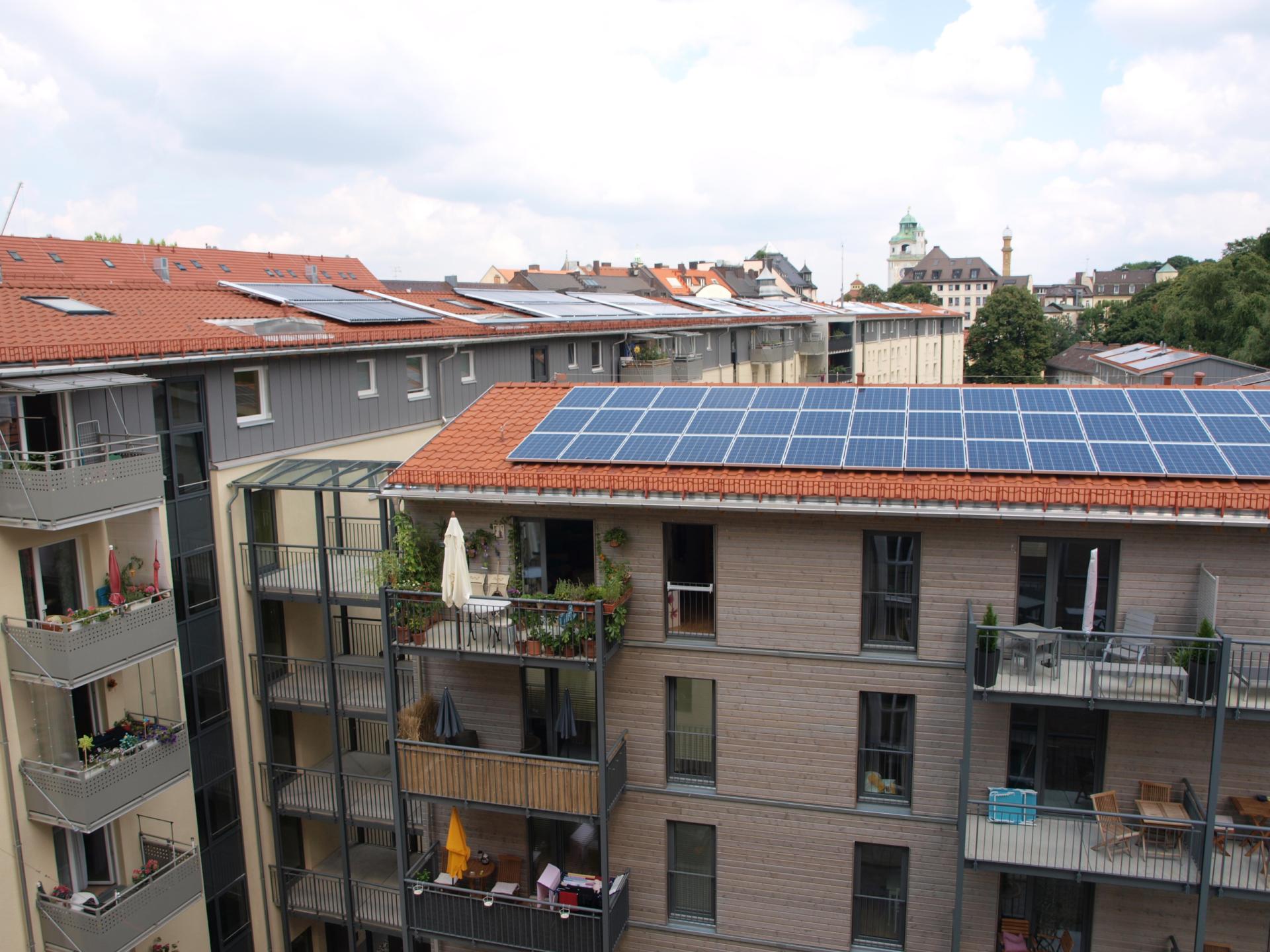
- Solar support for hot water and heating generation from tube solar collectors
- "Demand heating" through decentralized heating pumps
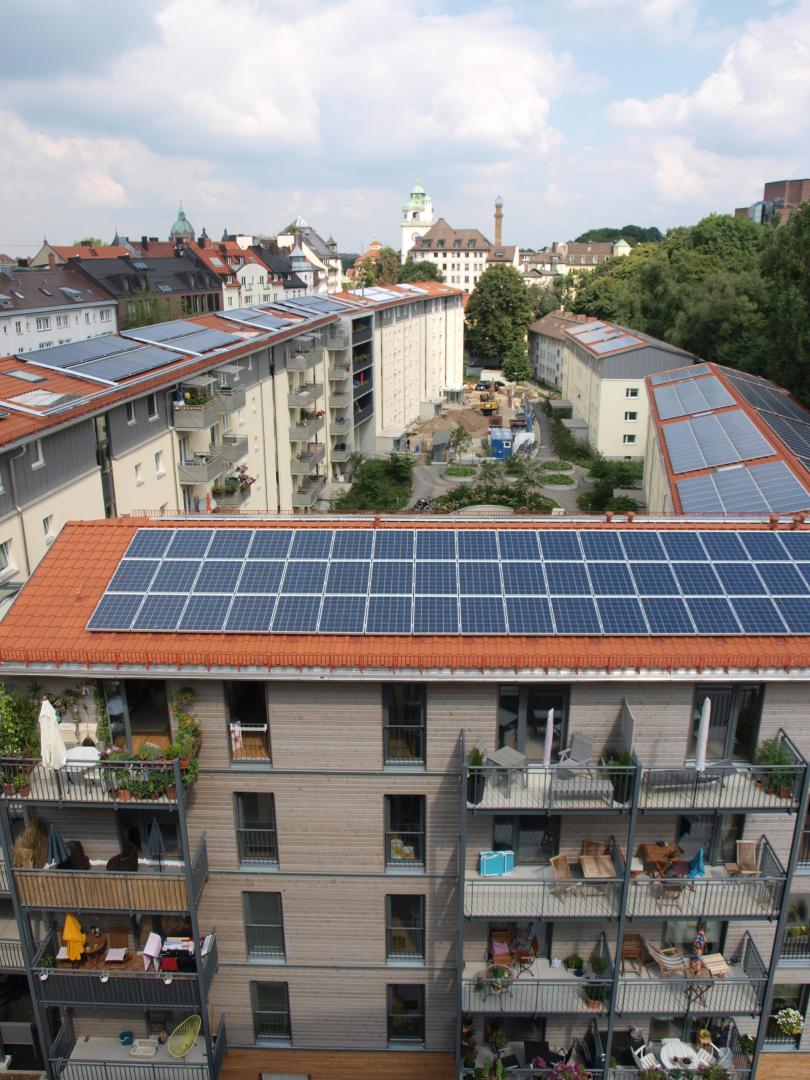
- Use of photovoltaics on the flat sloping roof surfaces
Key objectives for aesthetics and quality
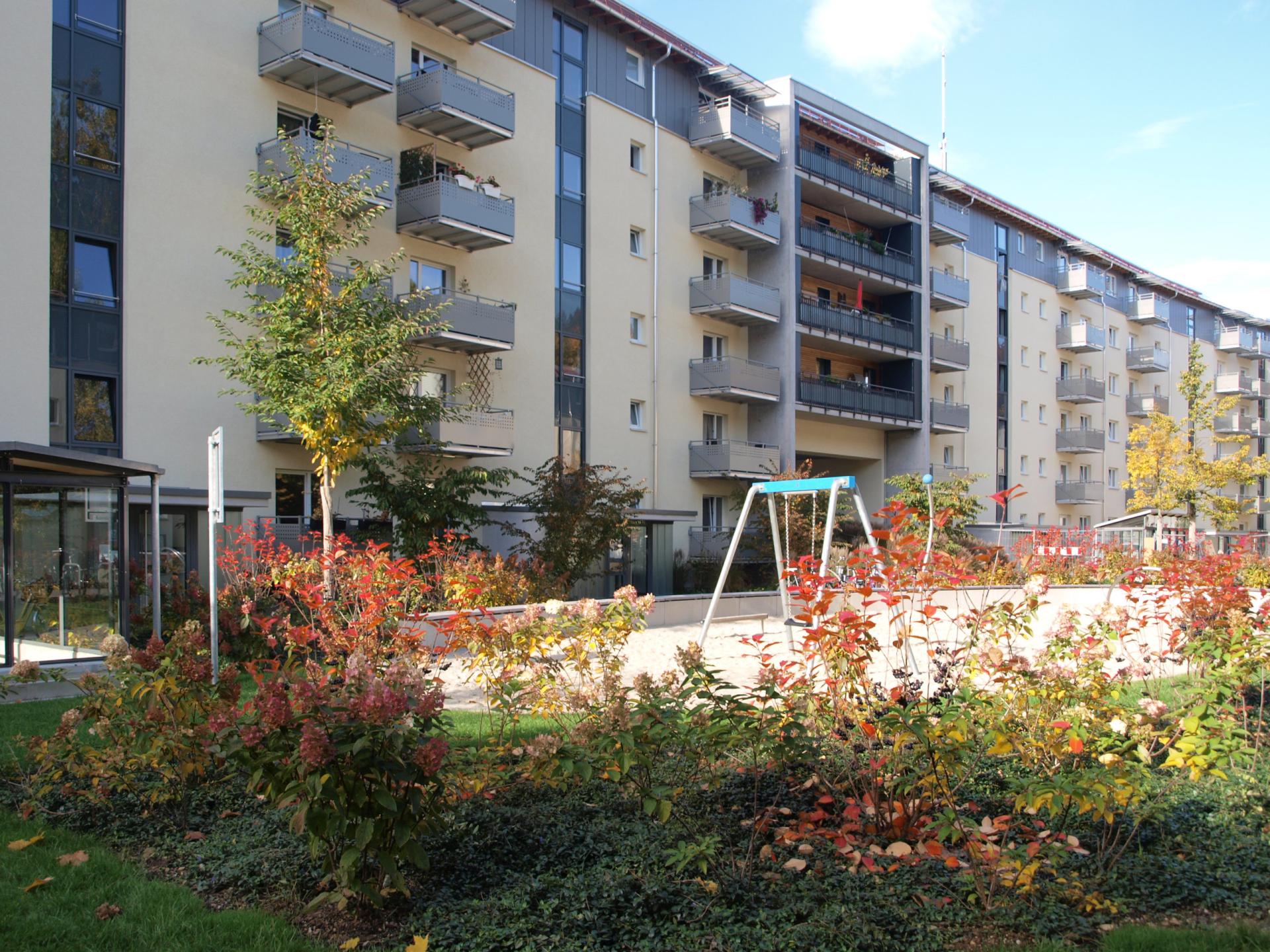
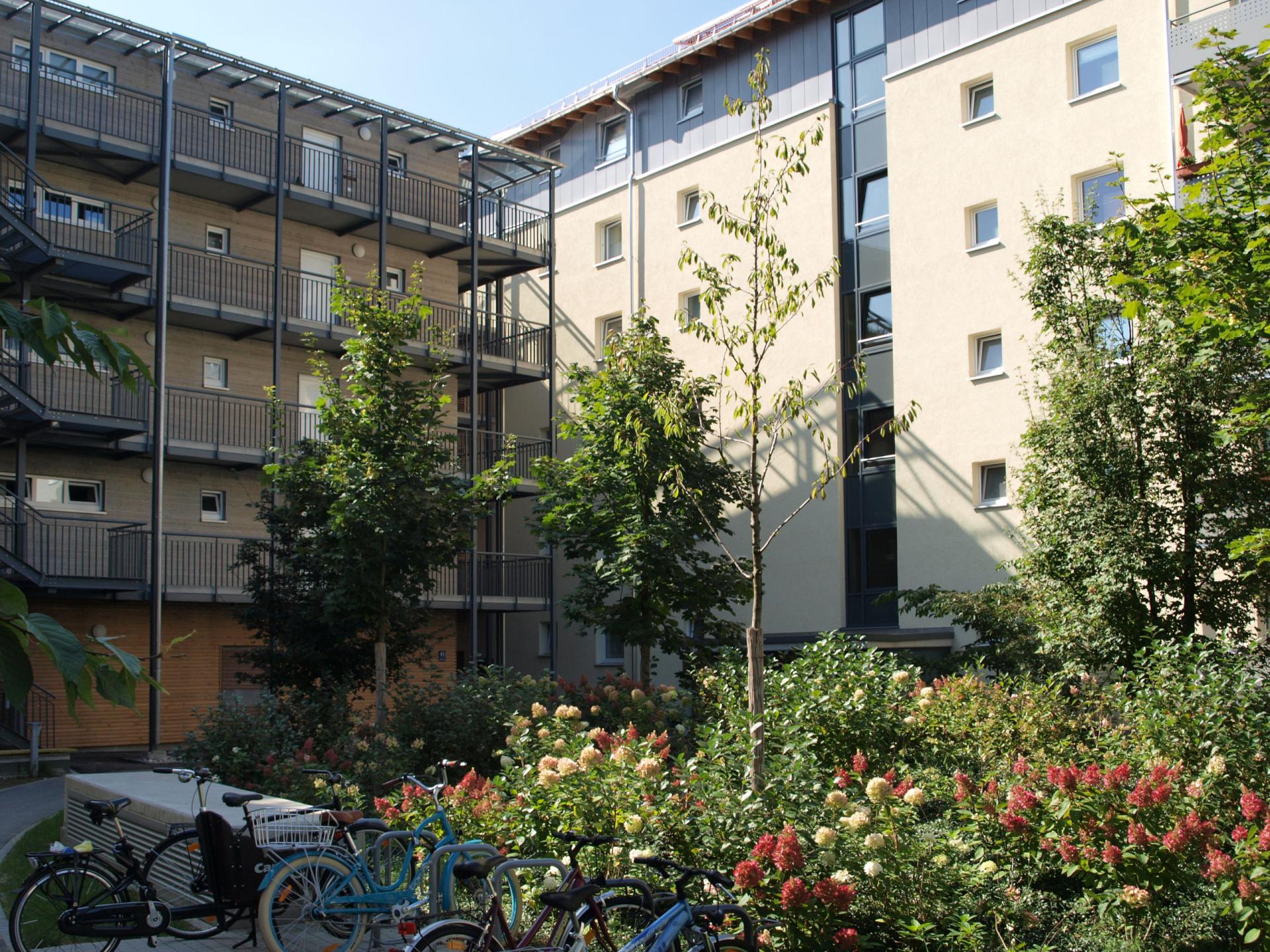
After the renovation and the complete redesign of the floor plans, the addition of balconies, the addition of storeys to the old stock, the construction of a new wooden house and a new building, the total living space could be increased by almost a third - and that without any loss of open space quality, on the contrary!
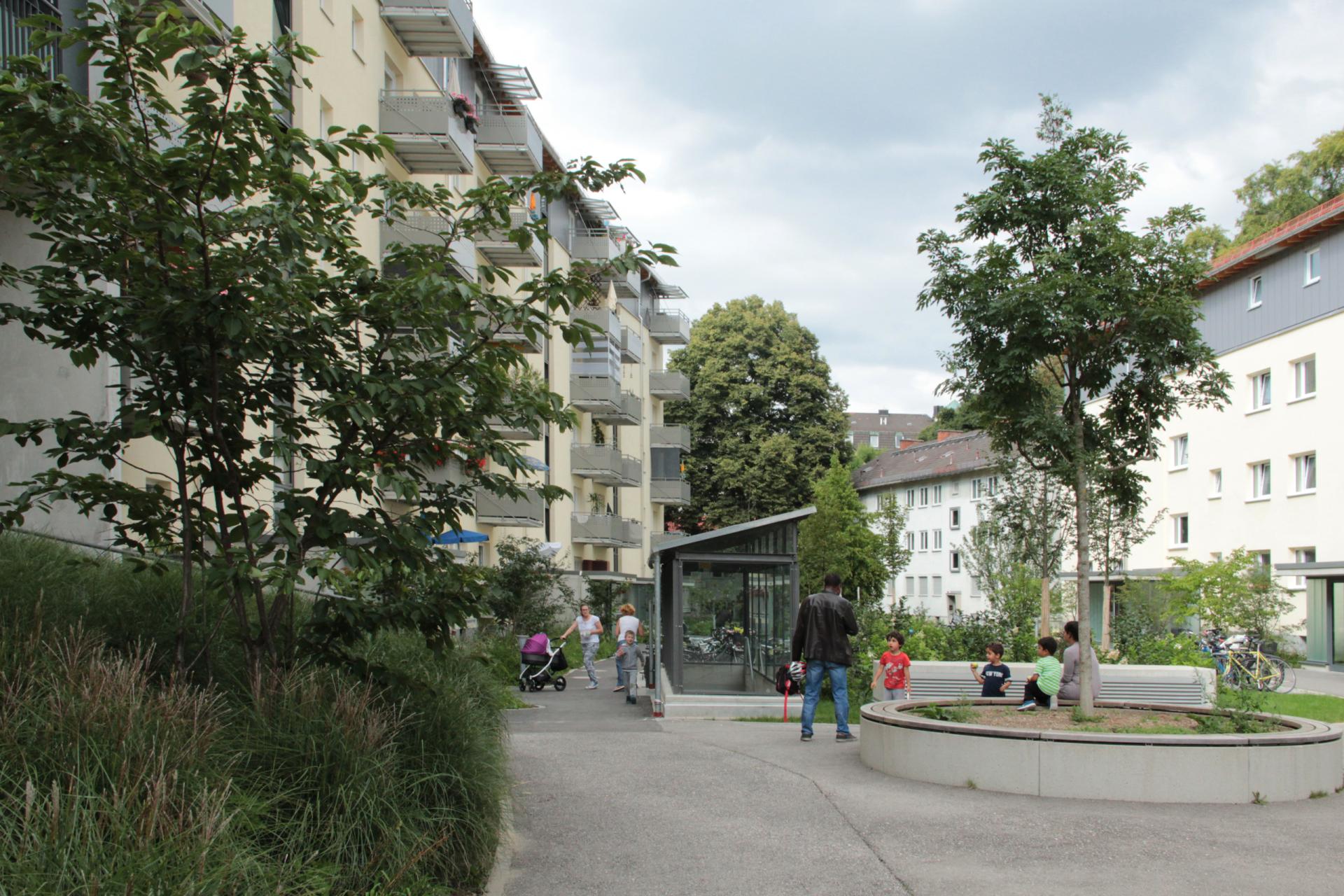
Beautiful green spaces with old trees and curved paths invite residents to stroll between the rivers Isar and Auer Mühlbach. Inside, there are bright, friendly apartments that meet today's expectations of modern and healthy living. This district renovation implemented the ideals of sustainable buildings in the most beautiful way.
Key objectives for inclusion
The ensemble offers a wider range of apartment-sizes, covering the needs of residents in different living situations. The addition of elevators creates a barrier-free living environment. The project created space for a new doctor´s practice, thereby offering medical-services on-site.
Results in relation to category
Aim of the project was an exemplary energetic renovation of the "Lilienhof" residential complex based on a primary energy requirement for space heating and hot water supply of at least 50 Percent below the permissible value – level EnEV 2009 – of a new building. Additionally required residual heat is provided on site by photovoltaics thereby guaranteeing a CO2 neutral energy supply for the residential complex.
After renovation, heating is supplied centrally from the inner courtyard for all buildings of the complex. A gas engine operated compression heat pump uses ambient heat, in this case groundwater, as a heat source. The heat pump is a one-off production and thus supports the pilot character of the overall project.
Over 230 m2 square meters of solar thermal Tube collectors provide additional energy on warmer days. A gas condensing boiler covers peak loads and secures availability. Sufficiently large heating surfaces enable low system temperatures - an essential basic condition for the efficient operation of the gas engine heat pump. The heating surfaces are supplied by small pumps on each radiator, that only provide heat if necessary. Thus achieving change from "supply heating" with central heating pump to "demand heating"
instead. The room temperature can be adjusted separately for each room via regulate room control units. Contacts at the windows switch off the room-related heat supply. To anodic oxidation system ensures the domestic hot water quality while making use of lower system temperatures at the same time. Therefore temperatures of 55 degrees Celsius in the heat generation circuit are sufficient.
Achievements
- Reduction of the final energy requirement for heating and hot water production from around 300 kWh / (m²a) to 31.4 kWh / (m²a)
- Primary energy demand for heating and hot water production below 50% of the EnEV 2009 requirement
- CO2 - neutral residential area
How Citizens benefit
The modernization provides future-oriented housing offers which meet the living requirements of residents. An additional living space of 2,819 m2 was created by increasing the existing buildings by one floor, an additional building with underground parking and a new wooden building. The carefully planned densification with additional buildings preserved the existing qualities of the quarter. However, despite newly created space, due to the increased apartment sizes, the total number of apartments was reduced to 140. After completion of the project the quarter provides a total living space of 9,332 m2.
Innovative character
The 140 apartments in the complex are a mix of 77 subsidized and 63 privately financed housing. The Lilienhof project was for GWG Munich a pilot project clearly showing, that social housing, innovation and sustainability can go hand-in-hand. The result of the project is a technically refined, CO2-neutral residential complex. After the renovation and the complete redesign of the floor plans, the addition of balconies, the addition of storeys to the existing buildings, the addition of a building in timber-construction and another new building, the total living space could be increased by almost a third - and that without any loss of open space quality.