Smart City Graz: from industry to future
Basic information
Project Title
Full project title
Category
Project Description
The ensemble of Science Tower & Leopoldinum School Campus form the heart of the new Smart City district in Graz, Austria. The buildings demonstrate pioneering green-tech and educational concepts such as an 13th floor biosphere for food production, transparent energyglass facades, green energy technologies and open (air) teaching clusters. National and EU-funding was used for an interdisciplinary planning process, stakeholder involvement and sets the basis for the realisation of a PED in Graz
Project Region
EU Programme or fund
Which funds
Other Funds
- Smart Future Graz -Smart Energy Demp-fit4set (Klien/EFRE 2012-2017)
- Green Lab Graz-Smart Cities Demo (Klien/EFRE 2018-2021)
- GrowSmarter (H2020 – 2015-2019) Follower
- Zukunftsquartiere Österreich-PositiveEnergyDistrics (BMK-EFRE 2018-2021)
- EXCESS - FleXible user-CEntric Energy poSitive houseS (H2020-2019-2024) Cooperation
- ANSERS – active user integration for smart energy devices –(Zukunftsfonds Steiermark/EFRE 2020-2023)
- TRANS-PED – Transforming Cities through Positive Energy Districts (JPI-Urban Europe 2021-2023)
Description of the project
Summary
Science Tower and School Campus Leopoldinum in Graz (AT) unite cultural, educational and scientific aspects to revitalize an old industrial area
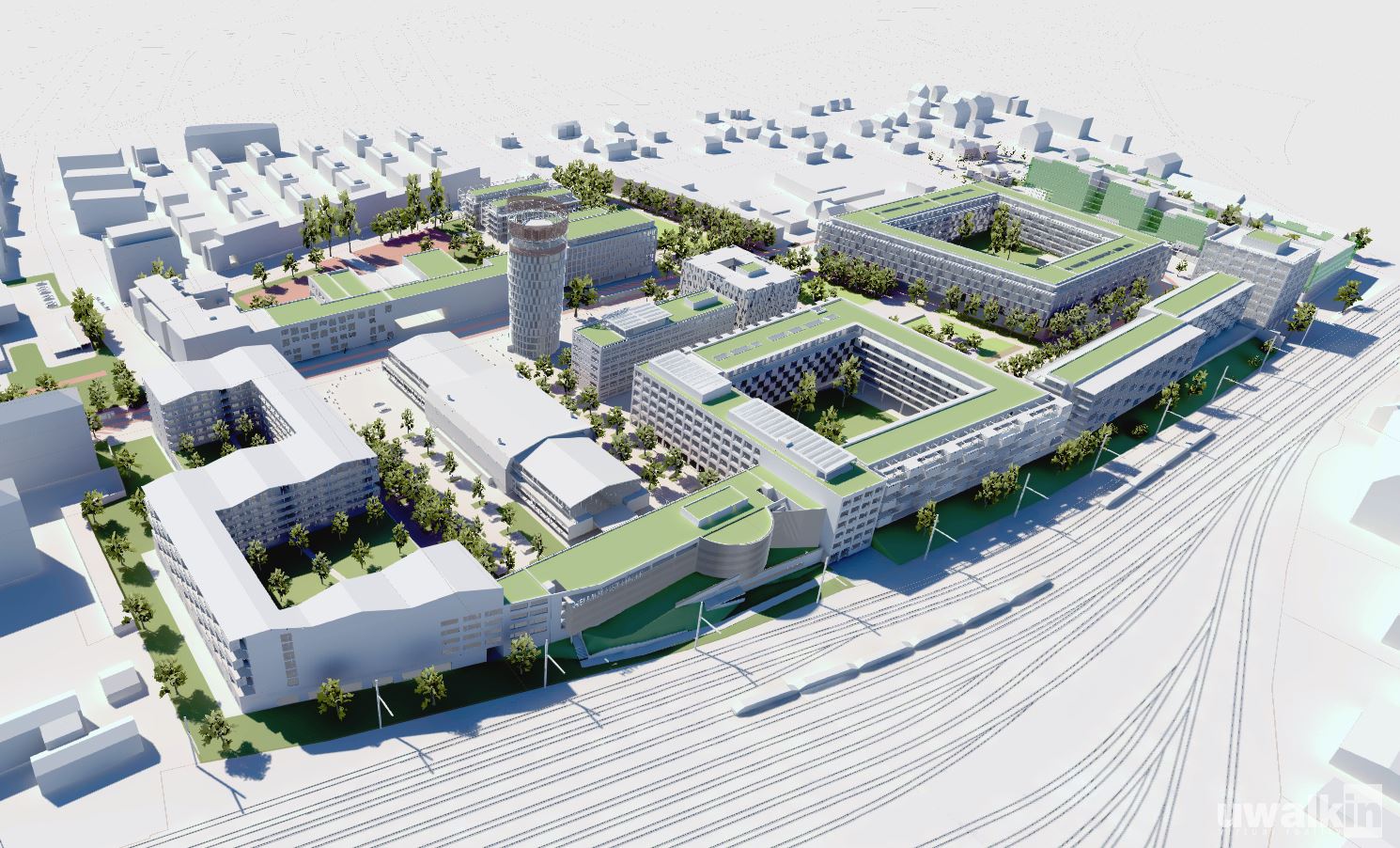
The ensemble of Science Tower and School Campus Leopoldinum forms - together with the already existing concert hall (Helmut-List-Halle) - the heart of the new Smart City district. The buildings demonstrate high levels of design, technology and inclusion. The development of the whole district focused on an interdisciplinary planning process. Relevant stakeholders as well as citizens were involved in a co-creation process, for instance at participatory events on the site.
The project is located in Graz, Austria’s second largest and fast growing city. Both, Science Tower and School Campus Leopoldinum have a unique structure and put pioneering scientific and educational concepts into practice. Through its open design, users of both buildings can interact with each other and at the same time experience green infrastructure inside and outside the buildings.
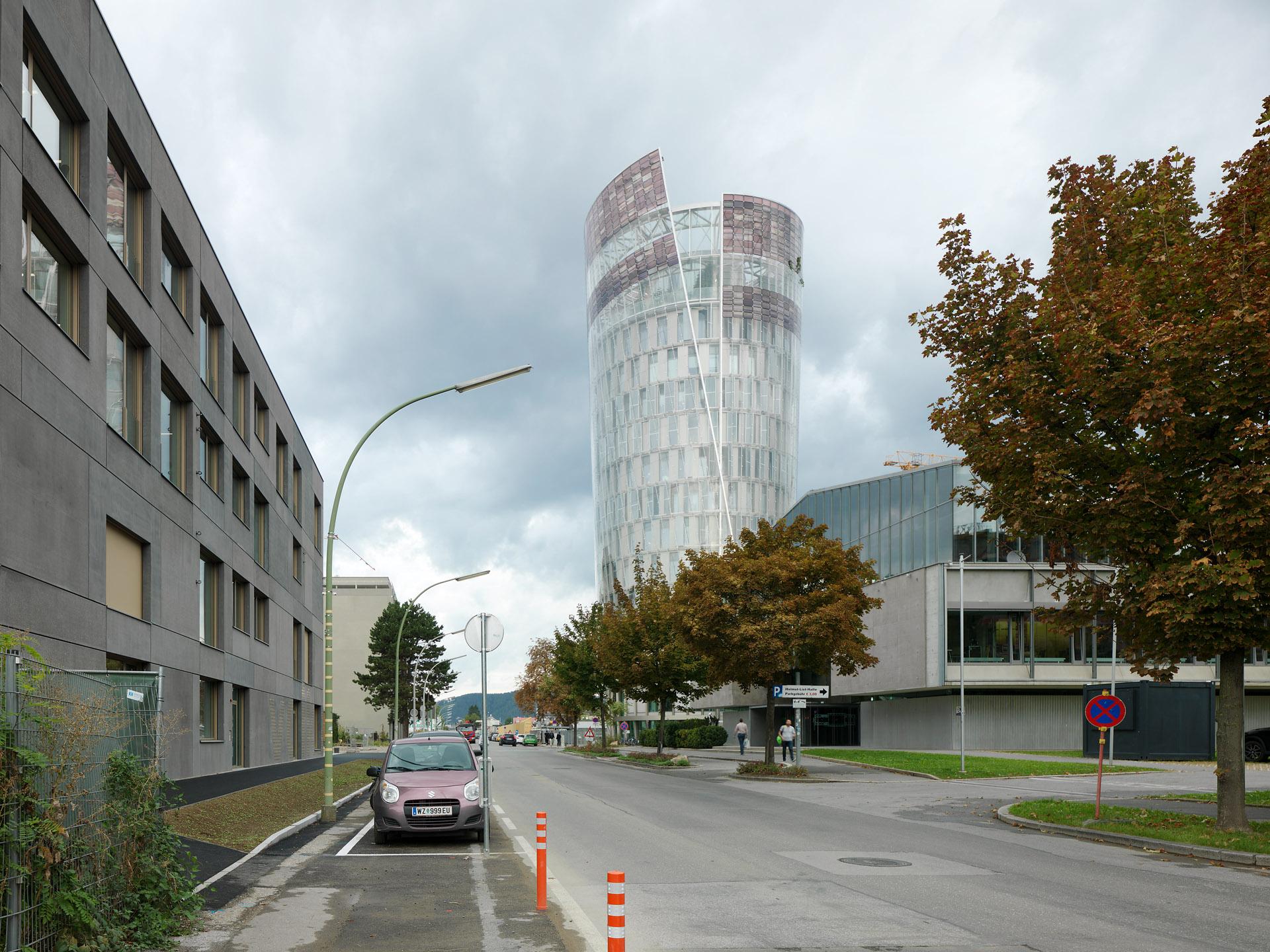
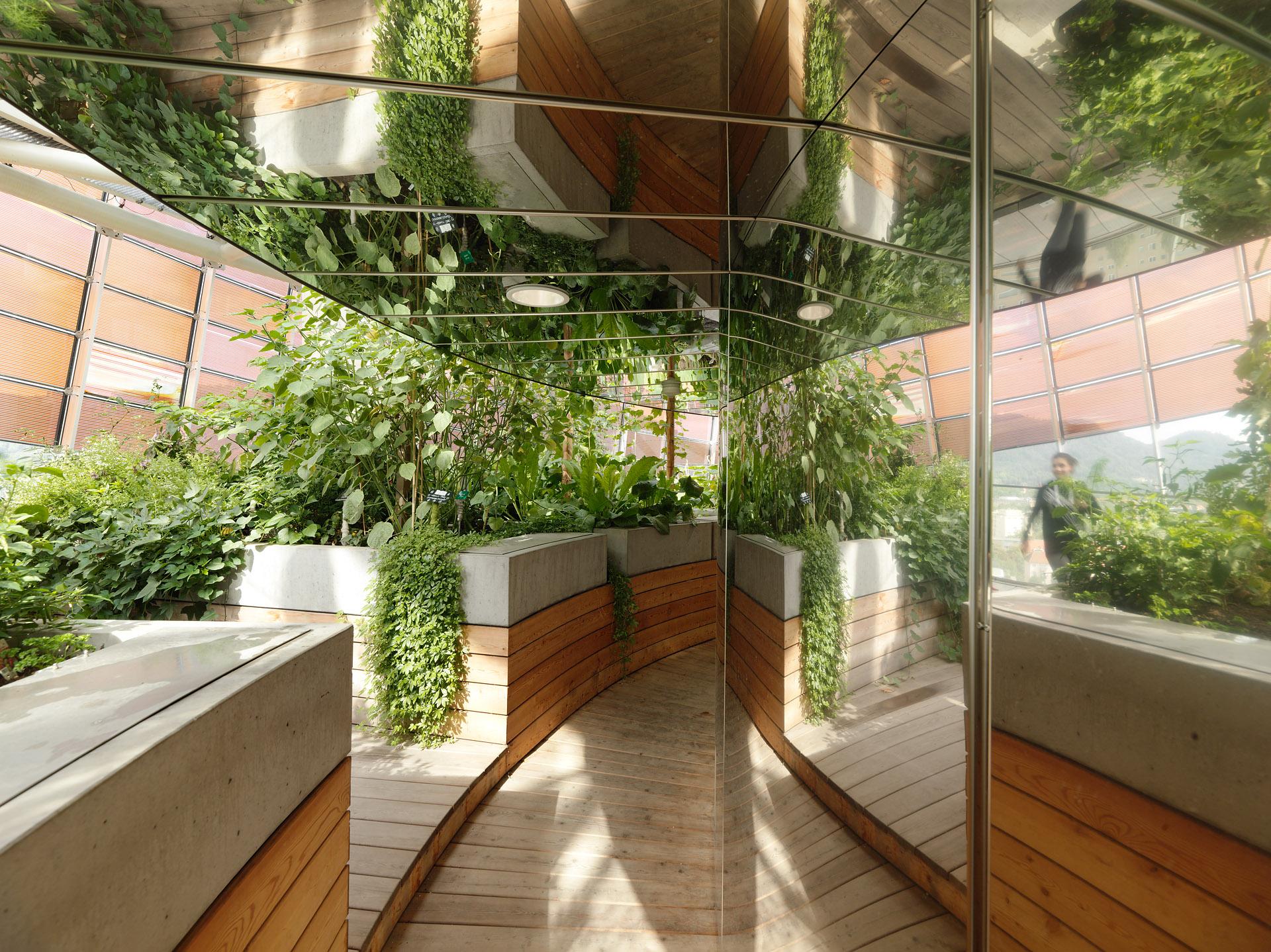
The Science Tower is a local incubator for green economy, research and development. Besides hosting office spaces, the building serves as a testbed for technological and social innovations contributing to nature protection. On the rooftop, there is a biosphere for Urban Farming, which has not only a positive effect on CO2 emissions, but also creates awareness for urban food production.
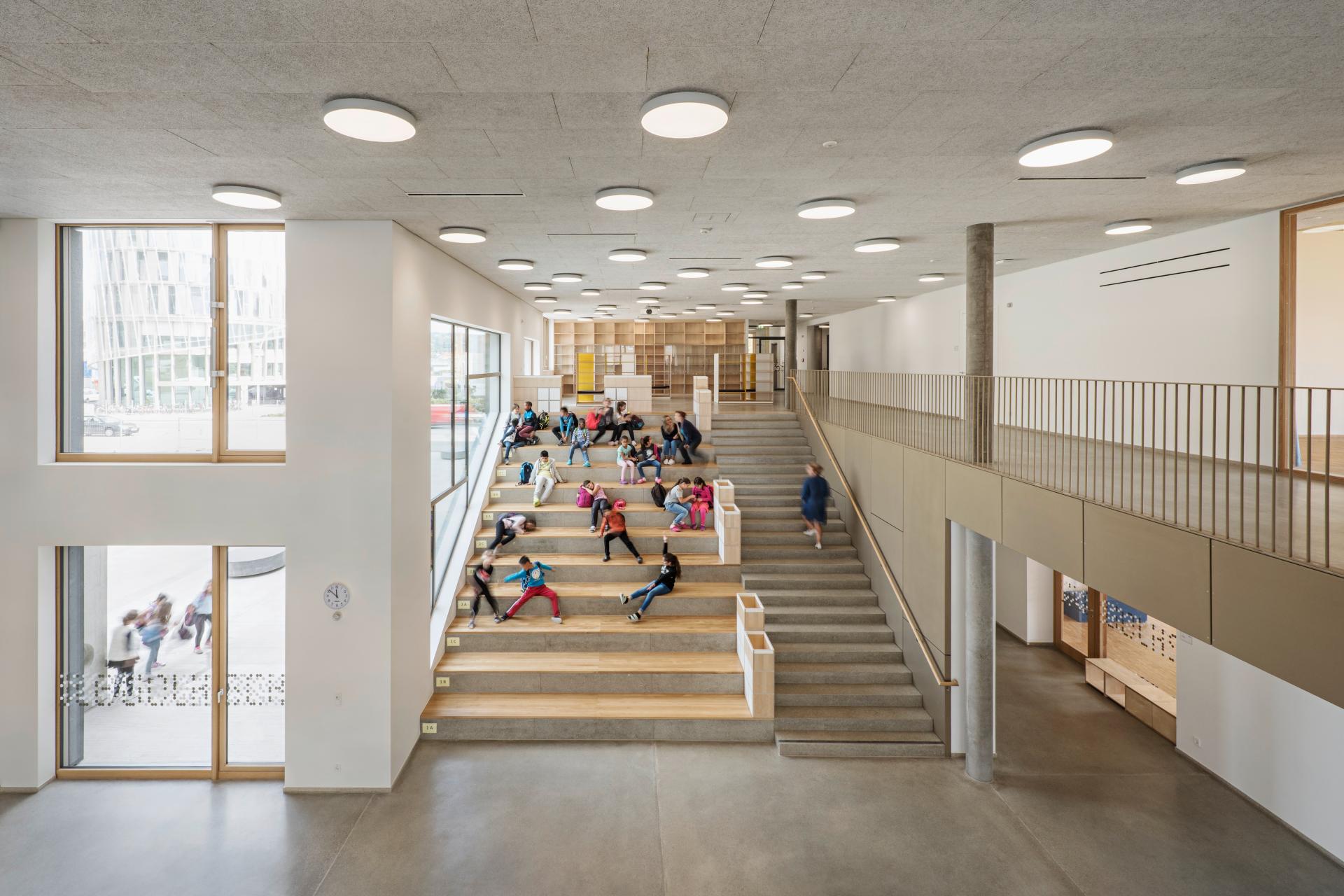
Vis-á-vis of the tower, the School Campus with its distinctive building structure implements modern educational concepts. Learning zones are arranged in teaching clusters, each with access to an own terrace. Through elements such as open-air classrooms and garden terraces for scientific practice, students can experience the value of nature and green energy production at first hand.
Science Tower
Architect Markus Pernthaler
Owner Hans und Birgit Höllwart
Construction 2014-2017
Leopoldinum
Architect Alexa Zahn
Owner City of Graz
Construction 2017-2019
Key objectives for sustainability
According to the Urban Development Concept 4.0, the long-term objective is to develop Graz into a ‘Smart City’, an energy-efficient, resource-conserving and low-emission city of the highest quality of life. The project follows this principle and meets sustainability criteria. The dualism of Science Tower and Leopoldinum School Campus puts pioneering educational and technological concepts into practice to minimize GHG-emissions, integrate green infrastructure and promote circular economy.
The Science Tower uses green infrastructure and Integrated Building and Energy Technologies, such as:
- Geothermal devices in form of twelve 200 m deep probes in combination with heat pumps to heat and cool the building. The activated soil serves as seasonal storage of remarkable capacity.
- Thin glass facade: with a new chemical process, the thickness of the glass panels in the outer facade was reduced by 33 % compared to a conventional manufactured glass. This saves energy in production, reduces transport costs and substructure measurements.
- Parts of the outer glass shell of the tower consists of energyglass. It converts sun light into electrical energy via dye-sensitized solar cells.
- Biosphere facilities on the rooftop
Leopoldinum follows the Smart City principle in terms of sustainability via:
- Flexible building construction: thanks to a flexible support grid, educational spaces are differently sized and adaptable to constantly changing educational concepts.
- Green infrastructure and gardens on the terrace allow the pupils to explore the vegetation and to experience the change of seasons on-site.
- The combination of intensive roof greening with photovoltaic panels has a positive effect on nature and biodiversity. It improves the thermic climate of the building and provides a habitat for birds and insects.
- Similar to the tower, geothermal devices in combination with heat pumps are used to provide heat and cold.
Key objectives for aesthetics and quality
One of the main objectives of the district development was the high quality of design, achieved by various urban and architectural competitions.
The Science Tower has been intended as a landmark within the new Smart City district. Its slim conus is 60 meters high and forms together with the concert hall and the school the social centre of the new quarter. The double skin of the tower includes a rotating shadowing system consisting of energy producing solar panels. On top, the biosphere is surrounded by dye-sensitized solar cells, which give the tower a very specific characteristic. The orange coloured translucent panels support the growth of the plants; vegetables and fruits, which are used in the nearby district restaurant.
The Leopoldinum is characterised by a monolithic structure, which is emphasized by the materiality and the window arrangement. The two prevailing window formats create a balance between the vertical and horizontal concrete elements. The fluent transition of inner and outer spaces allows a flexible and vibrant usage of the whole building, for instance, by its various terraces.
In combination with the development of the secondary school as next step until 2025 as well as the existing student home, the campus creates a strong urban backbone along the adjacent district main road. In its final form with the open forecourt, the school interlinks with its neighbouring buildings Science Tower and Helmut-List-Halle, which add a scientific and cultural perspective to the educational centre.
The combination of aesthetical built environment and the wide field of content will form the new identity of the district.
Key objectives for inclusion
Several stakeholder groups were included during the development process of the new district Smart City Graz. Landowners, architects, researchers and further experts formed a strategic, interdisciplinary group to steer the development process and to take up innovation as good as possible.
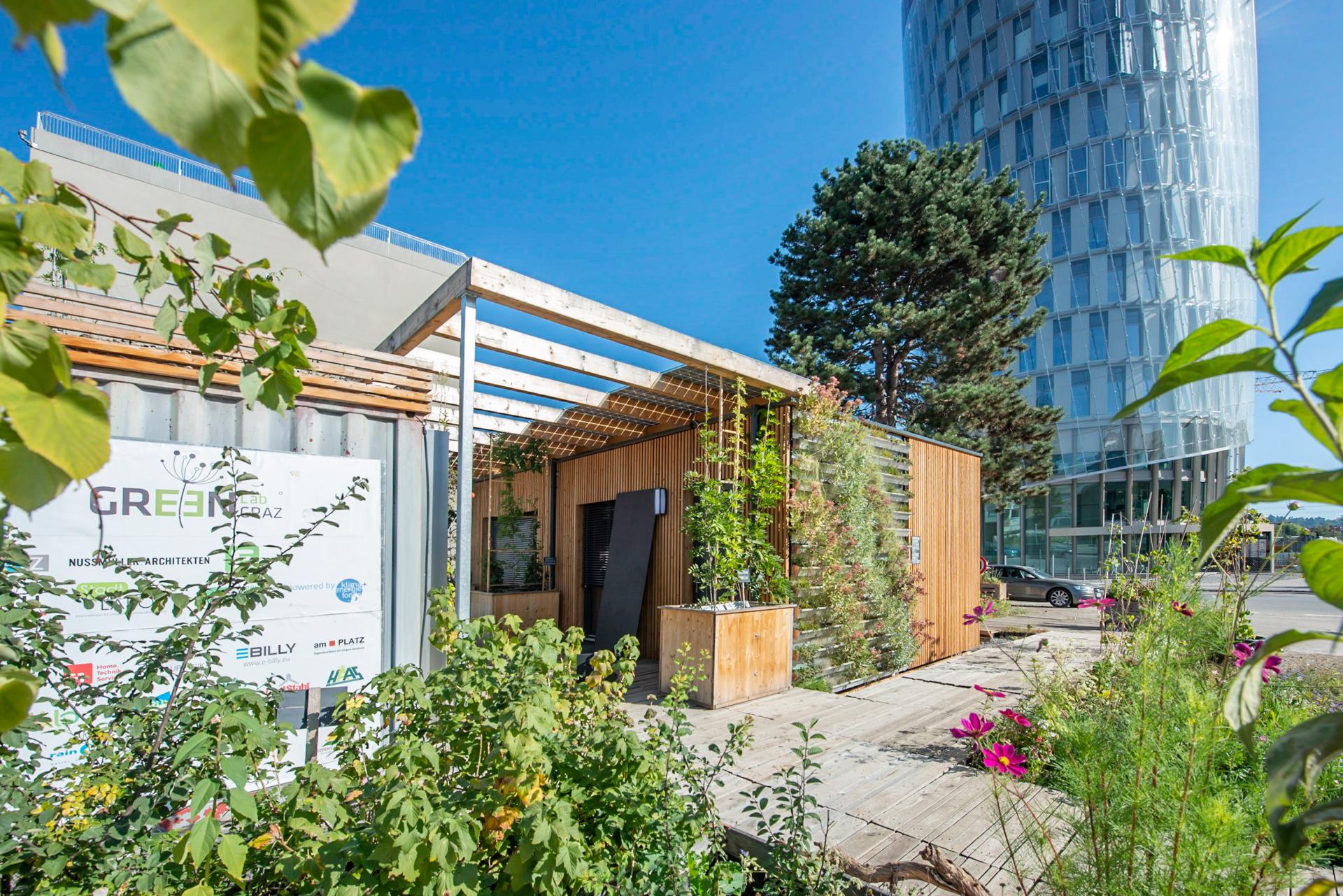
In addition, a distinctive district management had been installed at a very early stage, which involved adjacent neighbourhoods, building owners as well as new residents of Smart City Graz from the beginning of the development phase. The district management was located on site, situated directly between Science Tower and Leopoldinum. The self-sufficient building called 'green.LAB' offered room for exchange and served as a laboratory for the integration of green infrastructure into construction. The demonstration building in timber contained green infrastructure - inside, outside and on top of the building. The garden was used for urban farming as was open to the public. Neighbours could act as farmers to implement the urban greening project.
Results in relation to category
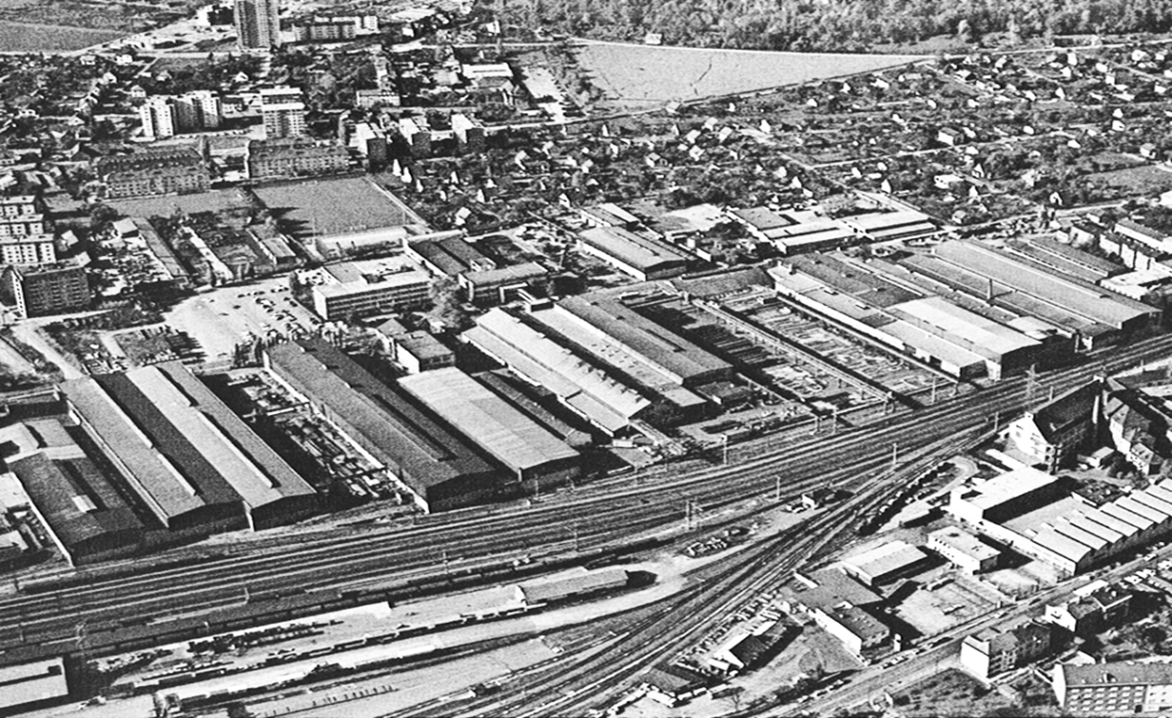
Smart City Graz with its urban landmarks and lighthouse projects Science Tower and School Campus Leopoldinum is a good example for a successful regeneration of a former industrial site. On the 17 ha sized brownfield that was used by a steelwork company in the past, the new Smart City district has started to take shape. Culture, Education and Science were three drivers for the transition of the area. The new centre has been established around its hotspots Helmut-List-Halle (a refurbished multifunctional event hall), the School Campus Leopoldinum (modern building with pioneering educational concept, completed in 2019) as well as the Science Tower (green-tech office building and living lab for new building technologies, completed in 2017).
The ensemble of Science Tower and Leopoldinum, accompanied by a temporary building of timber construction hosting the district management, combines sustainability, aesthetics and inclusion in an excellent way. The buildings fulfill highest buildings standards and use modern technology to minimize their ecological footprint. Synergies between the buildings and its functions are used to strengthen the local identity. For instance, the Science Tower is open for pupils of Leopoldinum School Campus to study new technological solutions, developed by scientists of the research-institutions who work inside the tower, ‘pupils as researchers’ is the motto.
How Citizens benefit
Climate change is not only a challenge for local authorities and developers, but also for residents. Lighthouse projects are necessary, to raise the awareness of all stakeholders and to show them the feasibility of adaptation to climate change through concreate measures.
The innovative educational concept at School Campus Leopoldinum teaches our next generation to think and act more sustainable, the variable room sharing concept makes the school complex accessible for different usages beyond the school hours.
To sensitize, inform and include current and future residents of the Smart City district, a central meeting point was establishment through of the green.LAB, In addition, a participatory process was installed to strengthen the local identity and cohesion. Experts as well as the civil society were involved in various ways:
- Green.LAB as a meeting point for the neighbourhood: regular opening hours twice a week, DIY-Workshops open to the public, additional seasonal events took place
- Support of local projects, e.g. one a months, a ‘consultation hour’ on urban greening took place, round tables, info folders were disseminated
- Presentations, dialogue-events, study tours and excursions for national and international delegates
To study the impact of the participatory process, a regular monitoring and evaluation took place, qualitative (e.g. stakeholder interviews) and quantitative (e.g. surveys) methodology was used. Additionally, a master thesis assessed the social impacts.
Innovative character
The project started as a private enterprise. Thereafter, two groups, on the one hand, the landowners with the architect and interdisciplinary experts, and on the other hand the strategic group coordinated by the City of Graz, founded together a PPP-consortium, which applied for a European programme, called 'Smart Energy Fit4Set'. This led to a successful application for a national funding programme (KLIEN - Smart City demo), resulting in the first smart city lighthouse demonstration project on national level.
The funded integrated urban development process transformed the former industrial area to a high quality and liveable new district. Mixed used zoning, short distances, attractive public spaces focussing on pedestrian- and bike-friendly public areas, integration of the topics 'Energy' and 'Citizen Partizipation and awareness raising' from the beginning on.
Topics:
- City development process and management
- Mobility Solutions
- Building Technologies
- Energy
- Architectural Quality and Public Space
- Social Sustainability
- Public involvement and awareness
Urban development contracts (PPP) were applied as steering instrument and arrangement between City of Graz and private developers to define specialiced qualities in main fields of sustainable actions.