text
Basic information
Project Title
Full project title
Category
Project Description
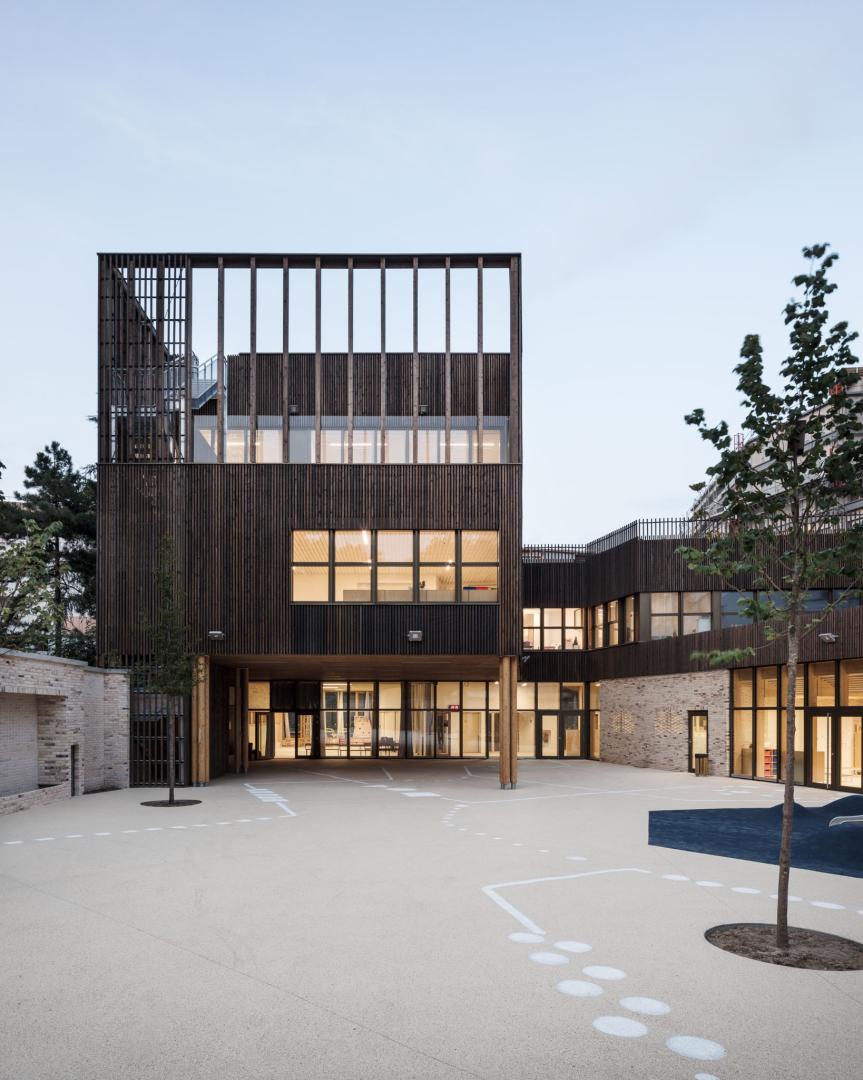
This project has developed into a polymorphic form as a result of the site's constrained geometry , while providing as many green apertures and urban qualities as possible. Every aspect of the project, from the playground to the roof, is structured around an architectural promenade, an inner street that supports the overall intention.
Project Region
EU Programme or fund
Description of the project
Summary
This project has developed into a polymorphic form as a result of the site's constrained geometry , while providing as many green apertures and urban qualities as possible. As the central focal point, the school is therefore sited in the hollow of a landscaped complex, where each volume and facade interacts and articulates with the urban space. Every aspect of the project, from the playground to the roof, is structured around an architectural promenade, an inner street that supports the overall intention. This means that each space is naturally illuminated and provides a view of this new landscape.
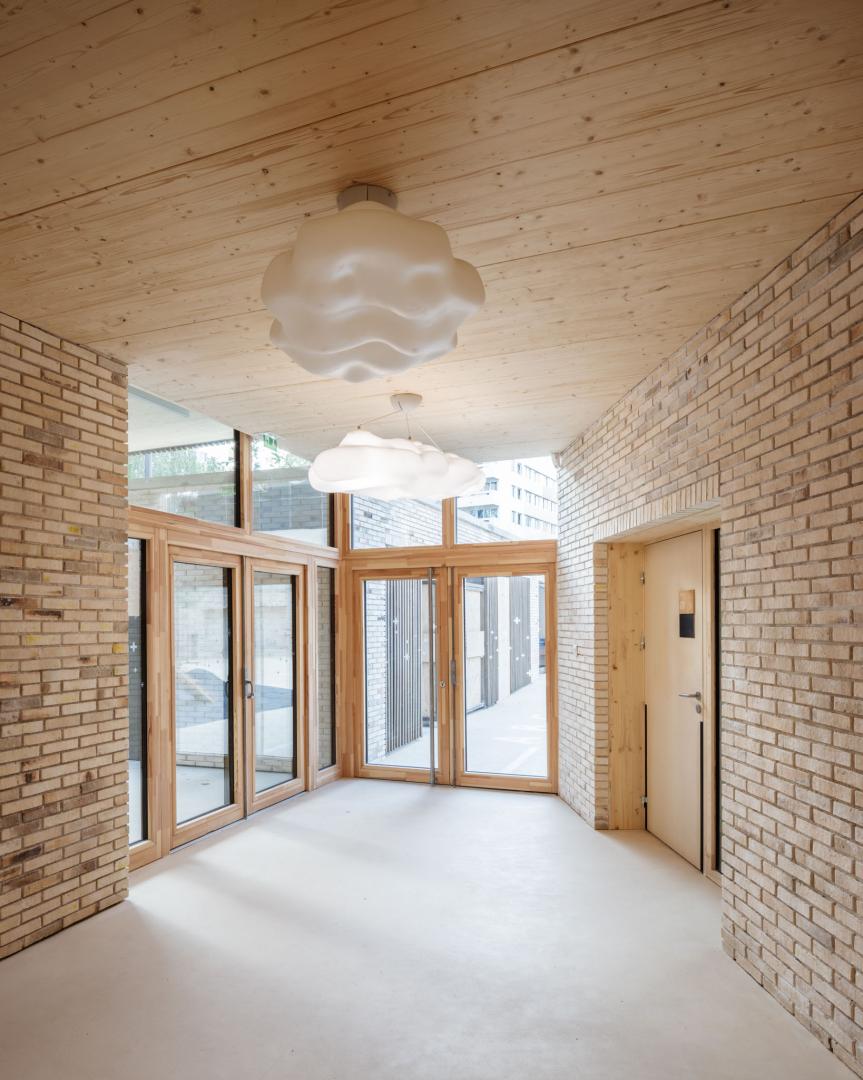
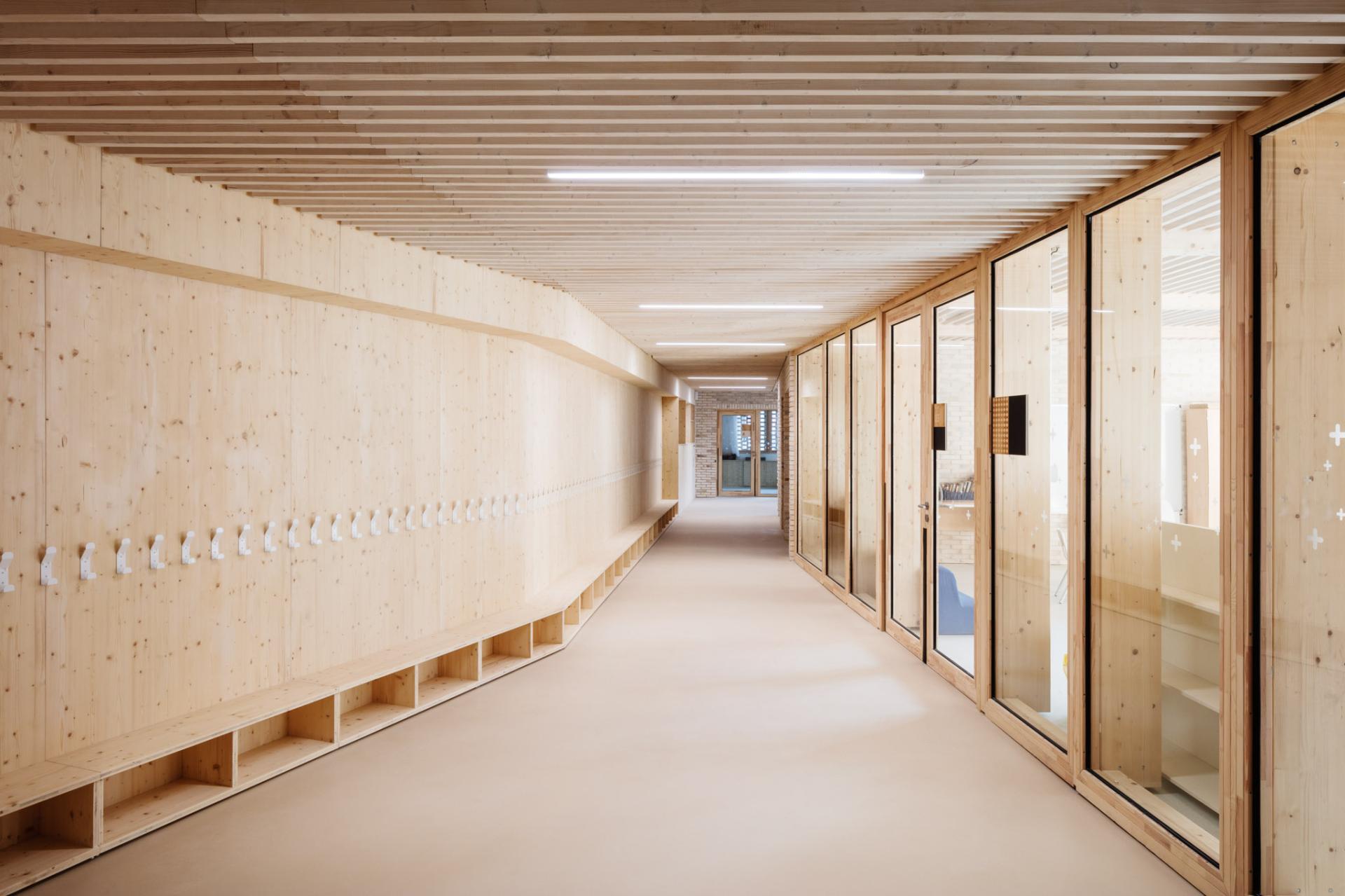
The architectural element and its materiality have been developed based on a dialogue with the depth of the route and the inner street. How do you traverse a long building facing one way for almost 40 yards? How should this space-time be occupied? What is the intention? Using what light, and what relationship to the outside? This is where the concept of an inner street came from, which expands to suggest a direction, a leisure centre, and takes children and parents to the heart of the school. This street is formed by regularly occurring interior structures with functional and structural thick volumes. These thick brick walls mark the boundaries of the children's spaces. And lastly, the partitions between the traffic spaces and the children's rooms are made of wooden frames which are often load-bearing and are fully glazed. The street is lit on both sides by direct views towards the facade or through these glass rooms, which themselves have a relation to the courtyard.
Key objectives for sustainability
The project has been designed using a constructive low carbon approach. The materials, both for the construction and the facades or interior finishes, were therefore selected from a range of bio-based and geosourced materials. As the building is part of a passive design certification, heating needs are reduced by optimising sunlight, and there is a high-performance envelope and a dual-flow ventilation system. The project's organic shape is part and parcel of the environmental considerations through the use and implementation of local and low-energy materials. The wooden walls are prefabricated in a workshop and the terracotta bricks are made near Paris, being shaped by hand and fired in one of the last traditional old kilns in France.
This project's technical building solutions meet requirements for thermal performance and summer coolness, interior and exterior acoustic constraints and a strong desire to reduce the building's carbon footprint. Therefore wood has been used in every form, such as wood-frame walls and straw insulation, interior walls and floors made of CLT, exterior wood-aluminium joinery, wood cladding (vertical cladding and horizontal cladding in a tobacco barn style) and wood fittings.
Key objectives for aesthetics and quality
The architectural language is intended to be undogmatic and designed to meet the spaces' natural lighting needs. The apertures in the thick brick volumes are designed as windows, sometimes sheltered from view by mashrabiya systems, which correspond quite well to the privacy required by certain premises. Additionally, all traffic receives natural light from the large bay windows that frame the urban and plant-filled landscape.
The entrance hall opens generously onto the inner street. It articulates the leisure centre, the washroom area, the restaurant and the engine room, and is also part of the route created via the inner street forming a walk that leads to the classrooms. Serving spaces are designed to the same quality as the spaces served, all of them naturally lit and with facilities that are integrated into the building. The project's functionality is based on the principle that each constructive, partitioning or functional element has a different use such as creating a framework, indicating a particular space, directing traffic, storage, etc. The inner street serves the various functional and educational spaces along the route. It has been designed to ensure that there is a view to the outside at every point, such as when the inner street expands towards the facades or via the second light source through the large rooms for the children.
Key objectives for inclusion
The program integrates a social mix through the diversity of types of housing. Functional diversity is found in the use of outbuildings, roofs for vegetable gardens and associative premises. One of the housing projects (the social building) also offers innovative housing in their configuration: in large family apartments, a small studio is separated from the apartment and accessible by a common patio (ideal for the independence of a young adult who has no other means than to stay with his parents).
The kindergarten project requires taking into account the constraints linked to the fragility of the public received (environmental quality of air, soil, accessibility, etc.) The other very important aspect is the search to reduce the "urban-heat island" effect for the summer comfort of the residents of the neighborhood. The solutions put in place are simple: green roofs and open ground in the project courtyard.
Results in relation to category
The feedbacks from the kindergarten are very positive, particularly on the feeling of general comfort related to materials, connections to the outside and thermal comfort in summer and winter. In a district where social housing is dominant, high quality equipment is a source of pride and a new benchmark for residents. The landscaped outdoor spaces are educational supports for schoolchildren, thus making it possible to include them in a process of discovery and respect for the environment and biodiversity.
How Citizens benefit
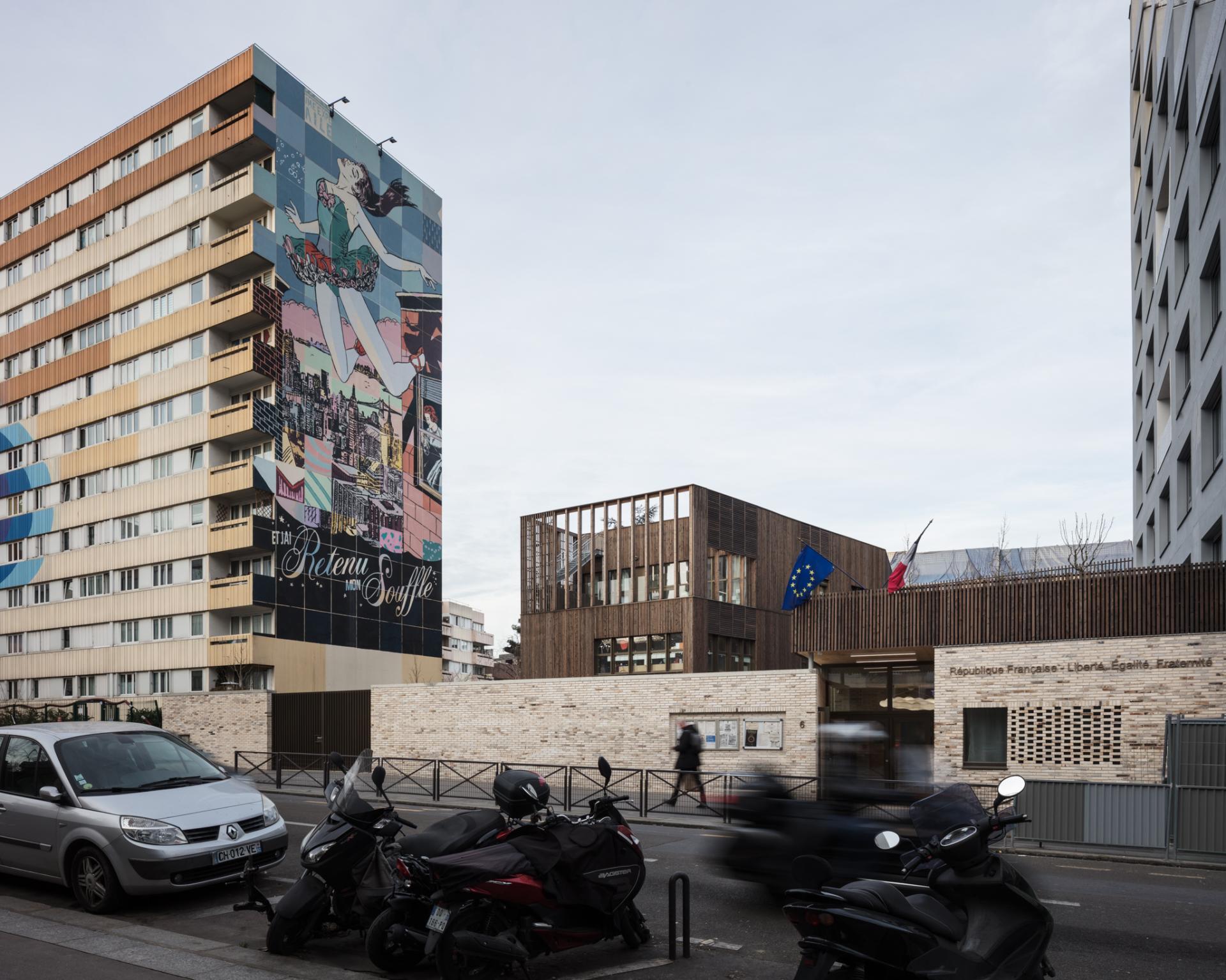
Initiated in 2013 and led by SEMAPA, the development operation of the urban block, on a proposal from Urban-Act and Transfaire, questions urban ecology. This operation is part of the process of upgrading the Vincent Auriol boulevard, an evolution thought through in a consultation process by the local district town hall. The project plot was occupied by a single-storey school, on a raised hillock, contrasting with the neighboring tall buildings. The site then had significant differences in height and didn't comply with accessibility for all, to which the development project had to respond. The urban project, which is organized around the heart of a landscaped courtyard, responds to the neighborhood's green network, and offers social and intermediate housing buildings and equipment: the nursery school. The boulevard itself is being upgraded by the installation of shops and facilities for soft mobility.
The participative process resulted in a very precise design brief for the kindergarten, organizing on this polymorphous plot the establishment of the street courtyard. The client's ambitions in terms of ecological exemplarity have made it possible to bring here a low-carbon project that defends, through a strong relationship with nature, a certain quality of use for the children and the educational team.
Innovative character
We believe that the architecture of the project has an educational role in itself. This is because environmental education for small schoolchildren becomes a matter of course through the showcasing of all these natural materials (wood, brick and straw). We have also done our utmost to promote nature through the use of accessible green roofs, a landscaped courtyard full of plants, framed views of the island's landscape, etc. We have had a lot of particularly positive feedback from the teaching team but also from the children and their parents about how the school is positioned as a green space in the city.
Last but not least, we feel it is important to point out that this school is the first project in the City of Paris to have obtained several certifications for biodiversity, and for the building's low carbon level and use of natural and biosourced materials. This is also one of the reasons why this kindergarten project is seen as proof that environmentally-friendly construction is possible, even in especially constrained urban environments such as Paris.