MLEI EFIDISTRICT FWD – NAVARRA (ES)
Basic information
Project Title
Full project title
Category
Project Description
The purpose of this project is to carry out an integral energy renovation project in districts as a regional strategy against climate change, energy saving and use of renewable resources (biomass) in a social district of Pamplona.
Summarizing the integral energy renovation of Txantrea district which includes three components:
A. Integral energy renovation of district buildings
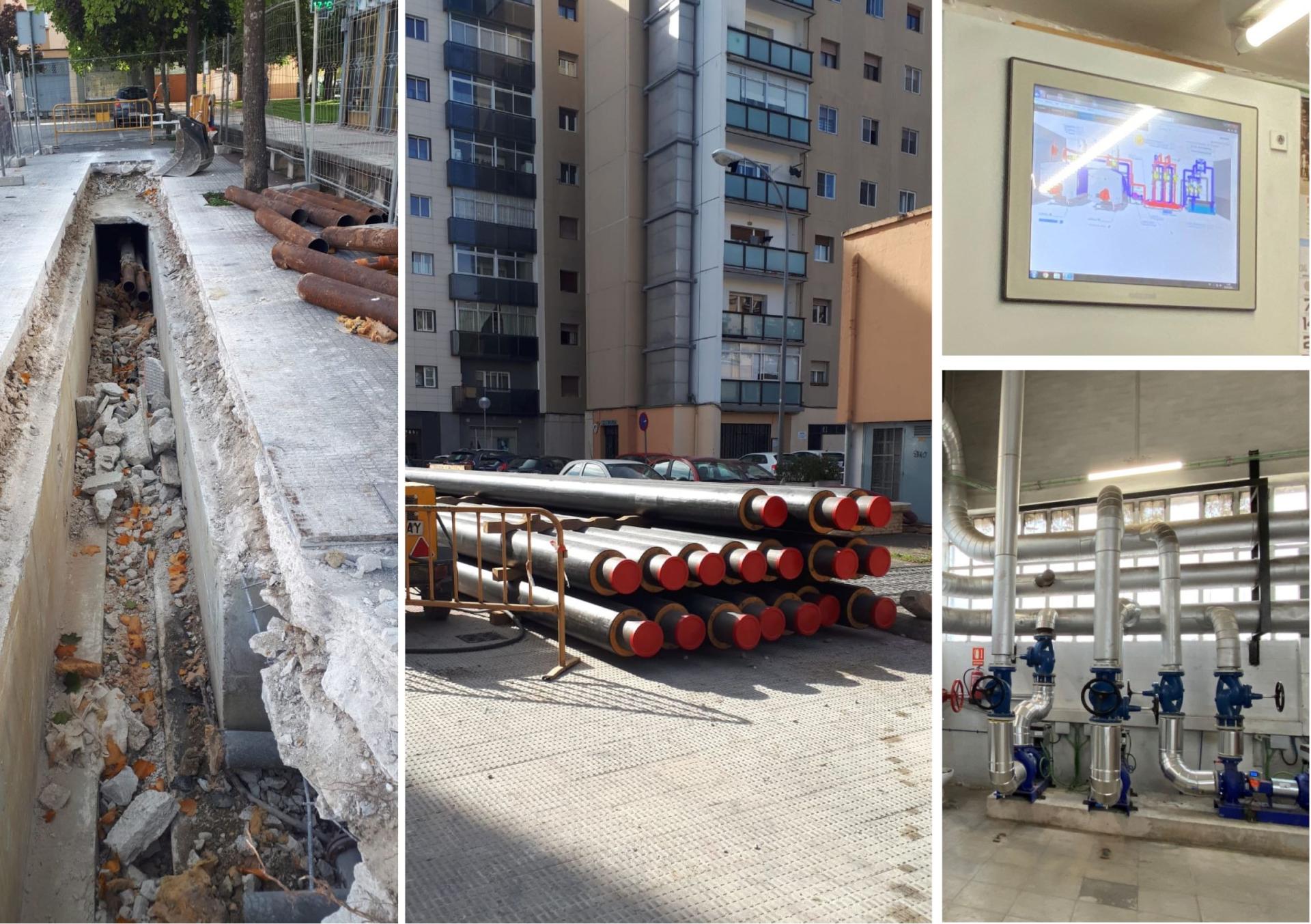
B. Renovation of existing District Heating.
C. Creation of a New Thermal Grid supplied by biomass.
Project Region
EU Programme or fund
Which funds
Other Funds
One Stop Shop Team
MLEI-PDA / CIP-IEE-2013 The Efidistrict project is financed by the European Commission (Mobilising Local Energy Investments – Project Development Assistance – MLEI_PDA)
Energy rehabilitation work for buildings
ERDF – IDAE PAREER CRECE
- Name of EU programme: Multiregional Operational Programme of Spain
- Fund: ERDF
- Chapter: Thematic priority 4 – Low-carbon economy Action line as appropriate: Specific objective 4.3.1. Improve energy efficiency in buildings, and in infrastructures and public services
- Year: 2015
ERDF – IDAE PAREER II
- Name of EU programme: Multiregional Operational Programme of Spain
- Fund: ERDF
- Chapter: Thematic priority 4 – Low-carbon economy Action line as appropriate: Specific objective 4.3.1. Improve energy efficiency in buildings, and in infrastructures and public services
- Year: 2017
Description of the project
Summary
Efidistrict is a project for urban regeneration of a working-class district that was able to improve the life of its residents. It has also been a space for collaborative work, citizen participation and co-existence with a view to building a sustainable future for the district.
The implementation of an integral energy rehabilitation project on which a regional strategy can be supported was meant to boost the dynamics of revitalisation and transformation in other districts of Pamplona and other municipalities of Navarre.
It has also become a key tool for fighting against energy poverty and adjusting to climate change, creating a new city model by means of reduced energy consumption and the use of renewable energy sources.
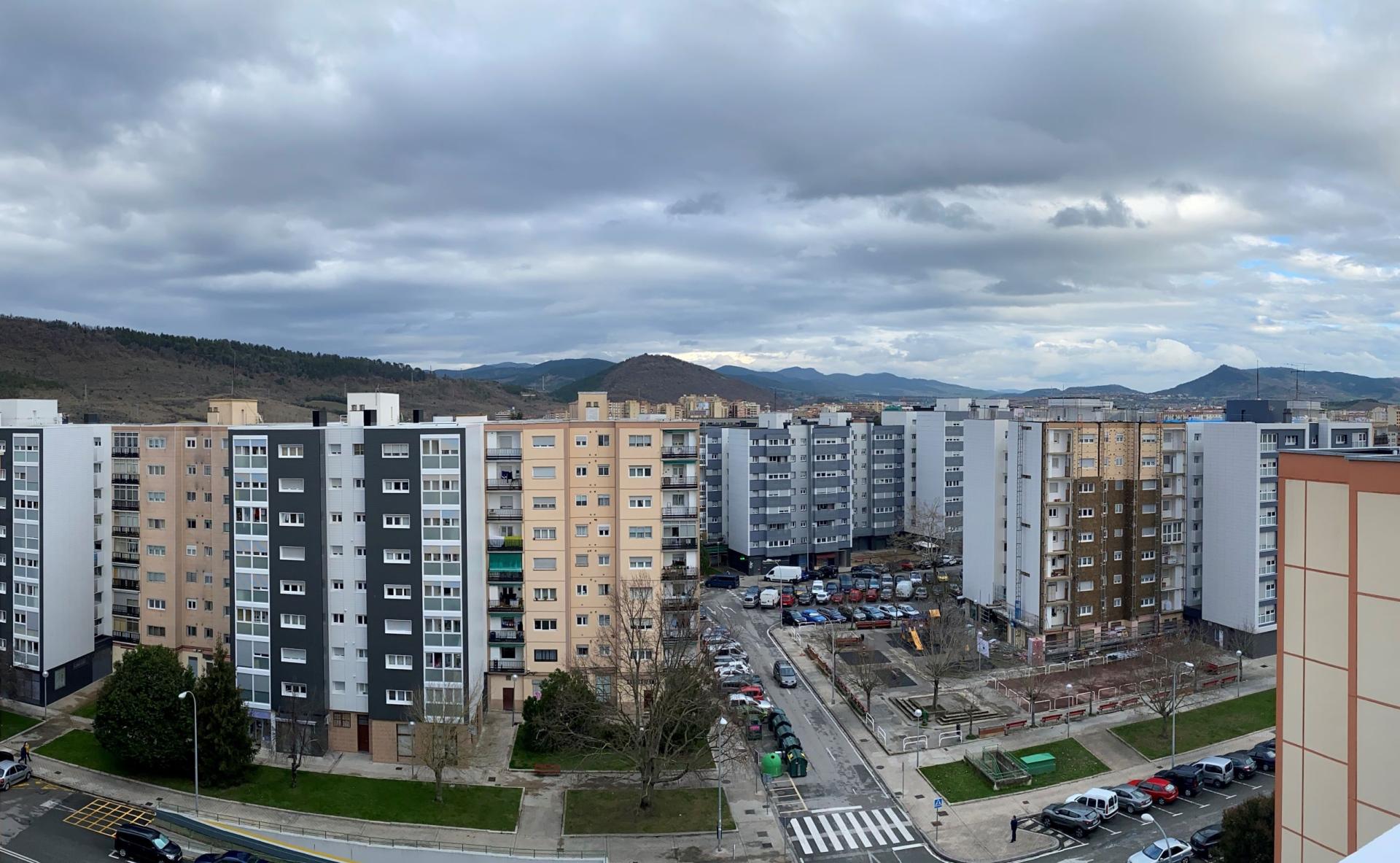
Txantrea is Pamplona’s oldest social housing district, with a markedly working-class identity. The area counts 6,273 homes, which were built before 1970 without any kind of thermal insulation and hence with excessive heating consumption and a corresponding health risk. There are eight heating networks in the district which provide service to all those homes.
Efidistrict has had two members: Navarra de Suelo y Vivienda (NASUVINSA), a public company pertaining to the Government of Navarre, as leader and coordinator, and the Economy, Tax, Industry and Employment Department (DETIE) of the Government of Navarre, as partner.
The project is based on two very simple concepts. First, to maximally reduce home consumption through inclusion of energy efficiency measures; and second, to introduce renewable energies via three measures:
A. Integral energy renovation of district buildings;
B. Renovation of existing district heating;
C. Creation of a new thermal grid supplied by biomass.
Key objectives for sustainability
Impact indicators in the own district
Energy consumption reduction in building by adding efficiency measures and heating system refurbishment.
Change in use of local renewables resources instead of current fossil resources.
A. Buildings Envelopes
- Avoided GHG emissions (tCO2e/year) Expect impact 272 - Real impact 802
- Primary energy savings (toe/year) Expect impact 124 – Real impact 274
B. District Heating
- Avoided GHG emissions (tCO2e/year) Expect impact 516 – Real impact 1.500
- Primary energy savings (toe/year) Expect impact 236 – Real impact 512
C. New heating system and main network
- Avoided GHG emissions (tCO2e/year) Expect impact 3.205
- Primary energy savings (toe/year) Expect impact 181
Impact indicators regionally
Develop a space and time schedule for Building Renovation processes and districts integrating energy efficiency measures from the beginning. In addition to favouring the startup of a Heating renovation policy for Districts built in the 60s and 70s to prevent the loss of these systems, which might serve as a model for new developments.
Seek greater transversality and co-operation among the different administrations involved in processes of this kind and involve en beneficiaries (owners) in satisfactory participation processes.
Impact indicators globally
Obtain a contrasted and tested methodology in district renovation processes, with the aim of improving quality of life, optimising time and resources and favouring energy efficiency. Importance of the promotion of energy renovation management from the public administration, moreover in the crisis, the reduction of public resources should not represent the inhibition of the administration but rather the redefinition of the process, of its role and leadership. With the EFIDISTRICT project we are looking to consolidate the Management Group figure, with staff trained on this type of actions.
Key objectives for aesthetics and quality
The involvement of citizens, as well as the participation and galvanisation of users has been the key to this project’s success. At present, the Txantrea district counts 6,273 homes and a strong associative and collaborative tradition.
The project for energy rehabilitation in the Txantrea district was carried out in collaboration with the communities of residents and delineated by the neighbourhood according to its real needs. Conceived on a comprehensive basis, the activity was meant to go beyond one-off measures at portal level.
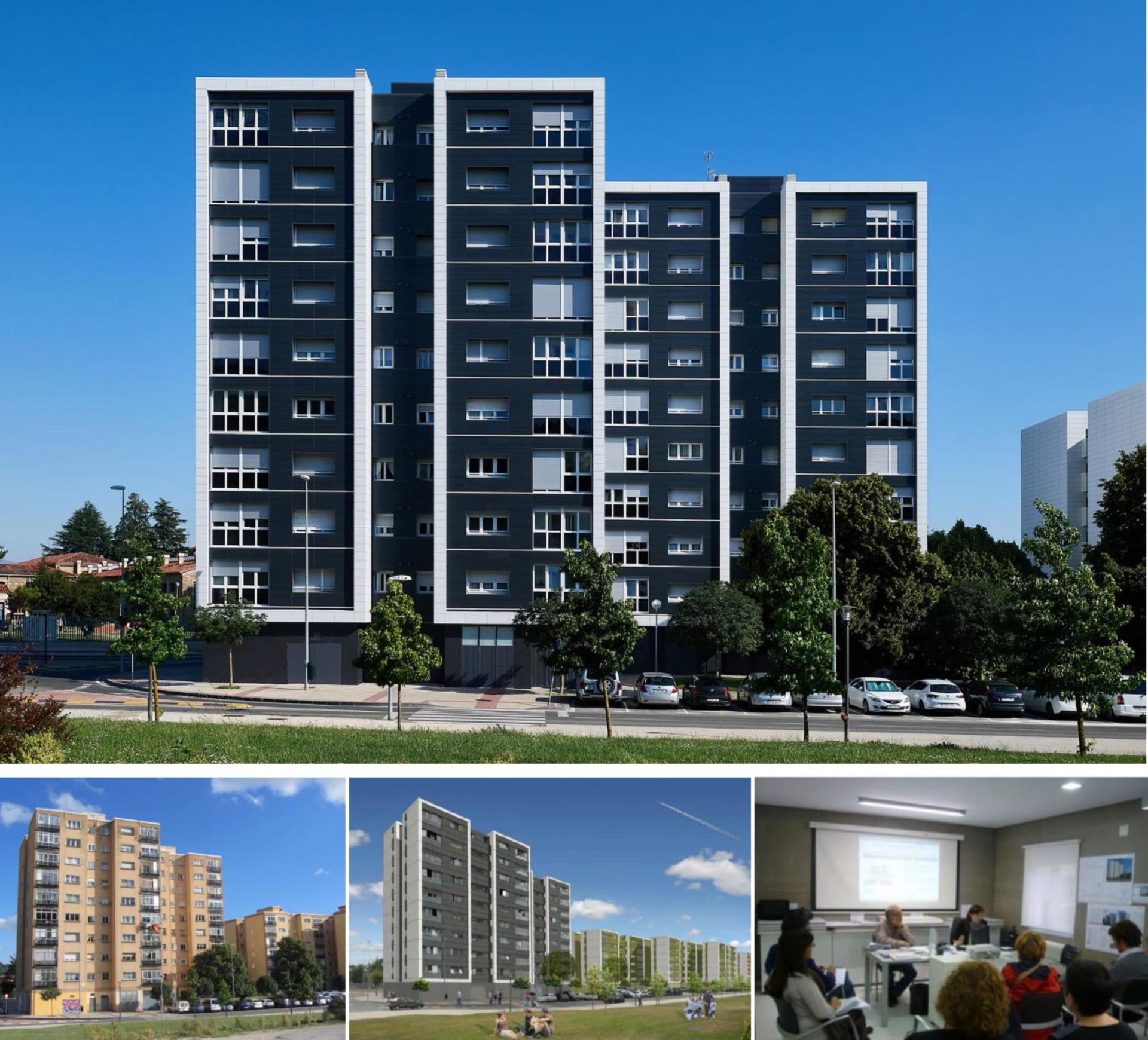
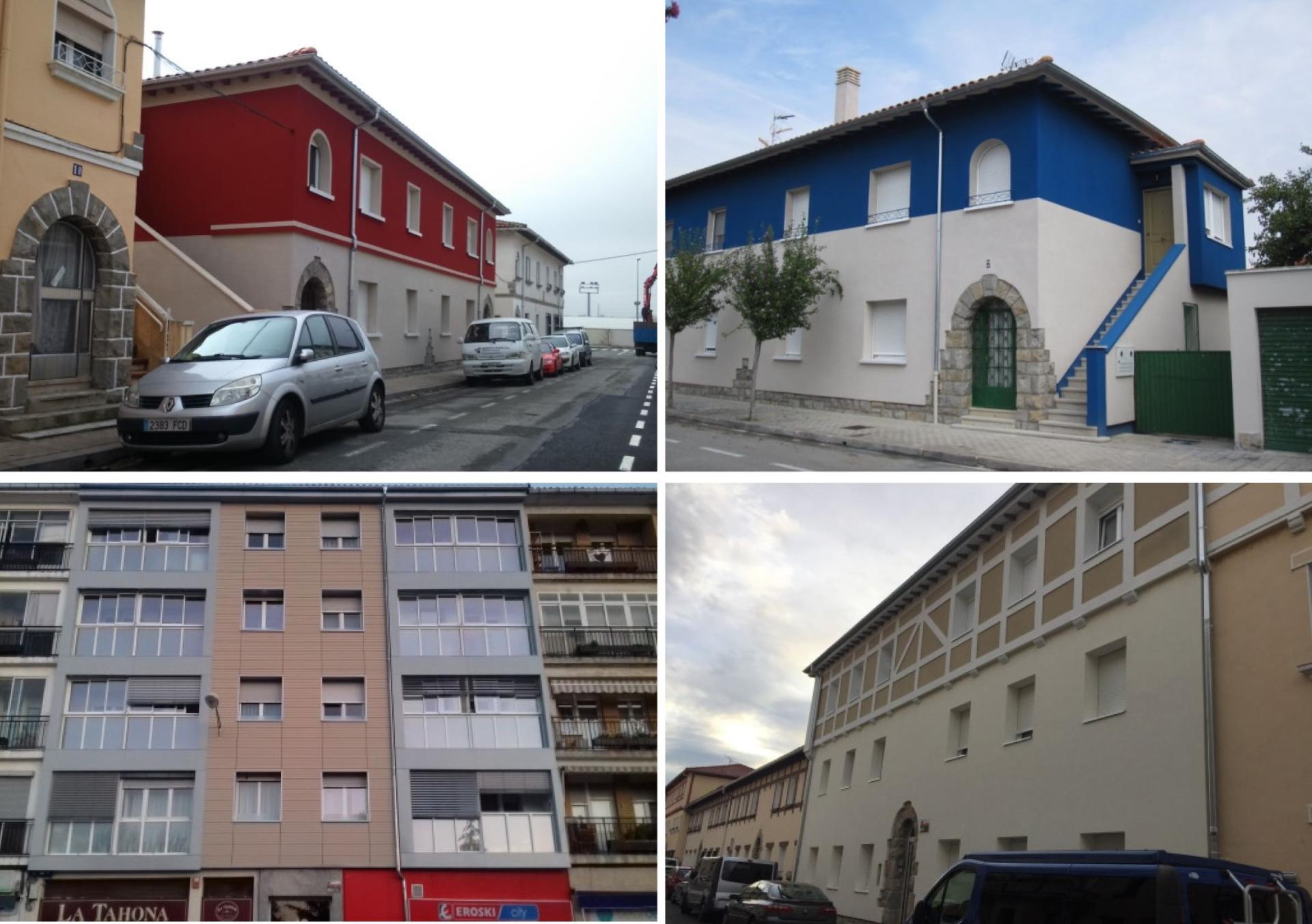
To ensure high-quality architectural and technical solutions, Nasuvinsa put out calls for various public tenders, with jury intervention, for the different building typologies. Those tenders were awarded to various proposals, the aim being to have different technical solutions to offer the residents.
The tender jury comprised technical personnel from Nasuvinsa, the Government of Navarre, the City Council of Pamplona, representatives of the Official Association of Basque/Navarrese Architects, residents and property administrators.
With those technical proposals, meetings with the owners involved were part of the galvanisation and awareness-raising processes. Sessions were held to determine vital aspects of the renovation project and respective envelopes: type of façade and insulation, balcony closure solutions, solutions for home ventilation facilities and clothesline solutions, etc.
Key objectives for inclusion
The activity was carried out in a social housing district with an aging population and in a situation of economic crisis.
All the implemented work counted external financing, whereby the residents meet the cost of the work with a monthly instalment that is reduced with the financial savings from the energy bill.
To guarantee equal opportunities, meetings were periodically held throughout the process with all the residents to make important decisions regarding the technical solutions to apply and the costs, subsidies and financing.
The companies awarded the work likewise contracted unemployed residents of the district to execute the projects and even for their technical management.
All the buildings targeted for action improved their energy qualification in one, two or more letters, altogether achieving considerable savings in final energy consumption and in reduction of CO2 emissions, thereby helping lower energy dependence on fossil fuels.
Note that, among other measures, environmental sustainability principles were applied, through the preferential use of materials with little environmental impact such as natural cork and stone wool insulators.
Results in relation to category
A. Energy rehabilitation of buildings
In all the cases undertaken in the Efidistrict project, it was decided to execute the complete thermal envelope of the building. Summary of actions:
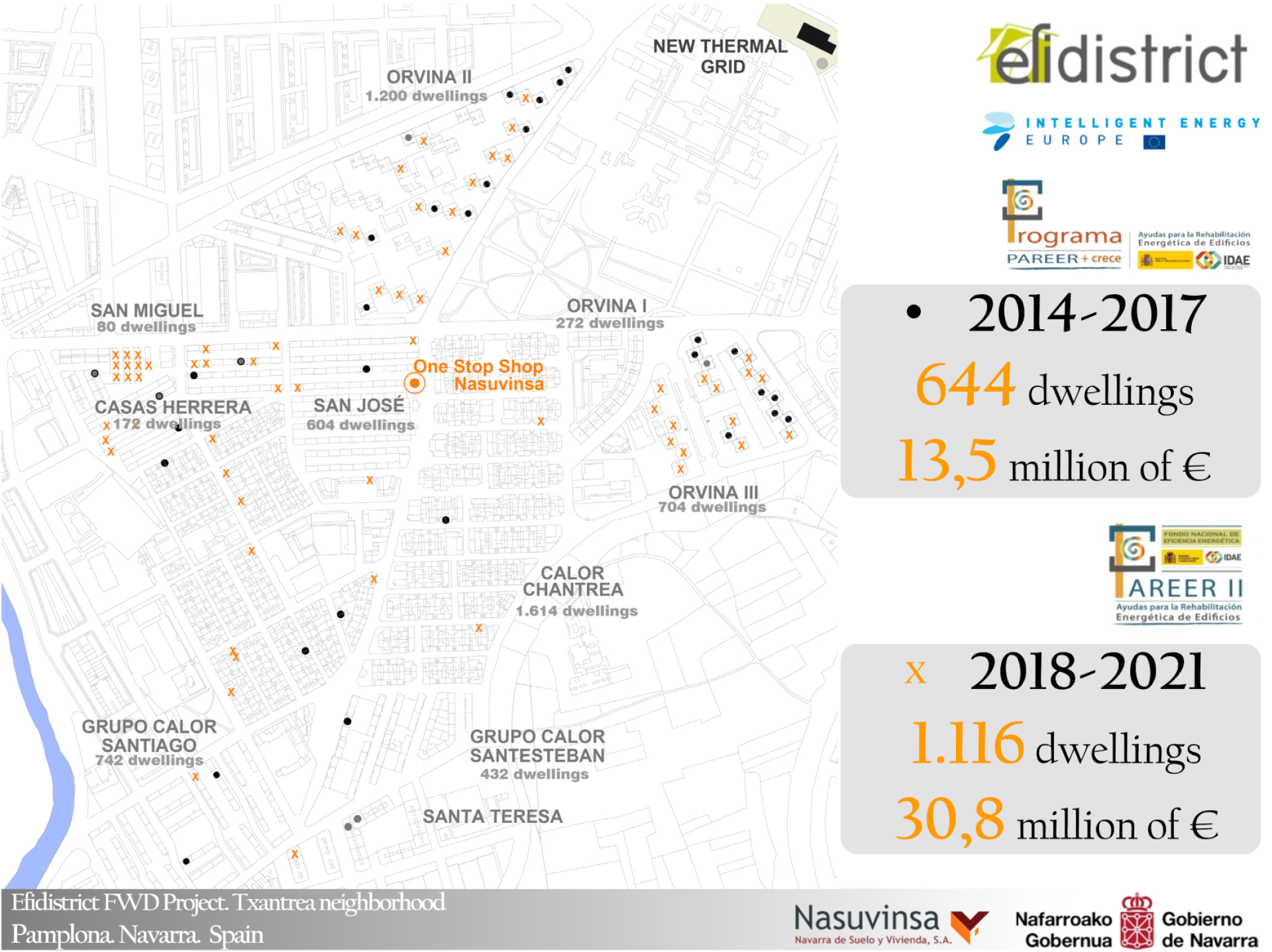
Period: 2014-2017
- Efidistrict project
- 30 rehabilitated communities
- 644 homes
- €13.5 M investment
Period outside the European project: 2018-2021
- Subsequent reproducibility phase, agreement between the City Council of Pamplona and Nasuvinsa
- 72 rehabilitated communities
- 1,116 homes
- €30.8 M investment
B. Renovation of existing heating circuits
One of the main objectives of the Efidistrict project is to protect the district’s old heating systems and adapt them to current regulations. Summary of actions:
Period: 2014-2017
- Efidistrict project
- Actions for regulation and control and renovation of networks in the Orvina II, Orvina III and Calor Txantrea heating networks.
- 483 communities of property owners affected
- 2,844 homes
- €1 M investment
Period outside the European project: 2018-2021
- Subsequent reproducibility phase, agreement between the City Council of Pamplona and Nasuvinsa
- Renovation of networks in the Orvina II heating network.
- 38 communities of property owners affected
- 1,200 homes
- €0.9 M investment
C. New heating network with biomass
The creation of a new district-wide heating network is meant to replace the current use of fossil fuels in the heating system with a renewable energy source of local origin such as forest biomass. This action has already been adjudicated.
Invitation to tender:
- Date of publication: 21-12-18
- https://hacienda.navarra.es/sicpportal/mtoAnunciosModalidad.aspx?Cod=18122108415772CD064B
Adjudication to tender:
- Date of adjudication: 10-04-19
- €6.5 M amount
- https://hacienda.navarra.es/sicpportal/ctaDatosAdjudicacion.aspx?Cod=2012&Ticket=190410121538A11854D1
How Citizens benefit
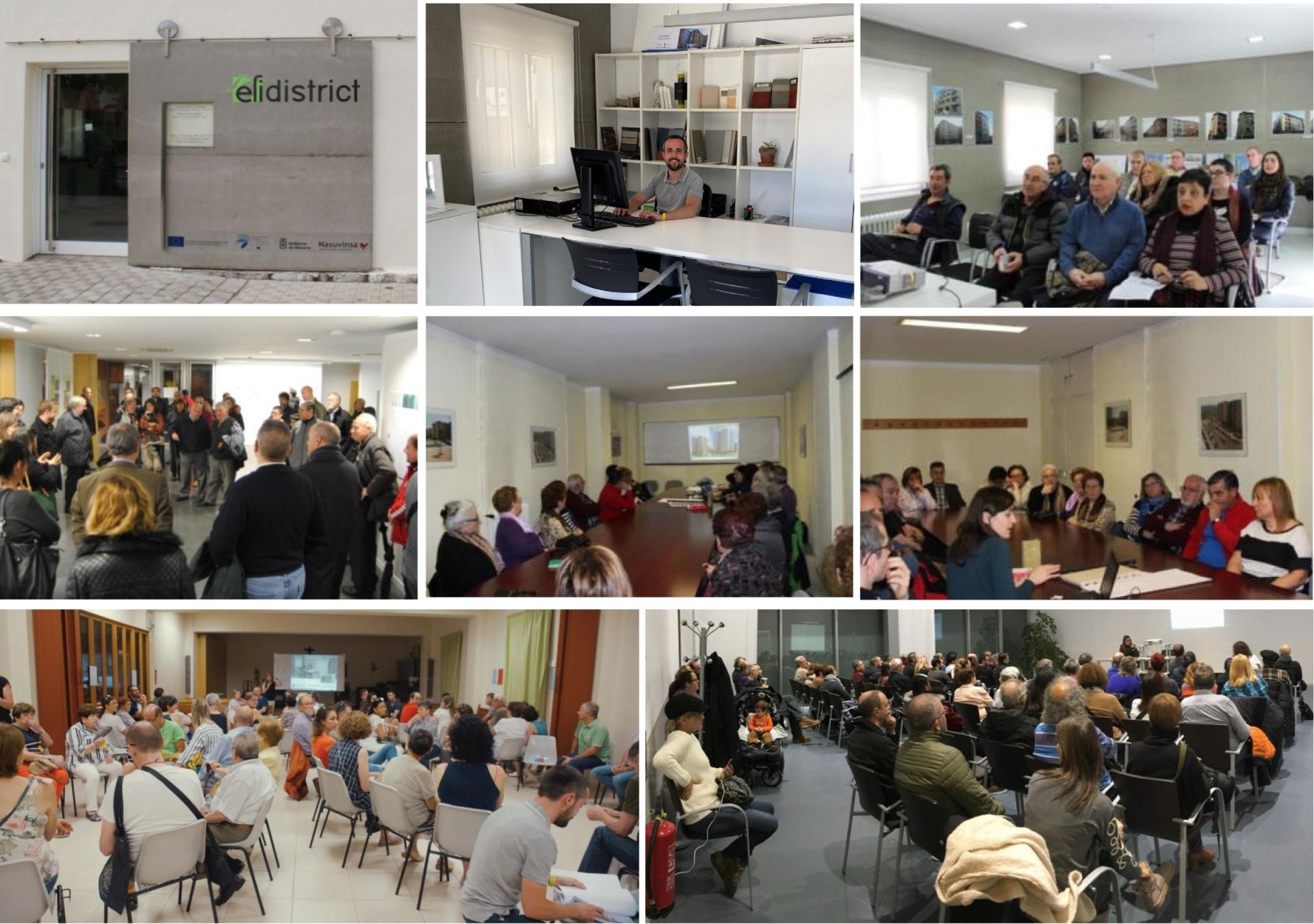
The key to reach the necessary participation was the work in the district itself, carried out by the technical team at the One Stop Shop, achieving maximum collaboration among all the involved agents, administrations and technical personnel and principally citizens.
The main objective of the participative process is to achieve the generation of an atmosphere of trust between the district’s residents and the management team of the Neighbourhood Office, so that citizens can feel that the administration is closer to them and friendly, far from the concept of bureaucratic administration; that it accompanies them, listens to them and seeks a real solution for their problems and needs.
This atmosphere of trust was key to attaining the citizen involvement needed to achieve the results.
We cannot forget that this is a private project; the homes are the residents’ property and it was therefore necessary to approve the agreements in assembly meetings, because they are the ones who paid for the actions. Without active citizen participation, the results could not have been achieved.
Activities carried out
General talks in the neighbourhood, presence in news media, participation in architecture competitions, workshops, library exhibitions, neighbourhood office, civic centre, attendance of informative meetings and councils at the level of resident communities (mainly in afternoons to make it easier for people to attend), involvement of cooperatives, attendance of works committee meetings, personalised attention at the Neighbourhood Office.
Approximately 800 meetings were held, both at the level of portals (start, monitoring and finalisation of process) and at the level of district heating, where citizens were kept informed of the entire process and were able to participate in it.
Participants
Directly involved participants: 2,500 residents of Txantrea; indirectly, the whole district.
Innovative character
The rehabilitation of the Txantrea district is a pioneering project in Spain, with the implementation of a model for integral management of district-wide energy rehabilitation action, involving both citizens and authorities as well as professionals and agents who intervene in the renovation of buildings. It is recognised as such in the ERESEE 2020:
2019 October. Government of Spain. Ministry of Transportation, Mobility and Urban Agenda. ERESEE2020.
Efidistrict project presented as an example of good practices.
https://www.mitma.gob.es/recursos_mfom/paginabasica/recursos/es_ltrs_2020.pdf
To achieve those objectives, Nasuvinsa played a facilitating role in the promotion of actions involving private investment in energy efficiency, making it easier to launch joint tenders to keep costs down and to make framework agreements with financial institutions to help residents obtain financing.
Accompanying residents throughout the process, in technical as well as social aspects, helping them in all phases of the process, the One Stop Shop open in the district served to advise residents about possible technical solutions and the processing of subsidies and financing. That office is still open, supporting new actions.
Until now, in rehabilitation processes there was no professional promoter as such. The technical team of Nasuvinsa assumes that promoter role, as a new agent, which enabled the implementation of a comprehensive district-wide project covering all real needs detected and which seeks solutions by means of the collaborative effort of all agents involved: residents, property administrators, technical personnel, builders, administrations, financial institutions, etc.