3D Housing 05
Basic information
Project Title
Full project title
Category
Project Description
Digital design tools have been at the heart of building design for decades, but construction itself has remained a stubbornly manual process. In 2018, Arup and CLS Architetti of Italy proved that a combination of 3D printing robotics could change all that.
Project Region
EU Programme or fund
Description of the project
Summary
Every April, the global design industry descends upon Milan for the world’s best known design fair. In the lead up to the 2018 event, the organisers of Salone del Mobile – the furniture fair at the centre of Milan Design Week – published a manifesto calling for designers to up their game when it came to tackling the global challenge of sustainability.
With this in mind, Arup worked with Italian practice CLS Architetti to create a temporary installation that went on to win the festival’s Best Sustainability award, which celebrates the project that puts ethics and sustainability at the centre of design. What started as a plan to build a wall using 3D printing for an industrial building evolved into the first 3D-printed concrete house constructed in the EU, and one of the first in the world made using a portable robot manipulator.
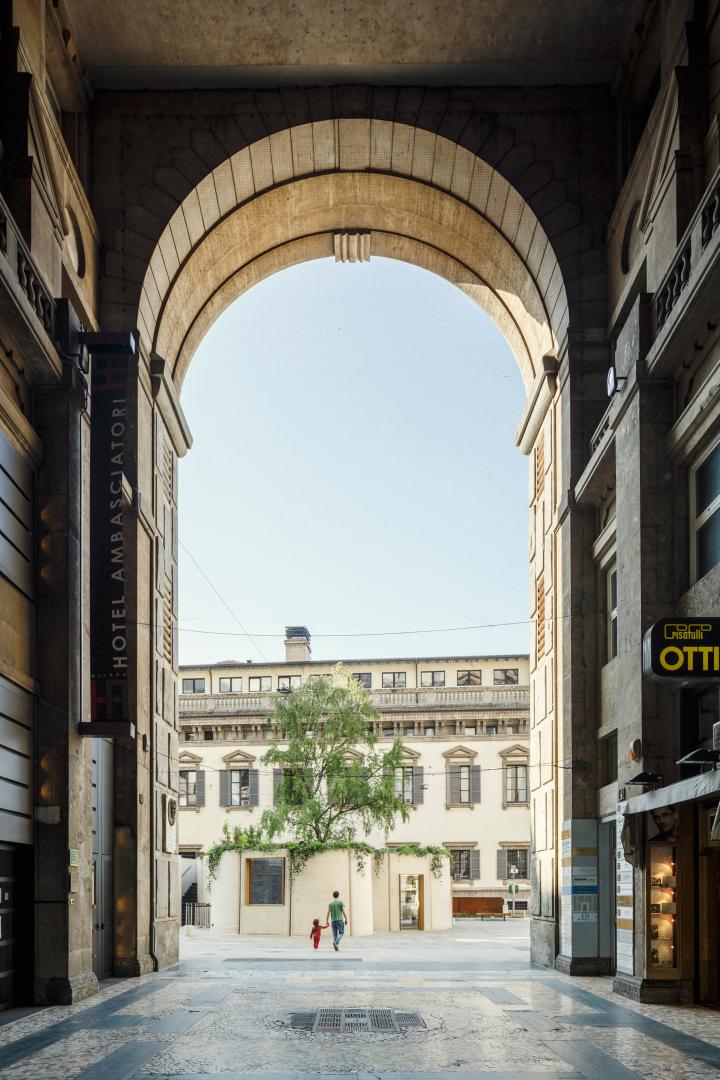
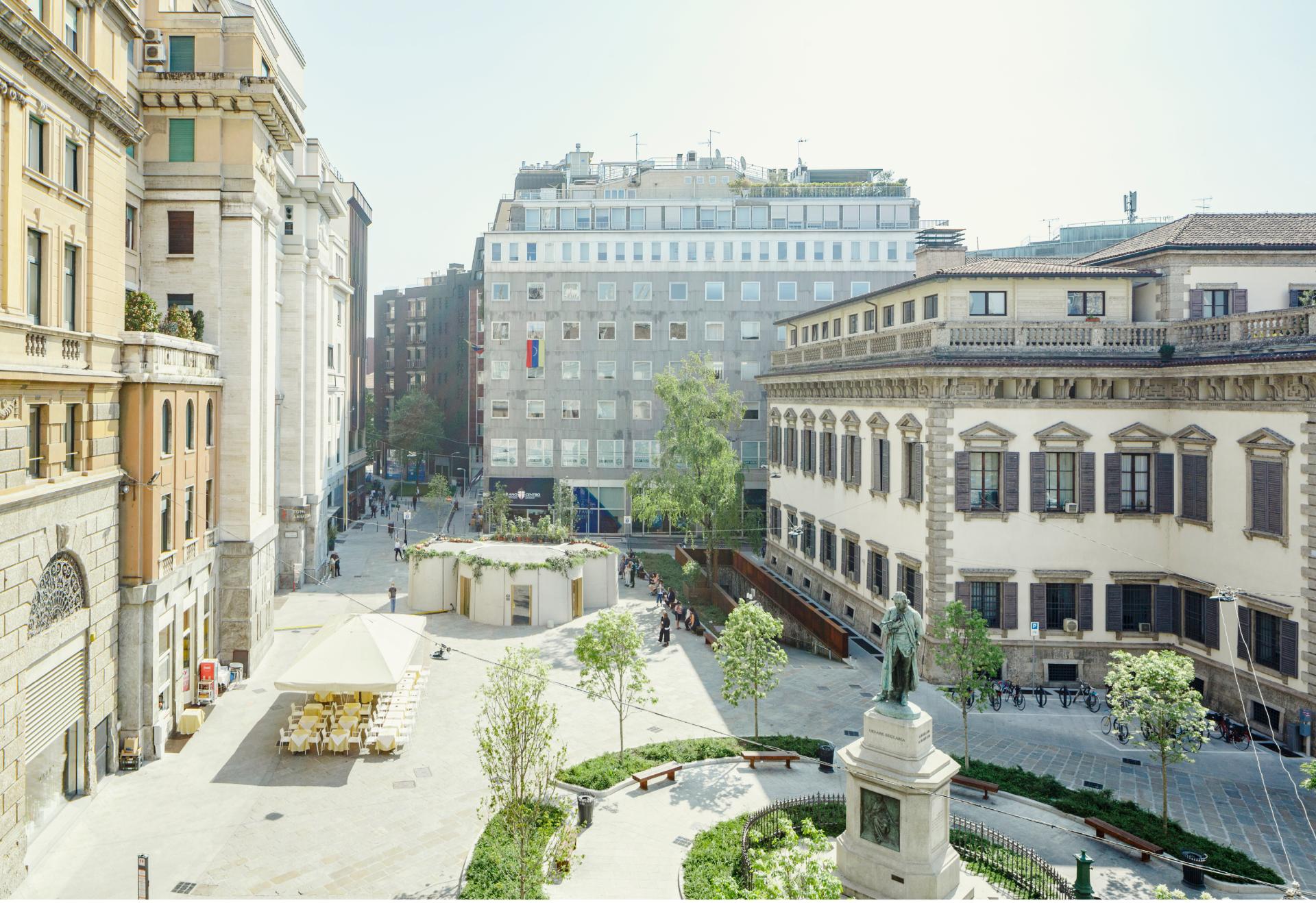
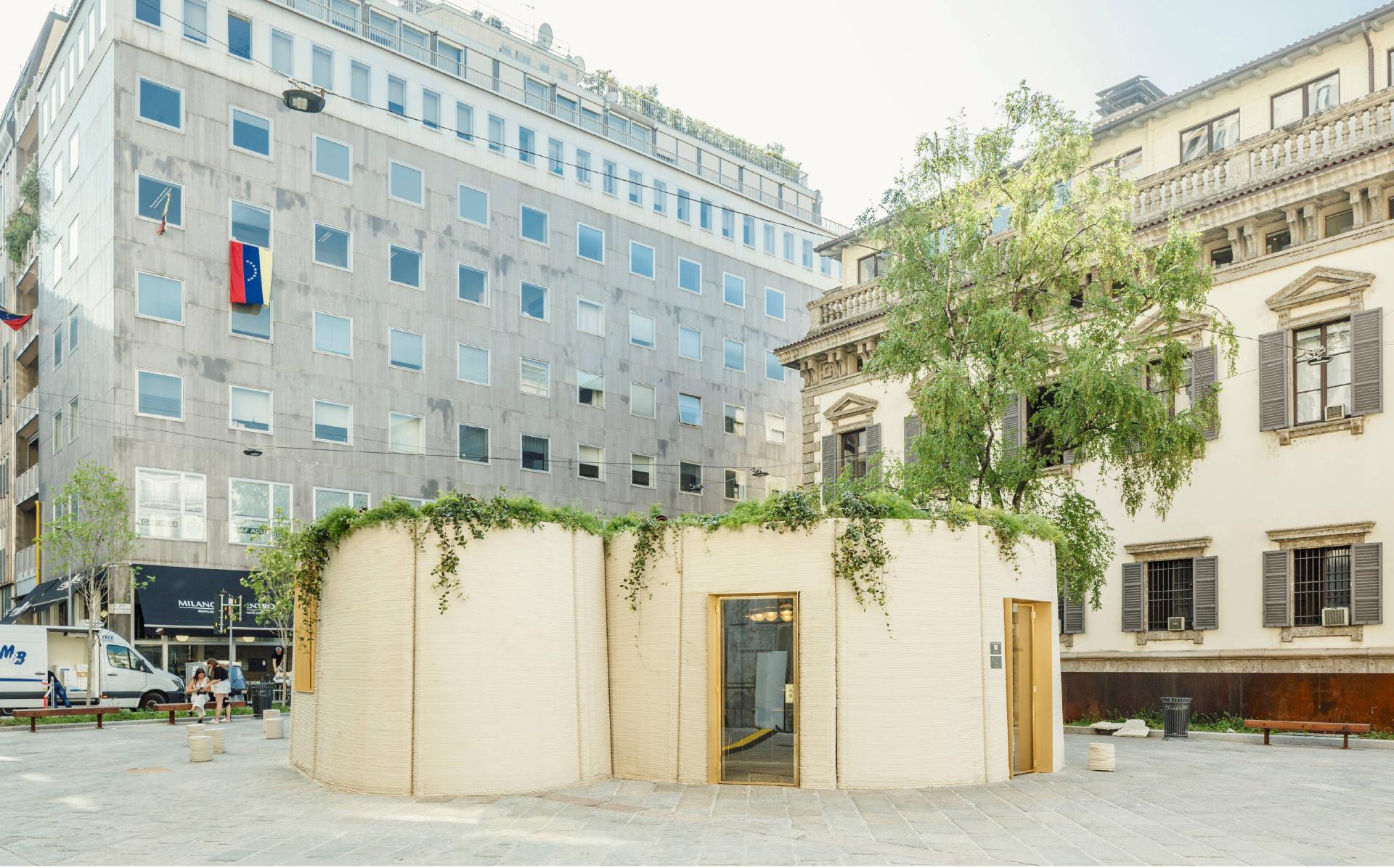
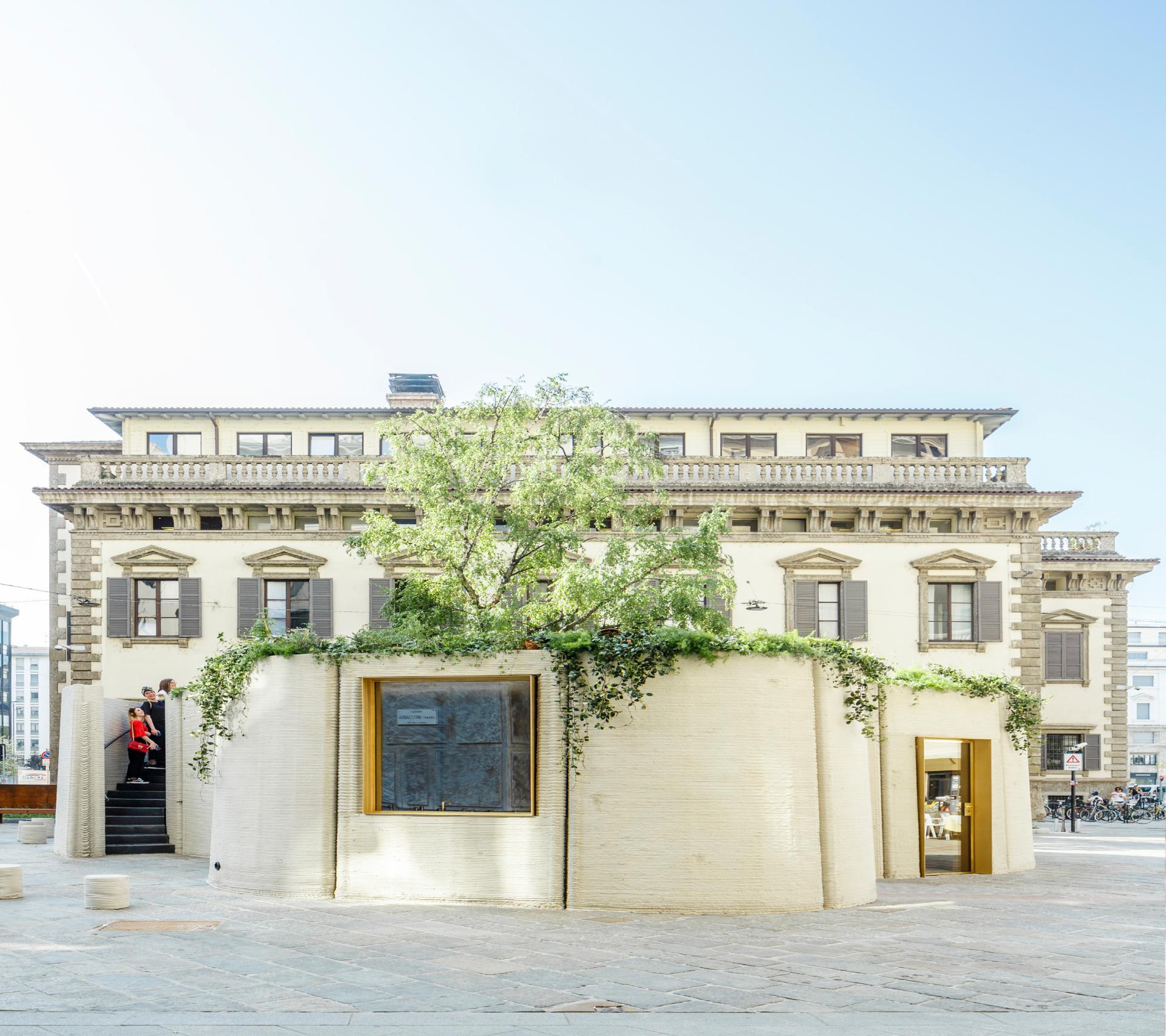
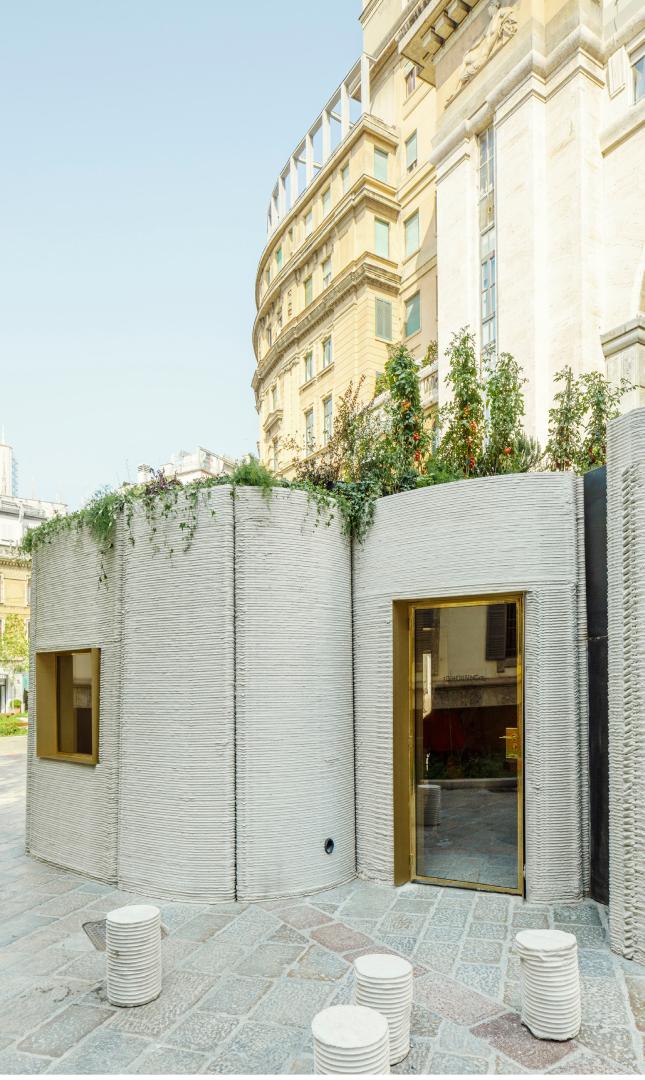
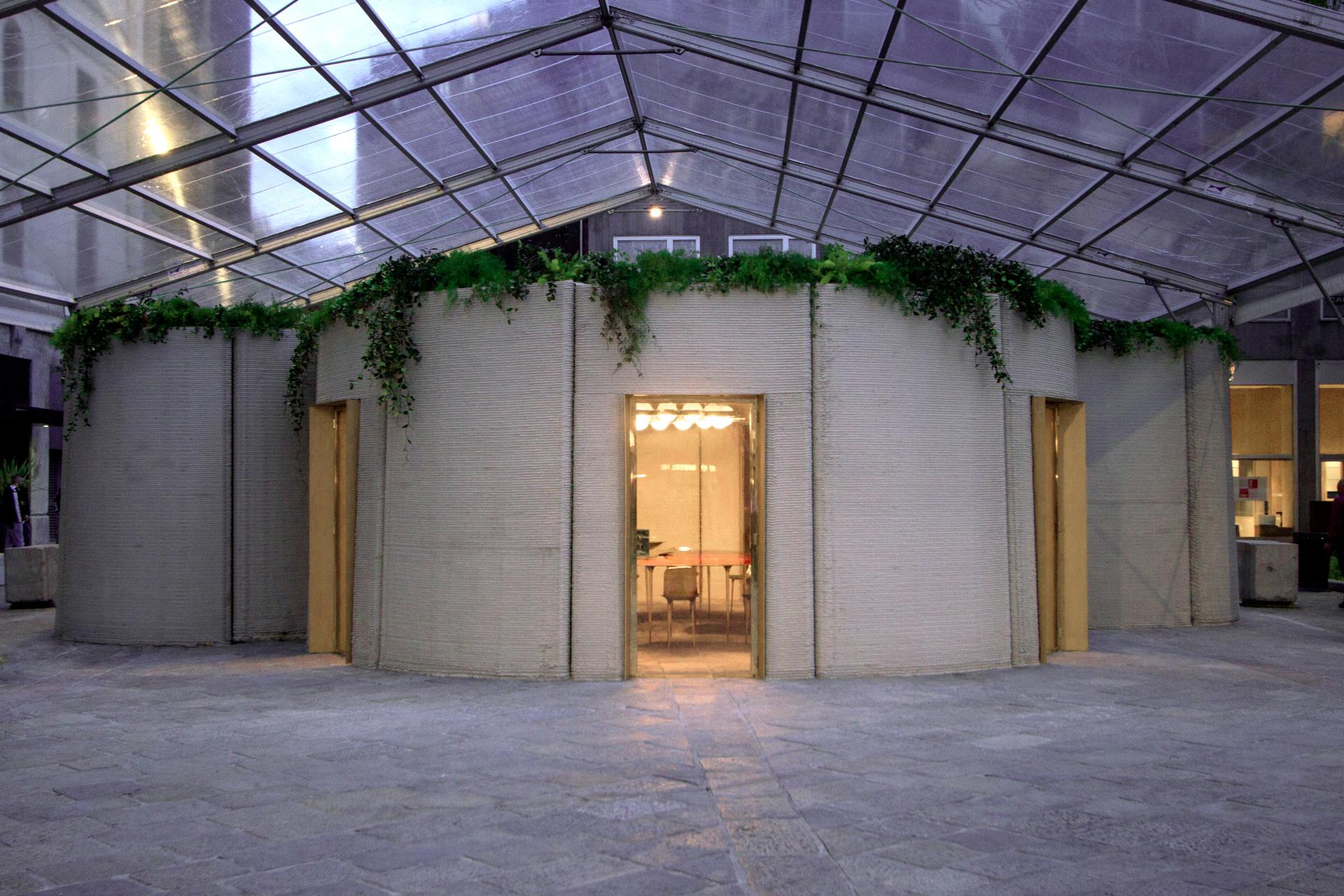
3D Housing 05 – a 100m² structure with curved walls that enclose a living area, bedroom, kitchen and bathroom – was built on a busy square in Milan’s city centre in full public view. It took just 48 hours to create the house’s 35 concrete modules, each 3.2m high, which were printed in 60 to 90 minutes. The completed structure, which was assembled in
two weeks, weighed about 50 tons, or 1,000kg per linear metre of printed wall.
At the end of Salone del Mobile, the entire structure was dismantled within five days, packed up and moved to a permanent location, leaving no trace of its short existence on the Piazza Cesare Beccaria as everyday life resumed in the city.
Key objectives for sustainability
The eco-friendly builder - Although concrete is a naturally sustainable building material, the real benefit is how little waste is involved during construction. The precision of the printing process ensures every centimetre of material is used, making it significantly easier to calculate how much will be needed in the first place. Given 32% of landfill waste is currently generated by the construction industry, this alone is a great advance. We are also experimenting with recycled concrete and natural fibres as building materials, both of which might bring down costs and allow materials to be sourced locally.
Every centimetre of material produced is used and placed exactly where needed without the requirement for formwork. This minimises materials,
reduces waste and conserves energy. Using digital technology, the structure can be analysed and the design refined before it is rendered in real life and without the risk of miscommunication or human error.
Such structures, designed to the principles of the circular economy, can be dismantled technology to design structures that withstand dynamic loads.
Projects like this demonstrate how new technologies and creative thinking can address long standing challenges. From duplicative structural models to housing shortages, we have a unique opportunity to rapidly test and discover new (and improved) ways to redefine the built environment.
Key objectives for aesthetics and quality
The interiors have been designed with reference to archetypes of the past, in a dialogue with the 3d language.
The concrete composite - the basic construction material - is used in with equally strong and timeless materials: the brass of the window frames, the marble of the bath fixtures, the smoothed plaster as one of the possible wall finishes, the sheets of polished brass for a reinterpreted industrial kitchen.
The stratification of the concrete generates a pattern, a surface on which climbing plants can grow spontaneously, reaching the roof which becomes an urban garden. The project comes from the desire to think about our future, to improve quality of life through the revolution of technology.
Key objectives for inclusion
From virtual to physical - If the robot is your labourer, the virtual design model is its brain. It powers the robot’s 3D printing arm to reproduce the design in concrete. Bringing the model onsite also allowed architects, engineers, and specialists to collaborate and resolve issues in real time without needing to cross-reference multiple models.
Results in relation to category
Arup, collaborating with architects CLS Architetti, provided structural engineering and materials consulting services. While Arup had previously done research into the potential of robotics in 3D concrete printing, this was the first time the firm had used the technology to create a real building. The design process commenced in January 2018,
leaving just 90 days to plan and complete the scheme. With no time for test runs, the team’s capability would be demonstrated for the first time live on site, with no room for error.
Conscious of the risk, the Arup team spent the months leading up to Milan Design Week conducting simulations to ensure that – at least in theory – the process was seamless. Arup used GSA, LS-DYNA® and Rhinoceros 3D software to develop the design, with the 3D model used on site during the construction process, all of which helped visualise and resolve issues in advance. Before starting on site, the team needed to consider factors such
How Citizens benefit
This project was showcased during the Milan design week, a global design fair which is attended by all stakeholders in design industry giving the project great visibility, it was furthermore situated in an extremely central area of the city and accessible to all citizens and visitors. it was a great opportunity to disseminate to the wider public a new technology and concept of construction for future living, giving a tangible example of what technology could achieve. During the Design week events were held from the design team to a wider audience to disseminate how projects like this demonstrate how new technologies and creative thinking can address long standing challenges. From duplicative structural models to housing shortages, we have a unique opportunity to rapidly test and discover new (and improved) ways to redefine the built environment.
Innovative character
Greater flexibility in building shape is possible, allowing more complex shapes and structures such as double curved walls.Digital plans could be used to print modules in situ, pushing the speed and efficiency of construction to its limits, as was the case with this project.
Instead of being confined to printing uniform elements in one place, the CyBe Construction RC 3Dp Robot is agile and can produce unique, curved elements at the construction site. In this case – a busy city square in Milan. The robotic arm can also create two storey buildings rapidly, extending up to 4.5 metres into the air. With so much creative flexibility, it’s easy to understand why there is a growing desire in the industry to expedite widespread adoption of 3D printing.
Developing a concrete mix that could keep pace with the super-human speed of the 3D printer and dry in record time was another challenge. Our materials experts virtually modelled concrete mixes and drying times to ensure the physical structure could in fact become reality.