Terra Tale
Basic information
Project Title
Full project title
Category
Project Description
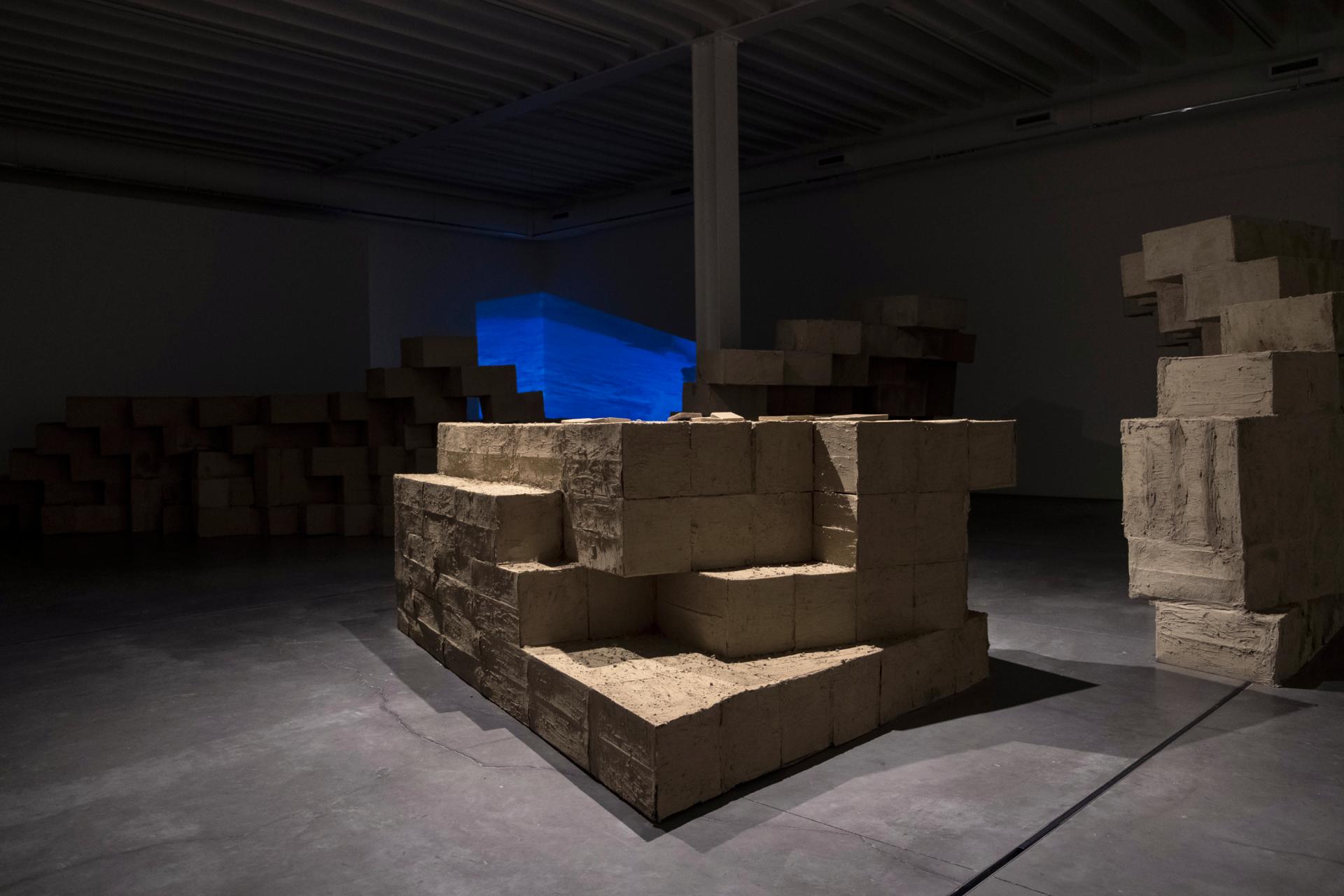
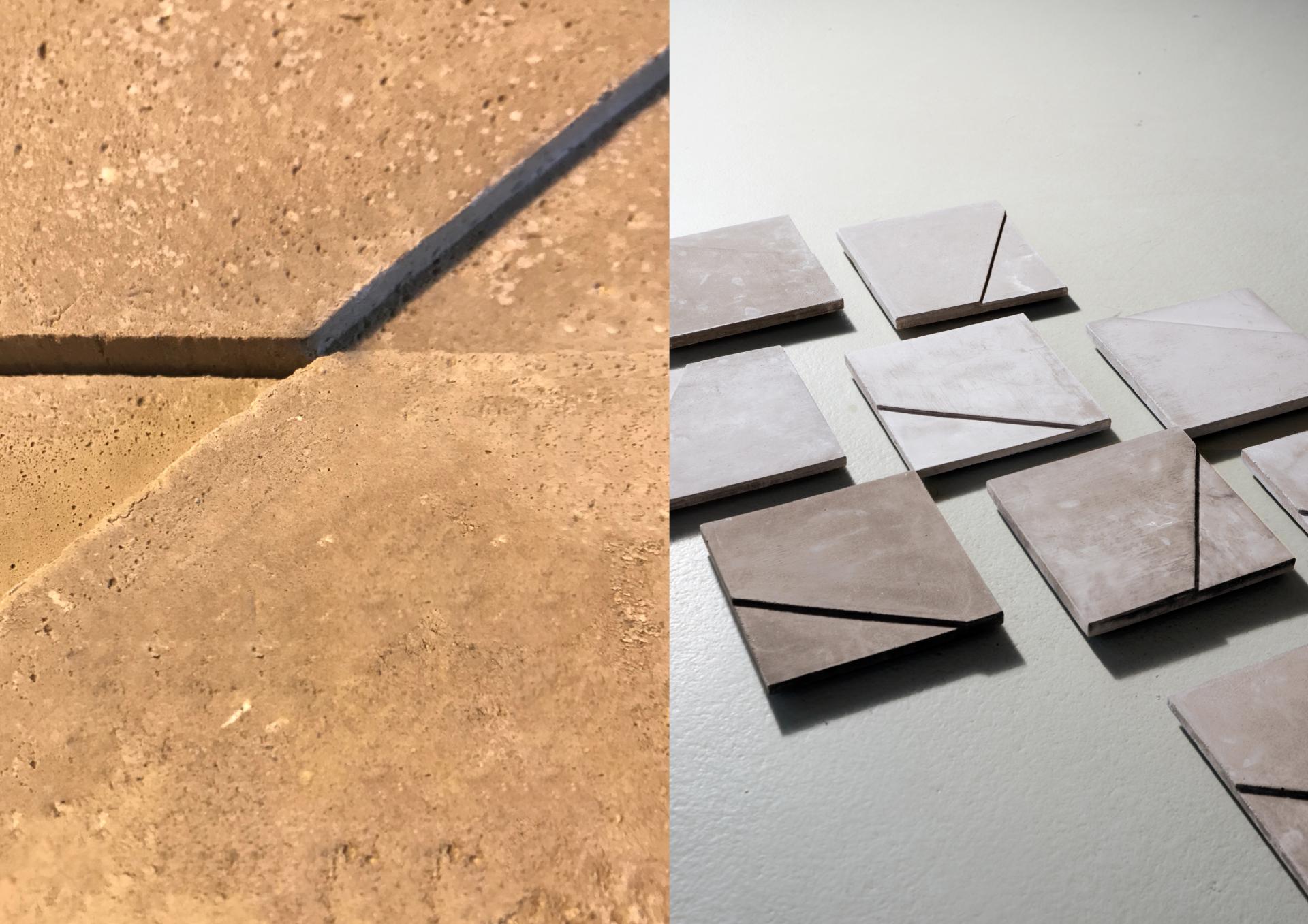
Our interdisciplinary design and research focussed on the development of composite materials, as viable alternatives to portland cement based products. The material production and manufacture used local resources and its application in architecture as Facade cladding pannels fits sensitively into the regional context. Our design and research output was shown in Contemporary Arts centre Archipelago.
Project Region
EU Programme or fund
Which funds
Other Funds
ACORES-03-0752-FEDER-000028 - PICA - Platform of Creative Industry of the Azores, designated from this point on as PICA, 2019-2020
Description of the project
Summary
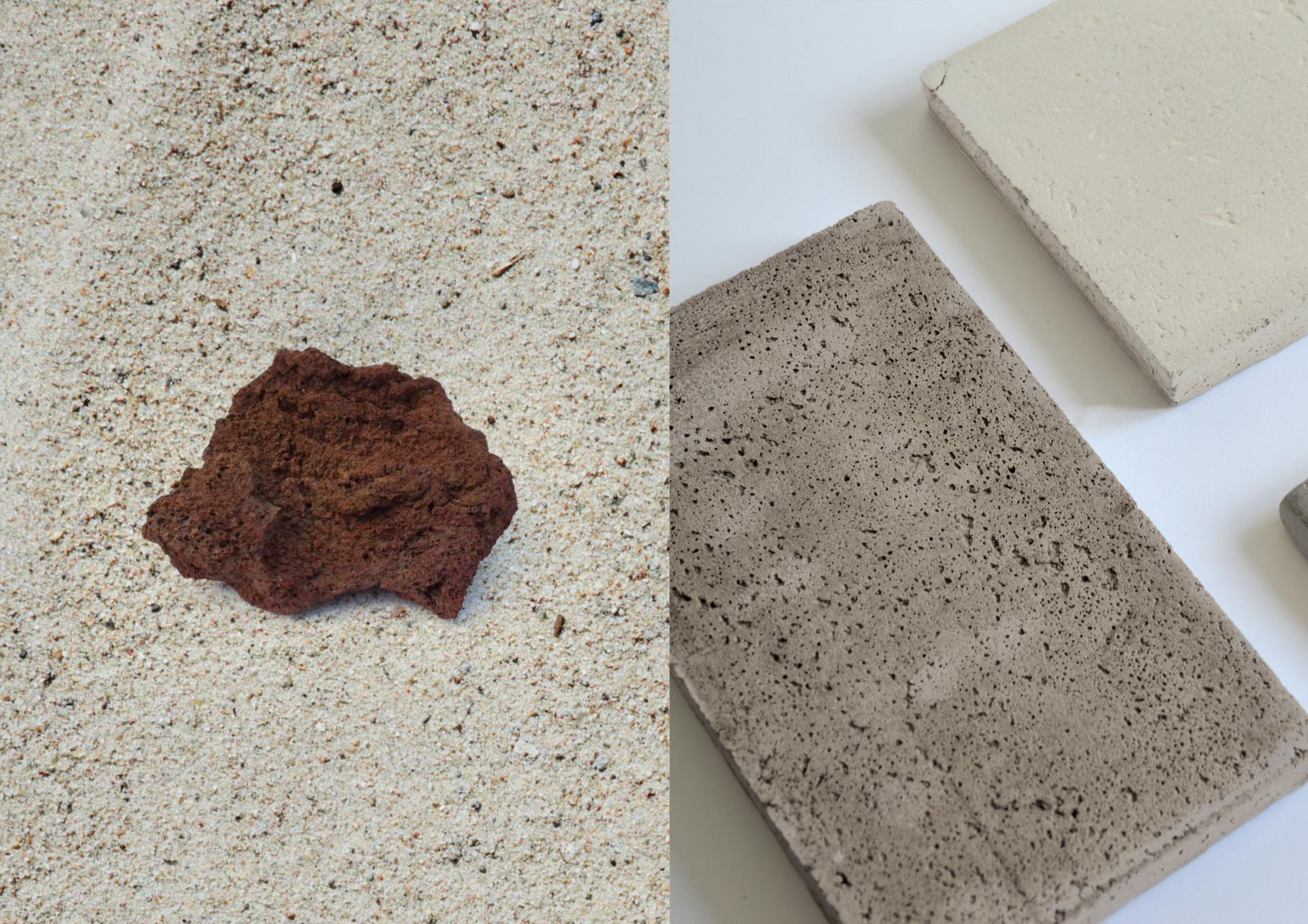
In an ongoing process we investigate the potentials of regional raw and man made mineral resources combining their specific technical performances with aesthetic values. Through the design of objects as well as architectural applications we translate the material investigation into contemporary artifacts that emphasize both, the beauty of soils or wasted materials and their local cultural and economical significance when manufactured into building and craft materials.
Key objectives for sustainability
Based on the evaluation of specific characteristics of the geogenic resources, our aim is to develop concepts that include sustainable alternatives for the extraction/collection, transformation and utilisation of these materials, adapting and implementing them in the regional areas where the materials have their origin.
Alongside our interest in mineral-based materials, the project originates from the need to contribute critically and constructively to the broader discourse on the environmental issues caused by the intense anthropogenic activity associated with the extraction and production of these natural resources.
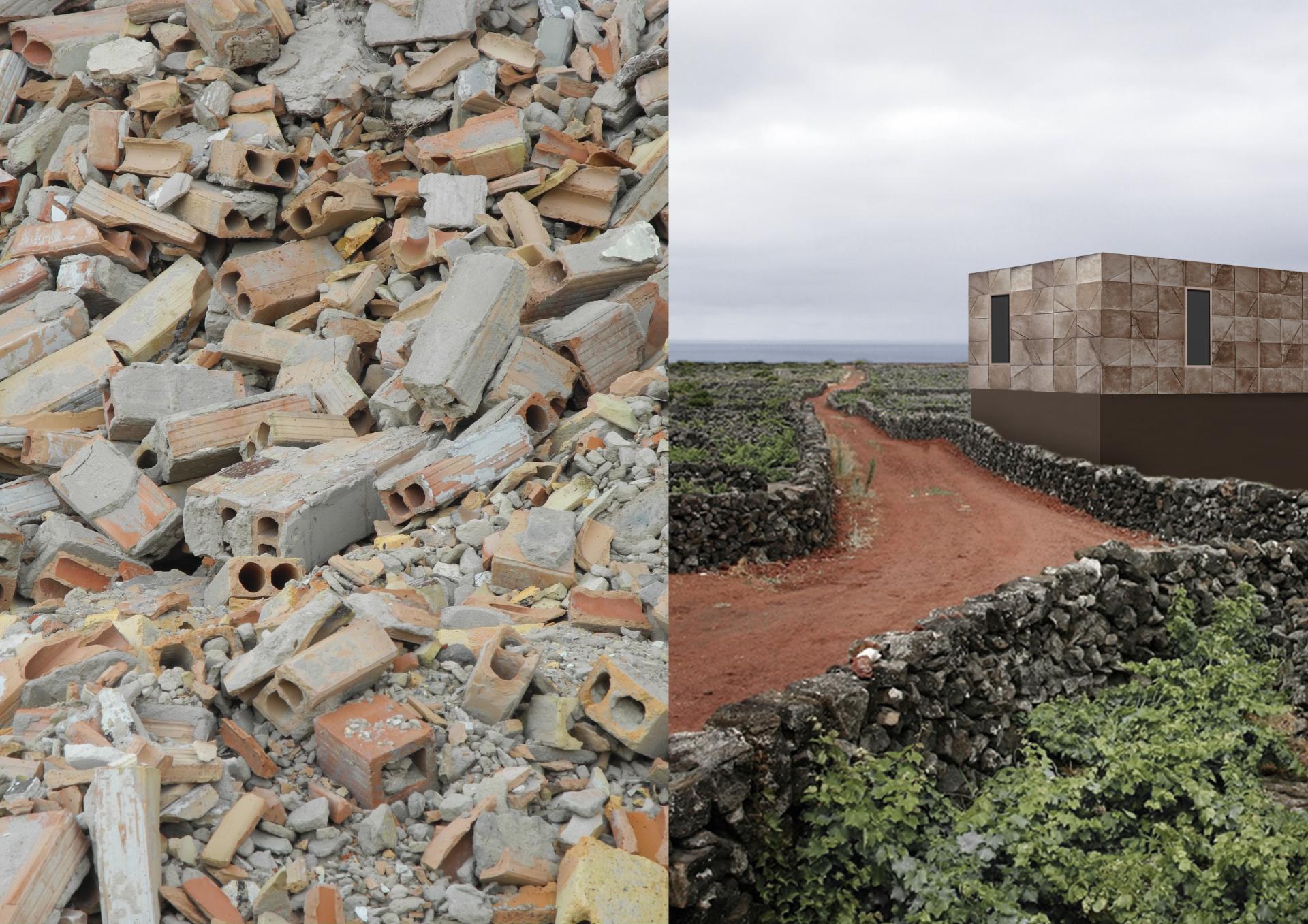
The developed mineral-based composite materials mainly contain specific recycled aggregates from construction waste with hydraulic properties, a small amount of local pozzolanic soils and ashes. Some material variations were designed with the addition of natural polymer obtained from food production waste.
Applying low energy processes and long curing periods allows to reduce CO2 emissions and at the same time to produce a very durable composite material, that continues to mature over time in the field.
In contrast to the production of Portland cement products, no harmful substances are used and significantly less CO2 emissions are released by using low energy processes, as well as the amount of waste water is reduced. The test results promise a higher durability, a partly higher mechanical strength as well as a healthy indoor climate in the application. The new composite materials are recyclable along the same product type like cycle.
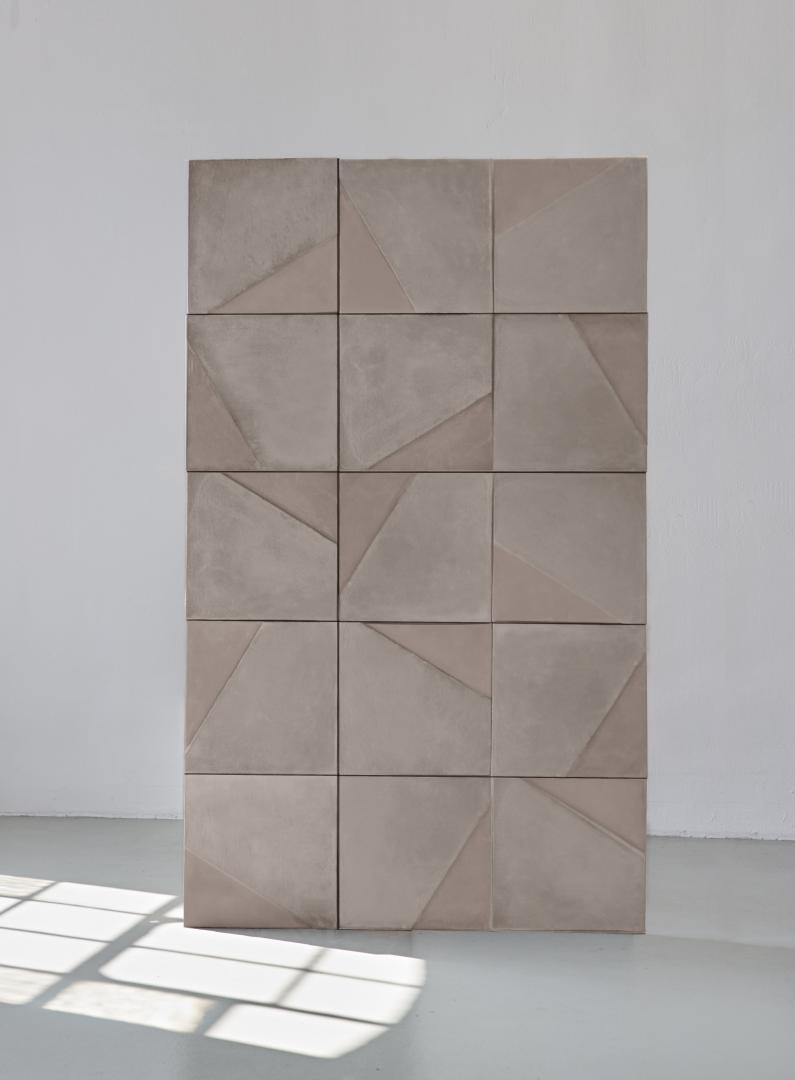
The large format facade panels are designed as prefabricated, easily installed modular elements. They therefore allow efficient use of materials and raw materials, without waste, and offer a wide range of applications due to the easy replaceability of individual elements and the variety in grid design.
Key objectives for aesthetics and quality
Behind the aesthetics of our designs is the desire to use structural elements and colour schemes associated with the cultural and natural heritage of the Azores, which we see as their most distinctive and biggest richness.
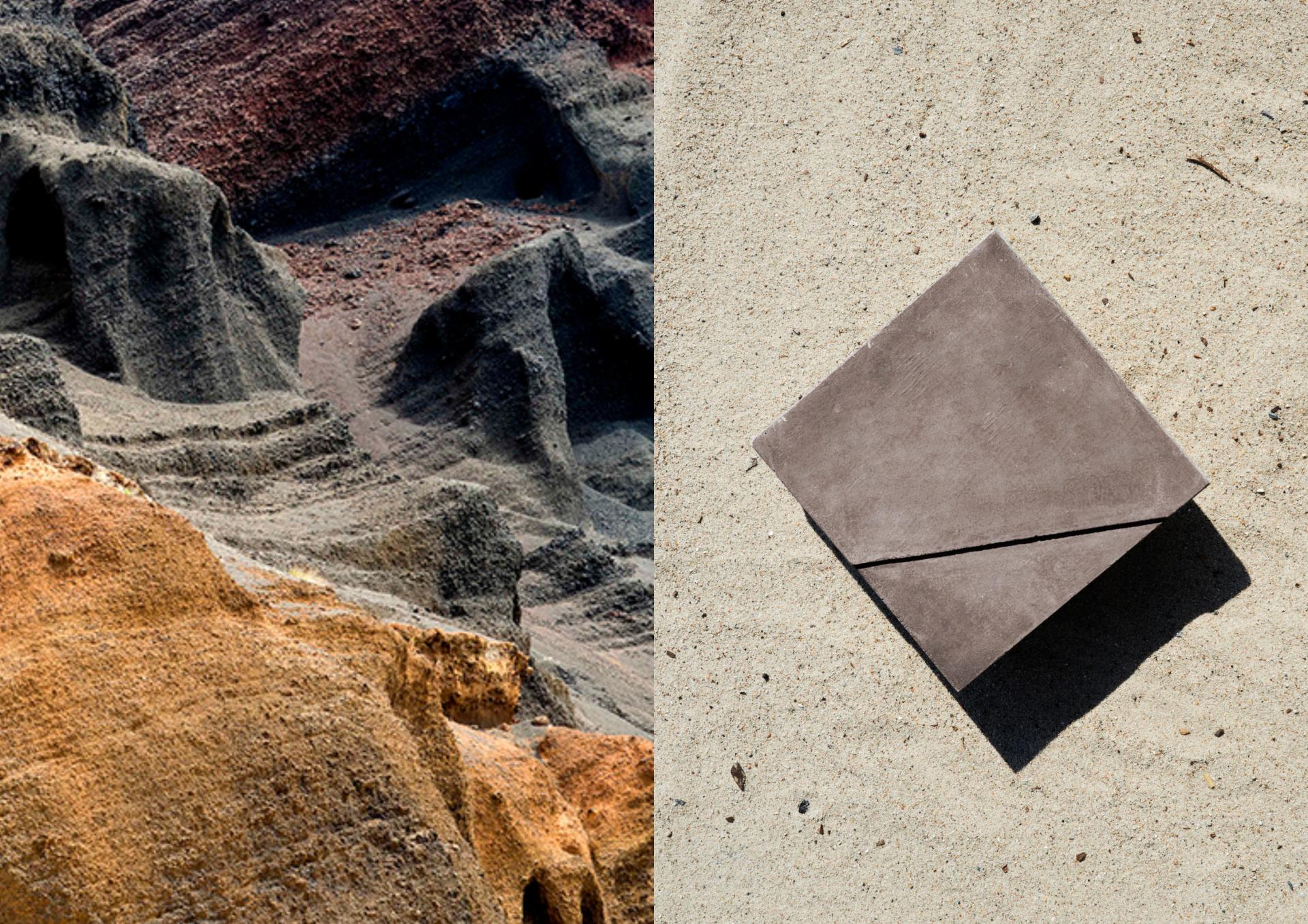
In particular we combined geometrically reduced reliefs and the use of natural colours, inspired from the landscape where the majesty and mystics of nature, the power and the strong presence of the volcanoes as well as the all over proximity to earth and soils are the all over protagonists.
Together with the green of vegetation, the most characteristic landscapes colours are the nuances of grey, black and red. The large variety of natural soils and the still high geological activity create amazing surface structures - stone textures from porous to smooth and almost polished.
These colours and textures we also found in the local traditional and modern architecture which makes use of natural endogenous materials.
The abstraction process behind the development of our concept has always referred to natural elements, informing the artifacts with site-specific identitary character.
Key objectives for inclusion
On the one hand, the interdisciplinary project contributes to the discourse on what and how design can contribute to sustainable development today. The exchange with engineers, architects and the population during the process were the main starting point for exemplary design proposals and also give hints for the future project development. The exchange of knowledge creates significant synergy effects, which in the long term can also stimulate local people in regions on the edge of Europe to multidisciplinary cooperation for their own regional development.
On the other hand, the sourcing and production of the façade panels is based on local resources. This refers not only to material raw materials, but also to human skills in craft, semi-industrial and scientific production. Instead of importing knowledge and material or finished semi-finished products, local material and human resources are to be used.
Results in relation to category
The Azores are the first investigation site of the Terra Tale project. The archipelago landscape has been shaped by volcanic activity and is dominated by rich vegetation, extraordinary rock formations and the sea. Due to the magmatic origin, there is an abundance of pozzolanic soils on the island. We focused our investigation on these, as they are one of the most exploited geological resources in the area for the production of portland cement.
Together with the LREC, the Regional Civil Engineering Laboratory and University do Minho, we were able to develop alternative composite materials which can represent viable alternatives to portland cement. The material production and manufacture uses local resources and its application as architectural elements fit sensitively into regional context.
The relevant matrixes should now be tested in large format panels to test the architectural application.
Our next aim is to apply the knowledge we gained from the Azores project to other relevant European contexts and furthermore to develop cementious materials as alternative to Portland cement products from other abundant materials, the so called waste from agricultural production. In the Endógenos Acores project we gained first of all important knowledge about raw materials and matrix of composite materials, as well as we gained experience in including regional, cultural aspects of nature and architecture in out coming designs.
We wish to intensify this exeperience and work with local geologists, architects, civil engineers and materials researchers on the one hand and on the other hand with the local population in order to make scientific findings tangible and usable for the local population through exemplary designs and participatory formats.
How Citizens benefit
In the Endógenos Acores project our research and design output was shown in a media and teaching (ich weiss ncht ob teaching richtig ist, viell. informative) format in Archipelago, contemporary Arts Centre on the Azores as part of the exhibition Uterus Acorica - How to build an island'. In this mediation format the high functional and aesthetic quality local materials, which are more and more replaced by materials from far away, have been enhanced and framed by contextual references. The exhibition not only showed raw materials and their application prototypes, but also used film formats to convey the systemic thinking behind the idea.
Innovative character
The relevance of soil and minerals for industrial production is undeniable, as well as the fact that the way in which they have been exploited and used up to date is no longer sustainable.
The development of the Terra Tale project is carried out on material based research and experimentation, which aims to investigate the potential development of new composite materials made from local mineral resources, with special focus on wasted ones and production byproducts.
Our focus was not in first instance to design a product, but to understand the system behind the sourcing and production af building materials and based on that to design a more viable systemic alternative, that uses local resources in high functional and aesthetic quality.