Plaza Past-Future and CCCDC
Basic information
Project Title
Full project title
Category
Project Description
As part of ‘Circular Construction, Conscious Design and Certification’, FAUP participation in Concreta (Portuguese construction largest fair) took as a starting point the theme of sustainability, framing these concepts and concerns in a sense of rediscovering traditions. From the co-construction of the space, with several types of wattle and daub, to the promotions of the practical workshops, the Plaza Alumni FAUP Past-Future was a place of knowledge sharing and dissemination.
Project Region
EU Programme or fund
Description of the project
Summary
The teaching of architecture and construction at the Faculty of Architecture of the University of Porto (FAUP) has been, in the last decades, too far away from the use of non-industrialized natural materials, in a situation that is common to most architecture degrees in Portugal. In the students' design works, the reinforced concrete abounds in a form of universal constructive monoculture. The school panorama replicates the context of the national construction activity, in which the pace of industrialization and the legislation left out the local constructive cultures.
However, at present time, the awareness that it is imperative to change our posture, as people and as architects, is growing. And although we know that "sustainable" has become a commercial buzzword that most of the time does not measure global impacts and can be lost in demagoguery, we also know that it can, and it is leveraging the development of new concerns and practices, especially amongst the younger generations.
With that in mind, a new curricular unity was implemented in FAUP Circular Construction, Conscious Design and Certification (CCCDC). The objective was to raise students' awareness of the buildings impacts on environmental and social ecosystems, studying and discussing topics that could inform a critical individual position, in a theoretical-practical approach.
Integrated into CCCDC overall strategy, the participation of FAUP in Concreta, the largest trade fair for construction materials in Portugal, was idealized to address the overall theme of sustainability, reframing concepts and concerns in a sense of rediscovering constructive traditions.
It was proposed, through workshops and the co-construction of the stand itself - the Plaza Alumni FAUP Past-Future -, a look at more easily renewable, recyclable, and recycled construction materials, such as earth and wood, and at constructive systems like rammed earth, adobe, CEB, and wattle and daub, helping to raise more awareness.
Key objectives for sustainability
The creation of the new optional curricular unity in the architecture course aimed to address a set of issues that were not covered in a structured way in the FAUP’s training offer. Issues such as designing for deconstruction, life cycle analysis, the importance of preserving and rehabilitating existing buildings, the rationality of resource consumption (energy or materials), the need to maintain and conserve buildings, the lessons learned from vernacular architecture, but also the role of technology and innovation, were issues covered in the CCCDC program and addressed in class, that were open to community.
The participation in the Concreta Fair offered the possibility to test, from a practical point of view, some of the assumptions presented in classes in a theoretical way.
In the definition of the fair, besides the companies' stands, there were a series of open spaces, ‘plazas’, whose idealization was given to associations, colleges, and professional orders. The plaza, as an open space, a meeting space, can become a space for action - and this was FAUP option, very dynamic.
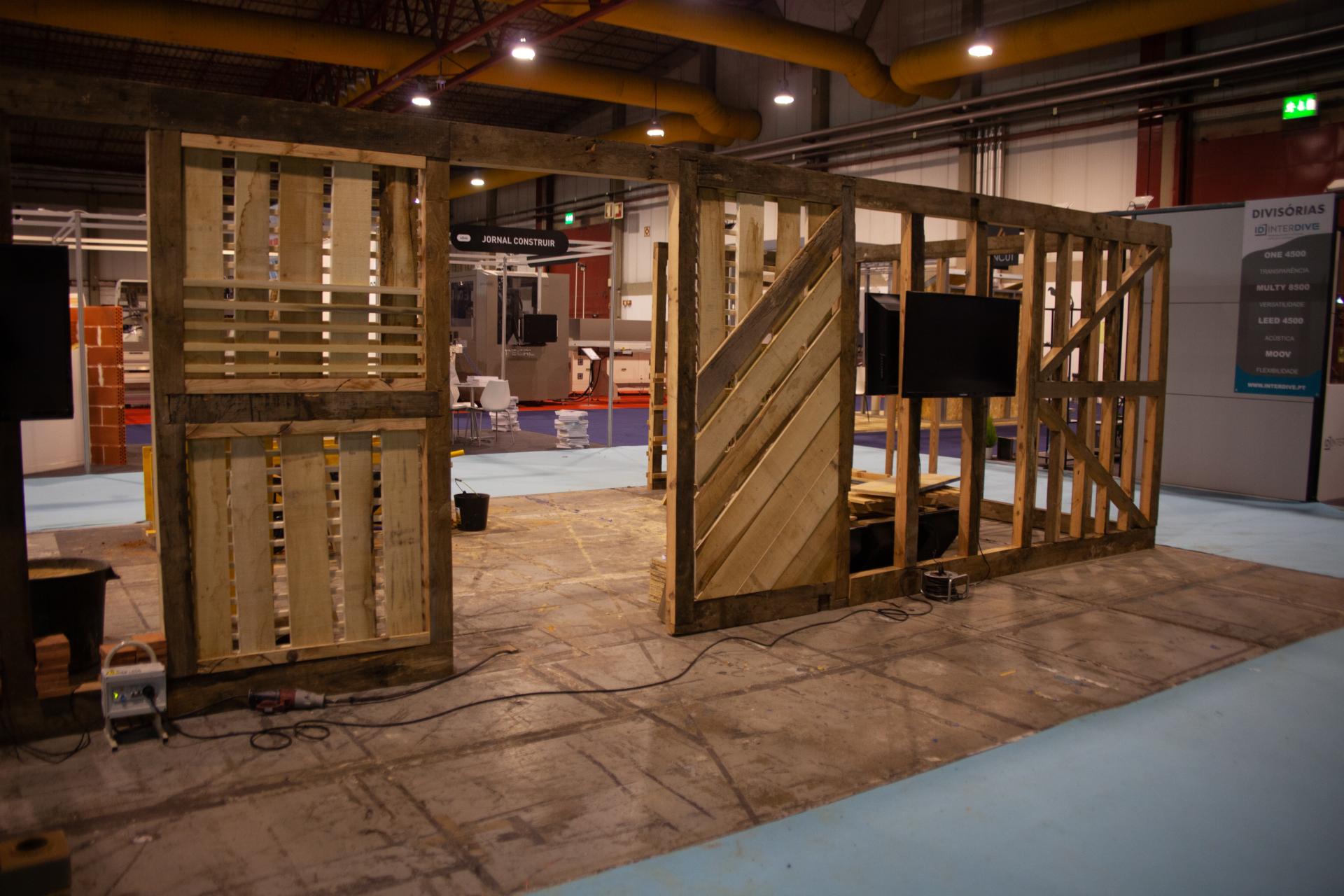
The design of the plaza resulted from research into traditional Portuguese architecture executed with more sustainable materials such as earth, wood, and other vegetal materials. Most of the wood used in the execution of the plaza's structures was recycled wood from other constructions. And the whole structure was executed modularly to allow disassembly and reassembly in other locations, promoting circularity.
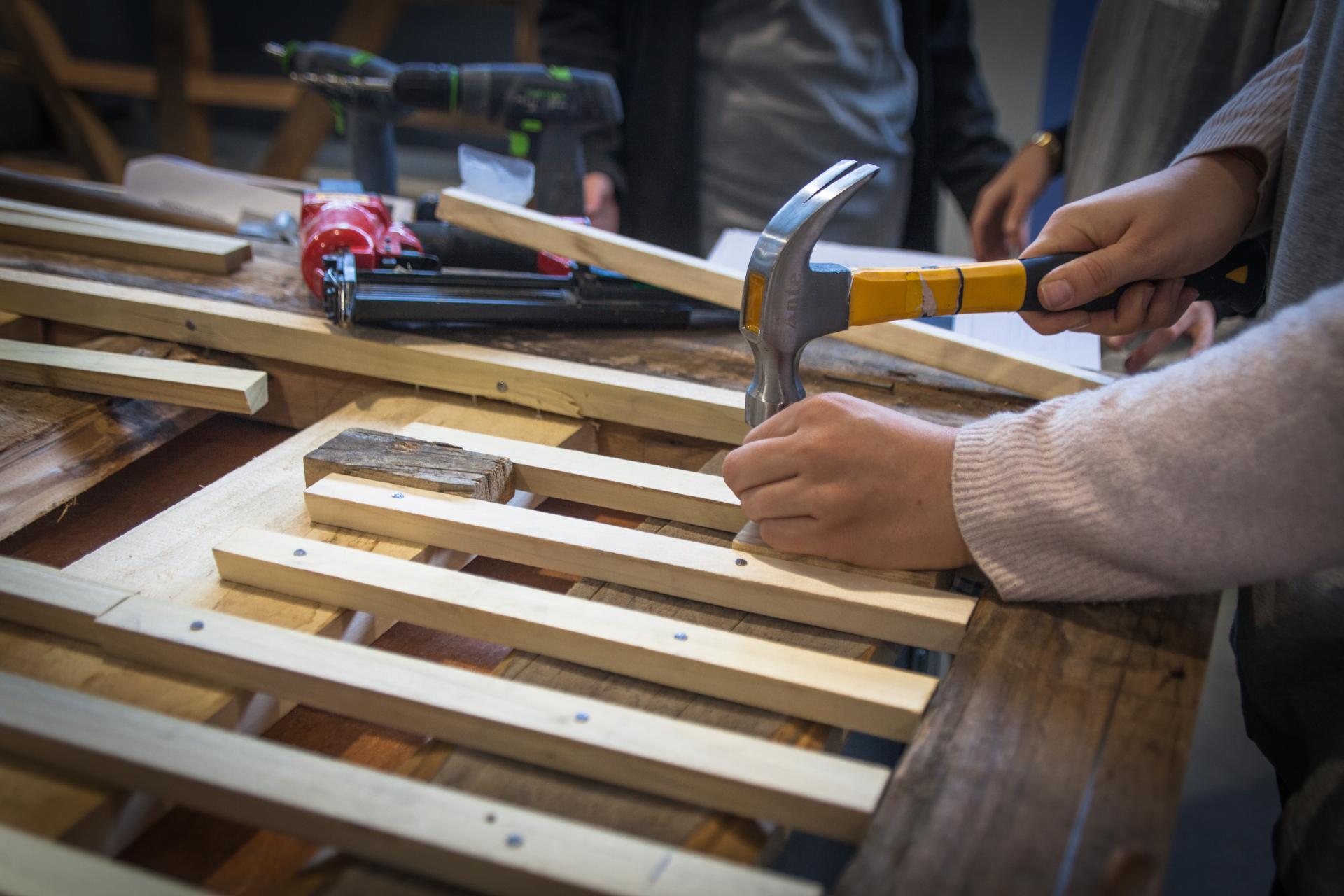
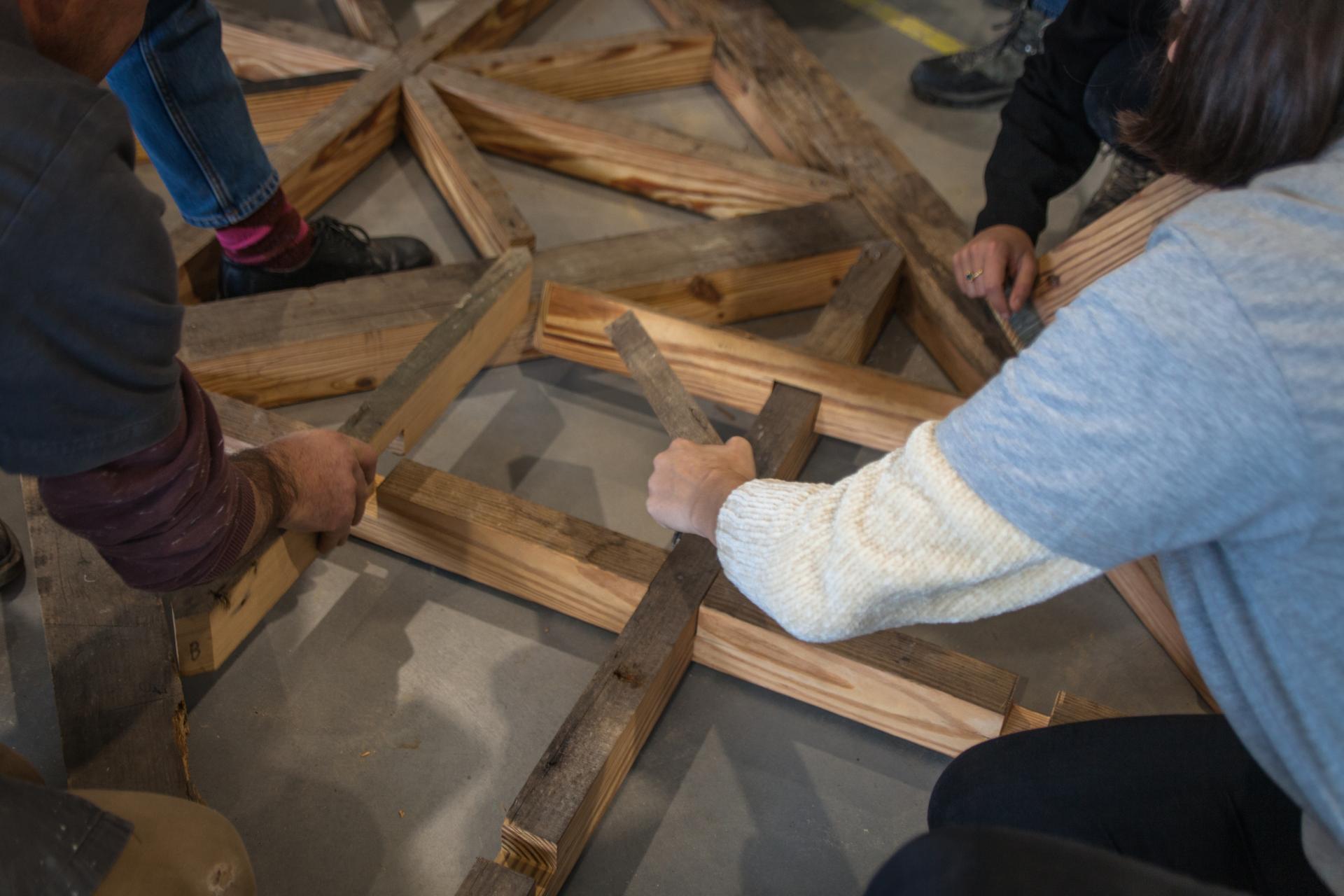
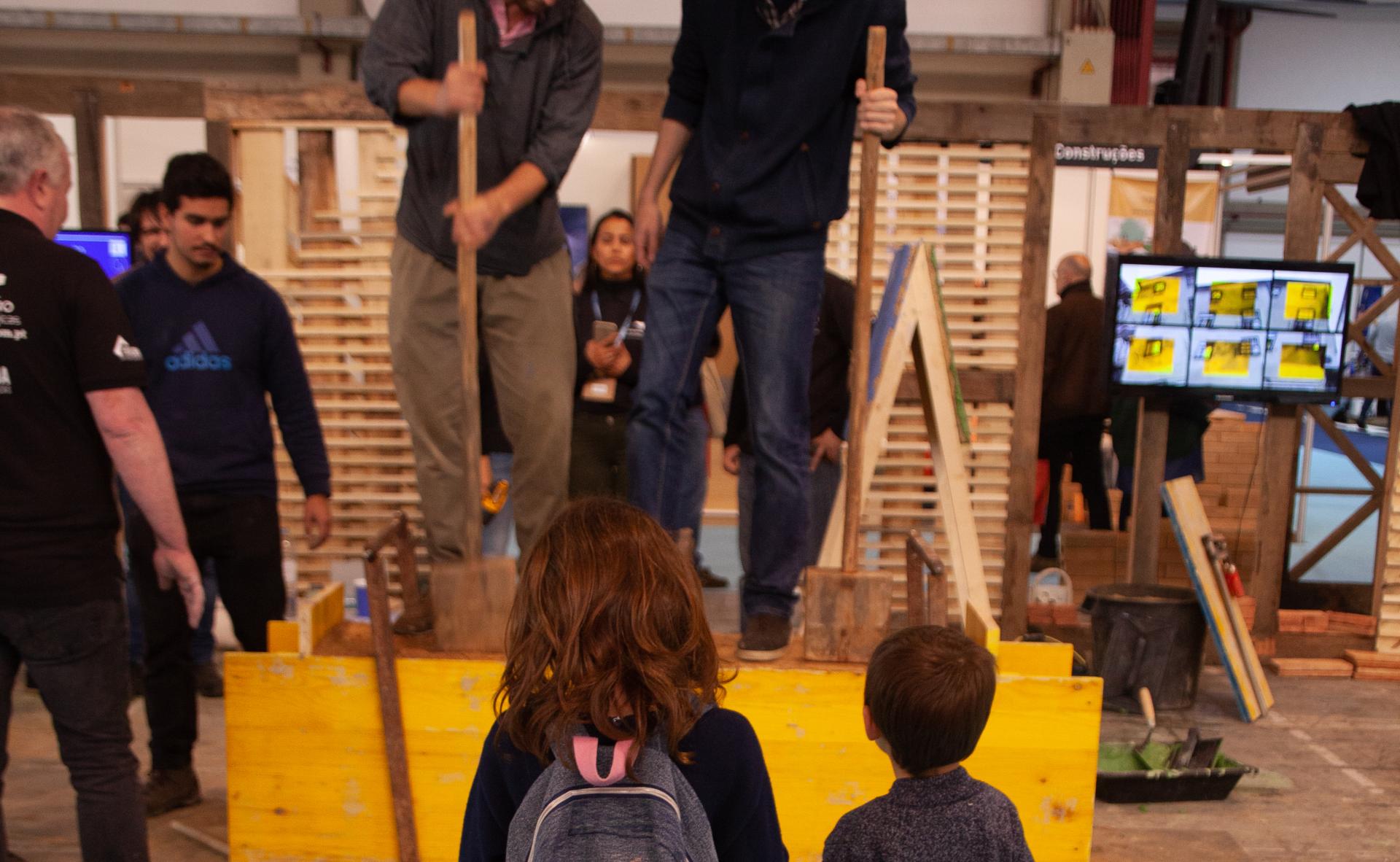
The main goals were, on the one hand, to raise awareness among students, professionals, and the general public about the value of traditional constructive cultures and structures, highlighting the possibility of maintaining them (instead of the most common option, demolition), and, on the other, to promote ‘learn by doing’ training (images 1, 2, 5) on how to execute and repair traditional building systems, reducing the threat that ignorance of how to make represents today.
Key objectives for aesthetics and quality
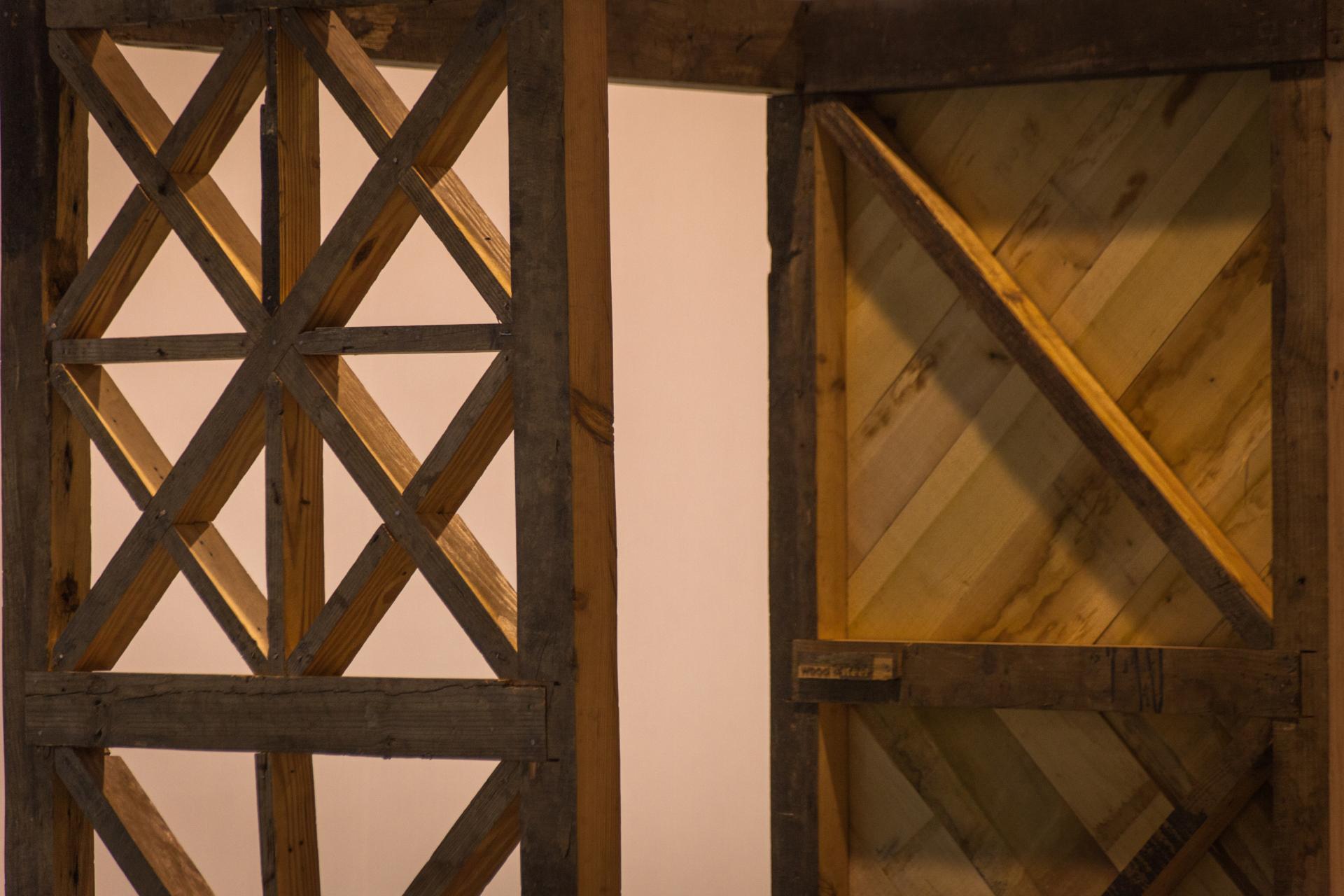
The aesthetic aspect, although not objectively the most important, was also decisive since the Plaza Alumni FAUP Past-Future represented the Faculty of Architecture. A balance was promoted between the result of the historical research (the structures designed corresponded to traditional construction systems effectively existing), the need for overall structural security in a fair environment (without foundations), the availability of space and work surfaces for the different workshops, the need to integrate LCDs to advertise the celebrations of FAUP’S 40th anniversary, and the aesthetic quality of the whole that would be in transformation throughout the fair, with the result of the various workshops (images 3, 4, 5).
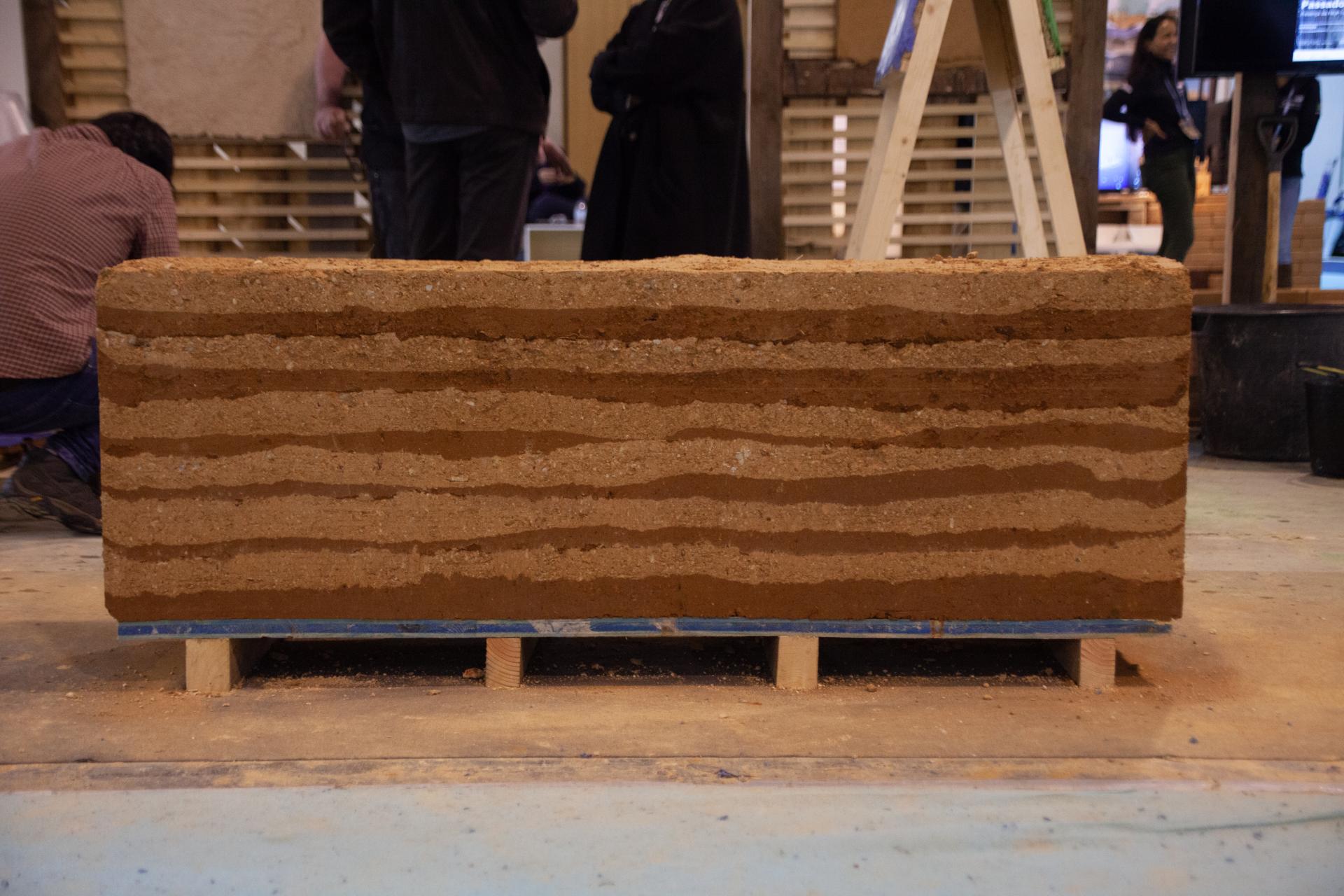
The project of the plaza was thus designed to highlight the aesthetic qualities of traditional wood structures and earth construction systems (rammed earth and compressed earth blocks - CEB). This was achieved by combining different timber structure systems, by placing partial semi-finishes (linings, fascias) that would allow for subsequent coating, by performing coatings with different characteristics, by using recycled wood with the time patina in confrontation with some freshly sawn wood, and by focusing more on the evidence of processes than on a finished product.
In the case of rammed earth, the alternation of two soils with distinct tonalities allowed the aesthetic potentialities of the most abundant and recyclable construction material to be highlighted (image 6).
In recent years, in Porto and in Portugal, in cases where designers have chosen to preserve these wooden structures, the building has been aesthetically enhanced by the apparent use of wattle and daub structures that would traditionally be hidden under the cladding. In the case of rammed earth, its apparent use, contrary to the traditional, has also been sought in some contemporary architecture. The plaza brought this recognition and visibility to a wider public.
Key objectives for inclusion
The idea of a plaza (in the city, but also at the fair) is, from the start, that of an inclusive space, of aggregation, of conviviality and citizenship. And that's what happened during those 4 days, being the most dynamic space in Concreta.
The idea of inclusion was worked at various levels, from the organization of the pre-fair workshops for the execution of the wattle and daub (which included the students of CCCDC, were open to other FAUP students and also included the carpentry professionals that supported the plaza execution), the workshops that took place at the fair (with some pre-registered students and other places available to any visitor, professional or public), to the organization of a half-day conference on earthen architecture, with the sharing of national and international experiences (taking place in a passage space between two exhibition halls, totally open).
But, the most inclusive results were at the shared memories level, which turned out to be one of the important impacts not initially foreseen. The traditional systems used were part of the memories of many, because they were present in the homes of their ancestors and relatives, and a considerable part of the contacts was made to leave testimonies of these memories, referring to the surprise of the recognition of these systems' cultural value (that many associated with times of poverty).
The whole action, from the articulated preparation with the carpentry and its employees to the assembly before the fair, and the 4 days of fair, resulted as a first step in the construction of a broader awareness about the value of traditional construction techniques, and the importance of their preservation - it was a way of induce preserving by recognizing.
From a pedagogical point of view, regarding the CCCDC students, after participating in the workshops they took the initiative to show projects they were involved in, sharing them with their colleagues, enriching the teaching and learning process.
Results in relation to category
We would like to make a remark about the difficulty of integrating the project in only one category. However, considering that it is within the framework of a higher education institution, we chose the category 'Interdisciplinary education models'. It is also worth noting that Concreta took place at the end of November 2019 and that some things that were planned for the second semester (end of February and March 2020) could no longer be implemented because of Covid-19.
Regarding the positive impacts, we can identify distinct levels, some direct and immediate and others that are spreading over time.
The general appreciation of the visitors (students, former students, professionals, and the public) far exceeded expectations, and promoted a series of contacts and exchanges of experiences, creating networks that allowed, among other things:
- Application, with a group of students who participated in the workshops, for funding by the Portuguese Youth Institute, to organize a cycle on sustainable construction that intends to replicate more widely the methodologies and actions implemented in the Concreta fair. The application is approved and financed and will have 3 actions between September and December 2021.
- Organization, with the North Regional Section of the Order of Architects, of a cycle of 'learn by doing' training, related to traditional materials and constructive systems, to take place from July 2021.
- Application to the FCT (Portuguese financing institution) of a research project on mountain range vernacular heritage, in which, for the purposes of dissemination and training, methodologies similar to those used in Concreta Fair will be implemented, including restoration camps.
- Scheduled reuse of the wattle and daub modules developed for Concreta at UNESCO's World Heritage Volunteers 2021, which will take place in Oporto in October 2021.
- And, a new invitation was made to again coordinate FAUP's participation in Concreta 2021 (November 18-21).
How Citizens benefit
The participation of the Faculty of Architecture in a building materials fair and exhibition, which has been taking place for a few years now, has mostly been to showcase the students' skills to future employers. It has also promoted small talks integrated with the same scope.
The 2019 edition, due to the needs arising from the implementation of this type of proposal, required the direct coordination with two companies that supported the preparation of the material for the execution of the partitions by students (Wood and Steel) and in the set of workshops that took place during the fair regarding the choice of land and execution of rammed earth, earth and lime mortar coatings, tadelakt coatings (J.P. Bernardino Ecological Constructions), also counting on the support of another company, in the supply of used wood (Casais).
This connection to companies and society had a greater impact on the company that supported the execution of the wattle and daub, namely:
- By the recognition, on the part of the company, that it could provide services in this area, acquiring know-how;
- By the recognition, by the workers involved, that the local traditions that they devalued (seen in the homes of relatives) deserved to be preserved, and, optimistically, being part of the promotion of cultural value recognition.
The pandemic cut off some of the plans for future actions since these were heavily dependent on face-to-face contact. Hopefully, from July 2021, some actions will be able to be resumed.
A second aspect was the way the UC CCCDC was structured in the 19-20 academic year, as a series of open sessions in some of the spaces in the city of Porto, showing through the spaces in which the classes took place some of the assumptions addressed in the theoretical part.
In 20-21, the open sessions continued on-line, with a much wider participation in terms of attendance but also of guests, from Iran to Mexico, ffrom Sweden to Egypt.
Innovative character
Thinking in a broad and international way, the undergraduate courses dedicated to some of the aspects related to sustainability are not new. Nor are the pedagogies based on "learn by doing" new, nor the research on traditional construction systems and the idea of the rescue of these techniques. However, the articulation and integration of all these aspects within a single strategy, and its inclusion in the context of a building materials fair, where each company comes to show the most "modern" that it can offer, often imported, was innovative, and also made a huge impact for being counter-current.
The project promoted an integrated vision, and the articulation regarding different aspects of the possible fields of action of a faculty of architecture. It strengthened the link between the academy and the business fabric, and gave visibility to these subjects in a broader way - as Concreta is the most important fair in Portugal, not only for the construction sectors, but for the general public, who take advantage of the weekend access, and the invitations issued by most companies, and visits the fair to see what's new and to make decisions for the works he plans to start.
Another innovative result was the possibility of capitalizing on memory as an asset for the recognition of the cultural value of the traditional constructive systems, helping its preservation but also promoting a more sustainable approach because the more sustainable materials are the ones that are already in use.