Coeur de Maine
Basic information
Project Title
Full project title
Category
Project Description
Revitalizing urban spaces and revealing the cultural, natural and human heritage present on the river bank through "Angers Coeur de Maine" project.
Project Region
EU Programme or fund
Which funds
Other Funds
ERDF in the framework of the "Investissement territorial intégré" (ITI).
Description of the project
Summary
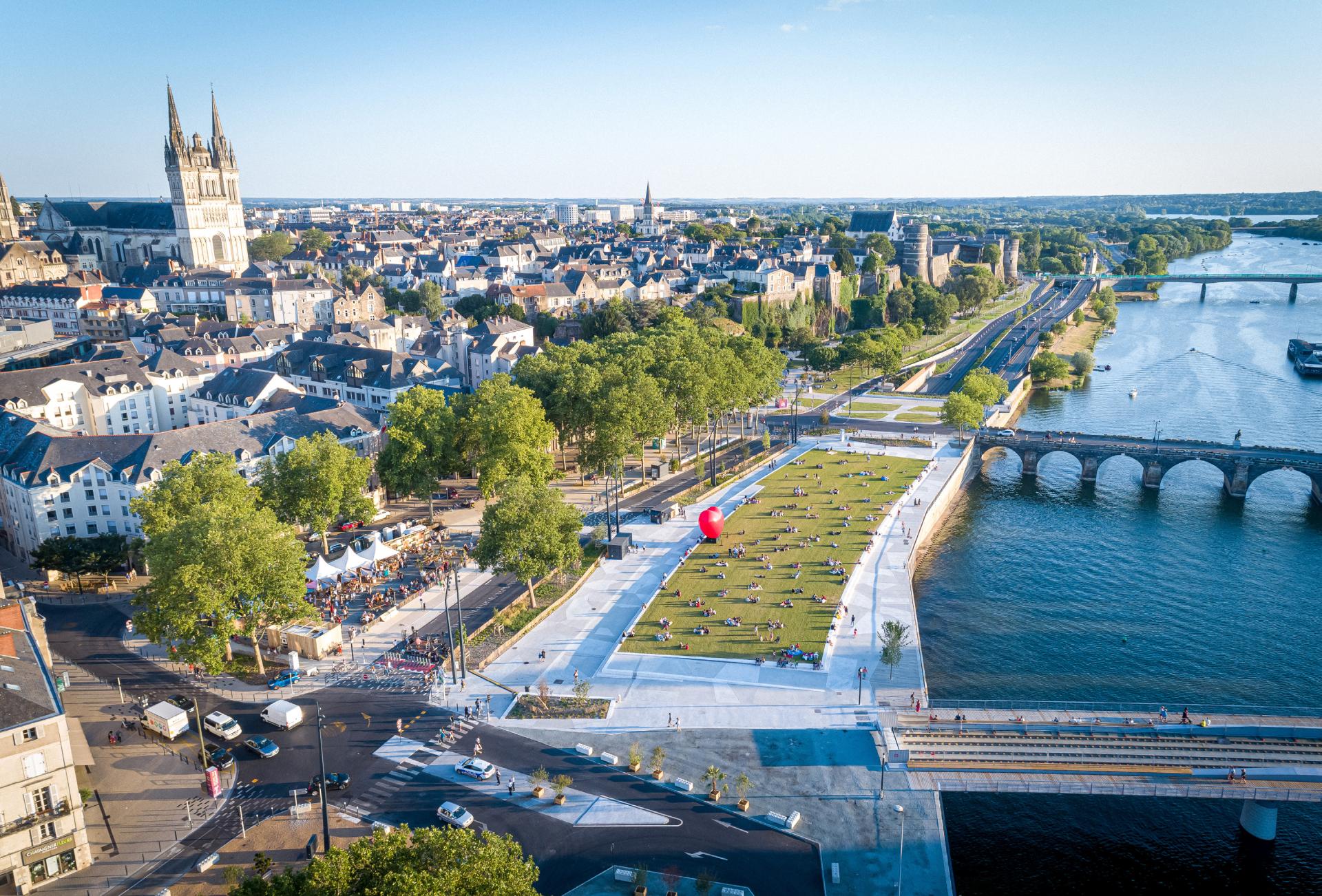
Result of a deep and global reflection on the city, the project “Angers Coeur de Maine” is one of the structuring projects of the Angevin territory. It aims at contributing to the revitalization of the city centre, in addition to the creation of a new tram line; to revisit the organization and development of the Saint Serge district (a sector renewed as a district of mixed economic activities: crafts, urban logistics, services, offices, etc.). which is the natural extension of the city centre and finally; to allow the inhabitants to rediscover the founding sites of their city, in particular the Maine river and its shores.
The will is to reveal the cultural, human and natural heritage that is present on the riverbank through four main objectives:
- Open the city centre to the river
- Develop the riverbank lane to better fit it into the urban framework
- Taking ownership and landscaping the banks of Maine
- Driving a deep renewal of the Saint-Serge business disctrict
Thus, in a territory of more than 200 hectares, three strategic sites have already been transformed:
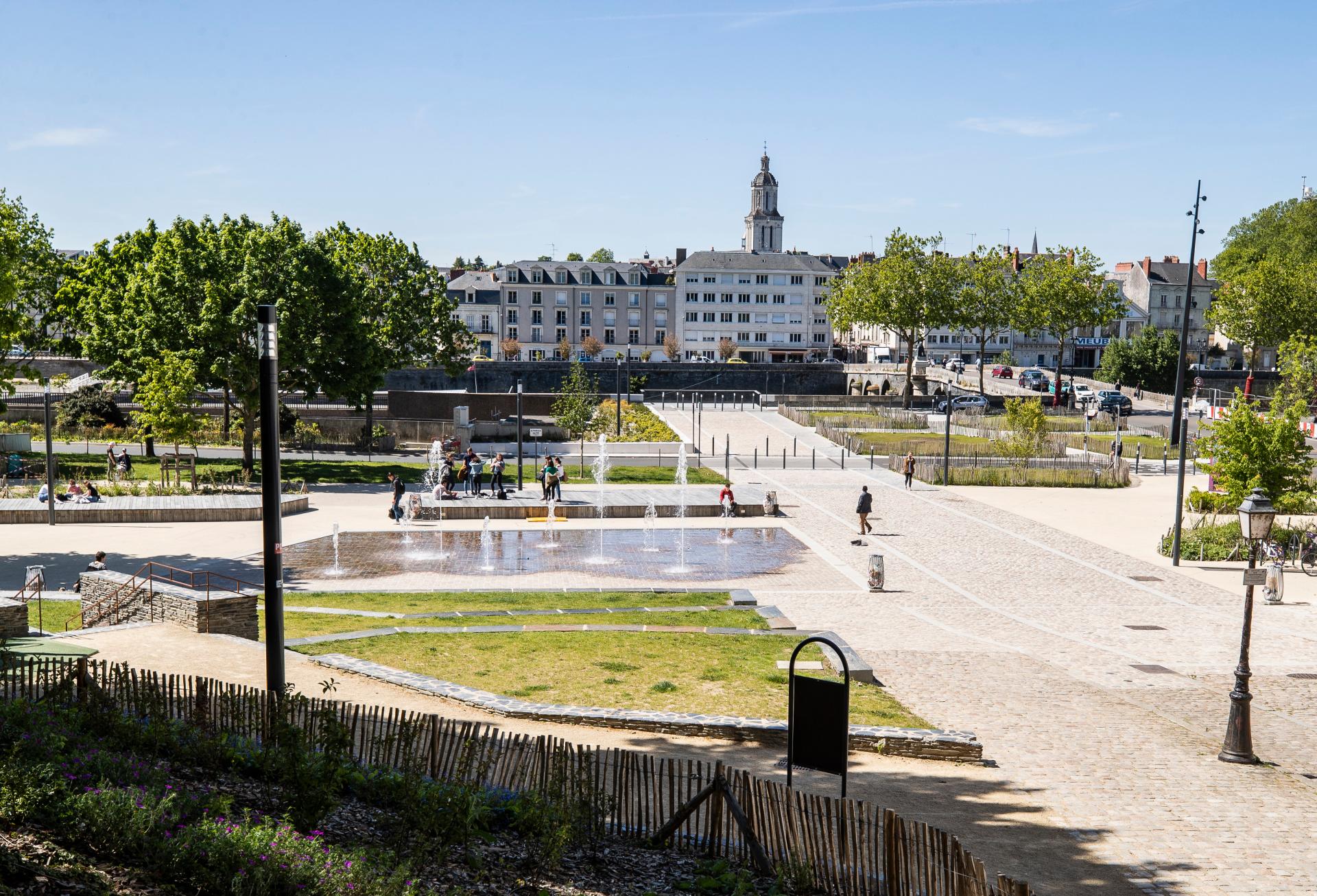
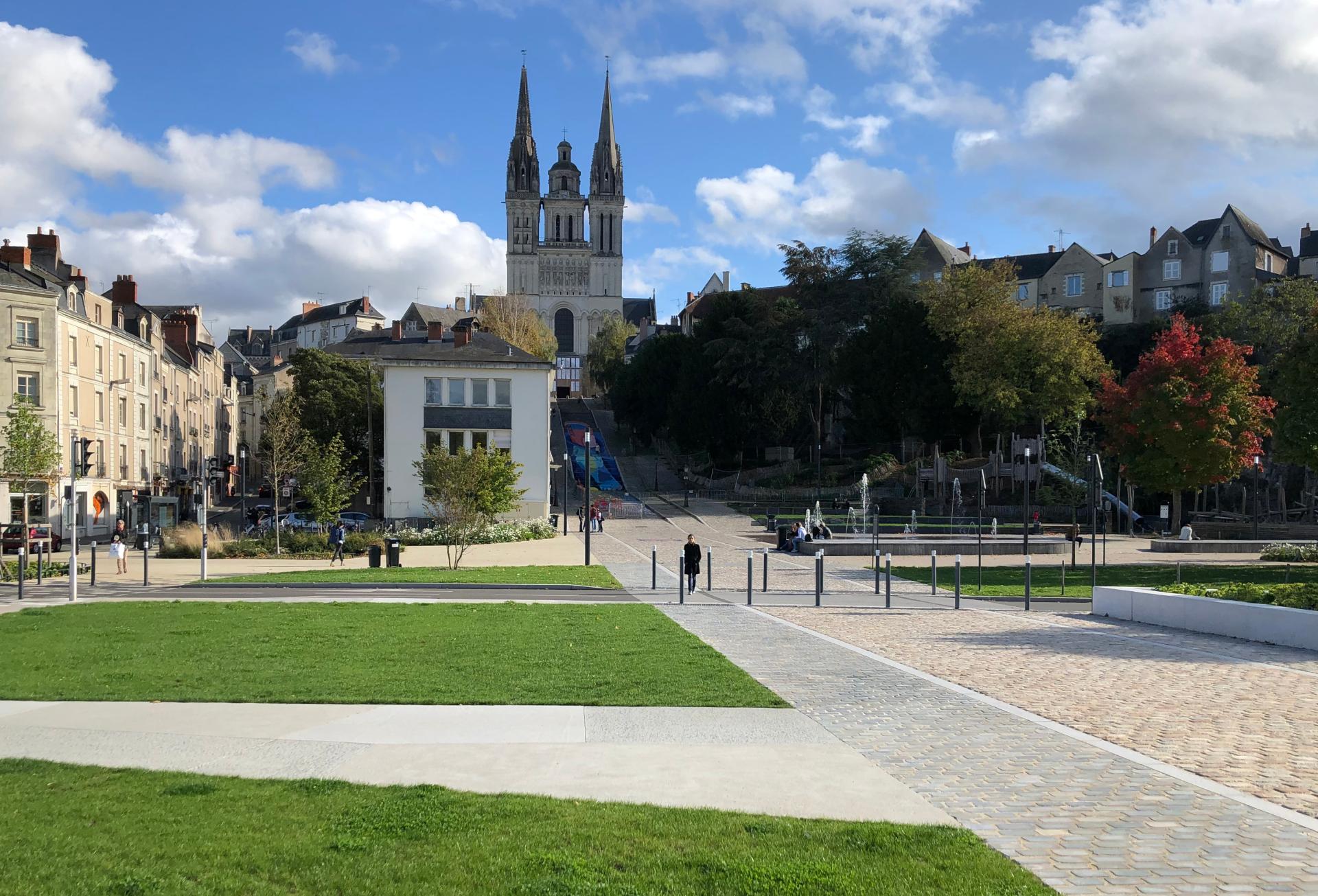
- Downtown Maine, with Jean-Turc Drive (delivered in June 2018),
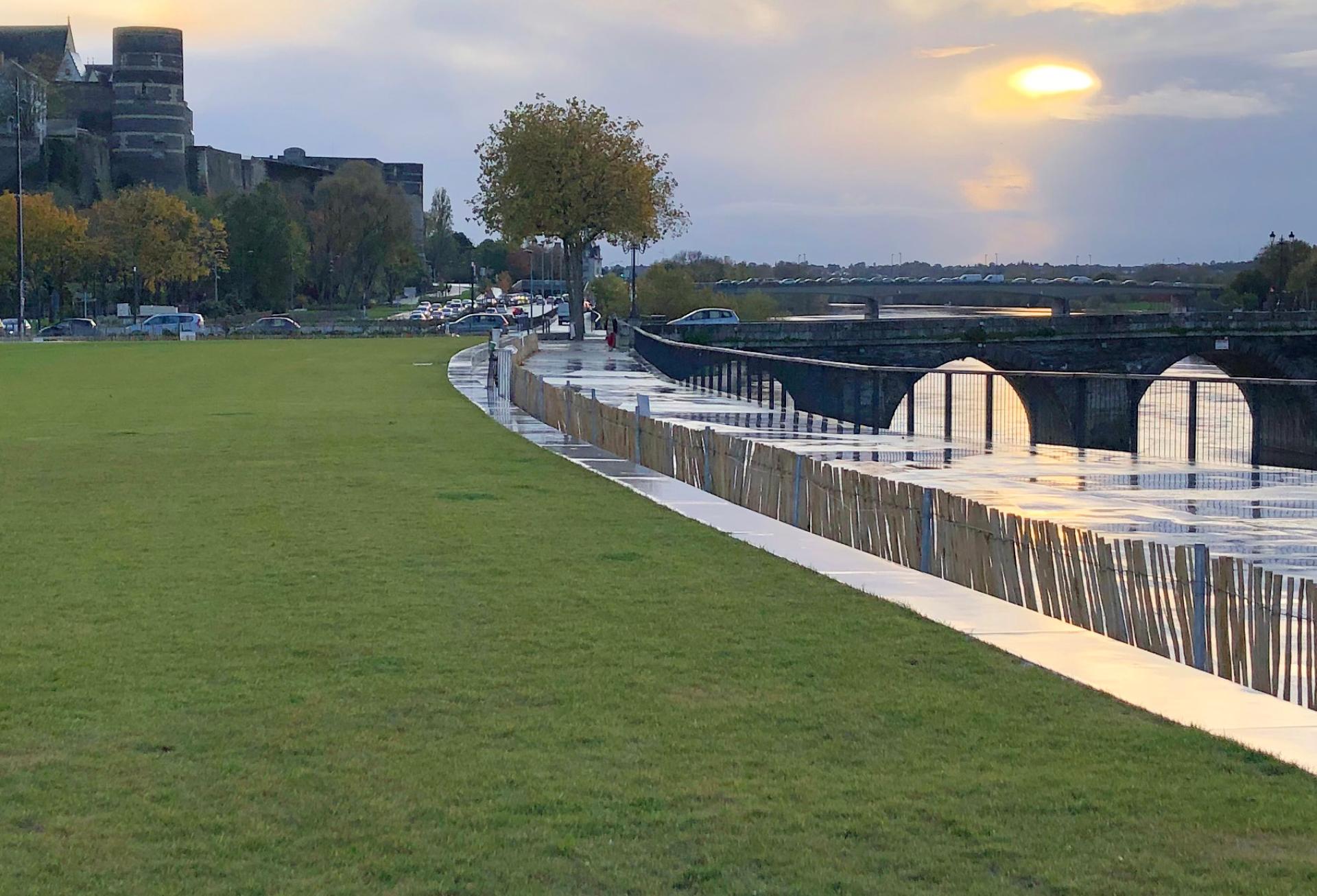
- A new Maine Heart Esplanade and the Fishmonger's Mall (delivered in June 2019);
- The riverbank lane, transformed into an urban avenue (delivered at the end of 2018);
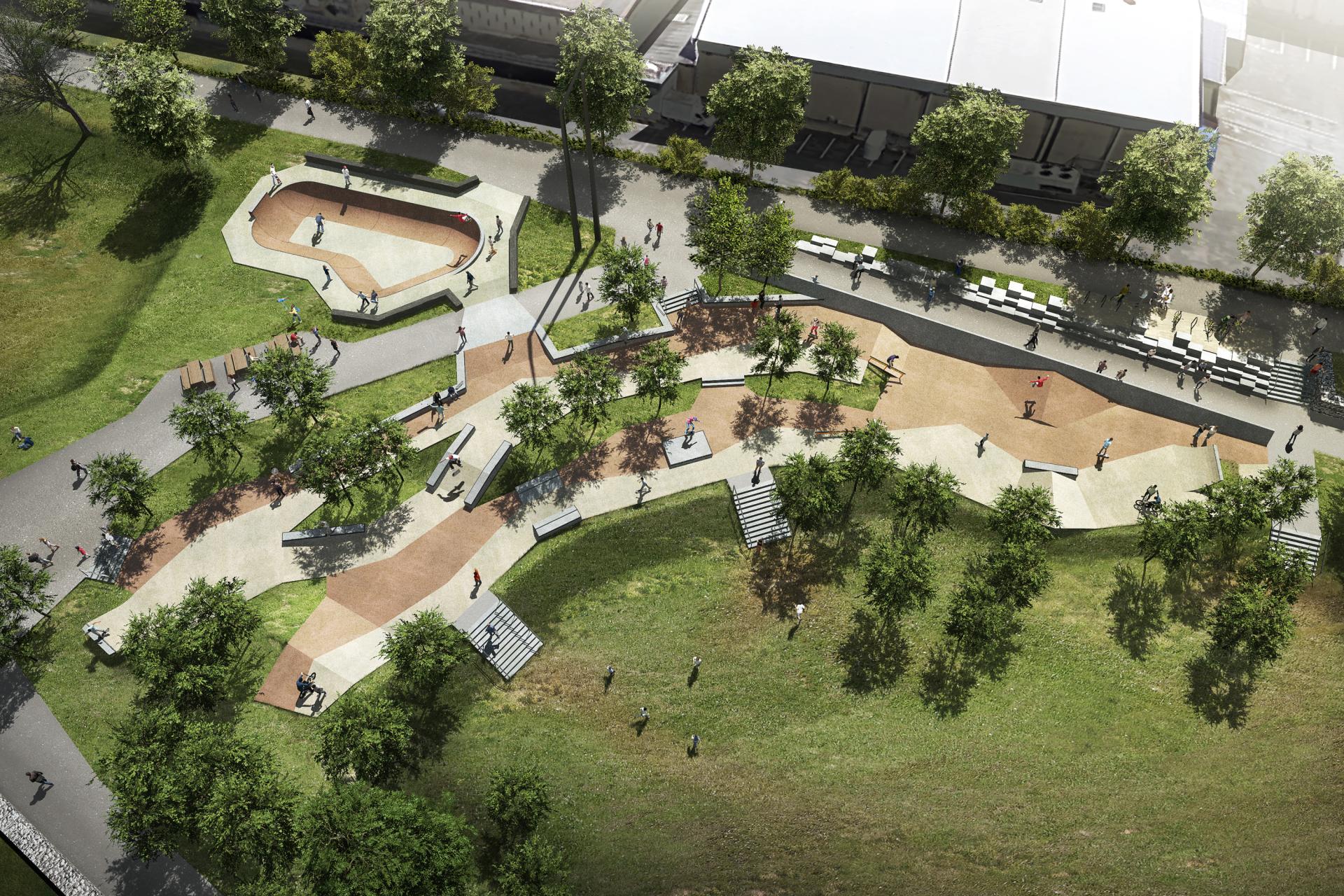
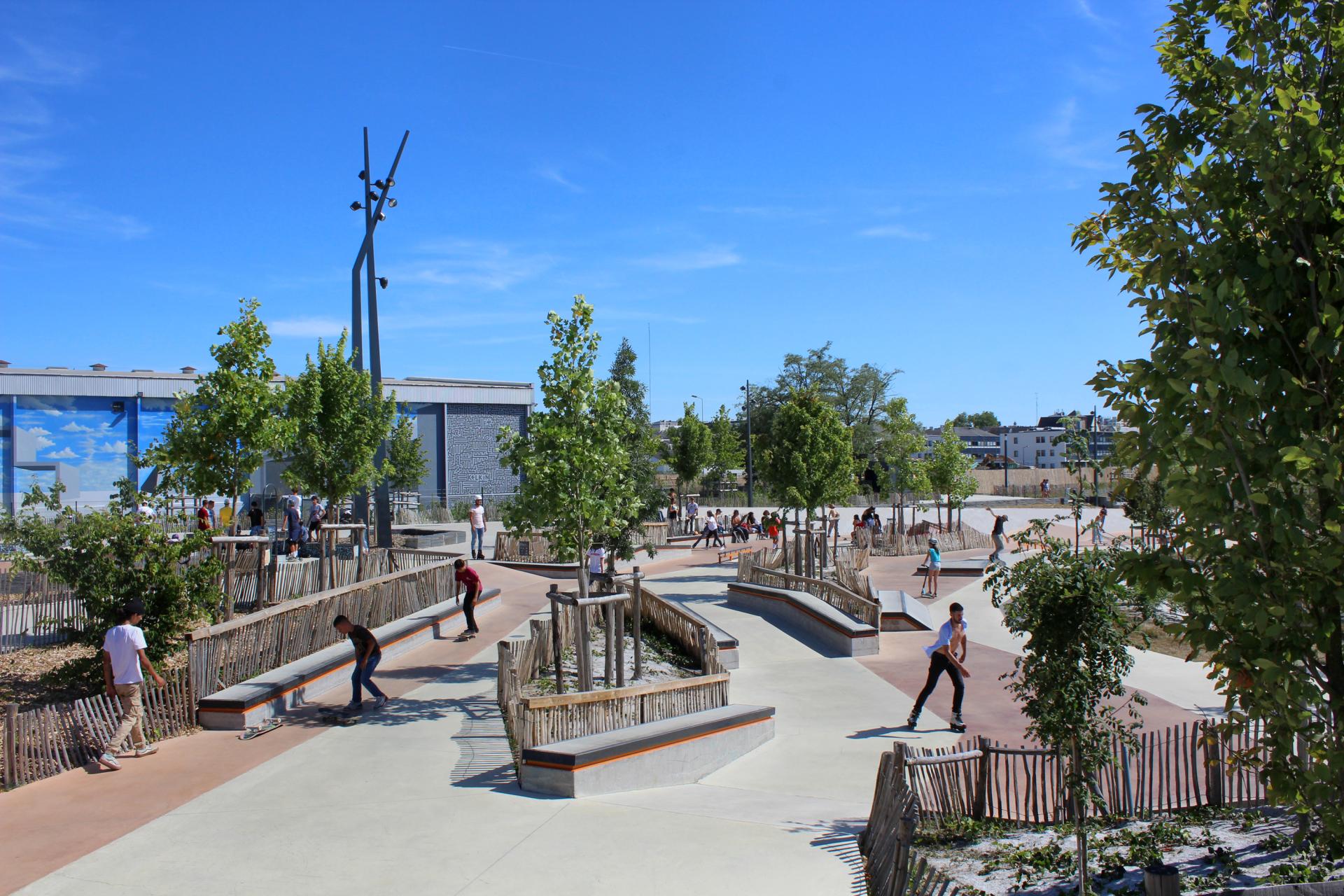
- The Quai Saint-Serge, with park of more than 5 hectares, its event plain, its new skate park and a new ice park (delivered in September 2019)
These developments now allow the inhabitants to reconnect with the river and contribute to the revitalization of the city centre by organizing its extension to the Saint-Serge district, an active suburb and a lively central area.
Key objectives for sustainability
Sustainability is at the heart of the project. Part of a broader ecological contract, the project promotes the value of existing natural heritage by strengthening the green and blue frames, maintaining and developing biodiversity and vegetating a large number of public spaces while taking into account social issues and quality of life.
The project was defined through a three-pronged approach that included landscaping, construction and urban furniture, as well as aspects of the economic model, partnerships and maintenance of the river, event programming and services.
Through this project the river banks are not only connected to corridors of biodiversity but also to wider pedestrian and cycling routes and link with green loops and sites such as Saint-Aubin Island or Terra Botanica Park. In addition, in the continuity of these actions, another project entitled "Rives Vivantes" has emerged and is being developed. "Rives vivantes" aims to enhance the river and develop its uses. It was co-created with 34 structures (associations, river actors, private groups, local residents, neighbourhood councils, planners, landscapers, elected officials...) that defined five main areas of work: Improving pedestrian and cycling continuity along Maine river; The enhancement and reinforcement of the ecological continuity of the river in its crossing of Angers; Facilitating access to the river and developing environmentally friendly activities in the sports, cultural, recreational and tourism fields; the extension of the urban transformation of the riverbank lane with the appeasement of automobile traffic; the proposal for public spaces and quality landscaping on Maine's docks.
A place of walking and leisure, Saint-Serge Park covers more than 5 hectares of which nearly 4 hectares have been vegetated. More than 500 trees have been planted. The park can hold both Maine floods and rainwaters through a series of three basins: During flooding, Maine's water will rise in the park's basins.
Key objectives for aesthetics and quality
Inventing an embellished, dynamic and attractive “Coeur de Maine”, is the mains goal of the project. By working on the layout of the sites, the idea is to reveal spaces, to make them accessible and to enhance the existing while transforming its use and creating places of life and encounter. The idea is including more memorable, walkable and livable spaces, and stronger connections to the downtown and the rest of the city.
The aesthetic objectifs of this projects were met throught a balance between ecological (vegetation, greener public spaces) and social aspects. The particular feature of riverside landscape is its extensive panoramas which provides a wide range of aesthetic sensations Therefore, spatial planning ensured the protection of both ecological and visual diversity for the urban river landscapes. The issue of continuity and consistency of the natural and urban was carefully followed.
Key objectives for inclusion
Reflected in its overall nature and co-constructed from the beginning with all citizens and a large number of actors, “Angers Coeur de Maine” project was designed so that inclusion and accessibility are the common threads of the transformation of places.
By making the places more accessible through public transports with the arrival of the tramway, by creating meeting spaces such as a skate-park(inserted in the slopes of the main basin and highly vegetated, consisting of a street and a bowl on an area of about 1,200 m2), a new ice-park and also by setting up a program of cultural activities in the new esplanade of “Coeur de Maine”, the project promotes the good living together and the quality of life of all the inhabitants.
Accompanying the renewal of the activity area around the Saint Serge dock: in a more specific way the area of activities around the Saint-Serge dock is redesigned in its entirety with the aim of offering an inclusive and attractive living environment to the inhabitants, researchers, students and economic actors, and thus strengthening existing academic and tertiary activities. The Saint Serge district is gradually being transformed through various projects in progress, into a sector of mixed economic activities (crafts, urban logistics, services, offices ...) unheard of Angers.
The development of the bottom of the city center: the development of the downtown Maine site is an opportunity to go beyond, in the lower part of the city centre. This will help to limit the contrast between new high-quality public spaces and an aging urban area. The aim is to comfort a neighborhood inhabited by:
- Rehabilitating degraded housing, mostly small rentals occupied by students, young workers and the elderly;
- Strengthening the residential function of the city centre to accommodate new residents, especially households with children;
- Maintaining social mix, which is the peculiarity of the city centre of Angers;
- Introducing small a
Results in relation to category
The Heart of Maine project has positive results, including the preservation, restoration and enhancement of ecosystems, biodiversity and landscape.
It was awarded the IMBP Fench national award (Infrastructures for Mobility, Biodiversity and Landscape).
Interventions are spread out over time, giving priority to those that are likely to amplify the positive effects of planned short-term developments in the lower city Centre and in Saint-Serge doks district.
A source of noise and pollution, the riverbank lane in the Heart of Maine has been "pacified" and the quality and functionality of the site has been improved by:
- Revisiting the organization of the entrances and exits of the riverbank lane;
- Reducing speeds from 70 to 50 km/h to reduce noise in the most urban part of the track;
- Treating the surrounding area to promote the landscape insertion of the riverbank lane;
- Adapting signage, removing its motorway character;
- Rethinking the lighting of the track, and more broadly along the banks, where the great historical sites are located.
How Citizens benefit
The founding elements of this urban project are co-construction and consultation by working in tandem with citizens and civil society. The latter was carried out in several stages with a wide range of participants and following a methodology and a co-developed work schedule.
A pre-project consultation took place in 2015 followed by a consultation specific to the design future public spaces. Then, starting in March 2016, several collaborative workshops were set up:
- March 22, 2016: Downtown Maine Collaborative Workshop (82 participants)
- April 26, 2016: participated in Saint-Serge University (between 40 and 60 participants)
- May 10, 2016: Saint-Serge Quai collaborative workshop (55 participants).
- Meeting with traders.
- Exchange on the expectations of the users of the slide (Skate-park)
This consultation process has been extended to the Rives vivantes" project, which is the continuation of the Coeur de Maine project to enhance the river and develop its uses. It was established in October 2018, in consultation with 34 structures: associations, river actors, private groups, residents, neighbourhood councils, planners, landscapers, elected officials... and several workshops were held until a program plan was formalized.
- Project Launch Workshop
- Co-reflection workshop on river uses.
- Thematic workshop: uses of the river / biodiversity and ecology.
- Thematic workshop: active modes and gentle continuity / history and geography
- Final restitution to elected officials by participants
- Introducing the Mayor/President
- Formalization of a program plan
A total of 98 proposals were made by the participants, february 2018, during the consultation workshops (34 on the uses of the river;22 on the uses of fishing;13 on tourism and heritage;10 on active modes and soft continuity; 8 on biodiversity; 7 to figth visual or noise nuisances; 4 on the management and maintenance of the river).
Innovative character
The innovative nature of this project lies in its governance and in the way it was co-constructed with all the stakeholders. In addition, this project is part of a more global and cross-cutting approach that invites us to "imagine" and rethink the city of Angers taking into account the issues of ecological, digital transition and all the issues related to the construction of an inclusive city.