Smart City, non-contact motion detection
Basic information
Project Title
Full project title
Category
Project Description
There is a lot of car traffic in cities, especially in their centers. Its saturation causes undesirable phenomena. They are: air pollution with exhaust gases, pollution with solid particles from wearing tires and brakes, and environmental pollution with noise. They cause civilization diseases.
This project aims to eliminate or seriously limit these phenomena through the use of magnetic motion and presence detectors. These devices use the ubiquitous, free Earth magnetism.
Project Region
EU Programme or fund
Description of the project
Summary
Throughout the 20th century, the phenomenon of people migrating from the countryside to the cities was observed. In the case of large cities, it was like an explosion. At the beginning of the century, there were 10 cities with a population of 10 million, and at the end there were 300. Although demographers assess positively the phenomenon of urbanization, it raises problems and presents civilization with new challenges. One of them is the crowded city centers with vehicles. There are usually many offices where a personal visit from a citizen is essential. It is connected with the necessity to occupy a parking space, air pollution with toxic exhaust gases, solid particles from tires and brakes rubbing, pollution of rainwater with petroleum substances.
Urban planners try to solve these problems by designating no-pedestrian zones, paid entry and parking zones, places dedicated to defined user groups or encouraging the use of public transport.
Magnetic sensor technology has been developed very recently. They record disturbances in the Earth's magnetic field caused by the moving mass of a parked car. They seem to be a good solution. They can be installed in a wireless system.
This allows (especially the mobile application) to lead the driver directly to the first free parking space near the destination without the need to circulate in search of it. At the same time, services monitoring the use of the car park can obtain information about the fee paid or the expiry of the free parking space. This allows you to discipline parking, and the intervention of security services to point out without the need to circulate in search of a vehicle whose driver has exceeded the established rules.
Due to my interest in road and pedestrian traffic management, I have independently developed a magnetic sensor for monitoring occupancy in uncovered parking lots. It is produced by my company KSK Developments. The structure was implemented in two locations in Czempiń and Piaseczno.
Key objectives for sustainability
The device - parking sensor has been developed according to the latest technologies, based on modern engineering knowledge. The assumptions in terms of durability were:
- the point nature of the interference with the existing pavement
- wireless power supply
- wireless data transmission
- detection efficiency - over 90%
- insensitivity to mechanical cleaning and snow removal equipment
- operating temperature range -20 - +40
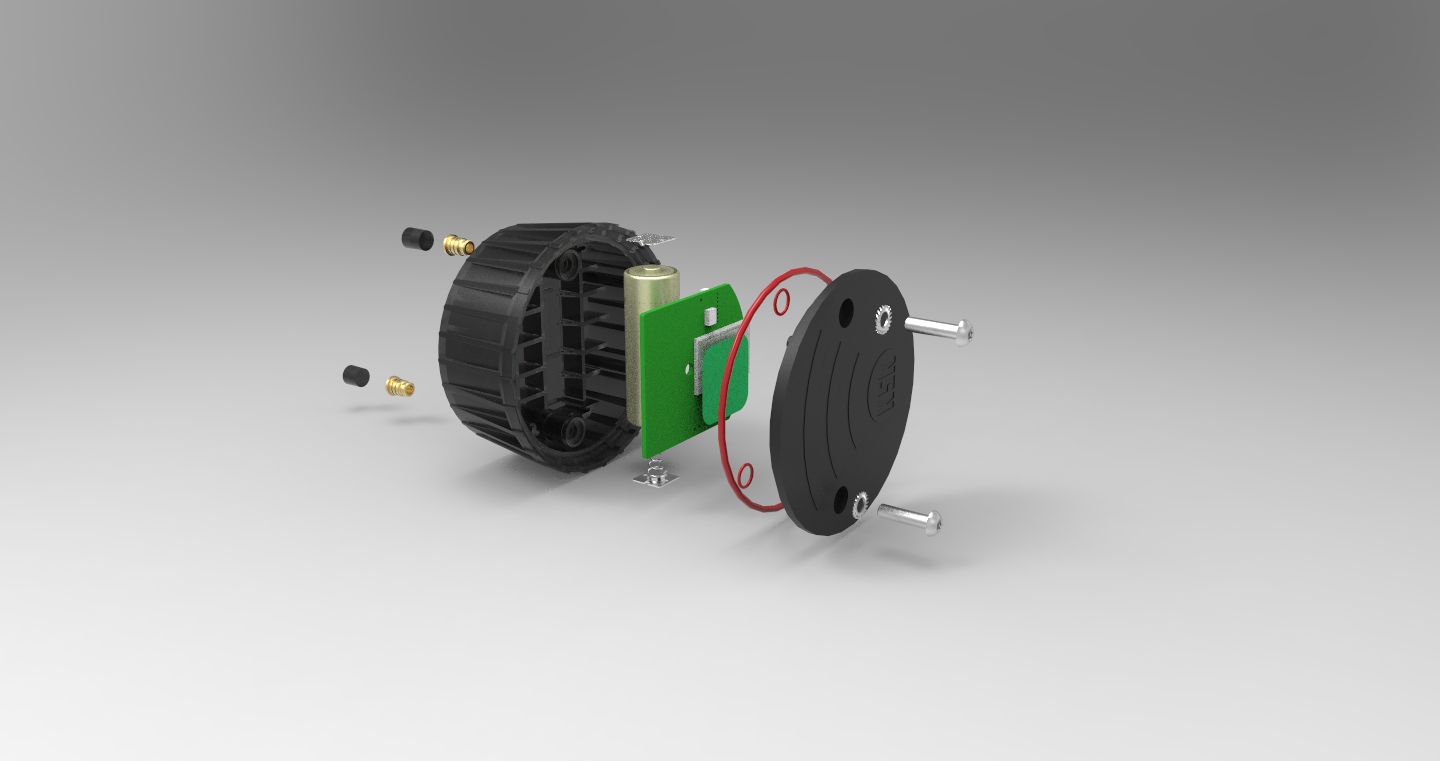
A point interference with the surface was achieved thanks to the small dimensions of the device (80 mm) and flush with the surrounding grade line. The sensor works in a wireless operating mode, battery powered by a lithium battery. A battery with a service life of at least 5 years is replaceable. Communication is carried out via the LoRa network dedicated to IoT. The detection efficiency was achieved by 98% thanks to the coupling of magnetic detection with radar confirmation. The empirical operating temperature range is from -40 to +70 degrees C.
Key objectives for aesthetics and quality
The aesthetic assumption of the project was that while fulfilling its functions, the detector would not stand out from the environment. It did not dominate it and did not constitute an element distinguished from the environment (as is the case with video monitoring). It was supposed to fulfill the tasks discreetly and not to evoke the feeling of being under surveillance in the operator. He was not to make any demands on cleaning, tidying up and supervising services. It was to be resistant to weather conditions and direct hitting the wheel of a motor vehicle.
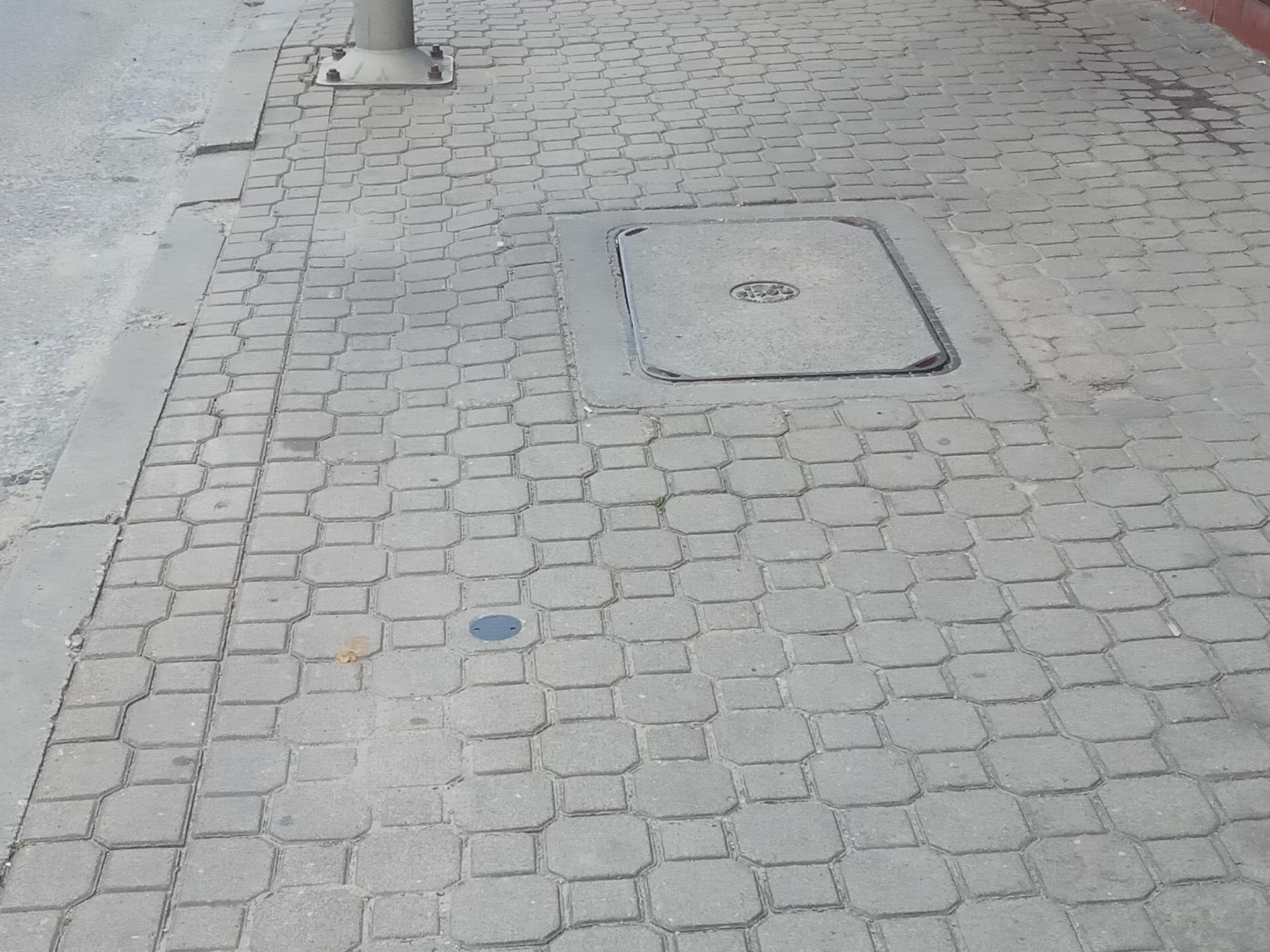
The device is a cylinder with a diameter of 80 mm. It is installed in the surface of the supervised place, such as a parking lot, pavement, or a fragment of the road. It is flush with its grade line. As a result, it is insensitive to the operation of mechanical sweepers and mechanical snow removal.
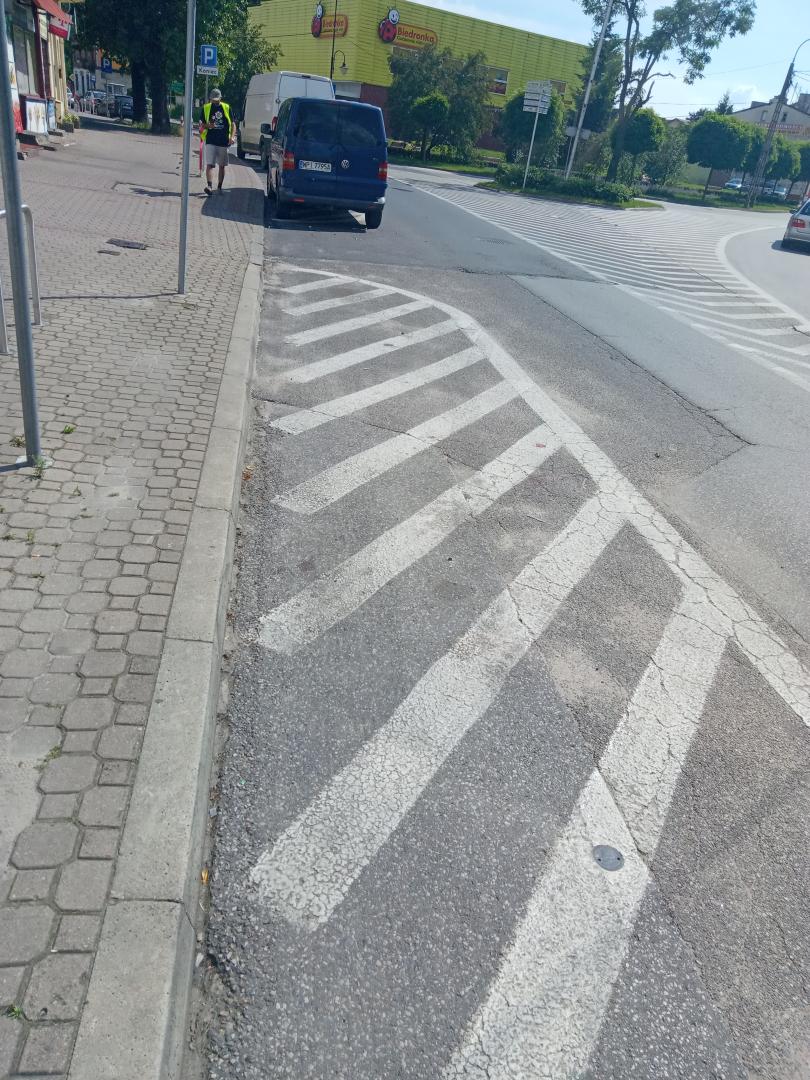
All design assumptions have been achieved. The discretion of the sensor operation is so great that in places subject to special care (gate entrances, narrow pavements, fragments of the road excluded from traffic), people breaking the law do not know that they will be brought to order within a few minutes. Only the intervention of the Municipal Police (notified by SMS by the sensor) forces them to respect the law.
Key objectives for inclusion
The aim of the project was to develop a device for monitoring uncovered areas.
The sensor is to monitor the state of the monitored surface in real time. This information is sent via a wireless IoT dedicated network.
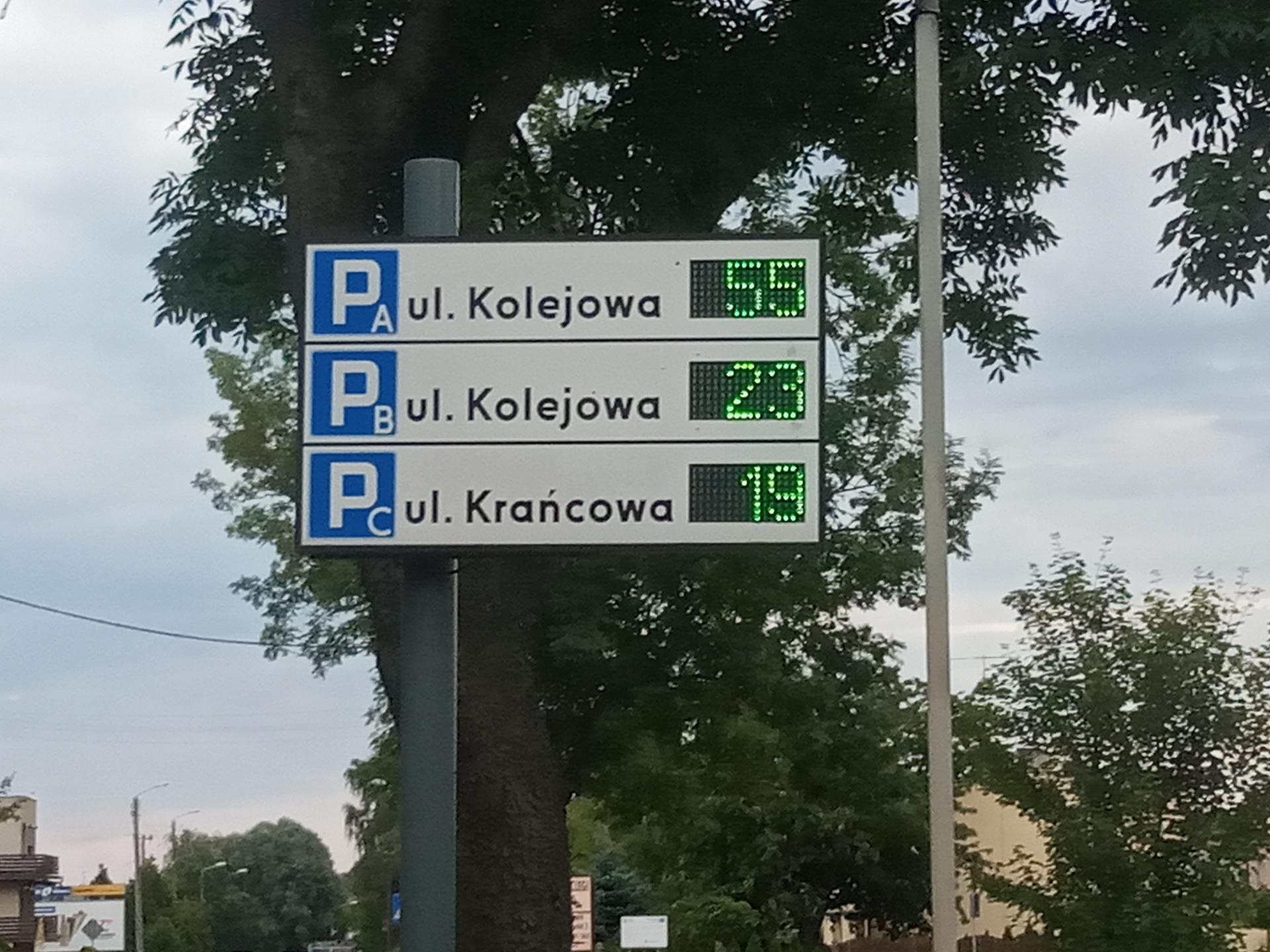
The information obtained is processed by the software according to an algorithm, and the result is sent to variable message boards (informing about free parking spaces) or to an application on a mobile device leading the driver to a free parking space near the destination or to the management center.
The aim of the study was also to develop such a form of an algorithm to inform the decision-maker with an SMS alarm about the violation of the area excluded from parking.
The achieved technical goals result in the achievement of the overarching goals, which is the reduction of local car traffic (moving in search of a free parking space generates 15% of local traffic), and thus reduces the consumption of fossil fuels. It also reduces exhaust emissions, particulate emissions from wear tires and brake pads. Limits environmental pollution with noise.
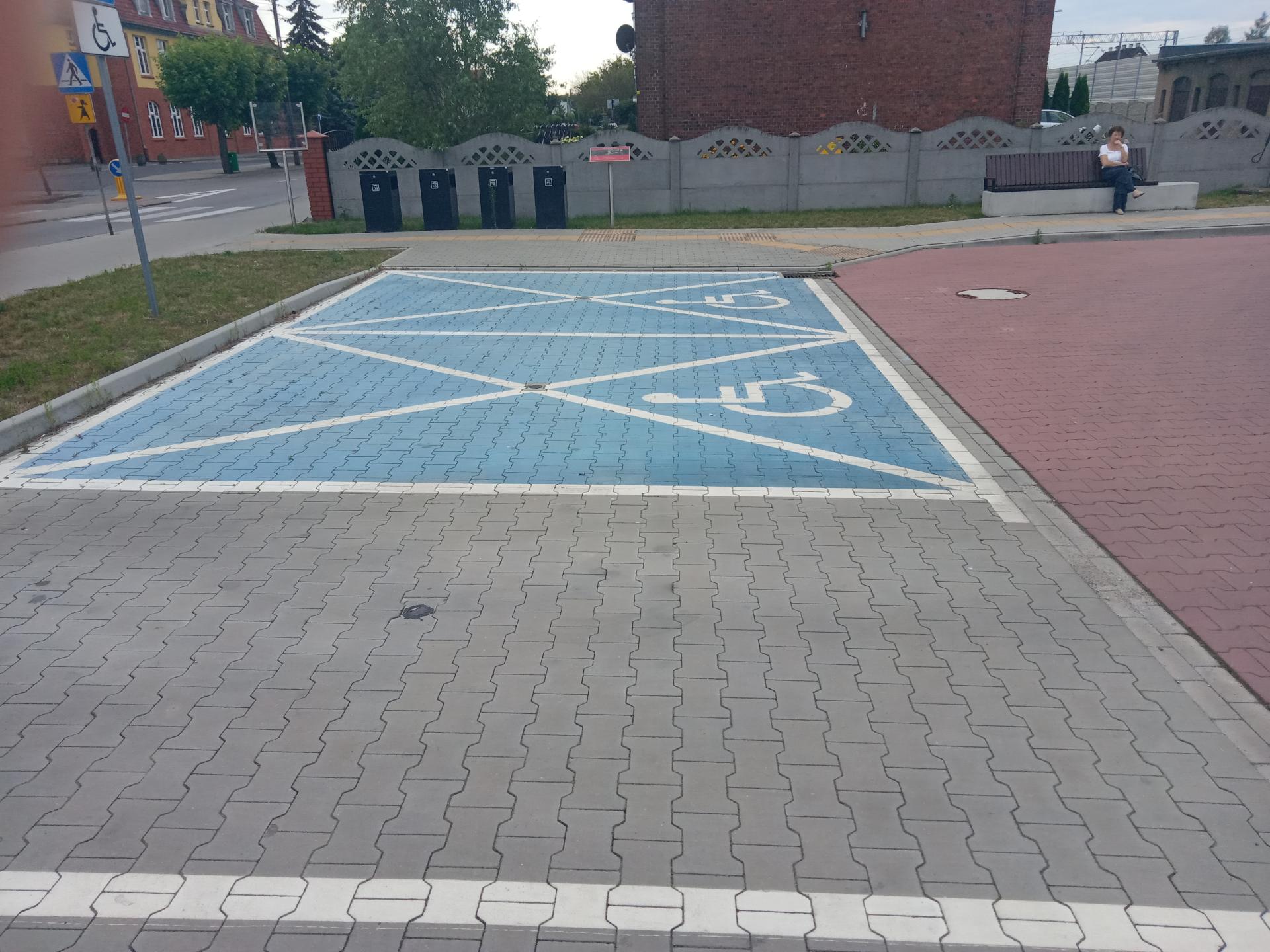
The main goal achieved is also to discipline drivers who break the regulations and stop in prohibited places, such as: narrow sidewalks, road fragments excluded from traffic, entrances to gates.
Soft goals were also achieved, such as: reducing negative emotions related to morning rush and conflict interpersonal relationships.
Results in relation to category
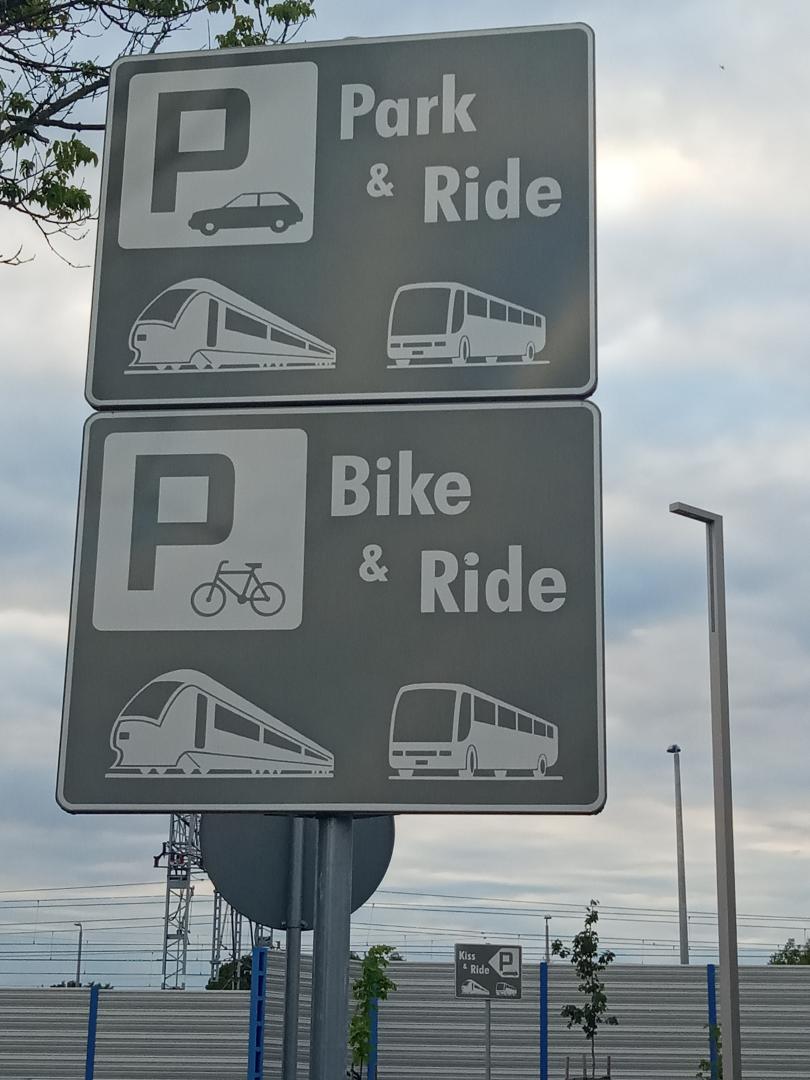
Sensors installed in car parks next to railway stations send information about the occupancy status in real time to information boards located on the entrance streets to the town of Czempiń. Thanks to this information, the entering driver knows which parking lot to go to in order to park the vehicle without any problems, without circulation or risking fines. This encourages the use of rail transport, which is less polluting and less harmful to the environment. This stimulates the reduction of the consumption of minerals and the emission of harmful substances.
Measurement of places requiring special supervision in Piaseczno also contributes to reducing the consumption of environmental resources. Breaking the safety rules resulted in collisions that used up resources and energy unnecessarily. Today, thanks to quick information from sensors and the immediate intervention of the city guard, the phenomenon has been curbed.
How Citizens benefit
In both locations, municipal administrators had a dominant influence on the installation of parking sensors. The moment of building the transfer center and the municipal car park was used to enrich it with elements of information monitoring based on detectors of my idea and made by my company.
Innovative character
The innovative ideas used in this project are:
- the use of the natural, ubiquitous, free magnetism of the Earth to stimulate the device to work
- impulse use of radar scanning to confirm a change at a supervised position
- sending scan results in LoRa technology dedicated to IoT
- spot mounting of the detector in the surface.