Artem Nancy
Basic information
Project Title
Full project title
Category
Project Description
ARTEM was born in Nancy in 1999.
On the Centenary of Ecole de Nancy [The school of Nancy], three major schools joined forces to create an innovative educational organization inspired by this famous artistic movement: ENSAD Nancy, National school of art and design, Mines Nancy and ICN Business School.
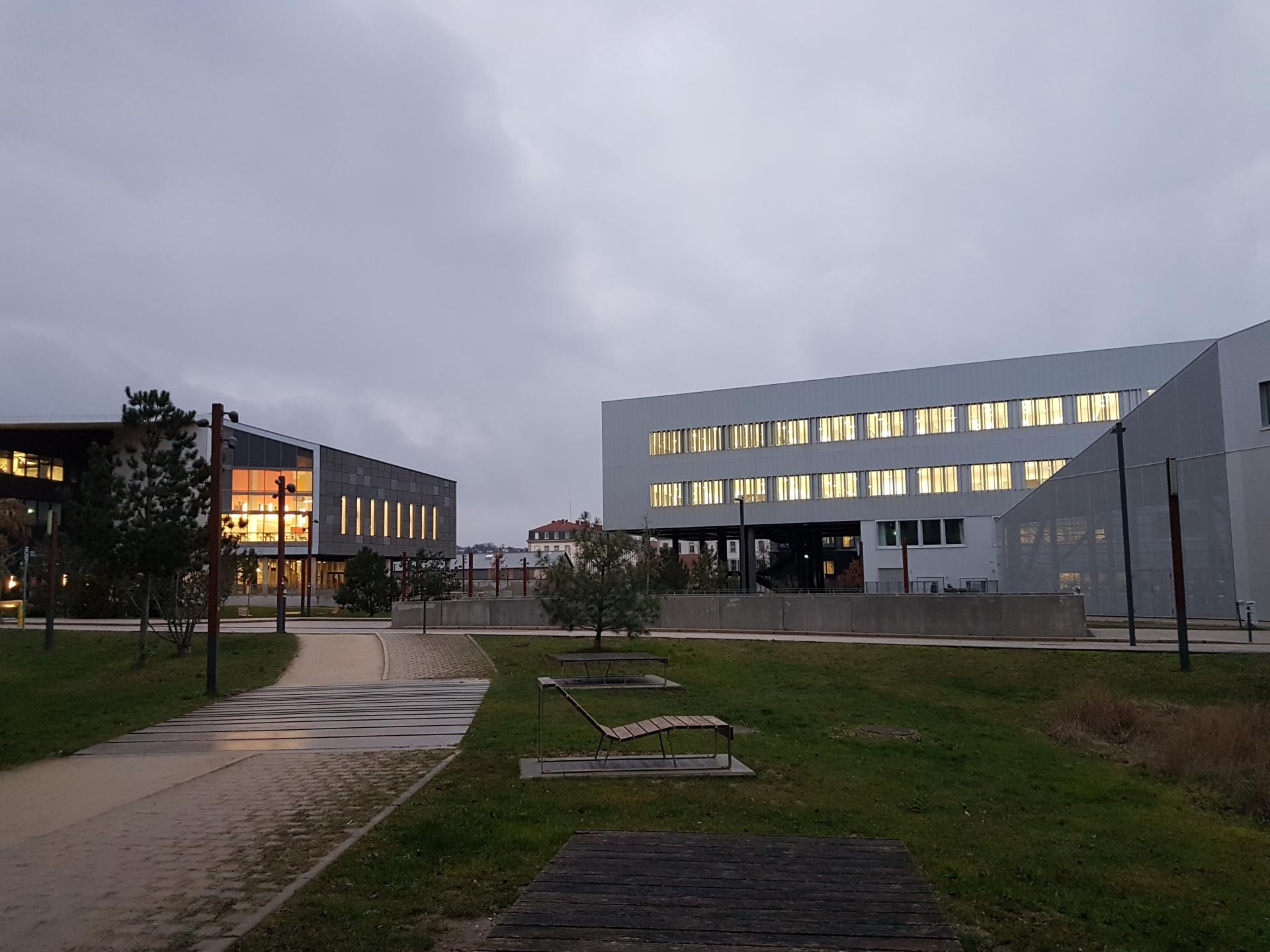
Since 2018, the three schools have been united on the ARTEM Campus, whose urban, architectural, and social project also contributes to keeping alive the spirit of l’École de Nancy.
Geographical Scope
Project Region
Urban or rural issues
Physical or other transformations
EU Programme or fund
Which funds
Description of the project
Summary
ARTEM is a project of pedagogical and scientific innovation in Nancy, France. It is also a Campus and an exceptional architectural and landscape project, all built from the heritage of the famous artistic movement: L’École de Nancy.
L’École de Nancy - Provincial Alliance of Art Industries - spearheaded Art Nouveau in France. Its essential inspiration lies in plant and animal forms. Based on research of advanced use in the crafts, to put the beautiful in the hands of all and bring art into the home, the artists of L’École de Nancy worked in the fields of art, design, and architecture. This internationally renowned movement, which combined creation, technology, and commerce, also had a strong environmental and social dimension.
In 1999, on the École de Nancy's Centenary, ENSAD Nancy, National School of Art and Design, Mines Nancy, Engineering School, and ICN Business School decided to revive this legacy and joined forces to create the Alliance ARTEM.
Together, for more than twenty years, they have been developing an innovative interdisciplinary pedagogy, which associates schools and socio-professional organizations around industrial, economic, artistic, environmental, and societal projects, in a stimulating environment and itself considerably inspired by L’École de Nancy: the ARTEM Campus.
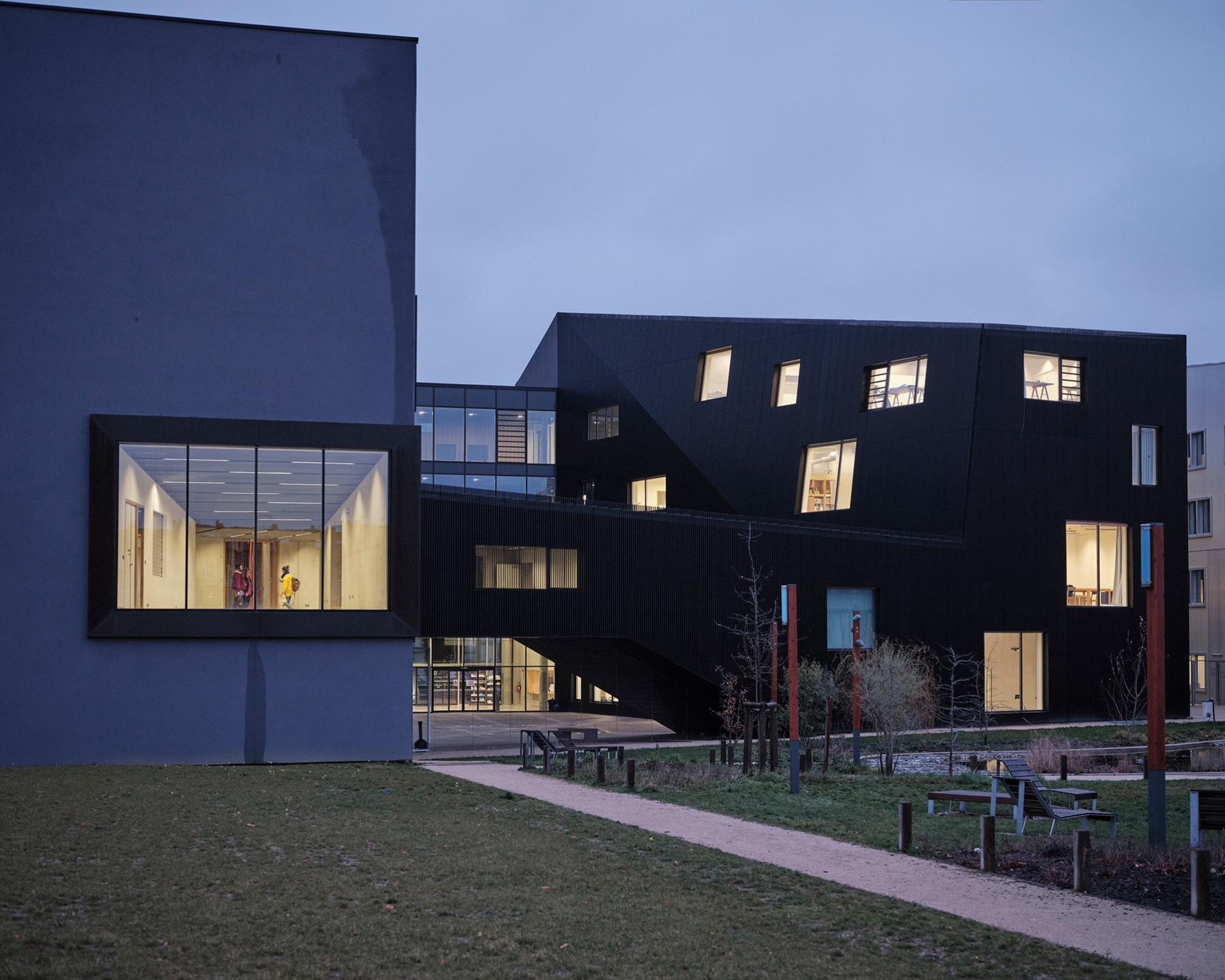
Since 2018, the three schools have indeed been brought together in the same space, which hosts other academic, scientific and student components and services. This university and urban project are located on the site of the former Molitor military barracks. It covers ten hectares and is home to 4,500 students, professors, researchers, and staff. It has gradually opened to the life of the neighborhood with its public gallery and park and the cultural events organized by the ARTEM Alliance for the public.
Key objectives for sustainability
The issues and attention paid to sustainability are embodied in several places in the ARTEM project: in its architectural and landscape project as well as in its educational programs.
Sustainability is at the heart of the ARTEM project, which is based on the ability of current and future generations to guarantee the ecological and social transitions that are now required of everyone. For several years now, Mines Nancy has been offering an ARTEM workshop on "Ecology and sustainable environment", which aims to offer a diversified and multicultural approach, based on scientific, societal, and human considerations. ICN, with its UNESCO Chair "Arts, sciences and sustainable development", organizes a scientific event every two years, bringing together researchers, artists, and designers from all over the world... and from the Campus! ENSAD Nancy, with its research program dedicated to the Design of environments, develops research-creation projects dealing with bio-sourced materials from the region.
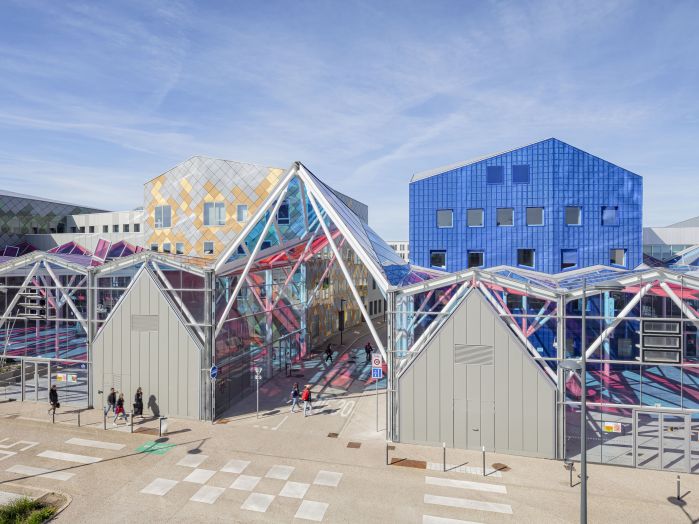
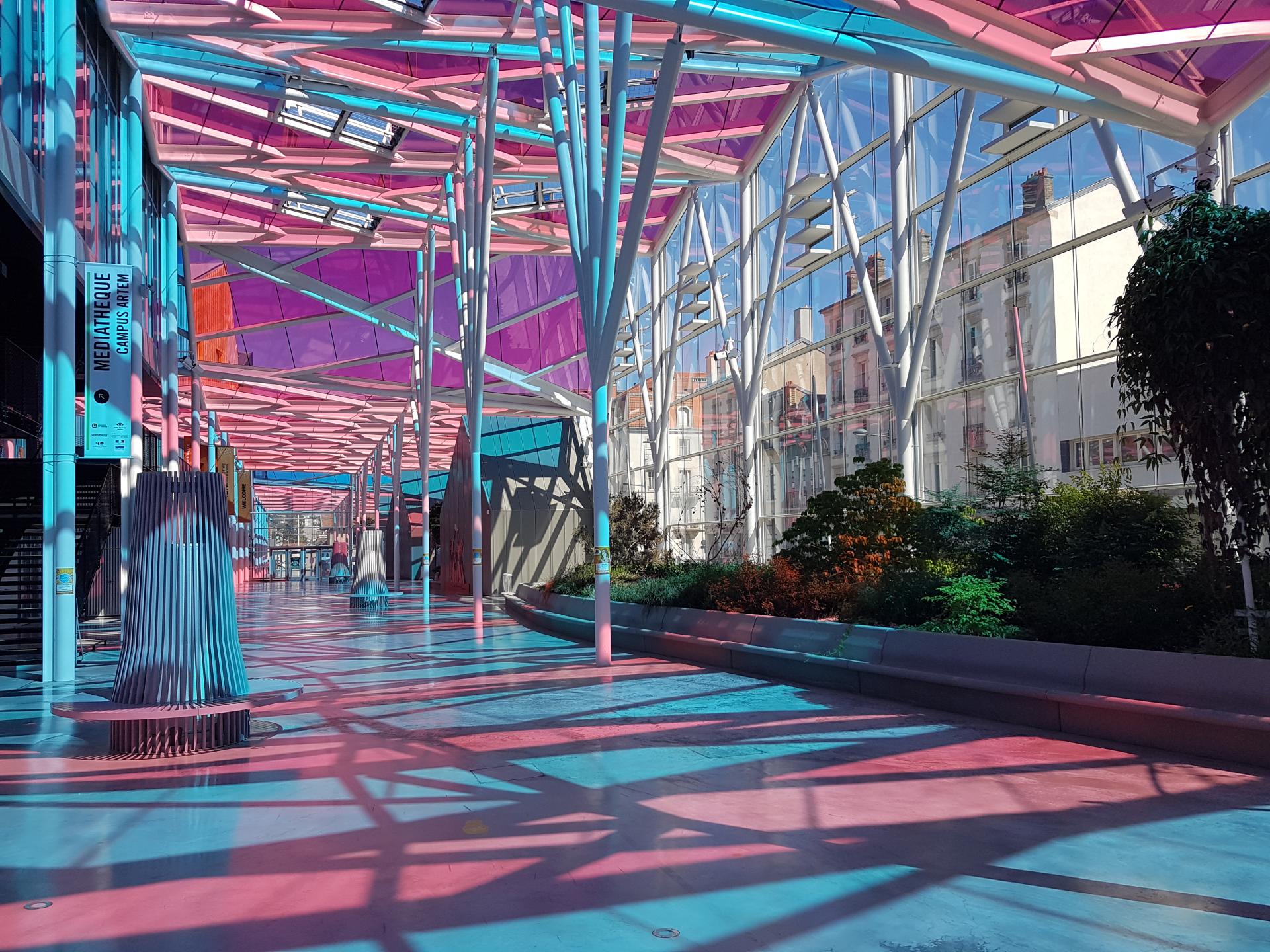
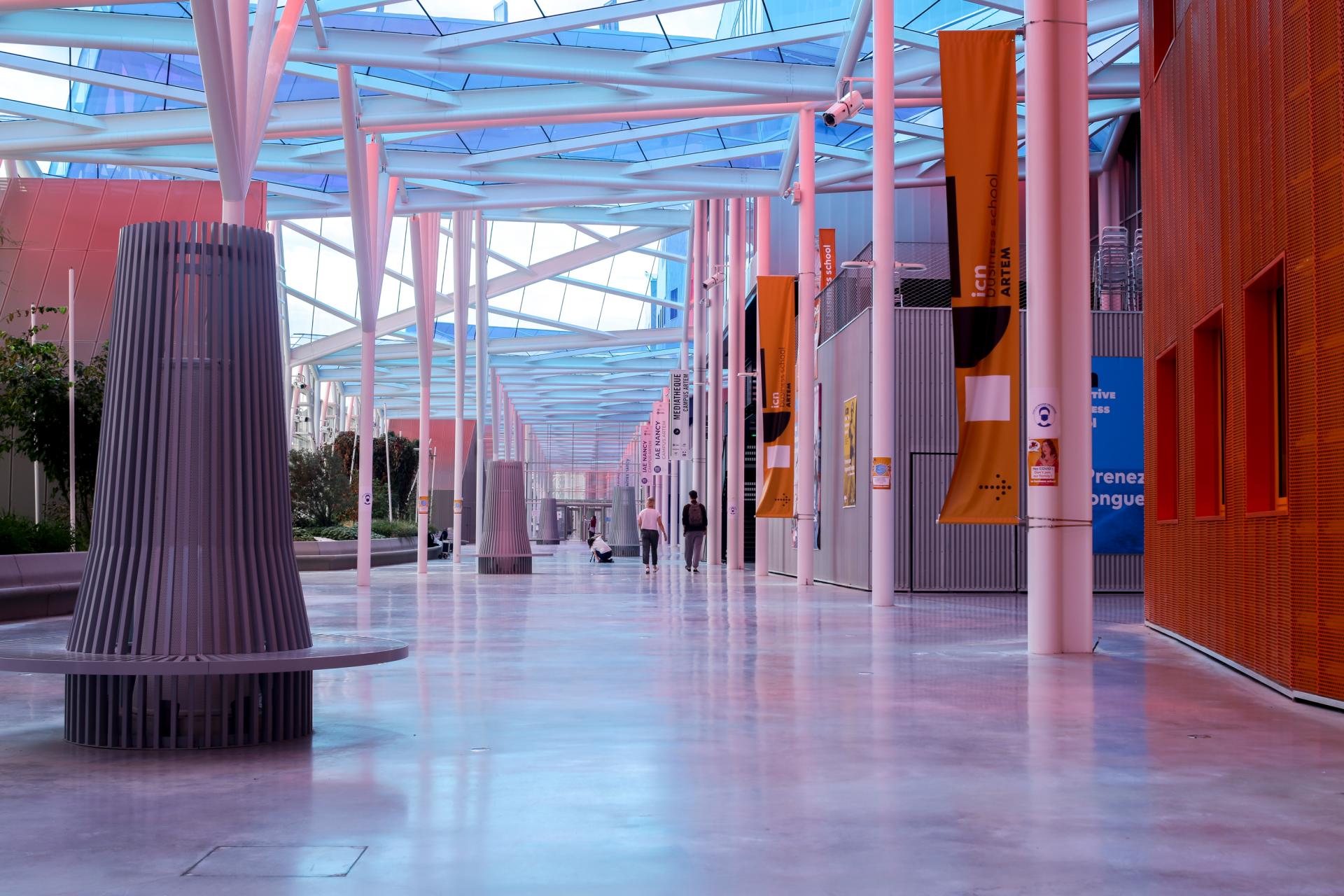
This environmental concern is reflected in the design of the Campus, a site of excellence that is also distinguished by its economic, energy and technical innovations, by its cross-disciplinary spaces and by its high architectural quality. The buildings, designed by renowned architects, naturally meet these challenges. The public spaces have received the same attention in their treatment. For example, the gallery, a covered / open street linking all the schools on the Campus via a 300-metre urban walkway, is designed with Canadian wells, rainwater recovery and inter-climate buffer systems. The Campus plant spaces are marked by the presence of dominant species, mixed with other trees to obtain harmonious contrasts. Ambiences of undergrowth, ponds and wetlands have been created and once again form a strong tribute to École de Nancy.
ARTEM is not only a place of knowledge and learning, but also a human, environmental, sensory, and aesthetic experience.
Key objectives for aesthetics and quality
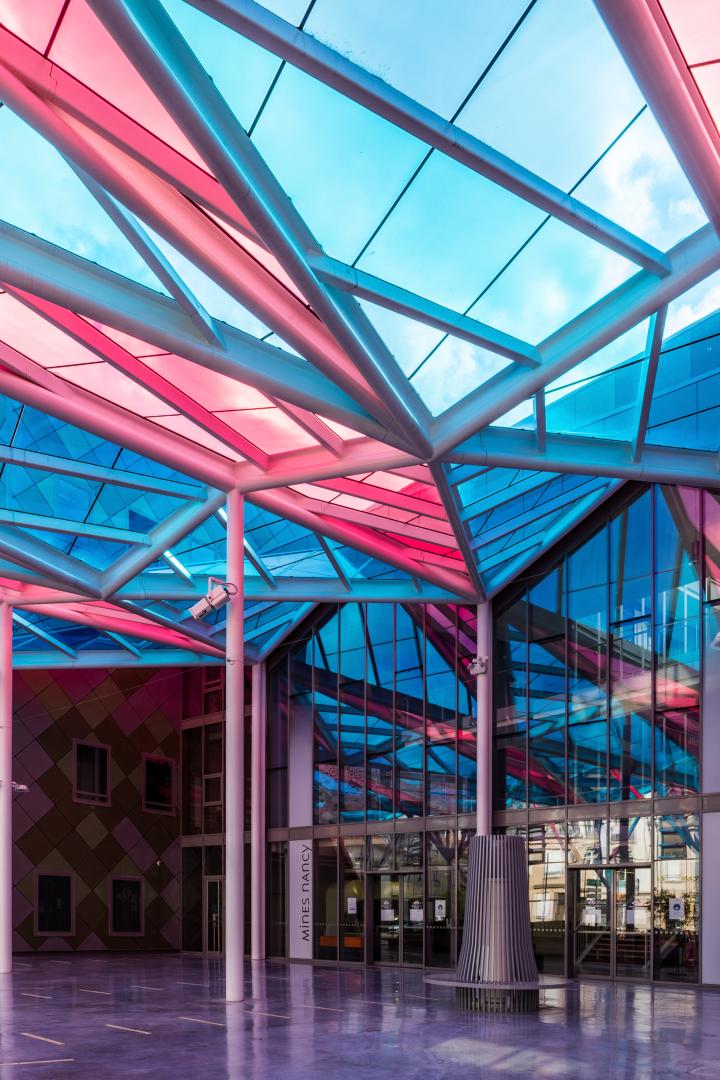
The Artem Campus is 97,000 square meters and it’s also an impressive gallery in pink and blue colors, whose glass roof design echoes the dynamics of the search for innovation and the association of different techniques, inspired by Nancy School. It offers a new form of public space linking all the components of the campus via a 300-meter-long urban promenade. This Gallery project is the very illustration of the spirit of Artem and is intended to be a place of exchange and mixing of students. This gallery gives a unity of place and breathes an Artem spirit. It is designed in the continuity of history and plays a structuring and unifying role through the establishment and connection of schools and shared facilities. Each school giving rise to the Gallery retains its own uniqueness and identity. Symbol of Artem, the Gallery is a cosmopolitan and spectacular space.
Beyond the campus itself, Art and design have a special place in the ARTEM programs. Engineering and management students are highly sensitized to artistic creation through their participation in the workshops run by ENSAD Nancy, which offer training in art, photography, cinema, and design.
The ARTEM experience is also embodied in the Global Design Master's program set up by the École des Mines and which also involves ENSAD Nancy and the National school of architecture of Nancy. Engineers are trained alongside designers and architects, and in the spirit of the work of Jean Prouvé, another illustrious figure from Nancy to whom ARTEM owes its name. Art and Science also intersect in exhibitions organized in the gallery of ENSAD Nancy, in the public space or in museums. Among the projects carried out, we can also mention the performances associating Art and Management experimented by the UNESCO Chair directed by ICN.
The wish for Art everywhere and Art for everyone expressed by l’École de Nancy is still a reality for ARTEM!
Key objectives for inclusion
Beyond bringing together all the students, teachers, and staff, since its creation, ARTEM has been concerned with opening its programs to a wide public. Thus, since 2010, ARTEM has actively participated in the “Rope of success”. This is a national program to help pupils from secondary schools located in rural areas or in priority districts succeed and ARTEM is an exception with its interdisciplinary project which aims to encourage the participation of all students. The specificities of the Artem Rope lie in the diversity of the tutors' profiles: engineering students, managers, artists, and designers, not forgetting the involvement of active executives from partner companies (Bouygues, EDF, etc.) and partner associations ("Avenir Passeport", " Undertaking as a woman", etc.). Artem Rope is made up of 15 partner establishments. For more than 10 years, more than 15,000 middle and high school students in the region have participated in the actions organized by the Rope Artem and more than 300 students have accompanied them in this adventure.
ARTEM has also launched its AGORA ARTEM conference cycle in which each school offers several conferences during the year open to students on campus but also to all citizens.
The Campus is also surrounded by green spaces open to everyone (students and citizens). It aims to be open to the outside world and accessible to all.
Also located on the campus are the PeeL, Lorraine student entrepreneurial center, the IJL, the Jean Lamour Institute with its 28,000m² dedicated to research and the IAE Nancy, School of management.
Results in relation to category
Artem has a pioneering pedagogy. By crossing the cultures of the engineer, the manager and the creative, the Artem Alliance also instills a unique pedagogy. Thanks to several common lessons (CB Days, Artem Workshops, Artem insight etc.), it invites students to think outside the box and promotes collaborative work. Enough to give students agility and an open mind conducive to creativity and innovation. Learning to work with people of different sensitivities is undoubtedly a plus for the future. Similarly, having a project and work experience in common is a way to understand the business world differently.
But the Artem spirit is not just about offering a different training, it is about exploring the boundaries of disciplines and the unity of place is important in the development of exchanges. The Artem spirit thus perpetuates the spirit of the 19th century to train citizens to understand all the universes with which they will be confronted in active life. Artem is therefore much more than a simple alliance of 3 schools.
And since Artem pedagogy is alive and constantly evolving, “Artemization” has only just begun.
Spreading this “Artem spirit”, enriching, exchanging on good practices, all while keeping and strengthening this strong specificity of support and support for local businesses and elsewhere is what the Artem Alliance wishes. It will therefore continue to work with the Nancy territory but also wishes to create an international Artem community through several cooperation that will be offered with partner schools at European and cross-border level.
How Citizens benefit
The challenge of ARTEM lies in its innovative pedagogy as well as in its application in everyday life.
The Campus physically embodies this objective. The Gallery, the Media Library and the park are open to the inhabitants of the neighborhood. During the National Heritage Days, guided walks are an opportunity for the inhabitants of the neighborhood and the Metropolis to discover and physically experience the architectural and landscape project of the ARTEM Campus.
The university media library is another public space. One can come here to read, consult documents and archives, and discover, through exhibitions or digital presentations, the heritage collections kept in the storerooms - many of which date back to the beginning of the 20th century - and which bear witness to the history of the city and the Ecole de Nancy.
The amphitheater at the entrance to the Campus regularly hosts public lectures, and in its art center, on the Campus and in the City, ENSAD Nancy organizes art and design exhibitions throughout the year by students, French and foreign artists, and designers, and sometimes also with scientists. This is notably the case for the productions developed in ARTEM GameLab, a training and research space for students and dedicated to video games.
Through some of the projects developed in the ARTEM Workshops and in ARTEM Insight, ARTEM projects are developed on a scale 1 in the city. This is the case, for example, with the productions of the Fabcity Workshop, which aims to explore the possibilities of a manufacturing, participative and circular city, or with some of the initiatives born in the Stand'up Artem incubator. One example is the Mollis Collection, a range of enveloping and soothing objects designed to improve the quality of life of frail people and to accompany them in medical and social care facilities and collective spaces or in their daily lives at home.
Physical or other transformations
Innovative character
Artem is a one-of-a-kind alliance of excellence inspired by the famous Nancy artistic movement, whose project aimed to combine the arts, technologies, and commerce. ARTEM is therefore the result of a common history forged over several years with the project of bringing together on the same campus the engineers of Mines Nancy, the business students of the ICN Business School and the students of the National Superior of Art and Design School.
The Artem Campus is a unique and original place which aims to be the symbol of the Alliance through its innovations in ways of saving energy, its challenges, and its spaces of transversalities.
Artem Campus is not just a "building" and the Artem spirit preceded the real estate project since we have been talking about Artem since 1999. And today, this building acts as an accelerator of the spirit Artem.
Thus, unlike other Alliances that may exist, the Artem Alliance is the only one to bring together students from the 3 schools on a single campus, with a strong sense of belonging. By moving onto a single campus, the 3 schools are thus opening a new page in their history, resolutely oriented towards creativity and innovation. This common campus allows them to create even more synergies with the daily cohabitation between students, teachers, and staff from the 3 schools.
Especially since the Artem campus offers students shared spaces promised to the latest digital developments allowing the crossing of disciplines, meeting, and mixing. These shared spaces include the media library which has the particularity of integrating the collections of the libraries of the 3 schools, several amphitheaters, the Maison des Langues which supports the pedagogies specific to each of the schools and is part of the perspective of lifelong learning, CROUS Lorraine and the Student House.
Learning transferred to other parties
The ARTEM 2030 project aims precisely at widening its partners.
Almost twenty years of practice, observation and monitoring have validated the relevance of transversality in the training process and its added value in professional integration. Today, several higher education institutions are trying to decompartmentalize, rather by juxtaposition, but without proposing a progression in practices as fine as that of the Artem Alliance. This proven experience also allows Artem to launch training programs outside the founding schools.
The ARTEM pedagogy specifications are currently being drafted. It will allow the transfer of the know-how and the acquired experience to a large national and international community: higher education institutions, professional organizations, communities. In this perspective, ARTEM is considering the creation of the ARTEM Academy which will propose several programs: summer schools for students willing to experiment interdisciplinarity, short or diploma courses open to professionals, and finally, personalized accompaniments. These projects can be conducted on the ARTEM site or online: the pandemic crisis allowed the experimentation of new pedagogical shapes which are now transferable for new organizations.
With the companies and professional organizations of the territory, ARTEM plans to better disseminate and share the experiences carried out to encourage them to call upon the skills acquired by ARTEM graduates and thus develop in several fields - such as production, construction and planning, well-being, "care" - the approaches developed by ARTEM.
More widely, it is with young people that a new project could be conducted. The skills and knowledge provided by ARTEM could indeed serve as a support for them to orient themselves towards professions that have yet to be invented, as well as to live better.
These ambitions are all part of the program defined by ARTEM for the period 2021-2030.