Synagogue Square
Basic information
Project Title
Full project title
Category
Project Description
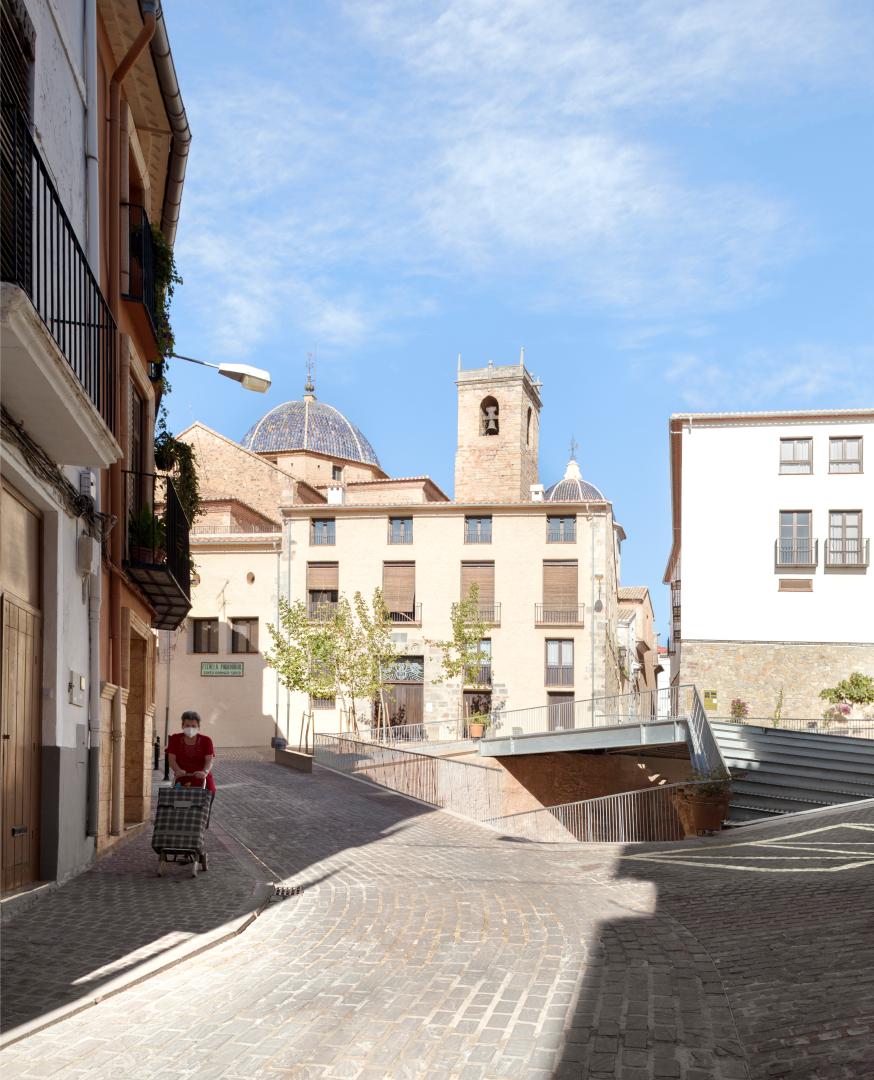
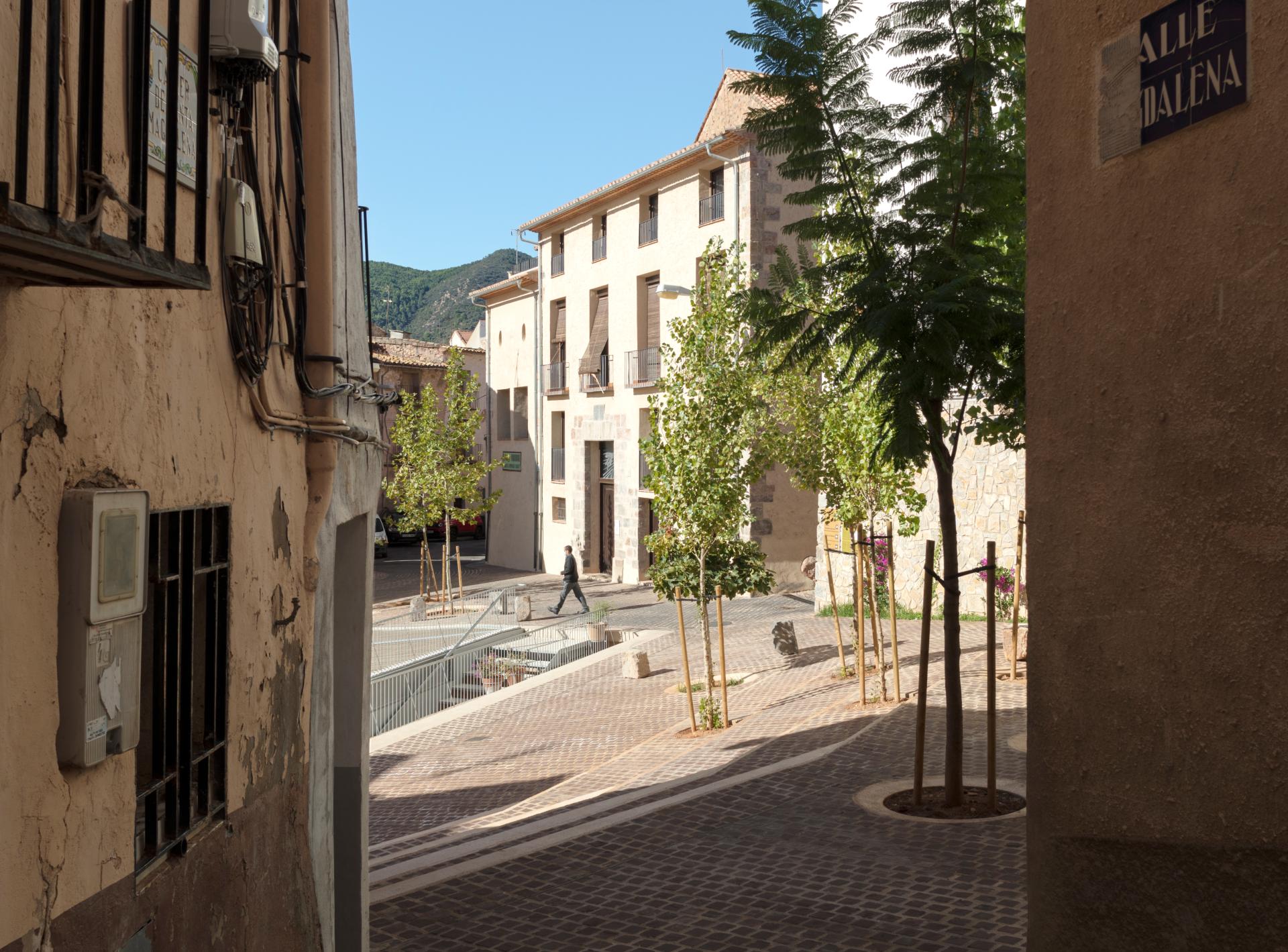
The idea was designed from an inclusive perspective, to improve the quality of life of people in the neighborhood. The project tries to reconnect the different levels of the place, building a floor with a continuous paving of anti-slipping stone as an adaptation of the traditional paving system. The connections with the streets are solved with soft ramps and with stairs of small height, to facilitate the daily displacements of the elderly people.
Geographical Scope
Project Region
Urban or rural issues
Physical or other transformations
EU Programme or fund
Which funds
Description of the project
Summary
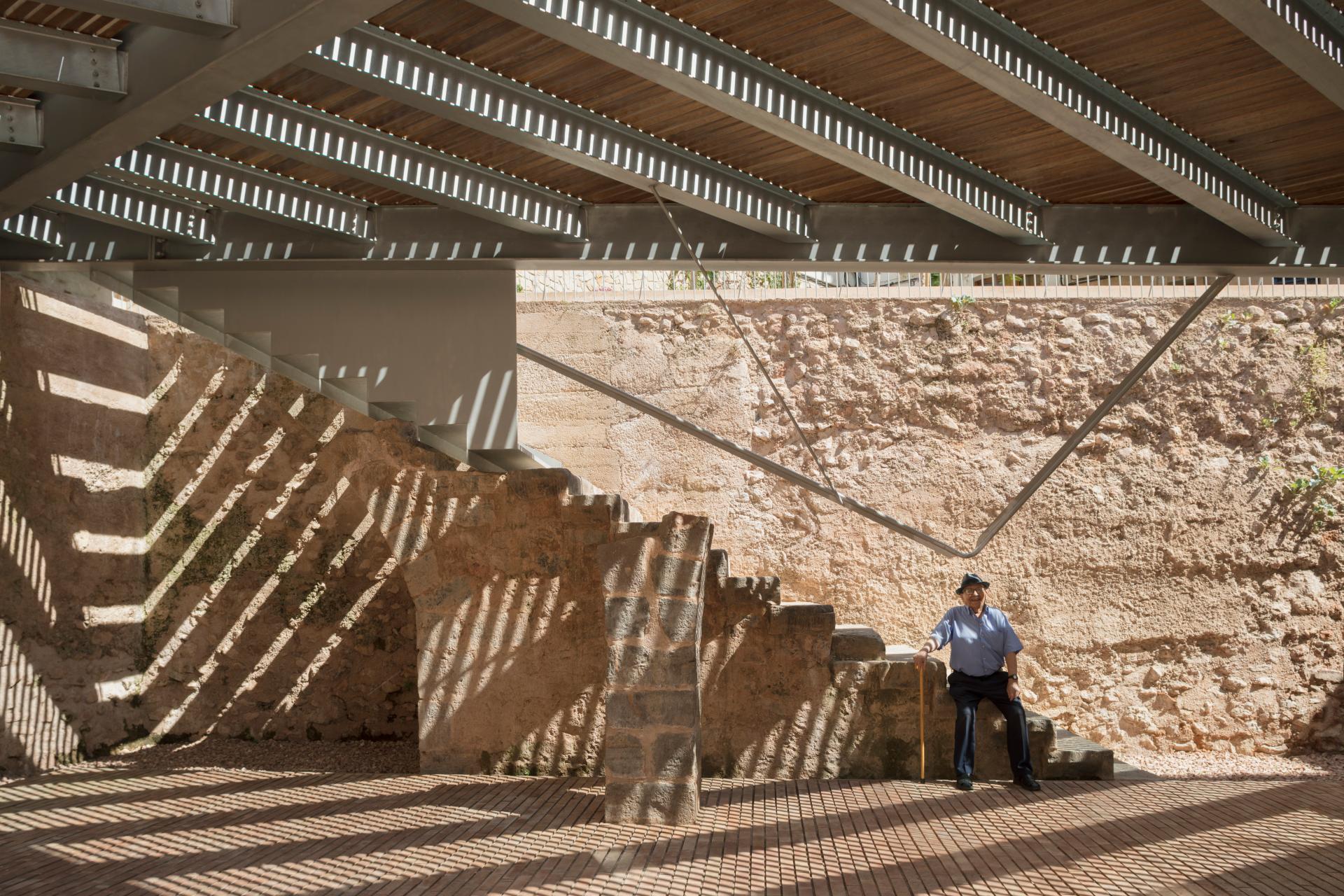
The project is an urban regeneration and heritage intervention, located in the Historical City Center of Onda, from de Islamic period (s.XI-sXII) declared as a Monument of Significant Cultural Interest with the Monument category in 1967. The square is a void in the medieval city, in a topographic area, close to the archaeological rests of arabic medieval palaces and the Chistian Church. This square was a social meeting space in the past, for agriculture uses or as a playground of a children’s school. But in the last decades was used only as a parking lot, degradating the quality of the space. In 2016, during an archeological research, an enclosure of medieval rammed earth walls reinforced with stones and the rests of a stair and pilasters of arches were discovered 5 meters deep in the ground.
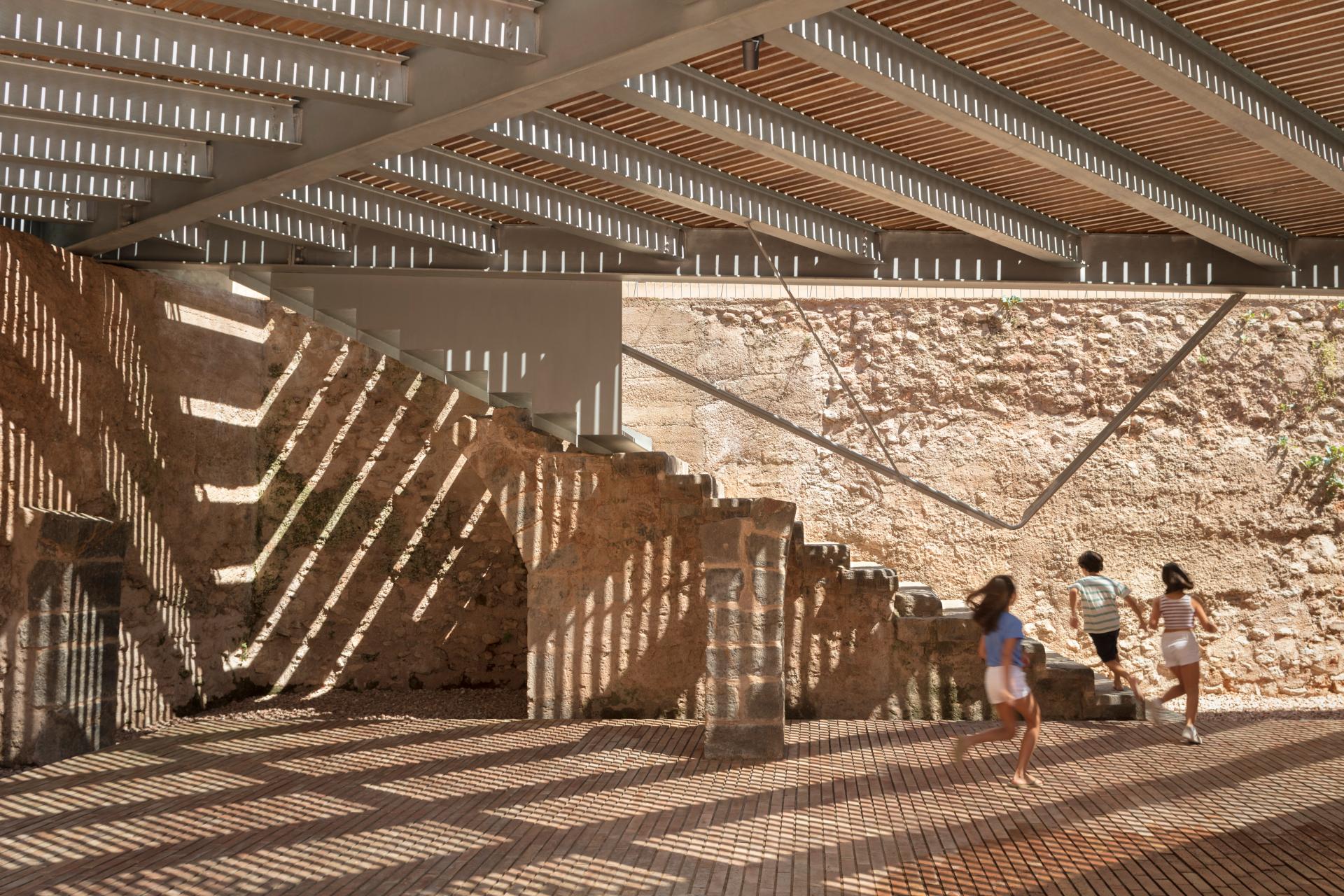
Conservation status In the archaeological site were discovered the remains of a large space 15x15 meters size, from an Andalusian raft of the 12th Century surrounded by 1,40 meters thick walls. This space was reused during the 13-14th Century, during the Hospital Christian Order time, building 4 lines of stone arches and a Gothic staircase from a civil or religious building. The aim of the intervention is to recover the interest and urban life of the neighborhood with an evident depopulation, from the reintegration of the archaeological site to the rest of the square and restoring the connexions to the streets that were lost during years in the archaeological works.
Participatory Heritage. The design was adjusted through different meetings with neighbors and residents of the neighborhood, to adapt to the different particularities: people with reduced mobility, small businesses, preferential routes, needs of meeting and play spaces...
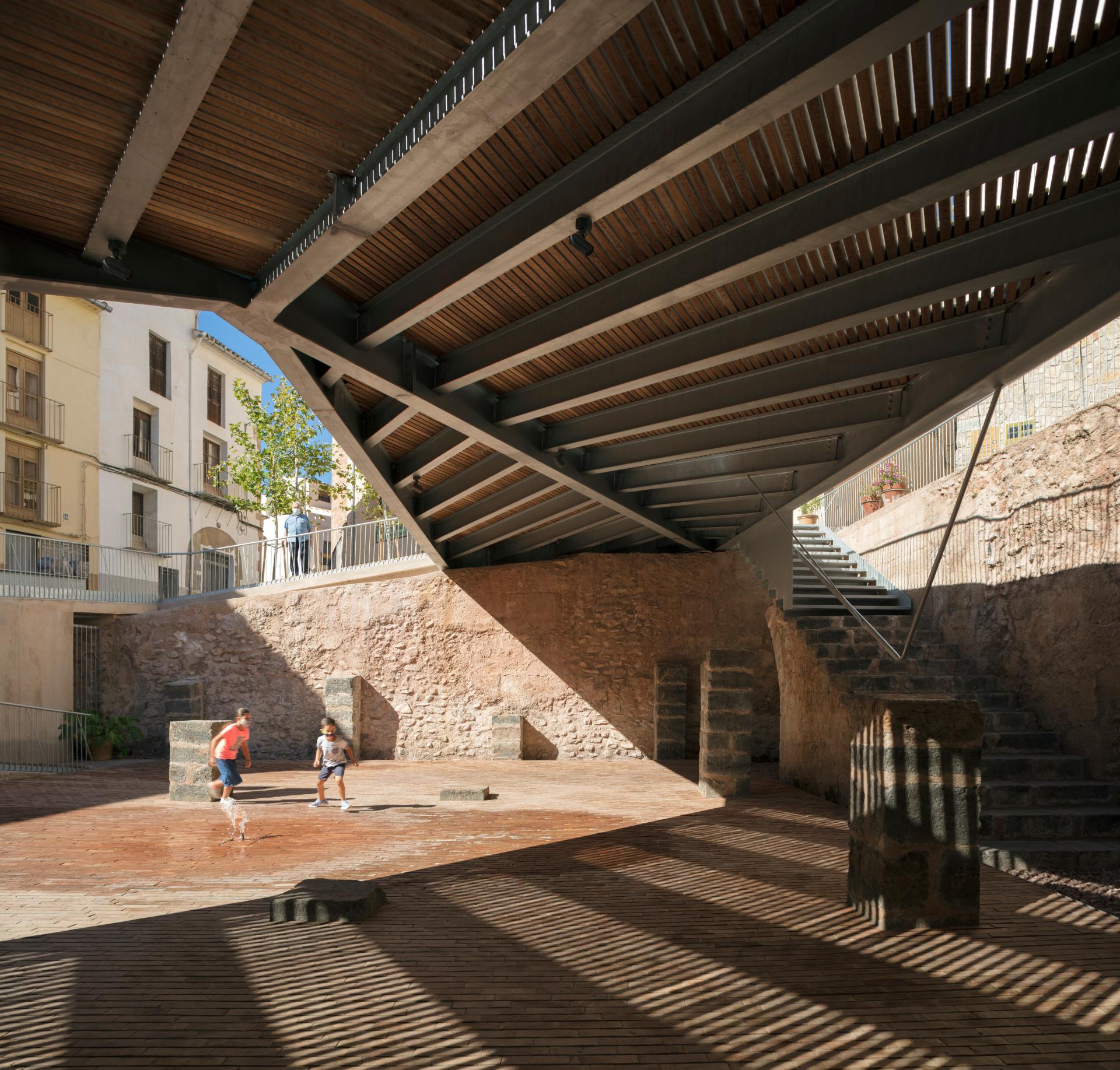
The project was designed from an inclusive perspective, to improve the quality of life of people in the neighborhood. The floating plaza is a continuity of the public space of the surrounding streets, which overflies the archaeological space.
Key objectives for sustainability
-Urban regeneration area to attract new inhabitants to the historical city center.
-Restoration of existent archeological site as a new urban square and archeological open air museum
-Use of traditional materials as red stone in pavements or wooden platform.
-Use of the archeological stones founded as urban elements as a fountain.
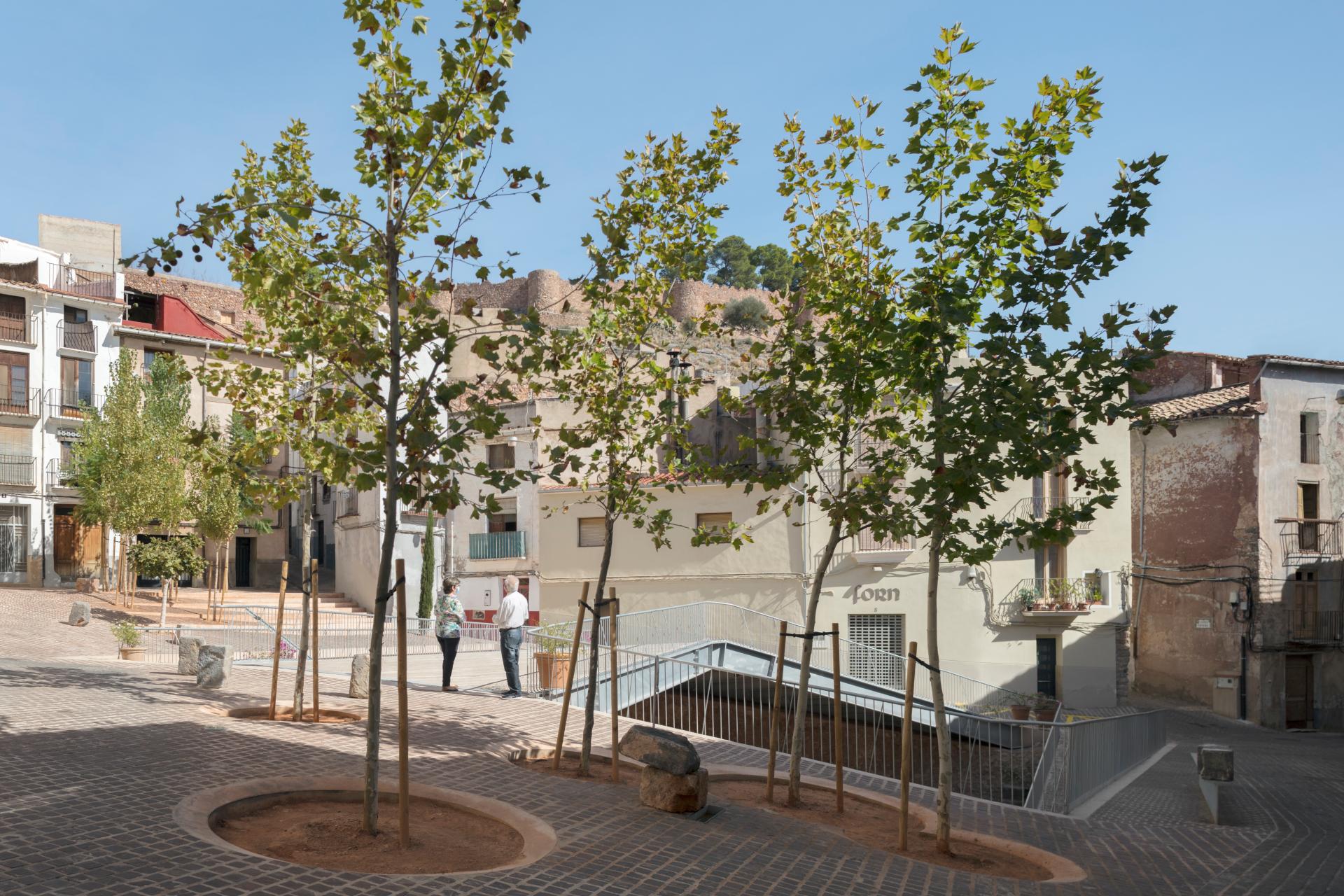
-Designing green urban spots with trees and vegetation in the city center, to regulate temperature in hot seasons.
Key objectives for aesthetics and quality
-An urban intervention introducing 2 dynamic spaces connected by a topography: the archeological site underground and the wooden platform square in the top.
-The wooden platform floating over the archeological site, is adapted to the natural and urban topography, connecting the different streets and levels.
-Square urban design based on traditional solutions (traditional stone materiality, ceramic pavements, green corners)
-Small scale design in different corners of the square, introducing neighbours meeting points.
Key objectives for inclusion
-Initial neighbours participatory process to co-design the urban solution.
-Reconnecting the different levels of the streets that arrive to the square, to recover the lost connectivity due to the archeological site, to all streets.
-Use the topography to adjust the urban accessibility to the existent neighbours houses.
-Adjust the small scale design to neighbours needs (Bakery load and download parking area, accessibility promenade, handline stairs for old people, water fountains, selection criteria of the vegetation and trees)
Results in relation to category
This project process has been recognized in different Urbanism Gender Awards, Heritage and Architecture Awards:
-Gender Urbanism Award GVA Valencian Government in 2021
-European Heritage Public Space Award AADIPA 2021
-Spanish Biennale Architecture Selection 2021
The positive impacts in the area, after the square finished works are:
-New Houses Rehabilitation in the area (2)
-New commerce Opening in the square (1)
-Old traditional commerce keep activity in the square (1)
-Existent public buildings keep activity in the square (2)
How Citizens benefit
Between 2014 and 2016 it was designed a City Center Masterplan for the urban regeneration looking for attracting new people to rehabilitate and live in the city center district. This project was proposed inside a public participatory process due to the strategical position, close to the main church, but also close to the more degraded area. After the long and traumatic archeological excavation between 2016 and 2018, neighbours started to claim and ask for a project for the area.
From the beginning it was planned a Design Participatory process to involve the commerce and neighbours that where living in the area:
-Initial Neighbours Participatory Process to focus the design solution, meeting in a public building next to the square. (January 2018)
-Neighbours on site meetings during the Works to adjust solutions. (October 2019-December 2020)
-Neighbours Appropiation opening celebration. (December 2020)
-Newspaper articles explaining the project.
-National and International Architecture Magazines and Blogs publications.
-Program of Concerts, Tourism and Heritage visits, Theater Works, TV Programs Scenography.
-Close contact to neighbours and citizens, adjusting the details to needs and uses.
-Identity and involvement feeling from the citizens to the square.
-Good use and maintenance of the square from the neighbours.
Physical or other transformations
Innovative character
-The project proposes the recovery of an old city center included in a strategy to attract new people to live and work in an degraded area.
-The project recovers the historical identity of the place and transform the place into a new heritage and tourism attraction.
-The involvement of the neighbours in the project design and during the process of works..
Learning transferred to other parties
-This project can be an example of Historical city centers regeneration, as a collaboration to diverse administrations, technicians and citizens.
-The designing of an Historical City Center Masterplan where strategical interventions were selected
-The multidisciplinary Design Process that involved a diverse team (Archeology, Architecture, Heritage, Civil Engineering…)
-The application to a co-founding of the Project’s Budget in an Urban Regeneration Program (ARRU), in between City Administration, Valencian Government and European Administrations.
-Onda City Center MasterPlan. (2014-2016)
http://web.elfabricantedeespheras.com/pla-especial-de-proteccio-del-centre-historic-onda/
-City Center Urban Regeneration Program (ARRU 2018-2020)
https://www.onda.es/ond/web_php/index.php?contenido=descripcion&id_boto=274
-Sinagogue Square Project (2019)
https://arquitecturaviva.com/works/plaza-de-la-sinagoga-en-onda
http://www.elfabricantedeespheras.com/placa-sinagoga-onda/
-Awards
https://castelloextra.com/es/comarcas/onda/plaza-sinagoga-onda-suma-nuevo-premio-accesibilidad/
https://www.gva.es/es/inicio/area_de_prensa/not_detalle_area_prensa?id=928801