Parkly - places, people and urban nature
Basic information
Project Title
Full project title
Category
Project Description
Parkly transforms public places from grey to green, and makes them more social and fun with a modular solution. Parkly pocket parks are lively and buzzing places that attract both people and pollinators. Parkly is circular by design and the modular solution makes it easy to add urban green, plants and small trees in all kinds of urban environments. Parkly’s mission is to fast track sustainable urban change by connecting places, people and nature.
Geographical Scope
Project Region
Urban or rural issues
Physical or other transformations
EU Programme or fund
Which funds
Description of the project
Summary
Parkly is an impact-driven design tool to fast track sustainable urban change, square by square. We believe that public spaces of all sizes and shapes play a vital role in the change towards more sustainable cities. The fast transformation of public spaces is a driver for re-imagining, planning and realizing greener sustainable cities as a whole.
Parkly transforms public places with a modular, scalable solution that creates greener and welcoming public places. Parkly modules are easy to mix and match, scale up and down, and use in different locations: streets, squares, asphalt courtyards, school yards and more. We also work with like-minded changemakers to link for example rooftop beehive projects with pollinator-friendly pocket parks at the ground level. Adding urban green helps alleviate problems like the urban heat island effect or the management of runoff waters as well as communicate the importance of urban ecology and resilience. Urbanites globally increasingly aspire for greener cities and Parkly is a tool to make it reality.
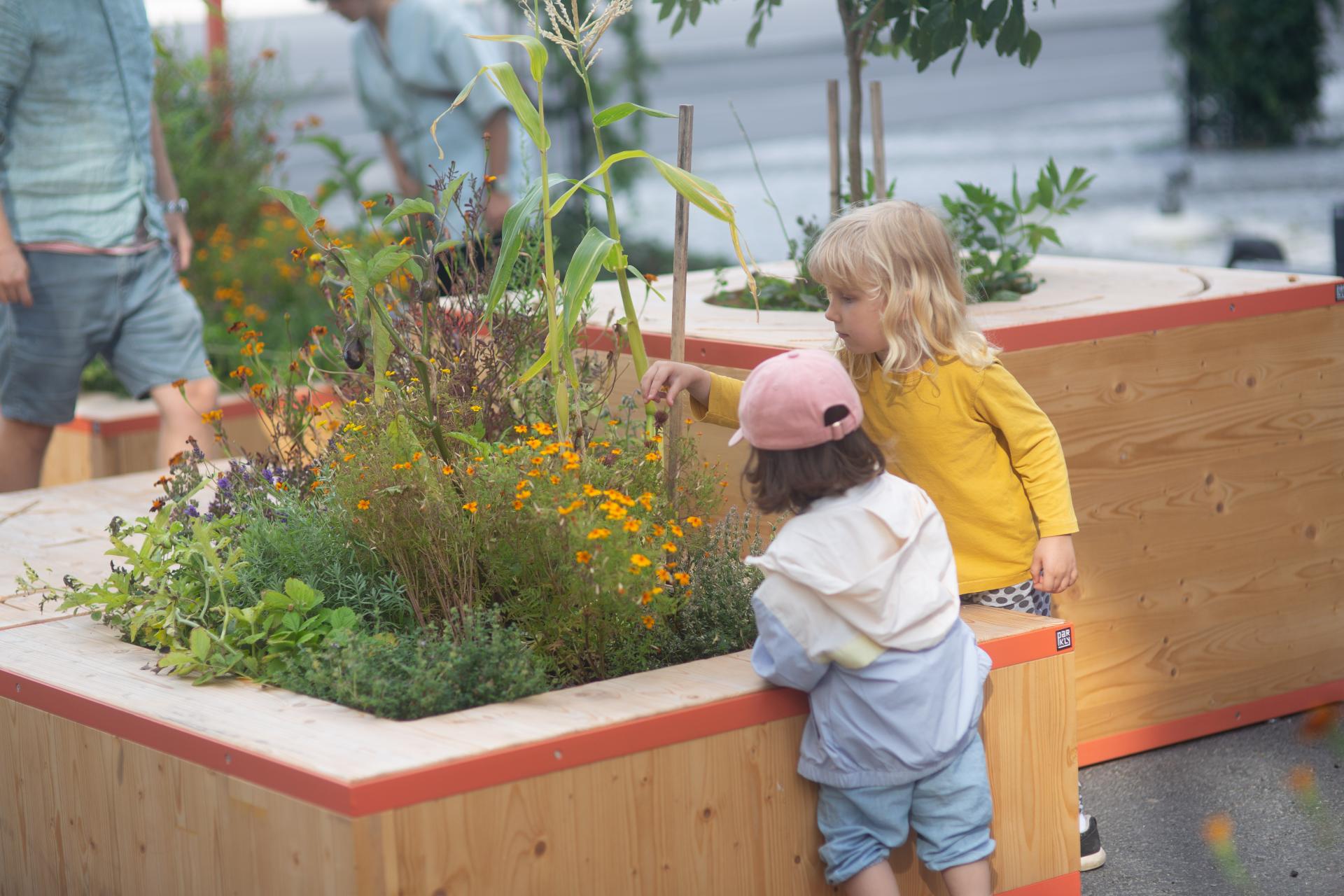
We use pollinator-friendly and edible plants to support biodiversity and deepen citizens' connection with the plant world and the ecosystem as a whole. The design and composition of our modules place people close to the plants and encourages them to touch and use their senses.
Parkly is created with sustainability at its core. It exemplifies circular economy and strives for wise use of resources, and increasing green infrastructures and circulation of biomaterials in cities.
We founded Parkly in 2020 and launched it in 2021 and have since completed versatile urban space transformation projects from residential pocket parks and pollination stations to small urban gardens and neighborhood squares.
Key objectives for sustainability
Parkly’s mission is to pave the way for the green transition in cities by making the transformation of public places easy and inspiring. We think that everyone should have access to green and social public places in their everyday urban environments.
Creating green surroundings has a positive impact on our mental and physical health: as research shows, adding growing boxes in children's everyday environments improves their immune systems and employees with green window views are more satisfied at work. Nurturing urban green environments can also deepen citizens’ sense of care and connection with nature. Empowering people to participate contributes to a more sustainable world as a whole, for example, active participation and positive transformation of public places can result in empowerment for climate action.
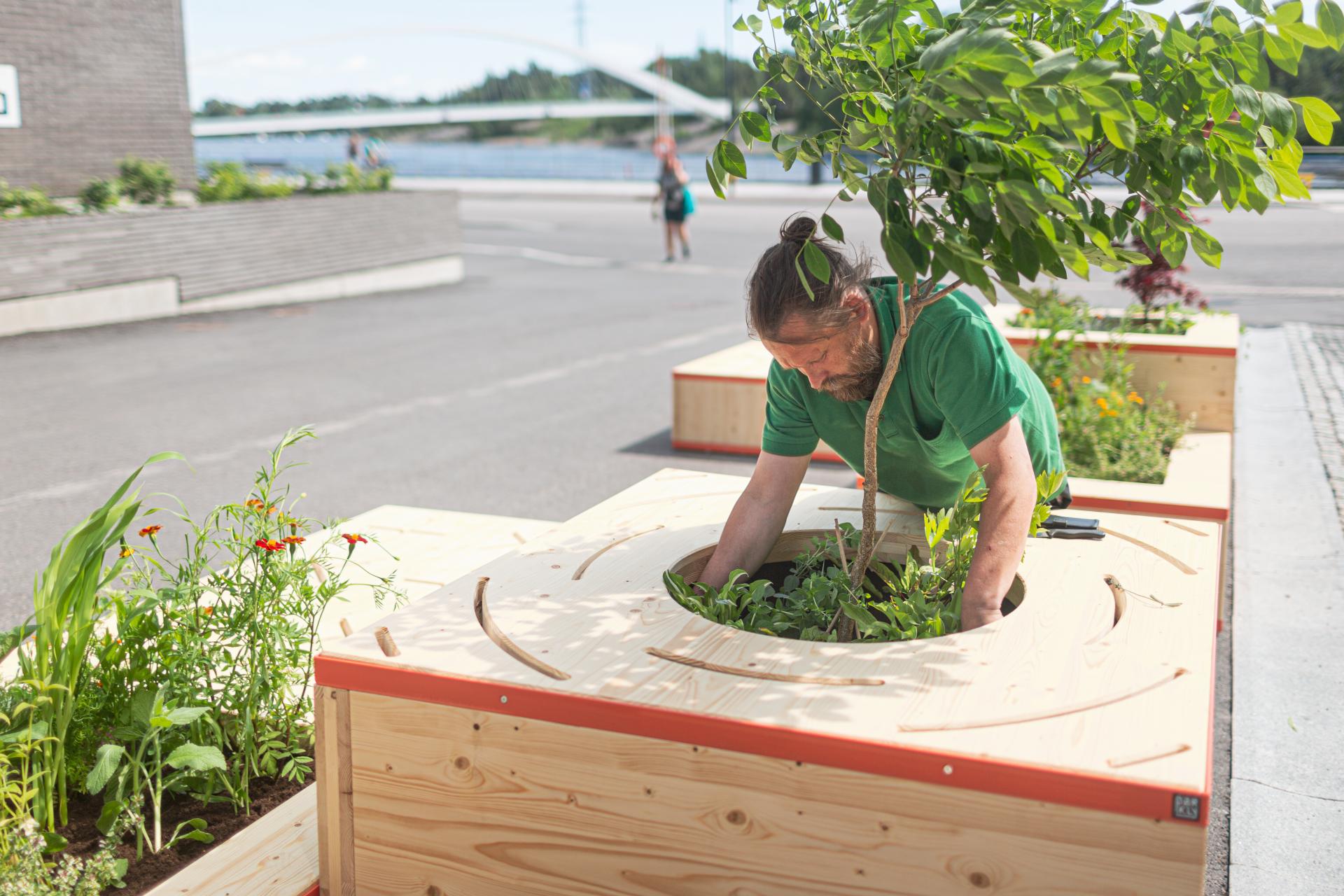
Parkly’s green modules add greenery in urban spaces from concrete yards and street corners to school yards and shop fronts. The planter modules have edible or pollinator-friendly plants to support urban biodiversity and edible cities. We circulate all biowaste, including small trees which are planted in parks once they reach a certain height. We utilize biophilic design methods and promote the use of nature-based solutions.
The modules are designed for circular economy: easy to maintain, store and replace parts. Materials can be recycled, metal frames have an almost endless lifecycle and the high-quality wooden plates are overhauled for several cycles until they are finally recycled. We think that durability, circularity and good design are the key factors of a sustainable product.
While adding more urban green, we work to preserve forests outside cities, too: for every Parkly module produced, we donate to protect 20 sqm of old-growth forest via the Finnish Natural Heritage Foundation, in 2021 totalling 1240 sqm. We are currently planning a match-funding model for the forest campaign and information design about forests for urban spaces.
Key objectives for aesthetics and quality
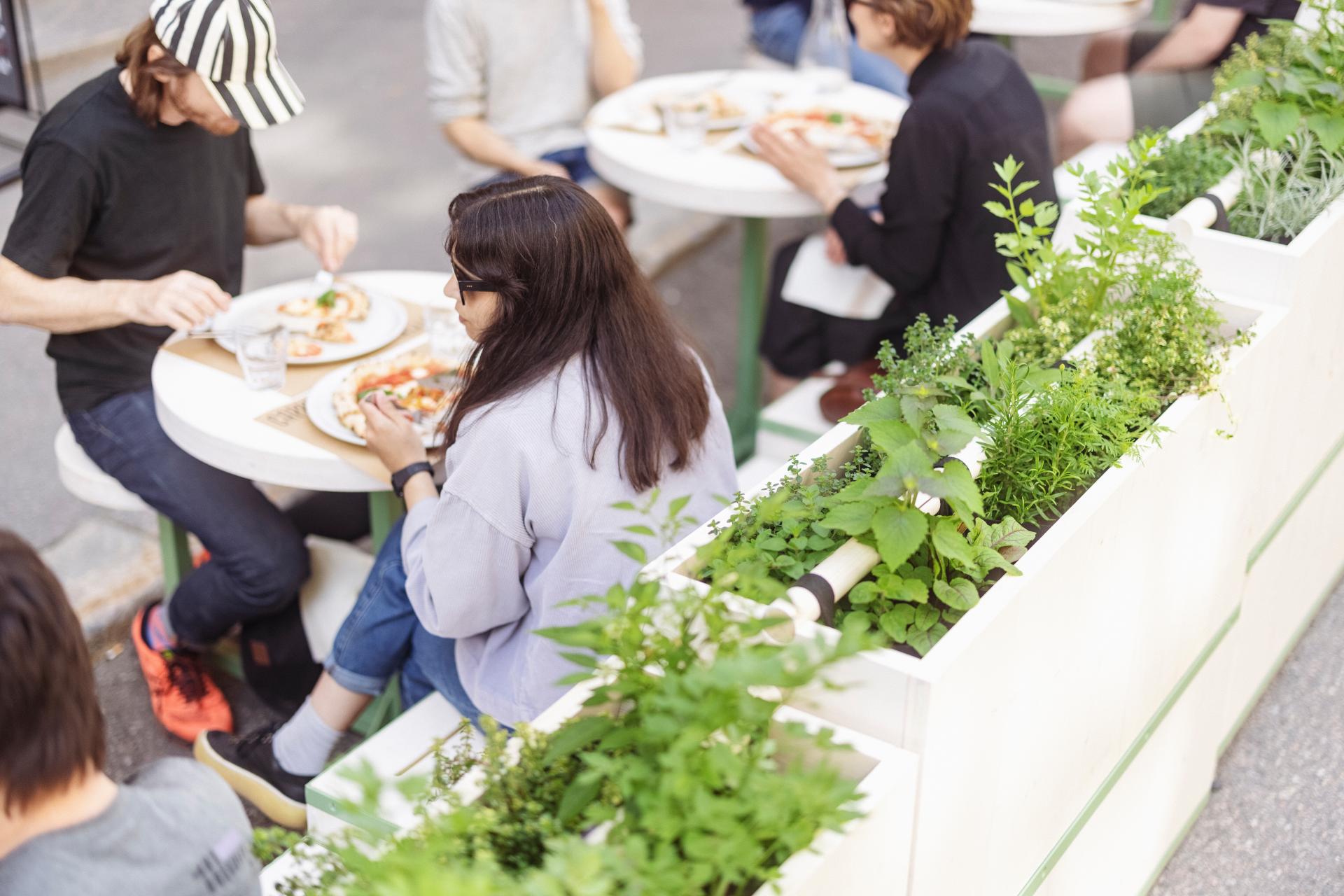
Parkly projects create welcoming places by combining different modules and functions together. The modules have a simple form language, attention to materiality such as high quality wood and color selection to add more color to urban environments. Wooden surfaces are comfortable to sit on, bring softness to built environments and pair well with plants and greenery.
Parkly is circular by design by choosing renewable, long lasting and high quality wood and metal, designing a smart structure for easy use, flat storage and delivery. Parts can also be changed if needed. Parkly is also a service - furthermore moving away from linear to circular. The design includes well thought details for comfortable use, quick assembly and easy storage.
The simple forms of the modules allow multiple uses and activities in public space as well as further designed and customized add-ons. Art and design installations are integrated in specific projects to add visual effects and interactive features.
The modules can be mixed and matched according to different needs in order to create fun combinations and highlight the strengths of different urban spaces and neighborhoods. The design is based on the philosophy of placemaking - they form a place rather than a design and leave room for the user's imagination. The modules and different combinations can be used for all areas of active public life: seating, socializing, play, parklife, urban gardening and even skateboarding.
Key objectives for inclusion
Parkly’s mission is to create inclusive, welcoming and accessible green public places. These places are platforms for people of all backgrounds and age groups to be present in our cities and to feel part of the urban community. The place can also function as a platform for exchange between the planners and the citizens, increasing participation of under-represented groups. Parkly projects are always based on the users’ needs in order to most effectively cater for the needs of local communities and districts.
Parkly makes urban design and placemaking easily understandable: by adding more seating and urban green, we can easily transform public places for the people and promote socially and ecologically sustainable cities. The simple design language and modular system makes Parkly accessible - anyone can design the essentials for a good public place. Parkly is also a tool to strengthen the connection between ideation and realization: the participants can see concrete results of their ideation in a short time span.
With our 3D & AR tool everyone can design and visualize their own Parkly projects in their preferred location. The gamification makes it fun and easy to participate - thus democratizing the design process of public places and communicating ideas in an understandable way. Parkly differs from other AR urban green visualization tools by working on a smaller scale, actually making it possible to add small trees and plants as opposed to larger green infrastructure projects.
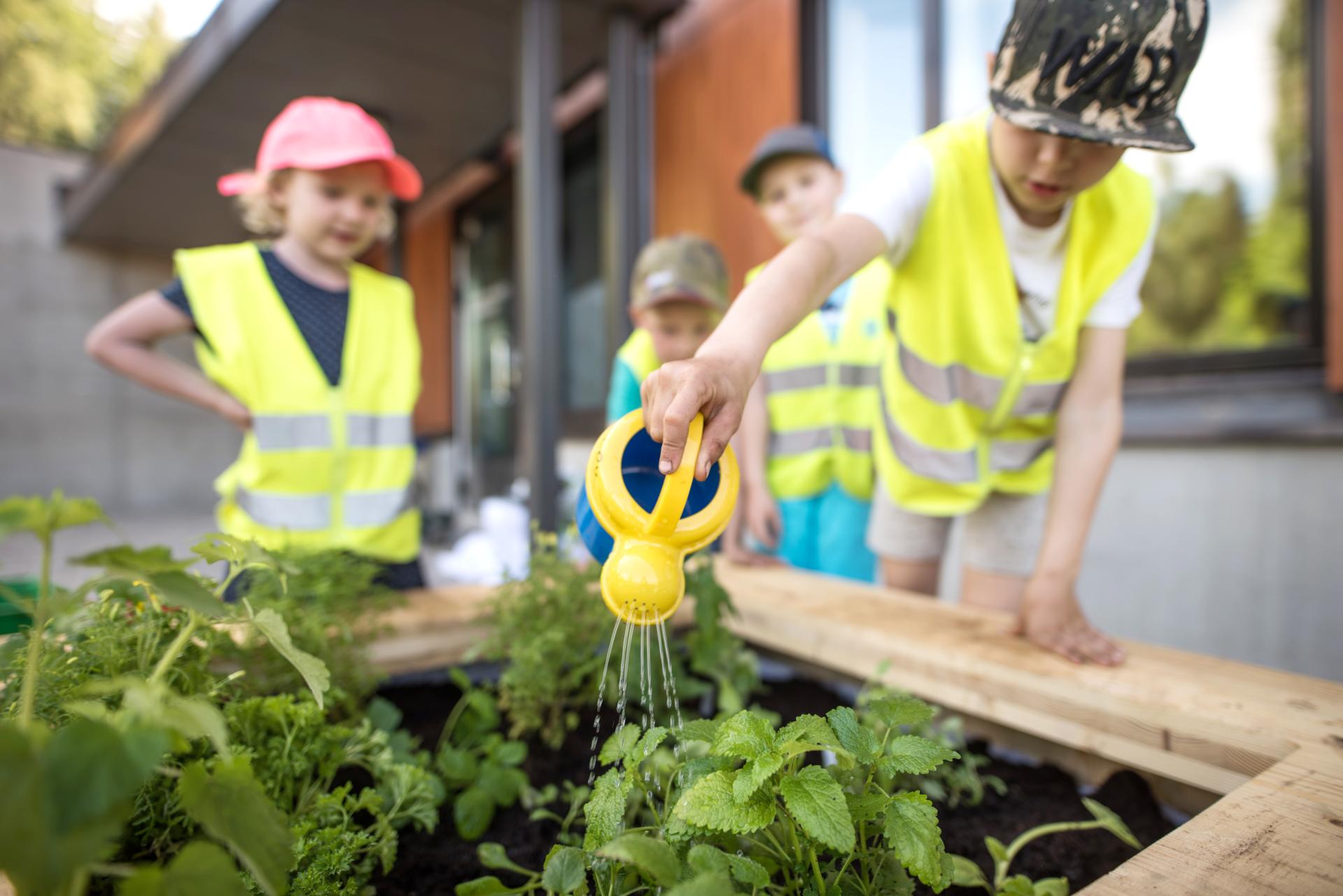
We carry our participation design to involve different stakeholders in the placemaking process. This includes for example urban gardening workshops and activities, urban design workshops and community events. Different sized planter modules are ideal for urban gardening for all age groups: the low ones for toddlers and the high ones for senior citizens. We use local service providers for the overhaul and maintenance of the modules, supporting local companies and makers.
Results in relation to category
Parkly has proven its concept through various projects: cities need innovative and smart solutions to add more urban green in different sized public places in order to increase liveability, sustain environmental health and support biodiversity. As opposed to slow and expensive transformation, Parkly makes the application of green infrastructure easy to adopt and scale up. Concrete transformations truly highlight the importance of urban green and the difference between grey and green public spaces.
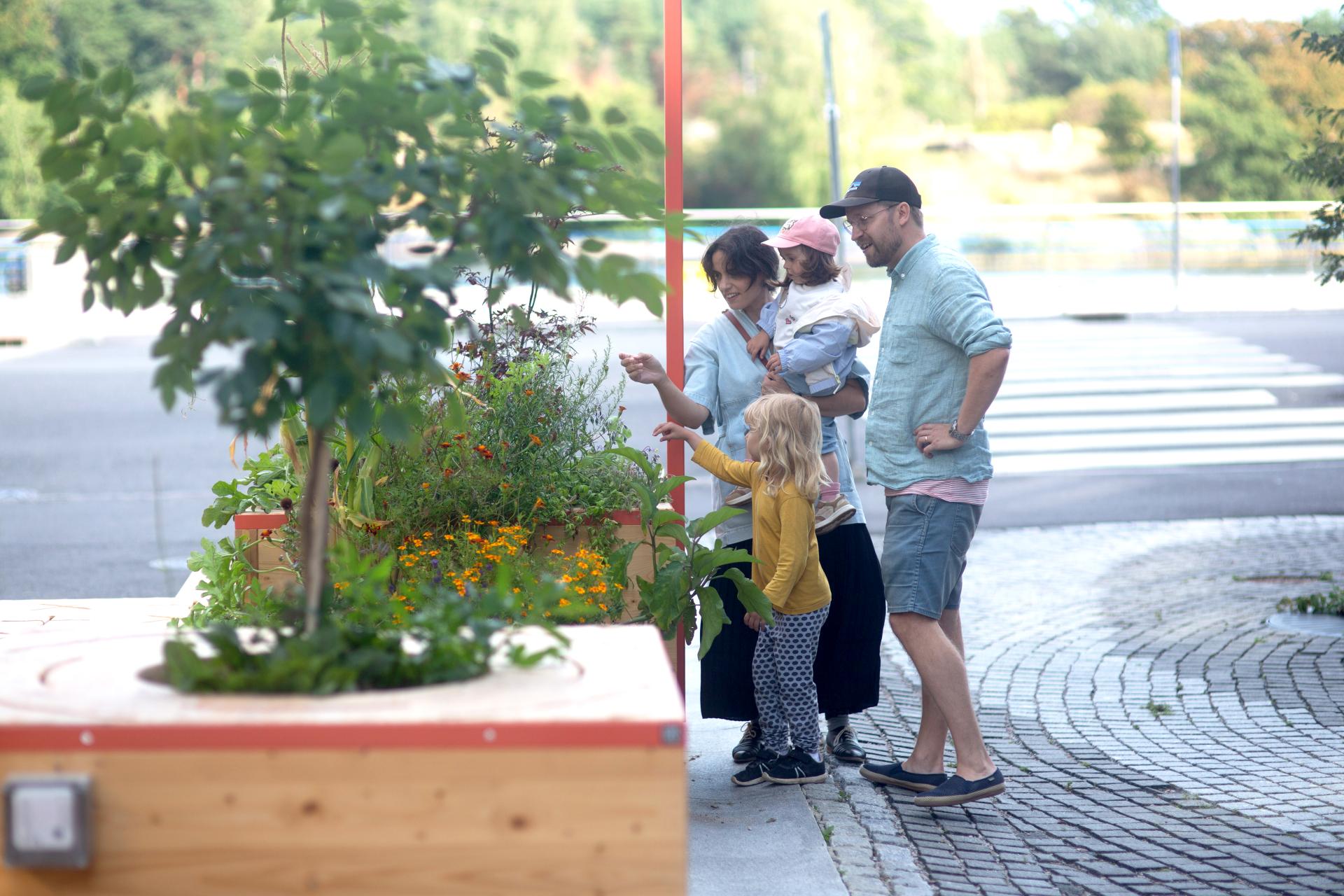
According to the feedback and data we have collected in our projects, citizens really appreciate the added green in urban spaces. From pocket parks and pollinator gardens to urban farms, greenspaces are considered to bring a sense of softness and warmth in urban environments, as well as provide more color and life. Even a relatively small amount of green modules makes a significant impact in residents' living experience, for example in the case of our project in the district of Kalasatama in Helsinki. According to the residents, the pocket park has had a positive impact on the streetscape and added a village-like feel to the neighborhood, becoming a popular meeting spot especially with families with small children who like to examine the plants.
Parkly modules have also helped daycare yards with little or no green to bring much needed greenery and urban gardening activities in the yards. Parkly parklets have transformed streets to be more green and accessible for people and greener outdoor meeting places have gathered people and plants together in campus areas.
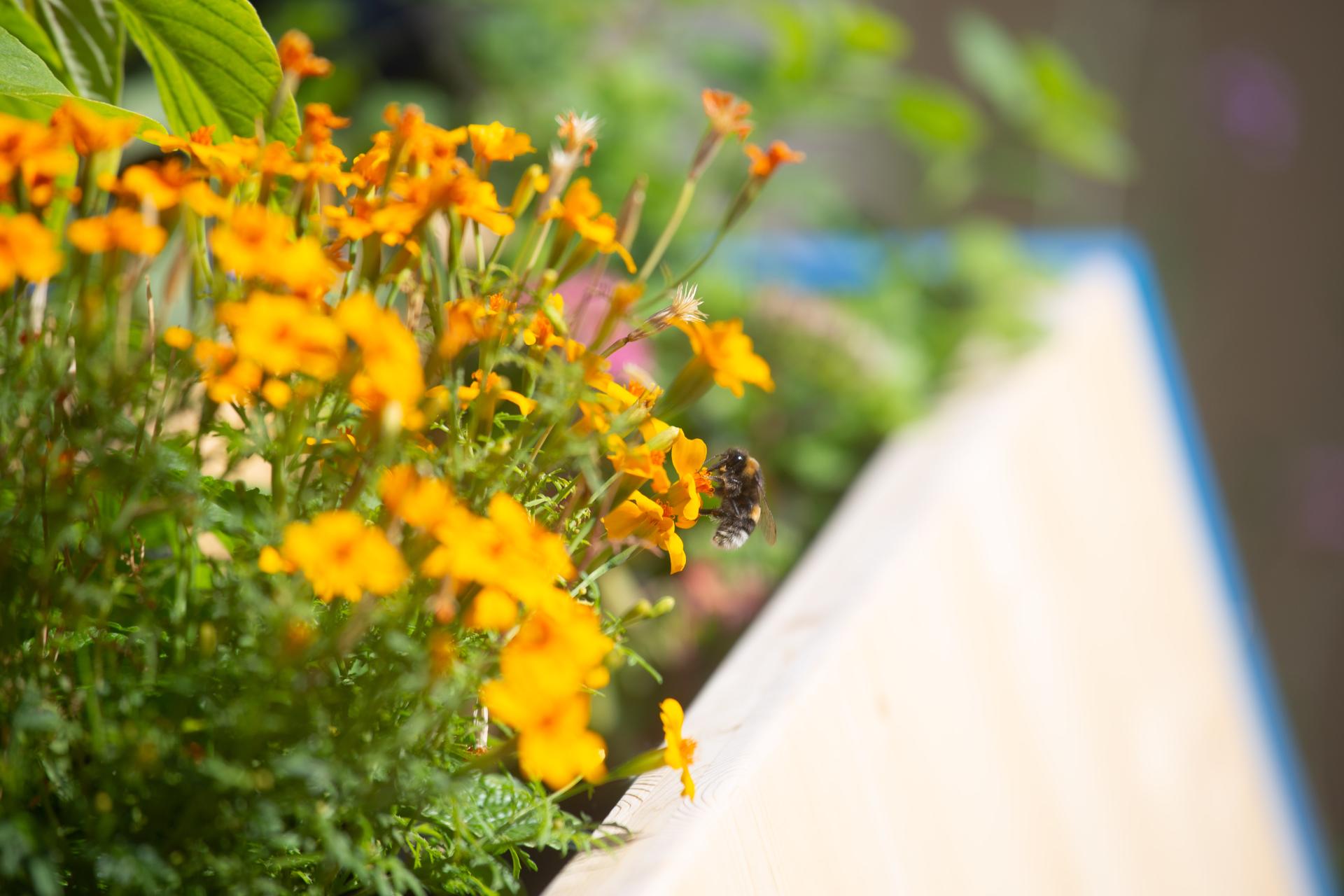
The plants attract numerous insects, for example bees, butterflies, hoverflies and ladybirds. Some plants are also very popular for small birds. Edible plants have provided new experiences of “the edible city” to all age groups.
How Citizens benefit
The Parkly concept is designed with a human-centric approach: we make places for people to connect to others and nature. Parkly is based on our findings in people-led placemaking projects and studying the use of public spaces.
Parkly projects can be co-designed together with different user groups: due to the simplicity of the forms, different module combinations are easy to ideate and visualize. Our ParklyCreate tool is designed to do just that digitally: to produce easy and fun visualizations which can be viewed in augmented reality. ParklyCreate makes designing easy and fun for all skill levels and helps democratize the design process.
Citizens are participating in Parkly projects in different ways. Based on stakeholder mapping and the project's goals, we carry out a participation design process. Participation models vary from workshops to street walks and interviews, urban gardening activities and youth involvement to citizen led-ideas and feedback which we then gather for the city planners and other stakeholders to assist the further planning processes.
The benefits of the multitude of participation models are the increased participation especially of under-represented groups, deeper sense of ownership of the city and it’s public spaces, connection to the community, access to urban green and participation in shaping our cities with a bottom-up approach.
Physical or other transformations
Innovative character
Parkly represents a new way of co-creating better cities by transforming public places in a fast and flexible way. Parkly is more than just furniture: together with people, it forms a place. The modular solution provides a cost-effective alternative to add more urban green compared to larger green infrastructure projects.
Rather than a linear product, we have created a concept which is based on circular economy, urban parks as a service, decentralization and digitalisation. This means we can easily collaborate and co-create Parkly projects anywhere in the world. We use digital tools to plan and visualize Parkly projects and data to measure the use levels and finding suitable locations for Parklys.
We work with innovative companies and startups who share our values and mission. In our international projects, first ones due in the spring 2022, we work with local partners to realize localized production and participation facilitation.
Parkly combines the best of smart city and placemaking approaches by utilizing digitalisation to fast-track sustainable urban change. We use digital tools such as AR technology for concrete goals: co-creation, participation and implementation.
Learning transferred to other parties
We work closely with urban planners, urban designers and architects to gather place-based information and learnings from the place interventions we create with Parkly. The methods we use are activity mapping, observation, interviews, surveys and gathering data. The learnings are also shared within the urban design and placemaking community in events, seminars and publications.
Parkly can be a tool to increase communication between different public place stakeholders: it can visualize possible futures, spark constructive debates and showcase active participation in public space. This exchange is an important aspect to developing our cities and is shared through different communications channels for further engagement.
As placemakers, our “soft city” approach complements the largely technical and bureaucratic urban planning processes and helps develop more human-centered cities. So far, we have significantly increased the participation of especially children and young people, whose involvement, ideas and viewpoints have been systematically gathered, documented and shared throughout our placemaking projects.