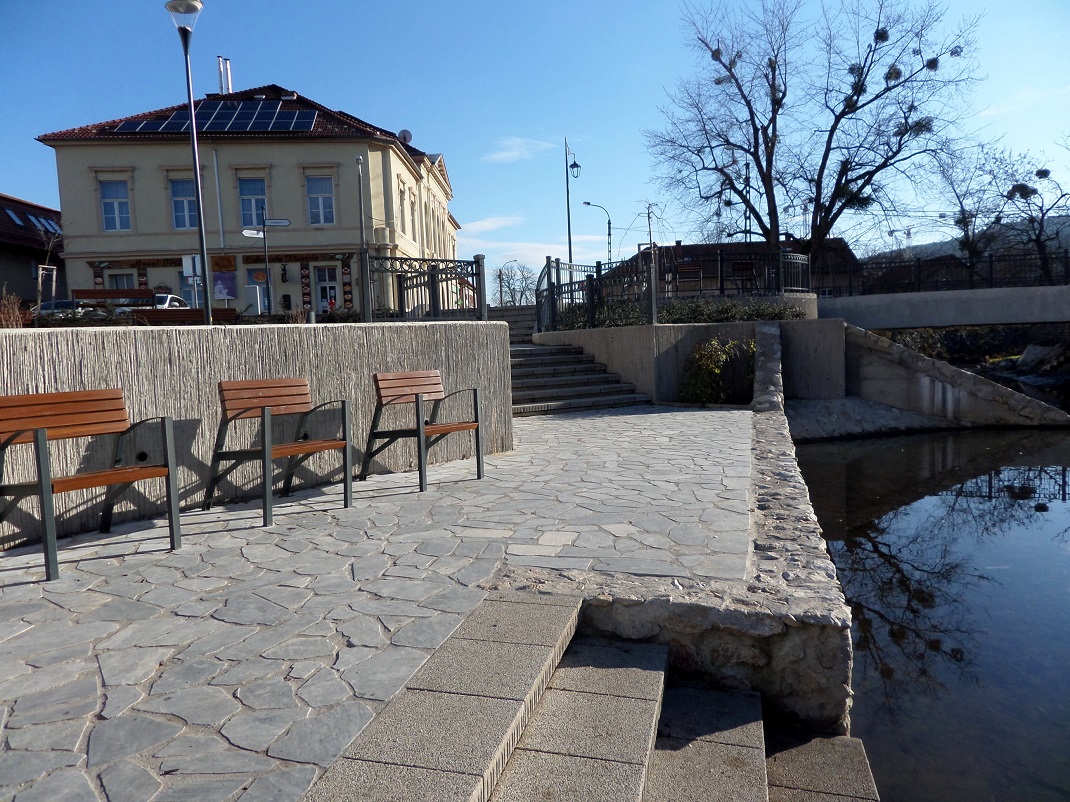
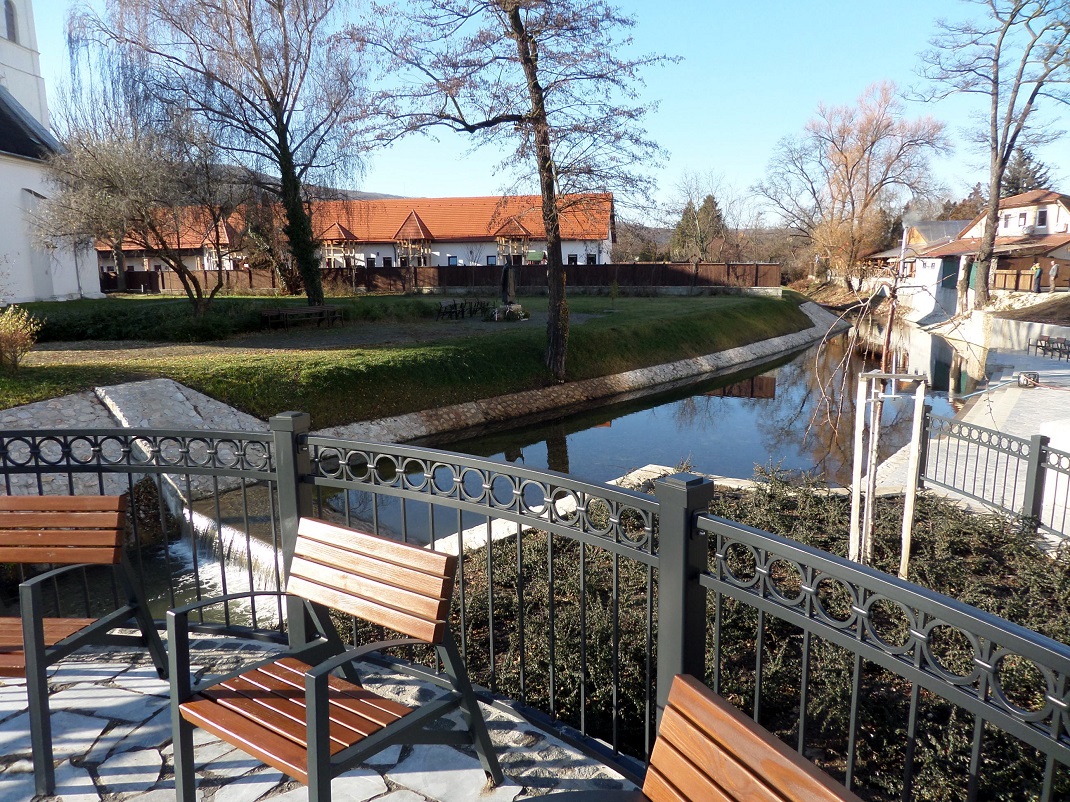
The renewal of Pope John Paul II Square
Basic information
Project Title
Full project title
Category
Project Description
In the framework of the project the designated action area was the Diósgyőr town centre. One of the main development elements of the project was the improvement of an area in the centre of the town, at the crossroads between the historic part of the town and the modern housing estate, which has been neglected for many years and is known to the population as the "little plum core". The aim of the development was to create a representative community space.
Geographical Scope
Project Region
Urban or rural issues
Physical or other transformations
EU Programme or fund
Which funds
Description of the project
Summary
Miskolc is one of the most populated rural towns in Hungary. A popular part of Miskolc is the Diósgyőr district, which has a population of about 10% of the total population of the city. Diósgyőr lies at the foot of the Bükk Mountains and is also the location of Diósgyőr Castle, making it a very significant area from a tourism point of view. In the framework of the project TOP-6.3.2-15-MI1-2016-00002 - "Integrated Rehabilitation of Diósgyőr Town Centre", the designated action area was the Diósgyőr town centre. One of the main development elements of the project was the improvement of an area in the centre of the town, at the crossroads between the historic part of the town and the modern housing estate, which has been neglected for many years and is known to the population as the "little plum core". The aim of the development was to create a representative community space that would attract and satisfy both residents and tourists, enhancing the value of the district and increasing its capacity to retain residents. As a result of the development, the neglected, unsightly area has been transformed into an eye-catching, yet intimate and recreational community space, and named after Pope John Paul II.The aim of the development was to create a community space that would be designed to accommodate larger crowds on its paved surfaces, its "free to walk on grass" lawn areas, and to provide opportunities for longer, shorter stays, taking into account the existing built, transport and landscape features. Another objective was to improve the green space system in the district, to restore the Szinva stream bed and to renovate the Szinva-bridge. The development has improved the structure of the Pope John Paul II Square by using a high ornamental value planting, various garden architectural elements and outdoor artworks. The project has increased the plant cover and green area. Terraces and walkways have been built on almost 3400 m2.
Key objectives for sustainability
The green infrastructure elements in the development target area provide the central backbone for the economic development of the area. An attractive environment with living greenery enhances the attractiveness of businesses, adds value to properties in the area and increases the earning power of existing tourism and tourist services. The development of green infrastructure elements will also have a positive impact on the quality of life of the local population. The planting of trees and triple-level vegetation will improve the microclimate and air quality, thus creating a healthier environment for everyday life activities. Renewable green spaces also serve as recreational spaces for community events. Increasing vegetation cover and reducing impervious pavements play an important role in stormwater management. The action area is crossed by the Szinva river, which is Miskolc’s largest and most polluted stormwater catchment. Green infrastructure improvements on and near the banks of the Szinva river provide an opportunity to reduce extreme flash flooding of the watercourse through the use of nature-based techniques. This modern stormwater management is more cost-effective than conventional management and reduces the load on the lower reaches of the Szinva (e.g. in the Inner City), which is expected to result in less destructive water and thus lower restoration costs. At the same time, the Szinva is an element of the urban blue infrastructure, a green corridor that provides a living link between distant green infrastructure elements. Plant associations in green spaces, using native species and appropriate to the ecological needs of the area, while preserving the existing valuable plant stock, increase plant and animal biodiversity and require less maintenance than classical urban plant planting. These are reflected in the low running costs of green spaces.
Key objectives for aesthetics and quality
One of the key social impact objectives was the creation of service spaces and community meeting points, improving the well-being of the population and achieving higher quality and quality public spaces. Strengthening local identity and local patriotism is one of the main social objectives and impacts of the project. People living in the neighbourhood, young people, families and pensioners can all "own" the space. The aesthetic experience is already guaranteed by the location of the square, as the view of the beautiful Bükk hills and the historic atmosphere of Diósgyőr Castle provide an intimate setting for both residents and tourists.
Key objectives for inclusion
A needs assessment was carried out in the action area in the form of a questionnaire. The purpose of the needs assessment is to gather the opinions of the population and local economic operators on the existing, future and new functions related to the integrated regeneration of the city centre of Diósgyőr. The primary aim of the survey is to have as accurate information as possible about the needs and suggestions of local residents, as well as the entrepreneurs, business owners, service providers and public service providers concerned, which we can take into account during the planning process and incorporate into the project. As regards economic operators, businesses in the action area were also interviewed by means of questionnaires, as was the general public. In some questions of the questionnaire we asked about sub-functions, but we tried to keep the main functions in mind. We also provided information to the target groups through the local media.
Results in relation to category
Construction of Pope John Paul II Square started in October 2019 and will be completed in December 2020. The development has improved the structure of the Pope John Paul II Square by using high ornamental planting and various garden architectural elements and outdoor artworks. The bridge over the Szinva stream has been renewed, widened and modernised, and a fountain has been built as a decorative feature of the square. The project has increased the amount of green space and vegetation, contributing to the principle of a more sustainable city and ensuring better air quality for the residents. Terraces and walkways have been built on almost 3400 m2. A retaining wall has been built along the Szinva stream, a water step has been built in the stream bed and the riverbed has been restored. From the finished square, you can walk directly down to the Szinva stream, allowing you to observe aquatic life up close, bringing you back to nature, which is one of the reasons why the square has become so popular with Miskolc residents. The square is bordered on one side by a church and on the other by a row of ten-storey apartment blocks, which gives the area a stark contrast, but this does not detract from its value, rather it enhances it, providing a special and unique atmosphere for those who relax here.
How Citizens benefit
A needs assessment was carried out in the action area through a questionnaire. The purpose of the needs assessment is to get the opinion of the population and local economic operators on the existing, future and new functions related to the integrated rehabilitation of Diósgyőr town centre, in order to implement the project with the consultation and involvement of the stakeholders. The primary aim of the survey is to have as accurate information as possible about the needs and suggestions of local residents, as well as the entrepreneurs, business owners, service providers and public service providers concerned, which we can take into account during the planning process and incorporate into the project. As regards economic operators, businesses in the action area were also interviewed by means of questionnaires, as was the general public. In some questions of the questionnaire we asked about sub-functions, but we tried to keep the main functions in mind. In addition to the 218 questionnaires for the general public, 32 business questionnaires were completed by interviewing businesses and institutions in the action area. were contacted. The development is primarily development-oriented and will result in expanded services compared to the previous situation, which will contribute to the wider role and functions of the action area.
Physical or other transformations
Innovative character
In the past, developments in the area were mainly aimed at renewing various institutions and buildings, as well as developing and expanding tourist attractions. The project is in line with the city's objective of implementing green city principles, thus contributing to the creation of a liveable and sustainable city.
The City of Miskolc was the first town in Hungary to join the European Green City Movement, so as a green model city, it formulates its vision of the future along the principles of the Green City Movement, and builds its urban development strategy and concrete measures around sustainability.
The principles of the Green City as described in the Green Book of Miskolc:
1. our settlements must be reconnected to the ecosystem around them, i.e. we must create more livable and sustainable cities.
2. to strive for sustainability, i.e. to create a sustainable, environmentally friendly environmental culture.
3. integration, i.e. making the most of nature's free services.
4. interdisciplinarity, i.e. the whole green profession and the involvement of the relevant co-disciplines and their representatives.
The Green Cities concept is based on the premise that the creation of green spaces is an investment with economic, social and environmental benefits, both at national/regional and individual level. Well designed and implemented, quality green spaces have significant positive impacts. The green spaces to be developed under this project have been designed with this in mind.
Learning transferred to other parties
The development has increased the attractiveness of the city, which also has an impact on the number of tourists. The improvement in the quality of life of the city's residents has made the city a much more liveable place, with a great improvement in the mood of its inhabitants. The regenerated district also provides a good investment location for investors and businesses. A better environment and a stronger economy will increase the city's retention capacity and provide happier conditions for its ageing population.