SENSHome Smart objects for sensible home
Basic information
Project Title
Full project title
Category
Project Description
SENSHome Smart objects are furnishings developed as part of a project financed by the EU. The designed furniture is combined with integrated sensors and can be able to accommodate the specificities of ASD people. These objects can support an autonomous life and can provide for the creation of more “sensitive” spaces. A non-intrusive technology detects critical situations and offers help in case of emergency. This smart solution can be a valuable help for caregivers and ASD people themselves.
Geographical Scope
Project Region
Urban or rural issues
Physical or other transformations
EU Programme or fund
Which funds
Description of the project
Summary
The research project “La casa Sensibile SENSHome: Sensori per Ambienti Speciali. La casa il più possibile normale e speciale quanto necessario”, is funded by the “2014-2020 Interreg V-A Italy-Austria” European Program and is based on a transversal and international skills network. As a research unit of the University of Trieste, we conduct it in partnership with the Free University of Bozen-Bolzano, the Carinthia University of Applied Sciences and Eureka System s.r.l. The aim of the SENSHome project is to develop a new home design together with smart technologies, to improve the quality of life of people with cognitive or relational impairment, especially autistic people, offering also valid support to their families and caregivers. Special furnishings are being studied that can be combined with integrated sensors and they are designed taking into account the peculiarities in which autistic people perceive the space around them. These solutions can also be adapted to standard furnishings. The research project provides the creation of a test environment with prototypes of special furnishings that reconstruct some rooms and the transition spaces between them. The environments that we design must be as domestic as possible and as little medicalised or hyper-technological as possible, so that the person living in them does not feel controlled but rather supported, by the integrated and invisible technological devices. The combination of design and technology explored in the SENSHome project wants to help families and caregivers who face every day the physical and emotional burden of constant care, reducing inequalities for vulnerable people, helping them to cope independently with everyday life.
Key objectives for sustainability
Based on Universal Design principles, the project involves the development of custom-made furniture integrated with a smart sensor network able to recognize hazardous events and able to help adult autistic person to live in more autonomous way, relieving the caregiver of constant attention to him or her. The goal is to improve the comfort, safety and privacy of end-users promoting independent living projects, combining, at the same time, contributions to a sustainable quality of life, inclusion and quality of experience for people. The furnishings were made of wood from sustainably managed forests: we choose to use Okumè marine plywood. This type of wood has FSC certification, that guarantees compliance with low-impact management rules that limit the pressure on the environment and facilitate natural regeneration. It also guarantees particular attention to improving the living conditions of forestry workers and their families: housing, drinking water, electricity, health, education, food, also ensuring permanent consultation with local communities. The wood panels have A + labeling, the lowest percentage of formaldehyde (less than 0.04 ppm US) and VOC. They also obtained the NAUF (No Added Urea Formaldehyde) name as they do not use urea-formaldehyde-based resin for internal gluing, but a phenolic resin. They are recognized by the LEED® Certification. All the paints are awarded the "Blue Angel" quality mark according to RAL UZ 12a, they are resistant to saliva and sweat and therefore particularly suitable for use by people who might bring objects into their mouths. Moreover, all the scraps derived from the processing of the furnishings are ground and reused in the formation of further panels. The aspect of economic sustainability is also important because the project also includes furniture elements and integrated sensors that can be installed on existing furnishings, thus reducing installation costs in existing environments and making SENSHome more accessible to all
Key objectives for aesthetics and quality
The special furniture we designed does not have an overtly sanitary character but looks like pleasant objects while fulfilling their supporting function. The person using it does not feel controlled by the integrated devices. Likewise, families may live in environments that do not openly declare the need for technological support.
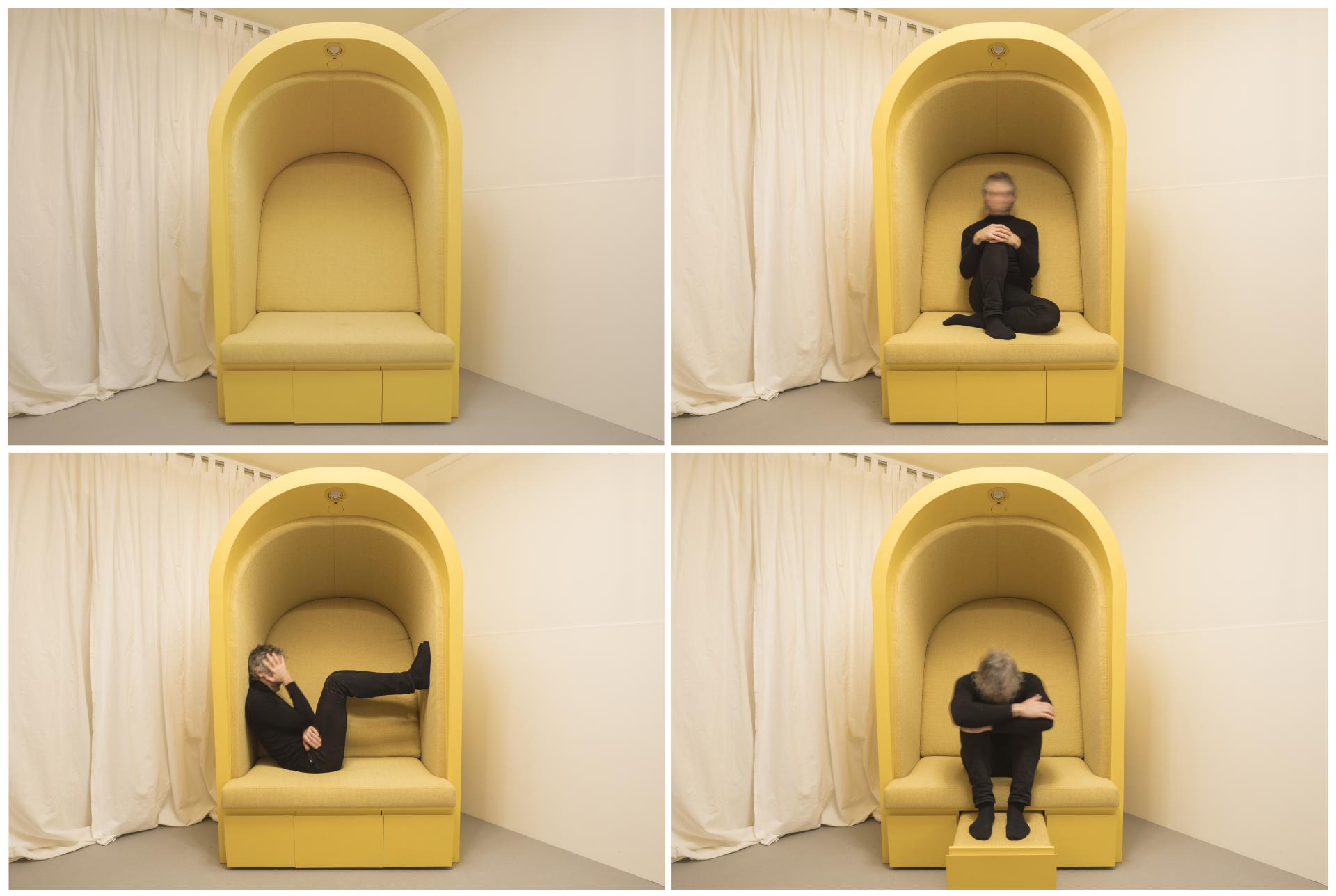
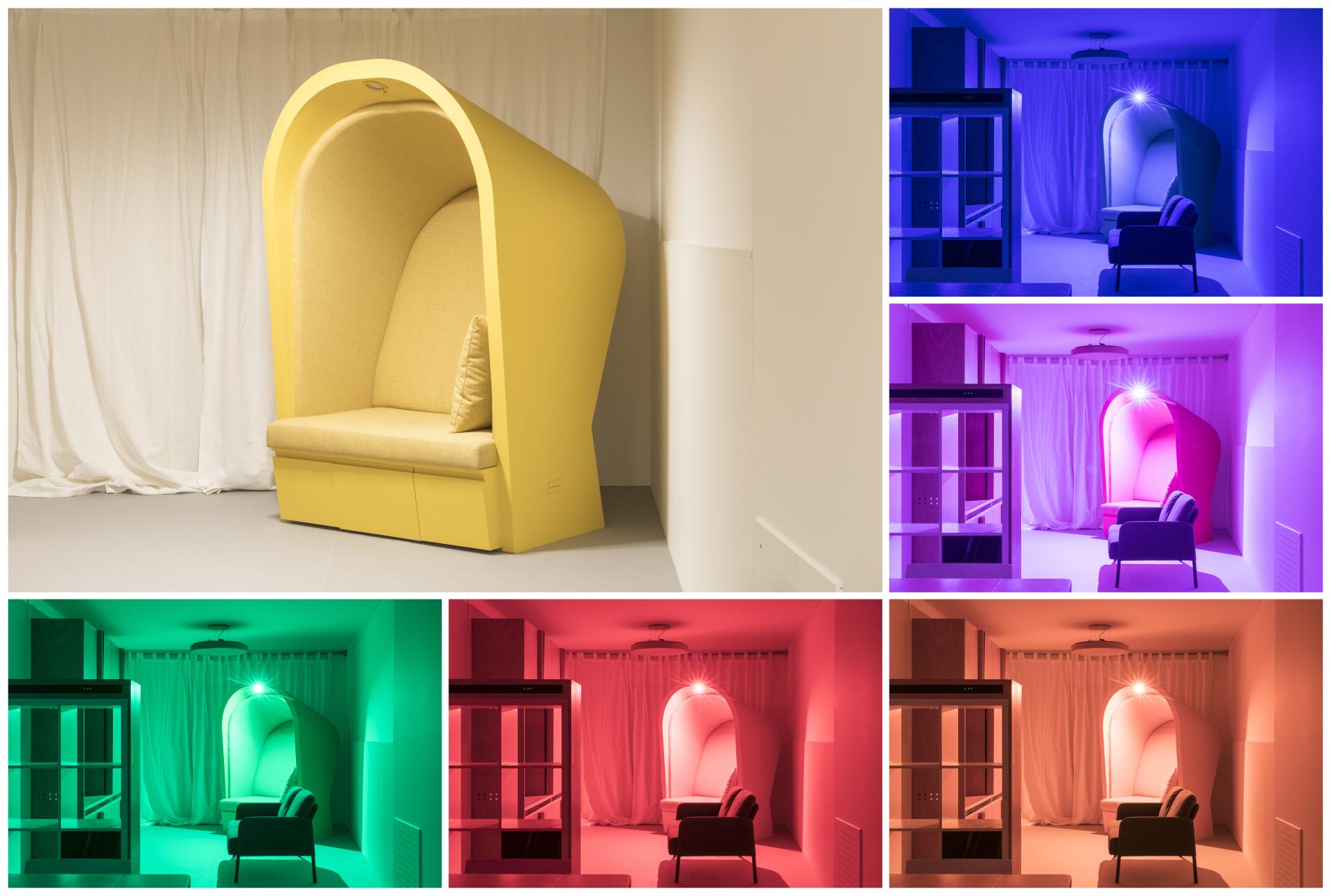
The shelter seat we designed is a space that holds and protects the person inside. The person could sit, crouch, relax and calm himself, finding a sensory balance. It is deep and large. The structure is made in curved wood panels with washable and sound-absorbing soft textile element inside. The seat is integrated with coloured and dimmer light and different types of sensors that are connected to the network for the detection of hazardous events (microphones, accelerometer, air quality detection and so on).
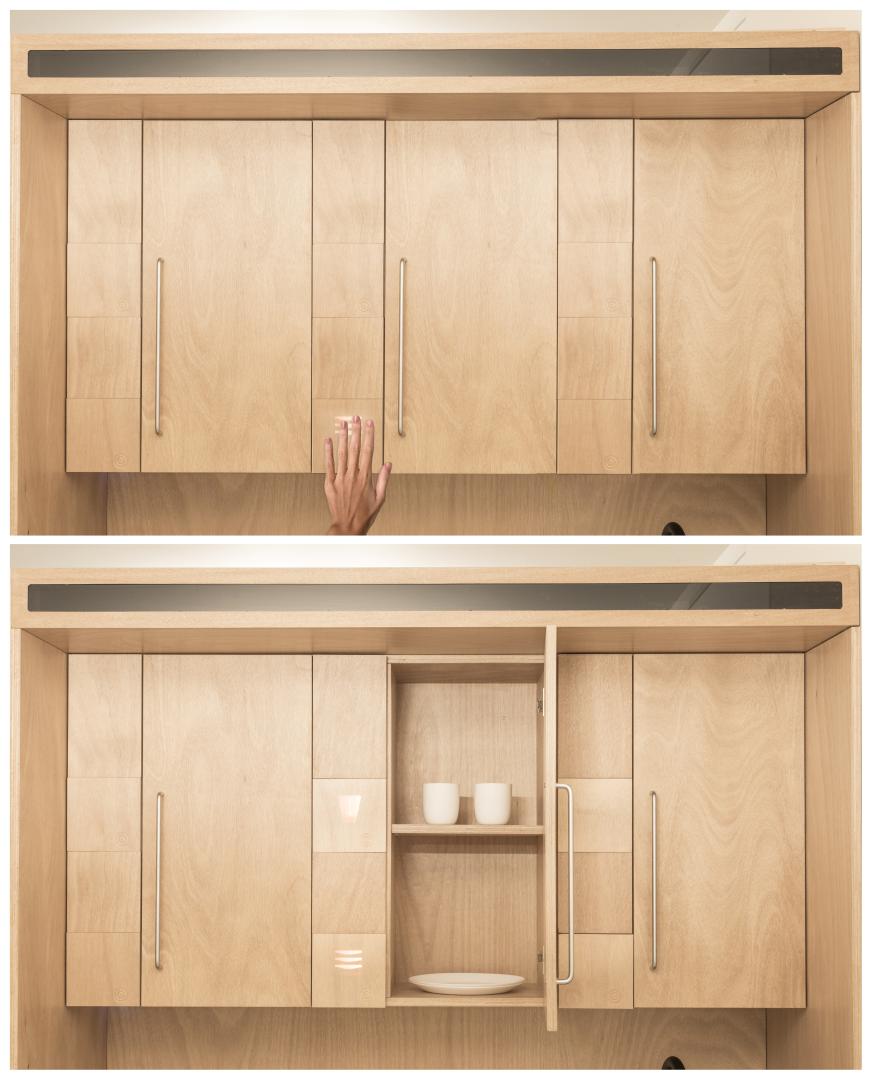
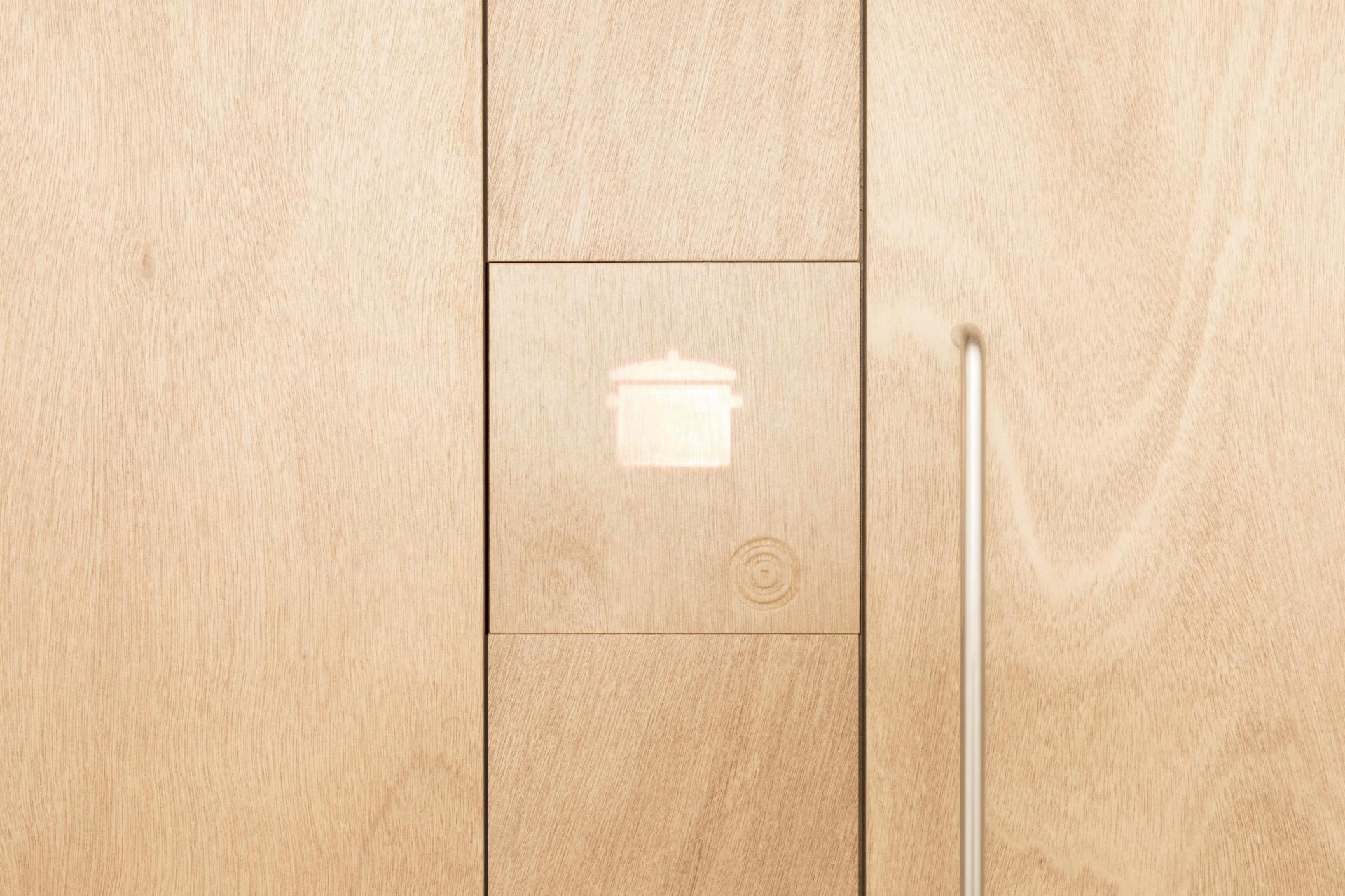
Pictograms are images drawn on labels very common in the daily life of autistic people. We have developed pictograms which are integrated into the furniture and appear only when necessary. The pictogram is engraved on the back of a wooden plate inserted in the furniture. A thin LED panel is added to the back of the plate, it is connected to tactile sensors and lights up if touched. With the light off, the pictogram is invisible. The system can be integrated into existing pieces of furniture and the plates are easily interchangeable.
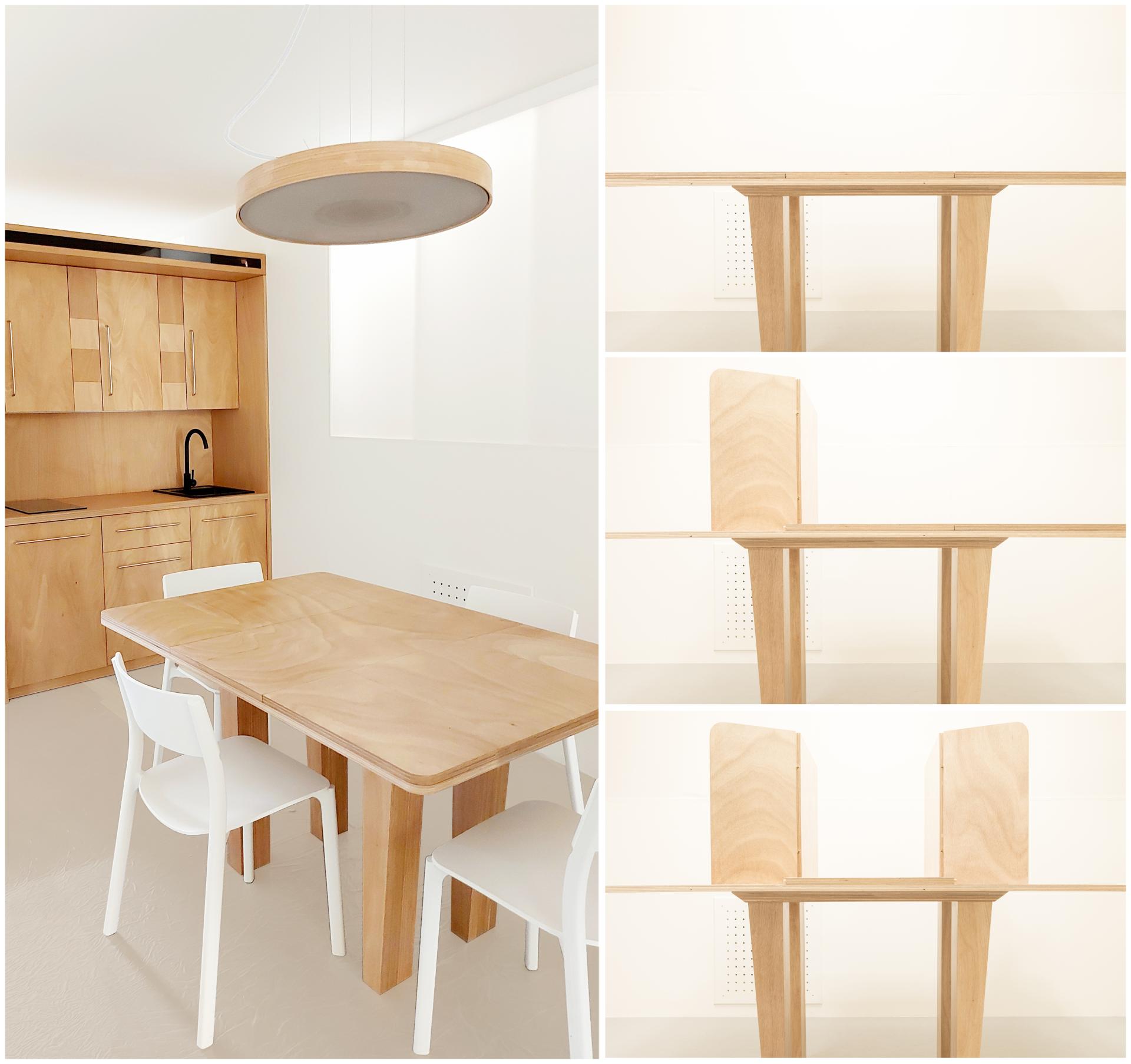
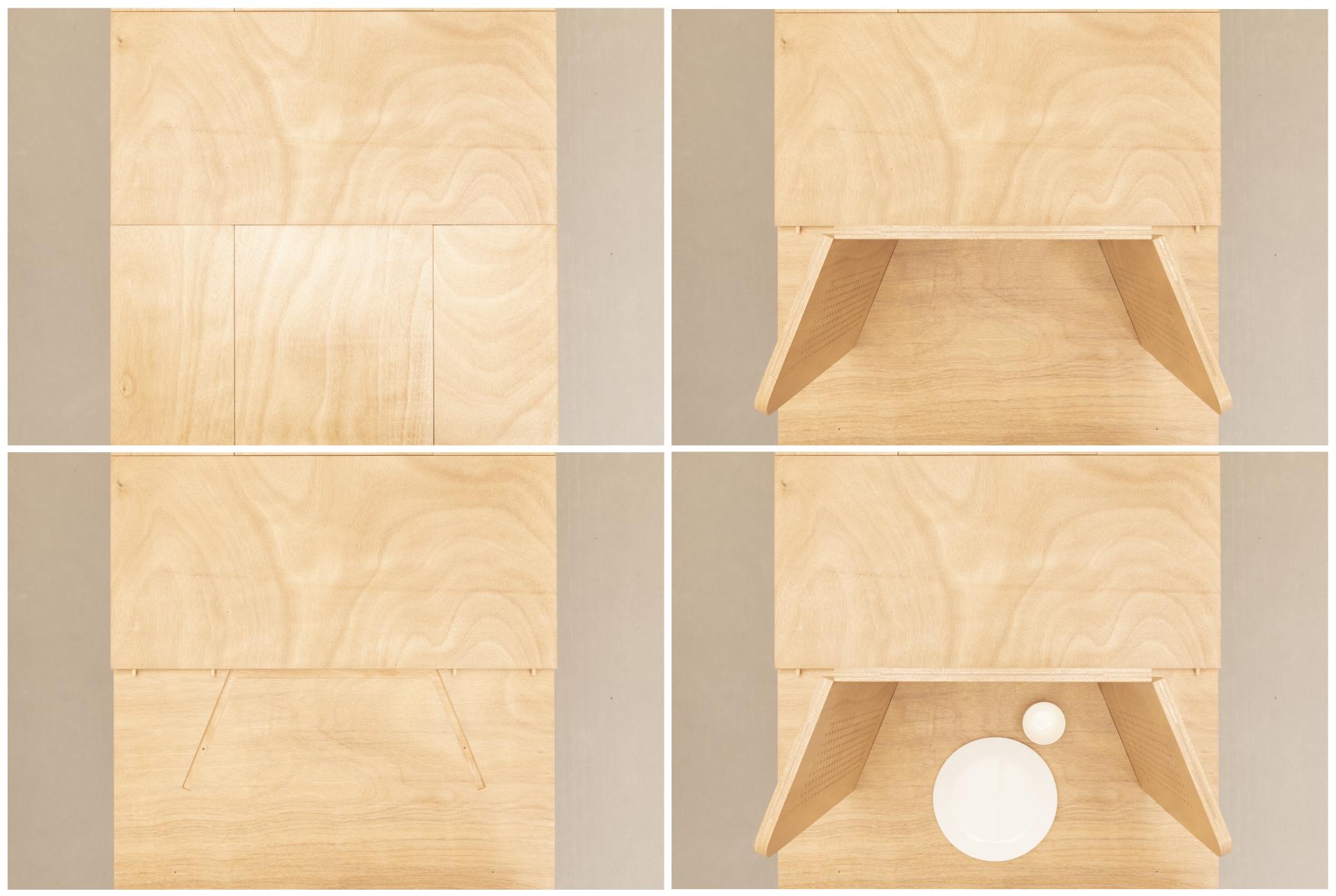
The table with dividers gives the possibility to create a physical separation from each other when eating or studying, focusing on food (or homework) remaining in the same place (without exclusion). It is equipped with removable front and side dividers. When need it, the person can bring out dividers to isolate him/her from view, smells, and sound. The dividers partitions are performed to offer sound-absorbing function, helping to improve acoustic comfort during the meal and are completely washable. Four vibration sensors will be placed underside the table sending an alarm signal if it is moved.
Key objectives for inclusion
The concept of the furniture was based on previous literature and on comparison between existent housing and residential facilities for people on the autism spectrum. The design process has been directed to the User-Centered Design principles, in which the furnishings, the technological system, and the user interface of the SENSHome project were centered on the real needs of the users (this method, described in DIN EN ISO 9241-210: 2010, puts human needs, skills and behaviour first and aims to satisfy these needs and capabilities). It has been therefore remodelled on what emerged from the activities carried out by the SENSHome consortium directly with users. People on the spectrum, practitioners and family members were involved through questionnaires, interviews and workshops. Associated partners, dealing specifically with autistic people, were also involved.
One way of involving users was to organise a design workshop together with the young adults of the high functioning and Asperger's group who frequent the facility of ProgettoAutismo Foundation, that it is one of the partners of Senshome project. We worked in the classroom together with the boys and girls and supported by two operators: a psychologist and a trainee. The aim of the workshop was to design a room together with the youth, a room imagined as the ideal place to spend time, even independently. At the same time, the goal was to collect their needs, their wishes and aspirations that are useful elements to develop interior architectures and special furnishings for future homes that can respond as much as possible to the needs of adult autistic people and that can be inhabited in an autonomous way.
We then defined the requirements and main features to be included in the SENSHome environment, determining the necessary sensors, design solutions and environments relevant to the project to offer a valid support to families and caregivers, bringing clear benefits in terms of quality of life for all.
Results in relation to category
Autistic people, their families or caregivers need design processes capable of over-coming the difficulties of everyday life. In 2020, the Centre for Disease Control and Prevention reported that approximately 1 out of 54 children in the U.S. is diagnosed with an ASD. In 2018 the prevalence of ASD individuals in approximately 0.62–0.70% of the population in European Union was estimated. A systematic review in six Asian countries reported that the prevalence of individuals with ASD from 1980 to present was 14.8 individuals per 10,000. Parents and caregivers, offer dedicated assistance to ASD individuals and most of the time this support is needed 24/7. Accordingly, the cost of caring for autistic Americans had reached $268 billion in 2015 and it would rise up to $461 billion by 2025. In Europe, the estimate economic burden per individual for 6 months is estimated varying in a range from 797 € to 11189 €.
The great ambition offered by the SENSHome project is to support autistic people and their families or caregivers accommodating, balancing and integrating their peculiar needs. The furnishings have been developed starting from the beauty, comfort and adaptability concepts. The integration between design and technology is specifically designed to allow users to feel privacy guaranteed, without turning living space into medicalized space. This system may reduce the cost of dedicated personnel, offering some rest to the families and increase the sense of privacy and autonomy. The interdisciplinary approach offered by the study on which the results were based (design, acoustics, well-being, user-centred design approach and sensors) and the participatory processes involving the people concerned (autistic people, their families and caregivers, voluntary associations, companies dealing with hospitality and home care facilities) also made possible to replicate and applicate the obtained results at local level.
How Citizens benefit
The analysis process and design led to the development of eight special furniture elements equipped with an integrated sensors system able to combine well-being, safety and autonomy. The results derive from activities carried out with selected groups of users (parents, caregivers, autistic people and designers) that led to optimizing the furniture prototypes. By analysing the experiences of other designers in working with spaces for autism and reflecting on the different approaches used, we were able to define the strengths for undertaking this type of design. The concept of including the points of view of the people involved emerged as a basic aspect.
Following the procedure envisaged by the User-Centred Design approach, the needs of autistic people and their family members with respect to the home environment were collected and verified in parallel, through interviews, questionnaires, and workshops. The data collection process involved associations operating in the field of autism within the area of the Interreg Italy-Austria project, in particular in the Italian regions of Friuli-Venezia Giulia (FVG), Veneto, and the Austrian region of Carinthia.
Another way to involve civil society in the SENSHome project was to include our students from the Architecture course at the University of Trieste. The theme of housing for autistic adults has been addressed in some Master’s Degree Thesis. This was an opportunity for research and project development because it made possible to study and experiment with various aspects of design for autism, involving and sensitising young future designers on this issue.
The realization of a mock-up of the SENSHome system is currently at disposal within a specific laboratory environment. The system validation will concern operational tests of the technological part and interviews with users to verify the satisfaction of furniture, the integration of the sensors and environmental comfort.
Physical or other transformations
Innovative character
The innovative approach is represented by giving a voice to those who live with autism on a daily basis: autistic people, their parents and caregivers. Their proposals, wishes and opinions were collected through interviews, questionnaires and project workshops. The opinions collected was then processed on the basis of the experiences available in the bibliography, to obtain products that were first of all "beautiful" and not “only useful”. Products that would stand out from the typical look of medical furniture. We intend to create objects that anyone would want to have in their homes, and not that "had to have because it was useful".
A concept of egalitarianism within (family, but not only) environments in another innovative character of this approach: no one has to adapt to the other anymore, but everyone can have the same possibility to choose what and how to use it.
A table with partitions can be both an ordinary table and a support table. A refuge chair can become both a space for hiding (reduction of sensory stimuli) and a space for getting closer to others (socialising tool). A piece of furniture with illuminated pictograms can help everyone contribute to the household chores. Furniture designed for specific needs can actually be very useful for everyone.
The application of environmental sensors, occupancy sensors and motion sensors in furniture also means that there is no need for invasive and unattractive technology in the room, but rather objects that are easy to replace, easy to use and attractive, as well as useful.
The real innovative character of this project is practically discover that if we design with the perspective of a place that could also be enjoyed by an autistic person (rather than an hearing-impaired individual or a cognitively disable individual), we learn that this space will also fit much better for the needs of most users too!
Learning transferred to other parties
All the results obtained within SENSHome project are Creative Commons licensed, that makes openly licensed material easier to discover and use.
Associated partners were also involved in the formation of the project partnership, both associations/foundations dealing specifically with autistic persons (Progettoautismo FVG, AeB), and companies and health structures dealing with assistance, hospitality and help for elderly or disabled persons (Televita spa, Inklusion:Karnten).
The development of the project right up to the implementation phase also made it possible to verify the real applicability of the proposed solutions both in relation to carpentry work (with carpenter Burelli) and in relation to the application of dedicated sensors (in collaboration with Eureka System s.r.l.).
The involvement of design companies as well as technology companies will also allow the spread of the inclusive design concept to different market sectors, stimulating the development of large-scale solutions, leading to a reduction in product costs but, above all, starting a revolution in the mindset of many.
At present, the products produced are visible and verifiable in the building physics laboratory of the University of Bolzano. The last phase of the project involves the viewing and implementation of all the SENSHome furniture by all those who have worked together to achieve the results (autistic persons, parents and caregivers). This will enable the validation of what has been achieved before it is disseminated to market.