Design Terrae Bootcamp
Basic information
Project Title
Full project title
Category
Project Description
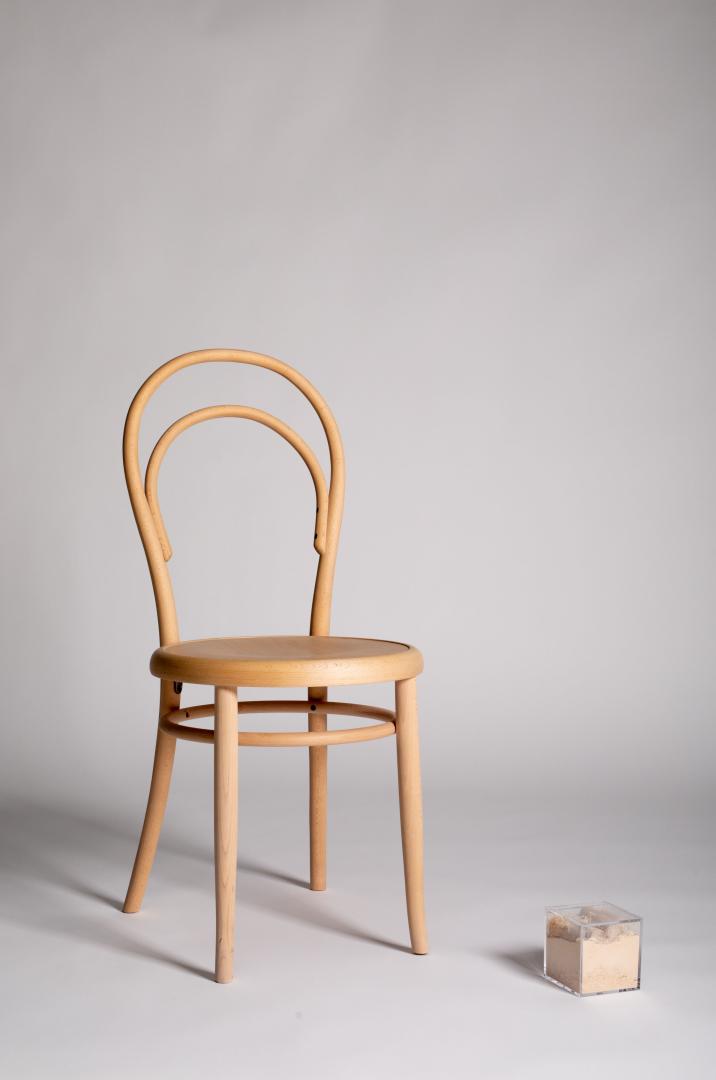
The Design Terrae Bootcamp was an innovative summer campus for higher education in design, an open and inclusive project based on the idea that design is first of all, an attitude that draws from the past to jump into the future. An immersive experience with a learning by doing approach that dealt with upcycling and waste valorization of one of the most iconic chairs in the history of design, the no. 14 by Michael Thonet.
Geographical Scope
Project Region
Urban or rural issues
Physical or other transformations
EU Programme or fund
Which funds
Description of the project
Summary
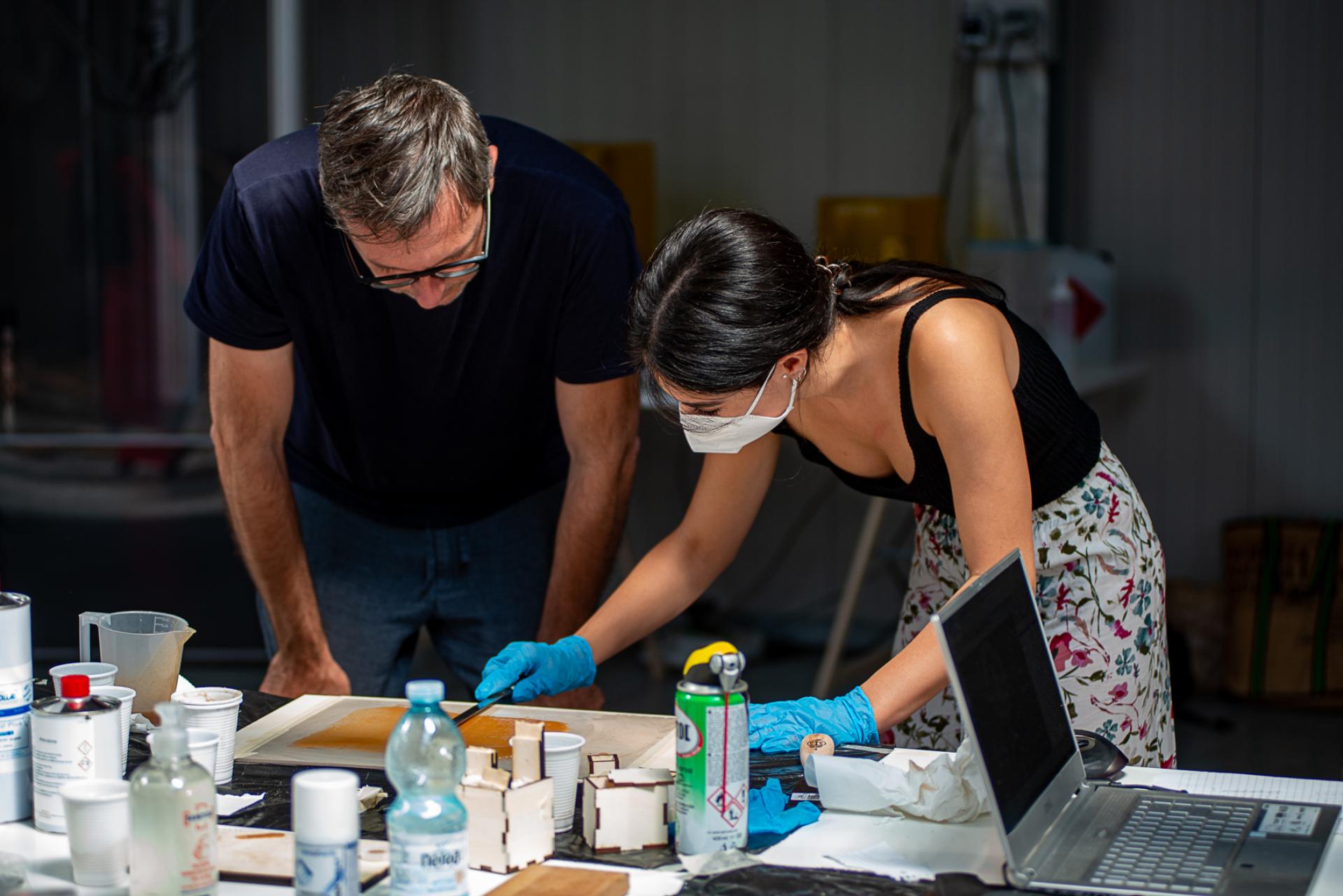
The Design Terrae Bootcamp was an innovative summer campus for higher education in design, an open and inclusive project, based on the idea that design is above all an attitude, that draws from the past and jumps into the future in new and unexpected ways. This very first edition of the Bootcamp was aimed at creatives, artisans, designers, artists aged approximately between 20 and 40, proposing them to measure their creativity, knowledge, and skills in a teamwork to experiment innovative design visions. The project offered an immersive experience, based on a “learning by doing” approach and a hybrid teaching method: a combination of theoretical lessons and practical laboratory activities, use of digital production technologies, visits to local companies to discover the manufacturing heritage of the territory and thematic stories of design professionals. 11 participants from all over Italy have gathered in a farmhouse in Le Marche hills – the Casale Delle Noci, restored by internationally known architect Gae Aulenti - and spent the week living and working together, surrounded by a dreamy landscape. Followed by two tutors, they have worked on upcycling and waste valorization of one of the most iconic chairs of design history, the no. 14 by Michael Thonet. Through a final exhibition of their works, this Bootcamp has given the opportunity to visualize waste to better understand how it can be enhanced and valorized with a new life and re-used in the production cycle of the company to add story and value.
Key objectives for sustainability
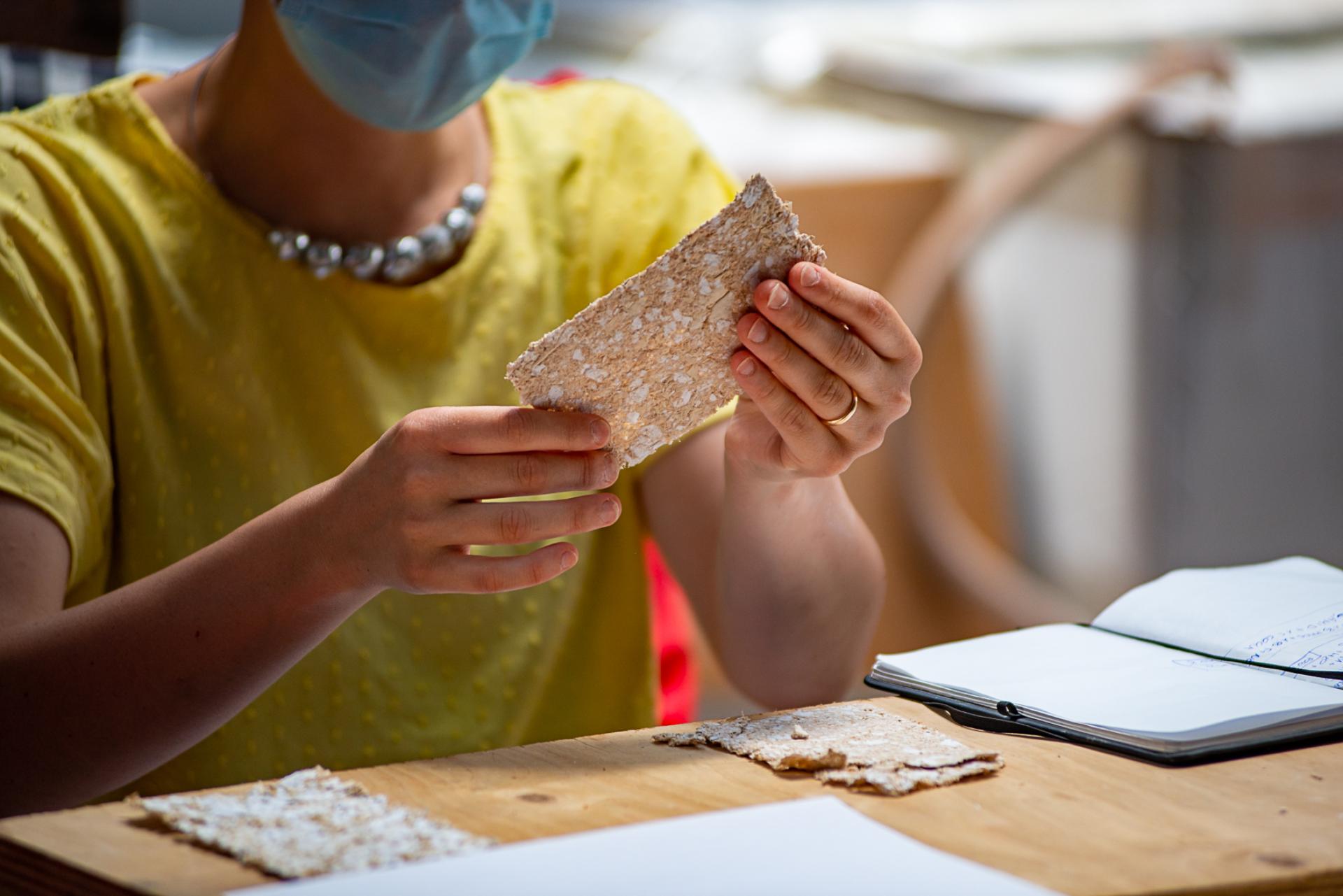
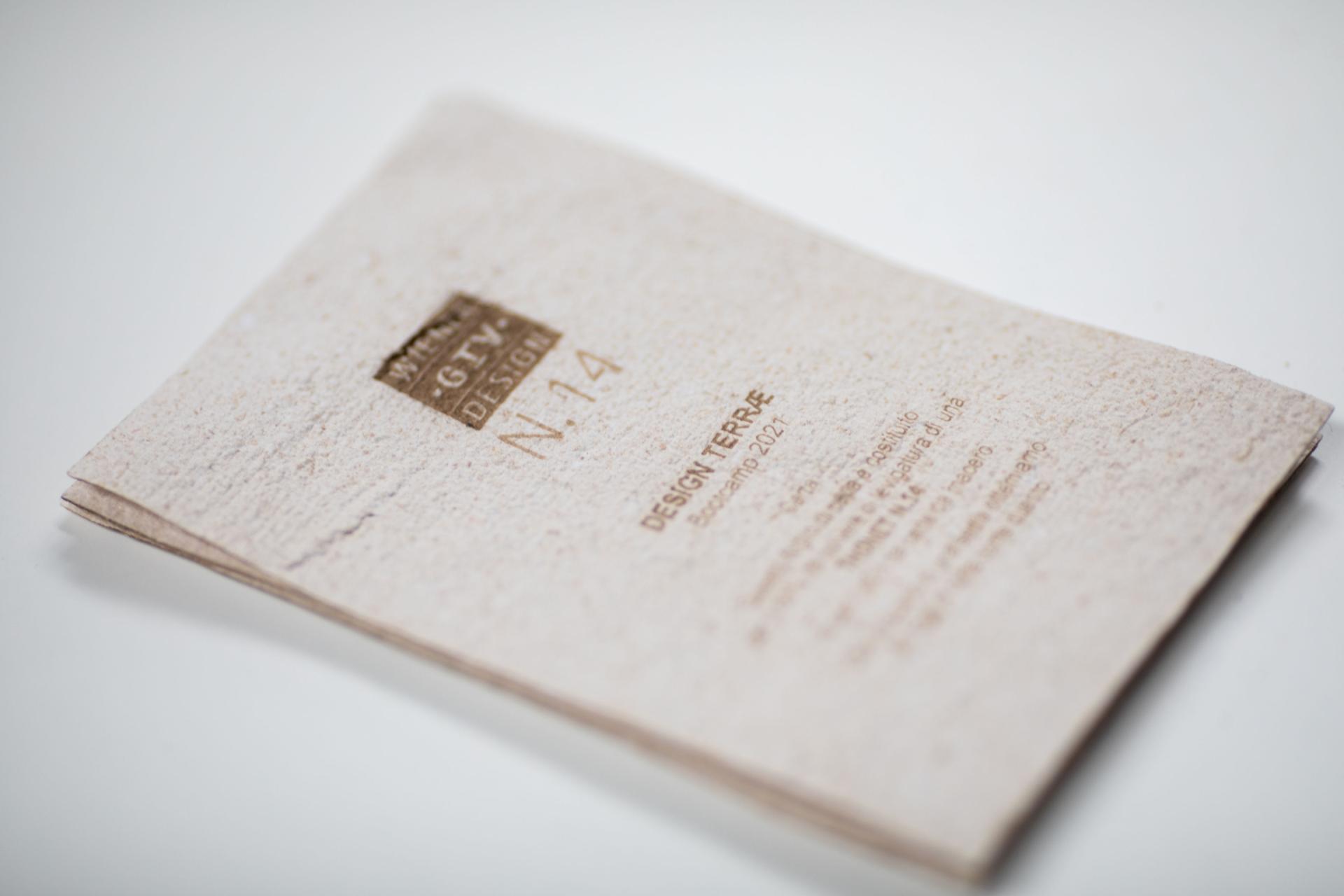
The theme of the Design Terrae Bootcamp was sustainability within the life cycle of industrial products through waste enhancement. We asked the participants, to work on the chair that changed design history, introducing process innovation, ethics, genius: Michael Thonet's no. 14. After visiting one of Gebrüder Thonet Vienna's production plants, we realized the little waste that the company still produces nowadays - as it has done for over 160 years - in the processing of this wonderful design object. The low production of residues, helped us design the structure of the Bootcamp, becoming the driver of the experience. We have decided to implement a data physicalization process giving physical and tangible form to the production waste data. We started our work with a statement: in nature, the phenomenon of waste does not exist. It is a purely cultural fact, linked to human activities, and therefore only man can become aware of it, analyze it, visualize it and find new ways to make it sustainable. We enclosed the production waste from a single no. 14 in a 10x10x10cm cube and placed it right next to the chair. How can we revive that waste? How can we communicate it? We asked the Bootcamp participants to give it new life not through a new product, but through new experimentation processes on the subject, to generate new design horizons. So these residues became paper, walking sticks, tiles, and more, certainly not final products, but visions of the future and proofs to demonstrate that circularity is achievable in the production process of a product and that indeed it can prove to be a valid ally to tell the sensitivity of the company and its responses to global sustainability challenges. Data physicalization work has allowed us to make the waste visible and imagine its future; possible horizons for companies that want to address the sustainability and circularity of their production processes and to raise awareness on a new class of designers, planners, and artisans.
Key objectives for aesthetics and quality
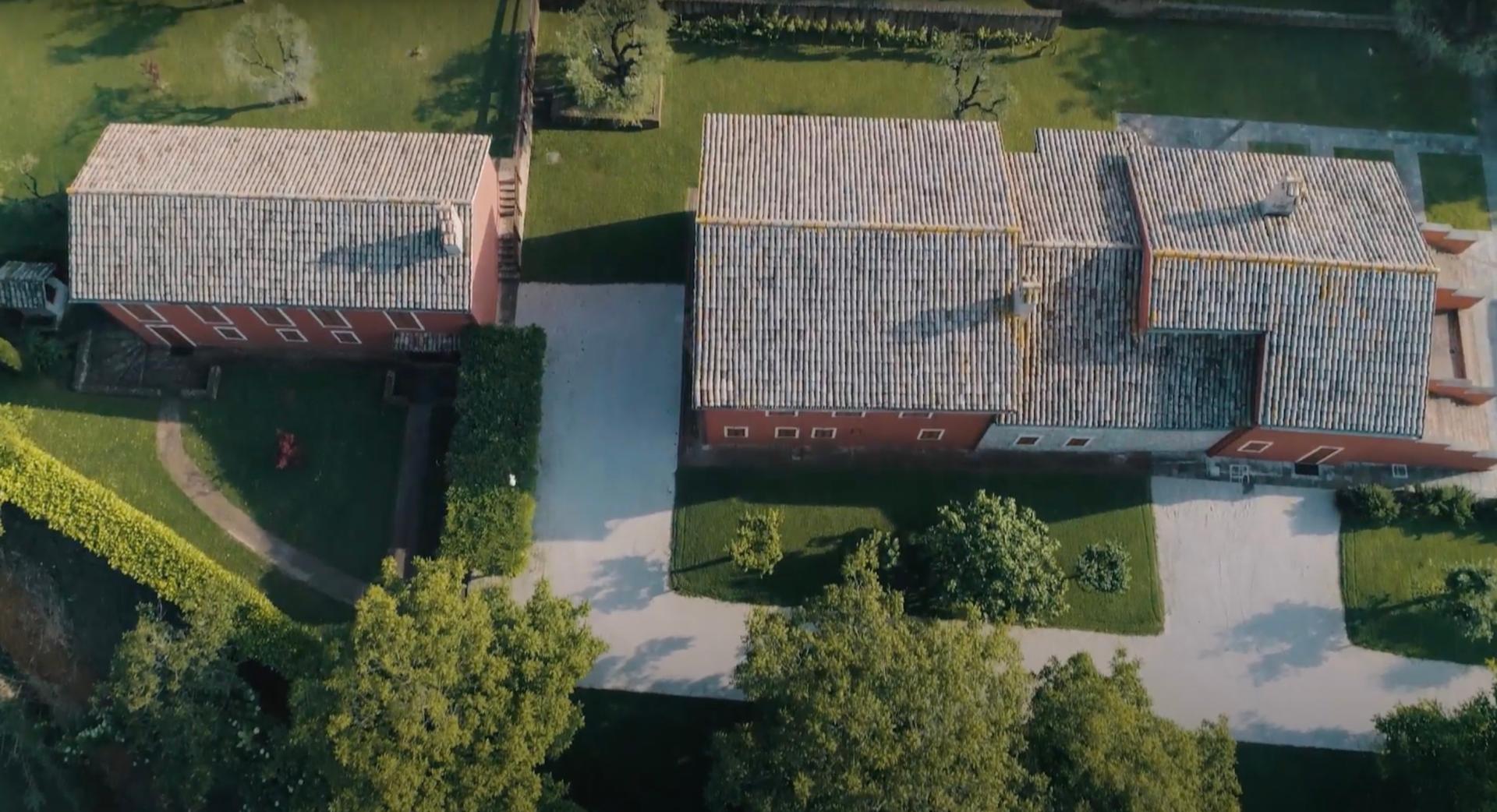
The Bootcamp has turned a summer workshop into a collective experience in which tutors and students collaborated with great cohesion and determination on a common project. We lived together, thought together, imagined together. Each element of the workshop has been designed to give an innovative and immersive experience to both students and tutors. Firstly, the teaching approach was based on the experience that is triggered when relating people, places, and objects pursuing a specific goal, where each element can circularly influence the others.The tutors were the guides of the experience, bringing their personal approach to design into the workshop. Putting themselves at the same level as the students, they were able to spark curiosity in the students and learning themselves.The location of the Design Terrae Bootcamp also contributed to the quality of the entire experience; the so-called Casale Delle Noci - a place out of the ordinary - ensured that the participants had a unique, intense, and enriching experience, intimately immersed in the heart of the Upper Macerata area. The estate is a farmhouse in the hills of Le Marche restored by internationally known architect Gae Aulenti and is the private residence of Mr. Franco Moschini, former President of Poltrona Frau and passionate patron of his beloved territory, the Upper Macerata area. During the week of the Bootcamp, it became a "campus" immersed in nature in which the laboratory was a hinge for moments of relationship and comparison concerning the topics covered. Our territory and, in particular our town Tolentino, has a special connection with the design world: not only is the birthplace of many internationally known design firms, such as Poltrona Frau or iGuzzini, but also the place where handcraft and artisanal works are natural aptitudes since late 1800. The uniqueness of this Bootcamp was indeed the possibility to breathe the international design mood, while being surrounded by nature.
Key objectives for inclusion
An inclusive and multidisciplinary approach is a mandatory condition for innovation in the field of design. For this reason, Bootcamp has established a close collaboration between the staff, the teachers and the local community. The participants, 11 people from all over Italy, with different ages, histories, and experiences, met in Tolentino to test themselves in a new context, with unknown people. Designers who bring with them only their skills, their creativity, and the desire to make it available to others and the project. Eventually, they became friends, colleagues. Design, understood in a broad sense as a cultural attitude, has become a "tool" that tells, enhances, and transforms to support both individuals and communities to face changes, starting from sustainability and experience.The context of the summer campus, the Upper Macerata area, was an integral part of the project, played with visits to relevant places and companies of the territory. The students were able to get to know the town and the community in a non-conventional way. By visiting some of the manufacturing companies in Tolentino, they could see with their own eyes the production cycle, touch with their hands the materials, hear the expertise of the workers, and deep dive into the design process. Equally, they had the possibility to interact with established designers and discuss how they confronts sustainability in their work. An "internationally local" experience - as we like to call it - where students are connected with workers, community, and internationally known designers at the same moment. Finally, the organization of the campus was aimed at being as most inclusive as possible. The application fee was measured not in terms of the total value of the workshop but on what we thought were the average economic possibilities of young student. The fee also covered accommodation, meals, and transfers during the week, so that each student could focus only on living the experience at its most.
Results in relation to category
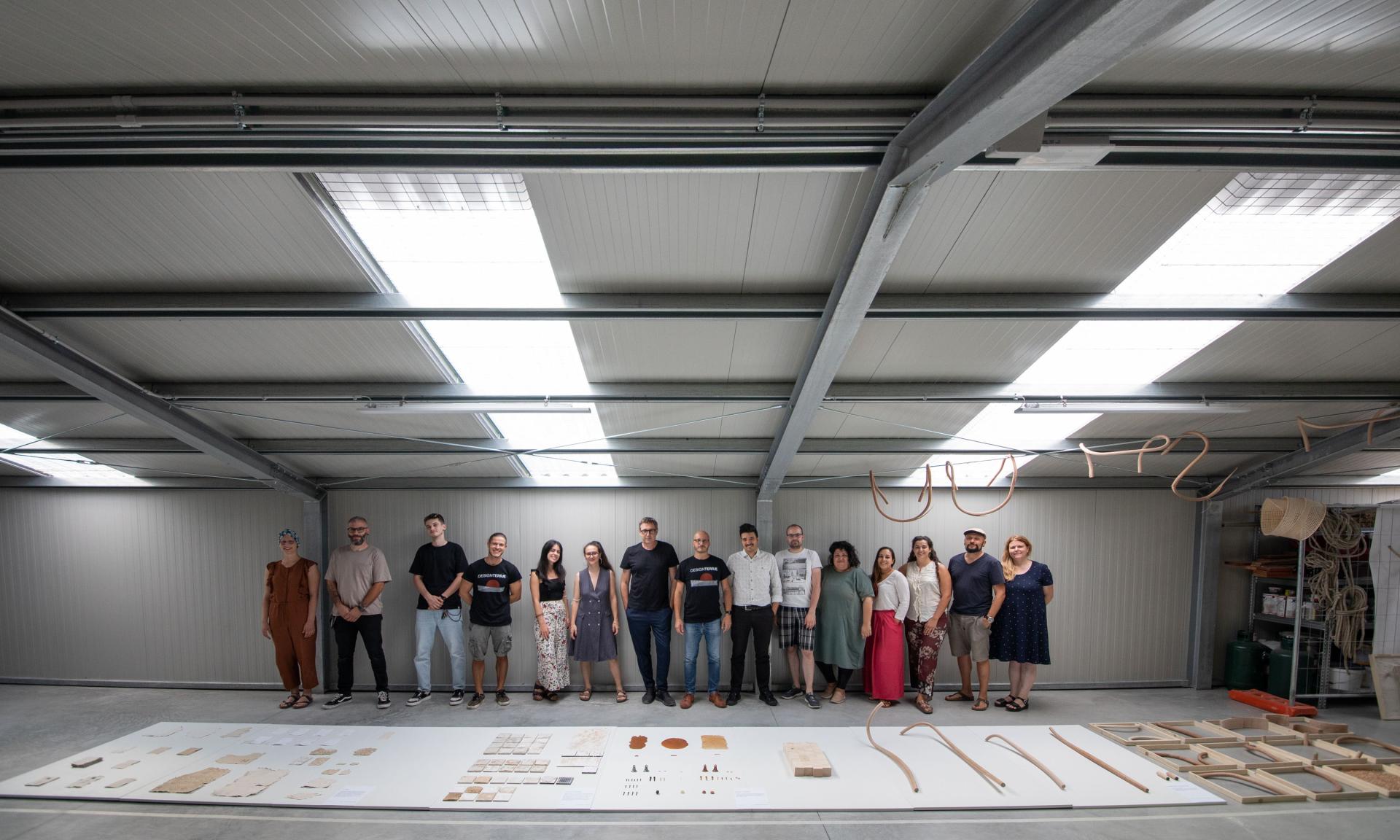
Organizing this type of workshop in a small town was a challenge. We weren't sure that students from bigger cities would have enjoyed the experience in a small city. The results were extraordinary; we were able to offer an educational workshop with an international mood in a small city. We like to call our experiment an internationally local design workshop, where local students met with students from bigger cities, with workers, where participants met with internationally known designers, all in a small town of Le Marche, learning new ways in their field while being able to get to know a new territory, made by its community and its story. A collective experience in which tutors, staff and students collaborated with great cohesion and harmony on a common project. The final exhibition aimed at visualizing the process and phases that each group followed during the working week. It was decided to place all the tests carried out on the ground following the logical order of succession of the work. Alongside the physical tests, we asked the participants to explain the contents of the tests and the percentage of used waste through legends. The ultimate goal was first of all to visualize the knowledge emerged during the analysis, design, and construction phases as a whole. Secondly, to share and compare the results obtained by the different development teams and, finally, to encourage students to tell a story of experimentation through the configuration and visualization of the objects as a whole. The residue from the production of chair no. 14 generated continuous surfaces, plasters, materials, coatings, colors, printable papers, tiles, slabs, vertical partitions, walking sticks. Each of these experiments wanted to translate, through a process of data physicalization, data into tangible and visible artifacts to tell the extraordinary innovation introduced by this company in woodworking. Small tangible tales of Gebrüder Thonet Vienna's environmental ethics.
How Citizens benefit
The Design Terrae Bootcamp has been designed not only as an educational experience but also as an opportunity to discover a territory that has always been strictly connected to the design industry. Tolentino has been an "industrious city", a place where the enormous amount of water has facilitated the birth of various industries since the XIX century, a place where farm work and artisanal competencies are natural provisions of the member of its community. Thus in modern ages, Tolentino, a small town in the Macerata province of fewer than 20.000 inhabitants, and its industries have hosted designers, architects, and developers from all over the world. Design Terrae, founded by Mr. Franco Moschini, has as its mission to promote "beauty, good and well done" starting from the Upper Macerata area, addressing those who intend to evolve them and, in particular, young people. Living opportunities for knowledge and growth through operations of contamination and bridging between knowledge and people is one of the objectives of Design Terrae. Thus, design understood in a broad sense as a cultural attitude, becomes a "tool" that tells, enhances, and transforms to support both individuals and communities to face change starting from sustainability and experience. This experience was all the more significant, as our territory was severely hit by the earthquake in 2016, an event that left tangible marks on the territory but also inevitably tore the social connections of these lands. It was, therefore, important to create the Bootcamp Design Terrae in our area, to create moments of beauty that help mend these tears, especially for the young people of the area. An innovative way to bring new life to this territory and enhance its peculiarities. An approach that can be easily replicated in other small towns of Italy, the treasure of this country.
Physical or other transformations
Innovative character
Upcycling and the re-use of production waste and residues is a current topic and the Design Terrae Bootcamp has addressed it using the design thinking and learning by experience approaches, as tools to generate innovative visions. The Bootcamp is an immersive experience in which participants live in close contact with the nature of the Upper Macerata area, in an informal and creative environment to facilitate the contamination of ideas and be able to imagine new possibilities without external conditioning. The local contact with Made In Italy artisans, designers, and companies experienced directly during the Bootcamp constitutes an added value of great richness. Thus the distance between industrial production and creative ideation, multidisciplinary teamwork, experience, generated by the interaction between context and people, leads to unexpected and innovative results: new knowledge, new visions, new sensibilities, and new skills. The final result is not a product or a prototype but an opening to the possible.
Learning transferred to other parties
The tradition of handmade in Italy is a peculiarity recognized all over the world. The intelligence of hands and of doing is intimately linked to the earth. For this reason, a workshop like the Design Terrae can be easily replicated in any place. It can be an opportunity to highlight the heritage of a territory and can certainly try to increase the sensitivity of local industries on sustainability and circularity of the economy, and push even the smallest companies, often family-run, to reasoning on issues of a global scale, on which we are all directly or indirectly involved.The results of the Bootcamp were made possible by respecting the following methodological requirements:
- Selection of the skills and competencies of the participants to form multidisciplinary groups and hybridize skills and knowledge
- Full awareness of the participants regarding the production processes that generated the waste/residues and the Life Cycle Assessment of the original product
- Availability of a laboratory with both analog and digital tools and instruments
- Attention to Data Physicalization, that is the ability to make the "hidden" value of production residues/waste evident and shareable through operations that clearly explain the processes and quantities generated first upstream and then downstream of the production phase. The visualization of the data is a fundamental key to understanding the impact of waste/waste in production and how it can become a resource
- Ability to communicate and expose the design and transformation process to share the results of the experience with different media (images, videos, and reports) outside the Bootcamp
- Presence of tutors specialized in laboratory experiences based on design thinking
With the experience of the Bootcamp, participants acquire the ability to experiment and, above all, to imagine something that does not yet exist, starting from the material used as a "starting condition".