EASYLIFE modular system
Basic information
Project Title
Full project title
Category
Project Description
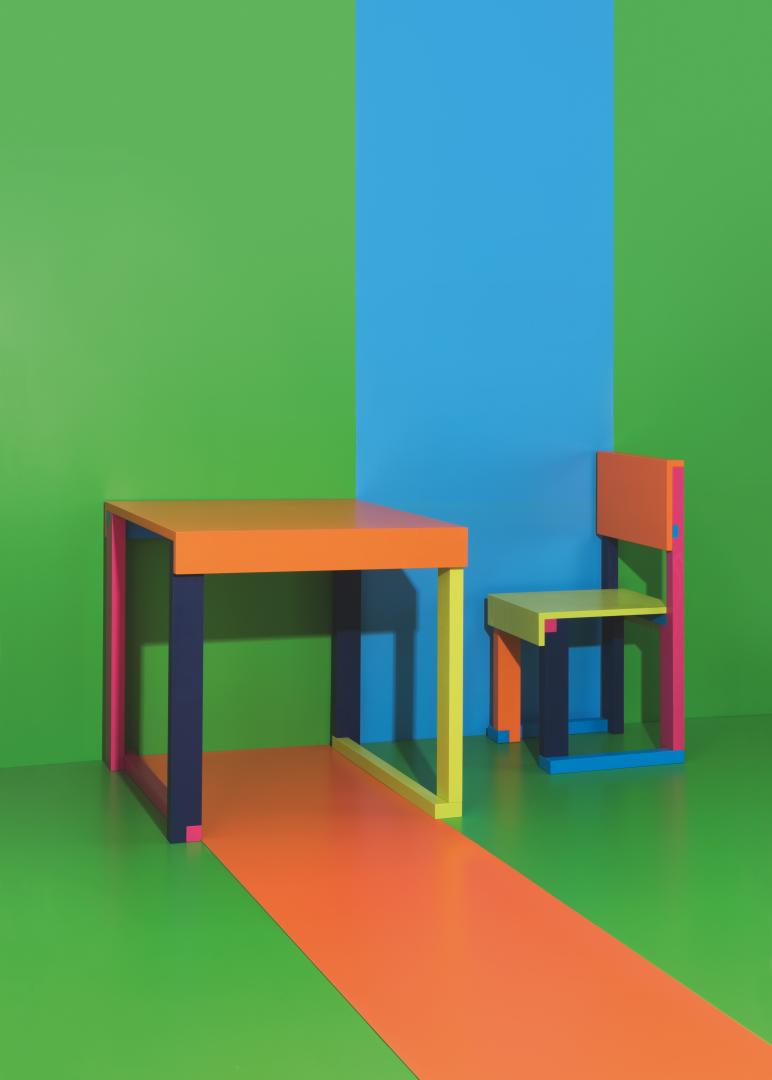
We are Arcadia Design. We envision a design that changes as you do. Rather than fix interiors, we prefer objects that you can modify to make them exactly what you need. EASYDiA and EASYoLo are modular chairs and table for children that are safe, healthy, circular, educational, creative and especially yours. They can be personilised, restored, regenerated, used and reused creatively.. to stay with you and your family as long as possible!
Geographical Scope
Project Region
Urban or rural issues
Physical or other transformations
EU Programme or fund
Which funds
Description of the project
Summary
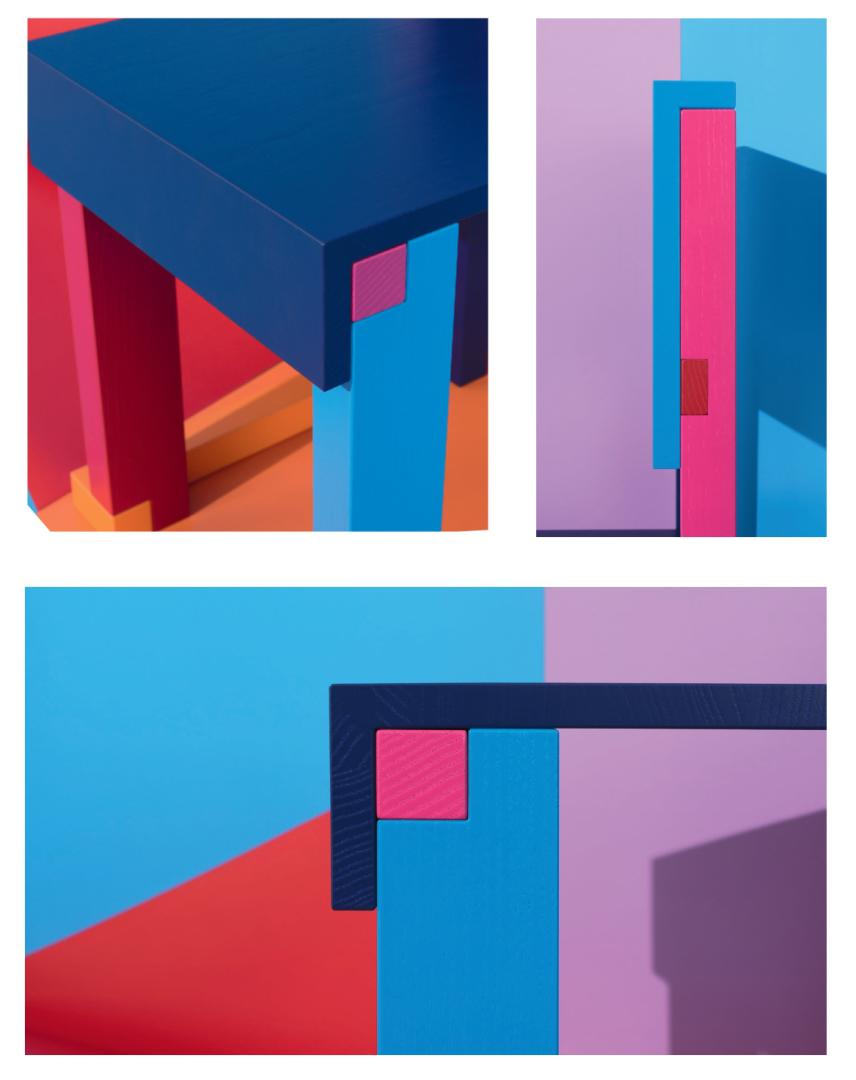
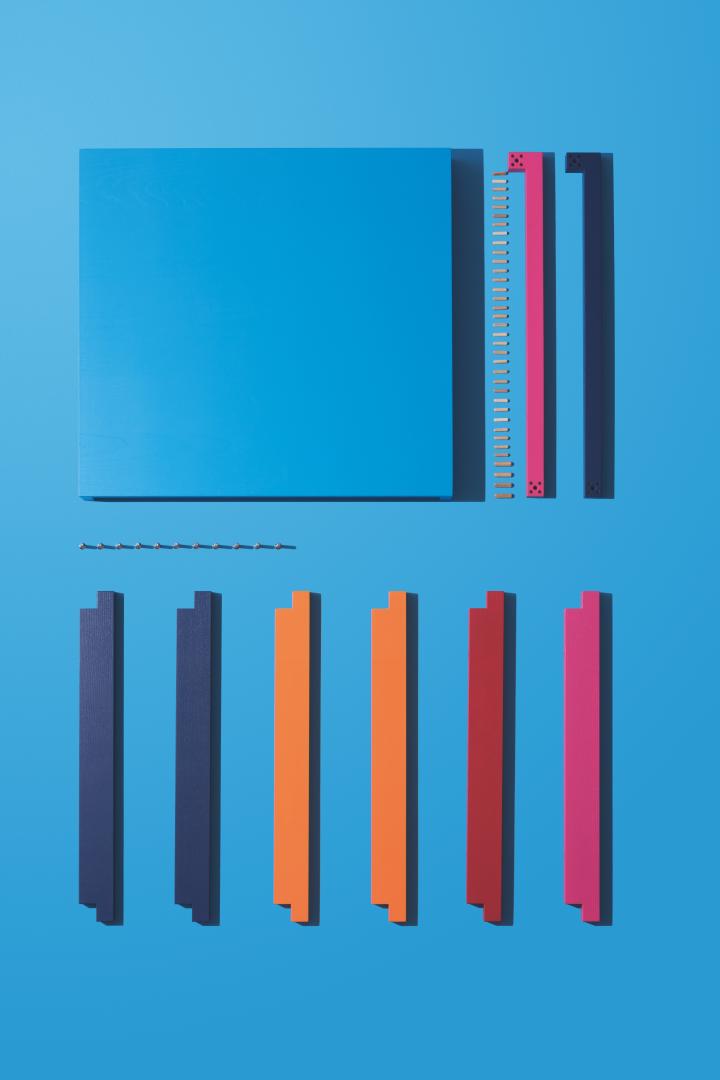
EASYDiA + EASYoLo are seating and table systems for children designed and produced by us. They are circular and sustainable, safe and healthy and foster interaction and creativity. Composed of modular and customizable elements they can be easily assembled and disassembled by the end customer, according to a DIY philosophy (do it yourself). All the components of EASYDiA and EASYoLo are recyclable and the durability of the product is increased through: 1. a system that allows you to replace parts that you may want to change or become damaged over time (and get a credit - PERSONALEASY and REFRESHEASY) 2. when no longer needed by children, the creative reuse of modules, as a toy or smaller object, once the product is not longer used as seat or table (REEASY), 3. the possibility to re-use children tables in all home environments and as standard side/coffee tables. A careful research on sustainability criteria was developed in collaboration with the University of Milan Bicocca: made with local or FSC certified wood, non vinilic glues only for minimum parts, finishing are non-toxic for either health and the environment. The patented structure grants stability with comparably less use of wood. The REEASY system is always in progress, with inputs from workshops with children. Certainly not of secondary importance, we wanted to emphasize the use of Italian chestnut (raw material that we use for the limited edition of EASYDiA + EASYoLo), and what follows. The Italian chestnut has been gradually abandoned since the 1960s due to some of its characteristics (aesthetic inhomogeneity, pronounced and irregular veins, tannin, greater presence of knots) which have been considered aesthetic defects, but with a adequate choice of the type of finishes and attention to communicative aspects, this peculiarity was transformed into a positive aspect.
Key objectives for sustainability
EASYDiA + EASYoLo are entirely made up of solid FSC ash sources from the most closed by countries, namely France and Slovenia, and a local underused chestnut wood at km0 (from Central Italy) with beautiful nuances for the production of a series of limited edition models.
Glues are vinilic and non-toxic, and used only in small parts.
Finishings (paints and dyes) are water-based, absolutely non-toxic both for the health and for the environment, and are certified for contact with food, selected after a careful assessment by the University of Milan Bicocca.
EASYDiA + EASYoLo models are designed to be customised and modified during their lifetime, either under aesthetic restyling drive (e.g. the combination of colors PERSONALEASY) or functional ones, to be transformed into other objects when the function for which they were purchased runs out: chair and table can be transformed into games for children, photo frames for the family, armchair for young people, small objects for the home such as vases, notebook holder, etc (REEASY). You can return your damaged modules and get a credit for it (REFRESHEASY), the latest development in 2020. Also, processing waste is used to produce other furnishing elements (eg: Arcadia Design's "Cable" series lamps, accessories for the desk and construction games at prototype stage).
The patented support structure is a light, but stable structure, for which a reduced use of raw material is necessary compared to the other equally stable possible structures of the same material (solid wood).
The catalogue is modular and sustainable like our products and is made without the use of glues and with totally sustainable materials (paper and cardboard) following a precious collaboration with creative and industrial Italian excellences.
The packaging is also sustainable and circular. It is made of cardboard and without the use of glues, but through laser cuts and folds of the cardboard sheet, which protect and leave the case easy to be reused
Key objectives for aesthetics and quality
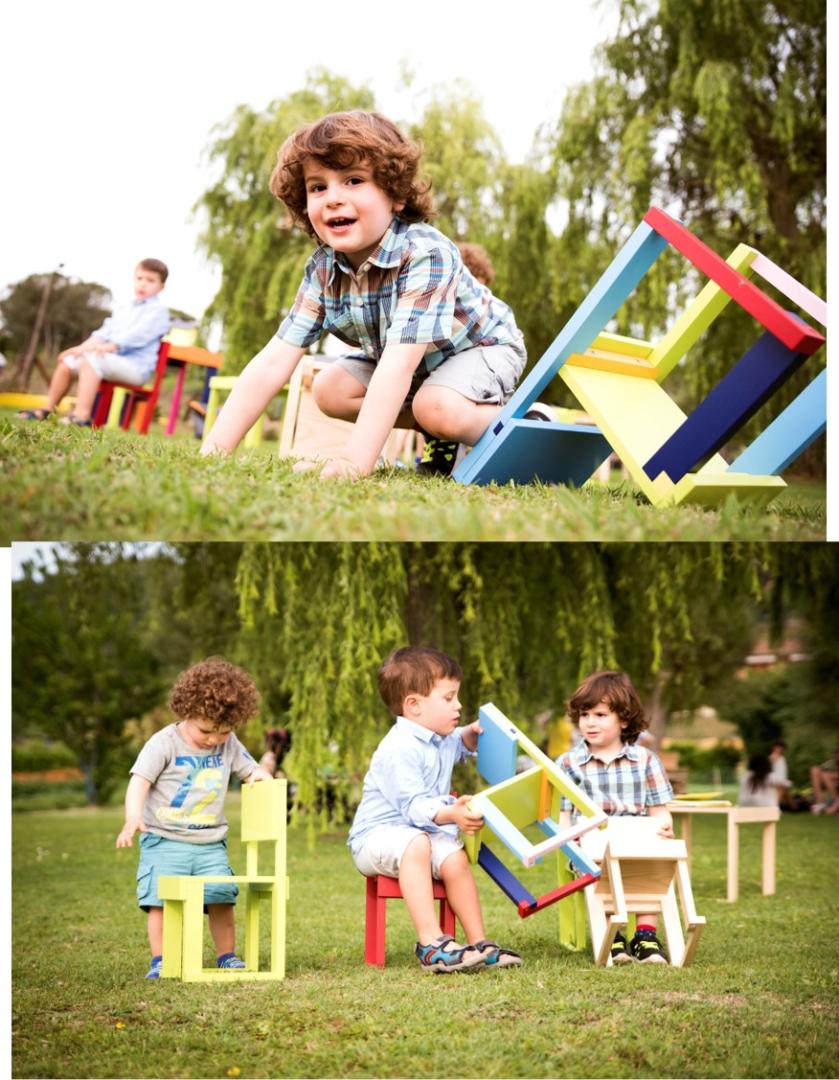
Beautiful design can become a personal experience of autonomy, playability and flexibility and increase belonging to the product. Sustainable design can become a personal experience: personalization, imagination and playfulness that young and old can share through objects, in mixing colours, assembling and disassembling, playing with them and in reinventing them (REEASY). The do-it-yourself assembly recalls the lego constructions and the "Doni Fröbel". Modules are beautiful constructions in themselves and especially in educational environments mounting their own chair creates a sense of belonging. Structure and dimensions of EASYDiA + EASYoLo allow children to play and move them without sacrificing comfort and safety. Children observed interacting with them immediately used them by stacking, moving, overturning them, making series, trains, castels, walkways etc., all without danger thanks to its stability. Finally, we would like to underline other aspects of flexibility and multifunctionality: EASYDiA + EASYoLo fit several home environments and are suitable for use by kids and adults at the same time (as coffee tables for example), facilitating long-term use.
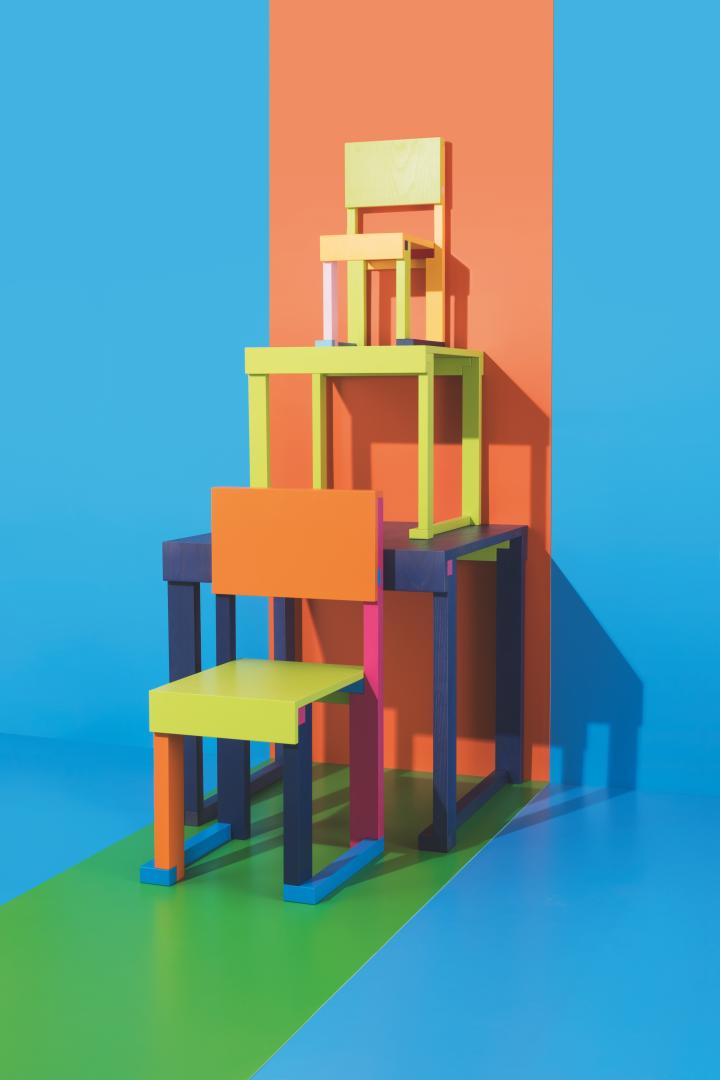
Visual and tactile experience through colors and paints. We have designed several integrable collections of EASYDiA and EASYoLo: multicolor, one-color (EU ash with open hole lacquering), natural (KM0 chestnut with semi-transparent color) and in addition, thanks to the modularity, they can be customized thanks to the user's imagination. The shapes are simple and the colors have been studied for the development of the child, not connected in a simplistic way to the gender issue, but designed to ensure that the child can live a visual experience that stimulates creativity and incentives the exploration of aesthetic tastes, also based on age: a greater possibility of "pastel" colors combinations for the kids size (18 months - 5 yrs) and more bright colours according to a less varied combination for the junior ones
Key objectives for inclusion
Inclusion, equal opportunities, universal design. In addition to lightness, we studied the dimensional proportions and then designed two different sizes for greater and easier usability of children. By doing so, the smallest children (kids size) are able to maneuver the products and to sit down adequately with the chair under the table without the need for any help from the adult and, together with their simple shape, allows them to be used even by children with prehensile disabilities.
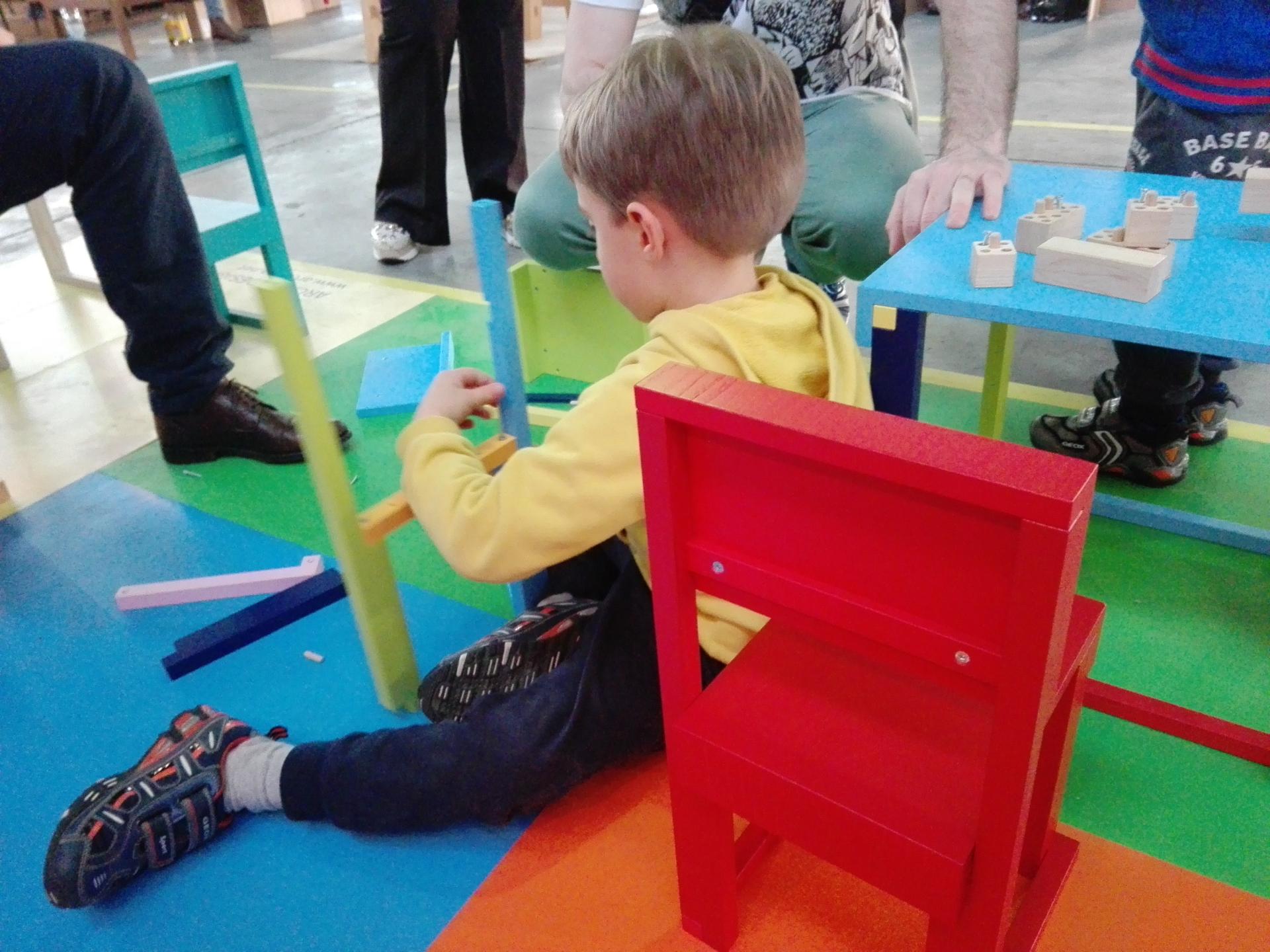
Public participation and co-design. We constantly worked observing children and getting inputs form them. We started with the aim of raising awareness among the population and especially children on the issue of circular economy and stimulating the creativity of children via "do it yourself" and supporting a cultural switch towards circular economy and creativity through design. For this we have created a workshop and a competition during the Spoleto a Colori Festival (Italy): we provided children and adults alike with our first prototypes and they decorated their own chair. The best ones were exhibited in the Galleria d'Arte Moderna in Palazzo Collicola (Italy). It continued with the Multiverse co-working center in Foligno (Italy), to which we have donated some pieces for use in their common spaces and workshops for children again, to raise awareness the community to the issues of sustainability and the Circular Economy, and of the Week Hand Festival (Festival del Fatto a Mano, Foligno, PG) and of the "Fa la Cosa Giusta" event (one 3-days on sustainability): in these last two experiences we tested the resistance of our paints during didactic works and to aggressive markers: no problem! We also found the community very interested. The workshop prepared at Fuorisalone Milan was a perfect hub to experiment with children new creative combinations of our modules and the appealing philosophy of our REEASY system for children.
Results in relation to category
Sustainability and Circular Economy. As regards circularity, taking as a reference the latest research conducted by the Symbola Foundation and FederlegnoArredo on furniture companies for the circular economy "Made in Italy inhabits the Future", the project developed by us, EASYDiA + EASYoLo, appears to have 7 of the 10 drivers of the circular economy, in particular:
1. eco-design
2. durability
3. disassembly
4. biomaterials
5. renewable and certified materials
6. reduction of pollutants
7. reuse and upcycling
Recycling is good, but upcycling is better!
This aspect is very important, we have focused a lot and directed the utmost attention to it. Granting a second existence to things and making objects reborn in another form is an aspect that must surely be taken into consideration by future designers if we want to move towards a complete circular economy of products: less waste, less energy consumption, less C02 emissions and climate-altering gases, less use of raw materials. In our case, and in all cases where the object is beautiful, it has its uniqueness, its history, upcycling becomes an even more precious act. Inspired by the peasant culture, in which what we now define "upcycling" was commonly done, for example by taking the legs of a broken chair and joining them to other parts to obtain a coffee table, thus creating objects that are perhaps a little imaginative but absolutely functional, even parts of EASYDiA + EASYoLo can be transformed, at the end of the product's life, into other toys for children (cars, rubber band guns, jewelry boxes, etc.), into other furniture or accessories (kitchen slate, photo frames, accessories for notebook computers, armchair, containers, etc), As far as possible, we have tried to set up a more efficient system, in terms of environmental impact, compared to pure and simple recycling.
How Citizens benefit
As stated above in the Co-design / Public participation section, citizens and companies were involved in several steps and ways on a two-ways directions: to get feedbacks on the products and its philosophy and to raise awareness on creative reuse and circularity.
We have had confirmations on:
colors and combinations: the colors themselves and their combinations were very popular, and the 3 collections (multicolor, monocolor, natural) very much appreciated also in a micx and match approach;
playability: children played while having fun assembling and reassembling them in other objects, alone or with the help of adults; they played with the products already assembled, stacking them and composing them together in other forms (trains, stages, etc.) and creating fantastic stories or they simply played with the individual modules;
stability and wear: when used by children during games and activities with EASYDiA + EASYoLo and when adults tested them, they proved to be highly stable and resistant;
To get feedback on our project we sought and obtained a valuable collaboration with Kw Bologna (https://kilowatt.bo.it/), a work cooperative made up of different souls operating in the sectors of social innovation. Through their motto, "include while designing!" they promote involvement and co-planning to create well-being, innovation and competitive advantage. Specifically, for the EASYDiA + EASYoLo project we collaborated with KwBaby, an experimental educational service created by Kilowatt at the Serre dei Giardini Margherita in Bologna (patronage of University of Bologna and Municipality of Bologna), for the age group 0-6 years. We gave KwBaby kindergarten free use of some of our EASYDiA and EASYoLo to get improvement suggestions, also since they used them mainly outside and had space constraints. This exchange has indeed produced some general indications both on the strengths and / or weaknesses of our chairs and tables and indications for optimal use in schools.
Physical or other transformations
Innovative character
The project concerns the product design of the wood-furniture sector. Its innovative character lies in thinking of our product also as capital that can be reintroduced into the market as much as possible, through restoration, regeneration and transformation, thus also maintaining the relationship with its users over time (loyalty ). The modularity allows the substitutability. The use of solid wood allows the restoration of deteriorated elements and their reintroduction into the market. The regeneration of modular elements of Junior size, allows to obtain modular elements of Kids size to be reintroduced on the market as new. The transformation makes it possible to obtain other products from the primary product and for us to provide assistance. In addition to undoubted advantages linked to sustainability, these innovative features that allow us to purchase the material only once and resell it several times, together with the assistance service for the transformation, bring us considerable economic advantages. This translates into product innovation, but also into process innovation, and, in our opinion, turns out to be a real business change.
Usually circular products in the furniture sector develop max one or two aspects. No other products currently available concentrate so many aspects fostering a real impact on both material flows and cultural attitudes.
The real innovativeness has still to be explored though! The modular system could be taken further and involve several products beyond chairs and tables, and different sizes, but this will require a very structured and comprehnsive logistic system that are beyond our small reality. This aspect was explored only at prototype level, the start though is in place.
Learning transferred to other parties
Project results worth of transferring are those summarised in our Manifesto and Philosophy:
Materials and supply chain with high standard of health and sustainability. The superior value of solid wood in terms of durability and regeneration and enhancement of disused and local woods. It would be worth to have the production chain, made mainly of artisans in Italy, aware of the benefits of healthy products and also of peculiarity in the production processes. Also parallel to what happens for the food sector, more stringent criteria would be needed as regards the information, also in self-certification, that the wood-furniture companies must provide to users regarding the materials and finishes used.
Modularity as a key aspect of durability and regeneration/reuse, with possibility to implement a very flexible system.
Increase the knowledge and awareness of public administrators on the potential and correct management of the forest heritage, with real awareness campaigns and discussion tables between experts of the territory and resources, companies in the wood furniture sector, companies and bodies in charge of maintenance, administrators . First of all, we would be very interested in participating in these tables, and we made ourselves available to prepare pilot projects.
Favouring also through tenders and financing projects for the certification of Italian timber on a regional / territorial basis.
Our main result is the capacity to integrate a reuse culture with personal and changing tastes and to transfer creativity in the hands of the consumers RE-DESIGN through a structured and stimulating modular system, starting with children. The consumption phase is the one that is most affected by habits, expectations and cultural factors and encouraging circular consumption habits is equivalent to a real change of mentality and a real awareness campaign, to reconnect the concept of personal well-being in people to a more general concept of social well-being.