nilak
Basic information
Project Title
Full project title
Category
Project Description
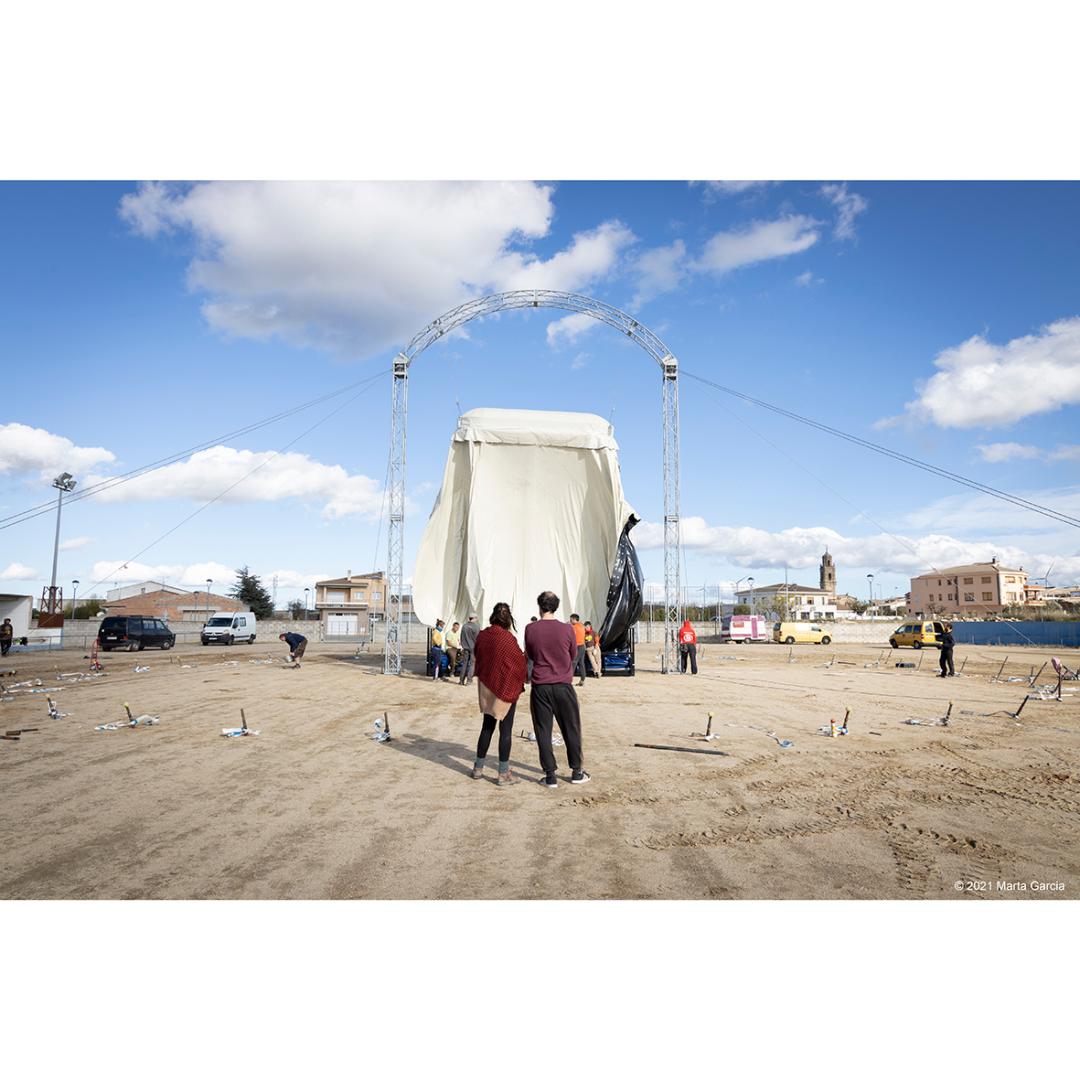
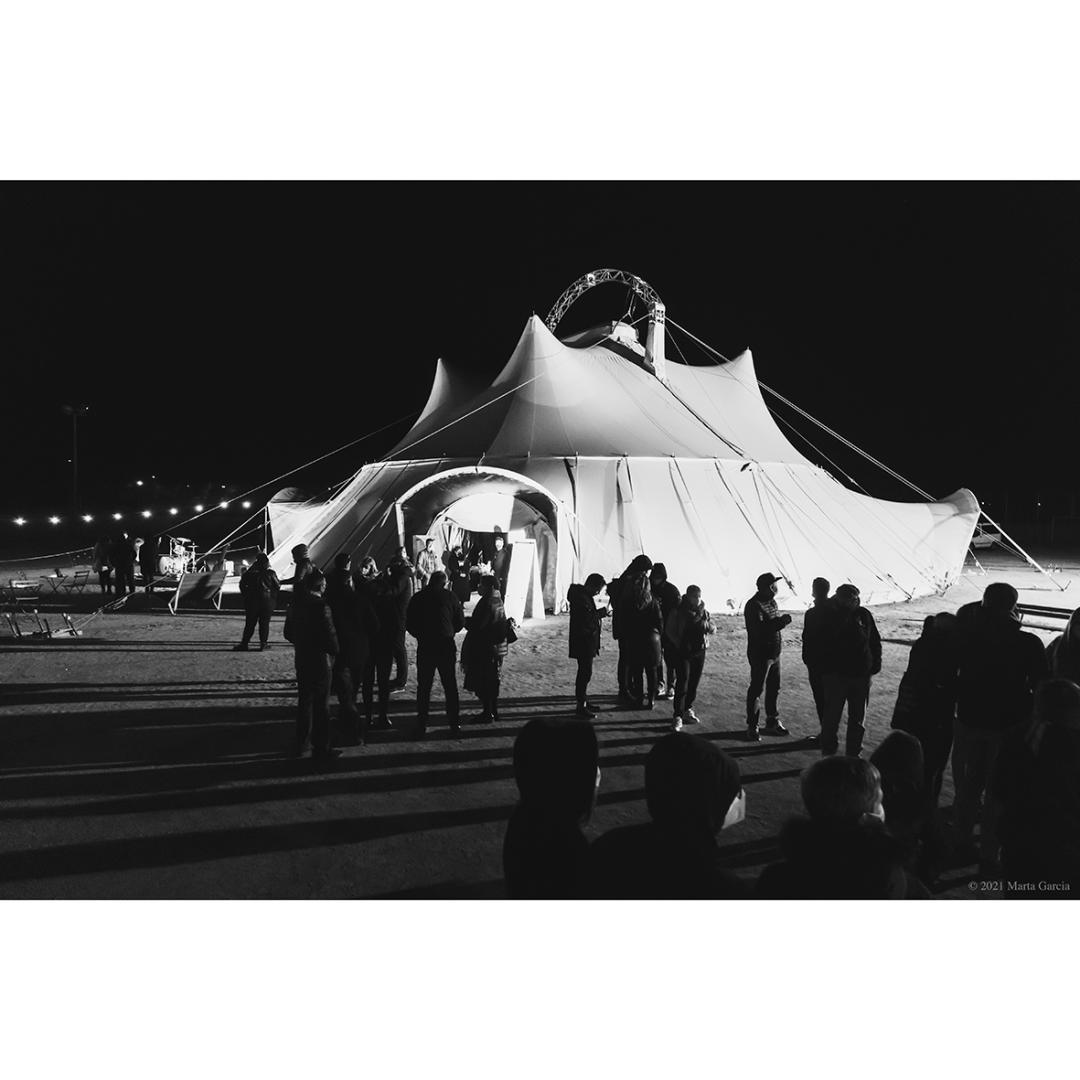
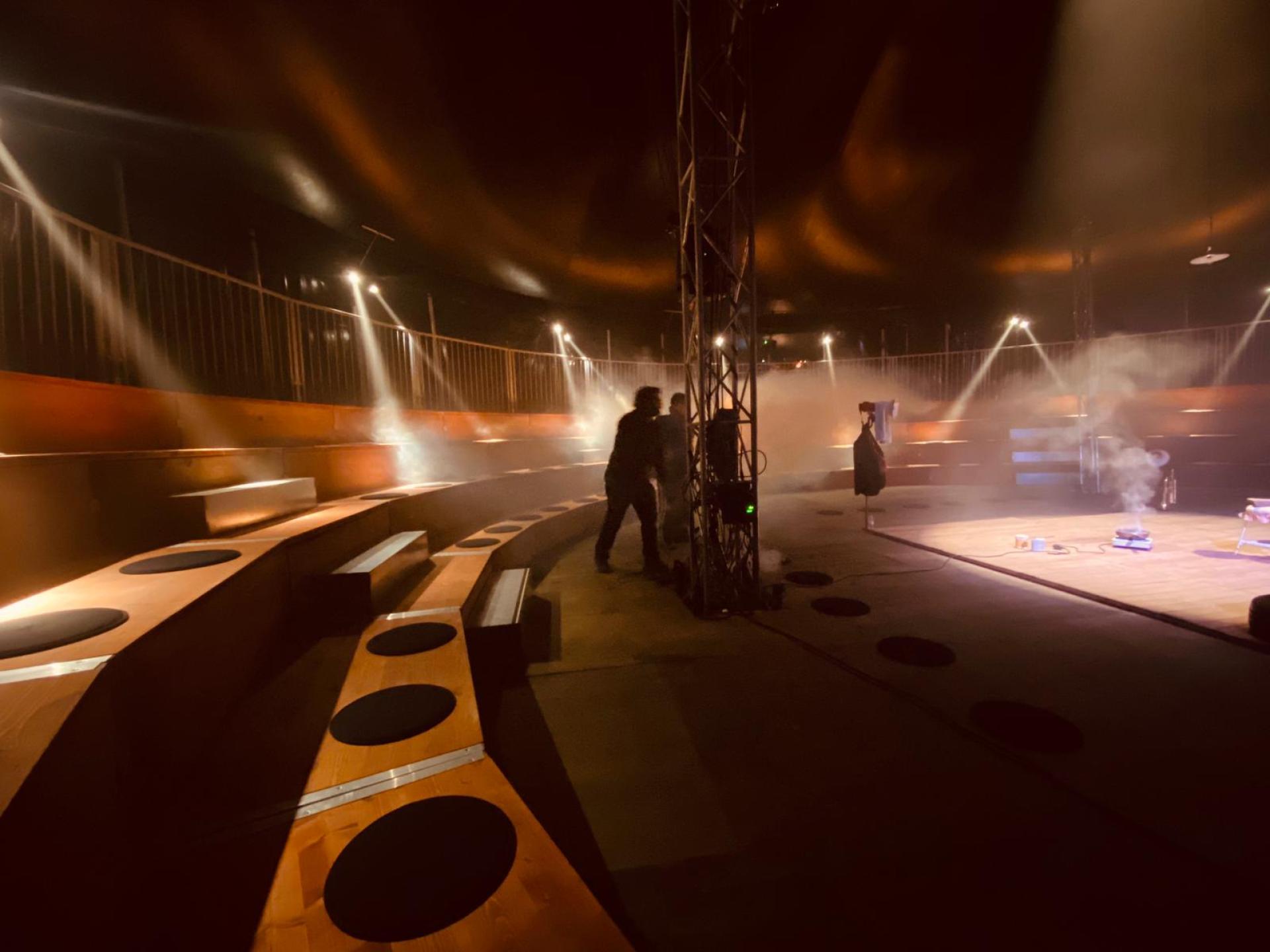
nilak is an itinerant performance space with a circus tent that works as a theatre in Catalan regions that do not have a theatre of their own (26% of the total of the regions).Its nomadic character wants to decentralise performance arts and move them away from the big urban centres, thus making villages the epicentre for contemporary performance arts. This model allows us to reach whatever village and to build a theatre with all the technical equipment needed for a presentation of a performance.
Geographical Scope
Project Region
Urban or rural issues
Physical or other transformations
EU Programme or fund
Which funds
Description of the project
Summary
According to the Cultural Statistics of Catalonia for 2021 (https://dadesculturals.gencat.cat/ca/estadistiques_culturals_catalunya) published by the Department of Culture of the Government of Catalonia, 26 % of Catalan regions do not have a theatre (Alt Urgell, Alta Ribagorça, Cerdanya, Conca de Barberà, Lluçanès, Moianès, Montsià, Pallars Sobirà, Priorat, Terra Alta and Vall d’Aran). This situation is not only true for Catalonia, but is repeated in Spain and other European countries.
Faced with this territorial situation that is not only linked to the construction of cultural infrastructure, nilak proposes a new model of cultural infrastructure based on an artistic, social and cultural project in order to bring closer and democratise access to the contemporary performance arts on a territorial level.
The project is an itinerant performance space with a circus tent that works as a theatre and uses the nomadic character in order to decentralise performance arts and move them away from the big urban centres, thus making villages the epicentre for contemporary performance arts. This model allows us to reach whatever village and to build a theatre with all the technical equipment needed for a presentation of a performance.
The tent itself, an architectural element traditionally associated with circus arts, is a construction that offers space for a stage and serves as a meeting space. Just like a theatre, a cinema, an auditorium, a classroom or even a book. The tent brings us together in a closed space in order to open our imagination, to alter our perception and to enjoy our sensitivity. It is a refuge, a container, a framework, a place that incentivises a meeting between you and me in order to live in the present, in a temporary community. But moreover, a tent is an architectural element that unlike a theatre, is not static.
Key objectives for sustainability
Our understanding of the tent as a performance space helps us explain that the “construction” of new cultural infrastructure is not necessarily linked to building “solid” equipment but rather linked to creating a holistic project. It is important to understand the singularity of the territory on a demographic level and to contrast it with the expenses generated by stable structures and its maintenance. The tent is at the same time an example of sustainability since, during its moments of inactivity, it does not generate expenses, waste or changes in the landscape linked to its structure.
The tent as a performance space allows us to build a fully equipped theatre within a couple of days without leaving a material trace afterwards, but rather leaving an emotional and experiential trace: an impression. The transformation of an urban space is thus understood as a cultural and social transformation.
With this holistic approach to the project, we do not only take into account environmental sustainability, but social and economic sustainability as well. For example, during the first edition of the project in Vilalba dels Arcs, we managed to achieve that the budget provided by the municipality on a basis of public subsidy was lower than what the project spent on local agents. In this way, apart from promoting local business and (cultural) industries, money coming from a local institution was given to the local population in a direct form, contributing to a circular economy on a local level.
The project takes into consideration yet another aspect of sustainability: the fact that, after the project visits different towns, its impact generates a demand for programming of performance arts and educational cultural activities, leading to its subsequent implementation and realisation. hus, sustainability as a non-dependence on the project is key to generating this impact over time. The effects of this can already be seen in practice.
Key objectives for aesthetics and quality
We see the whole project as a mediation in itself, which is why aesthetics and quality are key pieces so that the viewer can have an experience not only in relation to the exhibition of performances but also in relation to the environment and the contents of the project. We were looking for and created a sustainable performance space that can respond to the necessities of the territory. We wanted to create an ephemeral theatre where all the components (promotional material, illumination, the performances, gastronomy) are of the highest quality. Like this, we want to give value to the people who come to have an experience as active spectators.
We have worked with top fashion designers such as Miriam Ponsa (https://miriamponsa.com) for the design of the workers' wardrobe, or light designers such as Jou Serra (https://www.joanaserra.com) for the stage lighting design and have collaborated with companies such as Urbidermis (https://www.urbidermis.com/).
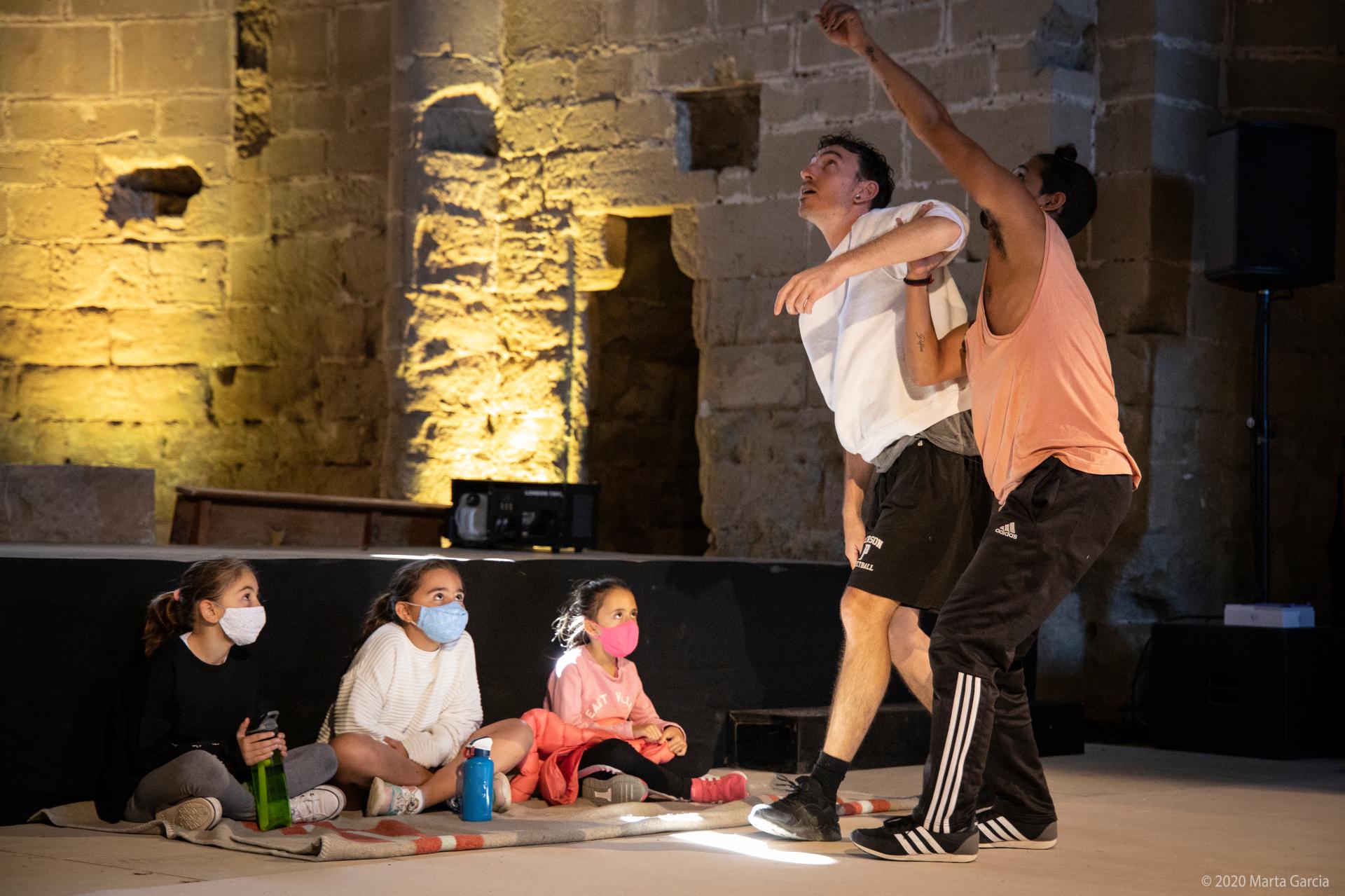
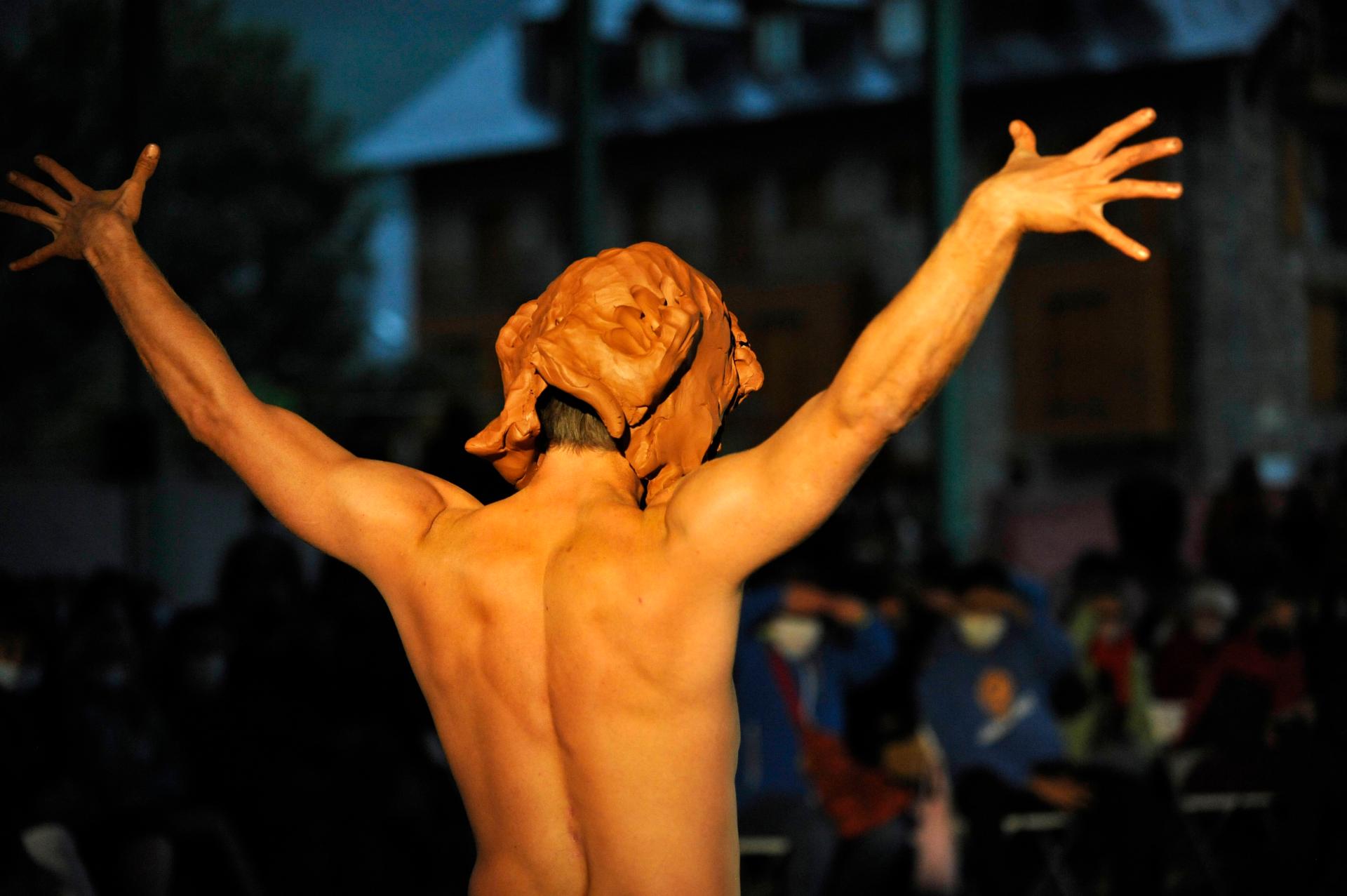
The aesthetic quality is present during the whole experience, from the moment the audience starts its journey to the moment they enter the tent to see the show. During the first edition, performances previously programmed in theatres such as Mercat de les Flors or National Theatre of Catalunya, were suddenly presented in Vilalba dels Arcs with 700 inhabitants, who were able to see Likes (https://mercatflors.cat/espectacle/likes/), Pugilatus (https://mercatflors.cat/espectacle/pugilatus/) and ILIV (https://mercatflors.cat/espectacle/i-les-idees-volen/.
This is an example of how we can bring performances that are usually programmed in main theatre venues to rural towns and show that this can be a viable practice and that there is an audience in such areas as well.
Key objectives for inclusion
The project was born with one main objective: to guarantee equal access to performing arts throughout the whole territory, thus guaranteeing that an infrastructure such as a theatre would be available throughout the country. We believe it is crucial to understand each edition of the project as a mediation and a dialogue with the locals, so that the inclusion of the inhabitants can be central to the process of the planification and creation of each edition of the project.
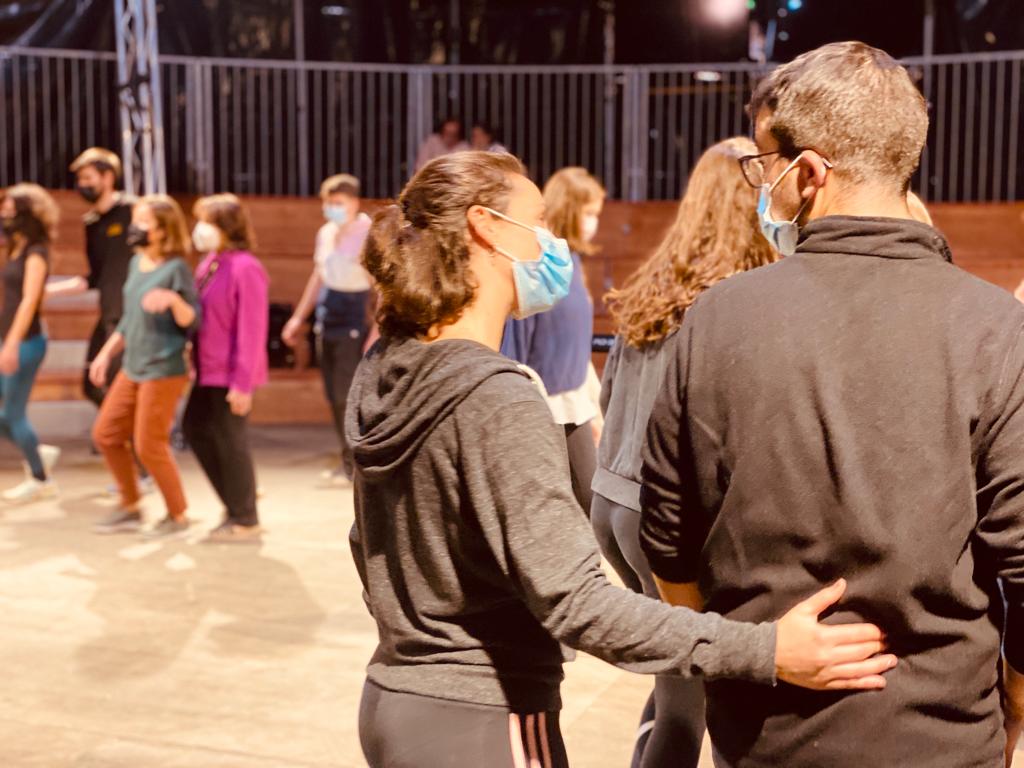
Taking the activities planned for the first edition as an example, 10 out of 20 were carried out with the participation of local and regional associations, and during the activities, local personnel in need of a job were contracted.
Since the space is adapted for wheelchairs, this allowed a person with reduced mobility to participate in a community activity (a joint creation connecting a local association and professional artists; link to the performance: https://www.youtube.com/watch?v=7sAC6ZnkB-Y&feature=emb_imp_woyt).
We are aware that the project is visiting villages with an ageing population, so the access to social media is difficult. To facilitate the purchase of tickets to the elderly and local population, the tickets were first sold in a physical form at the local municipality for two weeks, and only then online sale was open.
One of the activities carried out was the so-called “pending ticket”. Similar to the “cafe sospesso” model that can be found in Napoletan cafes, members of the audience can buy an extra ticket and leave it to someone that is not able to afford one.
Moreover, we want to ensure equal representation both in the project’s team and in the programme itself, inviting both senior and emerging artists.
Results in relation to category
In order to understand that the construction of a country is not random, it is important to observe the way the territory is constructed from a political, geographical and cultural point of view. In our case, the fact that 1 out of 4 Catalan regions does not have a theatre does not only affect the possibility of presenting performances but also influences the location of performance art schools and makes the access to cultural activities for schools more difficult. In relation to “Prioritising the places and people that need it the most” we see nilak as a possible new model of cultural infrastructure that makes up for the lack of institutional equipment.
Some of the most important data that we got from our impact study are:
- 22,4% of assistants had not attended any cultural event in the past year.
- In the case of schools, 84% of students had not attended any circus or theatre performance in the previous year, not with their family nor with school. After the first edition of the project, all the schools of the Terra Alta region signed a letter demanding access to the project activities throughout the year.
- 81,6% of the spectators rated their overall satisfaction with the project with 10 points.
- 10 out of 20 activities of the first edition were carried out by local associations, entities or circus schools.
This information clearly shows that the existence of a project like nilak is necessary and also shows that building new cultural infrastructure that can be adapted to the necessities of the territory can be a solution to a territorial deficit.
How Citizens benefit
This is one of the main points of the project. Working together does not only involve participation but also a sense of belonging to the project.
The work with local institutions starts one year ahead, on one hand to look for budgetary solutions together (as we do not want that the arrival of a theatre affects the annual budget of the municipality) and on the other hand to start looking for associations and other local agents that could collaborate in the preparation of activities.
In order to carry out this task, we work together with a territorial delegate, a person who lives in the region and who has a direct relationship with the social and cultural fabric. This person is also present both in the design of the activities and during the actual edition of the project.
Local associations’ direct participation in the activities creates a constant dialogue that goes beyond the relationship between the artists and the spectators. It breaks the “fourth wall” and places the local inhabitants in the centre of the project, without imposing the programming but rather creating space for exchange of experiences and skills. If the project did not have this in mind, it would be just another commercial activity that wants to fill the seating capacity.
Physical or other transformations
Innovative character
The innovation of the project lies in the design and construction of a performance space with a public character that is in this case also itinerant. To put focus on regions that do not have a theatre is at the same time changing the idea and position of a centre, since the epicentre is placed in villages far from the institutional cultural circuits. It creates a theatre built for the people and for the artists. In the concrete case of nilak, the project was conceived by different artists that come from such regions and were looking for a way to share their profession.
On the other hand, we are making a revision of the notion of a “circus tent”: in this case, we build it as a theatre which gives the option to replicate the project in other territories with similar necessities. This opens a chance to create new structures that are not tied to “solid” construction and that increase sustainability by reducing maintenance expenses in moments of inactivity. Furthermore, no architectural impact is generated in these villages (villages located in rural areas).
Another aspect to be taken into account is the understanding of the activity as an act of mediation. The participation and involvement of local institutions and associations in the activities makes the project part of the village, which breaks the “fourth wall” and facilitates access to activities.
Learning transferred to other parties
It is necessary to look at the results and the impact of the project, assessing impact on the territory, audiences, artists, institutions and sustainability. This information can help us improve the project and at the same time serves as a collection of cultural data. Sharing and analysing the extracted information makes it easier to open the doors to new projects, to demonstrate the viability and necessity of such projects, and moreover helps to prove the concrete work behind it and gives institutions tangible results.
The results were obtained by gathering numerical data, interviews and surveys directed at artists, spectators, businesses, institutions, schools, students and local associations. These were carried out by the DEP Institute (https://www.dep.net/). The collaboration with DEP continues into 2022 in order to give support to the project during the whole year.
Apart from the extracted data, the constant dialogue with institutions and local agents allows for the project to evolve and stay alive, as we are learning from previous experiences and needs that the territory demands. This dialogue helps us detect new needs, for example the fact that all of the schools of the Terra Alta region, 15 in total, claimed the presence of the project in the region. This has led to work currently being done on the development of an annual pedagogical plan, which is a good example of how the communication between the population and the project helps achieve common goals.
We attach an extract from the impact study on the results of the first edition of the project, carried out by the DEP Institute (in Catalan)