Zambujal 360
Basic information
Project Title
Zambujal 360
Full project title
Zambujal 360
Category
Prioritising the places and people that need it the most
Project Description
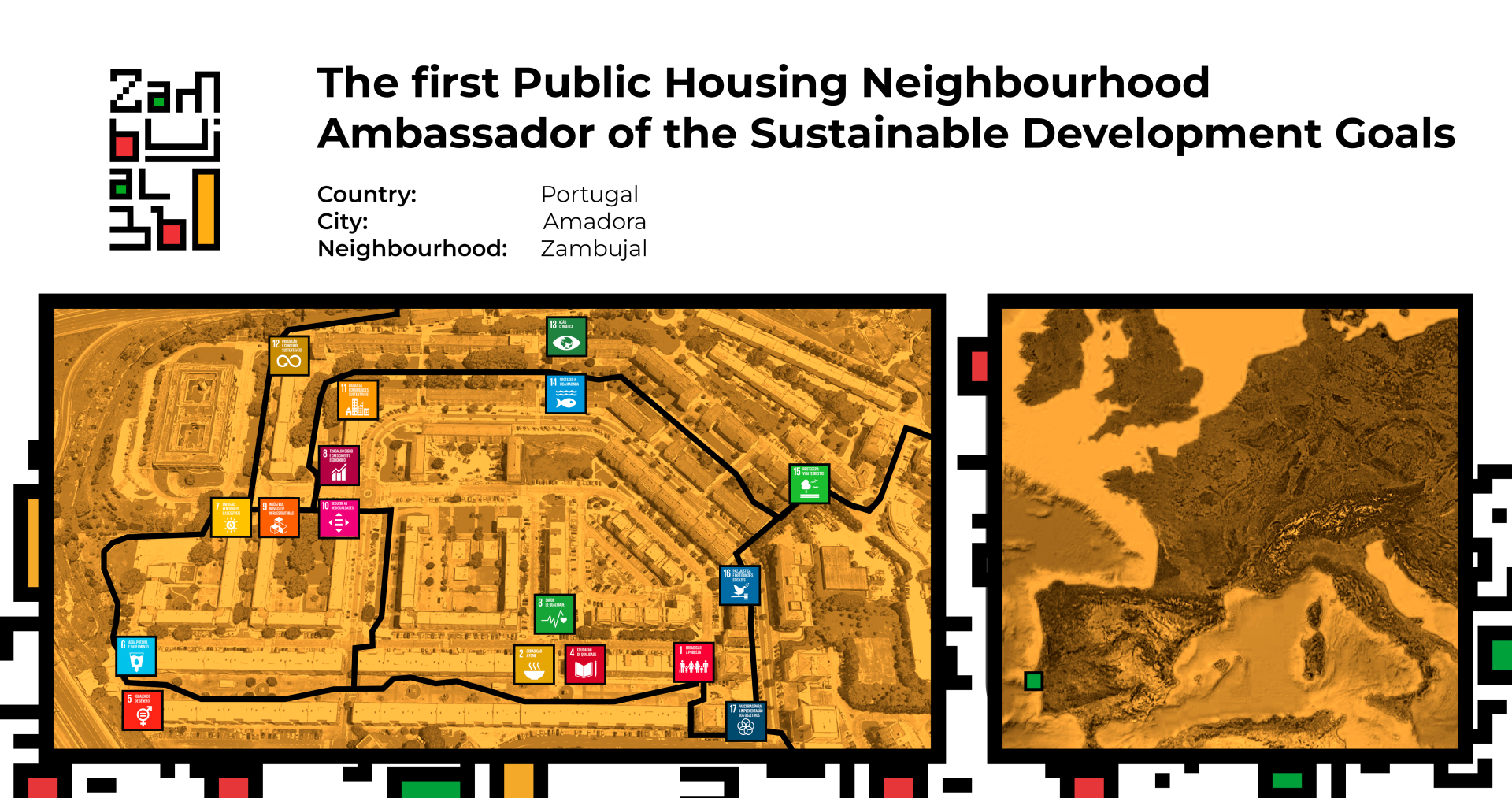
Zambujal 360 will be the first Public Housing Neighbourhood Ambassador of the Sustainable Development Goals of the United Nations.
Geographical Scope
Local
Project Region
Amadora Municipality
Alfragide Parish Council , Portugal
Alfragide Parish Council , Portugal
Urban or rural issues
Mainly urban
Physical or other transformations
It refers to a physical transformation of the built environment (hard investment)
EU Programme or fund
No
Description of the project
Summary
Zambujal 360 aims to turn the neighbourhood of Zambujal (Amadora, Portugal) into the first Public Housing Ambassador of the Sustainable Development Goals (SDGs) in the world. An education hub for the SDGs dissemination, simultaneously empowering the community. This concept fits in Strand C: “New European Bauhaus Education Champions”, and Category 2: “Regaining a sense of belonging”.
This neighbourhood has characteristics we intend to enhance:
- A migrant and multicultural community from Portugal and abroad, predominantly from the Portuguese-Speaking Countries;
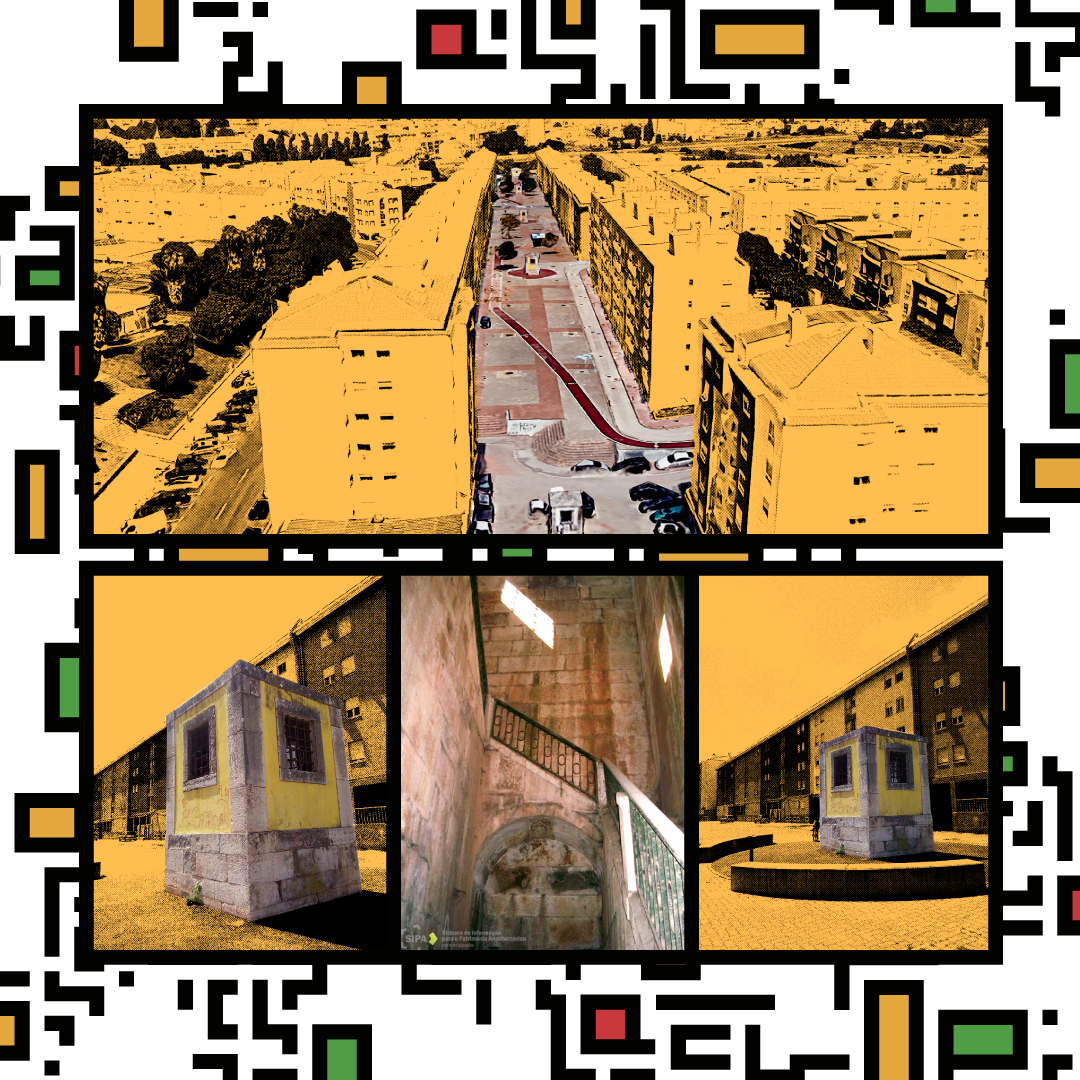
- The “Underground Galleries of Águas Livres Aqueduct”, a national heritage monument;
- Good geographic location contiguous to Monsanto Park, and to the city centre having good accesses;
- Wide streets, green areas and a bike path.
Zambujal 360 aims to contribute to the Social, Cultural, and Environmental Development of the community, through education, involving the residents in all its phases. It is rooted in three main pillars: Education through Art (Urban Art Gallery with 17 walls about the 17 SDGs); Education through Health (implementation of weekly walks stopping in each artistic SDG wall for gymnastic exercises); Local Commerce (a merchants network to discuss sustainable practices, fairtrade, and ways to promote their businesses more broadly).
The bike path connects the neighbourhood and the future Urban Art Gallery through its walkable and bikeable route. To welcome visitors, a training programme about the 17 SDGs will be offered to the youth of Zambujal so they can become “SDGs Ambassadors”, gaining the skills to lead two of the pillars: Education through Art and Education through Health.
As Ambassador of the SDGs, Zambujal 360 will benefit not only the local community (improving their sense of belonging, valuing their cultural roots, and preserving common spaces), but all external citizens keen to learn more about the 17 SDGs, including students, academics, policy-makers, and organisations.
This neighbourhood has characteristics we intend to enhance:
- A migrant and multicultural community from Portugal and abroad, predominantly from the Portuguese-Speaking Countries;
- The “Underground Galleries of Águas Livres Aqueduct”, a national heritage monument;
- Good geographic location contiguous to Monsanto Park, and to the city centre having good accesses;
- Wide streets, green areas and a bike path.
Zambujal 360 aims to contribute to the Social, Cultural, and Environmental Development of the community, through education, involving the residents in all its phases. It is rooted in three main pillars: Education through Art (Urban Art Gallery with 17 walls about the 17 SDGs); Education through Health (implementation of weekly walks stopping in each artistic SDG wall for gymnastic exercises); Local Commerce (a merchants network to discuss sustainable practices, fairtrade, and ways to promote their businesses more broadly).
The bike path connects the neighbourhood and the future Urban Art Gallery through its walkable and bikeable route. To welcome visitors, a training programme about the 17 SDGs will be offered to the youth of Zambujal so they can become “SDGs Ambassadors”, gaining the skills to lead two of the pillars: Education through Art and Education through Health.
As Ambassador of the SDGs, Zambujal 360 will benefit not only the local community (improving their sense of belonging, valuing their cultural roots, and preserving common spaces), but all external citizens keen to learn more about the 17 SDGs, including students, academics, policy-makers, and organisations.
Key objectives for sustainability
One of the main environmental issues of the Zambujal neighbourhood is street pollution. In the past, many cleaning activities were done but the outcome of those actions was ephemeral cleaning with no future sustainability.
To address this issue, in short-term, we believe that by turning the Zambujal neighbourhood into the first Public Housing Ambassador of the SDGs, we create an educational hub for the 17 SDGs, their values are embedded and taked in, thus increasing the community sense of belonging and developing the feeling of need to care after the common areas. On top of this, as Zambujal 360 will organise guided tours led by local young residents, a long-term vision will start to take action since they will be acting as community agents willing to care for a clean and beautiful neighbourhood to show.
Another key objective is to educate the community, as education can enable acceptance of the changes needed for green transition. Being a Public Housing neighbourhood, built with controlled costs in the 70s of the past century, it is highly important to learn about energy efficiency, water costs control, the importance of clean and climate isolated houses and their impact in good health, and how local sustainable options (e.g., reducing plastic) impacts the global task to save the planet.
We believe that painting 17 walls, one for each SDG, will create awareness about them. To implement the Urban Art Gallery, sustainable options will be prioritised: the majority of the artists are local for less pollutant travels; sustainable and durable materials like ceramics will be prioritised; and working for zero waste or with reused materials.
One of the Zambujal 360 partners, linked to the SDG7, is already keen to offer former eolic turbines to be dismantled and transformed into urban equipment or playgrounds, following the references of nordic countries.
To address this issue, in short-term, we believe that by turning the Zambujal neighbourhood into the first Public Housing Ambassador of the SDGs, we create an educational hub for the 17 SDGs, their values are embedded and taked in, thus increasing the community sense of belonging and developing the feeling of need to care after the common areas. On top of this, as Zambujal 360 will organise guided tours led by local young residents, a long-term vision will start to take action since they will be acting as community agents willing to care for a clean and beautiful neighbourhood to show.
Another key objective is to educate the community, as education can enable acceptance of the changes needed for green transition. Being a Public Housing neighbourhood, built with controlled costs in the 70s of the past century, it is highly important to learn about energy efficiency, water costs control, the importance of clean and climate isolated houses and their impact in good health, and how local sustainable options (e.g., reducing plastic) impacts the global task to save the planet.
We believe that painting 17 walls, one for each SDG, will create awareness about them. To implement the Urban Art Gallery, sustainable options will be prioritised: the majority of the artists are local for less pollutant travels; sustainable and durable materials like ceramics will be prioritised; and working for zero waste or with reused materials.
One of the Zambujal 360 partners, linked to the SDG7, is already keen to offer former eolic turbines to be dismantled and transformed into urban equipment or playgrounds, following the references of nordic countries.
Key objectives for aesthetics and quality
Public Housing projects made in Portugal over the past century resolved issues related to citizens' poor quality of life. The original strive to design several projects motivated the young Portuguese architects team who planned the Zambujal neighbourhood and won a prize in 1986 from the International Art Critics Association enhancing aesthetics and quality of life. However, political decisions underestimated the maintenance and requalification of the properties which, combined with a lack of social strategies, resulted in a loss of aesthetics and quality of experience.
That is why Zambujal 360 presents Education through Art as one of its key objectives, praising aesthetics and turning youth into agents for social change. In fact, creating an open-air Urban Art Gallery with meaningful paintings by different artists (ceramicists, illustrators, draughtsmen, painters and street artists), will reconnect the sense of belonging and pride of its inhabitants for being involved in the project:
1. Participation in meetings with artists and residents;
2. Creating a bond between residents and artists by executing open-air Art;
3. The Training Programme will connect youth to external invited volunteers;
4. The guided tours will promote the interaction among the community and outside visitors.
The second key goal of Zambujal 360 - Education through Health - reconnects the neighbourhood to the original design plan, offering residents the best possible quality experience, taking advantage of large streets, green areas as an extension of the Monsanto Park and its commerce. All these aspects also enlarge the architect’s original intention by giving reasons to external people to visit the neighbourhood.
And the icing on the cake is the “Underground Galleries of Águas Livres Aqueduct” bringing an unique experience for those who visit the neighbourhood, since the Galleries are going to be requalified and included in the tour guides.
That is why Zambujal 360 presents Education through Art as one of its key objectives, praising aesthetics and turning youth into agents for social change. In fact, creating an open-air Urban Art Gallery with meaningful paintings by different artists (ceramicists, illustrators, draughtsmen, painters and street artists), will reconnect the sense of belonging and pride of its inhabitants for being involved in the project:
1. Participation in meetings with artists and residents;
2. Creating a bond between residents and artists by executing open-air Art;
3. The Training Programme will connect youth to external invited volunteers;
4. The guided tours will promote the interaction among the community and outside visitors.
The second key goal of Zambujal 360 - Education through Health - reconnects the neighbourhood to the original design plan, offering residents the best possible quality experience, taking advantage of large streets, green areas as an extension of the Monsanto Park and its commerce. All these aspects also enlarge the architect’s original intention by giving reasons to external people to visit the neighbourhood.
And the icing on the cake is the “Underground Galleries of Águas Livres Aqueduct” bringing an unique experience for those who visit the neighbourhood, since the Galleries are going to be requalified and included in the tour guides.
Key objectives for inclusion
In terms of inclusion, Portuguese Public Housing neighbourhoods have a long history of creating communities for people with different backgrounds and geographical roots. Zambujal 360 aims to celebrate its 40+ years old as a Public Housing Community by working with all its residents, opening the world to the neighbourhood and the neighbourhood to the world.
In specific, and since NEB values are aligned to the SDGs, we have established the following aspects to make it inclusive:
- Diversity of artists with different artistic fields to build the Urban Art Gallery;
- Inclusion of all residents keen to participate in every phase of the project;
- The Urban Art Gallery will be of free and open access;
- The bike path to promote Education through Health will be of free and open access and use, allowing wheelchairs participants;
- Free training for the young residents to become “SDGs Ambassadors”, provided by the Zambujal 360;
- Guided tours available about the 17 SDGs in Portuguese, English, and a Portuguese-based Creole;
- Strive for equitable representation of genders in the beneficiaries but also in the internal team;
- Strive for representation of the young trainees from all different cultures represented in the neighbourhood citizens;
- Free access to clues about sustainable practices for local traders, provided by the Zambujal 360.
We highlight the bike path - inclusive by its nature: no steps and smooth declivity - as key element of the Zambujal 360 because it crosses the entire neighbourhood, connects the local merchants and residents within and to the exterior, and will be the route of the Urban Art Gallery about the 17 SDGs, promoting a walkable and bikeable pathway representing/corresponding/putting into practice the pillar Education through Health.
In specific, and since NEB values are aligned to the SDGs, we have established the following aspects to make it inclusive:
- Diversity of artists with different artistic fields to build the Urban Art Gallery;
- Inclusion of all residents keen to participate in every phase of the project;
- The Urban Art Gallery will be of free and open access;
- The bike path to promote Education through Health will be of free and open access and use, allowing wheelchairs participants;
- Free training for the young residents to become “SDGs Ambassadors”, provided by the Zambujal 360;
- Guided tours available about the 17 SDGs in Portuguese, English, and a Portuguese-based Creole;
- Strive for equitable representation of genders in the beneficiaries but also in the internal team;
- Strive for representation of the young trainees from all different cultures represented in the neighbourhood citizens;
- Free access to clues about sustainable practices for local traders, provided by the Zambujal 360.
We highlight the bike path - inclusive by its nature: no steps and smooth declivity - as key element of the Zambujal 360 because it crosses the entire neighbourhood, connects the local merchants and residents within and to the exterior, and will be the route of the Urban Art Gallery about the 17 SDGs, promoting a walkable and bikeable pathway representing/corresponding/putting into practice the pillar Education through Health.
Results in relation to category
Progress since April 2021 to February 2023:
- Sponsors per SDG:
1: SCMA (agreement in process)
2: Auchan Foundation (funded/prize)
3: Banco de Portugal (waiting for prize results)
4: Oriente Foundation (funded)
5: FLAD (agreement in process)
6: SIMAS (agreement in process)
7: GENERG (waiting for results)
8: Caixa Geral de Depósitos (funded/prize)
9: Manuel António da Mota Foundation (funded)
10: Altice Foundation (funded)
11: Turismo de Portugal (funded)
12: AREAS Group (funded)
13: BPI (funded)
14: EPAL (agreement in process)
15: TPF (funded)
16: Vieira de Almeida (agreement in process)
17: Amadora Town Hall and Alfragide Parish Council (agreement in process)
- Budget meetings to logistic matters were led with crane companies, filming and photo entities, owners of the houses, local entities, artists, residents, and trainees;
- Creation of a communication plan: logo, official website, logo animations, Instagram, recordings, training materials;
- Design of the “SDG Ambassadors” training programme and establishment of partnerships for its implementation and dissemination;
- Meetings with residents and artists;
- Elaboration of legal documents in collaboration with the law firm Vieira de Almeida;
- Diagnosis of local trade and creation of strategies to involve entities in collaboration with Montepio Mutualist Association.
The activities planned for 2023 are:
- New meetings between residents and artists: February to March;
- SDGs Ambassadors training: March to May;
- Artistic interventions in buildings: April to July;
- Guided tours: Starting in August;
- Filming all the process: February to August;
- Opening the Urban Art Gallery, tour guides and documentary: August/September.
- Sponsors per SDG:
1: SCMA (agreement in process)
2: Auchan Foundation (funded/prize)
3: Banco de Portugal (waiting for prize results)
4: Oriente Foundation (funded)
5: FLAD (agreement in process)
6: SIMAS (agreement in process)
7: GENERG (waiting for results)
8: Caixa Geral de Depósitos (funded/prize)
9: Manuel António da Mota Foundation (funded)
10: Altice Foundation (funded)
11: Turismo de Portugal (funded)
12: AREAS Group (funded)
13: BPI (funded)
14: EPAL (agreement in process)
15: TPF (funded)
16: Vieira de Almeida (agreement in process)
17: Amadora Town Hall and Alfragide Parish Council (agreement in process)
- Budget meetings to logistic matters were led with crane companies, filming and photo entities, owners of the houses, local entities, artists, residents, and trainees;
- Creation of a communication plan: logo, official website, logo animations, Instagram, recordings, training materials;
- Design of the “SDG Ambassadors” training programme and establishment of partnerships for its implementation and dissemination;
- Meetings with residents and artists;
- Elaboration of legal documents in collaboration with the law firm Vieira de Almeida;
- Diagnosis of local trade and creation of strategies to involve entities in collaboration with Montepio Mutualist Association.
The activities planned for 2023 are:
- New meetings between residents and artists: February to March;
- SDGs Ambassadors training: March to May;
- Artistic interventions in buildings: April to July;
- Guided tours: Starting in August;
- Filming all the process: February to August;
- Opening the Urban Art Gallery, tour guides and documentary: August/September.
How Citizens benefit
The residents of Zambujal are the beneficiaries of this initiative, but all those who will visit, learn, and shop, will contribute as well to new dynamics of the neighbourhood.
Zambujal 360 encourages the active participation of all residents in all its phases: from the assessment of needs to the joint construction of adequate answers and implementation.
The youth had and have a determinant role since they were involved in meetings with a nuclear group of leaders, thinking about strategies to engage more members to participate in the “SDGs Ambassadors” training programme and become community agents disseminating the SDGs and the NEB values.
Even though the Urban Art Gallery is free, visitors can pay a ticket to have a guided tour with a local SDG Ambassador. This means that external visitors can directly contribute to the local economy.
The elderly residents play an important role by using the bike path weekly, promoting good physical and mental health and making new friends among neighbours.
Regarding the local trade entities, they participated in a diagnosis to assess real needs and will be working with the Zambujal 360 team to implement sustainable practices and promote their commerce within a created network between them.
Local associations were involved from the very beginning. CAZAmbujal, a local entity formed by residents, plays a key role as partner in designing the original idea. There was also a network between other local associations that contributed to logistics, calling for the training programme, approaching the residents, implementing the training, and exchanging resources.
Since one of the goals is to open the neighbourhood to the world, Zambujal 360 also advocates for the principle of transparency, giving external actors the opportunity to participate with ideas for the growth of the project and by volunteering. One example is the requalification of the Underground Gallery, only possible due to the partner owner of the place.
Zambujal 360 encourages the active participation of all residents in all its phases: from the assessment of needs to the joint construction of adequate answers and implementation.
The youth had and have a determinant role since they were involved in meetings with a nuclear group of leaders, thinking about strategies to engage more members to participate in the “SDGs Ambassadors” training programme and become community agents disseminating the SDGs and the NEB values.
Even though the Urban Art Gallery is free, visitors can pay a ticket to have a guided tour with a local SDG Ambassador. This means that external visitors can directly contribute to the local economy.
The elderly residents play an important role by using the bike path weekly, promoting good physical and mental health and making new friends among neighbours.
Regarding the local trade entities, they participated in a diagnosis to assess real needs and will be working with the Zambujal 360 team to implement sustainable practices and promote their commerce within a created network between them.
Local associations were involved from the very beginning. CAZAmbujal, a local entity formed by residents, plays a key role as partner in designing the original idea. There was also a network between other local associations that contributed to logistics, calling for the training programme, approaching the residents, implementing the training, and exchanging resources.
Since one of the goals is to open the neighbourhood to the world, Zambujal 360 also advocates for the principle of transparency, giving external actors the opportunity to participate with ideas for the growth of the project and by volunteering. One example is the requalification of the Underground Gallery, only possible due to the partner owner of the place.
Physical or other transformations
It refers to a physical transformation of the built environment (hard investment)
Innovative character
Zambujal 360 stands out from other mainstream actions by:
- Turning the Zambujal neighbourhood into an Ambassador of the SDGs, recovering its architecture, geographical qualities, and richness of cultures value, promoting changes with regards to overcome prejudices;
- The outside-in and inside-out perspective on engagement, promoting exchanges between the community (youth, local traders and overall residents) and other external actors (individual volunteers, sponsors, partner entities, and visitors) and their active participation in all phases of the project;
- It is a different approach to disseminate the 17 SDGs using an educational method applied through Art, Health and in the local commerce;
- The pioneer SDGs Ambassadors training model for the young people to become tour guides. The methodology lands in three different dimensions:
Me - the person and their relation within the community;
Me and Others - their action as community agents;
Me and the World - how local can be global under the UN Global Citizens umbrella.
In 17 sessions, one per SDG, participants will learn about the values behind the SDGs, meet the Sponsors leaders and their commitment with society, and will learn basic English conversation skills with other young volunteers.
- The financing method uses an innovative model of sponsorship to fund the project, uniting 17 sponsors for each SDG, with equal distribution, promoting the involvement of entities from different areas.
- The vision of continuity once the Urban Art Gallery is completed, the training for young leaders and the visits are the foundation for other phases in the long term, such as annual scheduled and paid visits for schools, and team building actions for companies and workshops on the SDGs. In addition, international exchanges with similar projects like TOward2030 (Turin, Italy), having already met with the Town Hall, and the 17 Walls Project in Aahrus, Denmark.
- Turning the Zambujal neighbourhood into an Ambassador of the SDGs, recovering its architecture, geographical qualities, and richness of cultures value, promoting changes with regards to overcome prejudices;
- The outside-in and inside-out perspective on engagement, promoting exchanges between the community (youth, local traders and overall residents) and other external actors (individual volunteers, sponsors, partner entities, and visitors) and their active participation in all phases of the project;
- It is a different approach to disseminate the 17 SDGs using an educational method applied through Art, Health and in the local commerce;
- The pioneer SDGs Ambassadors training model for the young people to become tour guides. The methodology lands in three different dimensions:
Me - the person and their relation within the community;
Me and Others - their action as community agents;
Me and the World - how local can be global under the UN Global Citizens umbrella.
In 17 sessions, one per SDG, participants will learn about the values behind the SDGs, meet the Sponsors leaders and their commitment with society, and will learn basic English conversation skills with other young volunteers.
- The financing method uses an innovative model of sponsorship to fund the project, uniting 17 sponsors for each SDG, with equal distribution, promoting the involvement of entities from different areas.
- The vision of continuity once the Urban Art Gallery is completed, the training for young leaders and the visits are the foundation for other phases in the long term, such as annual scheduled and paid visits for schools, and team building actions for companies and workshops on the SDGs. In addition, international exchanges with similar projects like TOward2030 (Turin, Italy), having already met with the Town Hall, and the 17 Walls Project in Aahrus, Denmark.
Disciplines/knowledge reflected
Zambujal 360 is the result of a joint work between different actors, in a multidisciplinary perspective towards the Education on NEB values and the SDGs, involving local entities and external elements to the conception and growth of the original idea and also in practical actions such as the training programme for the SDGs Ambassadors.
The training programme was built together with two other experient non-formal education associations (PAR and IMVF) and is where the diversity of fields is more evident since there is the participation of different entities and individual volunteers in the respective areas of social, environmental and economic related to each group of SDGs. This aims to introduce and build with the young people a global view, but also in sports and English.
The concept of multidisciplinarity of Zambujal 360 is also reflected on its three main pillars and respective implementation activities:
- Education through Art (aesthetics, design, sense of belonging): Aiming for the diversity and enrichment in the creation and design of the 17 pieces for the Street Art Gallery, different artists (ceramists, painters, draughtsmen, illustrators, street artists) were invited to participate in the SDGs dissemination;
- Education through Health (weekly walks and specific exercises related to the SDGs): In order to prepare young people from the neighbourhood to become community agents, there will be the involvement of two different trainers: Benfica Foundation (a Portuguese football team) promoting the use of sports in transmitting values, as well as a personal trainer, actual responsible for the weekly walks with the residents;
- Local Commerce (sustainable practices and fairtrade): There was a diagnosis of the local trade with Montepio Mutualist Association for the network of local merchants to be created. To discuss its development and dissemination we also met with University Professor Roque Amaro, a specialist in the area of community development and economy.
The training programme was built together with two other experient non-formal education associations (PAR and IMVF) and is where the diversity of fields is more evident since there is the participation of different entities and individual volunteers in the respective areas of social, environmental and economic related to each group of SDGs. This aims to introduce and build with the young people a global view, but also in sports and English.
The concept of multidisciplinarity of Zambujal 360 is also reflected on its three main pillars and respective implementation activities:
- Education through Art (aesthetics, design, sense of belonging): Aiming for the diversity and enrichment in the creation and design of the 17 pieces for the Street Art Gallery, different artists (ceramists, painters, draughtsmen, illustrators, street artists) were invited to participate in the SDGs dissemination;
- Education through Health (weekly walks and specific exercises related to the SDGs): In order to prepare young people from the neighbourhood to become community agents, there will be the involvement of two different trainers: Benfica Foundation (a Portuguese football team) promoting the use of sports in transmitting values, as well as a personal trainer, actual responsible for the weekly walks with the residents;
- Local Commerce (sustainable practices and fairtrade): There was a diagnosis of the local trade with Montepio Mutualist Association for the network of local merchants to be created. To discuss its development and dissemination we also met with University Professor Roque Amaro, a specialist in the area of community development and economy.
Methodology used
General principles of the project design:
- Being Europeans our focus was on what we have in common and working WITH the community. The draft idea was designed in association with CAZAmbujal, created by local citizens, allowing the assessment of real needs. It was presented to all other local associations, which resulted in networking.
- Focus also on inclusion, an holistic vision was the strive. The project was designed to provide an integrated response to the needs of the neighbourhood, seeking its cultural, social and economic development in the areas of Local Commerce, Education through Art and Health.
- The SDGs theme is deeply related to European values and it intends not only to reinforce the community's sense of belonging and transformation of the neighbourhood, but also to disseminate the 17 SDGs.
- Individual, group and community intervention links directly to regaining the sense of belonging because everyone has a role to play, no matter what, in order to break prejudices and bring social cohesion.
- Micro, meso and macro impact: It operates in a specific neighbourhood, seeking to work towards its integral development, but also to bring impacts at a national and international level, being a stage for the dissemination of the SDGs and investigation, through the different elements of communication that opens the project to the outside.
- Multidisciplinary work: In the project presentation meetings (entities, individuals and artists), there was room for opinions and suggestions, and the initiative grew with the inputs, creating bridges between the different agents and actors of the community with other local and non-local entities.
- Mid-to-long term vision: Its sustainability will be guaranteed through guided tours to different groups and visitors. In addition, we intend to create indicators to assess the sustainability of the neighbourhood in the different SDGs and establish international partnerships.
- Being Europeans our focus was on what we have in common and working WITH the community. The draft idea was designed in association with CAZAmbujal, created by local citizens, allowing the assessment of real needs. It was presented to all other local associations, which resulted in networking.
- Focus also on inclusion, an holistic vision was the strive. The project was designed to provide an integrated response to the needs of the neighbourhood, seeking its cultural, social and economic development in the areas of Local Commerce, Education through Art and Health.
- The SDGs theme is deeply related to European values and it intends not only to reinforce the community's sense of belonging and transformation of the neighbourhood, but also to disseminate the 17 SDGs.
- Individual, group and community intervention links directly to regaining the sense of belonging because everyone has a role to play, no matter what, in order to break prejudices and bring social cohesion.
- Micro, meso and macro impact: It operates in a specific neighbourhood, seeking to work towards its integral development, but also to bring impacts at a national and international level, being a stage for the dissemination of the SDGs and investigation, through the different elements of communication that opens the project to the outside.
- Multidisciplinary work: In the project presentation meetings (entities, individuals and artists), there was room for opinions and suggestions, and the initiative grew with the inputs, creating bridges between the different agents and actors of the community with other local and non-local entities.
- Mid-to-long term vision: Its sustainability will be guaranteed through guided tours to different groups and visitors. In addition, we intend to create indicators to assess the sustainability of the neighbourhood in the different SDGs and establish international partnerships.
How stakeholders are engaged
To regain a sense of belonging and contribute to the SDG17, efforts were made to be in a network to design and fund the Zambujal 360 as a whole. It started to be jointly designed in the first quarter of 2021 between the NGO Ad Gentes and CAZAmbujal, a local association. This was important to create a close relationship with the community and assess real needs.
Being two non-profit associations, the financing model was conceived to include 17 sponsors, one for each SDG, all funding the same amount and contributing with one parcel. We linked the Companies’ vision to each specific SDG, e.g., Auchan Foundation funded “SDG 2: Zero Hunger” as food is their core business (see question 13).
All different entities working in the Zambujal neighbourhood were invited to a formal presentation of the project, and the outcome was unanimously agreed: Zambujal 360 is a beneficial project to the community. In total, we have 11 local entities collaborating with the Promoter, including the Amadora Town Hall, the Alfragide Parish Council, the Portuguese Environment Agency, the Santa Casa da Misericórdia da Amadora, the Alfragide Police Station, among others.
Throughout several months of meetings with different regional, national and European entities, many contributes were given, not only through funds (see question 13) but also with ideas to develop the original concept in its complexity and quality over time:
- United Nations Regional Information Centre for Western Europe (UNRIC): communication partner;
- Vieira de Almeida: pro bono lawyer advisers;
- Benfica Foundation: sport and training programme;
- Instituto Marquês de Valle Flôr (IMVF): training programme;
- PAR - Respostas Sociais: training programme;
- Speak Social: English training content;
- Colégio de Santa Doroteia: English training programme;
- Portuguese Environment Agency: training programme;
- Torino Town Hall: strategic partner;
- Montepio Mutualist Association: local commerce network advisers.
Being two non-profit associations, the financing model was conceived to include 17 sponsors, one for each SDG, all funding the same amount and contributing with one parcel. We linked the Companies’ vision to each specific SDG, e.g., Auchan Foundation funded “SDG 2: Zero Hunger” as food is their core business (see question 13).
All different entities working in the Zambujal neighbourhood were invited to a formal presentation of the project, and the outcome was unanimously agreed: Zambujal 360 is a beneficial project to the community. In total, we have 11 local entities collaborating with the Promoter, including the Amadora Town Hall, the Alfragide Parish Council, the Portuguese Environment Agency, the Santa Casa da Misericórdia da Amadora, the Alfragide Police Station, among others.
Throughout several months of meetings with different regional, national and European entities, many contributes were given, not only through funds (see question 13) but also with ideas to develop the original concept in its complexity and quality over time:
- United Nations Regional Information Centre for Western Europe (UNRIC): communication partner;
- Vieira de Almeida: pro bono lawyer advisers;
- Benfica Foundation: sport and training programme;
- Instituto Marquês de Valle Flôr (IMVF): training programme;
- PAR - Respostas Sociais: training programme;
- Speak Social: English training content;
- Colégio de Santa Doroteia: English training programme;
- Portuguese Environment Agency: training programme;
- Torino Town Hall: strategic partner;
- Montepio Mutualist Association: local commerce network advisers.
Global challenges
Advocating the 17 SDGs, Zambujal 360 will become an educational hub to disseminate and integrate them, achieving some of the goals in short and long terms:
G1: Visitors will contribute to new opportunities in the neighbourhood.
G2: Auchan Foundation will educate on healthy food.
G3: CAZAmbujal is promoting medical visitings to residents to measure diabetes, blood pressure, among other simple medical advice, besides the weekly walks already happening.
G4: Zambujal 360 will provide free non-formal training about the 17 SDGs for youth, local citizens and visitors.
G5: Gender number of selected artists will be almost equal (17 is an odd number).
G6: Our sponsor partner EPAL (Lisbon Public Water Company) will meet with the residents to plan water consumption and avoid water waste. On top of this, the Underground Gallery of Águas Livres Aqueduct will be requalified, allowing visits to understand how water was and still is important today.
G7: In the long term, we want to help the neighbourhood making energy transition (solar panels).
G8: Supporting local commerce will help this goal to be achieved.
G9: Working directly with the public entity (IRHU) owner of the majority of houses will allow us to plan in advance how industry and innovation can be implemented in the neighbourhood.
G10: Altice Foundation works toward reducing technology inequalities and wants to target the residents who need specific technology support.
G11: Turismo de Portugal not only supports Zambujal 360 but will also use it as a model to show how cities and communities can be more sustainable.
G12: The company Areas, expert in food chain, will provide training in this area to the youth and local merchants.
G14: The invited artist to paint this wall is the official French Marine artist, who will work directly with the community discussing topics about Life under water.
G17: This is probably the most iconic goal of Zambujal 360 because of the number of partnerships and sponsorship.
G1: Visitors will contribute to new opportunities in the neighbourhood.
G2: Auchan Foundation will educate on healthy food.
G3: CAZAmbujal is promoting medical visitings to residents to measure diabetes, blood pressure, among other simple medical advice, besides the weekly walks already happening.
G4: Zambujal 360 will provide free non-formal training about the 17 SDGs for youth, local citizens and visitors.
G5: Gender number of selected artists will be almost equal (17 is an odd number).
G6: Our sponsor partner EPAL (Lisbon Public Water Company) will meet with the residents to plan water consumption and avoid water waste. On top of this, the Underground Gallery of Águas Livres Aqueduct will be requalified, allowing visits to understand how water was and still is important today.
G7: In the long term, we want to help the neighbourhood making energy transition (solar panels).
G8: Supporting local commerce will help this goal to be achieved.
G9: Working directly with the public entity (IRHU) owner of the majority of houses will allow us to plan in advance how industry and innovation can be implemented in the neighbourhood.
G10: Altice Foundation works toward reducing technology inequalities and wants to target the residents who need specific technology support.
G11: Turismo de Portugal not only supports Zambujal 360 but will also use it as a model to show how cities and communities can be more sustainable.
G12: The company Areas, expert in food chain, will provide training in this area to the youth and local merchants.
G14: The invited artist to paint this wall is the official French Marine artist, who will work directly with the community discussing topics about Life under water.
G17: This is probably the most iconic goal of Zambujal 360 because of the number of partnerships and sponsorship.
Learning transferred to other parties
We aim to make the Zambujal neighbourhood a pioneering example for other neighbourhoods (public or private) in Portugal and internationally, demonstrating how the aesthetic renewal of a place and Education through Art and Health can make communities stronger, raise the economic local capacity and move forward to more responsible environmental and social actions.
Almost all big cities have neighbourhoods with similar characteristics related to Zambujal. It can be said that it is easier to implement this methodology in Public Housing neighbourhoods, but Zambujal 360 does include Private Housing as well. The Urban Art Gallery will have 5 art walls which proves the involvement of the diversity of residents living in the neighbourhood.
In specific, the elements we believe that can be replicated to other places are:
- Concept of being a neighbourhood Ambassador of the SDGs;
- Urban Art Gallery on the 17 SDGs (a similar approach exists in Turin, Italy, and will happen in Aarhus, Denmark but only about Street Art), connecting the local residents with the artists in the creative process;
- Financial model, raising 17 different sponsors, one for each SDG, allowing them to contribute with ideas and concepts going beyond funding;
- Education through Art, involving the young residents of the neighbourhood as guide tours and Ambassadors of the SDGs, turning young people, who struggle in the formal education, into community agents educating to the SDGs and disseminating them to the general public;
- Non-formal training for local youth, focused on the 17 SDGs, with 17 sessions and English classes;
- Education through Health, involving all residents in weekly or daily physical exercises, allowing other citizens to join them;
- Financial sustainability focused on optional paid guided tours that will fund the “SDGs Ambassadors” tour guides honorariums;
- A network of local merchants to rethink their environmental practices contributing to a more sustainable planet.
Almost all big cities have neighbourhoods with similar characteristics related to Zambujal. It can be said that it is easier to implement this methodology in Public Housing neighbourhoods, but Zambujal 360 does include Private Housing as well. The Urban Art Gallery will have 5 art walls which proves the involvement of the diversity of residents living in the neighbourhood.
In specific, the elements we believe that can be replicated to other places are:
- Concept of being a neighbourhood Ambassador of the SDGs;
- Urban Art Gallery on the 17 SDGs (a similar approach exists in Turin, Italy, and will happen in Aarhus, Denmark but only about Street Art), connecting the local residents with the artists in the creative process;
- Financial model, raising 17 different sponsors, one for each SDG, allowing them to contribute with ideas and concepts going beyond funding;
- Education through Art, involving the young residents of the neighbourhood as guide tours and Ambassadors of the SDGs, turning young people, who struggle in the formal education, into community agents educating to the SDGs and disseminating them to the general public;
- Non-formal training for local youth, focused on the 17 SDGs, with 17 sessions and English classes;
- Education through Health, involving all residents in weekly or daily physical exercises, allowing other citizens to join them;
- Financial sustainability focused on optional paid guided tours that will fund the “SDGs Ambassadors” tour guides honorariums;
- A network of local merchants to rethink their environmental practices contributing to a more sustainable planet.
Keywords
SDGs
Public-Housing
Commerce
Urban-Art-Gallery
Global-Citizenship