New library in old church
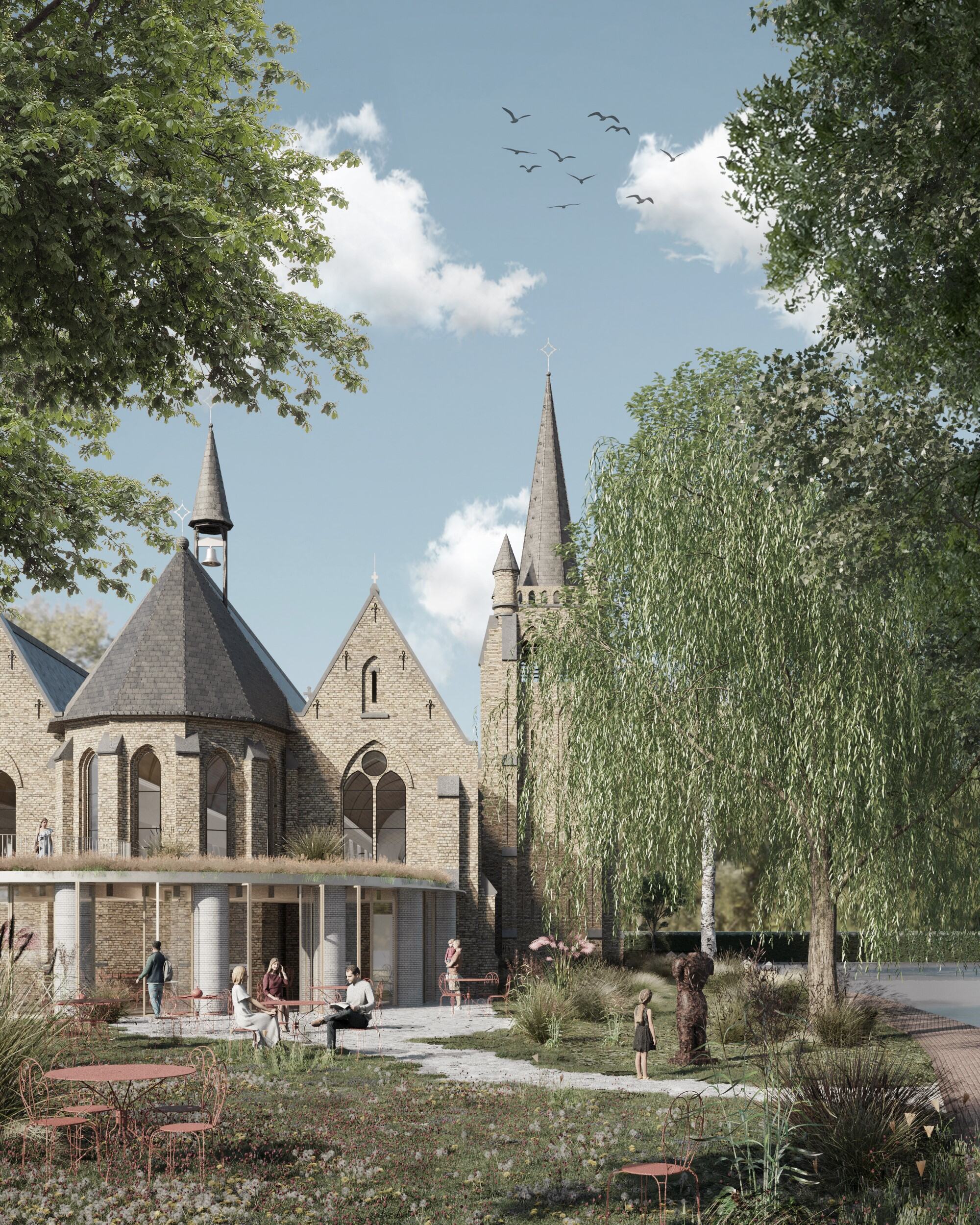
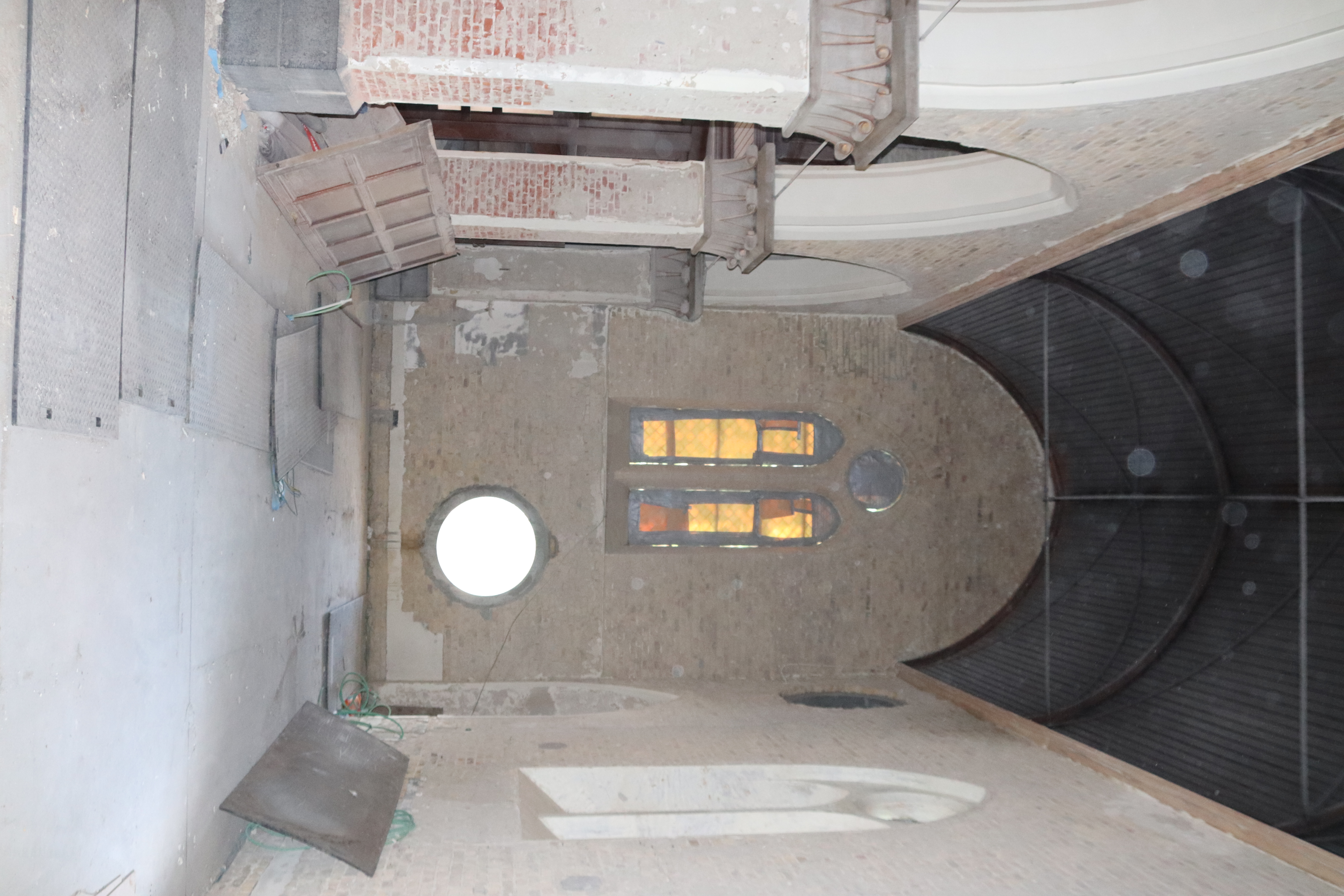
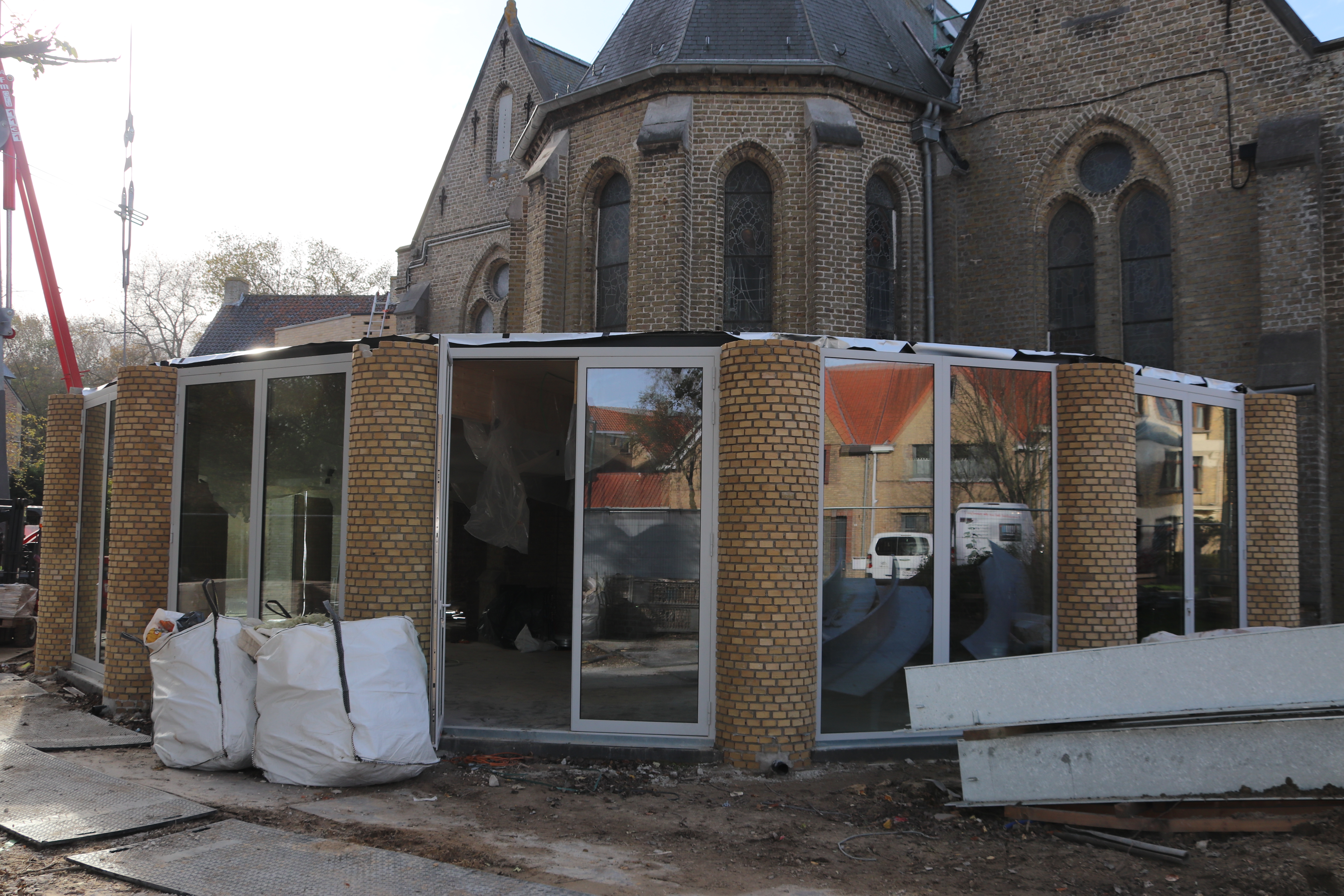
The public library is located in a former church
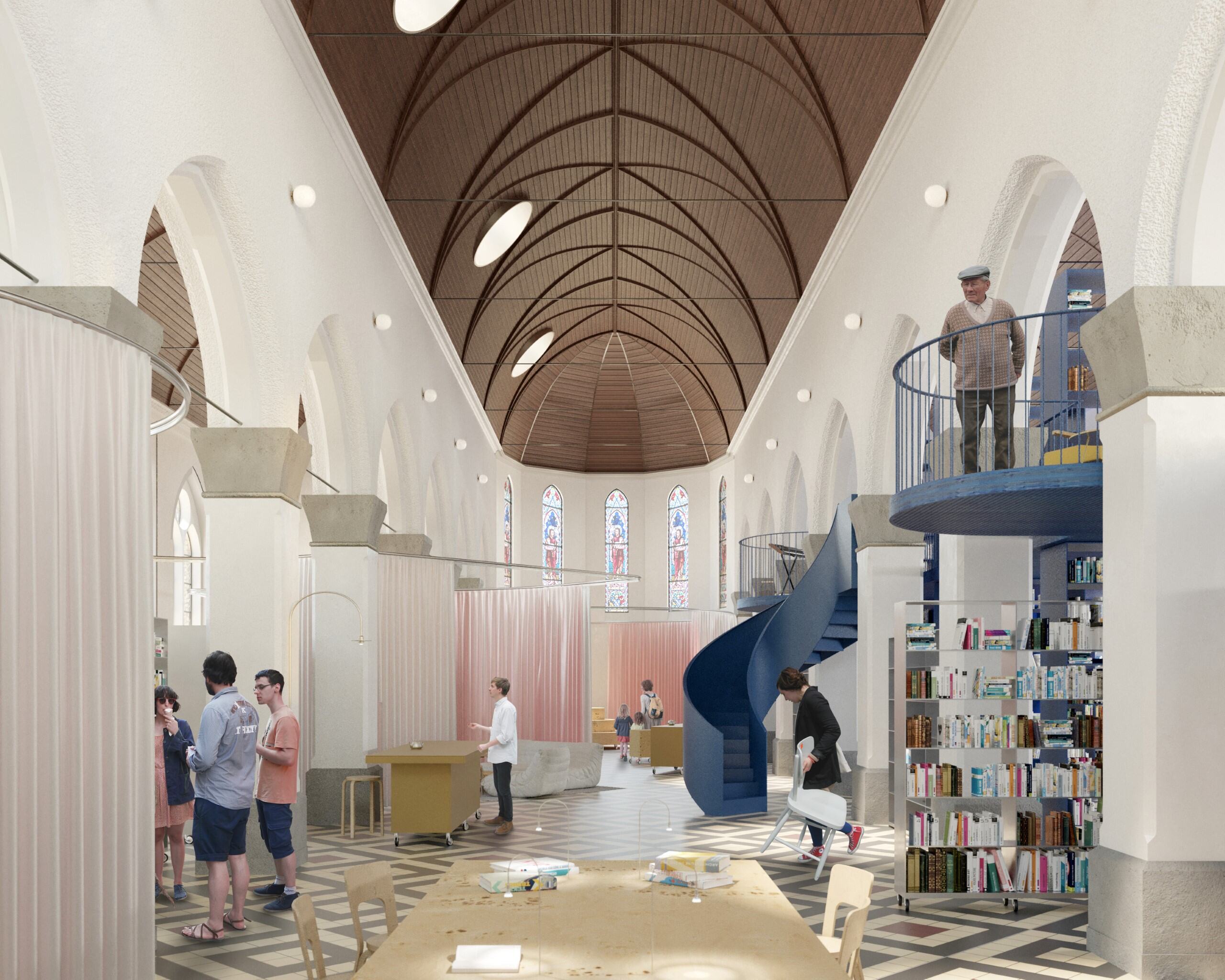
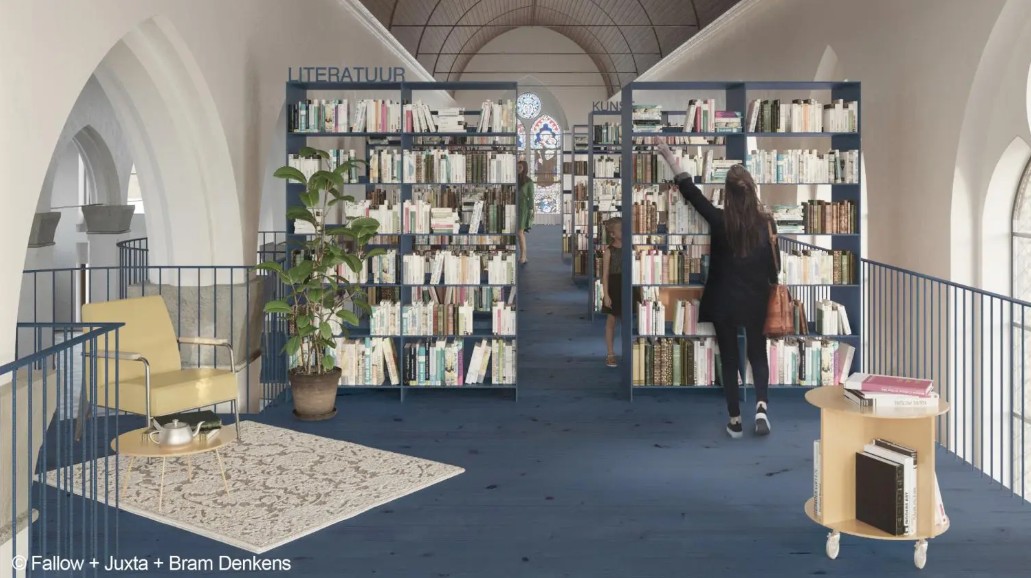
The library will be housed in a former church and will be accessible during staffed and unstaffed hours. Besides lending library materials, it will also serve as a meeting place for study, meetings, and small-scale cultural activities.
Belgium
Bibliotheek De Panne, Kerkstraat 53 (from 3 octobre 2026)
Completed
Yes
Yes
Yes
No
No
38008: La Panne (BE)
The local public library will be housed in a former, vacant church. It will be accessible during extended, staffed and unstaffed opening hours (7 days a week) at affordable prices (free for members up to 17 years old, €5 per year for adults). The library will be a place for study, relaxation, meeting, knowledge acquisition, and connection.
inclusion
sustainability
widely accessible
binding
repurposing
The project places sustainability at the heart of the building’s transformation. Geothermal energy was selected as the primary energy source for heating and cooling the building, allowing the infrastructure to operate in an energy-efficient and low-carbon manner. By harnessing heat from the earth, the system significantly reduces dependence on fossil fuels.
At the same time, the project embraces the principles of circular construction. Several elements from the existing building were carefully preserved and reused in the new design, including flooring components and structural wall elements. This approach not only reduces construction waste but also preserves part of the building’s material history.
By combining renewable energy with circular material reuse, the project substantially lowers its ecological footprint and demonstrates how historic buildings can be sustainably reactivated for contemporary community use.
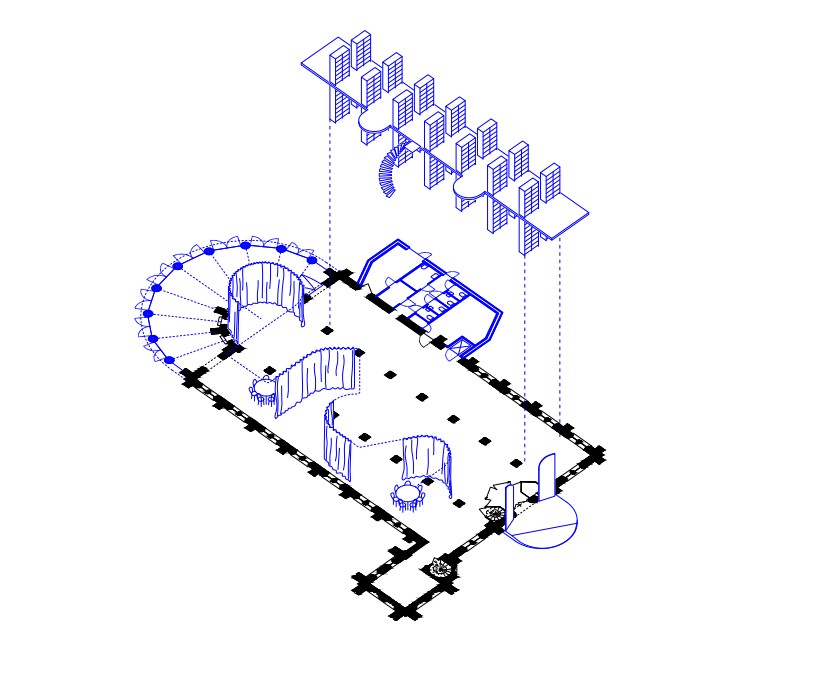
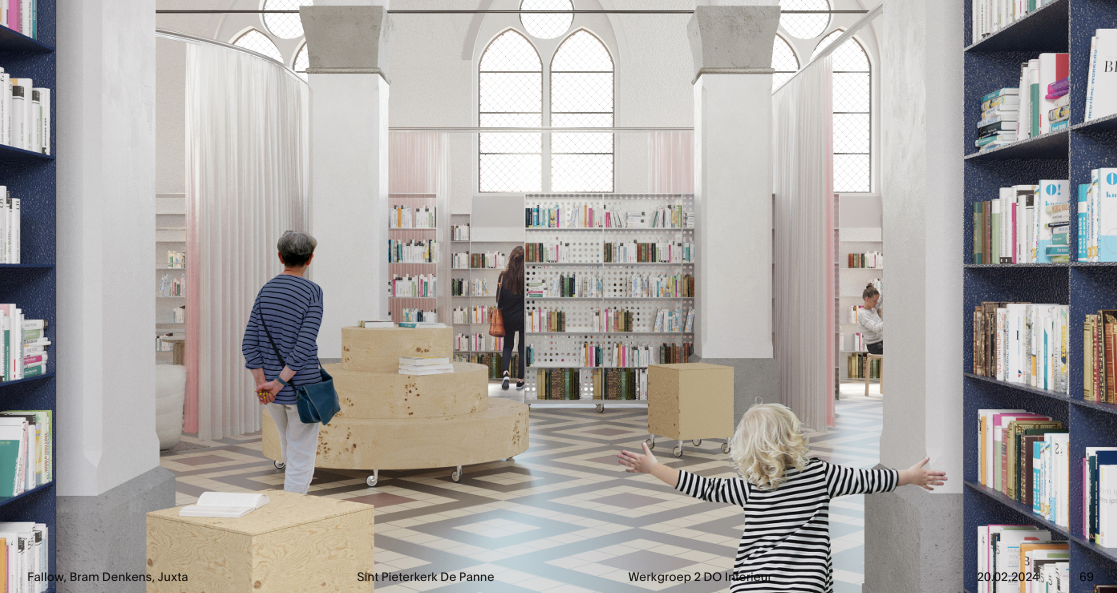
The new library is designed as a welcoming public space that enhances the quality of experience for visitors. The building will provide a variety of spaces tailored to different needs, including study areas, comfortable seating zones, relaxation spaces and meeting facilities.
A multifunctional room will host both library activities and cultural events, allowing the building to serve as a vibrant cultural hub within the municipality. In addition, the meeting space will be used to organise training programmes focused on digital inclusion, as well as integration courses for people with different cultural or linguistic backgrounds.
Through its design and programme, the library becomes more than a place to borrow books—it evolves into a dynamic meeting place where knowledge, culture and community life intersect.
The building will be accessible seven days a week, welcoming members from the local municipality as well as tourists, visitors and second-home residents of all ages.
Accessibility is further strengthened through an affordable membership system: access is free for children up to and including 17 years of age, while adults pay € 5. This low-threshold pricing policy ensures that the library remains accessible to a broad and diverse audience.
The project also aligns with the wider vision of “Grenzeloos De Panne”, a municipal initiative dedicated to promoting accessibility and participation for people with disabilities. Within this framework, particular attention is given to physical accessibility, user-friendly infrastructure and inclusive services.
The library therefore aims to become an open, inclusive and accessible public space, where everyone—regardless of age, background or ability—can participate in cultural, educational and social activities.
The programme and use of the building were partly shaped through a participatory process in which local stakeholders were actively consulted. This process was facilitated by anthropologist Ruth Soenen, who gathered insights and perspectives from different actors within the local community.
The results of this consultation played an important role in defining the future use and spatial organisation of the library. By integrating these contributions, the project ensures that the new library reflects the needs, expectations and aspirations of the local population.
The results of this consultation played an important role in defining the future use and spatial organisation of the library. By integrating these contributions, the project ensures that the new library reflects the needs, expectations and aspirations of the local population.
The project was developed in close cooperation with stakeholders at different governance levels. The redevelopment takes into account the local church policy plan, and a formal repurposing process was initiated in collaboration with the province and the diocese. The project also received financial support from the Flemish Government.
The local authority—responsible for the majority of the funding—also collaborated with a local technical school to design and manufacture specific furniture elements for the building. This partnership not only strengthened local engagement but also created educational opportunities for students.
Community involvement continues beyond the design phase. Local residents will actively participate in the relocation to the new building, with schoolchildren, library ambassadors and volunteers helping to move the collection and materials.
In addition, an international art competition was organised to design a time capsule that will contain locally significant objects. The capsule will be opened in fifty years and will remain prominently displayed in the building as a symbolic artwork linking past, present and future.
Throughout the design phase, the project team met regularly to ensure that the project aligned closely with the expectations of the local authority.
The team included representatives from the library, political decision-makers, facility management professionals and the architects responsible for the design. Project proposals were also reviewed within the municipal management team, the executive board and the municipal council of De Panne.
This multidisciplinary collaboration enabled the integration of technical expertise, policy considerations and social perspectives, resulting in a well-balanced and widely supported project.
De Panne has deliberately chosen the OpenBib concept, an innovative library model that allows registered members to access the building independently outside staffed opening hours using their eID or library card.
During these extended opening hours—often from early morning until late evening—visitors can borrow and return materials, study or read newspapers even when no staff members are present. This approach significantly increases accessibility and flexibility for users.
In addition, the project combines this innovative service model with sustainable energy solutions through the use of geothermal energy and solar panels.
The project integrates geothermal energy, a renewable energy source that uses heat from deep underground (from approximately 500 metres below the surface) to heat and cool buildings.
In this system, hot water is pumped to the surface, cooled via a heat exchanger and then reinjected underground through a return well. This closed-loop process creates a circular and low-carbon alternative to traditional heating systems based on natural gas.
In this system, hot water is pumped to the surface, cooled via a heat exchanger and then reinjected underground through a return well. This closed-loop process creates a circular and low-carbon alternative to traditional heating systems based on natural gas.
Several elements of the project can be replicated in other contexts.
First, the participatory consultation process used to involve local residents proved highly valuable and can serve as a model for similar community-oriented projects.
Second, the implementation of the OpenBib concept demonstrates how libraries can significantly extend accessibility while maintaining operational efficiency. This model is increasingly relevant for contemporary libraries and is likely to become a standard approach in the coming years.
Participation will remain a key element of the library’s future operation, notably through the establishment of a library council that will advise the local authority on library-related policies and developments.
The library will also continue to strengthen its inclusive mission by collaborating with municipal services and community partners to ensure that all residents can access its facilities. This includes digital learning programmes, language support initiatives for non-native speakers and partnerships with local schools.
Through these initiatives, the library will continue to embody the New European Bauhaus values of sustainability, inclusion and quality of experience, creating a public space that is both socially meaningful and environmentally responsible.