DISKOLOKA
RE:PLAY LOKA – Regenerating Urban Space Through Music and Community
Establishing a Participatory Youth Music Lab in the Historic Centre of Škofja Loka
Slovenia
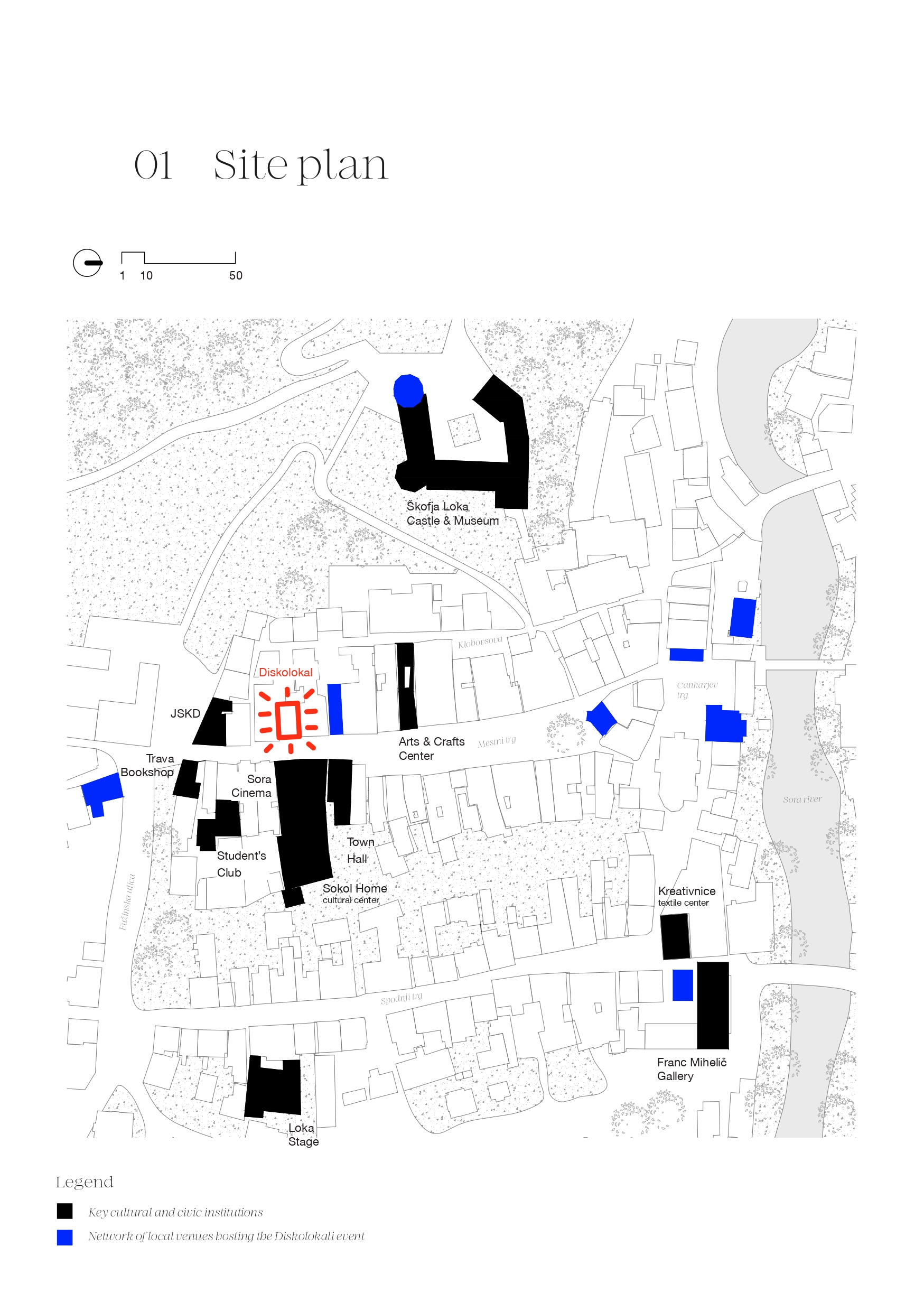
Mestni trg, Škofja Loka
Early initiative
Yes
Yes
Yes
No
No
122: Škofja Loka (SI)
DiscoLOKA(L) is a community-led initiative that transforms an underused interior space on Mestni trg in the historic centre of Škofja Loka into a multifunctional cultural hub dedicated to music, creativity and social interaction. The project builds on an already active local community and contributes to the revitalisation of the town centre through the adaptive reuse of an existing space.
The initiative is led by the Diskoloka collective (https://www.diskoloka.si/), which brings together DJs, music enthusiasts and cultural organisers who have been actively shaping the local music scene through events such as the Diskolokali festival. The project is also part of the broader “Plac za vse” (Square for All - https://www.naplacu.skofjaloka.si/) movement, which connects residents, cultural organisations, local businesses and the municipality in a shared effort to activate the historic centre.
The main target groups are young people, particularly aspiring DJs, music enthusiasts and creatives, as well as the wider local community across different generations. The space is designed as an open and inclusive environment where users can meet, learn, work, collaborate and actively participate in cultural activities.
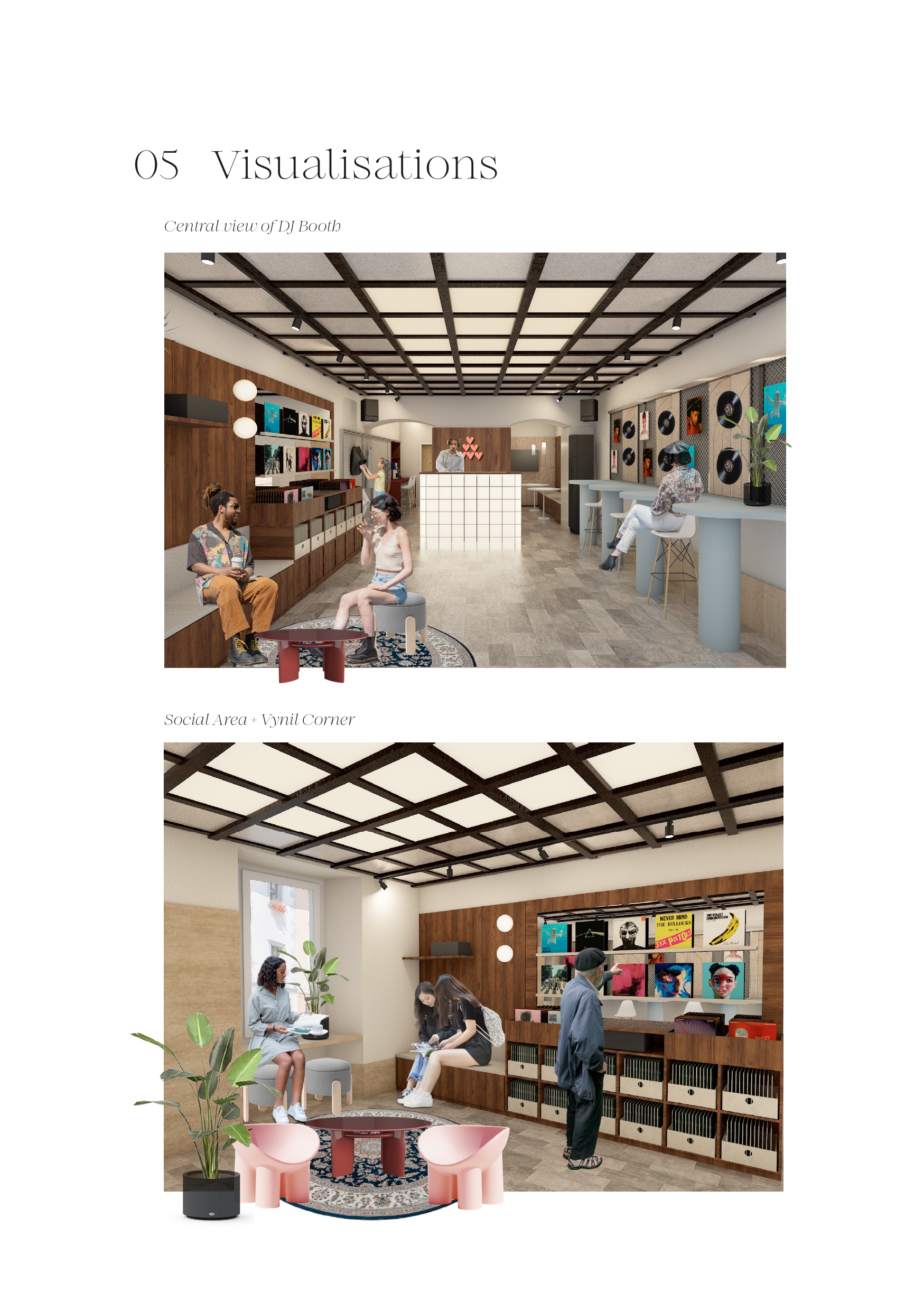
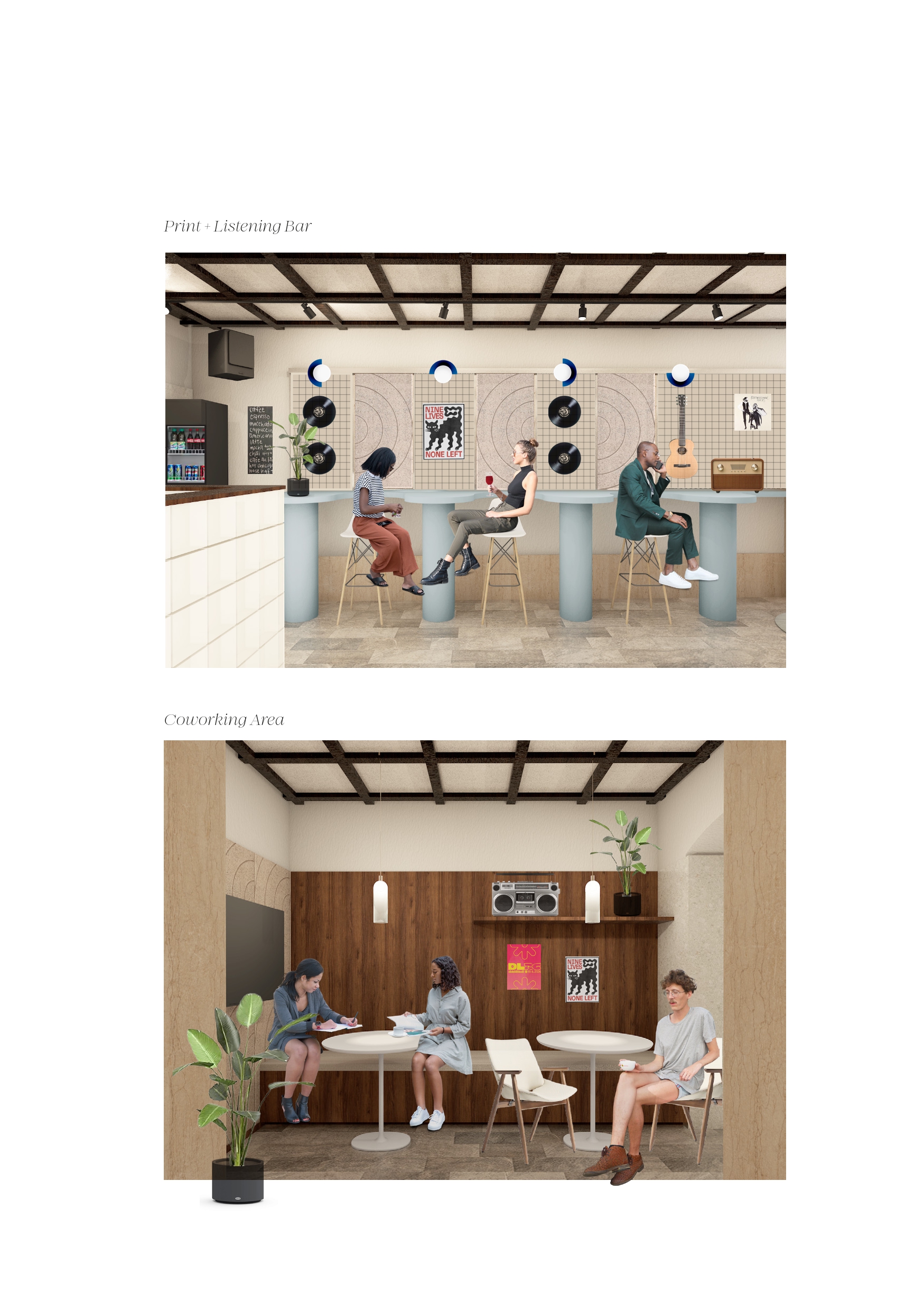
The project creates a multifunctional environment that combines a DJ practice space, vinyl listening areas, a vinyl library, workshop and event space, co-working areas and informal meeting zones. This hybrid model supports learning, creative expression and community exchange throughout the day.
The expected outcomes include the activation of an unused space, increased participation of young people in cultural and creative activities, strengthened local cultural networks and the creation of a vibrant community hub that contributes to the social and cultural life of Škofja Loka.
Placemaking
SoundTribe
Commons
VinylCulture
Revival
Sustainability is a core principle of the DiscoLOKA(L) initiative and is addressed through the adaptive reuse of an existing interior space, circular design strategies and community-based cultural practices.
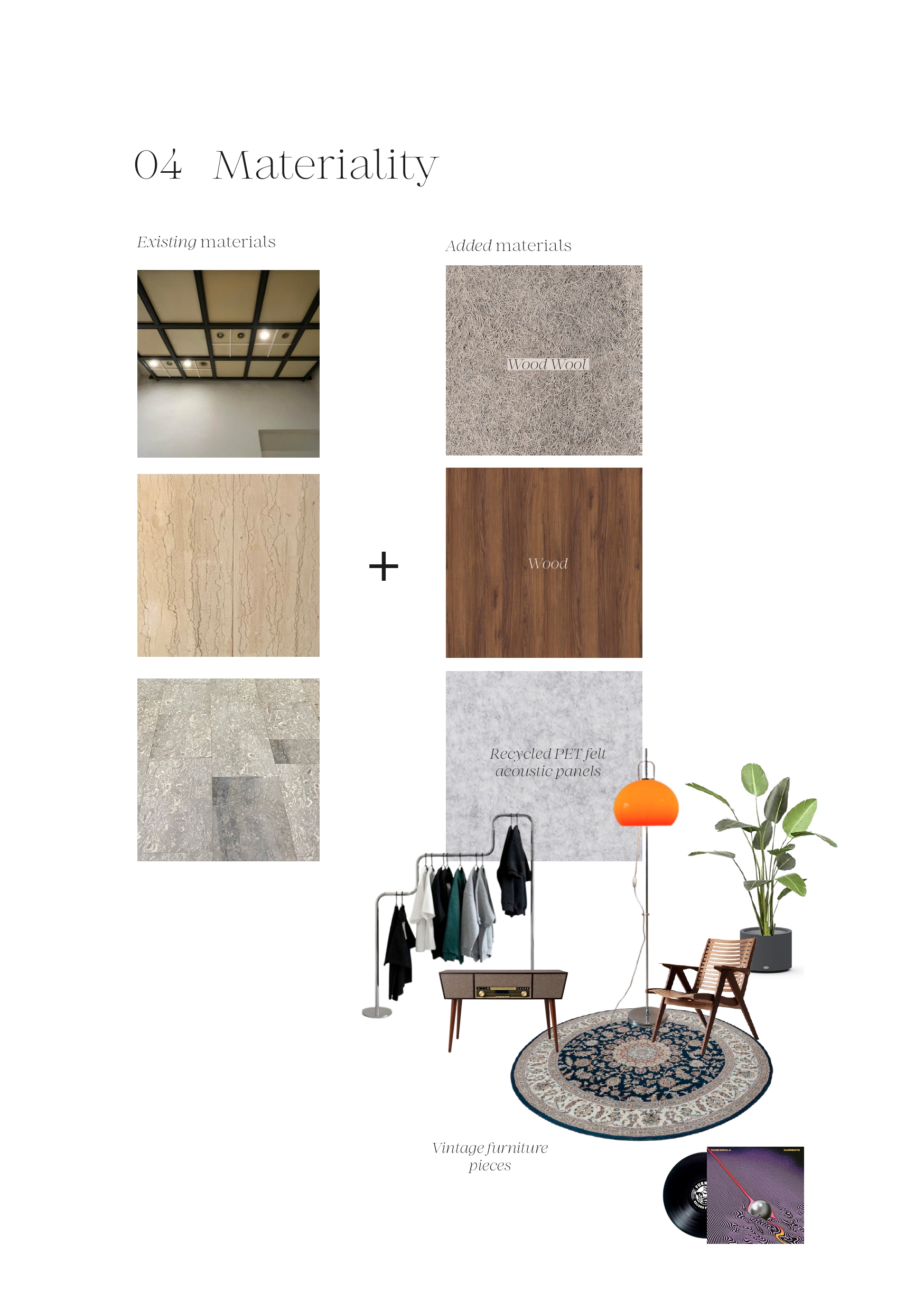
The project transforms an underused venue on Mestni trg in the historic centre of Škofja Loka, avoiding new construction and reducing the environmental impact associated with new infrastructure. The renovation follows a principle of minimal intervention, preserving the existing spatial structure while introducing sustainable materials such as wood, wood wool panels and acoustic elements made from recycled PET. Reused vintage furniture is integrated into the design, further reducing material consumption and reinforcing a culture of reuse.
Sustainability is also embedded in the way the space is used and governed. The venue is owned by a local resident who entrusts its use to young members of the Diskoloka collective, recognising their commitment to managing the space in a way that respects its history and cultural significance. The space has a long tradition of public use, previously hosting a pharmacy, convenience store, tobacco and cigar shop, hairdresser, and the current initiative continues this legacy by reactivating it as a place of exchange and community interaction.
The initiative also introduces a vinyl library, enabling the circulation and sharing of records within the community. Through listening sessions, vinyl exchange events and educational workshops on the proper handling and care of vinyl records, the project promotes preservation, responsible use and the extension of product lifecycles.
By combining adaptive reuse of space, circular material choices, intergenerational knowledge transfer and community-based governance, DiscoLOKA(L) demonstrates how small-scale interventions can deliver both environmental and social sustainability while creating lasting value for local communities.
The DiscoLOKA(L) initiative places strong emphasis on the aesthetic quality of space and the experience it offers to users by creating an environment where spatial design and cultural content are closely interconnected. The project transforms an underused interior into a distinctive cultural space inspired by vinyl culture, analog sound and community interaction.
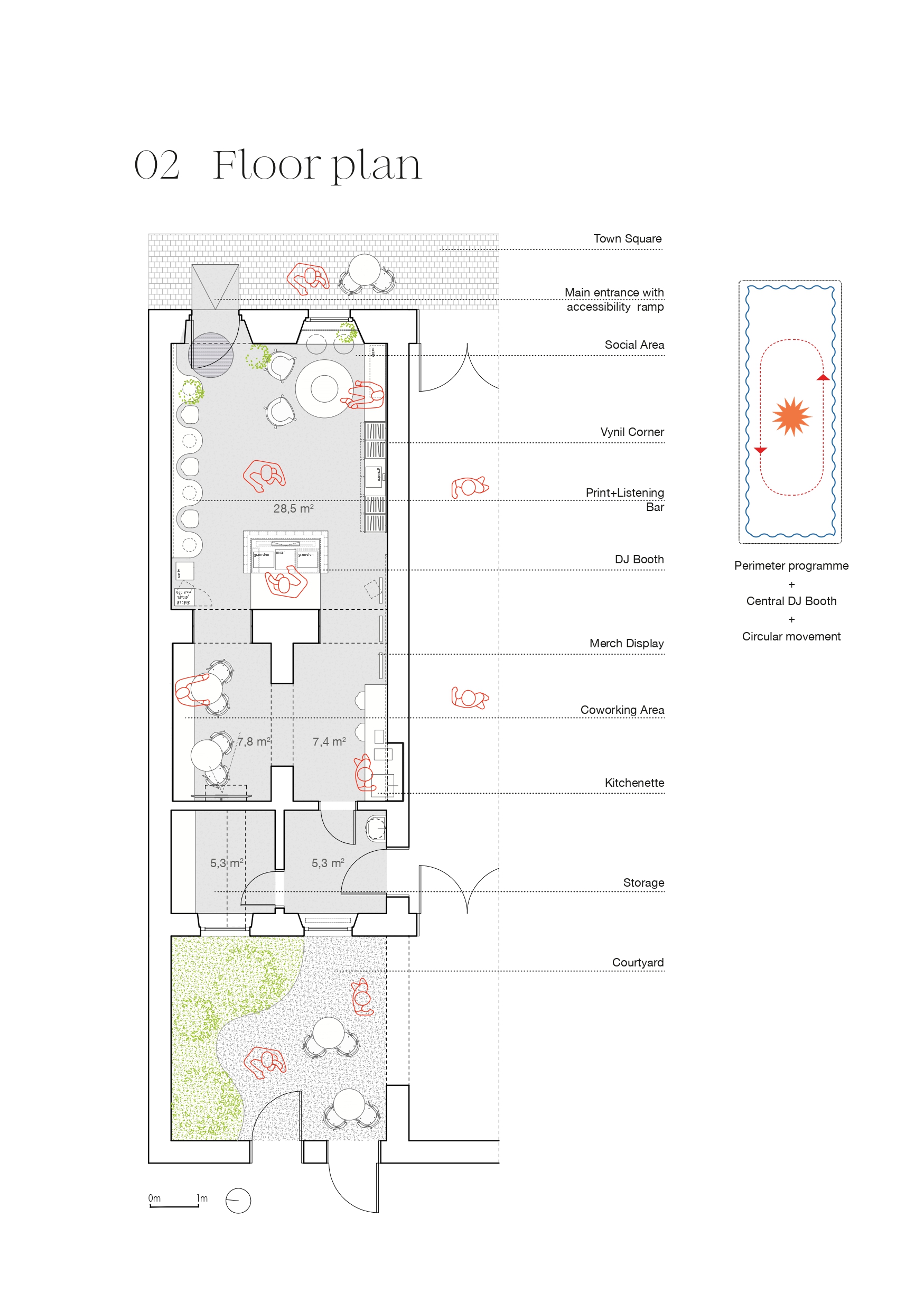
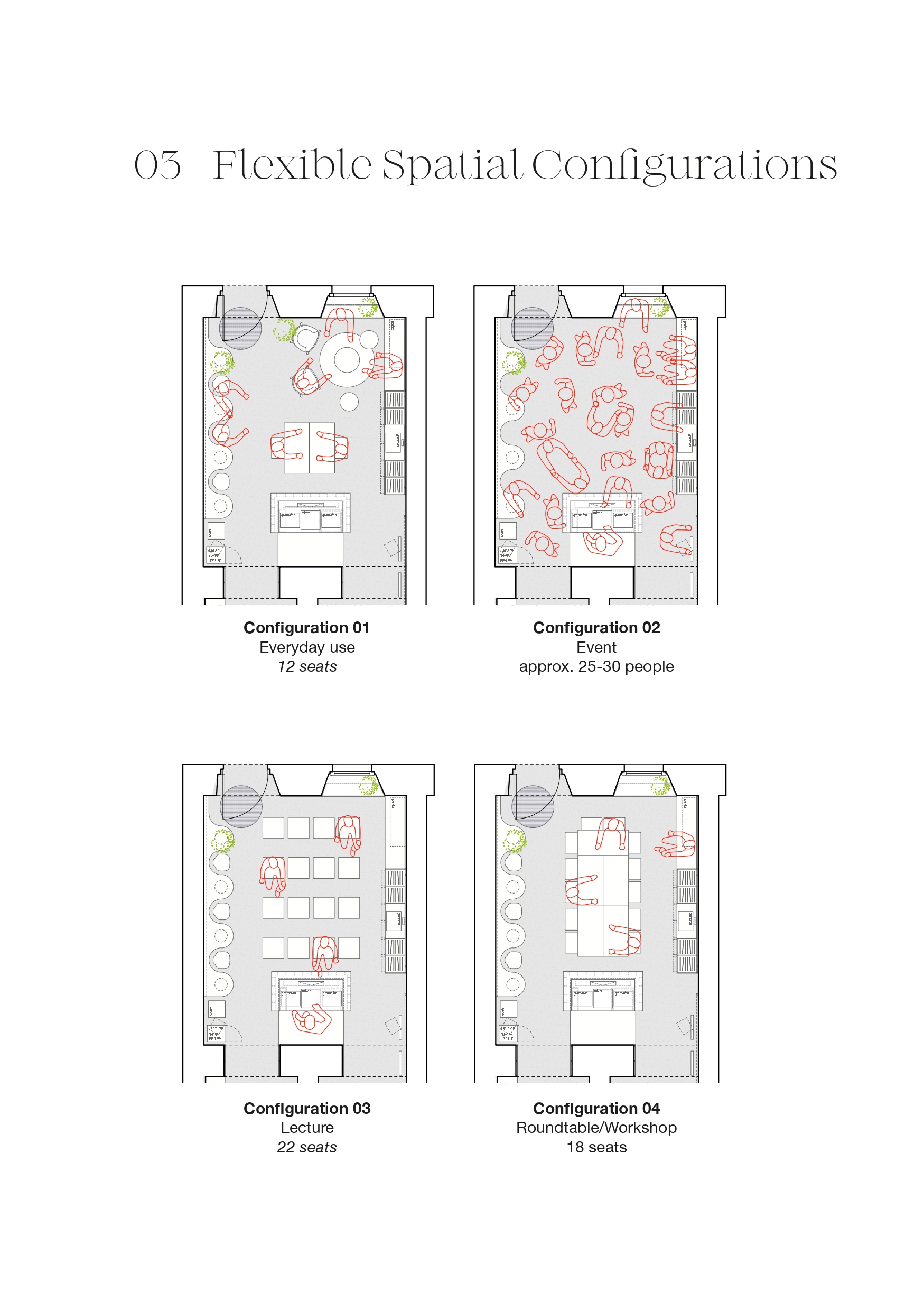
The design integrates multiple functional zones, including a DJ booth for practice and learning, a vinyl listening corner, a vinyl library, a small co-working area, and flexible seating arrangements for workshops, meetings and events. This multifunctional layout allows the space to continuously adapt to different uses, enabling both individual and collective experiences throughout the day.
A key objective is to create an immersive and sensory environment that encourages a more attentive and meaningful engagement with music. Turntables, vinyl displays and listening areas invite users to explore sound in a tactile and experiential way, contrasting with fast digital consumption. The use of reused vintage furniture, natural materials and recycled acoustic elements creates a warm, authentic and human-centred atmosphere.
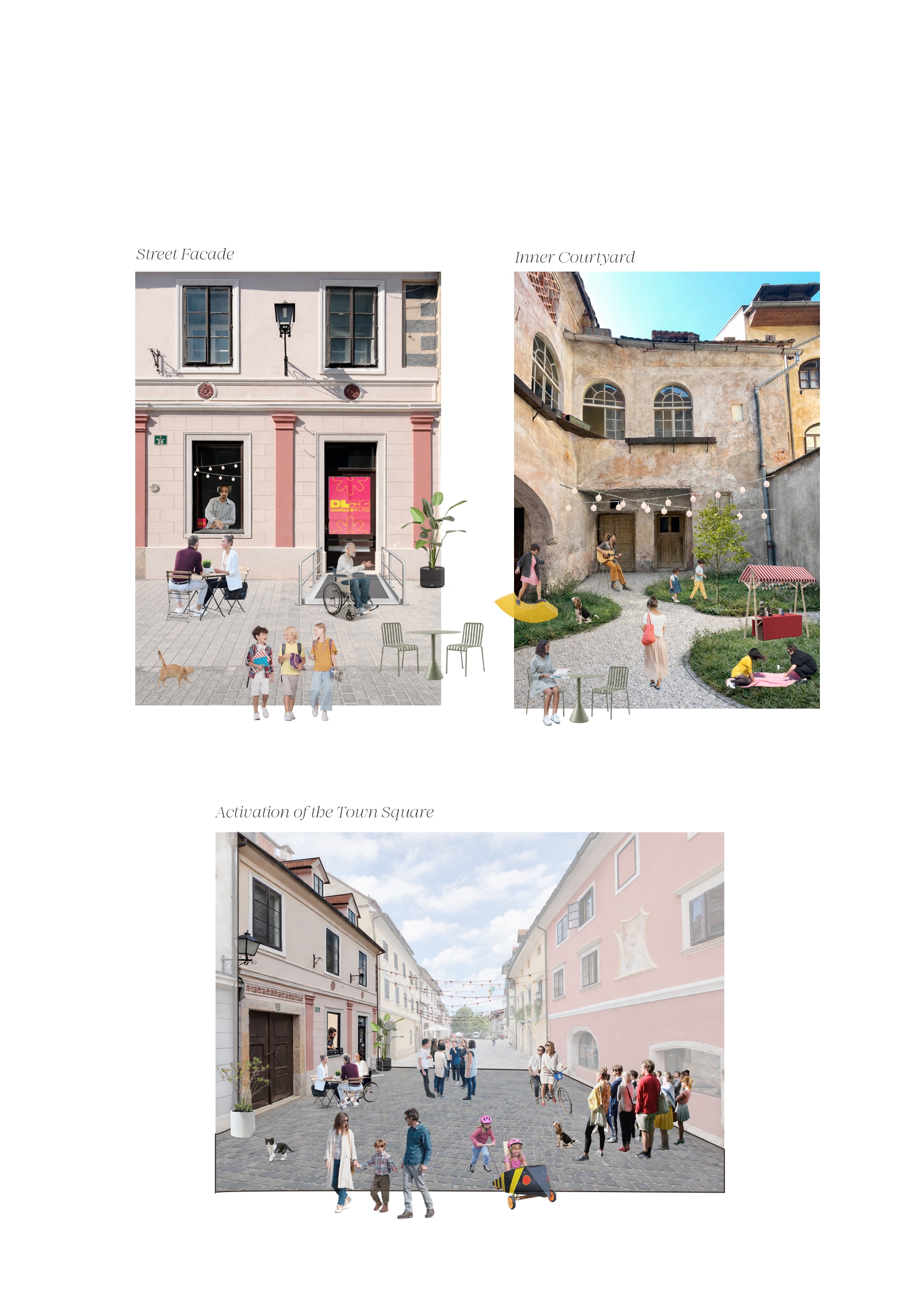
The space is further extended by an outdoor terrace, designed as a small green oasis that offers a more intimate setting for relaxation, informal meetings and creative reflection. This connection between interior and exterior enhances the overall spatial experience and supports different modes of use.
By aligning spatial design with cultural programming and everyday use, DiscoLOKA(L) creates a cohesive aesthetic experience. It demonstrates how small-scale interior interventions can generate high-quality cultural environments that are both functional and emotionally engaging, offering an exemplary model for enhancing the quality of life in historic urban centres.
Inclusion is a central principle of the DiscoLOKA(L) initiative and is reflected in the spatial design, governance model and programme of activities.
The project is based on the idea of an open, shared space that is accessible to a wide range of users regardless of age, background or experience. It is part of the broader “Plac za vse” (Square for All) initiative, which promotes the activation of the historic centre through inclusive and community-driven approaches.
Accessibility is embedded in the architectural design of the space. The layout follows a clear circular organisation that allows intuitive orientation and equal use for different users. All level differences are resolved with a ramp, ensuring a continuous and accessible path throughout the space. Circulation areas are designed without barriers and with sufficient width to accommodate different modes of movement, while the positioning of functions along the perimeter ensures easy access to all programme elements.
Affordability and openness are ensured through a flexible and community-oriented use of the space. Many activities, such as informal gatherings, listening sessions and community events, are designed to remain freely accessible or low-cost, lowering barriers to participation.
Inclusion is also reflected in the governance model. The initiative is driven by the Diskoloka collective in collaboration with a broader network of local stakeholders, including young creatives, women artists, cultural organisations, local businesses, municipality and residents. This participatory approach enables users to actively shape the programme and contribute to the development of the space.
By combining inclusive spatial design, accessible programming and community-led governance, DiscoLOKA(L) demonstrates how small-scale interventions can create open, welcoming and socially diverse environments, offering an exemplary model for inclusive cultural infrastructure in historic urban settings.
A strong participatory approach lies at the core of DiscoLOKA(L), building on an already active community that has been shaping the local cultural scene for several years. The project is led by the Diskoloka collective, which brings together DJs, music enthusiasts and cultural organisers who are not only beneficiaries but active co-creators of the initiative.
The participatory model is grounded in the experience of the Diskolokali festival, which connects local venues, artists and audiences across the historic centre of Škofja Loka. Through this initiative, a strong network of collaborators and users has already been established, forming the foundation for the development of DiscoLOKA(L).
Citizens and civil society are involved at multiple levels. They contribute to the design of the programme, propose activities, participate in workshops and events, and actively use the space for learning, collaboration and social interaction. Particular attention is given to young people, emerging creatives and women artists, who play an important role in shaping the identity and content of the space as part of a broader “SoundTribe” community.
Their level of involvement goes beyond participation, as users take on co-ownership of the space through shared responsibility, decision-making and programme development. This approach ensures that the space remains responsive to community needs and continuously evolves over time.
The impact of this participatory process is visible in the strong sense of belonging, long-term engagement and the creation of a resilient local cultural network. DiscoLOKA(L) demonstrates how community-led initiatives can transform underused spaces into active social and cultural environments, offering an exemplary model of participatory urban regeneration.
The DiscoLOKA(L) initiative is developed through collaboration between stakeholders at multiple levels, combining community engagement, professional expertise and local support.
At the local level, the initiative is led by the Diskoloka collective, which actively involves users in shaping the programme and contributes long-standing experience in organising cultural events such as the Diskolokali festival. It is closely connected to the “Plac za vse” (Square for All) initiative, linking residents, cultural organisations, businesses and the municipality in the revitalisation of the historic centre.
The space is privately owned by a local resident who enables its use and supports its development, recognising the value of the initiative for the community. The architectural concept was developed by architect Ema Bernik Ferreira, introducing a flexible, accessible and sustainable spatial design adapted to diverse uses.
Local businesses support the initiative through sponsorship and partnerships, contributing to events as well as to the establishment and operation of the DiscoLOKA(L) space, and strengthening the link between cultural activity and the local economy.
At the municipal level, the Municipality of Škofja Loka supports the initiative through funding opportunities and financial support for the activities of the Diskoloka collective, recognising its contribution to cultural development and urban regeneration.
This collaboration connects public, private and civil society actors, creating a shared ownership model that strengthens community life, supports long-term engagement and enables the sustainable activation of the space.
The DiscoLOKA(L) initiative brings together multiple disciplines, combining architecture, design, music culture, cultural management, cultural heritage, community development and local entrepreneurship.
The architectural dimension is represented by yougn architect Ema Bernik Ferreira, who developed a spatial concept based on flexibility, accessibility and sustainable materials. Her design responds directly to the needs of users and enables different forms of use within a single space.
Music culture and creative practice are contributed by the Diskoloka collective, which brings experience in organising events such as the Diskolokali festival. Their knowledge of DJ culture, vinyl practices and community-based cultural production shapes the programme and identity of the space.
Community development is reflected through the “Plac za vse” (Square for All) initiative, which connects residents, organisations and local stakeholders in the revitalisation of the historic centre.
Local businesses contribute knowledge related to entrepreneurship and support the practical functioning of the initiative, while the municipality provides a broader development framework and access to funding opportunities.
These disciplines interact through continuous collaboration, where spatial design, cultural content and community needs are developed in parallel. This ensures that the space that is part of the cultural heritage od Škofja Loka is both functional and socially relevant.
The added value of this approach lies in the integration of different perspectives, enabling the creation of a multifunctional space that combines cultural production, learning and social interaction, and demonstrates a holistic model for community-led urban regeneration.
The innovative character of the DiscoLOKA(L) initiative lies in its hybrid model, which combines a cultural venue, learning environment and community hub within a single multifunctional space.
Unlike mainstream cultural or music venues that primarily focus on events or nightlife, DiscoLOKA(L) operates as an open, day-long space where music becomes a tool for learning, collaboration and social interaction. The space enables hands-on exploration of music practices, including DJing, listening sessions, workshops, co-working and informal gatherings, and is accessible to users of different ages, backgrounds and levels of experience.
A key innovation is the integration of vinyl culture and analog practices as a framework for education and community exchange. Through a vinyl library, listening sessions and workshops on the care and use of records, the initiative promotes a more conscious and sustainable relationship with music, contrasting with dominant digital consumption models.
The project also introduces a new approach to cultural infrastructure through the adaptive reuse of an underused interior space, combined with a circular design approach and community-led governance. Rather than investing in new construction, the initiative demonstrates how existing spaces can be transformed into vibrant cultural environments with minimal intervention.
Equally important is the collaborative model that connects civil society, local businesses, a private owner and public support. This cross-sector cooperation creates a shared ownership structure that strengthens long-term sustainability.
By combining spatial transformation, cultural practice and community participation, DiscoLOKA(L) offers an innovative and replicable model for activating unused spaces and supporting cultural life in small towns.
A hybrid, community-driven approach underpins the development of DiscoLOKA(L), combining spatial transformation, cultural programming and collaborative governance.
The process begins with the adaptive reuse of an underused interior space on Mestni trg, forming part of the cultural heritage of Škofja Loka.. The renovation follows a principle of minimal intervention, preserving the existing structure while introducing sustainable materials, reused elements and a flexible spatial layout. The architectural concept, enables multiple uses within a single space and supports accessibility and long-term adaptability.
A key element of the approach is the co-creation of content. The Diskoloka collective, together with local users, actively contributes to the development of the programme, which includes workshops, listening sessions, hands-on exploration of music practices, community events and informal use of the space. This ensures that the programme evolves in response to community needs.
Cross-sector collaboration plays an important role, bringing together civil society, local businesses, the private owner and the municipality. Each contributes knowledge, resources and support, creating shared responsibility for the development of the space.
The approach is based on gradual activation, starting with pilot activities and expanding through continuous use and community engagement. This allows the project to test formats, adapt over time and ensure long-term sustainability.
Through this methodology, the initiative demonstrates how small-scale interventions can activate existing spaces and create inclusive, adaptable and community-oriented cultural environments.
A highly transferable model for activating underused spaces in small towns is demonstrated through the DiscoLOKA(L) initiative, particularly in historic centres where vacant interiors and limited access to cultural infrastructure are common challenges.
One of the most replicable elements is the adaptive reuse of an existing interior space. The project demonstrates how unused venues can be transformed into multifunctional cultural environments through minimal intervention, flexible design and the use of sustainable and reused materials. This approach is cost-effective and adaptable to different spatial and economic contexts.
Another key transferable aspect is the hybrid methodology, which combines spatial transformation, cultural programming and community participation. By integrating music culture, learning activities and informal social use within a single space, the initiative creates a model that can be adapted to different creative communities and user groups.
The participatory approach is also highly replicable. The involvement of local communities, creatives and stakeholders in co-creating the programme ensures that the space reflects local needs and identities, making the model applicable across diverse cultural contexts.
The project further demonstrates a transferable model of cross-sector collaboration, bringing together civil society, private stakeholders, local businesses and public authorities. This structure enables shared responsibility and supports long-term sustainability.
By combining adaptive reuse, community-led programming and collaborative governance, the initiative provides a practical and scalable model for small municipalities seeking to revitalise spaces and strengthen local cultural life.
A clear commitment to implementation is demonstrated through the fact that the DiscoLOKA(L) initiative has already moved from concept to action. Preparatory works in the space have started, including cleaning, technical adjustments and initial steps towards renovation, while the project team has secured initial resources to support the first phase of development.
The next phase focuses on the interior renovation based on the architectural concept. The design integrates flexible spatial organisation, reused elements and sustainable materials, reflecting the NEB values of sustainability, aesthetics and inclusion.
In parallel, the programme of activities is being developed through collaboration with the Diskoloka collective and the wider community. Planned activities include workshops, listening sessions, hands-on music exploration, community events and informal use of the space, ensuring accessibility and continuous engagement.
The initiative already incorporates NEB working principles through participatory processes, cross-sector collaboration and a transdisciplinary approach. Civil society, local businesses, the private owner and the municipality are actively involved in shaping and supporting the project.
The implementation follows a gradual activation model, starting with pilot activities and expanding through continuous use. A key milestone is the opening of the space in connection with the next Diskolokali festival, planned for this summer in Škofja Loka.
Through ongoing renovation, community involvement and programme development, the initiative demonstrates a strong commitment to creating a sustainable, inclusive and high-quality cultural space in practice.