The Blue Lagoon Rehabilitation
The Blue Lagoon Rehabilitation: Balancing Nature & Experience
The Blue Lagoon Rehabilitation is a national initiative by the Malta Tourism Authority, in collaboration with Mizzi Studio, to restore the ecological balance of Comino’s iconic lagoon within the Għajnsielem locality. Through an integrated, design-led regeneration approach, the project enhances visitor experience while protecting a Natura 2000 landscape uniting sustainability, accessibility, and long-term stewardship for future generations.
Malta
Blue Lagoon, Comino
Prototype level
Yes
Yes
Yes
No
No
MT02622: Għajnsielem and Comino (MT)
The Blue Lagoon Rehabilitation is a national initiative led by the Malta Tourism Authority, in collaboration with Mizzi Studio, aimed at restoring the ecological balance and improving the overall quality of one of Malta’s most iconic coastal landscapes on the island of Comino, within the Għajnsielem locality. The initiative responds to increasing environmental pressures and the need for a more sustainable, inclusive, and high-quality public environment.
The primary target groups include local communities, visitors, environmental stakeholders, and public authorities responsible for the stewardship of the site. The project also engages civil society organisations and aims to benefit future generations by safeguarding a Natura 2000 protected landscape.
The key objectives of the initiative are to restore and protect the natural environment, reorganise and integrate visitor infrastructure through design-led interventions, improve accessibility and public amenities, and enhance the overall visitor experience while reducing environmental impact. The project also seeks to strengthen governance and long-term management through coordinated operational strategies.
Expected outcomes include improved ecological conditions, reduced visual and environmental pressures on the site, enhanced accessibility and quality of public space, and a more balanced and sustainable visitor experience. The initiative will also establish a long-term framework for the management of the lagoon, supported by operational systems and stakeholder collaboration.
Through this approach, the project aims to demonstrate how design, environmental stewardship, and governance can work together to transform sensitive natural landscapes, offering a replicable model aligned with the values of the New European Bauhaus.
Nature Conservation
Sustainable Tourism
Digital Innovation
Cultural Experience
Habitat Restoration
The Blue Lagoon Rehabilitation initiative aims to restore one of Malta’s most visited coastal landscapes through a holistic approach to environmental regeneration, sustainable tourism management, and climate-responsive design. The project transforms the Blue Lagoon on Comino from a fragile, overburdened destination into a resilient public landscape that protects ecological systems while enhancing the visitor experience.
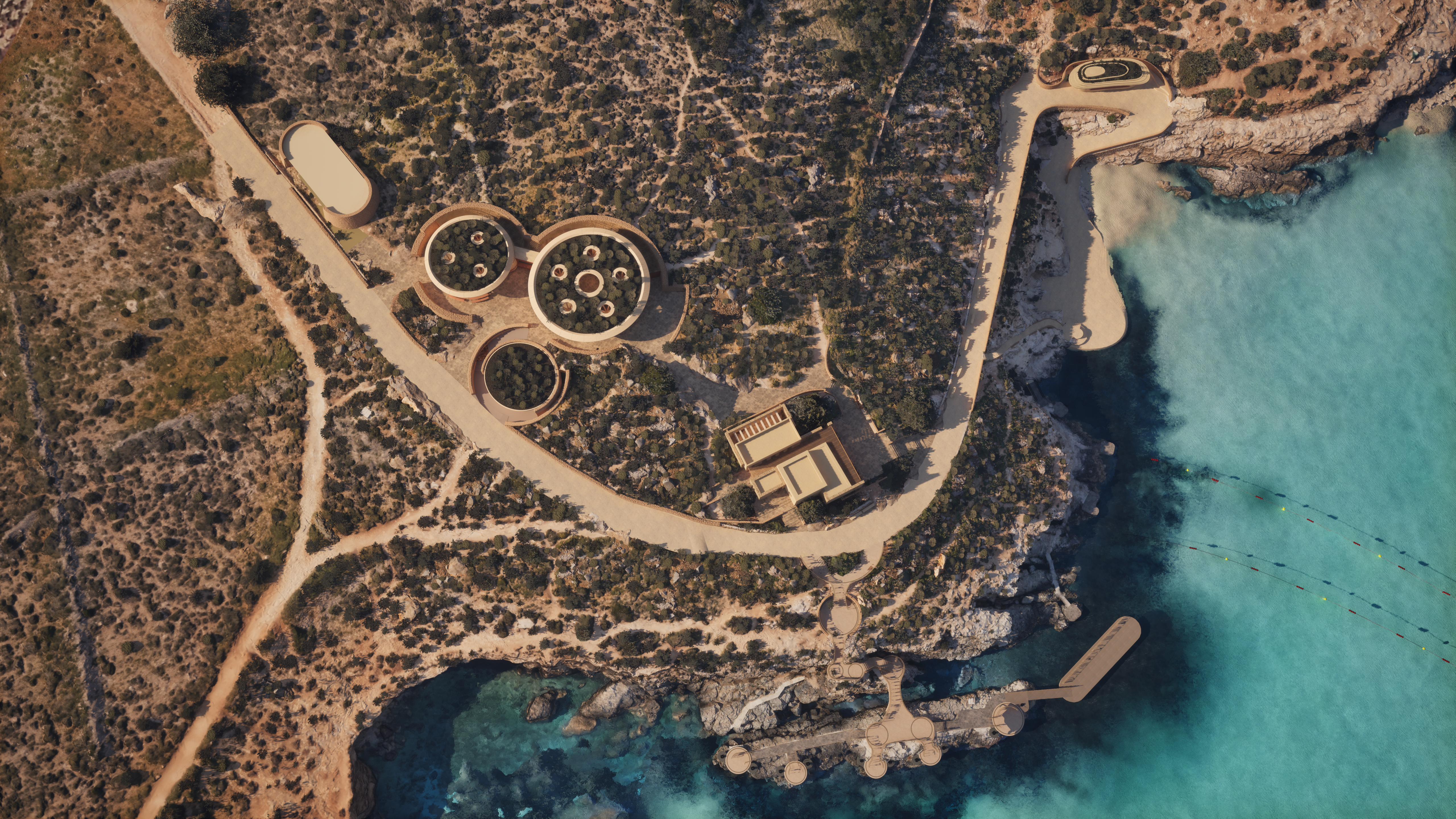
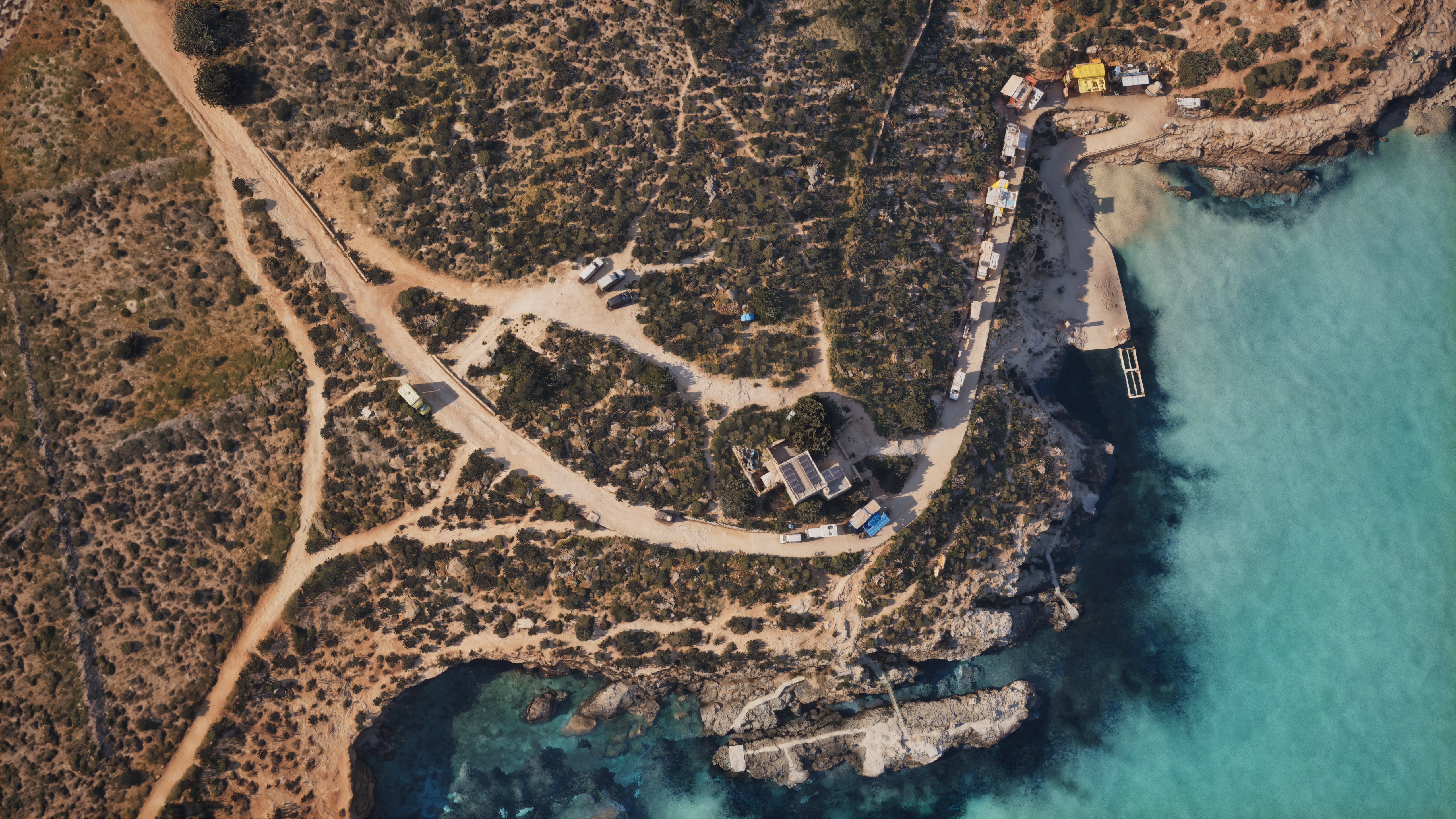
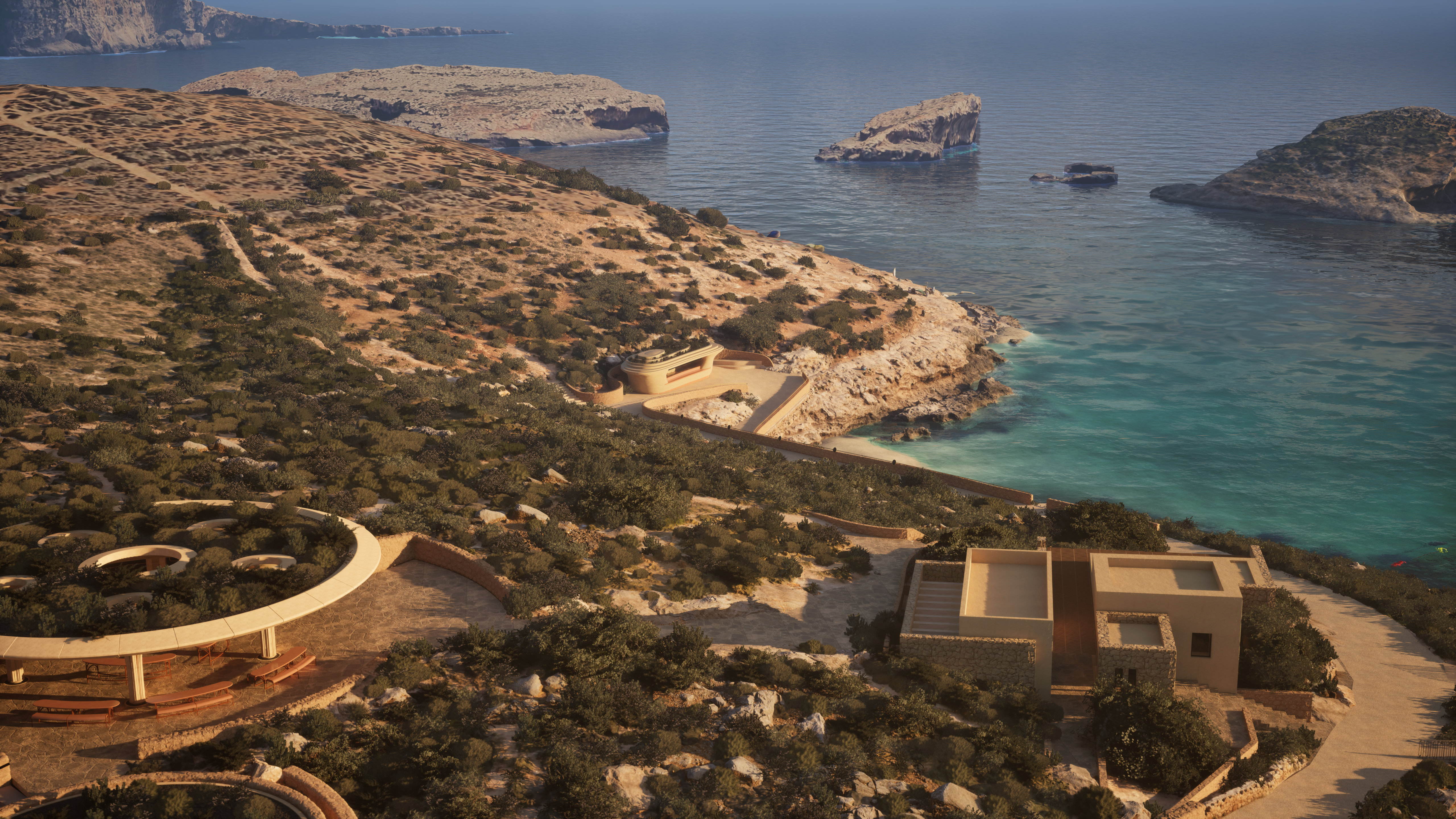
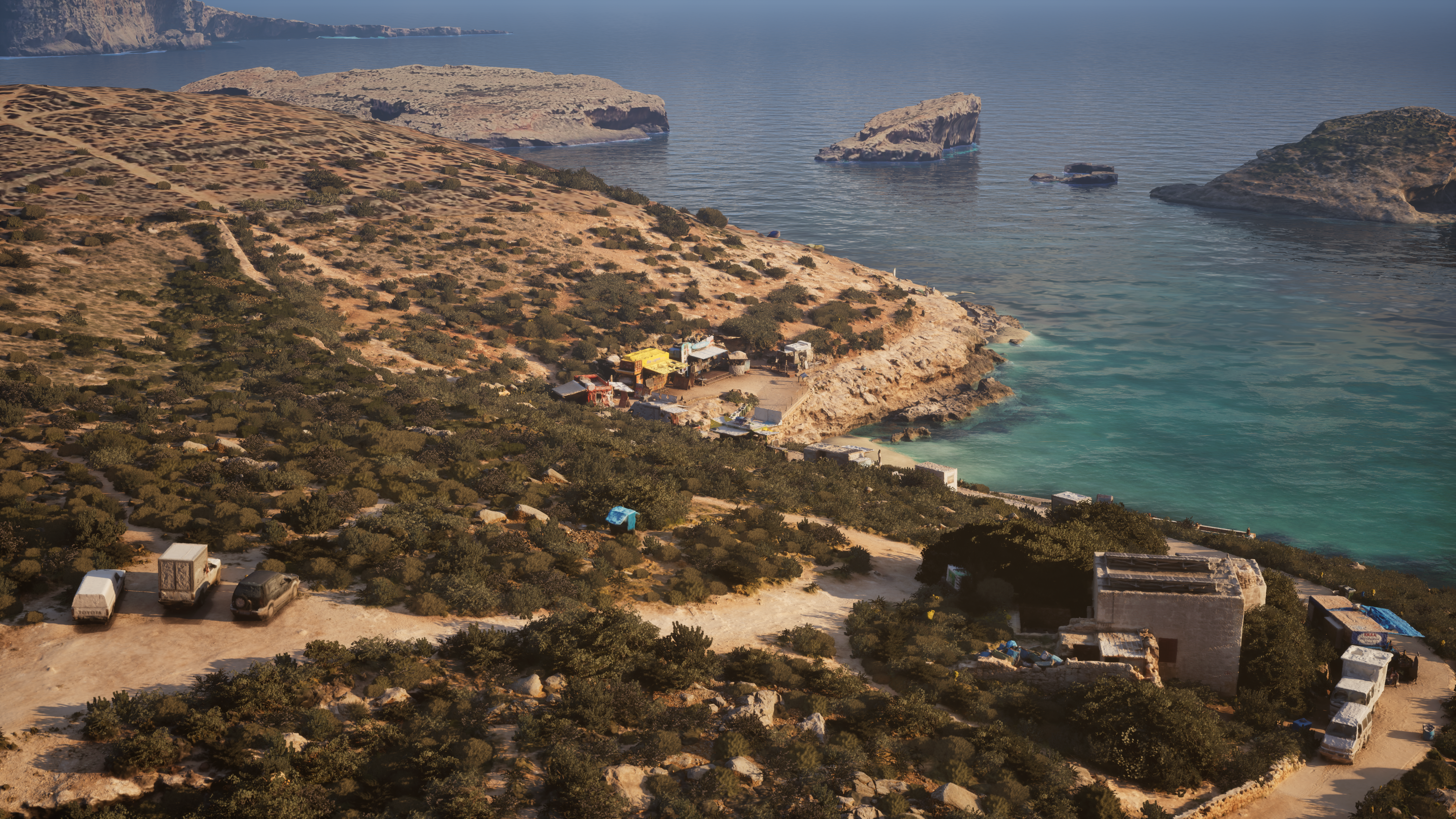
A primary objective is to reduce environmental pressures and restore ecological balance. A carefully designed spatial framework reorganises arrival points, improves circulation, and consolidates visitor facilities into a coordinated footprint, replacing scattered temporary infrastructure and protecting surrounding Natura 2000 habitats.
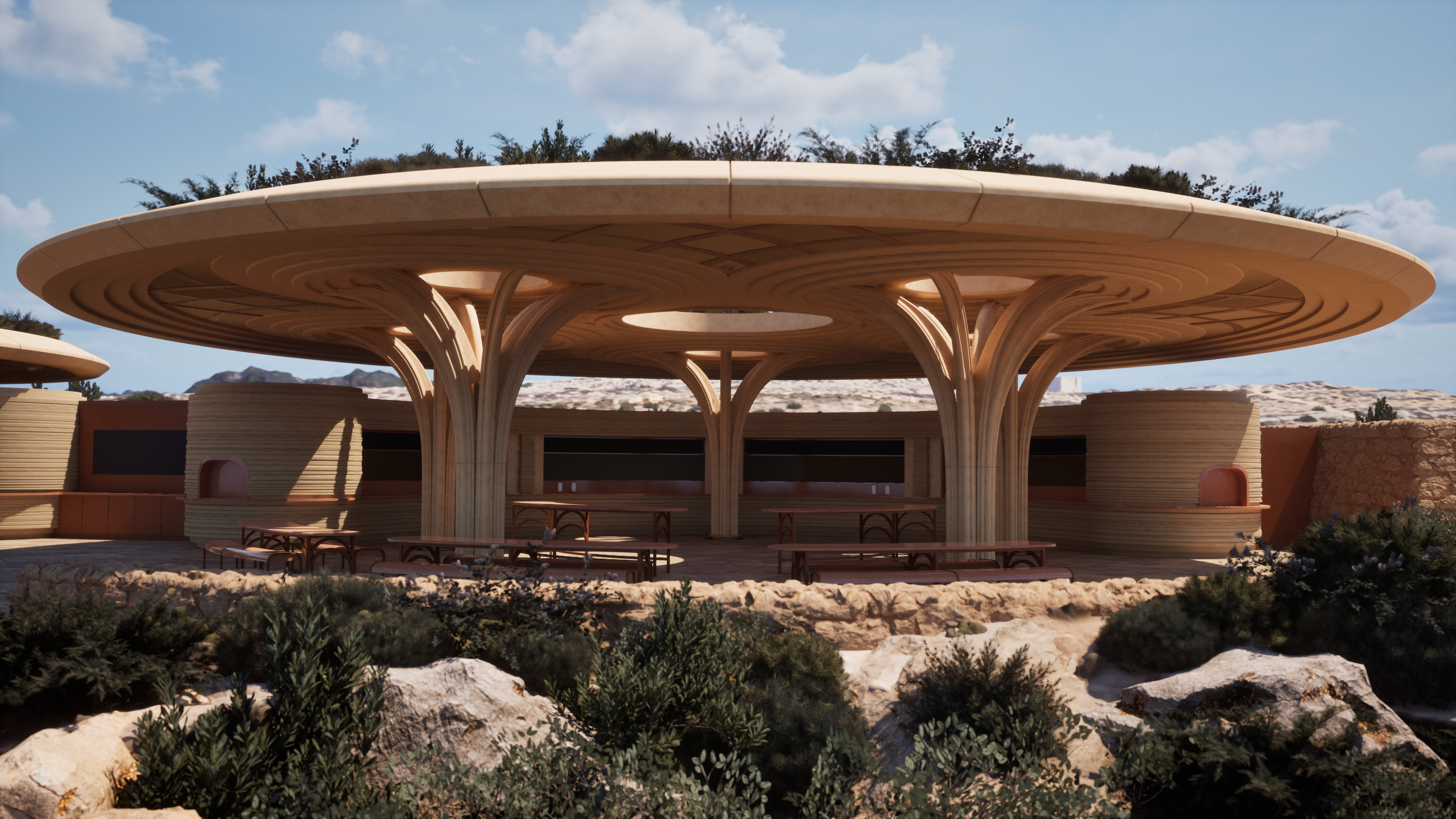
The project implements low-impact, climate-conscious design through modular, lightweight interventions integrated within the terrain and primarily located on already disturbed land. The use of locally sourced limestone and reconstituted stone reinforces durability and cultural continuity.
Water, waste, and resource management are key priorities. New sanitation and organised waste facilities improve hygiene and reduce pollution, addressing issues such as waste-related impacts on local biodiversity. A rainwater reservoir is proposed to support irrigation of planted areas and green roofs, reducing reliance on potable water. Solar PV systems are also proposed to generate operational energy needs, replacing existing polluting generators.
Landscape restoration focuses on garrigue regeneration, habitat protection, and shoreline preservation, enhancing biodiversity and visual quality. Improved circulation, docking coordination, and educational interventions promote responsible visitor behaviour.
Circular practices, digital tools, and carbon assessment guide design and engagement, offering a transferable model for sustainable tourism in fragile coastal landscapes for long-term impact across Europe.
The Blue Lagoon Rehabilitation initiative aims to restore and enhance the visual and experiential quality of one of Malta’s most iconic coastal landscapes, carefully balancing environmental protection with visitor enjoyment. Recognised as a site of outstanding landscape value, the lagoon’s natural beauty is central to its cultural identity. A key objective is therefore to ensure that all design interventions reinforce, rather than compete with, the landscape.
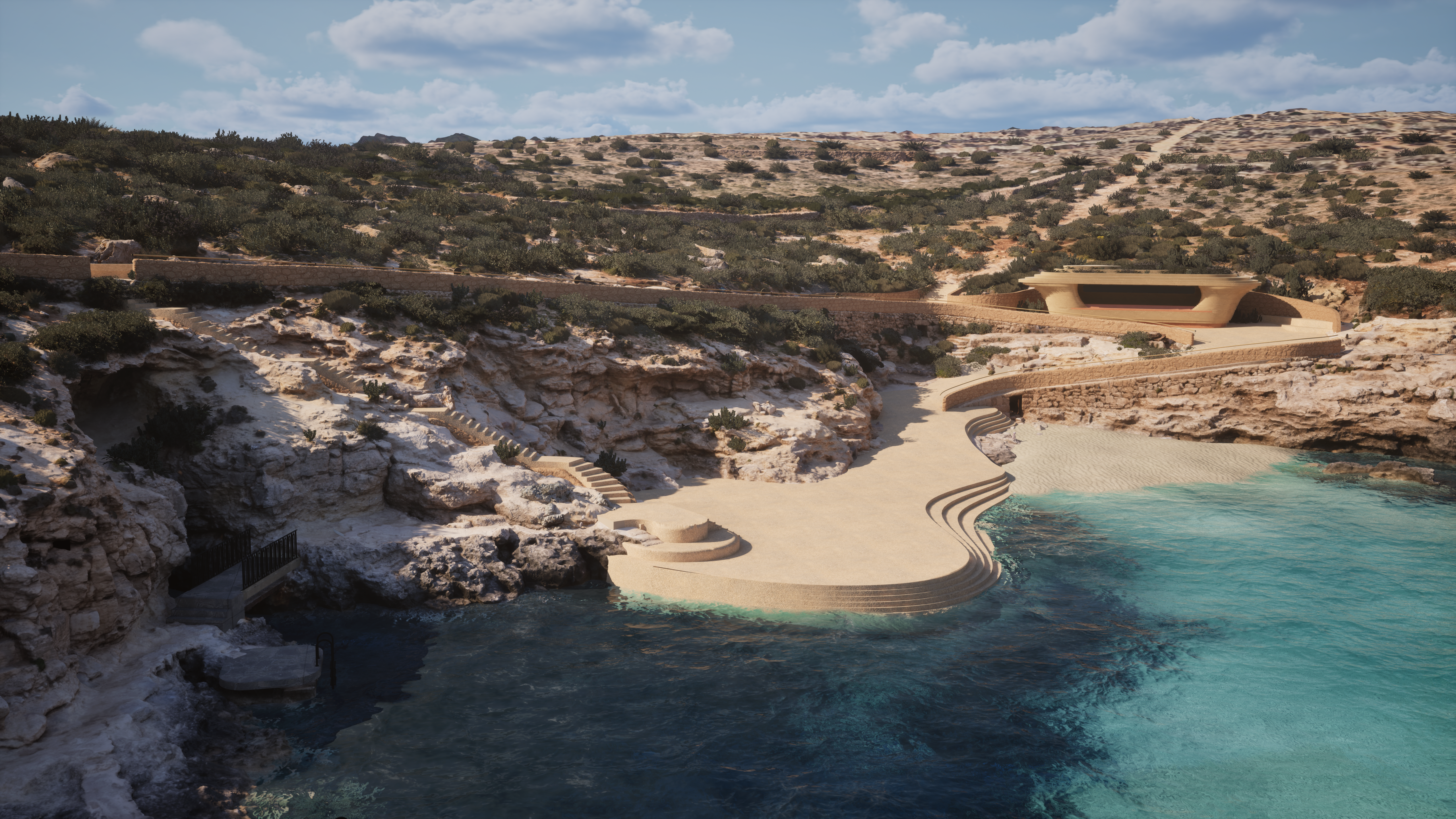
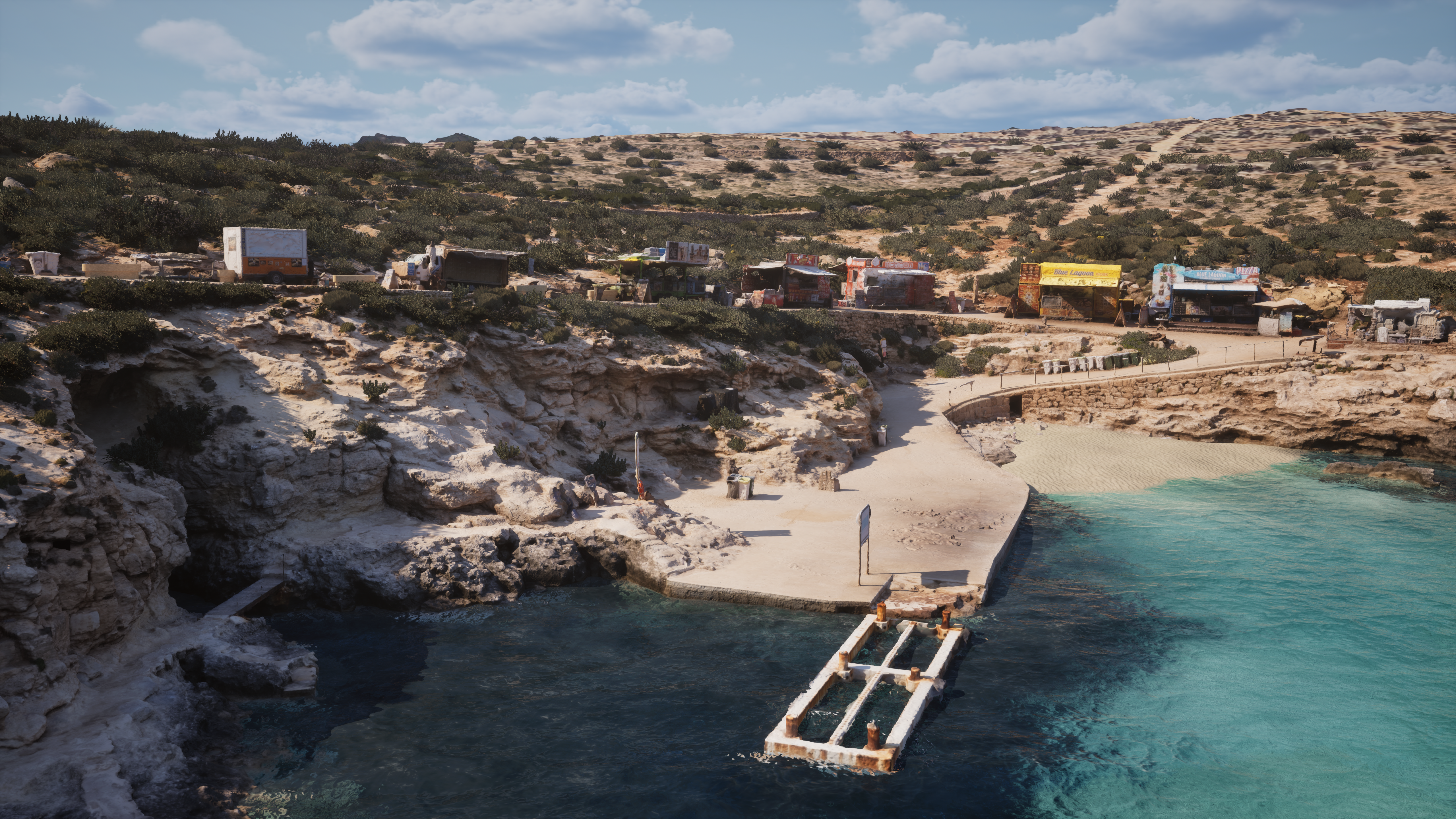
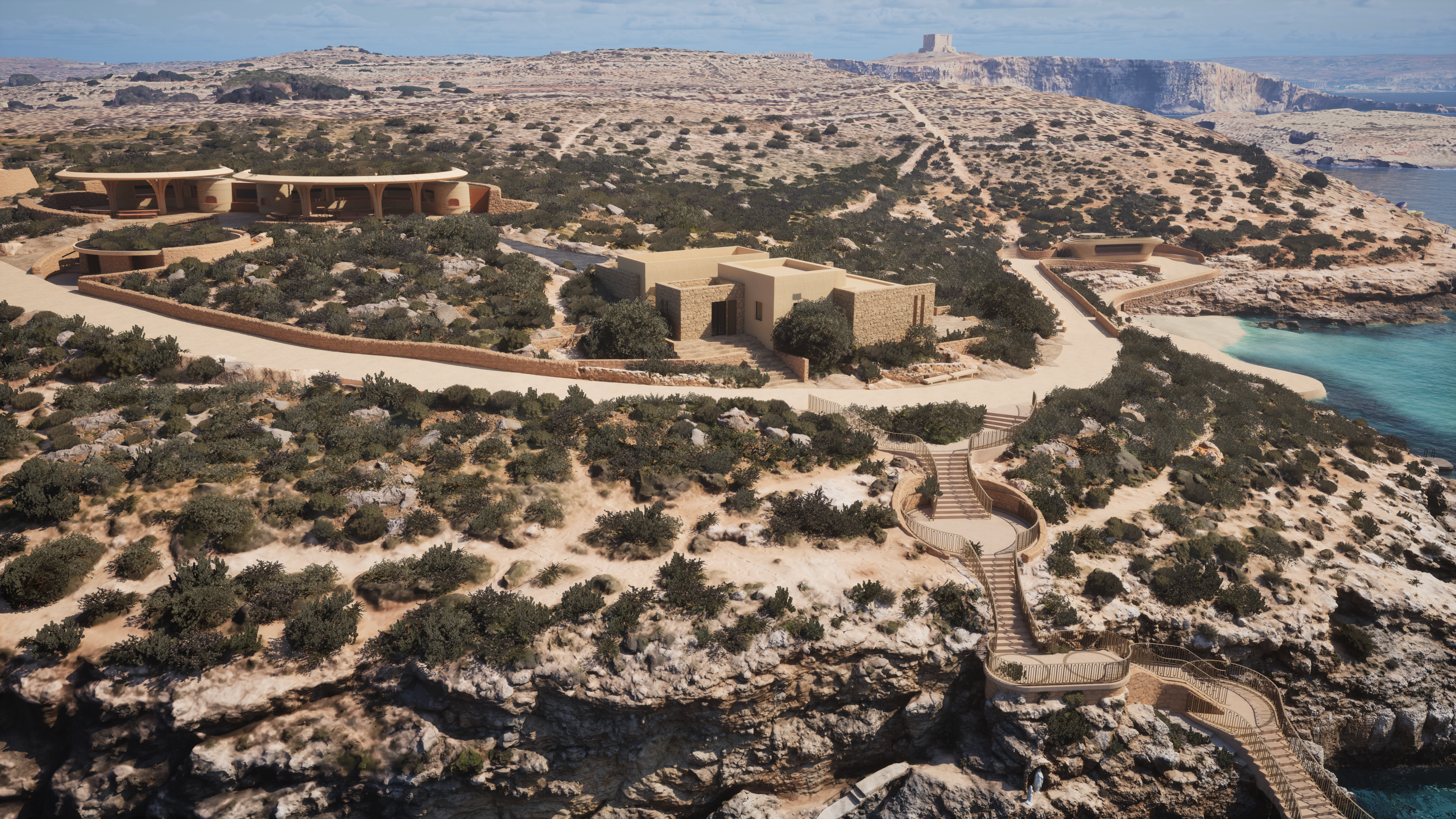
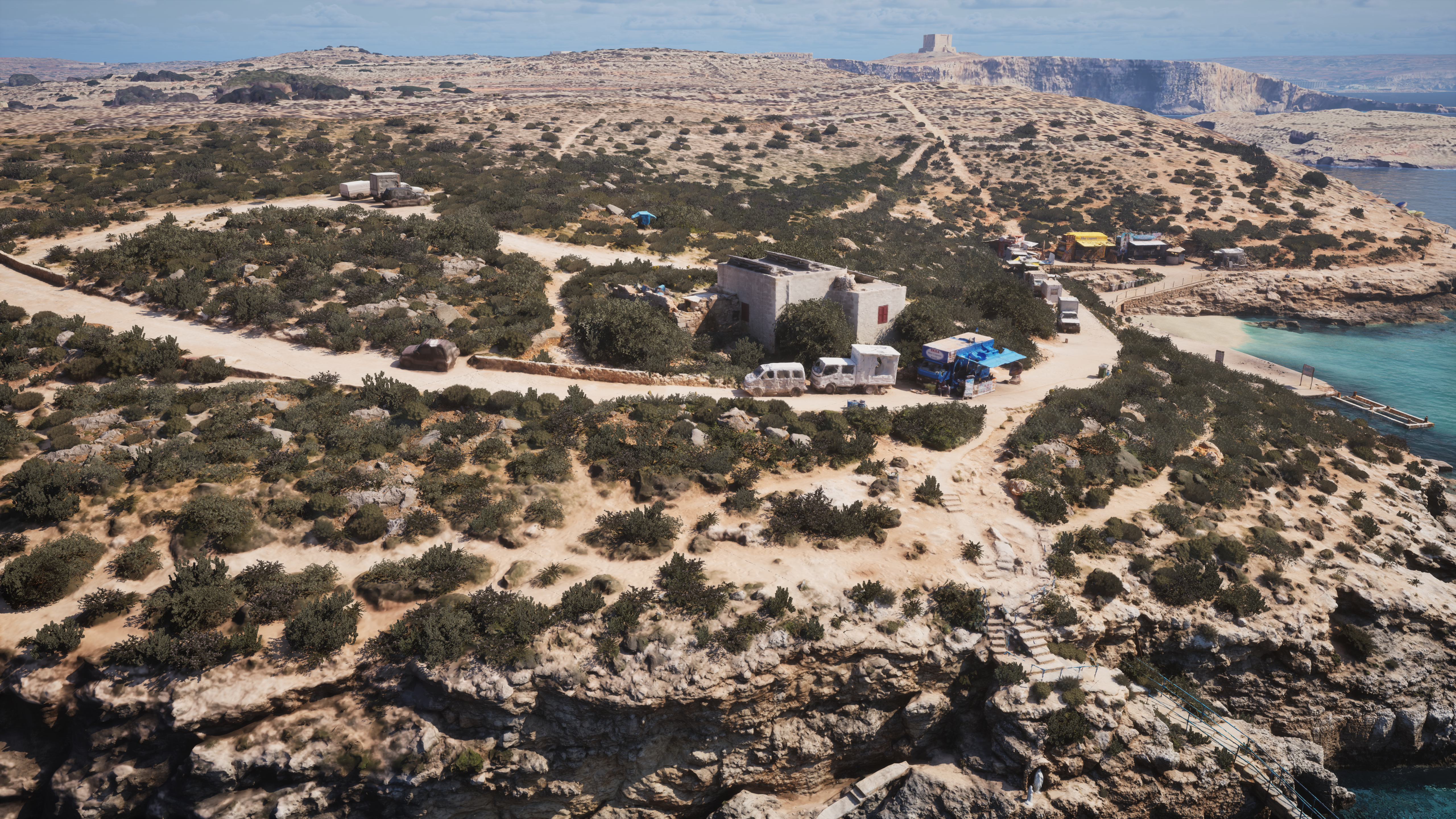
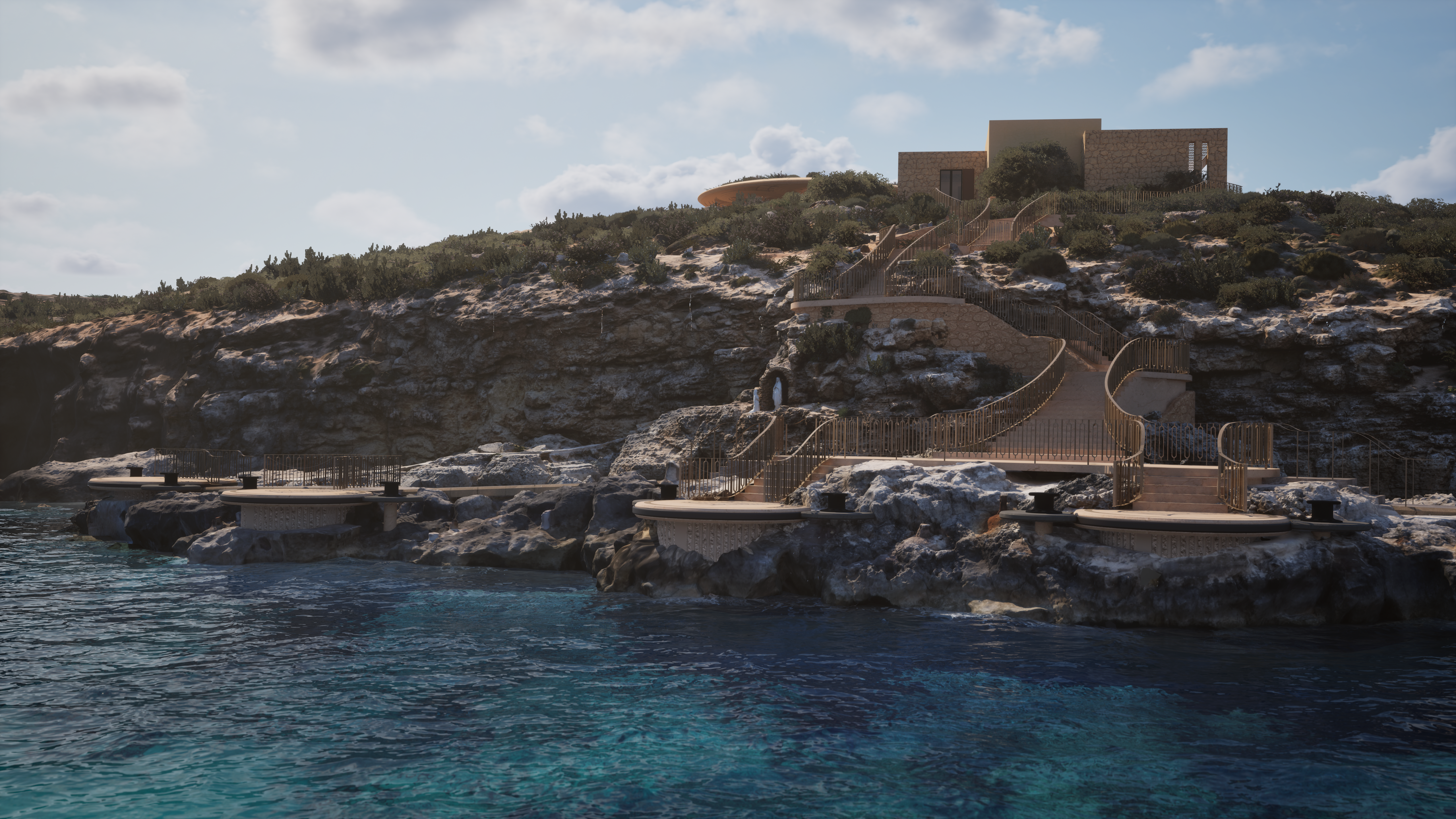
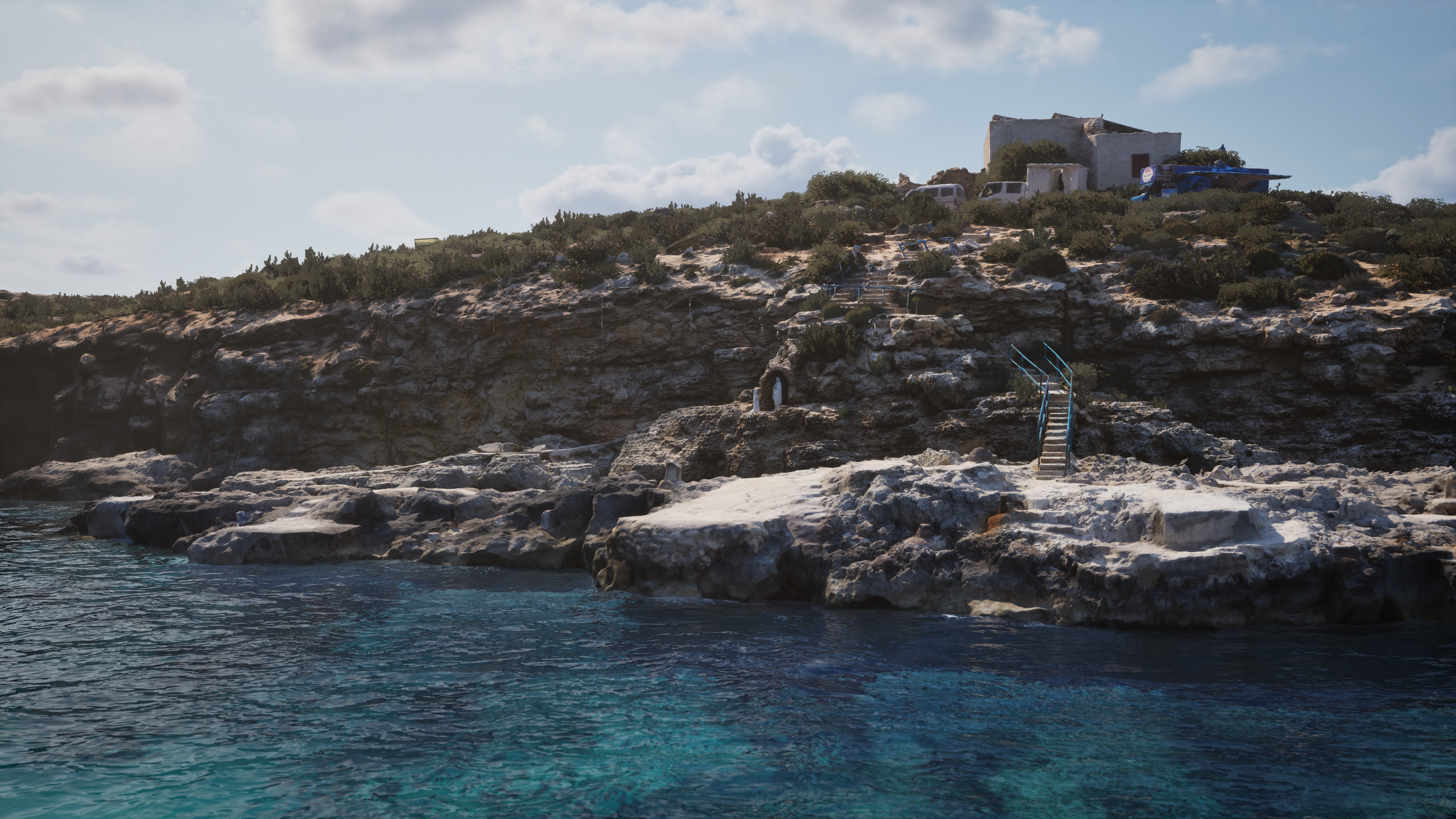
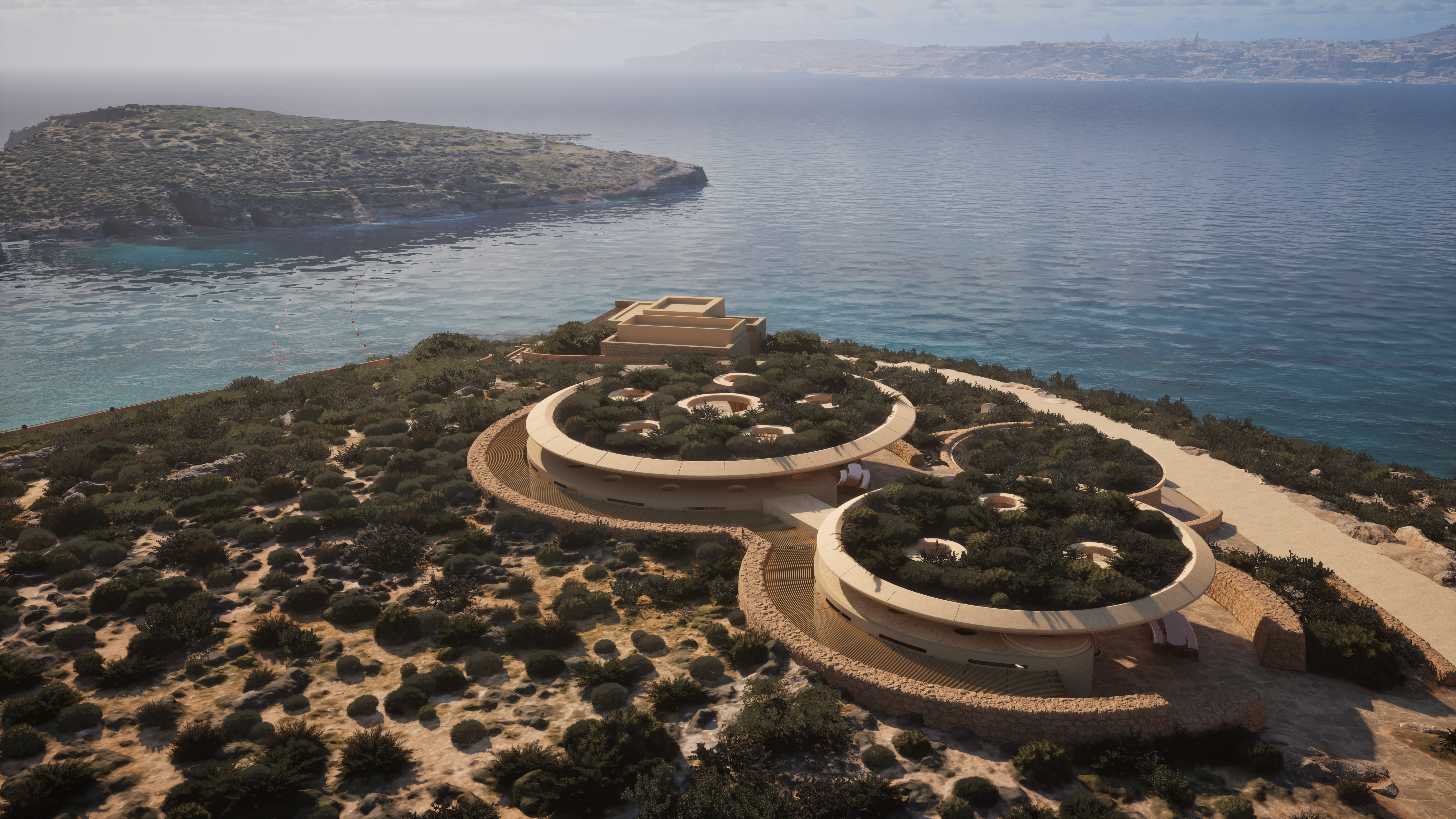
The project replaces visual clutter caused by temporary and uncoordinated infrastructure with a coherent spatial framework that reorganises arrival points, pathways, and facilities into a discreet and integrated system. Architectural interventions are minimal, embedded within the topography, and often excavated to reduce visual impact, ensuring that views of the lagoon and surrounding cliffs remain dominant.
The design reinterprets Maltese vernacular architecture through a contemporary lens, using local stone, rubble wall systems, and skilled craftsmanship to root the project in its cultural and geological context. Garrigue green roofs further embed the interventions within the landscape, reflecting local habitats and enhancing visual continuity. A digital twin of the site enables precise calibration of views, materials, and environmental impact, ensuring a sensitive and responsive design process.
The project creates a high-quality public realm that encourages slower, more meaningful engagement through scenic pathways, shaded spaces, and interpretive elements that reveal the ecological and cultural significance of the site. Developed through close collaboration with environmental NGOs, heritage bodies, and public authorities, the initiative demonstrates how design can quietly transform fragile landscapes - elevating beauty, deepening connection, and setting a new standard for how both local communities and visitors experience and care for shared natural environments.
A central objective of the Blue Lagoon Rehabilitation initiative is to ensure that the site remains accessible, inclusive, and beneficial to all, while safeguarding its environmental and cultural value. Recognised as a shared national and European natural asset, the project seeks to improve how people of different ages, abilities, and backgrounds can experience and enjoy the lagoon.
The design prioritises universal accessibility and “design for all” principles within the constraints of a sensitive coastal landscape. New pathways and ramps are integrated alongside key facilities to improve movement and access to sanitation, seating, and information points. An accessible sea entry seat enables individuals with reduced mobility to safely experience the water. These interventions, supported by compliance with accessibility standards and consultation with relevant bodies including the Commission for the Rights of Persons with Disability, aim to create a more welcoming and equitable environment.
The project also restores the lagoon as a shared public landscape by replacing fragmented, temporary infrastructure with a coherent and high-quality public realm. Scenic pathways, shaded areas, and integrated facilities encourage comfortable and respectful engagement with the environment.
Inclusive governance has been central to the initiative from its earliest stages. Ongoing collaboration with environmental NGOs including Friends of the Earth Malta, Moviment Graffitti, BirdLife Malta, and Din l-Art Ħelwa alongside public authorities, ensures that diverse environmental, cultural, and community perspectives shape the project.
Educational and interpretive elements further support inclusion by making the site’s ecological and cultural value accessible to all, while transparent communication through public media and an interactive digital walkthrough opens the design process to wider audiences.
Creating shared landscapes to experience, connect with, and care for.
Engagement with citizens, civil society, and environmental stakeholders has been central to the Blue Lagoon Rehabilitation initiative from its earliest stages. Given the ecological sensitivity and national significance of the site, the project has prioritised inclusive participation, ensuring that those connected to the protection and use of the lagoon actively contribute to its future.
From early design stages (Stage 00–02), the Malta Tourism Authority and architects at Mizzi Studio engaged closely with environmental NGOs, including Friends of the Earth Malta, Moviment Graffitti, BirdLife Malta, and Din l-Art Ħelwa. These organisations brought critical knowledge on habitat protection, landscape stewardship, and public access, directly informing key design decisions particularly in reducing environmental pressures, restoring landscape quality, and reorganising visitor infrastructure.
This process has been complemented by ongoing consultation with national authorities, including the Environment and Resources Authority and the Superintendence of Cultural Heritage, ensuring alignment with ecological and heritage sensitivities.
At an operational level, the establishment of Team Blue Lagoon under the Malta Tourism Authority introduces a proactive model of site stewardship. A QR-based access system enables real-time monitoring of visitor flows, supporting adaptive management that responds to environmental conditions and user experience.
Transparency and engagement are strengthened through accessible communication tools, including a public film, national media outreach, and an interactive digital platform based on the project’s 3D model. This allows citizens to explore proposals in detail, supporting understanding and participation during the planning process.
These approaches strengthen environmental outcomes and ensure ongoing responsiveness and accountability demonstrating how governance, participation, and design shape resilient, inclusive landscapes.
The Blue Lagoon Rehabilitation initiative has been shaped through collaboration across multiple governance levels, anchored within the Local Administrative Unit MT02622: Għajnsielem and Comino. The application is supported by the Għajnsielem Local Council as the public authority representing the locality, with the Malta Tourism Authority (MTA) responsible for the project’s commissioning, coordination, and implementation.
At the national level, the MTA leads the initiative as client and coordinating body, supported by Team Blue Lagoon, a dedicated unit responsible for site management and visitor strategies, including a QR-based system enabling real-time monitoring and adaptive response.
At the local and civil society level, the project engages closely with environmental NGOs, including Friends of the Earth Malta, Moviment Graffitti, BirdLife Malta, and Din l-Art Ħelwa. Their input has informed priorities around habitat protection, landscape quality, and public access. The involvement of the Għajnsielem Local Council and the Gozo Tourism Authority further grounds the project within its local context.
At the regulatory level, consultation with the Environment and Resources Authority, the Superintendence of Cultural Heritage, Transport Malta, and the Comino Committee ensures alignment with ecological and heritage sensitivities.
At the European level, the initiative aligns with Natura 2000 protections and the New European Bauhaus.
This multi-level engagement strengthens environmental outcomes, ensures compliance, and supports long-term adaptability - demonstrating how governance, participation, and design can align to shape resilient, inclusive landscapes.
The Blue Lagoon Rehabilitation initiative is developed through an interdisciplinary process bringing together architecture, landscape design, environmental science, engineering, heritage conservation, digital technologies, and operational management. This collaboration addresses the environmental, cultural, and logistical challenges of rehabilitating a highly visited natural landscape.
At its core, the project is led by architecture and landscape design, restoring spatial clarity while integrating infrastructure in a minimal and sensitive manner. Ecological considerations guide the organisation of pathways and facilities, informed by specialist studies including ecological assessments and coastal wave analysis to ensure resilience and minimal impact.
Environmental expertise, supported by NGOs and regulatory bodies, informs decisions on habitat protection and the integration of interventions. Early collaboration with the University of Malta, including LiDAR scanning and a photogrammetry-based digital twin, has enabled precise site understanding and coordination.
Engineering disciplines address sanitation, waste, and service systems, working closely with designers to maintain environmental and visual quality. Heritage expertise ensures alignment with Malta’s cultural landscape.
The digital twin supports interdisciplinary coordination, allowing proposals to be tested and refined collaboratively, while operational input from the Malta Tourism Authority and Team Blue Lagoon ensures alignment with long-term management.
This exchange between disciplines creates a holistic approach where design, science, and governance inform one another - demonstrating how integrated collaboration can shape resilient, context-driven landscapes.
The Blue Lagoon Rehabilitation initiative introduces an innovative approach to managing highly visited coastal landscapes by combining design-led environmental restoration, operational management, stakeholder engagement, and digital technologies. Moving beyond reliance on regulation or temporary infrastructure, the project integrates spatial design, governance, and environmental stewardship into a coordinated strategy.
A key innovation lies in using architecture and landscape design as tools for environmental management. The project replaces fragmented development with a coherent spatial framework, integrating facilities discreetly within the landscape and addressing environmental protection, visitor experience, and operations simultaneously.
The initiative reinterprets Maltese vernacular construction through a contemporary lens, combining local stone, prefabrication, and craftsmanship to ensure durability while reinforcing cultural identity.
Digital technologies play a central role. A high-resolution digital twin enables precise analysis, interdisciplinary coordination, and informed design decisions. It has guided ecological restoration and the replacement of unsympathetic past interventions. The model is also being translated into an interactive platform, supporting public understanding and transparency.
Operational innovation is embedded through the establishment of Team Blue Lagoon and a QR-based system enabling real-time monitoring and adaptive visitor management.
Together, these approaches redefine the management of fragile landscapes shifting from reactive control to a dynamic, design-led system where environmental care, cultural identity, and visitor experience are continuously shaped, tested, and evolved.
The Blue Lagoon Rehabilitation initiative adopts a holistic, design-led methodology that integrates environmental sensitivity, interdisciplinary collaboration, and adaptive management. Moving beyond conventional approaches that separate planning, design, and operations, the project establishes a continuous and responsive process where spatial design, stakeholder input, and real-time management are developed in parallel.
The methodology began with in-depth site analysis examining environmental conditions, visitor patterns, and landscape qualities, developed collaboratively between Mizzi Studio, the Malta Tourism Authority, environmental stakeholders, and regulatory bodies. This early alignment ensured a shared understanding of ecological sensitivities.
A central innovation is the development of a high-resolution digital twin of the site. This enabled precise analysis of terrain, circulation, and visual impact, allowing multiple disciplines, architecture, landscape, engineering, and environmental expertise, to test and refine interventions collaboratively.
The design strategy prioritises minimal, integrated interventions, reorganising infrastructure within a framework that works with the natural topography while reducing impact.
Stakeholder engagement is embedded throughout, with NGOs, heritage bodies, and authorities shaping priorities and strengthening outcomes.
Crucially, the methodology integrates design with operational systems. Team Blue Lagoon and QR-based monitoring enable real-time management, allowing the site to adapt to changing conditions moving beyond static, one-time design solutions.
Together, this establishes a dynamic framework where design, data, and governance interact continuously shaping more responsive and resilient landscapes.
The Blue Lagoon Rehabilitation initiative demonstrates a high potential for transferability by establishing a replicable framework for addressing overtourism, environmental degradation, and pressure on sensitive coastal landscapes, including Natura 2000 sites. Anchored within a small island municipality, it shows how local administrative units can lead scalable, design-led responses to globally shared challenges.
At its core, the project offers a transferable methodology that integrates spatial design, interdisciplinary collaboration, early stakeholder engagement, and coordination with regulatory authorities. This approach ensures that environmental, cultural, and operational considerations are embedded from the outset, providing a structured yet adaptable model applicable to diverse contexts.
A key innovation with strong replicability is the use of a high-resolution digital twin. This tool enables precise analysis of terrain, ecological conditions, and visual impact, allowing interventions to be tested, refined, and communicated across disciplines. Beyond design, it establishes a new standard for conservation practice—supporting evidence-based decision-making, stakeholder engagement, and public consultation. Its application has clear potential to be adopted in other fragile landscapes globally.
The project also introduces a transferable governance model. The establishment of Team Blue Lagoon demonstrates how design can be paired with active site management, while QR-based monitoring systems enable real-time understanding of visitor patterns and adaptive responses—an approach that can be applied in other high-pressure destinations.
In parallel, the integration of local craftsmanship and vernacular materials within contemporary design offers a replicable principle: grounding interventions in local identity while ensuring durability and environmental performance.
Together, these enable municipalities to move from reactive control to design-led stewards.
The Blue Lagoon Rehabilitation initiative is currently undergoing planning screening and progressing into Stage 4 technical design and procurement, ahead of phased site clean-up and implementation. This phase translates the design framework into built interventions while maintaining environmental stewardship, inclusive access, and high-quality landscape design.
Immediate actions include securing planning approval and finalising detailed design and coordination, ensuring that architectural, landscape, and infrastructure elements are sensitively embedded within the coastal environment, including public facilities, pathways, sanitation and waste systems, and landscape restoration.
Implementation is supported by ongoing collaboration with regulatory authorities and environmental stakeholders, including the Environment and Resources Authority and the Superintendence of Cultural Heritage, ensuring alignment with ecological and heritage priorities. Engagement with NGOs continues to inform decisions and strengthen outcomes.
The project’s digital twin is being developed into an interactive online platform, enabling citizens to explore proposals in 3D and engage with the design process, supporting transparency and participation.
At the operational level, the Malta Tourism Authority and Team Blue Lagoon continue to refine adaptive management strategies, including QR-based monitoring systems, ensuring long-term responsiveness.
The initiative embeds New European Bauhaus values: sustainability through environmental restoration, beauty through landscape integration and craftsmanship, and inclusion through accessibility and engagement. Participation, interdisciplinarity, and multi-level governance guide the process.
Next steps include final approvals, phased implementation, and continued stakeholder dialogue.