Enablers for New European Bauhaus Transformation
The Bildung Climate School
The Bildung Climate School: Inclusive, Holistic Sustainability Education for a Better Future
The Bildung Climate School is a groundbreaking educational program that empowers young people to face sustainability challenges with resilience, creativity, and care. We bring together students from vocational, applied, and university education in an interdisciplinary learning community, combining science, hands-on skills, and personal development to prepare the next generation for a beautiful, inclusive and sustainable world.
Netherlands
Local
Rotterdam, the Netherlands
Mainly urban
It involves other types of transformations (soft investment)
Yes
2025-07-08
No
No
No
Individual
The Bildung Climate School (BCS) is a Rotterdam-based educational program that enacts sustainability in a radically new way. We bring together vocational (MBO), applied sciences (HBO) and university (WO) students in the Netherlands' first integrated learning community through a 12 week program located at the Hef House community center in Rotterdam South.
Our vision: Resilient futures for all!
Our mission: to build individual and collective resilience for sustainability transitions by breaking down educational silos and building community
We operate as a partnership between Erasmus University Rotterdam, Albeda MBO and Hogeschool InHolland (joined in 2025).
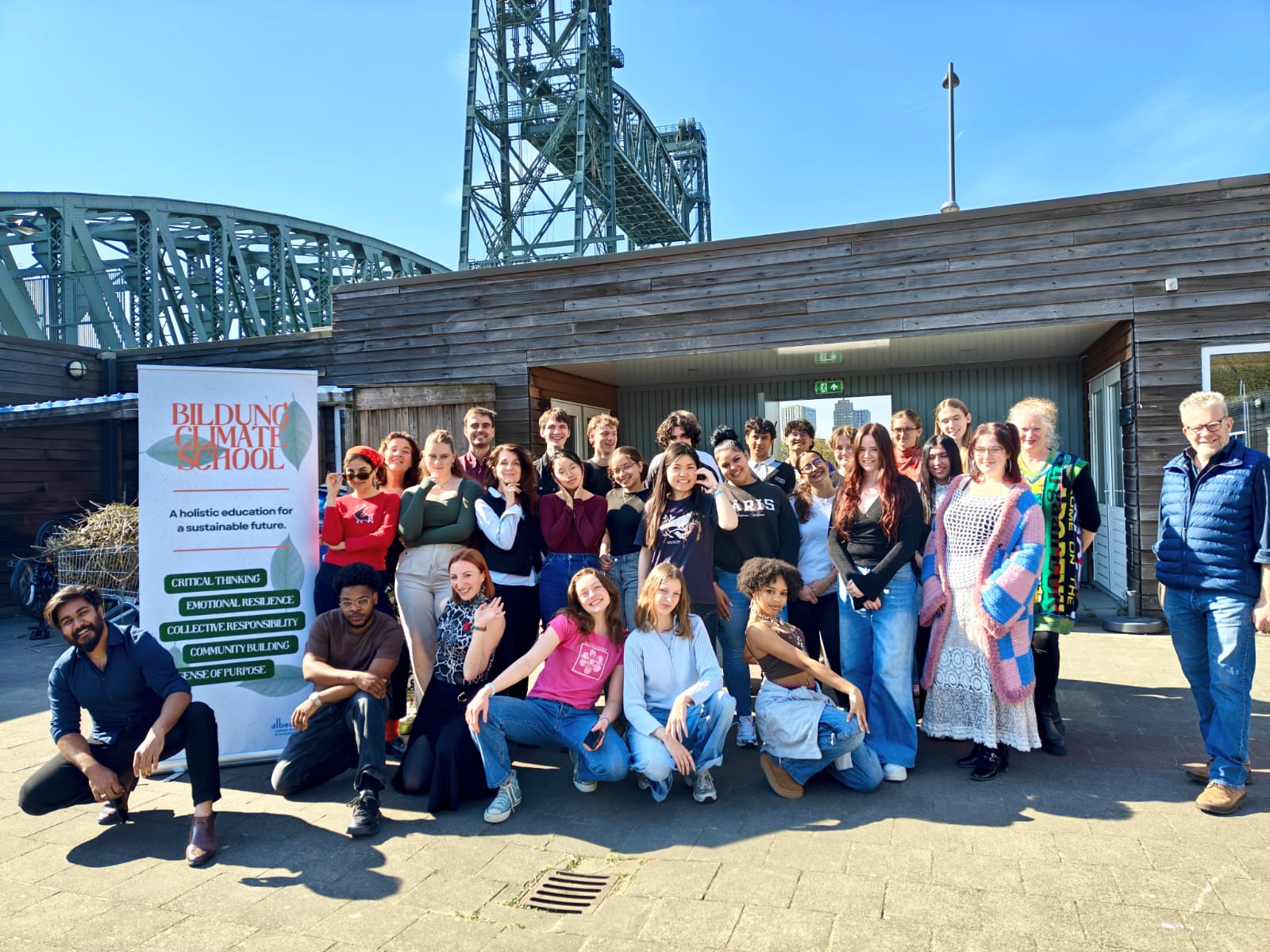
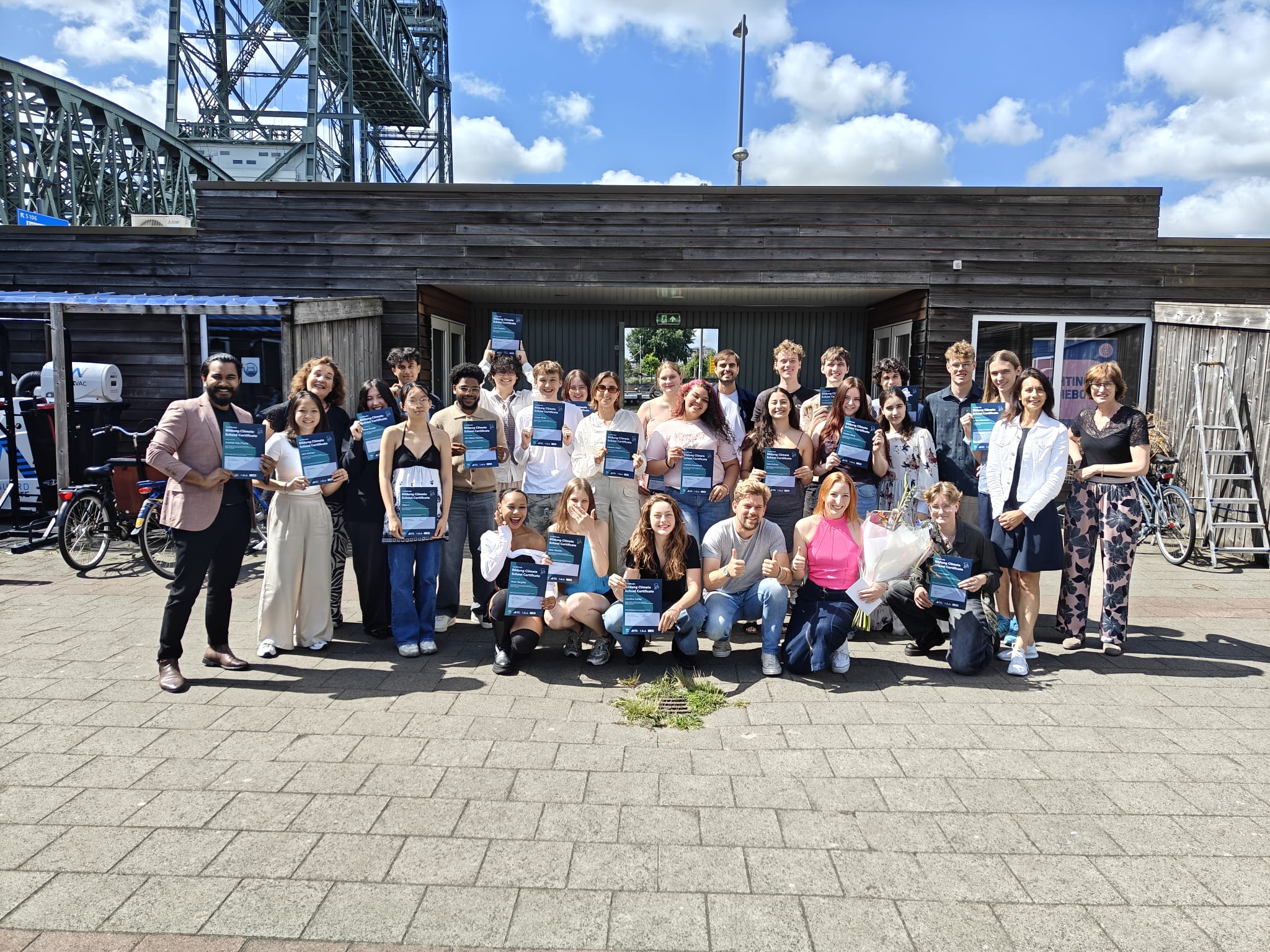
At time of application, we ran two successful extracurricular pilot programs from April-July 2024 and 2025, graduating 46 students. Pilot 1 was themed on food. We are applying for the NEB prize for Pilot 2, which was themed on fashion. In 2026, we will move towards a full time credited 10 week program included in the curriculum of all partner institutions.
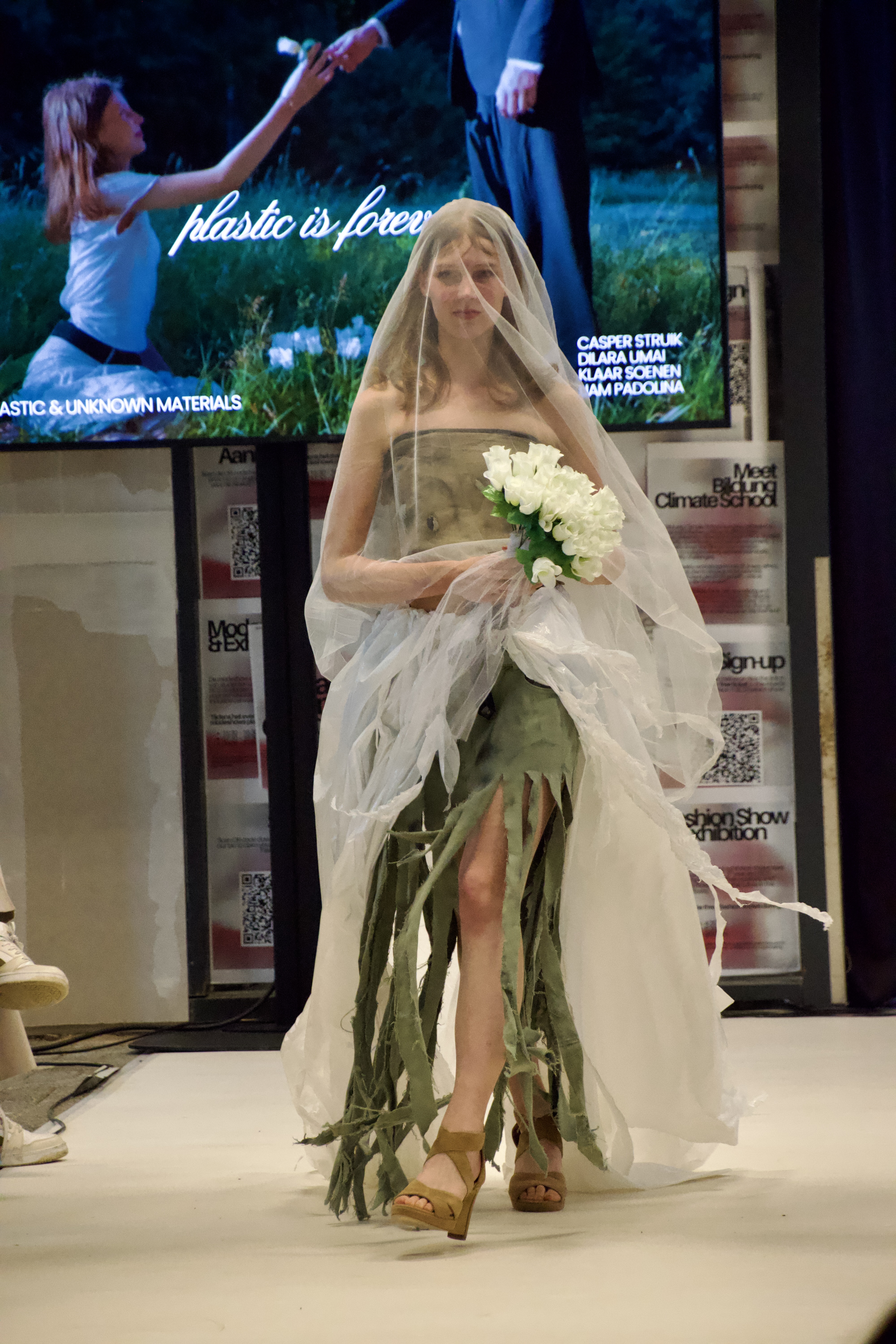
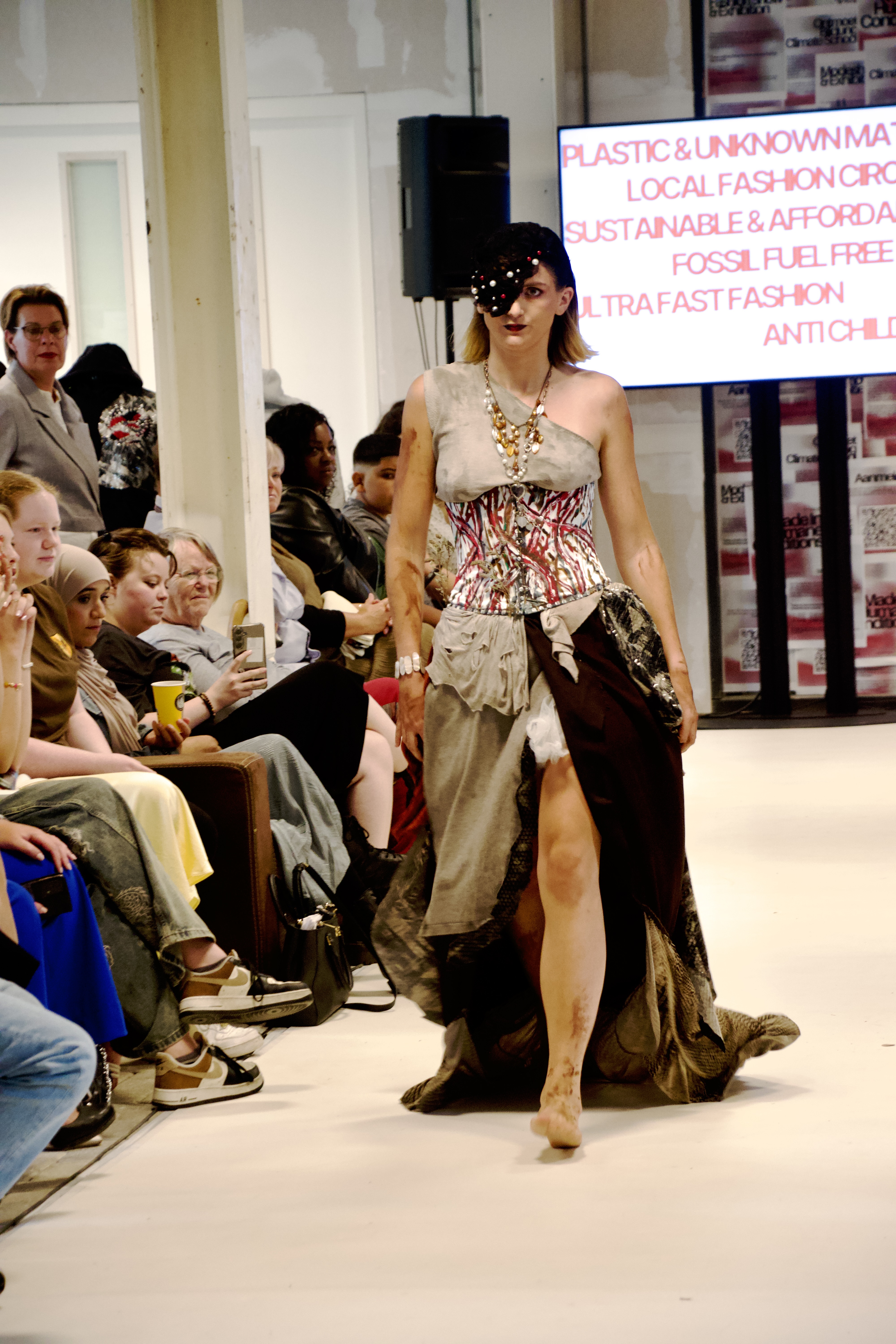
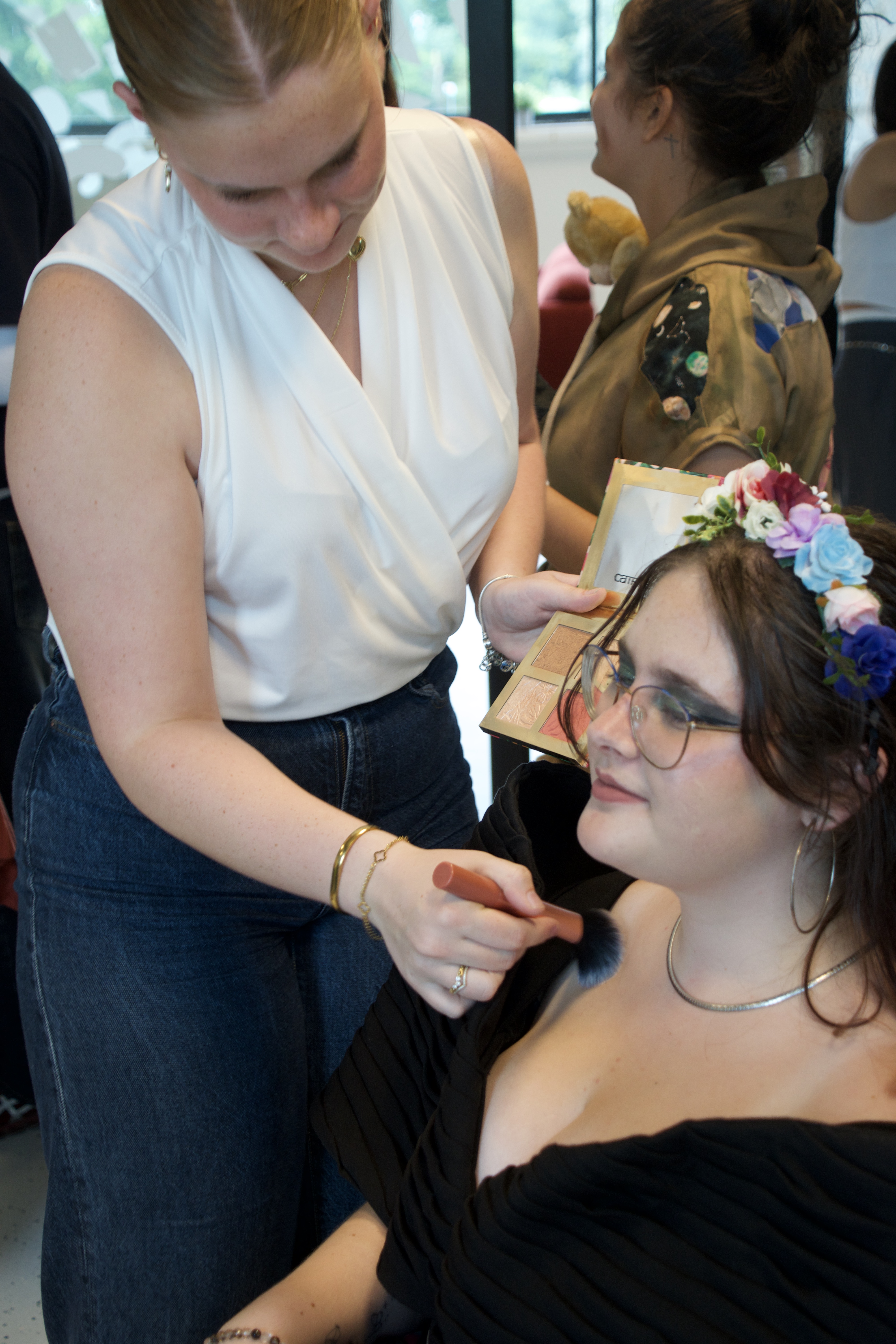
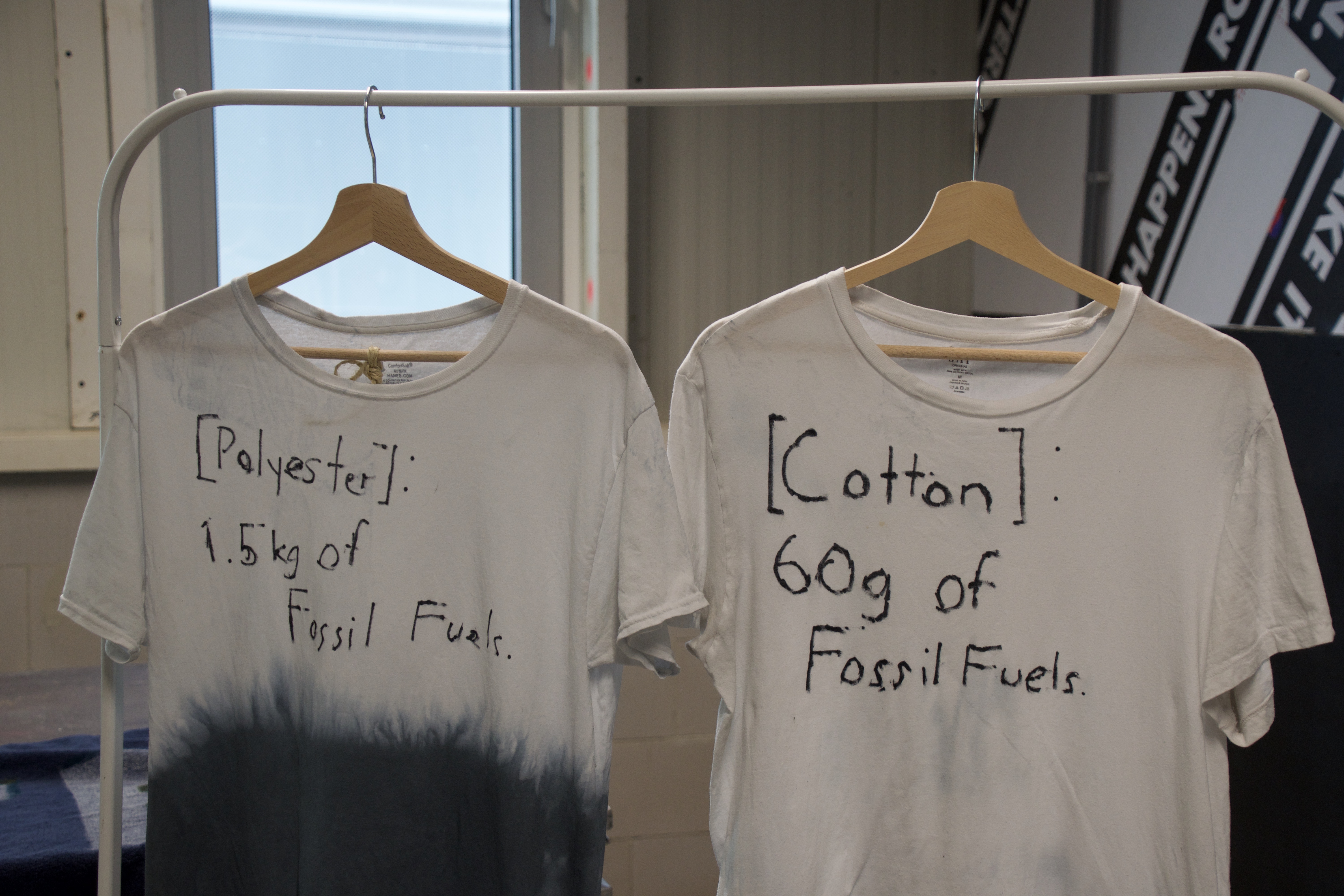
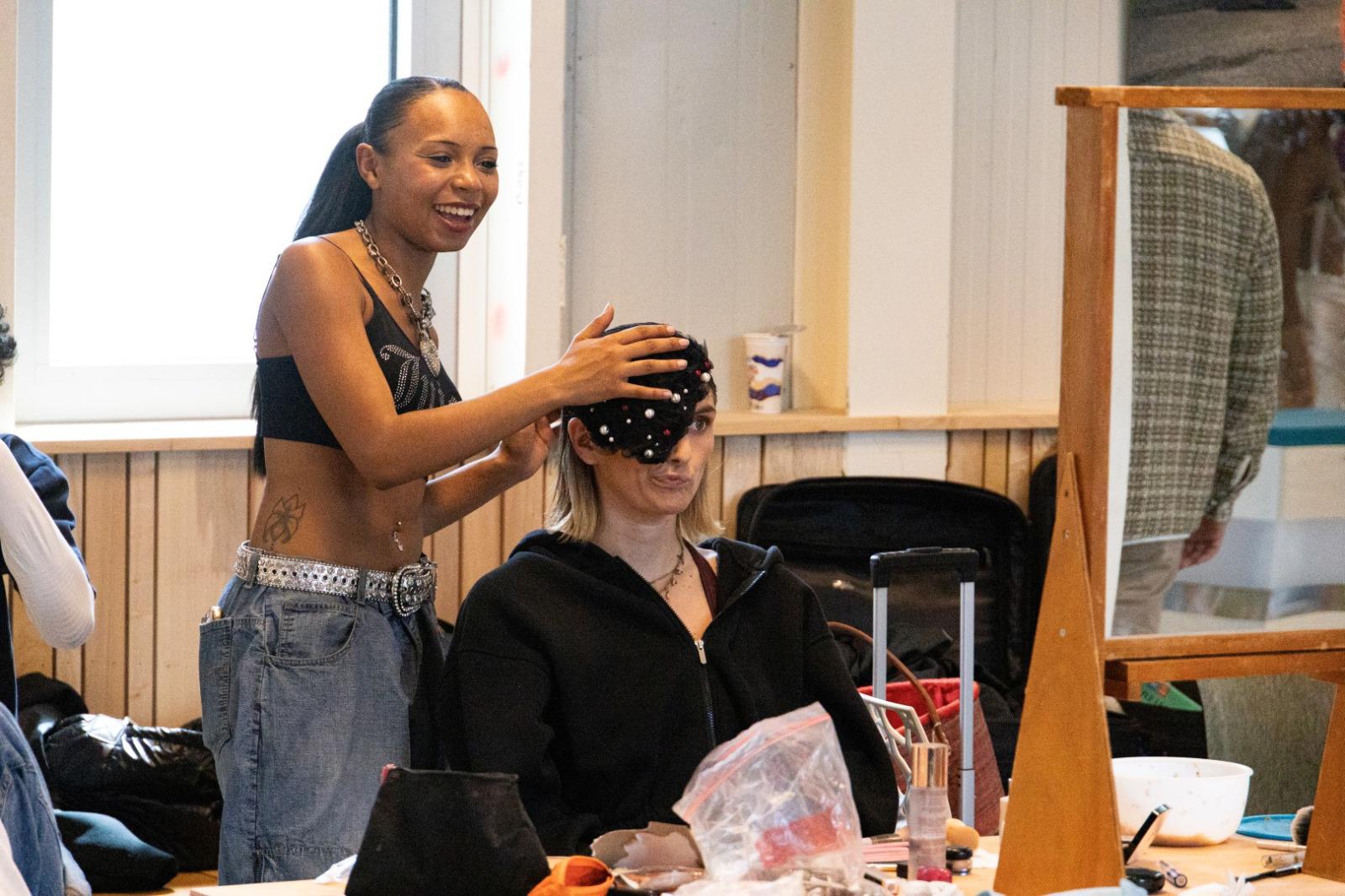
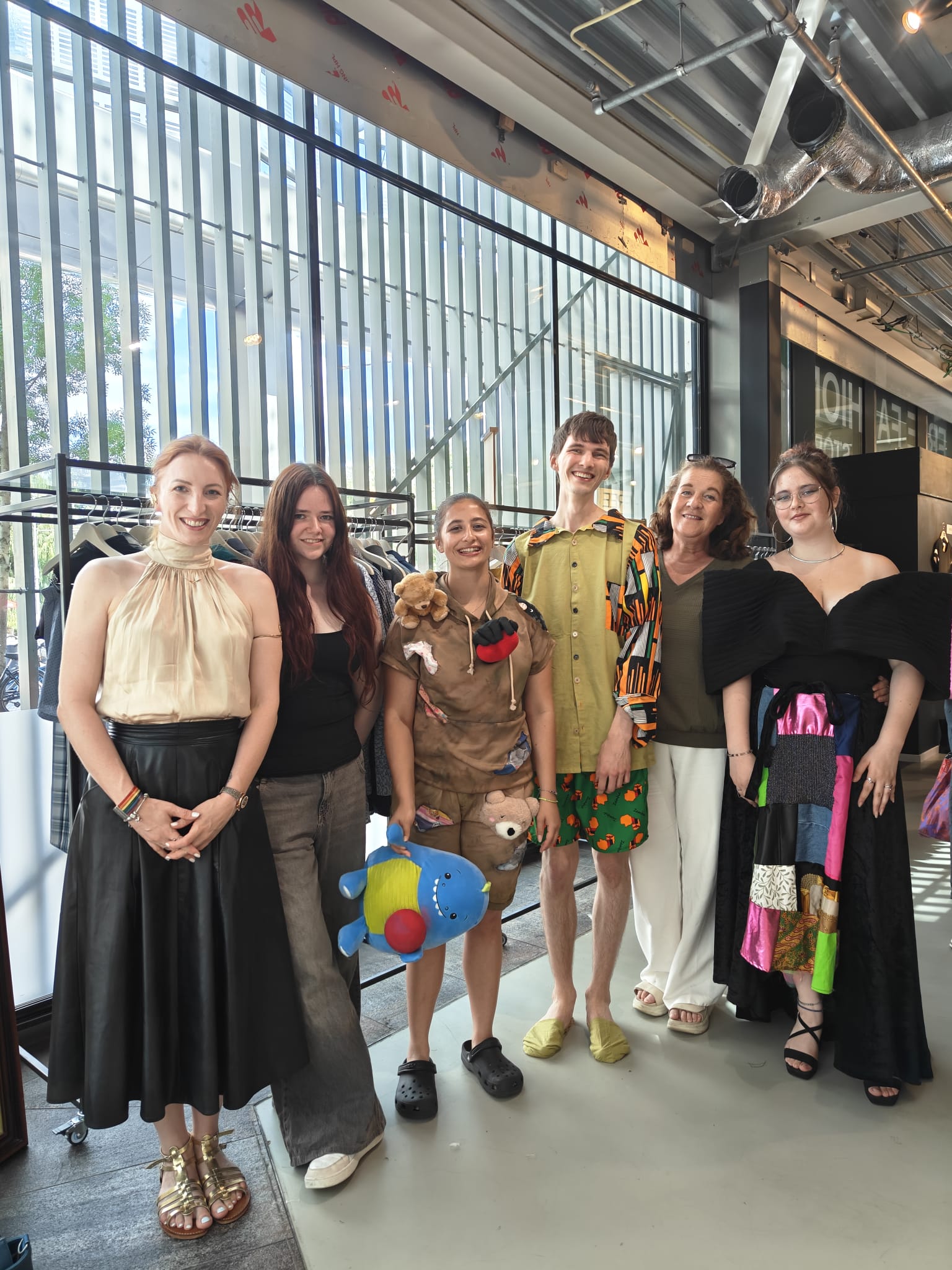
"The BCS: The Fashion Edition" (2025) offered 11 Bildung workshops and 11 project workshops, culminating in 2 fashion shows in which students showcased wearable art they made from reused materials and exhibitions to protest damaging aspects of the fashion industry.
Our methods are based on 5 pedagogical principles:
1. Planetary boundaries: all workshops are grounded in a scientific understanding of planetary boundaries.
2. Experimental Pedagogics: an education design framework developed by BCS founder Ginie Servant-Miklos, that structured our curriculum along 5 developmental dimensions - cognitive, individual, group, community, global.
3. Bildung: a scandinavian learning philosophy for personal and collective emancipation and resilience.
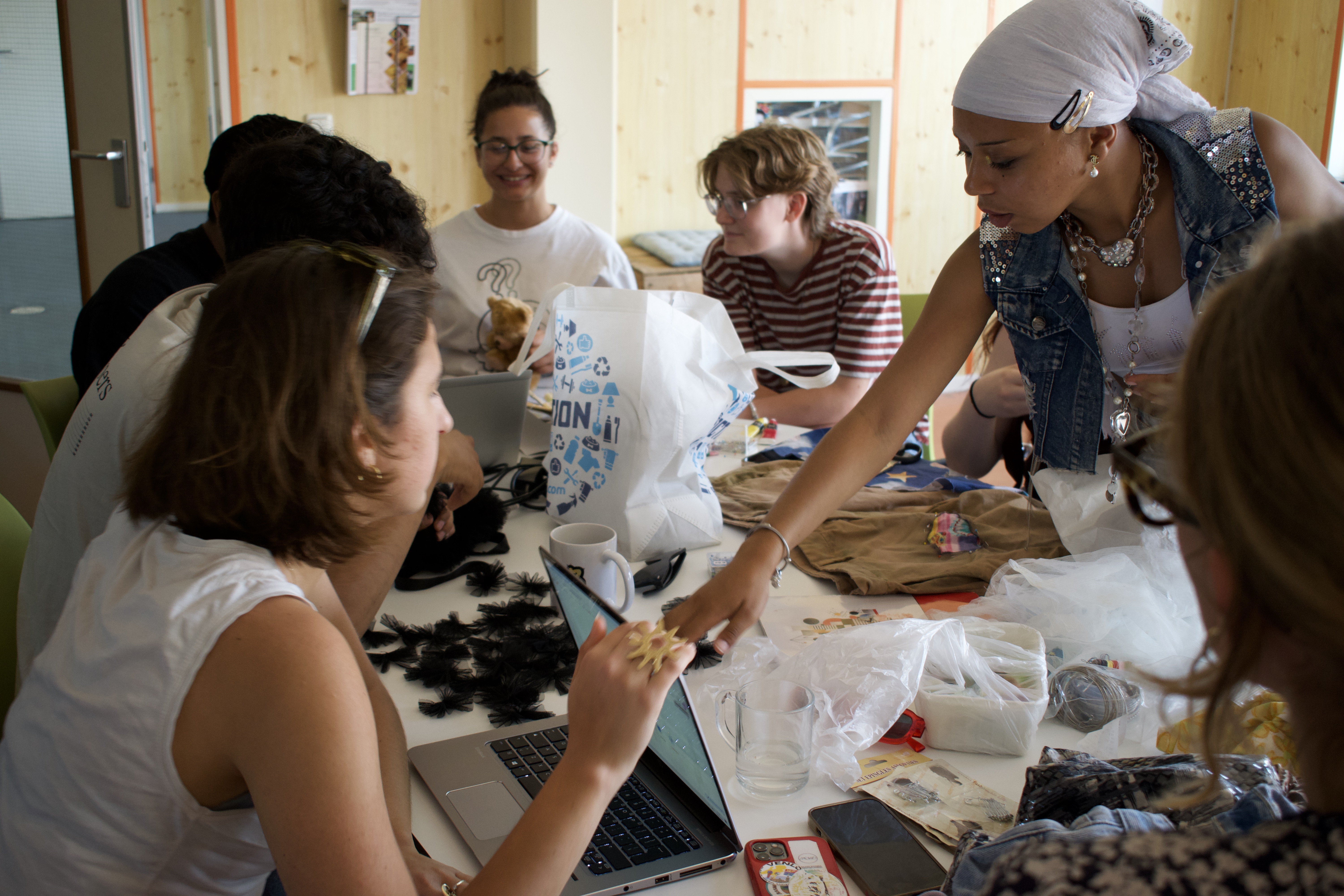
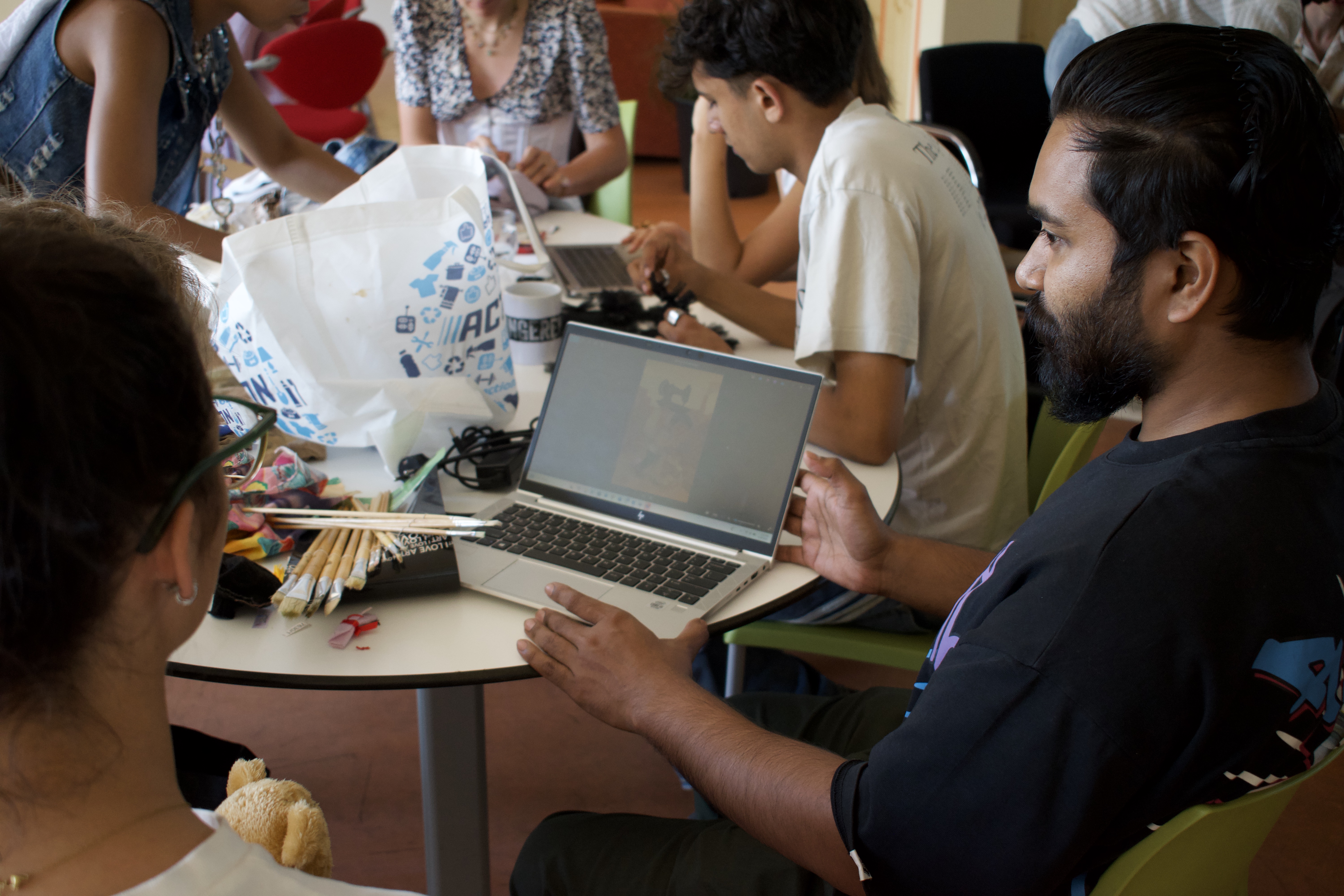
4. Mixed-group projects: MBO-HBO-WO students worked together on sustainability challenges in the fashion industry.
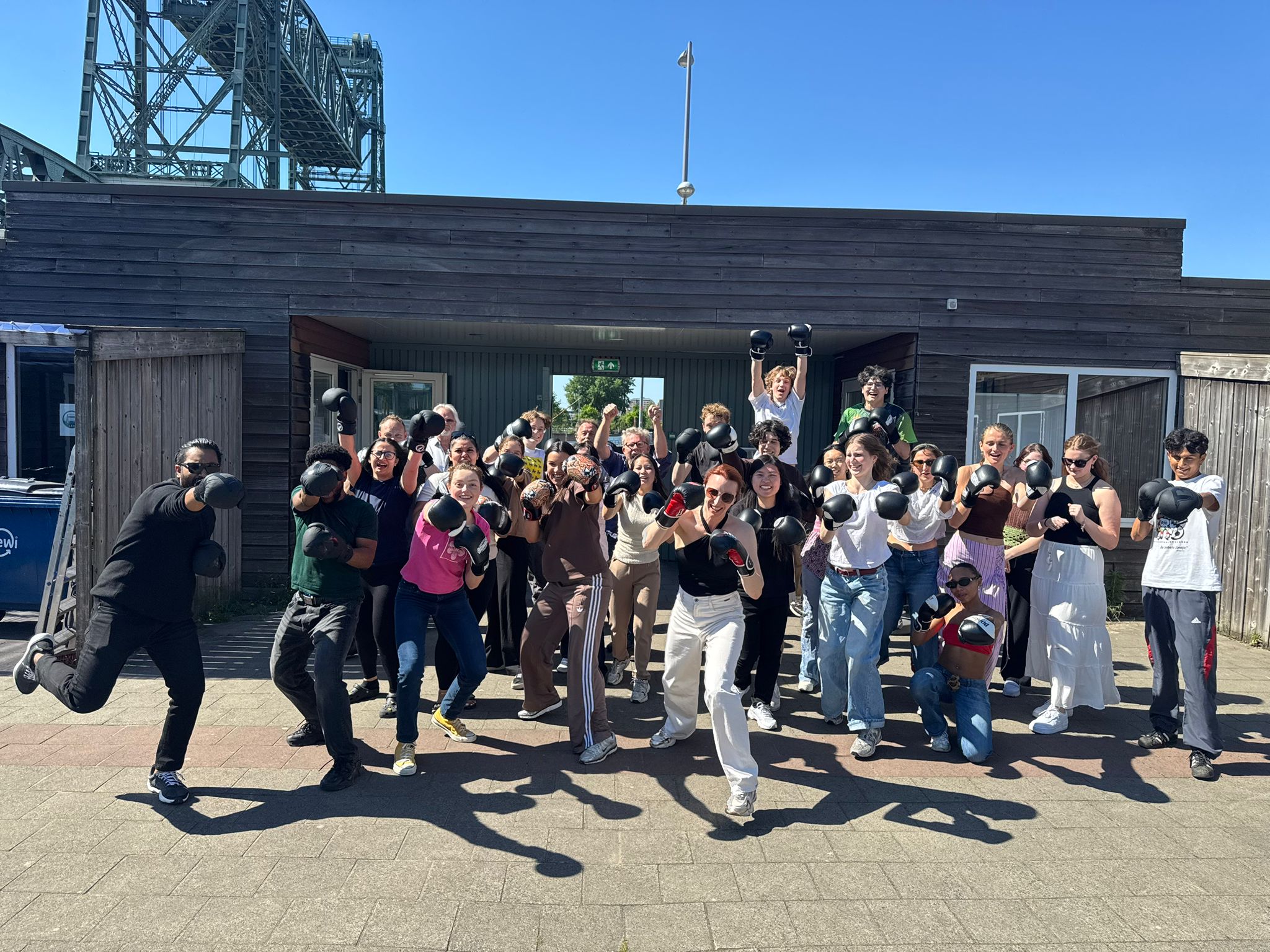
5. Reflection: embodied reflection, martial arts, dancing, breathing as personal resilience.
The BCS is the brainchild of Dr. Ginie Servant-Miklos, author of "Pedagogies of Collapse: a Hopeful education for the End of the World as we Know it" (Bloomsbury, 2024). Taking the book's vision for a sustainable future for education seriously, she joined forces with former Erasmus University (EUR) Rector Rutger Engels to build the founding partnership between EUR and Albeda MBO.
Here is a timeline of the project:
January 2024: Erasmus Trustfund provides funding for Pilots 1 & 2. We secured the partnership with Hef House, which is funded in part by the municipality of Rotterdam and EUR as an outreach outpost.
April 2024: Start of Pilot 1: the Food Edition with 21 MBO-HBO-WO students.
July 2024: End of Pilot 1
January 2025: NIVOZ and Bildung Academie partnerships secured to develop Pilot 2. Funding secured for documentary "Together".
April 2025: Start of Pilot 2: the Fashion Edition with 25 MBO-HBO-WO students.
May 2025: Roskilde University and NEXT Copenhagen visit BCS Rotterdam
June 2025: Comenius Fellowship funding secured from the NKO for expanding the concept into a full time credited program by 2026.
July 2025: End of Pilot 2 with 2 fashion shows in Rotterdam.
August 2025: BCS Copenhagen launched
September 2025: NPRZ provides extra funding. Hogeschool Inholland joins as formal HBO partner.
November 2025: "Together" documentary released showcasing achievements of Pilot 2.
December 2025: Mondragon University joined our European working group on BCS-type education.
February 2026: first study on BCS outcomes focused on eco-anxiety released in pre-print.
Under the directorship of Ginie Servant-Miklos, 22 now people work at BCS, roughly equally spread across MBO, HBO and WO backgrounds. This includes the management team, education team, research team and advisors.
Finances are managed centrally through a project budget at EUR, with contributions between partners settled through institutional agreements and secondments.
Bildung
Social inclusion
Resilient education
Community building
Sustainable economy
At the Bildung Climate School, sustainability is the organizing principle of a fundamentally different kind of education. We don't ask students to learn about the ecological crisis, rather, to learn to be differently in the world. The distinction between sustainability as content and as developmental process (Bildung, dannelse, éducation) shapes our program design.
Environmentally, we anchor into the planetary boundaries framework. Fashion is our lens: 10% of global carbon emissions, massive water use, toxic waste, and an industry every student knows as a consumer. Students work only with discarded materials, producing wearable art entirely from waste. Systemic problems examined through lived experience: that's the core of our pedagogy
Socially, the BCS is the first program in the Netherlands to integrate MBO, HBO and WO students in a single learning community. The Dutch education system separates children early, with consequences that mirror with socioeconomic disadvantages. We invert this: MBO students lead the creative process; university students support analytically. Our eco-anxiety research confirms that MBO students show greater baseline engagement and action-oriented resilience.
Economically, we locate the program in Rotterdam South, one of the city's most deprived areas, giving MBO students access to university knowledge networks and connecting their work to active circular economy businesses.
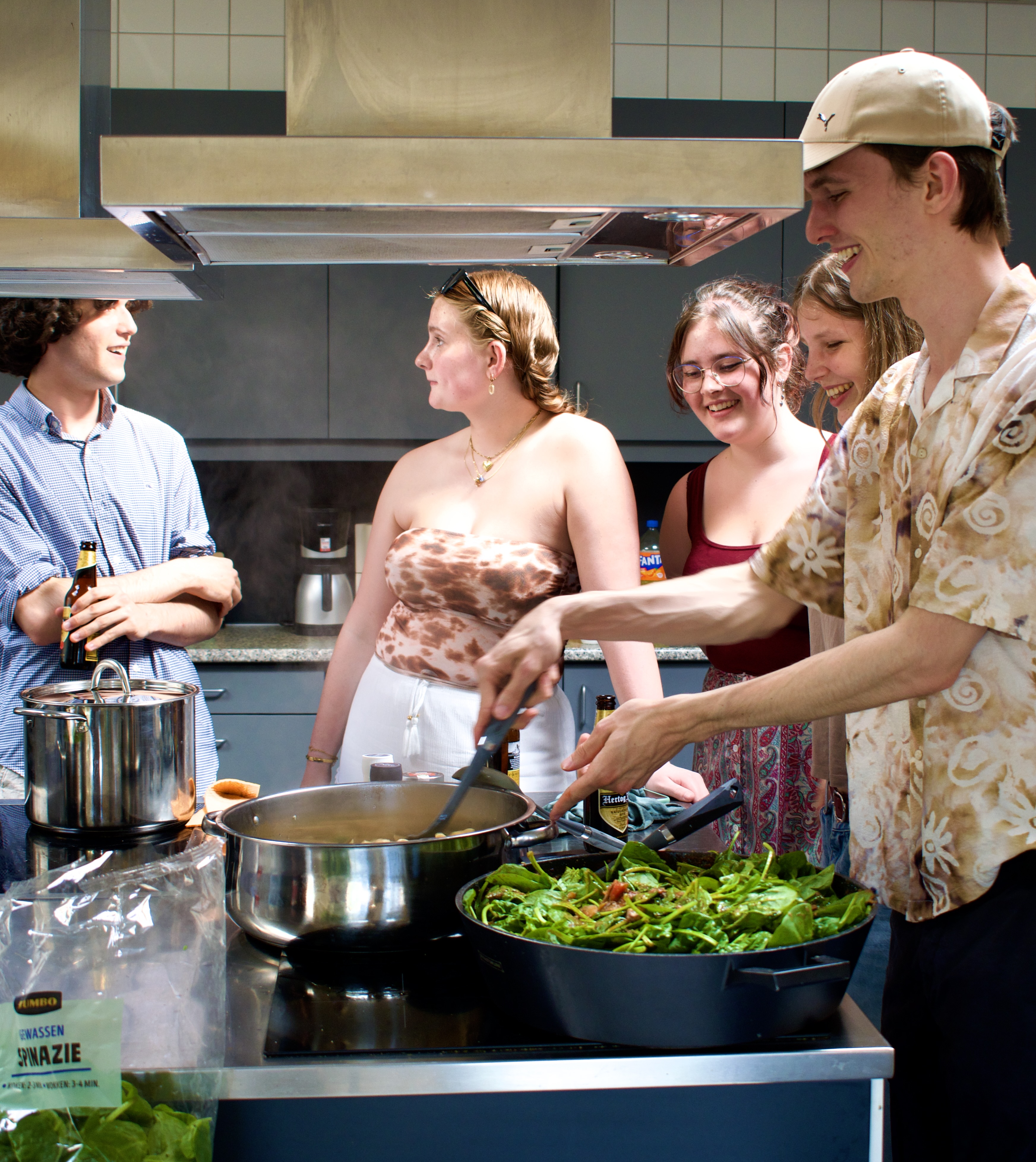
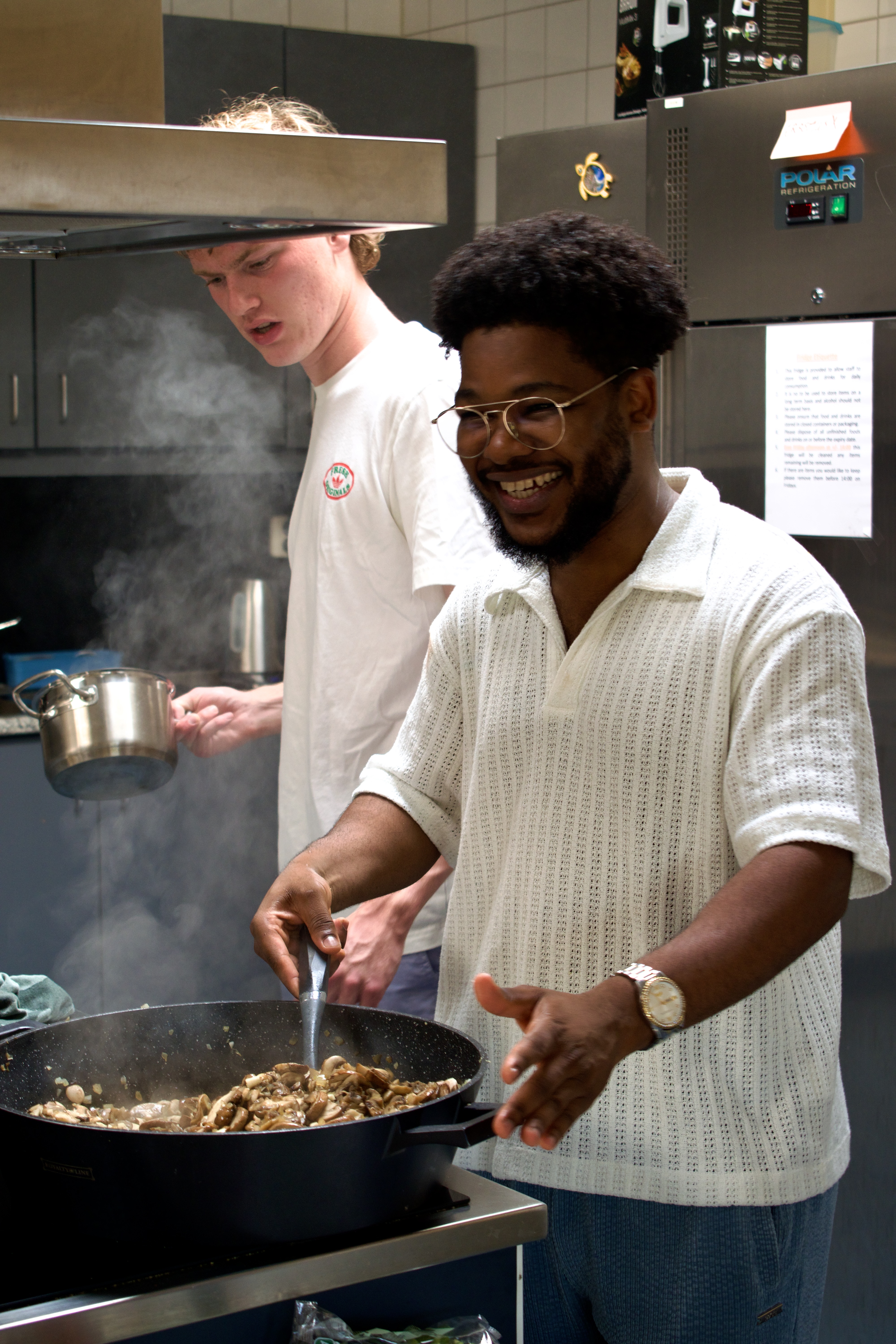
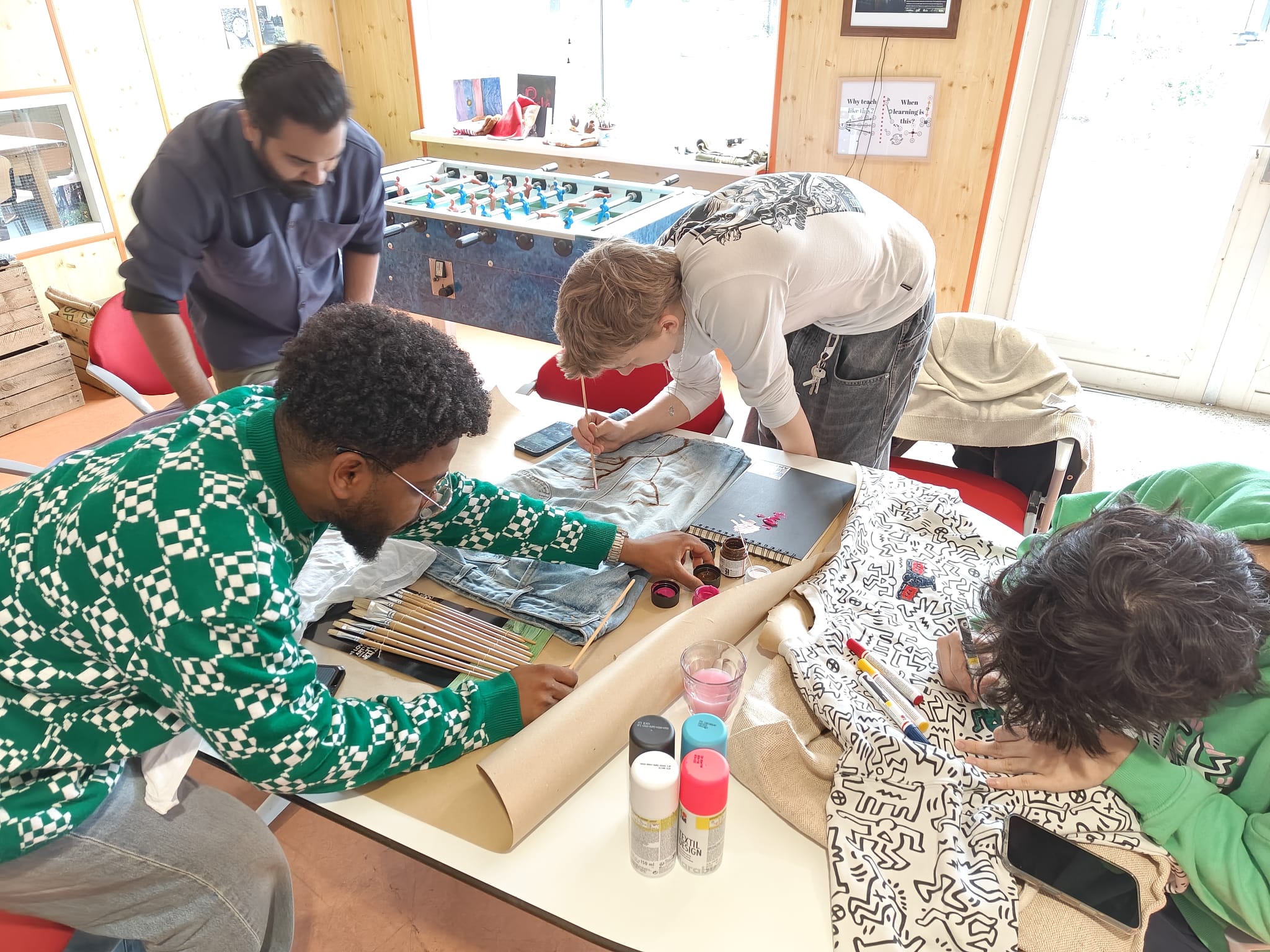
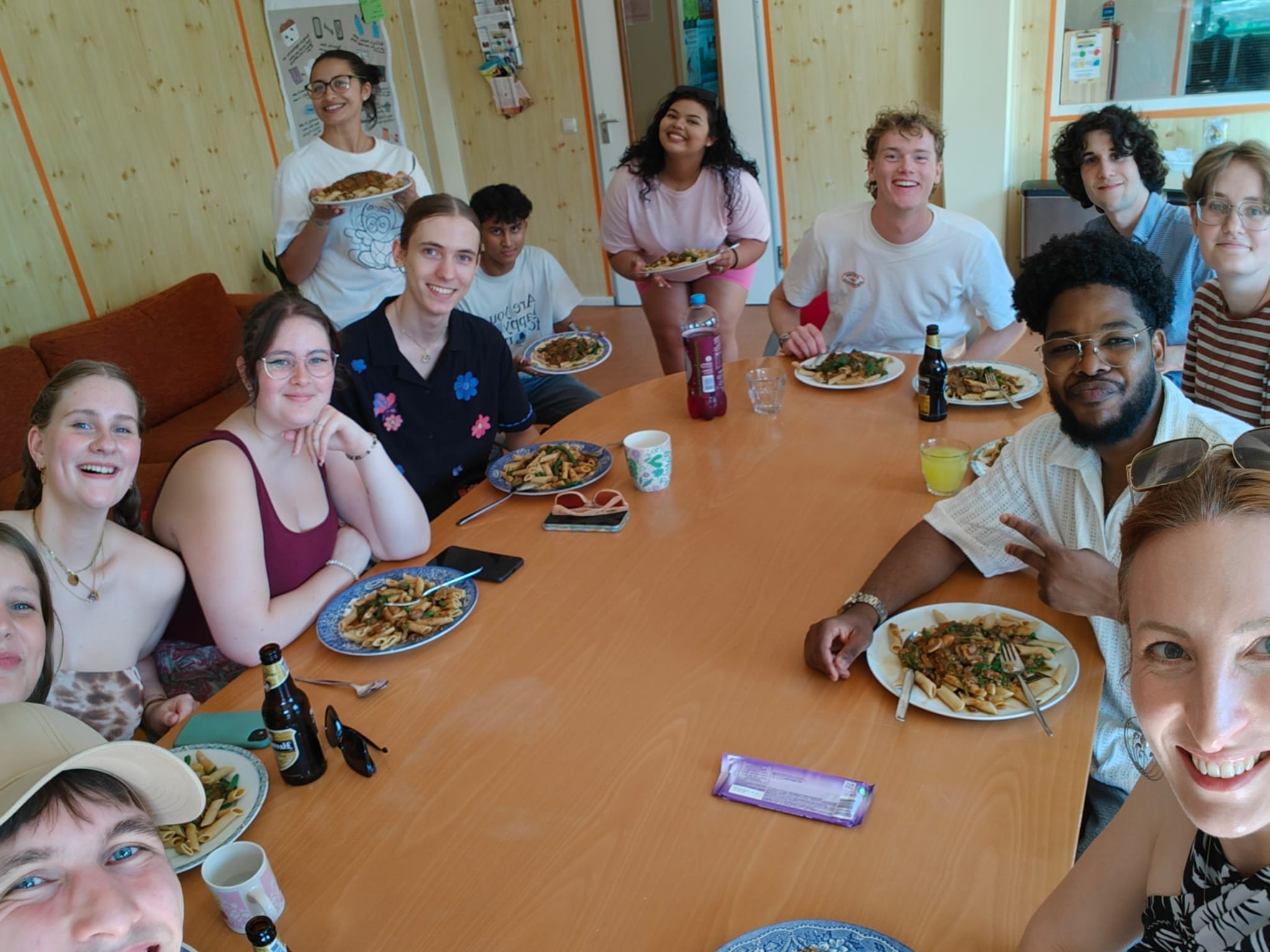
Culturally, the Bildung Track integrates cooking, dance, music and craft as core practice. The ecological crisis is rooted in modes of being that prioritize extraction over care, consumption over creation. Students cooking, dancing and making things together practice a different relationship with the material world, and with each other.
Every project theme was simultaneously environmental, social, economic and cultural. Students didn't choose which dimension to engage: the design made them engage with all of them at once.
We built the BCS on a deliberate provocation: beauty and sustainability are not opposites. Fashion is among the world's most polluting industries and one of its most aesthetically charged domains. We chose that tension as our pedagogical engine and asked students to work through it with their hands.
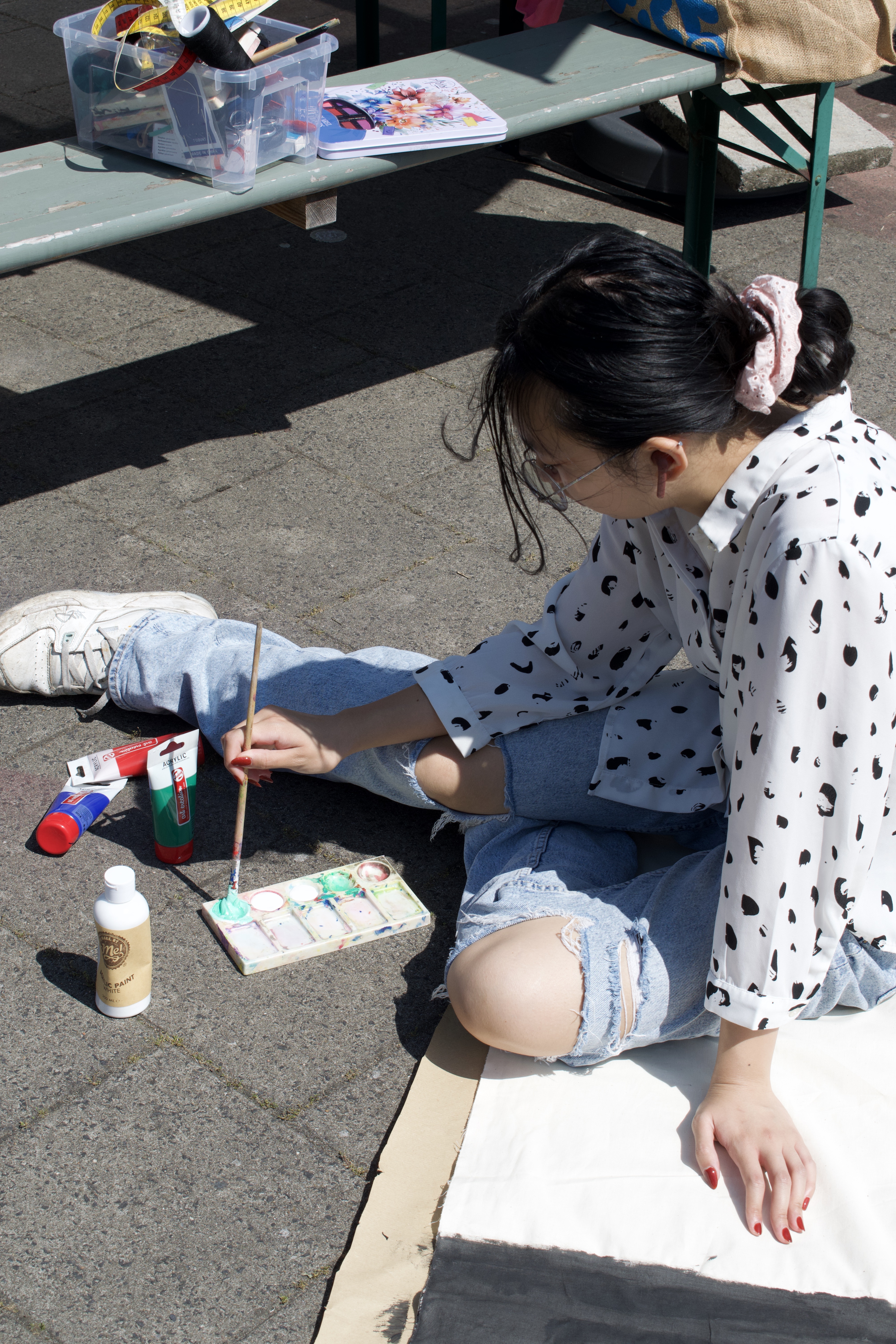
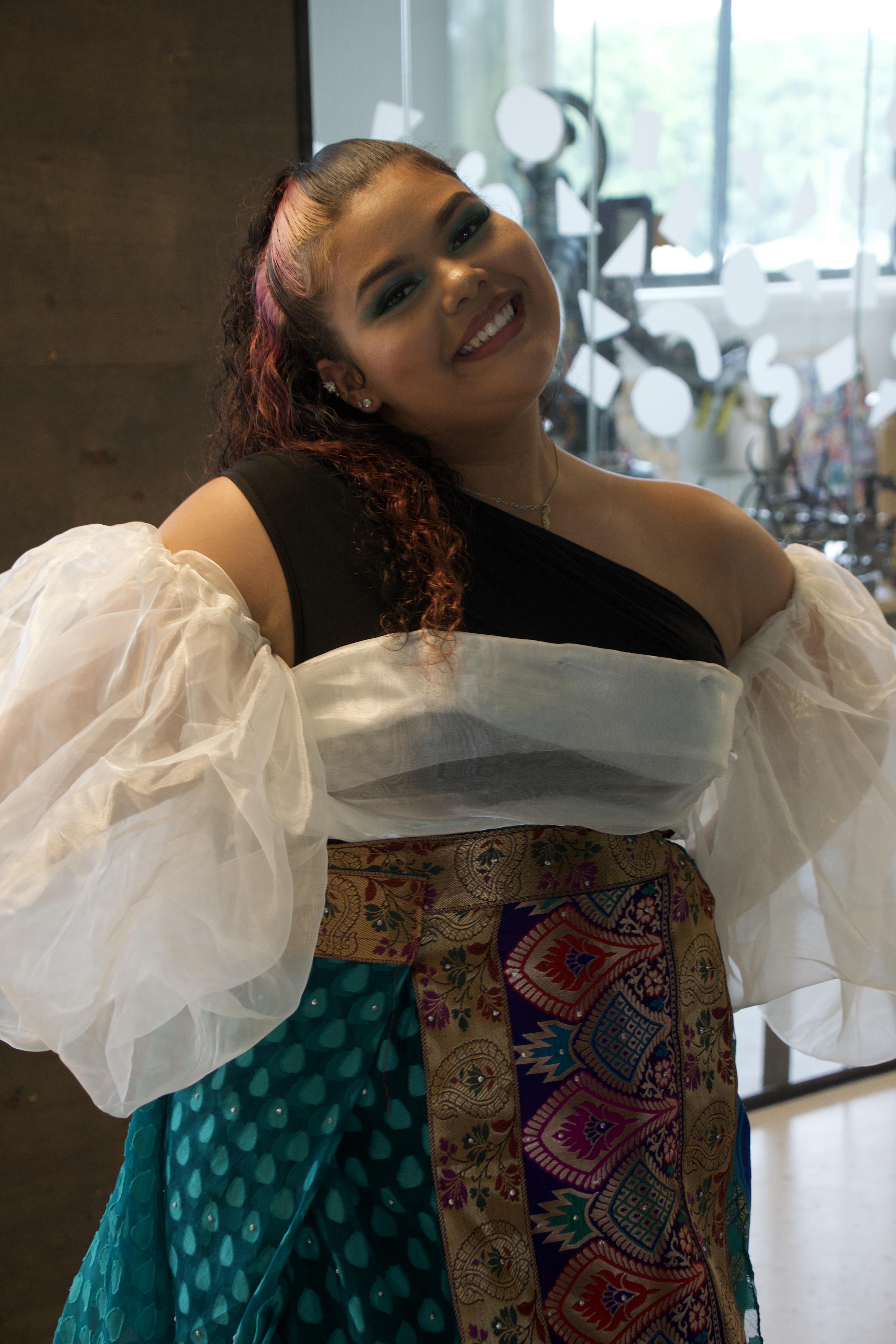
The centerpiece is wearable art made from discarded materials. Mixed MBO, HBO and WO groups transform second-hand clothing and unwanted objects into original pieces, each carrying a sustainability message: child labor, ultra-fast fashion, plastic pollution etc. on a public runway. These pieces warn, move and inspire - we give devastating topics a beautiful form.
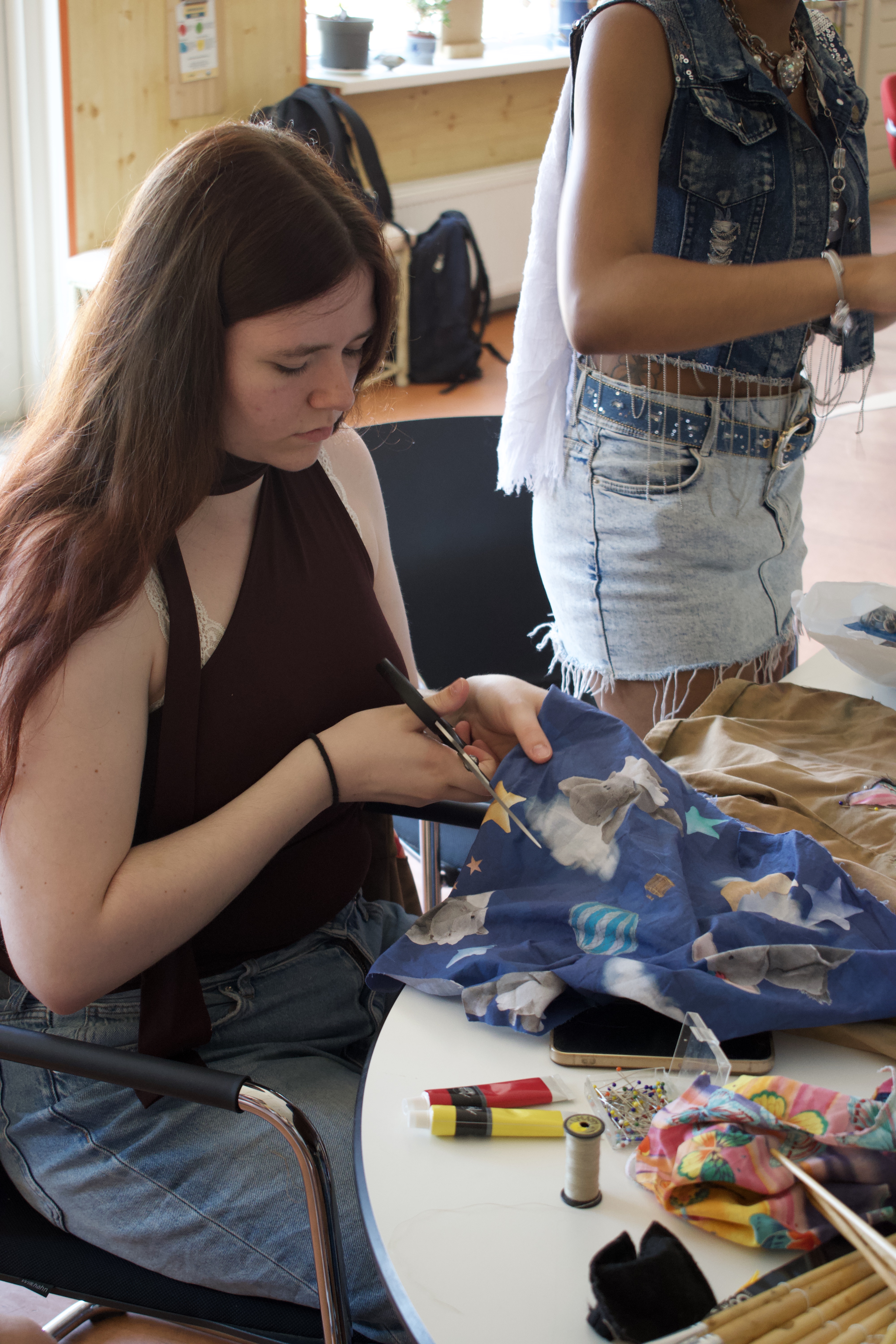
The Bildung Track extends our commitment beyond fashion: we offer dance, music, cooking and sewing through the entire program. We see creative practice as a mode of learning, knowing and being.
We rooted our events in places with social meaning: a fashion show at De Her, an environmental park built from industrial waste; a runway at the launch of Free Fashion's store at Rotterdam Station. Local seamstresses joined the program; a Noordereiland charity supplied raw materials. We embedded beauty in place and community.
The process translated aesthetic outcomes into empowerment. MBO students led the projects, coordinating runways, delegating tasks, running events. An MBO student told his university peers: "put your laptops down and let's start doing something." Students systematically undervalued by Dutch education had the skills, creativity, and capability this program needed. The fashion show was a public moment of recognition for them.
Our eco-anxiety study found that references to community nearly tripled between start and end. Only 2 out of 27 students dropped out of a 12-week extracurricular program with no credit points. Students called it a third space, somewhere they belonged.
Sustainability and beauty, brought together with intention and care, produce something neither could achieve alone
At 11-12, Dutch children sit the CITO test. That score determines their educational pathway - vocational (MBO), applied (HBO) or university (WO). The correlation with family background is well documented: children with migrant and low SES backgrounds are over-represented in MBO. Once in their tracks, they don't work together again until they hit the labour market, where the hierachy persists.
The BCS is the first integrated MBO-HBO-WO program embedded within educational institutions in the Netherlands. We built inclusion into the core of our program's architecture. Students from all three levels spend 12 weeks learning, making and thinking together, at HefHouse community center in Rotterdam South chosen deliberately to create psychological safety for everyone, and to avoid the intimidating atmosphere of any single campus.
The program is free to attend, delivered in late afternoons to accommodate work and internship schedules, designed without academic prerequisites or jargon. MBO students keep us honest: when the pedagogy drifts toward conventional academic practice, they disengage within minutes, forcing an immediate course correction.
Inclusion in the BCS also means inverting the usual hierarchy. The European Qualification Framework places vocational students below their academic peers. The BCS places them at the center. MBO fashion and events management students lead the creative process, coordinate productions and run communications. Our eco-anxiety research found that they arrive at sustainability education with greater baseline engagement and more action-oriented resilience than WO students.
The program explicitly welcomes queer, neurodivergent and mentally vulnerable students, with flexible participation and safe spaces throughout the HefHouse. Our near-zero dropout rate is clear evidence that inclusion built on joy, dignity and mutual recognition works. The 46 alumni still in community across educational and social divides are proof it works
First participatory element: participatory partnerships between Albeda MBO, Hogeschool Inholland and Erasmus University Rotterdam, with equal financial contributions and program ownership, formalized in institutional agreements that will outlast individual relationships. Shared participation in building, running and evaluating the BCS runs through everything we do: mixed MBO-HBO-WO representatives sit on our management team, mixed teachers form the education team, mixed alumni participate in dissemination and recruitment, mixed researchers design and carry out evaluations. The impact: flattening educational hierarchies, making space for all voices in education.
Second participatory element: the Feijenoord and Noordereiland community, where the HefHouse is located. Far from intimidating school campuses, HefHouse weaves BCS life with that of local civil society including HefPark, a community vegetable garden, Stitching LES, a local youth NGO, L'Oiseau Bleu, a disability advocacy group, Iedereenaanboord, a neighborhood sustainability group. We have a symbiotic relationship with these groups who give workshops in the BCS, share resources with us, e.g. free second hand textiles and objects for our shows, while BCS students and alumni work with and for them. e.g. L'Oiseau Bleu was founded by a BCS alumnus; 2 BCS alumni work with Stichting LES to organise sustainability workshops for the youths. The impact has been to break away from the too-common perception that WOs and HBOs take advantage of local communities to harvest data while contributing little of value. Instead, we built trust and a reputation for fairness and care. The proof: moving forward, a dozen local businesses have signed up to work with BCS projects for the 2026 program.
Overall impact: because stakeholders feel recognized in our joint stakes in the future of education, they contribute in cash and kind. That's how we manage to run BCS with low budgets. Participation is core to our business model.
We operate the BCS at four levels of governance, treating stakeholders as co-investor in a shared mission.
Local: BCS is fundamentally a Rotterdam project. All students and core partners involved in the design and implementation - Albeda, Inholland, Erasmus University - are based in the city. Our program addresses Rotterdam's specific challenges: challenges transitioning a fossil-fueled port city into a circular economy, sharp socioeconomic inequality between north and south, disconnection between educational sectors and communities. Involving local MBO-HBO-WO partners and communities add value by creating space for productive encounters between local, practical and theoretical knowledge and layered transdisciplinary networks. BCS received funding from Municipality of Rotterdam; adding legitimacy value and institutional longevity to our program.
Regional: 2024-25, BCS was funded by Erasmus Trustfund, whose contributions added value by sponsoring a model for regional educational innovation.
National: 2026-28, the Nationaal Kennisinstituut Onderwijs funds the BCS through a Comenius grant, adding value by connecting BCS into the national Comenius Network of educators. Two full-house screenings (2025-26) of BCS documentary "Together" generated interest from Amsterdam, Maastricht, Eindhoven and Groningen. With local education think tank NIVOZ, we're developing the first national MBO-HBO-WO teacher qualification, adding value of a mechanism by which our model could be replicated nationally bottom-up through teacher know-how.
European: A delegation from Roskilde University and NEXT Copenhagen (HBO) visited in 2025, and launched a sister BCS in Copenhagen with our support. A 2nd sister BCS is in early stages at Mondragon University. We'll formalize these partnerships in an Erasmus+ consortium to create a durable European infrastructure for BCS-type education, adding the value of aligning with NEB's ambition to connect local transformation to continental change.
Most programs that claim transdisciplinarity mean something modest: two or three adjacent disciplines, maybe students from different faculties working together. The BCS means something more radical: we don't organize knowledge around academic disciplines at all. Our program was designed with the Experimental Pedagogics framework, a method developed by BCS founder Ginie Servant-Miklos. It structures learning around five levels of human experience: cognitive, individual, group, community, global. We use whatever combination of disciplines and practices best serves student development at each level. Natural scientists, economists, philosophers, fashion designers, martial artists, musicians and protest artists contribute to the same learning journey.
For instance:
Cognitive level: neuroscience meets martial arts and breathwork.
Individual level: psychology, philosophy and dance help students locate themselves in relation to the crisis.
Group level: music and cooking build the kind of reciprocal bonds sustainable communities require.
Community level: students meet and work with local civil society: NGOs, neighborhood gardens and groups, businesses.
Global level: economics, political science and science fiction help students imaginatively inhabit the systemic forces driving the crisis.
Academic, applied and vocational disciplines contribute on equal terms. Martial arts and sewing carry the same pedagogical weight as transition sciences.
Everything converges in the project track, where students synthesize all of their experiences into a publicly showcased runway piece and exhibition. This is a scientific argument, an ethical statement, an economic critique and a work of art. Students told us consistently that the public-facing outcome was the most effective, motivating element of the BCS.
No other program in the Netherlands has attempted this combination within formal education programs. Our transdisciplinarity literally breaks educational moulds.
Too many education innovations follow the same arc: grant funding, promising results, enthusiasm, then the funding ends and the program disappears without durably changing the system.
We designed the BCS to break that cycle. Our three-horizon model moves the program from grant dependency to structural embedding in mainstream public education financing.
Horizon one: proof of concept.
2 pilot editions, deliberately lean, co-funded by the Erasmus Trustfund with in-kind and cash contributions from partner institutions. Multiple institutions investing real resources showed early buy-in.
Horizon two: national validation.
In May 2025, BCS secured the Comenius Leadership Fellowship (NKO), 530,000 euros, the largest Dutch education innovation grant. This funds the development window through 2028: developing a full time program, negotiating institutional agreements, building accreditation cases, training teachers, generating the research evidence that makes permanent public financing achievable.
Horizon three: structural embedding.
At WO and HBO level, the BCS will occupy a standard 30 ECTS minor slot. HBOs and universities already have public budgets for this. At MBOs, it qualifies as an internship under existing vocational financing. Once embedded, all three partner institutions contribute per-student public funding. BCS is more expensive to run than regular minors but will secure institutional commitment to cover this.
To develop our program, we will pursue specific financial instruments through an Erasmus+ application in 2027, and an ERC grant application for our research.
Developing self-sustaining income, our pay-per-participant national MBO-HBO-WO teacher qualification program (with NIVOZ) will generate income along the BV private-public model widely used by universities.
The long game: a dedicated national accreditation for cross-level programs at the NVOA, our national accreditation body creating a permanent, ring-fenced funding stream.
The BCS will never have 600 students. A single cohort cannot exceed roughly sixty without undermining the community-building and cross-level relationships that make the program work. Scalability, for us, means multiplying the model.
Our precedent is the Scandinavian Folk High School movement: from 1 experimental school in 1851 to over 150 operating across Scandinavia today. Each locally based, independently governed, sharing a common pedagogical philosophy.
What we can scale:
1. The Experimental Pedagogics framework, which was published open access in "Pedagogies of Collapse" (2024), making it freely accessible to teachers. It requires no specific theme, city, or institutional configuration.
2. The extracurricular piloting strategy, running the program in evenings and after school before seeking formal embedding. This format lowers regulatory and financial barriers to getting started. We provide a blueprint for willing educators with a community space and the motivation to do something. We normalise MBO-HBO-WO collaboration by showing how it can be done.
3. The mixed-group project model transfers to food systems, urban planning, construction, digital infrastructure. Our Danish partners combined carpenters, mechanics and humanities students around technology.
4. What we share freely. All research protocols, survey instruments and measurement tools will be published open access. All our outputs are freely accessible. A practitioner book will translate our methods into accessible guidance for teachers across all three levels. 5. The teacher qualification program with NIVOZ will provide a certified training pathway to develop teacher know-how for bottom-up replication opportunities.
6. The European infrastructure. A sister BCS launched in Copenhagen in 2025. A second follows in the Basque Country in 2026–27. With an Erasmus+ consortium in 2027, we will develop a Europe-wide capacity building platform for BCS-type programs.