Enhancing Circularity, Sustainability, and Innovation
Compostable Altar: Offering to the Earth
{Empty}
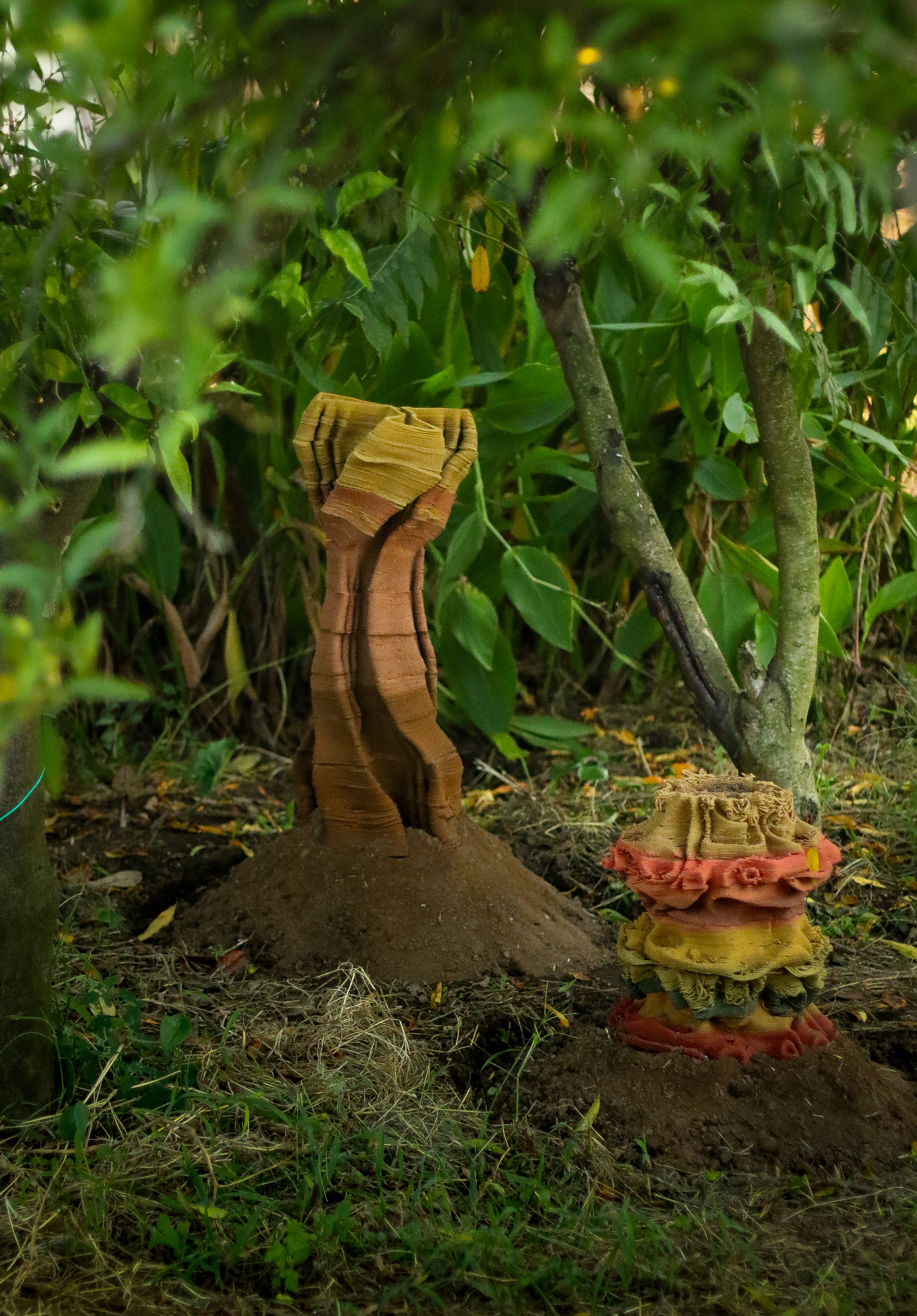
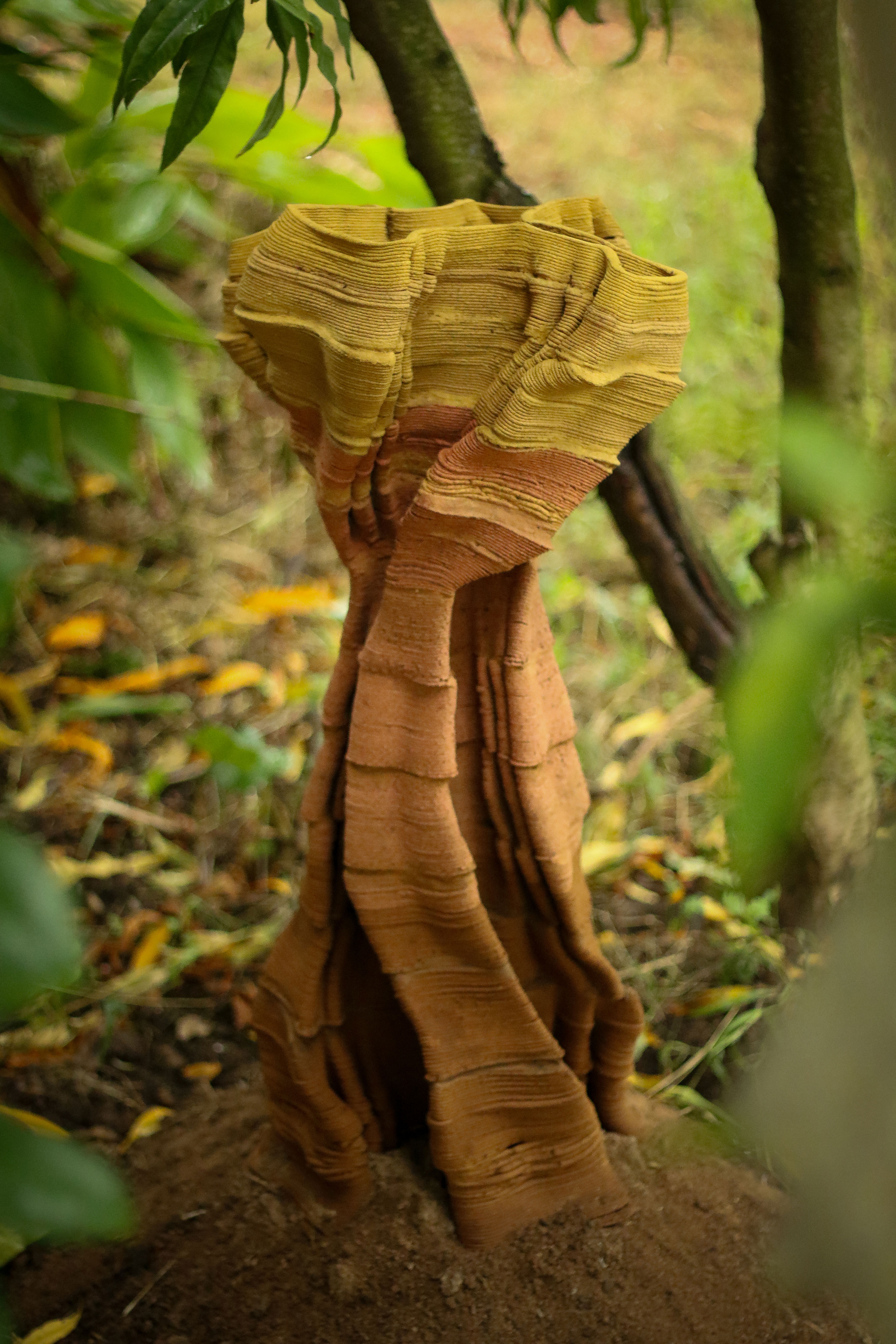
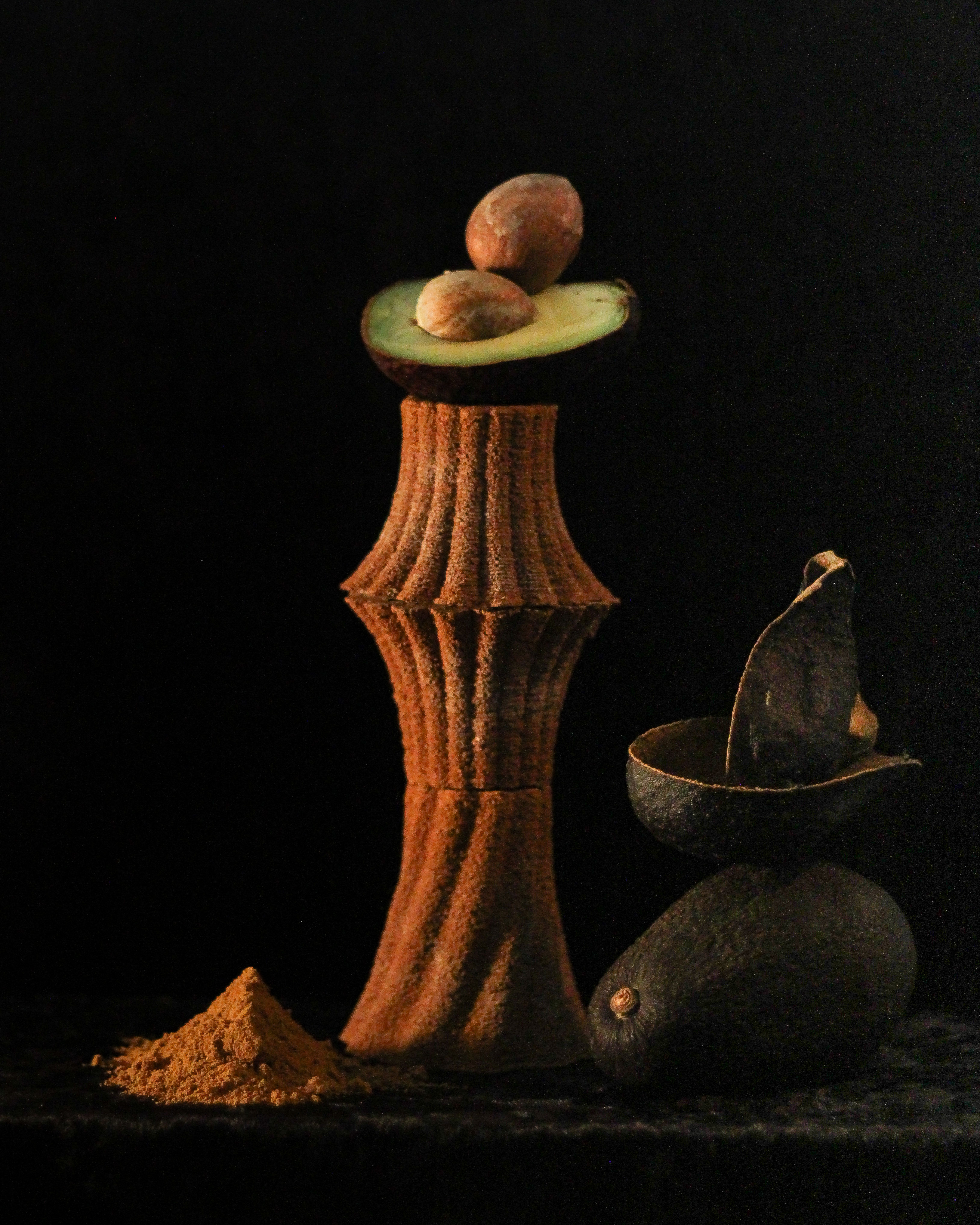
Compostable Altar is a biodesign project merging art, science, and regenerative agriculture. Created with an agroecological farm in southern Italy, it transforms agricultural waste into a large-scale 3D-printed biodegradable sculpture that returns nutrients to the soil. Using ecological sensors, parametric design, and AI models, it explores decomposition as regeneration, proposing a ritual of impermanence, reciprocity, and circular material culture.
Italy
Local
Physical implementation:San Ferdinando, Limbadi Reggio Calabria, Italy.
Research and development: Barcelona, Spain
Research and development: Barcelona, Spain
Mainly rural
It involves a physical transformation of the built environment (hard investment)
Yes
2025-10-31
Yes
Horizon2020 / Horizon Europe
No
No
Individual
Compostable Altar is a biodesign experiment that brings together art, science, and regenerative agriculture. Developed in collaboration with Le Terre di Zoé, an agroecological farm in Calabria, southern Italy, the project explores circular strategies for transforming agricultural by-products into living installations that decompose and return nutrients to the soil.
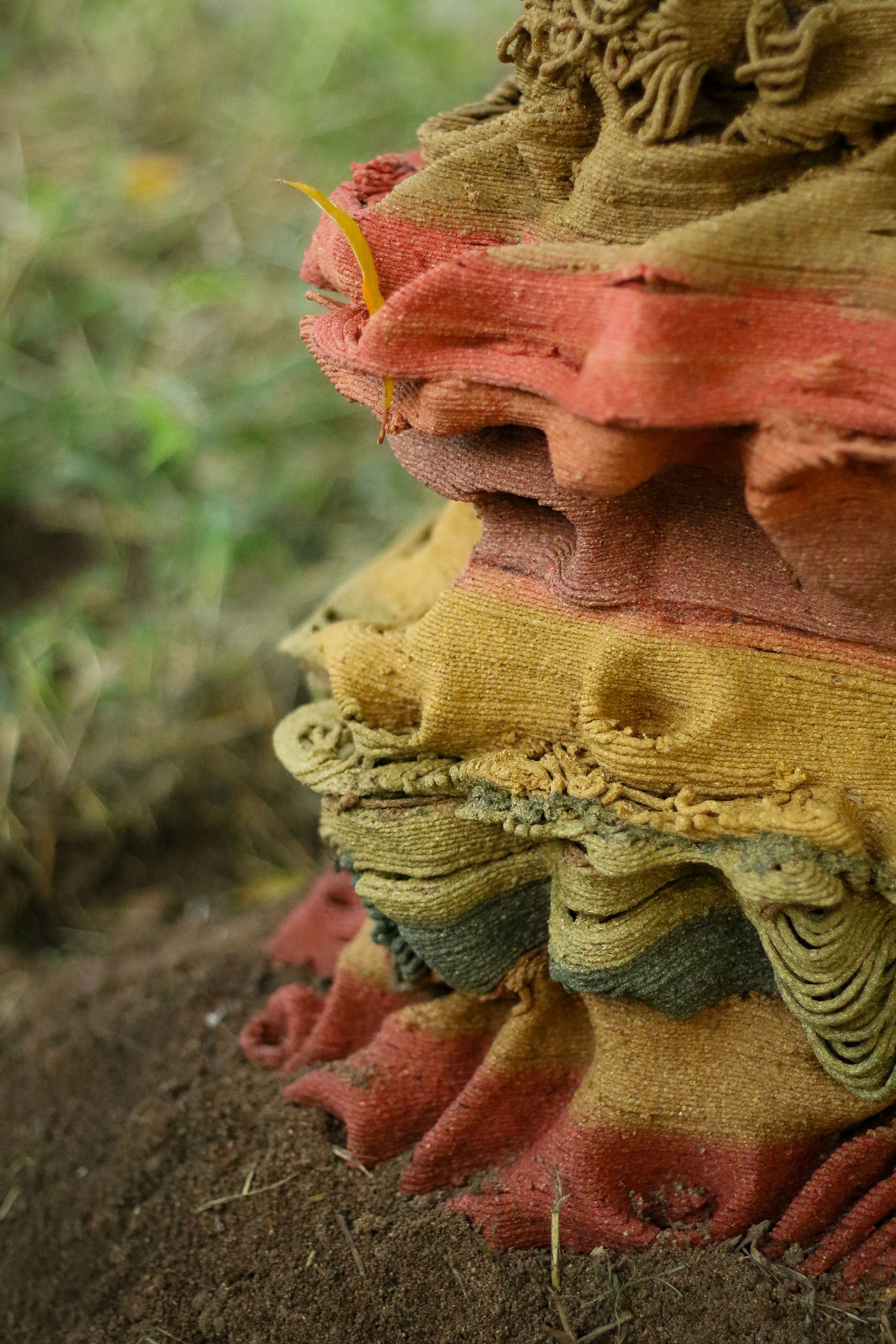
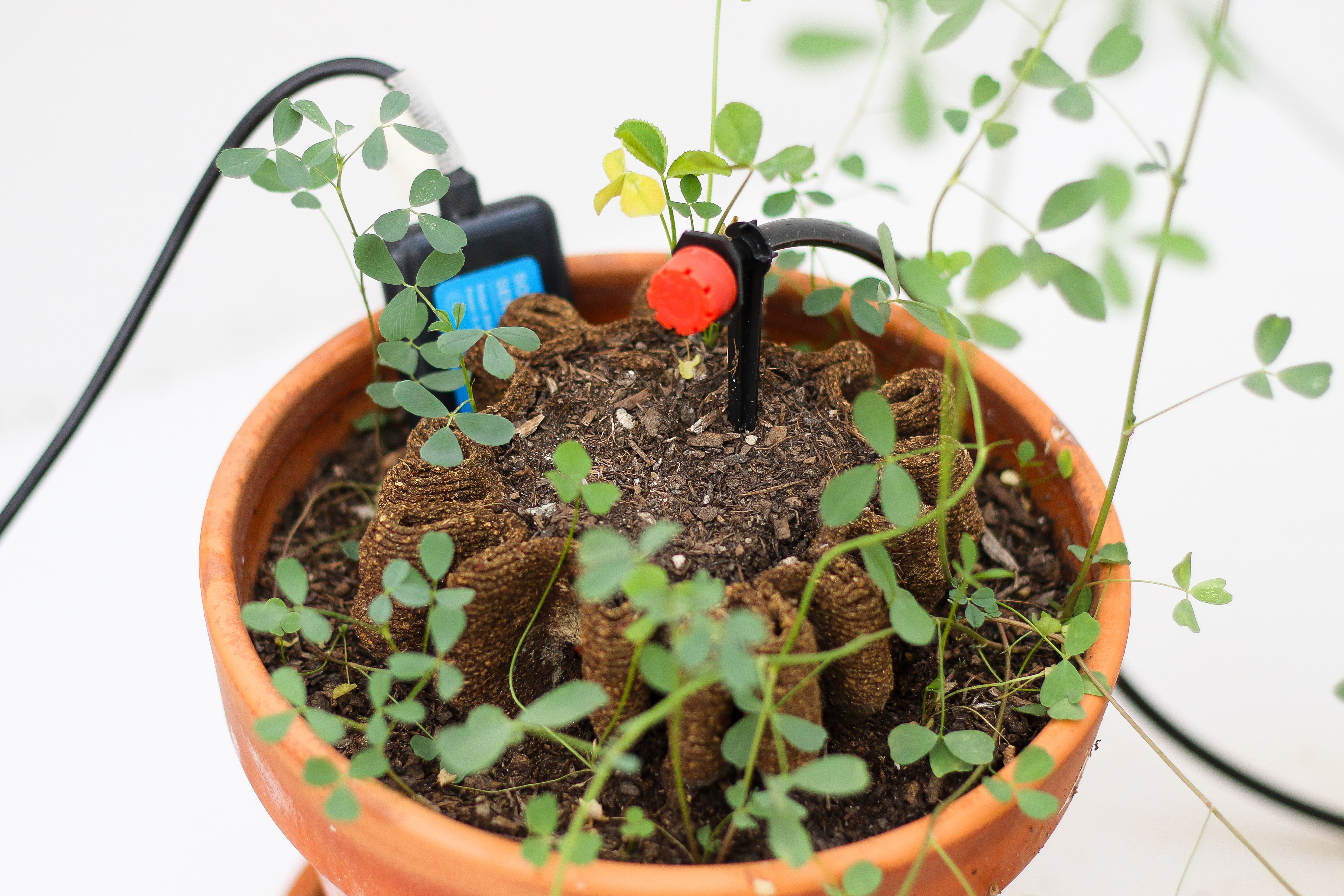
The altar functions as both a sculpture and an ecological prototype: a large-scale, biodegradable structure 3D-printed from biomaterials developed from local and seasonal organic waste. During the research process, ecological monitoring using sensors and control of microclimatic conditions allowed data to be collected on the interaction of the soil with the decomposition of biomaterials — including temperature, pH, humidity, electrical conductivity, and nutrient dynamics. This system generated a feedback loop between decomposition and regeneration.
Through a data-driven parametric design process and AI predictive models, the project visualizes the metabolic dialogue between human creation and natural transformation. Compostable Altar proposes a new type of ritual: one that celebrates impermanence, reciprocity, and the intelligence of living systems.
As a replicable, open-source methodology, it contributes to rethinking production, waste, and material culture within the agri-food system, offering an alternative vision in which design becomes an act of care and regeneration.
Altar Compostable emerged from a long process of personal artistic and material research exploring how biodegradable design could foster regenerative relationships between humans and soil. The project began approximately one year before receiving the Hungry EcoCities grant, during a series of artist residencies (between Barcelona, Finland, and Cyprus) where I experimented with biomaterials based on local organic waste and ritualistic approaches. These early iterations focused on transforming agricultural waste into compostable sculptural forms that could return nutrients to the earth, focusing on the processes of degradation and their corresponding documentation.
With the support of Hungry EcoCities, the project went from being a symbolic gesture to a real-world implementation. Developed in the context of an organic farm, the installation integrated large-scale 3D-printed biodegradable structures placed directly on the ground. Thanks to environmental sensors that monitored humidity, temperature, and nutrient dynamics in a previous pilot experiment, the work went beyond metaphor and generated measurable ecological feedback.
On the ground, the project combined experimentation with materials, soil monitoring, community dialogue, and public presentation. Farmers and local participants were involved in presenting this system of waste reuse and transformation as a ritual offering and a living prototype of circular material systems. Through iterative testing and collaboration, Altar Compostable became a concrete example of how aesthetics, science, and regenerative practices can converge to support ecological transition.
circularity
soil life
biofertilizers
community engagement
local production
Altar Compostable promotes sustainability by transforming local organic waste streams into biodegradable 3D-printed structures that actively reintegrate into the soil. The project goes beyond symbolic awareness by combining innovation in biomaterials with environmental sensing and data analysis, generating quantifiable information on soil moisture, nutrient dynamics, and decomposition cycles. This places the work within the realm of circular economy, soil regeneration, and nature-based solutions.
From an environmental perspective, the project reduces waste and proposes regenerative material systems. From a social perspective, it raises awareness about soil degradation and food systems through accessible public installations.
What makes the project innovative is its integration of aesthetics, scientific validation, and real-world testing. Sustainability is integrated at all levels (material, technological, and cultural) and demonstrates how artistic research can generate replicable, data-driven solutions in line with long-term climate resilience goals.
Altar Compostable redefines beauty as an ephemeral regenerative process rather than a static object. By transforming organic waste into sculptural forms that decompose and nourish the soil, the project makes ecological cycles visible and experiential. The installation creates contemplative environments where data, material transformation, and ritual gestures converge, fostering an emotional connection to the soil and the place.
The aesthetic approach is based on transformation, temporality, and care. It proposes an evolving landscape shaped by living processes. Through data-driven (parametric) morphological design, visitors witness ecological feedback in real time, reinforcing awareness of the interdependence between human activity and natural systems.
The project reflects that sustainable innovation can be culturally meaningful and sensorially appealing. It bridges contemporary design, environmental science, and ancestral practices, offering a model in which beauty supports belonging, stewardship, and long-term ecological responsibility within communities.
Altar Compostable promotes inclusion by making complex ecological systems understandable and participatory. Through tangible installations and accessible data visualization, the project allows diverse audiences to engage with soil health and circularity without the need for technical knowledge.
The methodology is open, adaptable, and replicable, fostering collaboration between artists, farmers, researchers, and local stakeholders. By using locally sourced organic waste, the project promotes affordability and contextual relevance across regions. Public presentations, workshops, and symposiums in which the project participates foster dialogue, collective learning, and shared management of common resources.
The integration of environmental data improves transparency and democratic access to ecological information. Rather than centralizing expertise, the project distributes knowledge through interdisciplinary collaboration and open practices.
Altar Compostable positions inclusion not only as access to space, but as access to agency, knowledge, and regenerative capacity, supporting new social models based on cooperation, circularity, and shared environmental responsibility.
Altar Compostable was implemented in the context of an organic farm and artist residencies, directly involving farmers, local collaborators, and interdisciplinary residents in its development. Farmers contributed practical knowledge about soil conditions, crop cycles, and composting systems, which influenced the formulation of the materials in nutritional terms.
Public presentations, open study sessions, and talks allowed a wider audience to interact with the installation as an interactive ecological system rather than a static work of art. Visitors can observe the decomposition of materials, collaborate on documentation, and reflect on waste, soil health, and regenerative practices.
Participants were not passive spectators but active contributors to the dialogue and testing. Their involvement reinforced the project's ecological relevance, improved its adaptability to real agricultural contexts, and broadened its educational impact. The participatory process transformed the work into a shared learning platform that connects cultural practice with everyday environmental responsibility.
The project was developed at multiple levels of participation. At the local level, collaboration with farmers and residency hosts grounded the work in real agricultural and soil contexts. At the regional level, partnerships with arts and research institutions supported technical development and interdisciplinary exchange.
At the European level, the project aligns with EU priorities on the circular economy, soil regeneration, and ecological transition, and has been presented in transnational cultural and innovation frameworks. Support from initiatives such as Hungry EcoCities allowed the research to be expanded from experimental prototypes to installations accessible to the public.
The added value of this multilevel structure lies in its ability to translate sustainability goals into tangible, site-specific practices. Altar Compostable demonstrates how cultural projects can act as bridges between local ecosystems and broader systemic transformation.
Altar Compostable is inherently transdisciplinary. Its development integrates artistic practice, biomaterials research, regenerative agriculture, environmental sciences, digital manufacturing, sensor engineering, and AI-assisted data analysis.
The project combines experimentation with biodegradable materials and soil monitoring technologies, bringing together design methodologies and scientific measurements. Collaboration with a researcher in electronics and AI ensured rigorous data collection and predictive modeling, while agricultural expertise provided insight into soil interaction and decomposition processes.
The research was further strengthened through mentorship by Mendel University, In4Art, and Studio Other Spaces, institutions that collectively bridge environmental sciences, art-driven innovation, and spatial practice. Their guidance supported the integration of scientific validation, cultural experimentation, and systemic thinking, expanding the project’s methodological and conceptual scope.
By merging ritual, ecological practice, and digital technologies, the project transcends disciplinary boundaries and generates new forms of knowledge at their intersection. Art functions not as representation but as a platform for research, enabling dialogue between cultural meaning, environmental data, and technological innovation.
Altar Compostable operates through a hybrid model combining artistic production, research partnerships, and applied regenerative design. The project generates revenue through commissioned installations (festivals, cultural institutions, public space programs), research residencies, and public funding aligned with sustainability and innovation frameworks.
In parallel, the biomaterial research opens pathways for applied product development, such as compostable plant modules and soil-regeneration elements. These applications can evolve into limited production lines, licensing agreements, or collaborations with agricultural and ecological design stakeholders.
Workshops, talks, and educational programs provide additional revenue streams while strengthening knowledge transfer. The integration of environmental sensing and AI-supported analysis also creates opportunities for collaboration with research institutions and innovation labs, enabling co-funded projects.
Financial sustainability is ensured through diversification: cultural commissions, research grants, educational activities, and potential regenerative product applications. This hybrid structure allows the project to remain adaptable while progressively transitioning from prototype-based artistic research to scalable regenerative design solutions.
Several elements of Altar Compostable are designed for replication and transfer across contexts.
The biomaterial recipes, based on locally sourced organic waste, can be adapted to different regions using available agricultural or urban residues. The digital fabrication process enables decentralised production, making the system transferable to community labs, farms, or cultural institutions.
The soil-sensing and data-monitoring framework can be scaled from small installations to larger agricultural or landscape applications. Its modular structure allows integration into educational programs, public space interventions, or regenerative farming practices.
Methodologically, the project provides a replicable model that combines artistic engagement, scientific validation, and community participation. The open and interdisciplinary approach supports adaptation across rural and urban settings, different climates, and diverse stakeholder groups.
Rather than exporting a fixed object, Altar Compostable offers a transferable system: material protocols, sensing tools, participatory methods, and design principles. This flexibility enables long-term impact beyond a single site toward circular and regenerative ecosystems.