Strengthening Local Democracy and Inclusion
a
{Empty}
aaa
Ireland
National
Mainly urban
It involves a physical transformation of the built environment (hard investment)
Yes
2025-12-31
No
No
No
Organisation
Football Cooperative is a community-led social enterprise that transforms underused recreational spaces into inclusive, accessible, and socially impactful environments. Our core aim is to address population physical inactivity and social isolation through improving access to recreational football by tackling the underutilisation of local facilities. Our vision is to create a sustainable, community-led initiative that prioritises wellbeing, participation, and connection.
Our initiative primarily benefits young people and in particular marginalised groups while also engaging grassroots organisations, local authorities, and key national stakeholders as active partners. Key objectives include: increasing participation among underrepresented groups; improving physical and mental wellbeing; strengthening community cohesion; and developing a scalable, locally adaptable model for inclusive sport.
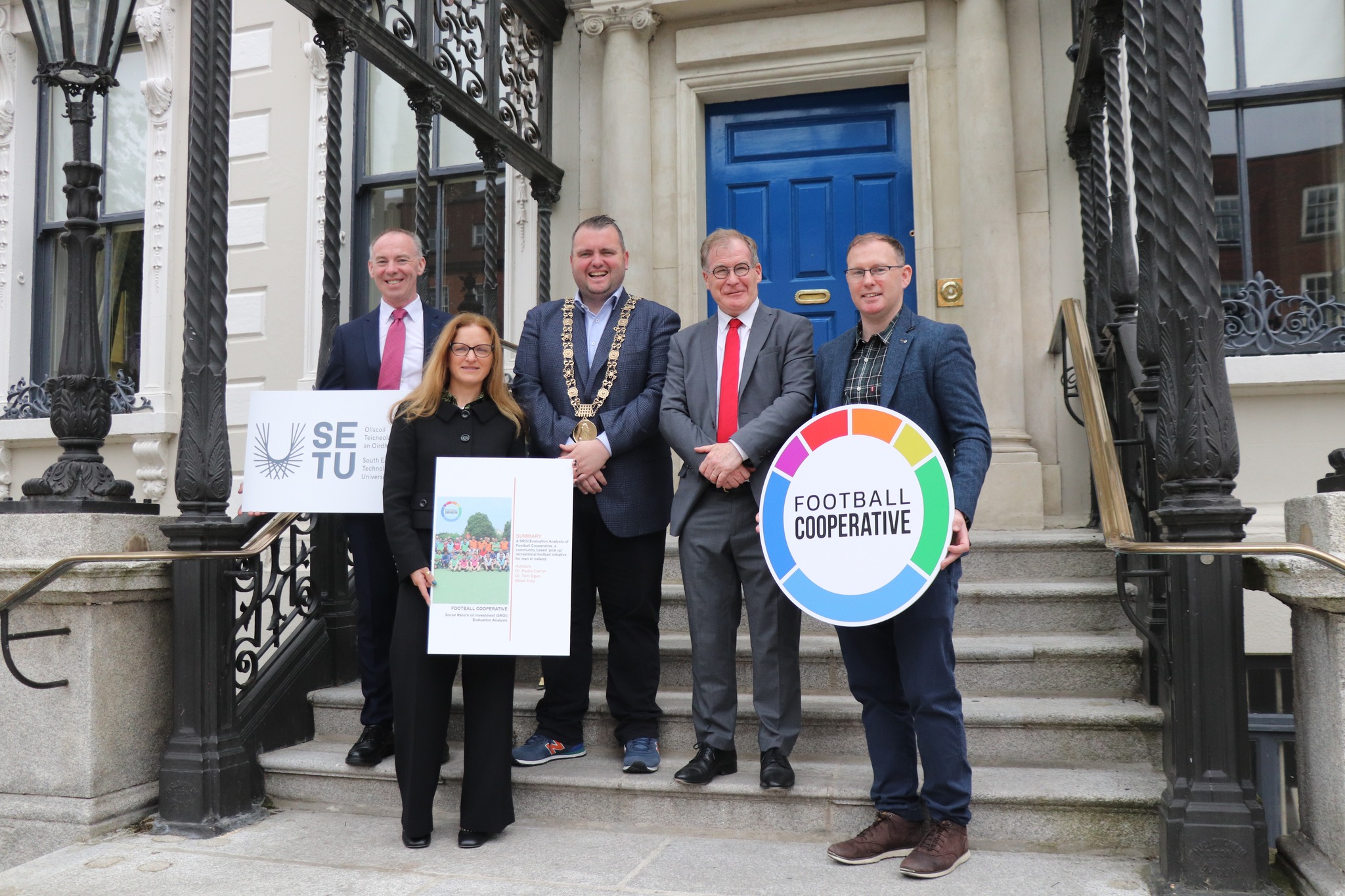
A social-enterprise academic partnership undertook a Social Return on Investment (SROI) analysis to demonstrate measurable social value, including improvements in wellbeing, social connection, and community belonging. Importantly, this evaluation was informed by participants, volunteers and other key stakeholders, ensuring outcomes reflect lived experience. Following on from this, a national implementation strategy was co-developed with stakeholders, providing a clear, evidence-based framework for scaling Football Cooperative across Ireland. The Social Value assessment and Implementation Science approach establishes Football Cooperative as both a proven intervention and a replicable system for community-led development. Our transformative potential lies in our participatory approach: communities are not passive recipients but co-creators and co-owners. By combining evidence-based impact measurement with democratic governance and scalable design, Football Cooperative has achieved a forward-looking model for inclusive, sustainable, and socially driven use of public space.
Football Cooperative emerged from a recognition that many local recreational spaces, particularly synthetic astroturf facilities, are often underused, exclusionary, or inaccessible to large parts of the community. At the same time, growing levels of social isolation and inequality highlighted the need for more inclusive, community-driven approaches to participation and wellbeing. Football Cooperative was developed to reimagine these spaces as shared spaces for participants and led by participants. From the outset, the project adopted a participatory approach. Rather than a top-down programme, Football Cooperative has been co-designed with community members that are actively involved in shaping the model and decision-making processes.
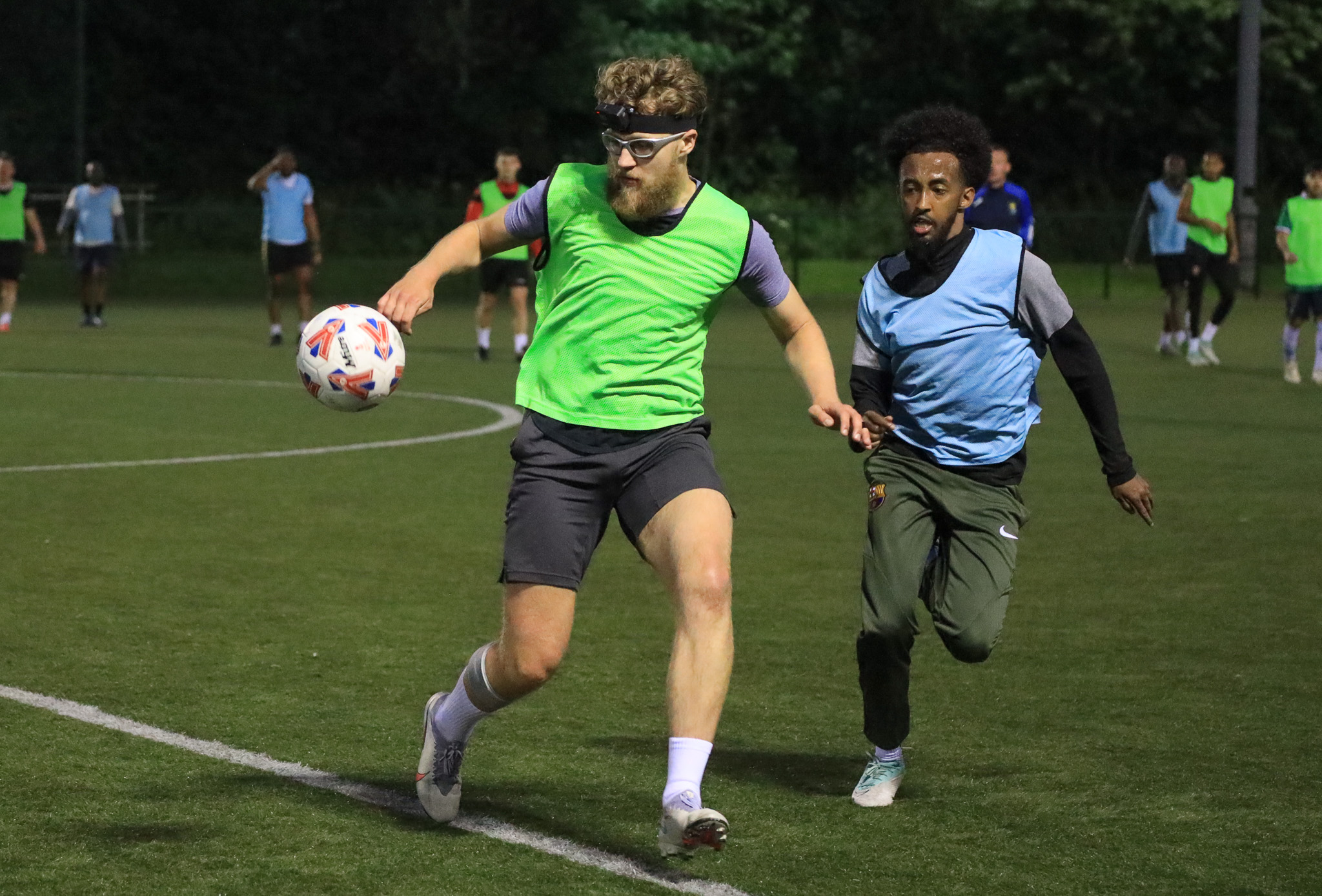
Our initiative has evolved through several key phases. Initial research and engagement identified barriers to access and opportunities for inclusion. This informed a co-design phase, where stakeholders jointly and collaboratively helped to develop the principles - weekly pick up play when it suits games year round that are open to participants of all mobilities and football abilities. Pilot activities were then implemented in local settings, testing the format and the volunteer led delivery. Continuous feedback and observation informed refinement.
The Social Return on Investment (SROI) analysis captured the social value created, incorporating input and impact from primary stakeholders including participants, volunteers, significant others (of participants) and community partners. Methods included community consultations, participatory workshops, and evidence-based evaluation tools. This iterative and collaborative approach ensured that the project not only achieved its objectives—improving access, wellbeing, and social connection—but also embedded long-term ownership, making the model sustainable and transferable.
Community co-governance
Social inclusion
Public space activation
Health and wellbeing
Scalable social innovation
Football Cooperative addresses sustainability as an integrated social, environmental, and economic challenge by reimagining how existing recreational spaces are used and valued within communities. Our sustainability objective is to maximise the social value of existing infrastructure while reducing barriers to access. Rather than creating new facilities, the project focuses on activating underused local spaces, promoting place-based participation, and partnering with local networks (i.e Social Prescribing) to enable ongoing access to these spaces to people across the community.
Implementation has resulted in the development of inclusive, community-led football games that prioritise accessibility. As a social enterprise, we have embedded participatory governance, thereby actively engaging participants in decision-making, ensuring that our approach is designed in partnership to reflect local needs, barriers and facilitators to physical activity. For example, our model reduces economic barriers by offering low-cost game fees, making activities sustainable but more importantly accessible to a wider and more diverse population.
Evidence of results can be demonstrated through our Social Return on Investment (SROI) analysis, which identified significant social value generated through improved wellbeing, increased participation, and stronger community connections. Our initiative has fundamentally led to a much more diverse cohort using local facilities while also enhancing their long-term viability.
The approach is exemplary in its ability to deliver sustainability without reliance on new physical development. By combining efficient use of existing resources with community ownership and evidence-based evaluation, Football Cooperative has created a durable and scalable model. Our strength lies in integrating social sustainability with practical implementation, demonstrating how local spaces can become long-term assets for inclusive, resilient communities.
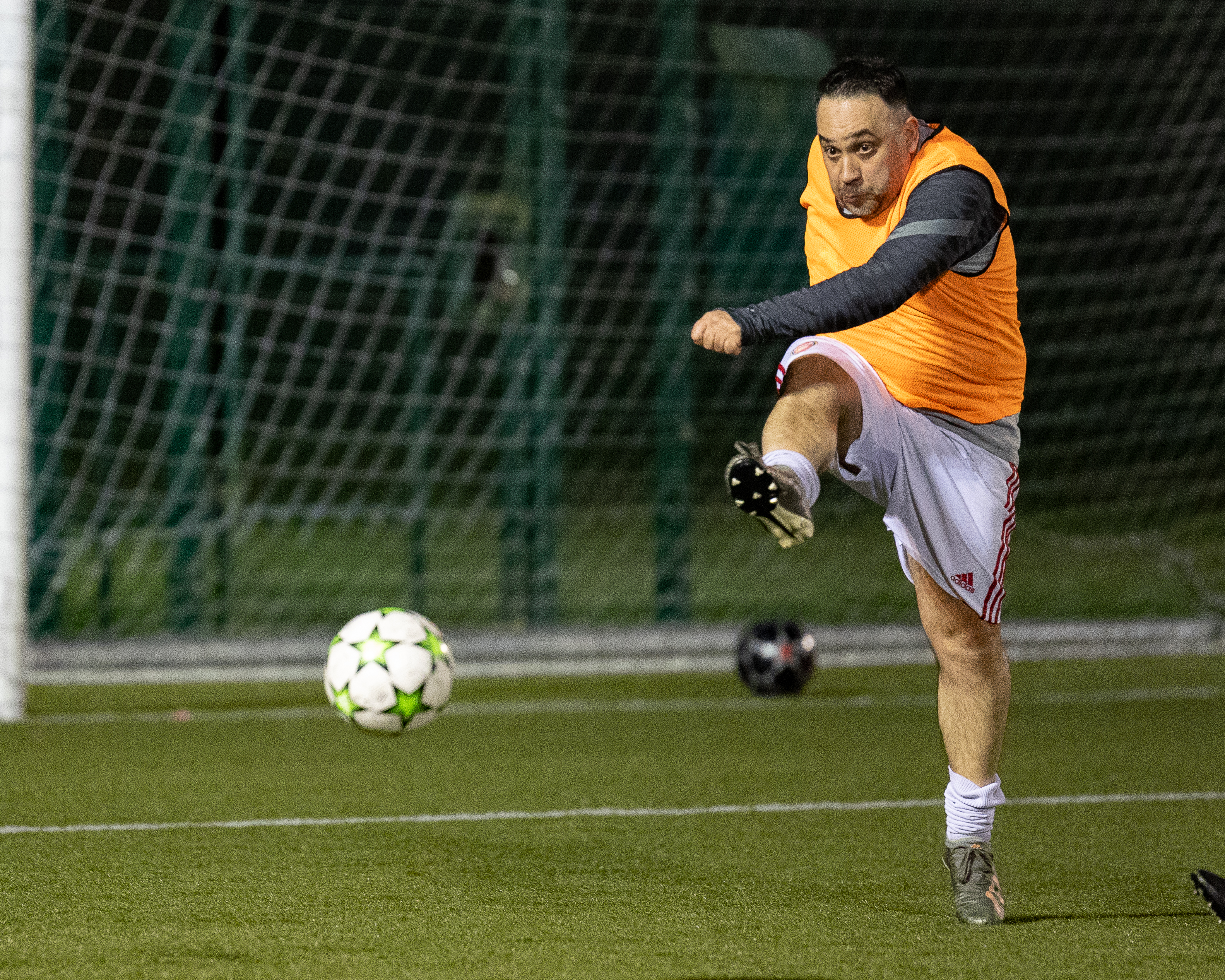
Football Cooperative enhances the quality of participants' everyday life by transforming ordinary recreational spaces into welcoming, inclusive, and socially vibrant places. Our aesthetic objective is not based on physical redesign alone, but on improving how spaces are experienced - making them more open and meaningful for the people who can gain use of them. Our project achieves this by activating underused football spaces through inclusive, community-led activities that prioritises diversity and shared participation. Simple but intentional choices such as flexible game formats, mixed mobility and ability groups, and flexible use of space have helped to create environments that feel safe, informal, and inviting. Rather than exclusive or competitive settings, these spaces become places of connection, expression, and belonging.
The quality of experience is central. Participants describe increased enjoyment, confidence, and comfort in spaces that were previously unwelcoming or inaccessible. The sensory experience is shaped by movement, play, social interaction, and the atmosphere of inclusion. Ultimately transforming familiar environments into positive, familiar and emotionally engaging places.
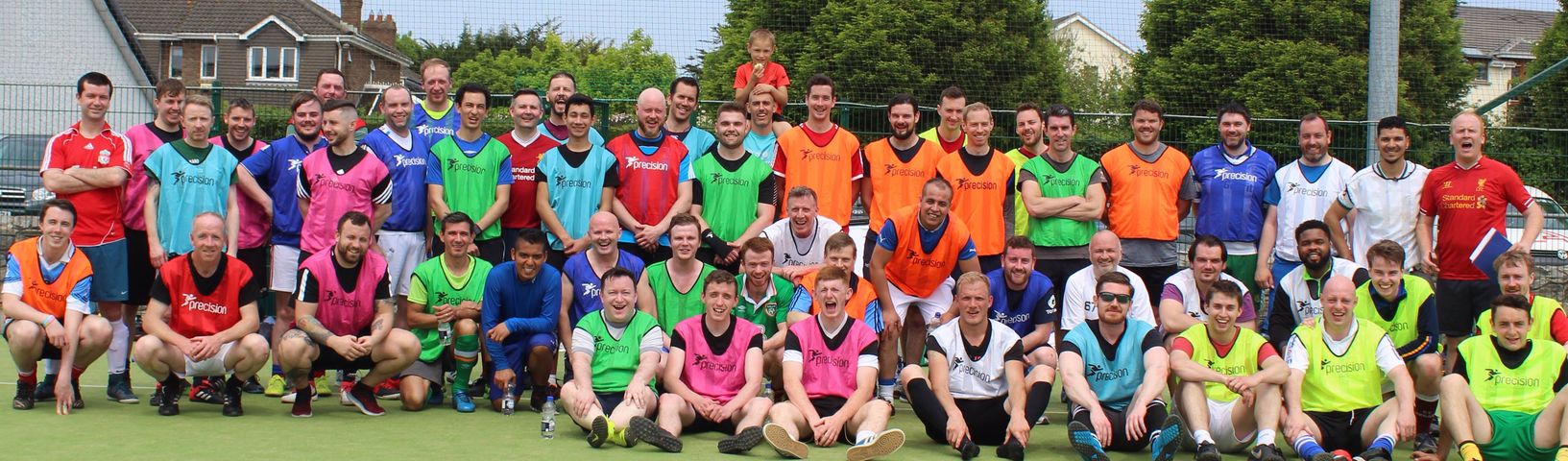
Our social enterprise strengthens local identity by embedding activities within communities and reflecting their diversity. Football becomes a shared language that brings together people of different ages, backgrounds, and abilities, fostering new relationships and reinforcing a sense of belonging. These spaces evolve into social anchors where people feel ownership, care, and connection.
Football Cooperative can be considered exemplary in its approach to aesthetics as we demonstrate that beauty can be created through use, interaction, and social meaning, not only through physical design. We focus on experience, inclusion, and collective ownership offering a forward-looking model of how everyday spaces can become more vibrant and valued over time.
Football Cooperative is fundamentally designed to promote inclusion of people from social, economic, cultural and educational disadvantage by removing barriers to participation and enabling communities to actively shape how local recreational spaces are used. Our inclusion objectives focus on widening access to sport and public space for people who are often excluded due to membership cost, ability, mobility or social circumstances. We also strive to create inclusive governance by ensuring participants are not just users, but active contributors to how our games are organised, delivered and evaluated.
Our implementation is based on practical, low-barrier measures. Participation is low-cost or free where needed, reducing financial exclusion. Activities are designed to be flexible and open to all abilities, with no requirement for prior experience, ensuring accessibility for diverse groups. The informal, community-based format reduces social barriers such as fear of judgement or competitiveness. Our participant recruitment pathways are driven through local networks and partnerships, helping reach underrepresented groups. Our initiative has engaged a diverse participant base and increased access to recreational spaces for those previously underrepresented. Evidence from a Social Return on Investment (SROI) analysis shows improved wellbeing, increased social connection, and reduced isolation. Participants report greater confidence, stronger networks, and a sense of belonging within their local community.
Football Cooperative is exemplary in our inclusive approach because it combines accessibility with agency. We do not simply promote access but provide a new approach where through a social enterprise model we secure shared spaces that shifts from participation to ownership. This in itself represents an innovative and scalable approach to inclusion, offering a practical model for building more equitable and connected communities.
Football Cooperative is built on a participatory approach, where local people and communities have been actively involved at every stage of the project design, delivery and evaluation. A wide range of stakeholders have been involved, including participants (local residents), volunteers (activated from the participant group), community organisations (supporting participant recruitment) and national stakeholders such as sports bodies and public health agencies (informing key pillars around governance, volunteer management and health literacy). These groups are not only beneficiaries but active contributors to our continuous development.
Participation has been embedded throughout all phases. In the early stages, community members were engaged through consultations and informal feedback to identify barriers to participation and shape the model. During implementation, volunteers take on key roles as coordinators, managing activities, organising sessions, and upholding the project’s values on the ground. This has helped to create a shared governance model where responsibility is distributed across the community.
The SROI analysis directly involved multiple stakeholder groups—including participants, volunteers, community partners, and family members in defining outcomes, validating findings, and assessing impact. Similarly, the implementation strategy for scaling was co-developed through stakeholder engagement ensuring the model reflects real-world experience.
Football Cooperative is passionate about enabling participants to have a meaningful level of influence. Their feedback shapes how activities are organised, how spaces are used, and how the model evolves. Volunteers also influence operational and strategic decisions, contributing to a sense of ownership and accountability. This participatory approach has significantly improved our quality and relevance. It ensures that our solution is grounded in lived experience and supports long-term sustainability.
Football Cooperative has been developed and implemented through a multi-level approach, involving stakeholders from local to national levels. At a local level, community members (participants), volunteer coordinators, and facility providers are central to delivery and decision-making. Together, they manage game delivery operations and ensure the model responds to local needs and dynamics. Furthermore, support organisations and local referral networks also support outreach and inclusion, embedding the initiative within and across the community.
At regional and national level, key institutions including the Football Association of Ireland (FAI), Sport Ireland, public health bodies and academia have been actively engaged. Their roles have included supporting the strategic alignment with national policies, providing expertise in participation and health, and supporting the development of a scalable model. National stakeholders also contribute to governance through advisory board representation to enable support with long-term planning and funding pathways.
At European level, engagement with organisations such as UEFA and Social Value International has provided strategic alignment with broader sport, health, and social inclusion agendas. Insights from comparable initiatives in other countries have also informed the implementation strategy, strengthening its transferability.
This multi-level approach has been of significant value to Football Cooperative. Cooperation across these levels has been structured through continuous stakeholder engagement, advisory board input, and collaborative development processes. It has strengthened our legitimacy, ensured alignment with national and European priorities, and supported scalability beyond local contexts. Today, by combining local ownership with institutional support and policy integration, We have strategically demonstrated itself to be a robust and transferable model for inclusive, community-led development
Football Cooperative is inherently transdisciplinary, combining expertise from social sciences, public health, sport science, community development, digital technology, and policy to design and implement an inclusive, scalable model. Academic researchers from health, sport science, and social research disciplines played a central role in evaluating the initiative and developing its evidence base, including the Social Return on Investment (SROI) analysis and implementation strategy. Our approach has been informed and shaped by continuous interaction with practitioners, community participants, and policy stakeholders, ensuring that research remains grounded in real-world practice. Community development perspectives have also been embedded through the involvement of local organisations, volunteers, and participants, who contributed practical knowledge on inclusion, engagement, and local needs. Public health expertise informed the focus on wellbeing, prevention, and behaviour change, while sport science contributed to understanding participation patterns and physical health outcomes.
Digital tools also played a role, particularly through the development of a bespoke platform to manage participation, coordinate activities, and collect data, supporting both delivery and evaluation. Policy and governance expertise from national and European stakeholders has also ensured alignment with broader strategies in sport, health, and social inclusion.
Through a combination of stakeholder consultations, workshops, advisory board engagement, and ongoing interaction between researchers, practitioners, and communities, we have adopted a collaborative multi-stakeholder approach that has enabled different perspectives to be shared, challenged, and integrated into a coherent model. This transdisciplinary approach resulted in a more robust and innovative solution that is not only evidence-based but also practical, inclusive, and scalable.
Football Cooperative operates a hybrid, socially-driven business model that combines earned income with philanthropic and partnership-based support to ensure long-term sustainability and scalability. Our core model is fee-for-service: participants contribute a low, accessible fee per game to take part in our recreational football activities. This trading income supports ongoing delivery, covering essential costs such as facility hire, equipment provision, insurance, and digital infrastructure.
To complement this, our social enterprise leverages philanthropic funding and in-kind support from partners across sport, health, and community sectors. National stakeholders, including sports bodies and public agencies, have supported development through expertise, strategic alignment, and access to networks. This blended approach reduces reliance on any single funding source.
The model has strong potential for future revenue generation. As the initiative scales, income can grow through expanded participation, partnerships with local authorities and health organisations, and delivery of outcome-based programmes. Football Cooperative is actively evolving towards an outcome partnership model, where funding is linked to measurable social impact such as improved wellbeing, increased participation, and reduced social isolation.
Ongoing costs include programme delivery, coordination, technology development, and governance. These are shared across the organisation, with increasing potential for dedicated staff roles as the model scales. This approach supports scalability by creating a financially resilient system that can be replicated across multiple locations while maintaining local ownership. Its potential for disruptive innovation lies in repositioning recreational sport as social infrastructure—demonstrating how community-based, outcome-driven models can deliver both public value and financial sustainability in urban and local development contexts.
Football Cooperative has been explicitly designed as a scalable and transferable model, supported by robust evidence and a national implementation strategy. It can serve as a model for others because it combines proven social impact with a practical, low-cost delivery system rooted in community ownership and existing infrastructure.
The most transferable elements include the core methodology of activating underused recreational spaces through inclusive, community-led participation; the volunteer-led delivery model; and the structured yet flexible implementation framework developed to support replication. The use of simple, accessible formats and existing facilities makes the model easy to adopt in diverse settings without the need for significant capital investment.
Replication relies on building strong local and national partnerships. At local level, collaboration with community organisations and facility providers is essential to embed the initiative within communities. At national level, partnerships with football and sports bodies, public health organisations, and local authorities support alignment with policy and long-term sustainability.
The model requires a combination of skills, including community engagement, volunteer coordination, and partnership development. However, these are supported through the implementation strategy, which provides clear guidance on roles, processes, and governance structures.
This implementation strategy outlines fundamental pillars to support the adaption of the initiative when considering replication internationally. Overall, Football Cooperative offers a flexible, evidence-based model that has enormous potential to scale up (to new communities) and scale out (to more people within these communities). Our approach serves as a real-world example of how community projects designed and delivered in partnership with local stakeholders are more likely to be successful because they've been created with needs in mind.