Cēsis Youth and Children's Vote
Basic information
Project Title
Cēsis Youth and Children's Vote
Full project title
Cēsis Youth and Children's Vote
Category
Regaining a sense of belonging
Project Description
Cēsis Youth and Children's Vote was a pilot-project taking place alongside Latvia's Parliamentary elections on October 1, 2022. Aimed at revitalizing civic engagement, by providing a platform for democracy and encouraging the younger generation of Cēsis to have a say in the development of their town, it boosted the voter turnout in the general elections. The Cēsis Municipality co-created the project with the Design Department of the Latvian Academy of Arts and the Central Election Commission.
Geographical Scope
Local
Project Region
Cēsis Municipality, Latvia
Urban or rural issues
Mainly urban
Physical or other transformations
It refers to a physical transformation of the built environment (hard investment)
EU Programme or fund
No
Description of the project
Summary
On the day of the Saeima elections, October 1, 2022, a total of 1,311 votes were cast in the Cēsis Youth and Children's Vote "Democracy begins in the family".
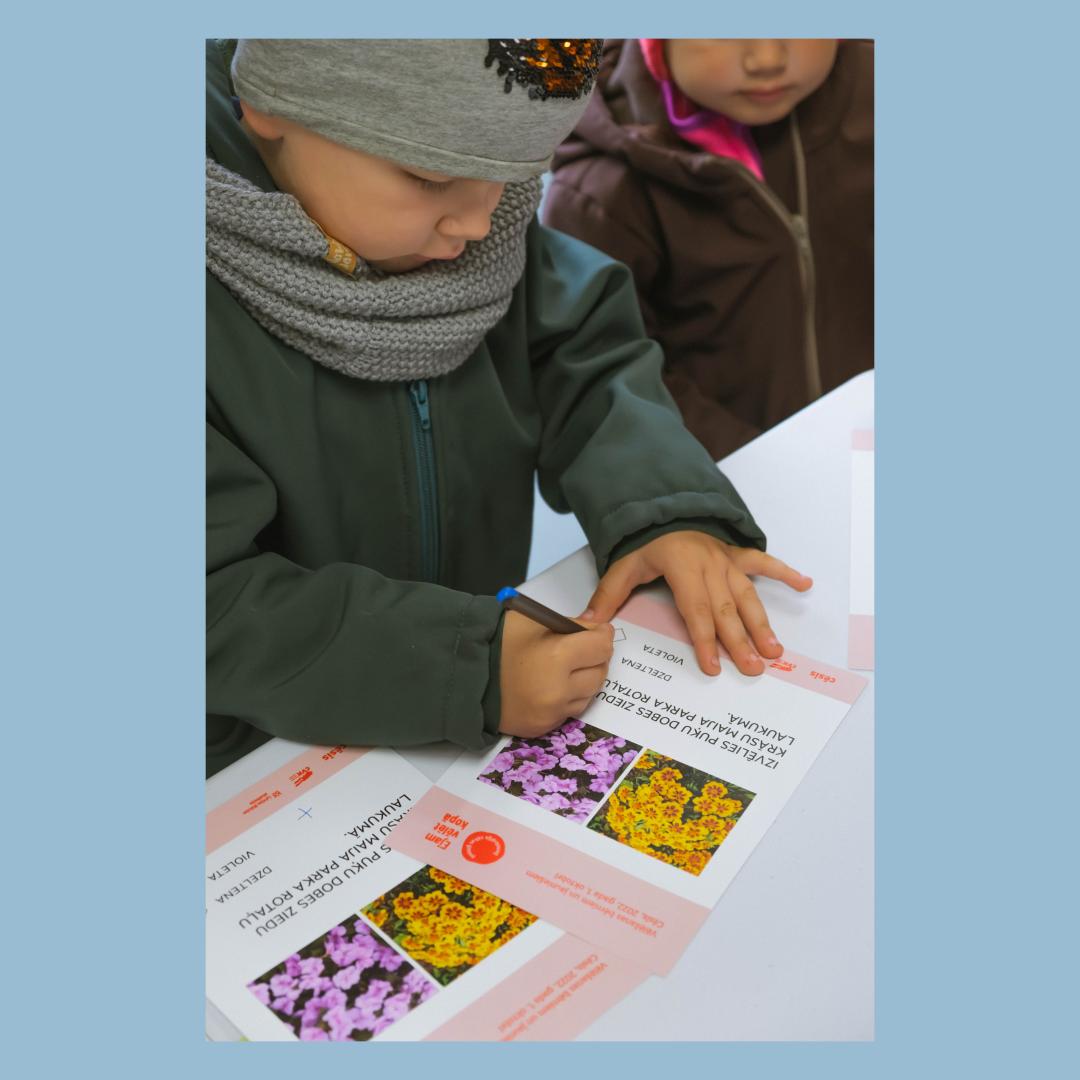
During the project, students of Cēsis educational institutions voted for what they think are the best urban environment solutions for Cēsis. Kindergarteners and first-graders voted on the color of flowers in the Maija Park playground for summer 2023. 2nd to 7th grade students chose the playground equipment in Maija Park, while youth from 8th until the 12th grade chose a place in the city where a drinking water fountain should be installed.
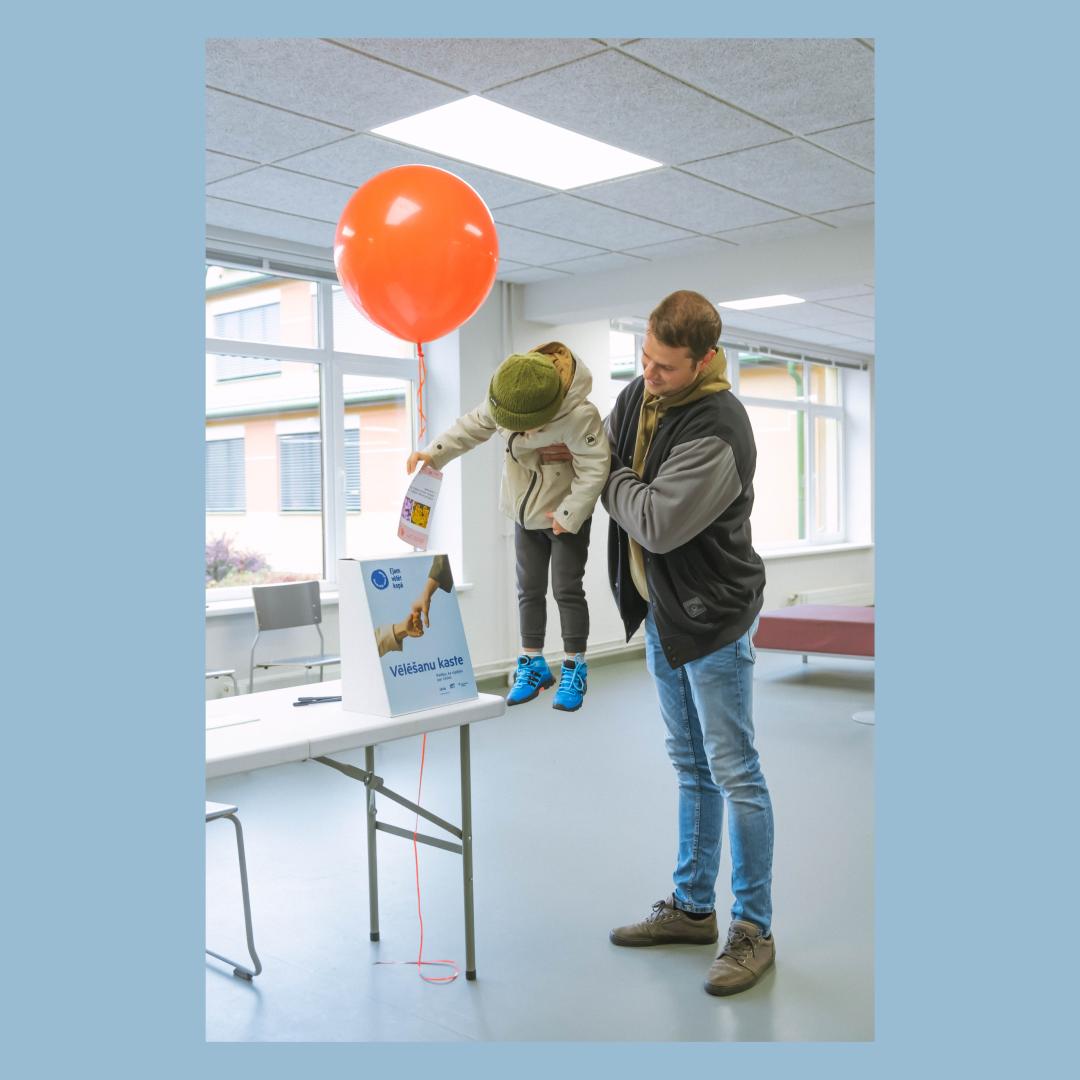
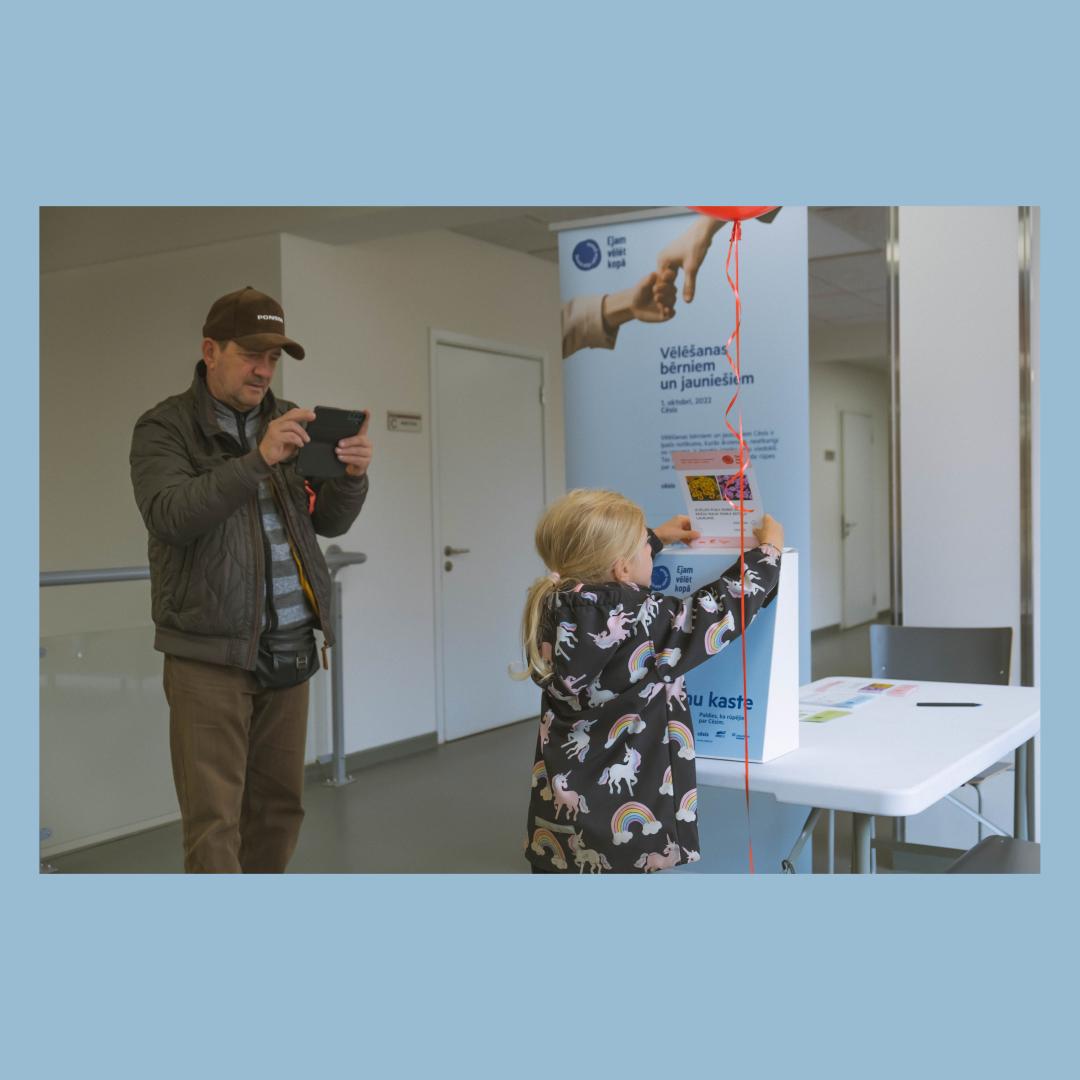
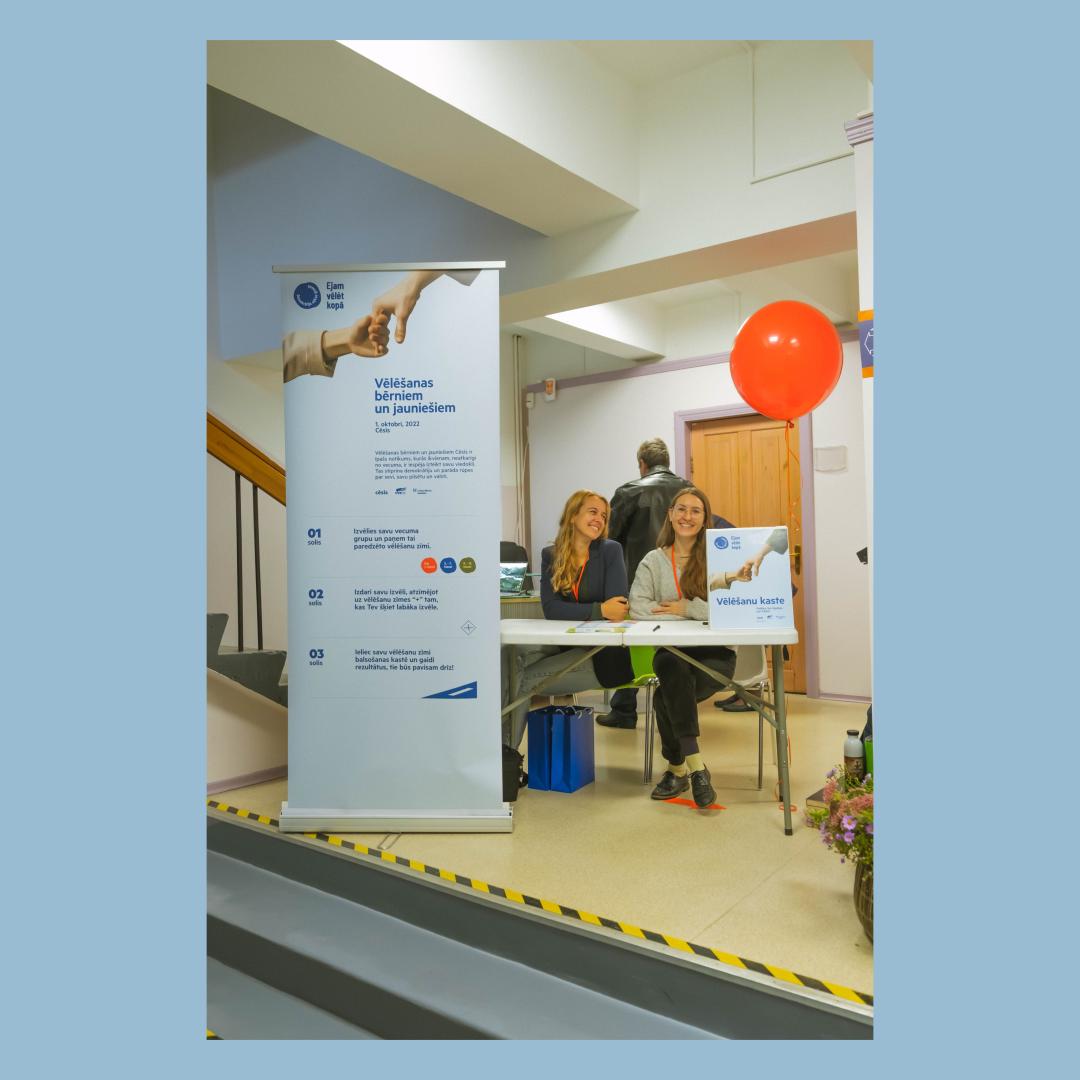
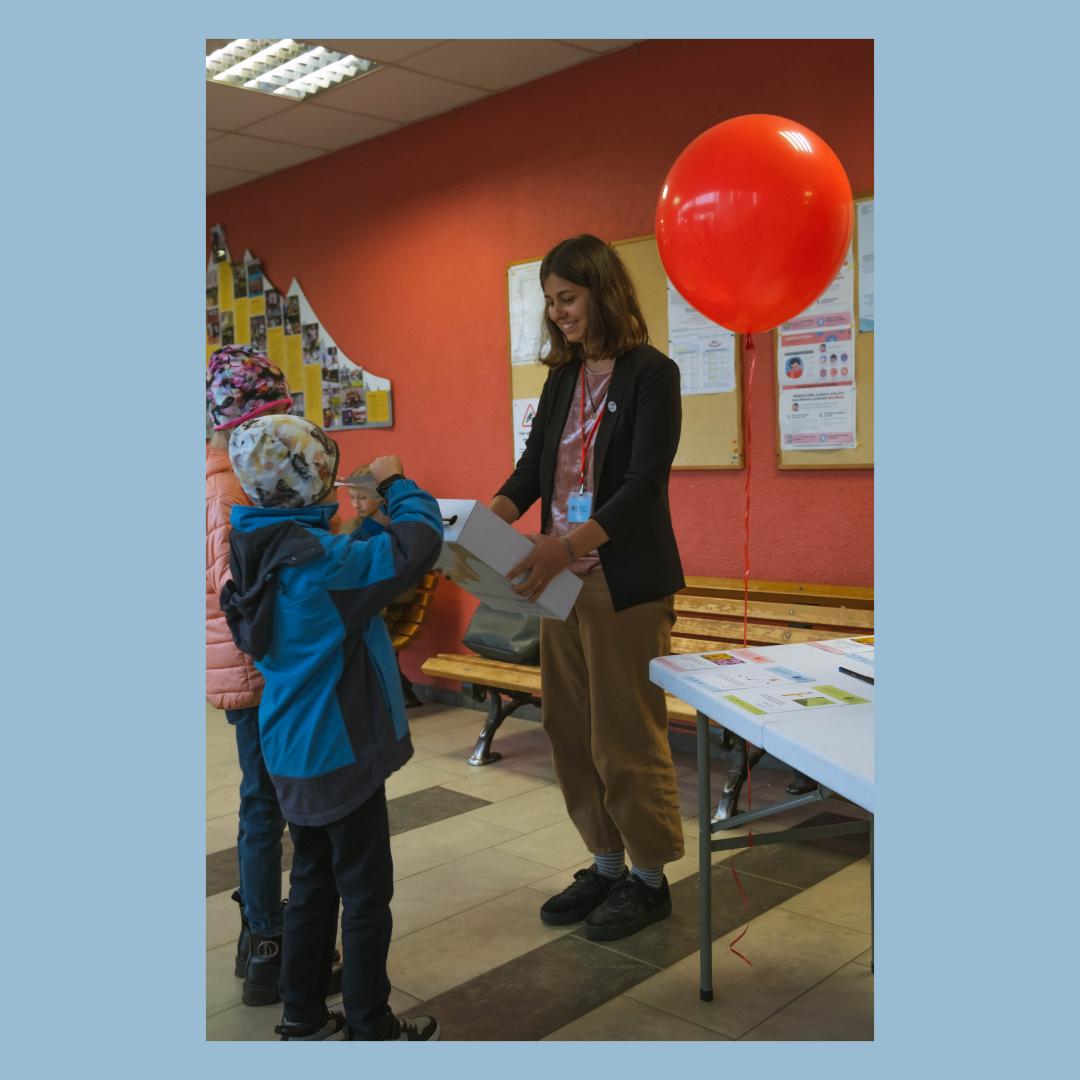
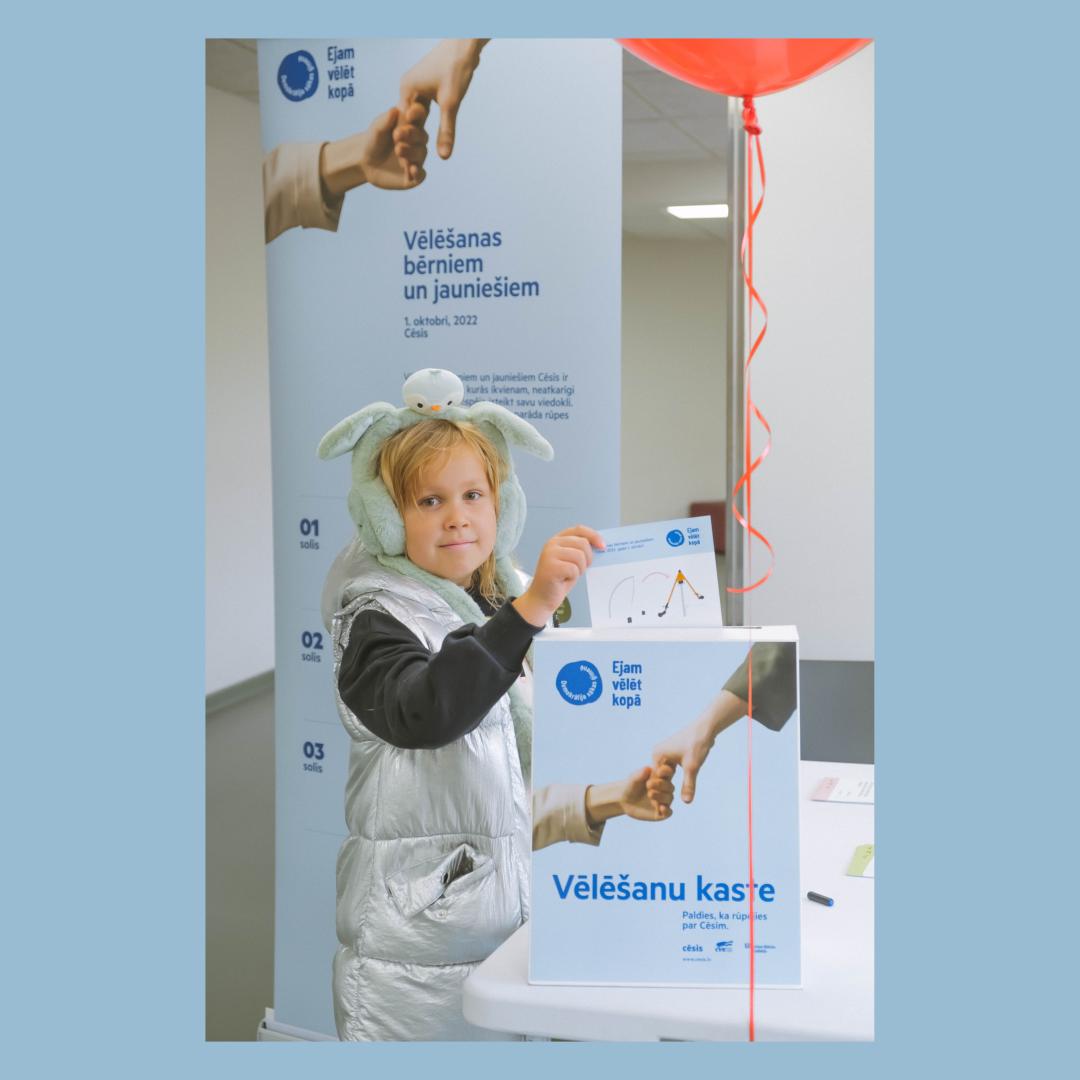
The vote took place alongside the election of the Latvian Parliament - in the same locations, with designated areas, volunteers that helped kids and their parents, specially designed voting ballots and ballot boxes.
The underlying motive of the project was to ensure both - that young people of Cēsis get used to their voice being heard and that their willingness to go out and vote in the voting precincts of Cēsis would increase the voter turnout of the general election, since they would most probably be accompanied by their parents.
The total project voting activity across all youth and children's age groups was 36%. For comparison, 34% of the voting population participated in the previous municipal elections in Latvia. The urban solutions voted on will be implemented in the spring/summer season of 2023.
The Vote's idea was created by two students of the Design Department of the Latvian Academy of Arts, Ulla Ozollapa and Beatrise Lasmane, who approached the Cēsis Municipality to implement it as a pilot project, with the support of the Central Election Commission. The positive results and feedback received for the project have cemented the commitment to repeat the project in the next elections - this time, on the regioanl scale, with all towns and rural areas of the Cēsis Municipality included.
During the project, students of Cēsis educational institutions voted for what they think are the best urban environment solutions for Cēsis. Kindergarteners and first-graders voted on the color of flowers in the Maija Park playground for summer 2023. 2nd to 7th grade students chose the playground equipment in Maija Park, while youth from 8th until the 12th grade chose a place in the city where a drinking water fountain should be installed.
The vote took place alongside the election of the Latvian Parliament - in the same locations, with designated areas, volunteers that helped kids and their parents, specially designed voting ballots and ballot boxes.
The underlying motive of the project was to ensure both - that young people of Cēsis get used to their voice being heard and that their willingness to go out and vote in the voting precincts of Cēsis would increase the voter turnout of the general election, since they would most probably be accompanied by their parents.
The total project voting activity across all youth and children's age groups was 36%. For comparison, 34% of the voting population participated in the previous municipal elections in Latvia. The urban solutions voted on will be implemented in the spring/summer season of 2023.
The Vote's idea was created by two students of the Design Department of the Latvian Academy of Arts, Ulla Ozollapa and Beatrise Lasmane, who approached the Cēsis Municipality to implement it as a pilot project, with the support of the Central Election Commission. The positive results and feedback received for the project have cemented the commitment to repeat the project in the next elections - this time, on the regioanl scale, with all towns and rural areas of the Cēsis Municipality included.
Key objectives for sustainability
The project tackles the sustainability of the democratic process. By encouraging young people that their voices matter and showing them the immediate results of their vote, "Democracy begind in the family" lays the groundwork for the next generation of voters to be better prepared and more civically engaged. It also indirectly influenced the outcome of the general Parliamentary election, with kids dragging their parents along for the vote - not the usual other way around.
Key objectives for aesthetics and quality
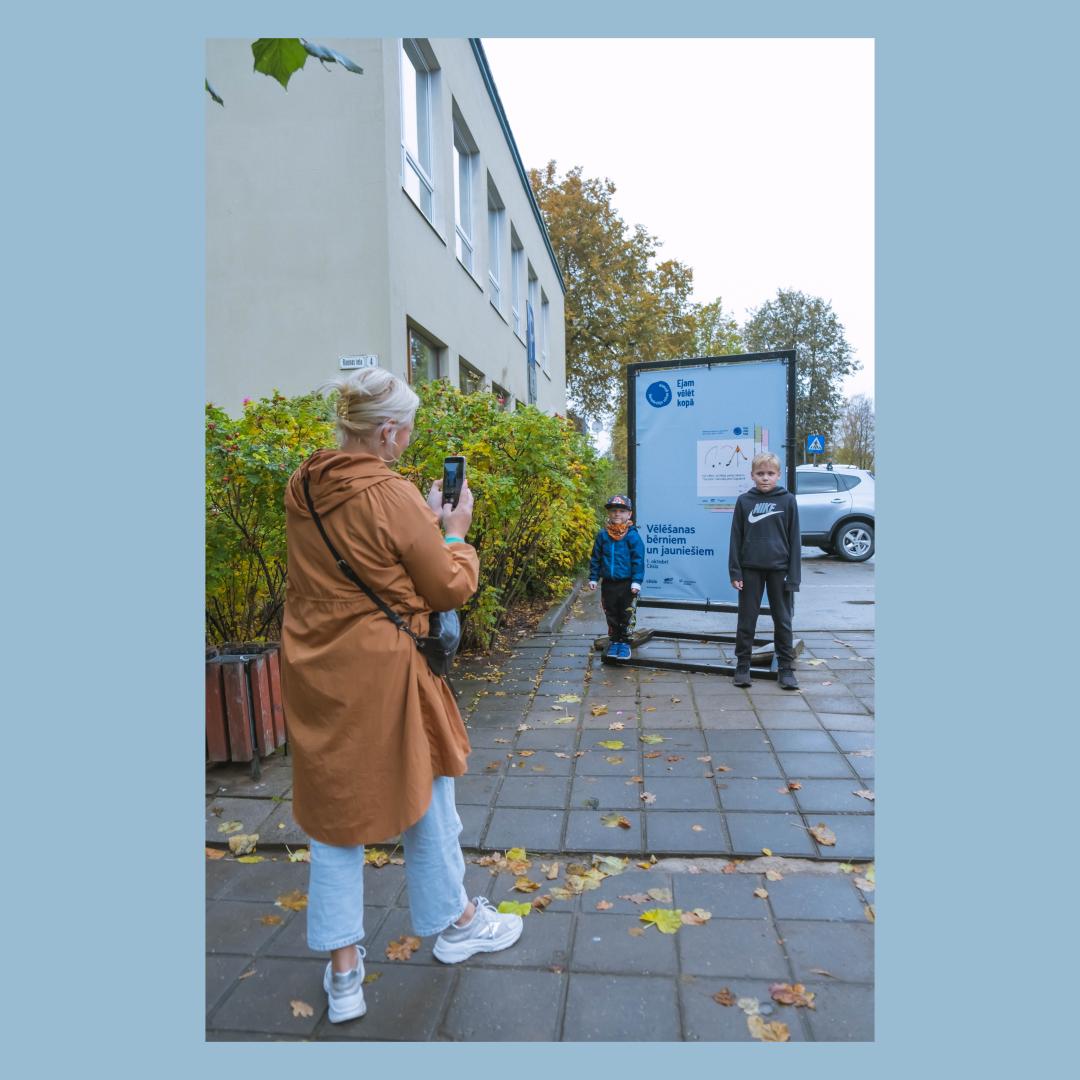
The design of the project was intentionally created bright, colorful, attention-grabbing and simple to perceive at the same time. Since the younger generation of the project's voters did not neccessarily know how to read yet, the ballots of the Vote were designed to be universally understandable and easy to fill out. The same principles of design were used for the outdoor campaign of the project as well as for the interior spaces of the voting precincts where the project's volunteers and ballot boxes were placed.
Key objectives for inclusion
The project was intended to be inclusive of every child in the kindergartens and schools of Cēsis, regardless of ther social, financial or other backgrounds. Since the project's main idea was to promote democracy and its values, every kid in the educational system of Cēsis received a ballot (and an instructional letter) before the Vote. To ensure the project met its goals, the staff of Cēsis educational institutions were also instructed on how to help their students with understanding the vote, its process and the voting itself.
Regarding the physical accessibility of the precincts, they followed the same norms as the precincts of the general election, since - for the puproses of the project - they were located in the same facilities.
Regarding the physical accessibility of the precincts, they followed the same norms as the precincts of the general election, since - for the puproses of the project - they were located in the same facilities.
Results in relation to category
As a pilot project “Democracy begins in the family” achieved a 36% or 1311 voter turnout of the total number of children and youth in the schools and kindergartens of town of Cēsis. Since the voters needed to make their way to the voting precincts to turn their votes in (same as with general elections in Latvia), the scope of reach for this first-time engagement project can be considered a success. For reference, the average national voter turnout of the municipal election the year before was 34%.
Additionally, “Democracy begins in the family” was heavily featured in Latvian national media as well as social media, making the idea behind the project widely known in the general population.
Due to the nature of the Latvian climate, the vote’s results will be physically implemented this year, in the spring/summer season of 2023, thus ensuring another possibility to remind people of the project in the medium term.
Another benefit of the project is the expressed political will to continue the project in the elections to come – this time including not only the town of Cēsis, but also all of the rural areas of the Cēsis Municipality with their own customised objects for the vote.
Additionally, “Democracy begins in the family” was heavily featured in Latvian national media as well as social media, making the idea behind the project widely known in the general population.
Due to the nature of the Latvian climate, the vote’s results will be physically implemented this year, in the spring/summer season of 2023, thus ensuring another possibility to remind people of the project in the medium term.
Another benefit of the project is the expressed political will to continue the project in the elections to come – this time including not only the town of Cēsis, but also all of the rural areas of the Cēsis Municipality with their own customised objects for the vote.
How Citizens benefit
The underlying motive of the project was to ensure both - that young people of Cēsis get used to their voice being heard and that their willingness to go out and vote in the voting precincts of Cēsis would increase the voter turnout of the general election, since they would most probably be accompanied by their parents.
Physical or other transformations
It refers to a physical transformation of the built environment (hard investment)
Innovative character
Never before have any similar youth votes been implemented in Latvia to tackle both – the civic engagement of kids and subsequently their parents. Additionally, not only was the vote customized to fit specific target age groups, but it also brought together local, academic and national institutions in a unified attempt to test this approach that has now been politically approved as an accompanying project for future elections. It also featured a new way to design the democratic process, showing the interlinked nature and importance of discussing democracy between children and their parents.
Disciplines/knowledge reflected
The project included design of voting, democracy, user experience, youth and civic engagement. There were three main stakeholders of the project - the designers from the Design Department of the Latvian Academy of Arts, the municipality and the Central Election Commission (the local Election commission included). The project planning started eight months in advance, with regular meetings and brainstorming to develop the strategies and best possible user experience for a pilot project never been done before. With the project taking form, schools, kindergartens as well as the city planners and architects of Cēsis were brought onboard to finalize the details of the project to make sure the vote would produce sustainable, implementable and concrete results.
Methodology used
The methodology included careful prior preparation and UX design of the voting process itself as well as direct voting on the day of the project whereupon the children and youth of Cēsis were able to choose between three various solutions to three urban infrastructure questions depending on their age group.
The approach was based in interdisciplinary cooperation amongst academic, educational, municipal and state institutions with the common goal of encouraging the civic engagement of young people, subsequently driving the voter turnout of their parents in the Parliamentary elections.
The approach was based in interdisciplinary cooperation amongst academic, educational, municipal and state institutions with the common goal of encouraging the civic engagement of young people, subsequently driving the voter turnout of their parents in the Parliamentary elections.
How stakeholders are engaged
The Cēsis Municipality implemented the pilot project in cooperation with the Design Department of the Latvian Academy of Arts and the Central Election Commission. To ensure the project's success, the schools and kindergartens of Cēsis were also onboarded as the main target groups.
Global challenges
The main challenge at the base of the project is the civic engagement of youth – or lack thereof. Young people remain an inactive, underrepresented part of the voter pool in Western democracies – with some of the lowest voter activity figures among all age groups. The project provides a platform for the youth to not only recognise the validity of their opinion and voice but also to practice taking part in a democratic process with concrete, visible results in their local vicinity.
Learning transferred to other parties
Communication campaign, process of school and kindergarten (and their staff) onboarding, selection of objects for voting, general design.