Strengthening Local Democracy and Inclusion
HabitarBem
HabitarBem – Architecture for All
HabitarBem is a participatory digital platform that connects communities, students, and professionals to co-create accessible architectural solutions. By transforming homes, façades, and public spaces—one project at a time—it promotes inclusion, climate resilience, and dignity, empowering people to actively shape their environments and build more just, sustainable, and connected cities.
Brazil
National
Mainly urban
It involves a physical transformation of the built environment (hard investment)
Prototype level
No
No
No
Individual
HabitarBem is a participatory digital platform created to democratize access to architecture and empower communities to actively transform the spaces where they live. It emerges from a deeply unequal reality, where millions of people live without access to professional support, excluded from decisions that directly shape their environments.
By connecting low-income residents with architecture students and professionals, HabitarBem enables the co-creation of accessible, sustainable, and context-driven solutions. Residents can express their needs—such as home improvements, façade transformations, or accessibility adaptations—and actively participate in shaping the outcomes. In this process, architecture becomes a collective practice, where technical knowledge meets lived experience.
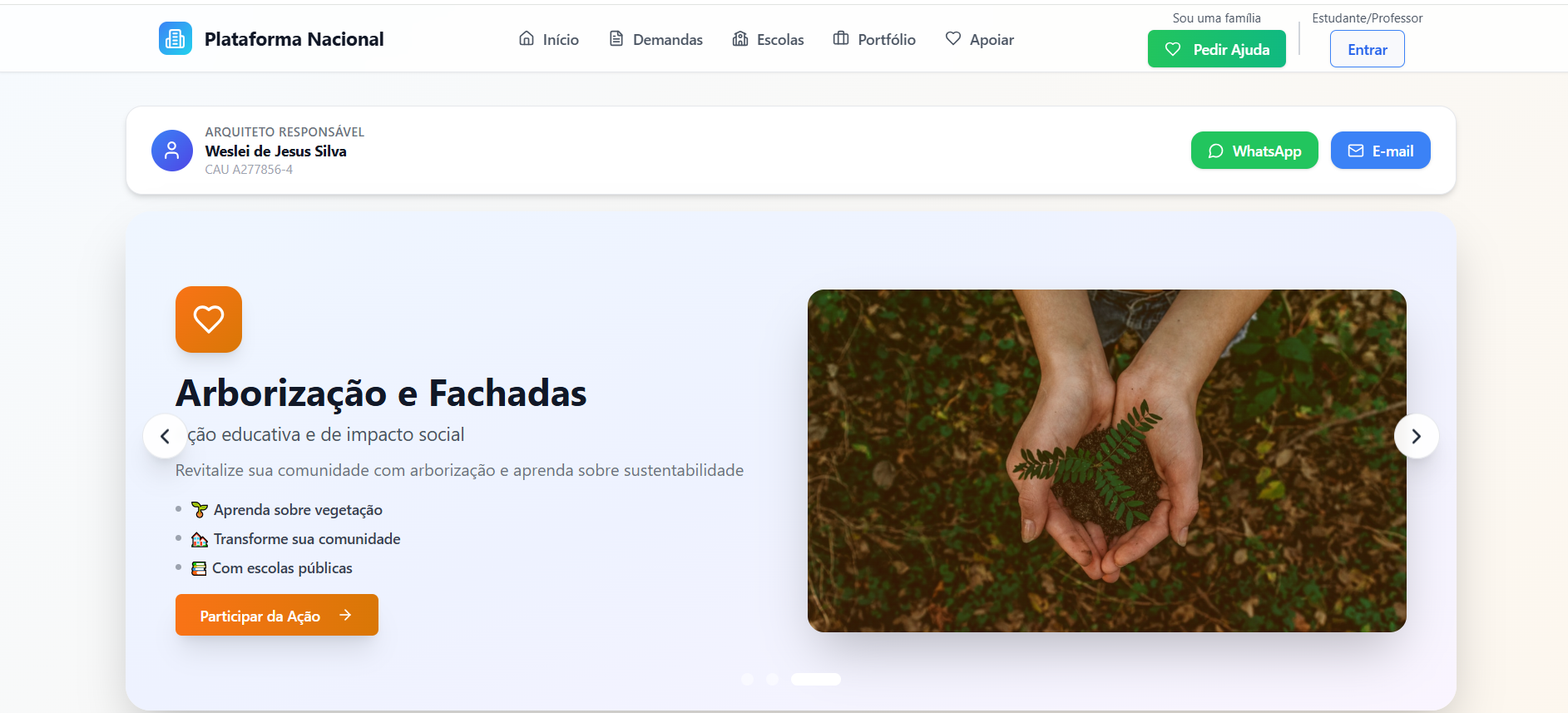
The platform is already developed and ready to operate, with a scalable model designed to reach diverse communities. Its initial actions focus on low-cost, high-impact interventions, such as transforming façades combined with tree planting—simple strategies capable of improving environmental conditions, strengthening local identity, and fostering a sense of belonging.
The expected results go beyond physical improvements. HabitarBem aims to enhance thermal comfort, ventilation, and spatial quality, directly impacting health and well-being. At a broader scale, it contributes to climate resilience, greener neighborhoods, and stronger social cohesion.
The initiative also extends to public schools, promoting the co-creation of improvement projects with students, professionals, and local communities—building a continuous cycle of learning, participation, and transformation.
By placing people at the center of decision-making and combining digital accessibility with collaborative design, HabitarBem strengthens local democracy and inclusion, creating pathways for more just, resilient, and human-centered cities—one home, one street, and one community at a time.
HabitarBem is born from my own lived experience. I was born and raised in contexts like the ones this project aims to transform. Growing up, I witnessed how many families live in homes that lack comfort, ventilation, and adequate conditions—spaces that often contribute to health and well-being issues. This is my reality, and it is what motivated me to act.
From an early age, I realized that architecture—something that should be a right—is still treated as a privilege. Entire communities remain excluded from decisions about their own spaces, living in environments that were never designed for them.
This experience became the driving force behind HabitarBem: a way to bring quality architecture to those who need it most, in an accessible way.
The concept was developed by combining three main pillars: digital accessibility, collaborative design, and social impact. The platform connects residents, architecture students, and professionals, creating a participatory process where real needs are transformed into feasible solutions.
The development focused on simplicity and inclusion, ensuring that anyone can access and engage with the platform. At the same time, strategies were designed to involve students and professionals, allowing them to contribute to real projects while gaining practical experience and social awareness.
A key decision was to start with low-cost, high-impact actions—such as façade transformations combined with tree planting—capable of generating visible change within communities.
The platform is already developed and ready to connect people and demands. Although still in its early stage, it was designed as a scalable and replicable model that can adapt to different contexts.
More than a technical solution, HabitarBem is the materialization of a personal story and a commitment to social transformation—where communities become active protagonists in shaping healthier and more dignified environments.
Social inclusion
Affordable housing solutions
Urban resilience
Climate resilience
Digital platform for inclusion
HabitarBem addresses sustainability through an integrated approach that combines environmental, social, and economic impact. It focuses on improving existing living conditions rather than promoting new construction, reducing material consumption and minimizing environmental impact. By prioritizing low-cost, high-impact interventions—such as façade improvements, better ventilation, and space optimization—the project contributes to energy efficiency and thermal comfort, especially in vulnerable areas affected by extreme heat.
A key environmental strategy is the integration of tree planting alongside housing improvements. Each transformed home is paired with the planting of a tree, contributing to urban cooling, improved air quality, and increased biodiversity. These small-scale actions, when replicated across communities, create meaningful contributions to climate resilience and more sustainable urban environments.
Social sustainability is at the core of the concept. By making architecture accessible and participatory, HabitarBem reduces inequalities and empowers communities to take part in shaping their own environments. This approach strengthens social cohesion, promotes well-being, and builds long-term resilience.
Economically, the platform creates an accessible model by reducing costs and enabling shared value. It connects residents with students and professionals, generating opportunities for learning, collaboration, and social impact while keeping services affordable. This model supports local economies and encourages inclusive growth.
HabitarBem can be considered exemplary in sustainability because it transforms small, achievable actions into scalable impact. It demonstrates how accessible design, community participation, and environmental awareness can work together to create healthier homes, stronger communities, and more resilient cities—without requiring high-cost or resource-intensive solutions.
HabitarBem understands aesthetics as a fundamental part of dignity, well-being, and belonging. In many vulnerable communities, the absence of care in the built environment is not only physical, but also symbolic—reinforcing exclusion and invisibility. By transforming homes and public-facing elements such as façades, the project reintroduces beauty as a shared and accessible value.
The initiative focuses on simple, low-cost design strategies that can significantly improve visual quality and spatial perception. Façade transformations, color, organization, and small design interventions help create more harmonious, welcoming, and human-centered environments. These changes are not only aesthetic improvements, but also emotional ones—impacting how people feel about their homes and neighborhoods.
A key aspect of the concept is participation. Residents are actively involved in the design process, which strengthens their connection to the results. When people contribute to shaping their own spaces, beauty becomes a collective expression of identity, culture, and care.
The project also contributes to long-term aesthetic value by combining physical improvements with environmental strategies, such as tree planting. Over time, this creates greener, more pleasant, and visually cohesive neighborhoods.
HabitarBem can be considered exemplary in terms of aesthetics because it democratizes beauty. It shows that high-quality, meaningful design does not need to be expensive or exclusive. Instead, it can be accessible, participatory, and deeply connected to people’s lives—creating spaces that foster pride, belonging, and a renewed sense of care for the place where they live.
HabitarBem addresses inclusion by removing one of the main barriers to architecture: access. It creates a model where architectural support becomes affordable, understandable, and available to those who have traditionally been excluded from it—especially low-income communities.
The platform is designed to be simple and accessible, allowing residents to express their needs in a clear and intuitive way, regardless of their technical knowledge or digital experience. By reducing costs and offering flexible access, it ensures that quality design is no longer a privilege, but a possibility for all.
Inclusion is also embedded in the governance model. HabitarBem promotes a participatory approach where residents are not passive recipients, but active contributors in decision-making processes. Through co-creation, communities collaborate with students and professionals, ensuring that solutions reflect real needs, cultural contexts, and local knowledge.
The concept also embraces “design for all” principles by considering accessibility, usability, and adaptability in its solutions. It seeks to respond to diverse needs, including those related to vulnerable groups, by prioritizing practical, inclusive, and human-centered design strategies.
Additionally, the platform introduces a new social model by connecting education, professional practice, and community impact. Students gain experience, professionals contribute with purpose, and communities benefit from accessible solutions—creating a shared-value system.
HabitarBem can be considered exemplary in terms of inclusion because it transforms access into participation, and participation into empowerment. It does not only deliver solutions—it creates conditions for people to actively shape their environments, fostering equity, dignity, and stronger, more inclusive communities.
Participation is at the core of HabitarBem, shaped directly by lived experience and continuous engagement with the reality of the communities it aims to serve. The concept was developed through close observation, dialogue, and informal exchanges with residents, understanding their daily challenges, priorities, and aspirations regarding their homes and neighborhoods.
Rather than designing solutions from a distance, the project is built on the principle that those who experience the problems should be part of the solution. This perspective guided the creation of a platform where residents can actively express their needs and take part in shaping the outcomes.
Users are involved from the very beginning of the process—by describing their demands, sharing their perspectives, and interacting with proposed solutions. Students and professionals also play a key role, contributing their knowledge while engaging with real-life contexts, creating a continuous exchange between technical expertise and lived experience.
This participatory approach had a direct impact on the development of the concept. It led to the creation of a simple, accessible platform, focused on clarity, usability, and real needs rather than complex or abstract solutions. It also reinforced the importance of starting with low-cost, high-impact actions that communities can easily understand and adopt.
HabitarBem transforms participation into a practical tool for inclusion and empowerment. By involving citizens, students, and professionals in a shared process, it builds trust, strengthens community bonds, and ensures that solutions are not only technically effective, but also socially meaningful and culturally relevant.
HabitarBem is designed as a multi-level collaborative model, connecting stakeholders across local, regional, national, and potentially international levels to enable inclusive and scalable urban transformation.
At the local level, the project directly engages residents, community groups, and local leaders, who are central to identifying needs and co-creating solutions. Their involvement ensures that interventions are grounded in real contexts and reflect local identities, priorities, and knowledge.
At the educational and professional level, architecture students and practitioners contribute with technical expertise, while benefiting from practical experience and socially engaged work. Universities and academic institutions can play a key role in supporting and expanding this network.
At the municipal and regional levels, public authorities and local governments are expected to be involved, especially in initiatives related to public schools, neighborhood improvements, and community-based projects. Their participation can support implementation, provide resources, and help integrate the initiative into broader urban strategies.
At the national level, the concept can connect with public policies, social programs, and funding mechanisms aimed at housing, education, and urban development, strengthening its reach and long-term impact.
At the international level, including European collaboration, HabitarBem has the potential to exchange knowledge, replicate its model, and contribute to global discussions on inclusive and sustainable cities.
The added value of this multi-level governance lies in its ability to connect grassroots realities with institutional support. By aligning community participation with technical knowledge and public policies, HabitarBem creates a more resilient, inclusive, and scalable model—where each level reinforces the other, enabling long-lasting and meaningful transformation.
HabitarBem is inherently transdisciplinary, bringing together multiple fields of knowledge to address complex social, environmental, and spatial challenges in an integrated way.
Architecture and urbanism form the foundation of the concept, guiding the design of spatial solutions that improve living conditions and urban environments. However, the project goes beyond traditional architectural practice by incorporating social sciences, recognizing the importance of understanding community dynamics, cultural contexts, and lived experiences in the design process.
Education is a central component, as the platform actively involves students in real-world projects, creating a bridge between academic learning and practical, socially engaged action. This transforms the initiative into both a service and a learning ecosystem.
Digital technology also plays a key role, enabling access, communication, and collaboration between residents, students, and professionals. The platform functions as a tool for inclusion, allowing participation at scale and facilitating the co-creation process.
Environmental sciences are reflected in strategies such as improving thermal comfort, optimizing natural ventilation, and integrating nature-based solutions like tree planting, contributing to climate resilience and more sustainable urban environments.
Additionally, elements of design and visual communication are present in the development of clear, accessible, and understandable project representations, ensuring that solutions can be effectively interpreted and implemented by users.
By integrating these different disciplines, HabitarBem creates a holistic approach that connects technical knowledge, social understanding, environmental awareness, and digital accessibility—resulting in solutions that are not only functional, but also inclusive, sustainable, and deeply connected to people’s realities.
HabitarBem is designed as a financially sustainable and scalable model that combines accessible service provision with public and private funding strategies. In its initial phase, the platform operates with low-cost services, offering affordable architectural solutions to residents while creating opportunities for students and professionals to contribute. This allows the project to generate modest revenue while maintaining accessibility.
In the long term, the core of the business model is based on a hybrid funding structure, combining public investment and private sector engagement. Public funding can support the implementation of projects in vulnerable communities and public schools, aligning with housing, urban development, education, and climate policies.
At the same time, the concept strongly aligns with ESG (Environmental, Social, and Governance) principles, creating opportunities for private companies to invest as part of their social and environmental responsibility strategies. Through ESG partnerships, companies can support specific interventions—such as housing improvements, façade transformations, and tree planting—while generating measurable social and environmental impact.
Additional funding mechanisms may include grants, impact investment, and partnerships with NGOs and institutions, further strengthening the financial resilience of the initiative.
This model creates shared value: communities receive accessible solutions, students and professionals gain experience and purpose, and public and private stakeholders contribute to meaningful social and environmental outcomes.
By combining low-cost service delivery with strategic funding aligned to ESG and public policies, HabitarBem establishes a financially viable and scalable system capable of generating long-term impact.
HabitarBem is designed as a highly scalable and transferable model, with key elements that can be adapted to different geographic, social, and cultural contexts. Its core strength lies in the combination of a digital platform, participatory methodology, and low-cost, high-impact design strategies.
The digital platform is inherently scalable, allowing connections between residents, students, and professionals to be replicated in different regions with minimal structural adaptation. Its simplicity and accessibility make it suitable for diverse populations, including those with limited digital experience.
The participatory approach is another key transferable element. By placing communities at the center of decision-making and co-creation processes, the model can be applied across different cultural and social contexts, adapting to local needs while maintaining its core principles of inclusion and empowerment.
The focus on low-cost, high-impact interventions—such as façade improvements, space optimization, and tree planting—makes the concept particularly adaptable. These solutions rely on widely available materials and techniques, allowing easy replication in resource-constrained environments.
Additionally, the integration of students and professionals creates a flexible and expandable network that can be implemented in partnership with universities and institutions worldwide, strengthening both education and social impact.
The main learning embedded in the concept is that meaningful urban transformation does not require complex or high-cost solutions, but rather accessible systems that connect people, knowledge, and local realities.
Because of this, HabitarBem has strong potential to be replicated globally, especially in regions facing similar challenges of inequality, inadequate housing, and limited access to architectural services—contributing to more inclusive, resilient, and sustainable communities worldwide.
HabitarBem is already at a stage where implementation can begin immediately, with a clear roadmap focused on activating the platform, engaging stakeholders, and delivering initial pilot actions within the first year.
In the first phase, the priority is to launch pilot projects in selected communities, focusing on low-cost, high-impact interventions such as façade transformations and small-scale home improvements. These initial actions will serve as proof of concept, demonstrating the effectiveness of the model while generating visible and measurable results.
At the same time, efforts will be directed toward onboarding architecture students and professionals, building a collaborative network capable of responding to community demands. Partnerships with universities will be strengthened to support this process and ensure a continuous flow of participants.
Another key step is community engagement and outreach, using simple communication strategies and local connections to ensure that residents understand and trust the platform. This phase is essential to build participation and long-term relationships.
In parallel, the project will seek partnerships with public institutions and private organizations, especially those aligned with ESG principles, to support expansion and ensure financial sustainability.
Digital improvements will also be implemented based on user feedback, refining the platform to enhance accessibility, usability, and impact.
By the end of the first year, the goal is to have a validated and operational model, with active users, implemented projects, and established partnerships—creating the foundation for scaling the initiative to new communities and regions.
HabitarBem represents not only a vision, but a concrete and achievable path toward inclusive and participatory urban transformation.