Enhancing Circularity, Sustainability, and Innovation
ENGO NO SHU
ENGO NO SHU: Reconnecting Forests and People Across Borders through Circular Timber and Co-creation
ENGO NO SHU is a cross-border initiative that reconnects forests and people through circular timber practices and co-creation. Spanning two adjacent regions in Japan with distinct forestry cultures, the project builds relationships that respect differences while enabling mutual learning and collaboration.
By integrating local timber processing, design, and production within each region, it creates a circular system where both economic and cultural values are retained and regenerated locally.
By integrating local timber processing, design, and production within each region, it creates a circular system where both economic and cultural values are retained and regenerated locally.
Japan
Local
Nishiawakura Village
Chizu Towm
Chizu Towm
Mainly rural
It involves other types of transformations (soft investment)
Yes
2025-04-01
No
No
No
Organisation
Modern forestry and timber industries have evolved through efficiency and large-scale production. In this process, forests have been treated as resources rather than living ecosystems, leading to the loss of local ecological and cultural diversity. Standardization has also homogenized timber use and products.
ENGO NO SHU is a cross-border initiative that reconnects forests and people by rethinking forestry as a circular and relational system. Spanning two regions in Japan—Nishiawakura (Okayama) and Chizu (Tottori)—with distinct forestry cultures, it builds collaborative relationships that respect differences while enabling exchange.
By integrating local timber processing, design, production, and distribution, the project creates a circular system in which economic and cultural values are retained locally. As a counter to standardized material flows, it fosters diverse products and practices rooted in place, supporting meaningful work and craftsmanship.
It also introduces a distributed revenue-sharing model, allowing value from products and experiences to be shared among participants rather than concentrated in conventional value chains. This enables livelihoods without reliance on mass production.
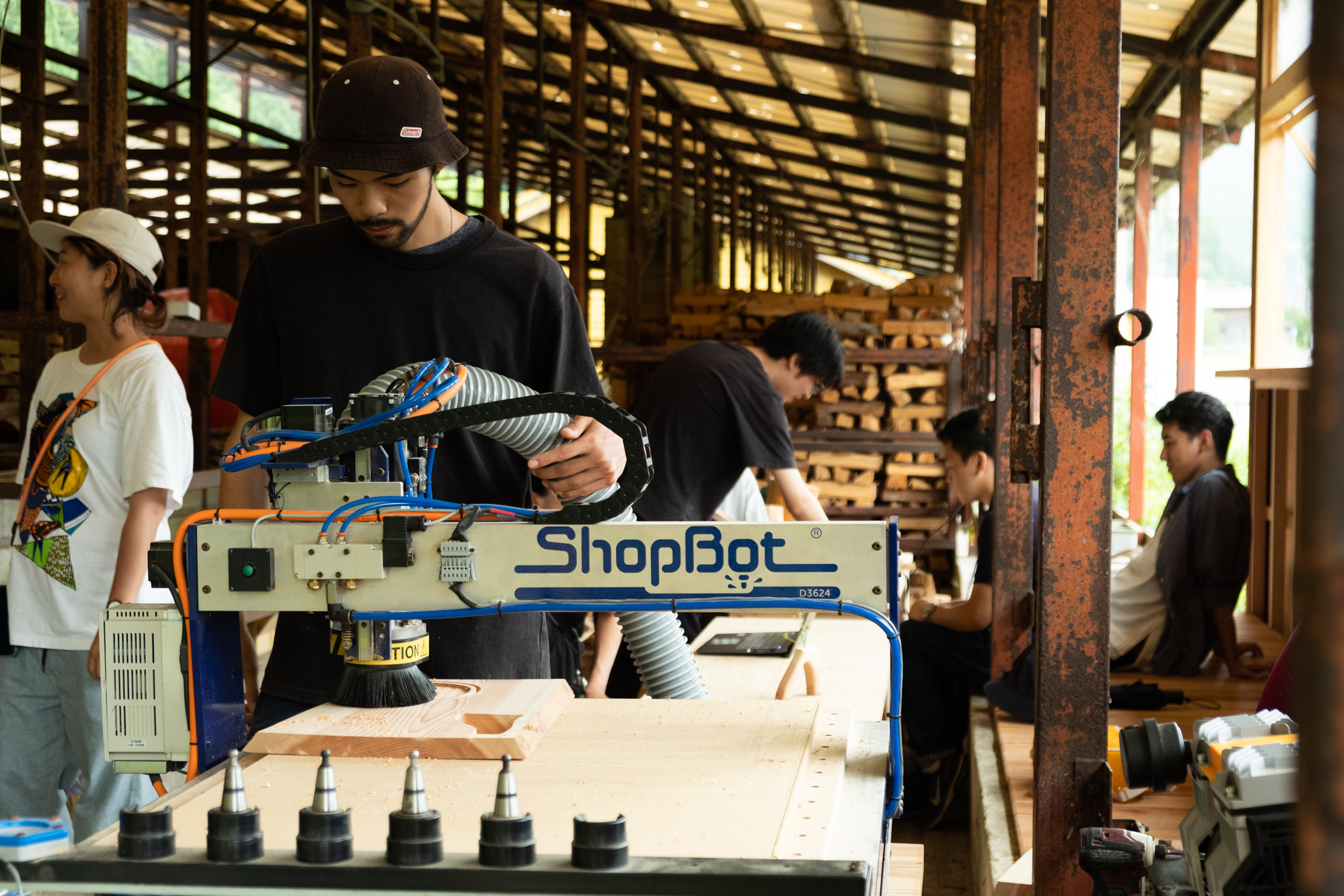
Digital fabrication functions as a shared language, connecting urban and rural contexts while allowing locally adapted creation. This supports new forms of co-creation based on regional resources and knowledge.
Inspired by guilds and commons, ENGO NO SHU proposes a distributed structure in which diverse actors maintain and evolve both resources and culture. Rather than a fixed model, it functions as an adaptable framework that can be reinterpreted across regions, generating new value through human-centered connections.
This project began with a question: can forests be redefined not as resources, but as relationships between people, culture, and ecosystems?
In Japan, forestry has developed through policies prioritizing efficiency and standardized practices, leading to the loss of ecological and cultural diversity and increasingly homogeneous forest landscapes. The sector depends heavily on subsidies, with low incomes and high risks, while population decline and labor shortages are pushing it toward a critical point. Long-term stagnation in timber prices has made it difficult to return value to forest owners and producers, leaving little value within local regions.
If this continues, not only forest biodiversity but also the cultural knowledge that sustains it may be irreversibly lost.
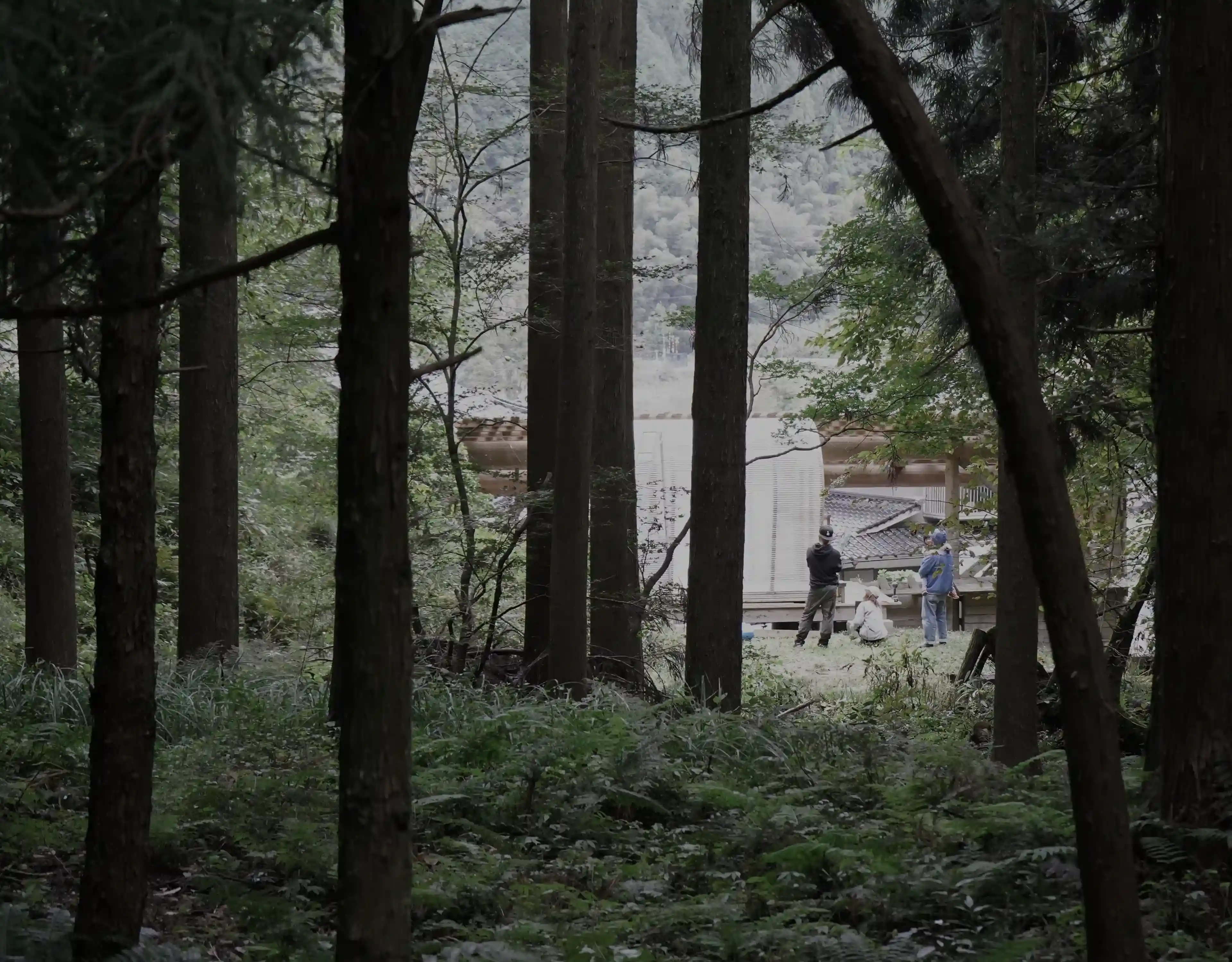
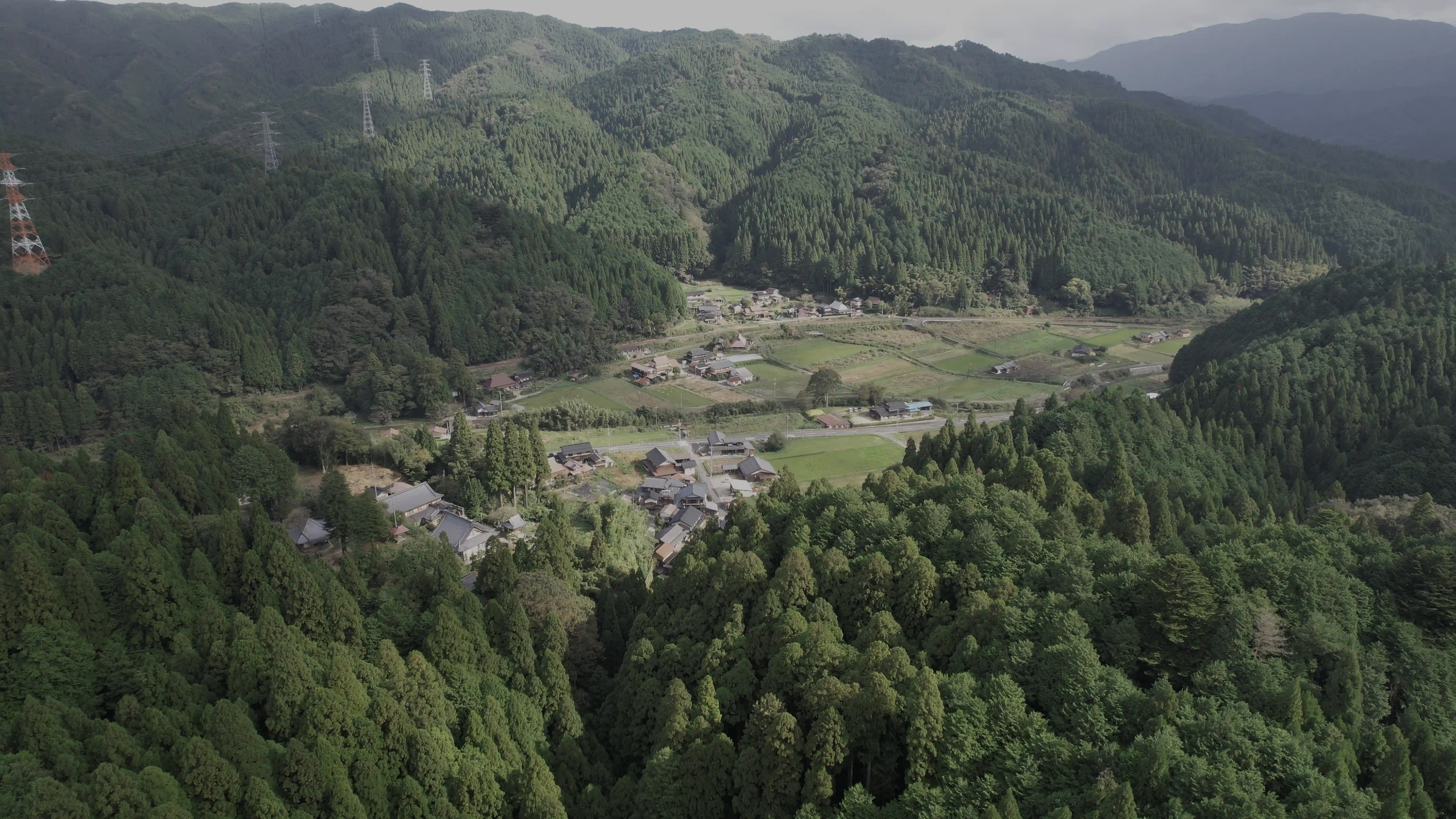
In response, we began exploring a form of forestry that can function at a small scale, working across regions with different forestry cultures. Our field spans two adjacent regions—Nishiawakura (Okayama) and Chizu (Tottori). Although their forests are continuous, they have been divided by administrative boundaries, with no framework for collaboration. We sought to cross this invisible boundary and build relationships that embrace regional differences.
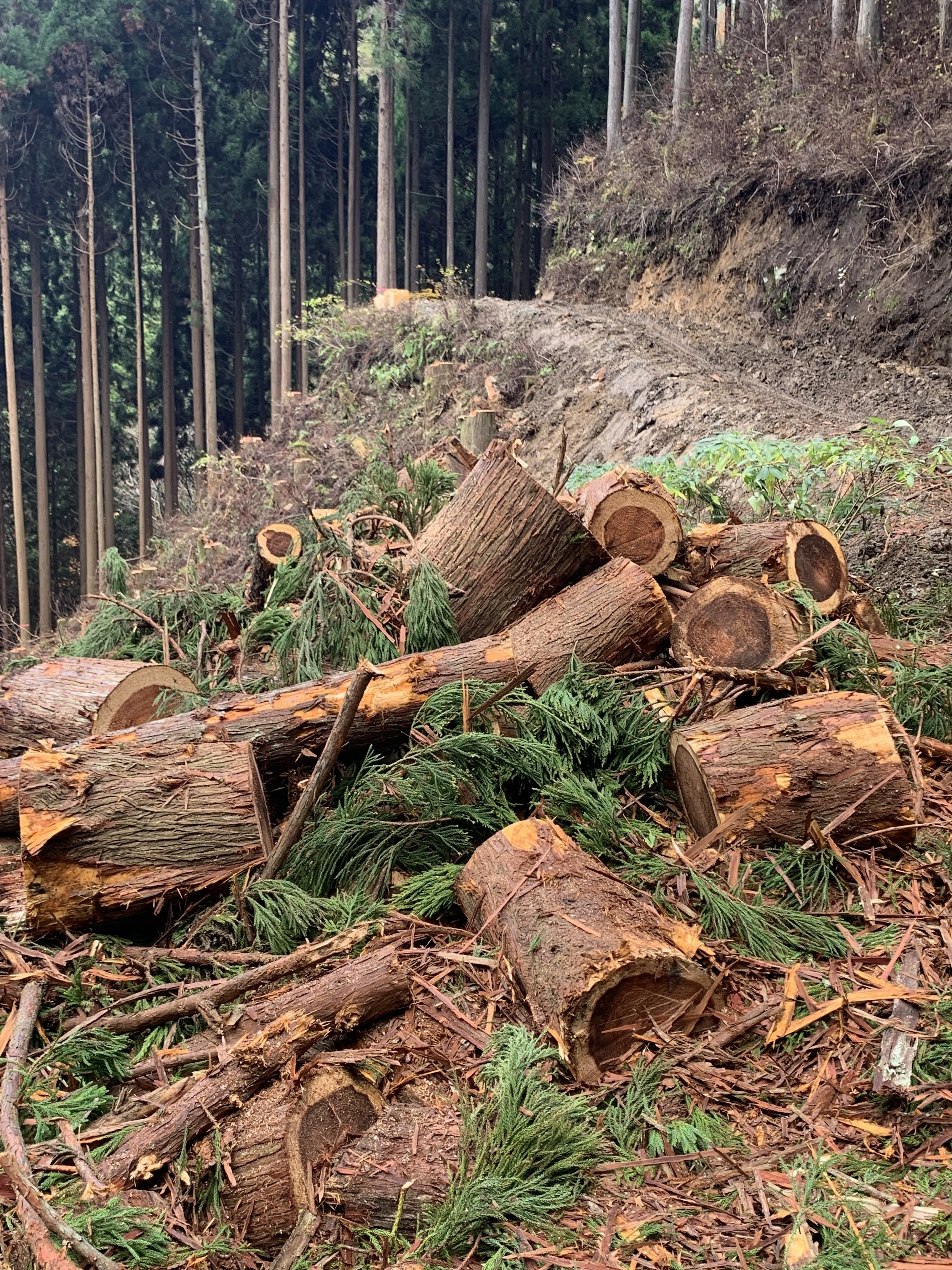
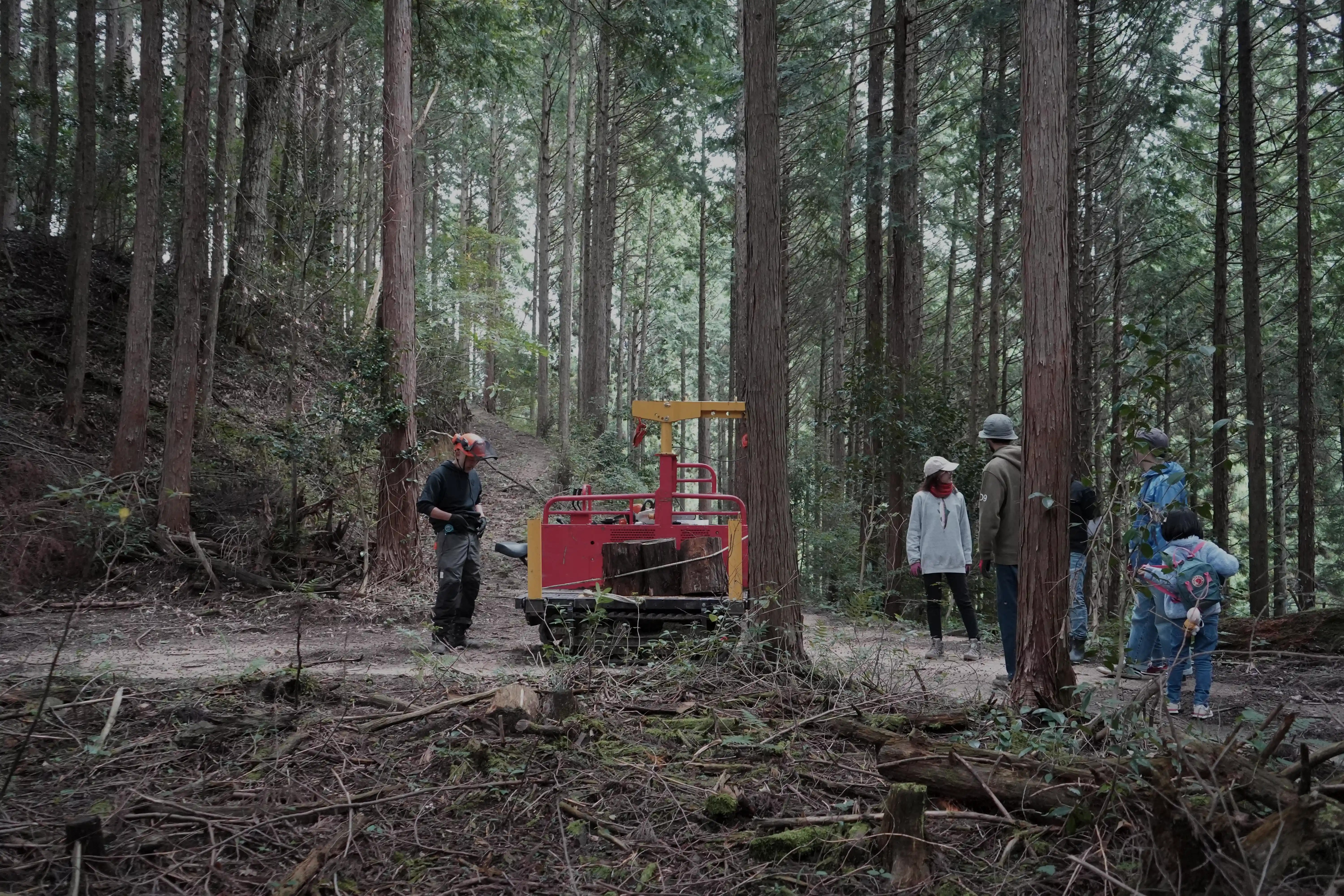
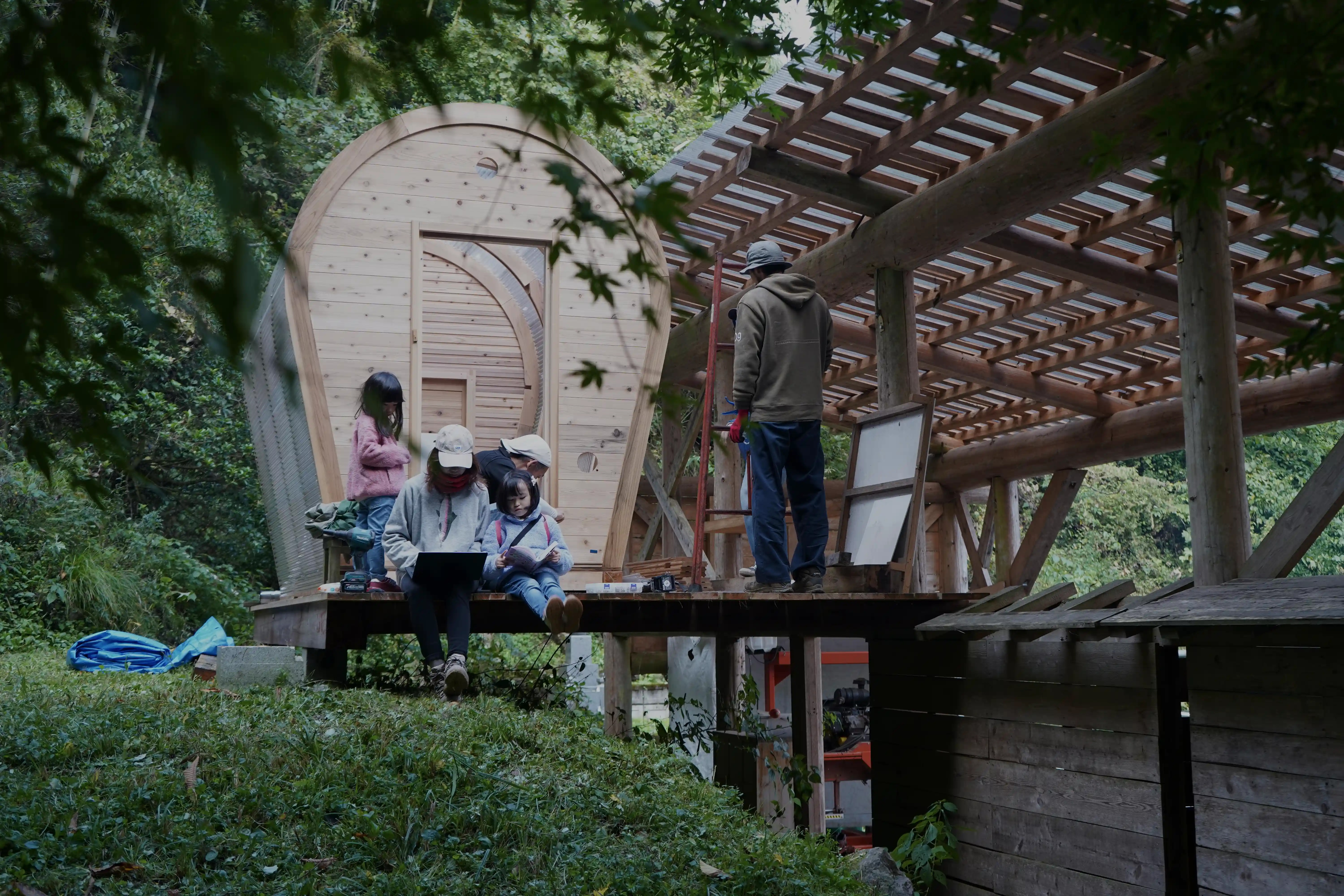
Together with a forester practicing environmentally conscious forestry, we conducted small-scale experiments. By integrating digital fabrication, we identified new uses for undervalued materials such as hardwoods and small-diameter logs, demonstrating the potential to enhance economic, environmental, and cultural value simultaneously.
The initiative expanded to include carpenters, woodworkers, photographers, and producers, forming a distributed, trust-based supply chain across regions. This represents a collaborative model of forestry that does not rely on large-scale capital or infrastructure.
This model is not limited to Japan, but can be applied to forest regions worldwide where local resources and cultural value need to be sustained.
Distributed Collaboration
Local Resource Circulation
Participatory Making
Transdisciplinary Practice
Forest-Based Economy
ENGO NO SHU builds sustainability by restructuring the relationship between forest resources and economic activity, creating a locally rooted circular system.
Conventional forestry has largely depended on large-scale and efficiency-driven supply chains, where timber is distributed across wide markets and much of its economic value flows out of the region. Within this system, it has been difficult for small-scale actors to sustain their involvement.
In contrast, the project integrates design, processing, production, and distribution within the forest region itself, enabling value to remain and circulate locally. This not only strengthens local economies but also supports the accumulation of knowledge, skills, and cultural value within the community.
Furthermore, the forestry sector generally faces structural challenges, including low income levels and a declining workforce. In response, the project adopts a distributed revenue-sharing model, ensuring that value is not concentrated among a limited number of actors but is shared across participants. This enables small-scale practitioners to sustain their involvement over time, supporting the continuity of diverse actors within the system.
In addition, the use of digital fabrication enables small-batch, high-variety production, reducing dependence on mass production. This approach allows forest resources to be utilized more carefully while increasing their overall value.
Through these strategies, ENGO NO SHU establishes a model in which environmental, economic, and social sustainability are integrated, forming a resilient and locally grounded system of forest-based production.
In ENGO NO SHU, beauty is not understood merely as form or visual appearance, but as something that emerges from relationships between people, forests, and processes.
In conventional forestry and timber use, emphasis has often been placed on uniform finishes and products that meet market demands in terms of function and price. In this process, the individuality of materials, their local context, and the people involved tend to become invisible.
In contrast, this project operates through a flat and distributed structure in which design and production processes are open and participatory. As each participant engages with agency, new forms of expression emerge beyond conventional value standards. This enables the creation of unique products that reflect the character of the material and the specificity of place.
Participants themselves describe a shift in perception: rather than feeling the need to produce what is expected or commercially viable, they have begun to explore and realize what they genuinely want to create. They now seek to work together, embracing the individuality of local timber and translating it into new forms of making.
Elements such as knots, irregularities, and imperfections—once seen as defects—are reinterpreted as traces of the tree’s life and environment. Instead of uniformity, variation and nuance are recognized as sources of aesthetic value.
In this way, ENGO NO SHU redefines beauty as something that arises from the interconnectedness of materials, people, and processes.
ENGO NO SHU fosters inclusion by creating a framework in which people with diverse backgrounds and perspectives can participate on equal footing. Rather than being structured by hierarchy, the project operates as a flat and distributed collective, where each participant holds agency and responsibility.
The project also addresses structural barriers within conventional forestry systems. While local forests are abundant, access to these resources has been limited for small-scale carpenters, craftspeople, and urban actors due to standardized and large-scale distribution systems. As a result, meaningful engagement with local timber has often been difficult.
In response, ENGO NO SHU reconfigures the processes of design, production, and distribution to enable broader participation. By introducing digital fabrication as a shared language, local materials and knowledge are translated into accessible processes, allowing diverse actors across regions and disciplines to engage in forestry-related practices.
Unlike conventional material-driven supply chains, the project establishes a relationship-based circulation model. Timber flows not as an anonymous resource, but together with the people, contexts, and processes involved in its transformation. Through this, participants build tangible connections with one another and with the forest.
Through these approaches, ENGO NO SHU redesigns access to forest resources and builds a participatory ecosystem in which diverse actors collaboratively reshape the relationship between forests and society.
ENGO NO SHU establishes a participatory process by designing the project as an open and evolving framework in which diverse actors can continuously engage.
Rather than confining design, production, and distribution within specific experts or organizations, these processes are kept open. At each stage, people with different backgrounds can contribute, enabling a co-creative process rather than fixed roles.
Decision-making is also distributed. Instead of being centralized, it emerges through participants depending on the context, allowing individuals to engage not only as contributors but as active agents shaping the project.
Digital fabrication lowers barriers to participation, enabling even those without expertise to take part in design and production. This creates an environment where a wide range of participants can meaningfully contribute.
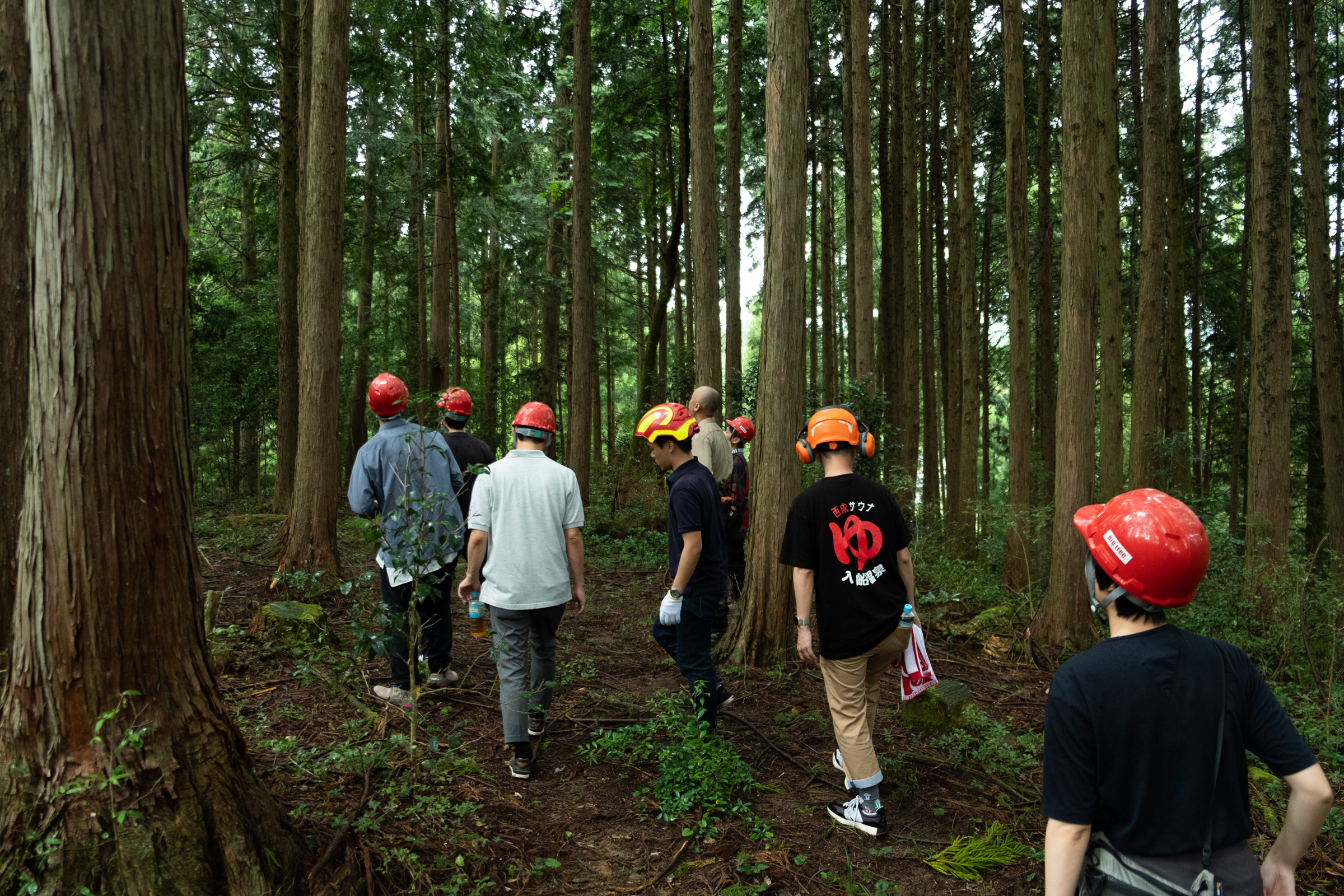
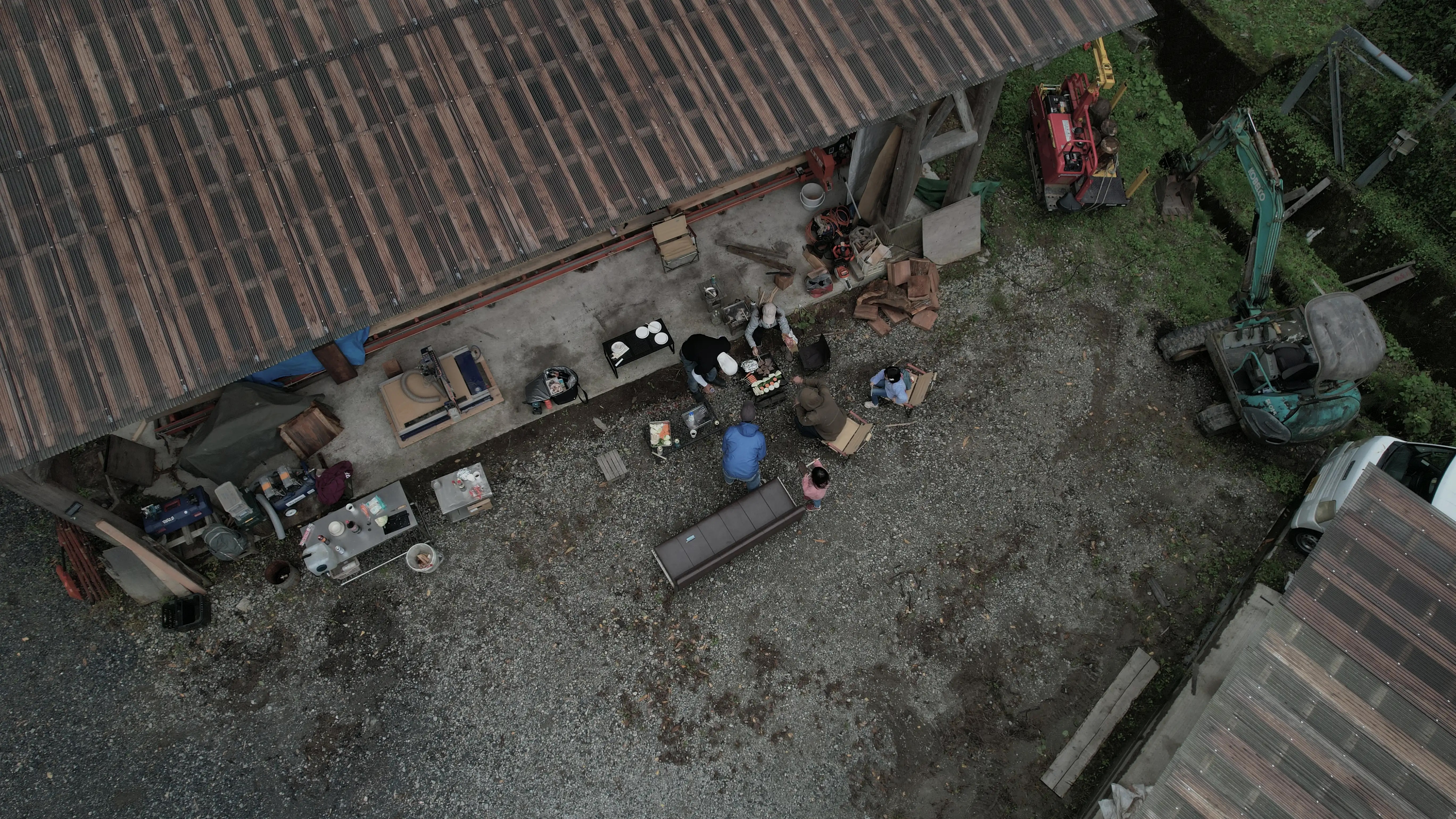
These processes are realized through corporate training programs, where participants engage directly in the full cycle—from forest resources to design and production. In a region where the forestry supply chain is locally concentrated, participants are not observers but actively involved in making.
While many urban initiatives focus on either conservation or timber use, this project enables participants to experience the entire chain as a connected system. By engaging directly with project members, they encounter ways of living and working with forests, sensing the meaning and purpose—often described as “ikigai”—embedded in these practices.
Through this approach, ENGO NO SHU continuously evolves through practice, establishing a deeply engaging and participatory ecosystem.
ENGO NO SHU realizes multilevel engagement by building collaborative relationships that span across regions, disciplines, and generations.
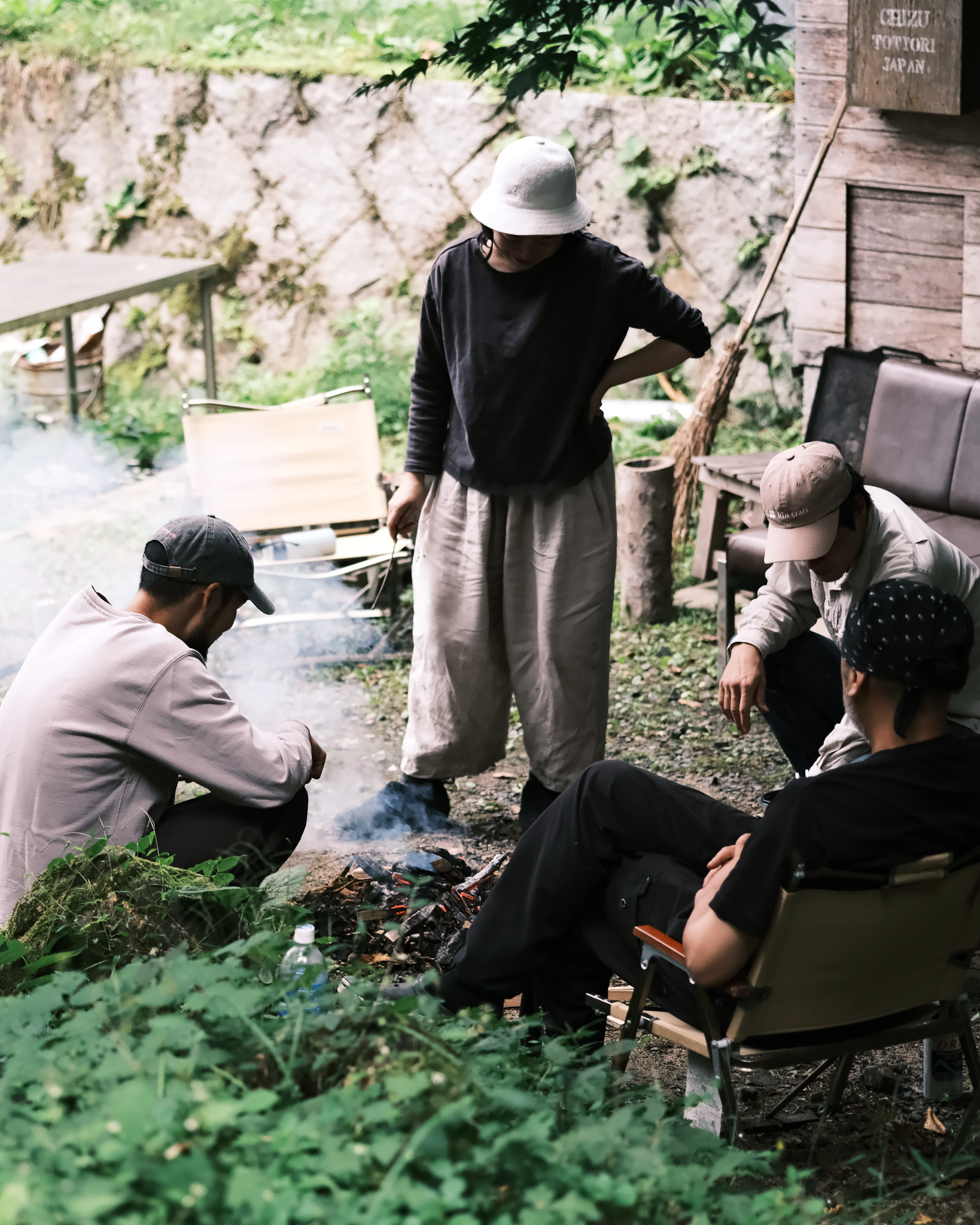
The initiative brings together a wide range of actors, including forestry workers, carpenters, digital fabricators, woodworkers, photographers, and producers. Participants range from their 20s to 50s, and include women in fields where they have traditionally been underrepresented. This diversity is intentionally embedded in the structure, allowing different perspectives to actively shape decision-making and practice.
The project also connects two neighboring regions with distinct forestry cultures—Nishiawakura (Okayama) and Chizu (Tottori)—forming a cross-border collaboration beyond administrative boundaries. Through the exchange of local knowledge and practices, the project does not converge into a single standardized model but instead fosters mutual learning while maintaining regional diversity.
In addition, by integrating digital fabrication, the project connects local forestry practices with urban actors and professionals from different fields. This creates a platform for co-creation that transcends geographic and disciplinary boundaries, enabling new forms of collaboration rooted in both local resources and distributed knowledge.
Through these layered connections—across territory, profession, and generation—ENGO NO SHU establishes an open and collaborative ecosystem in which diverse actors engage and co-create value.
ENGO NO SHU adopts a transdisciplinary approach by integrating knowledge and practices across forestry, craftsmanship, design, and digital fabrication to generate new forms of practice.
The project involves a diverse range of expertise, including forestry workers, carpenters, woodworkers, and digital fabricators. Traditionally, these fields have been organized in a fragmented and specialized manner, with limited opportunities for knowledge exchange.
In this project, however, these differences are not treated as fixed roles but are restructured into relationships of mutual learning. For example, experienced carpenters with traditional skills share their knowledge with younger practitioners, while younger members proficient in digital technologies contribute their expertise in return. Through this, knowledge and skills circulate in a bidirectional manner.
Such interactions go beyond conventional client–contractor relationships typically found in business contexts. Instead, they are formed within a flat and collaborative framework, where different forms of expertise influence and integrate with one another.
Digital fabrication plays a key role as a shared language, enabling collaboration across disciplines. It connects local craftsmanship with contemporary technologies, allowing new approaches to design and making to emerge.
In this way, ENGO NO SHU does not simply combine disciplines but establishes a system in which knowledge continuously circulates, generating new values and practices through integration.
ENGO NO SHU builds a sustainable business model by combining activities rooted in forest resources, including wood-based product development, corporate training, and co-creation projects. These programs engage participants in the full process—from forest use to design and fabrication—offering meaningful experiences for urban professionals.
So far, 43 participants across 6 organizations—including designers, architects, forestry groups, and community practitioners—have formed a transdisciplinary collaboration.
These activities are interconnected, creating a circular system in which product development, training, and relationships continuously generate new value.
To support this system, the project adopts a distributed revenue-sharing model, returning income to individuals and small-scale actors. In contrast to conventional supply chains where forestry receives less than 5% of final value, this model has the potential to double forestry income, with an estimated annual turnover of around €60,000.
Notably, this is achieved through contributions of just one to two days per month per participant, demonstrating a distributed, part-time model.
Rather than relying on conventional employment structures, the project enables flexible, relationship-based collaboration rooted in diverse motivations.
At a small scale (around ten participants), the model shows that alternative economic structures can function without large capital investment while attracting new actors.
Currently implemented across two regions (Nishiawakura and Chizu), it functions not as a fixed model but as an adaptable “operating system” that can be applied in different local contexts.
As a result, ENGO NO SHU enables diverse, place-based practices to emerge, supporting sustainable local economies.
ENGO NO SHU is not limited to a specific region or context, but is characterized by its ability to be adapted and applied across different locations through its underlying principles and structures.
At its core, the project reconfigures the relationship between forest resources, design, production, and distribution, supported by a flat and distributed network of collaboration. These elements are not site-specific, but can be reinterpreted according to the resources, cultures, and conditions of each region.
This approach is applicable not only within Japan but also globally, particularly in regions with forest resources and a growing need for locally rooted, sustainable economic systems. The emphasis on small-scale, decentralized production and local value circulation responds to widely shared global challenges.
The use of digital fabrication as a shared language provides a technical foundation for collaboration across different contexts, enabling similar processes to be implemented elsewhere.
Importantly, the project is not designed as a fixed model to be replicated. Instead, it functions as an adaptable framework that evolves autonomously in each community. It can be initiated at a small scale (around ten participants per unit), making it highly replicable. In Japan alone, there are approximately 1,000 rural and mountainous municipalities, each representing a potential context where this model could be applied. As these small units emerge and adapt locally, the model can expand organically across diverse regions.
In this way, ENGO NO SHU operates as an open and transferable model, where methodologies, relationships, and processes are continuously reinterpreted, enabling diverse, locally rooted practices to emerge across regions and contexts.