Enhancing Circularity, Sustainability, and Innovation
Paraisópolis' Seeds of Change
Paraisópolis' Socio-Environmental Outreach Hub - Seeds of Change
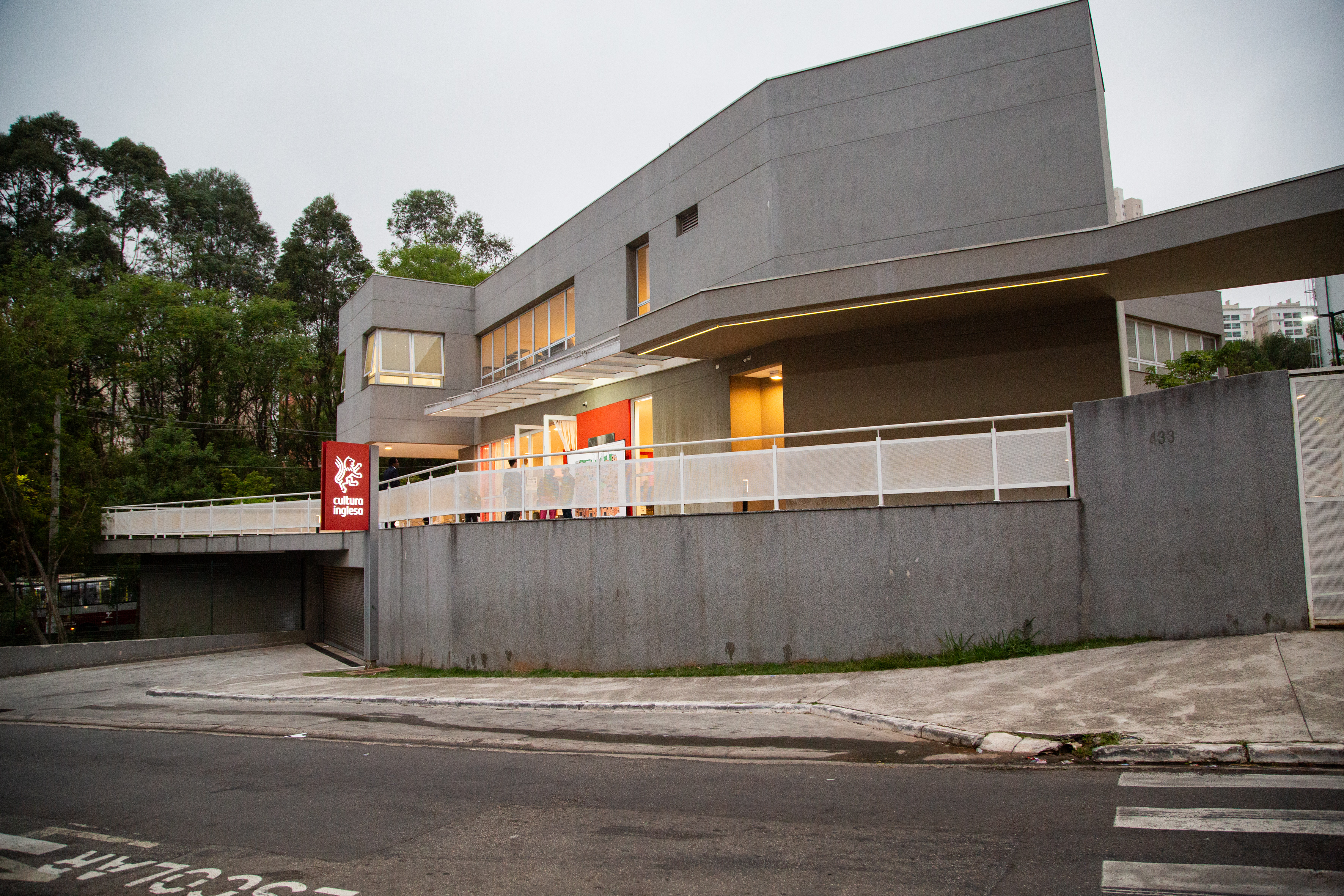
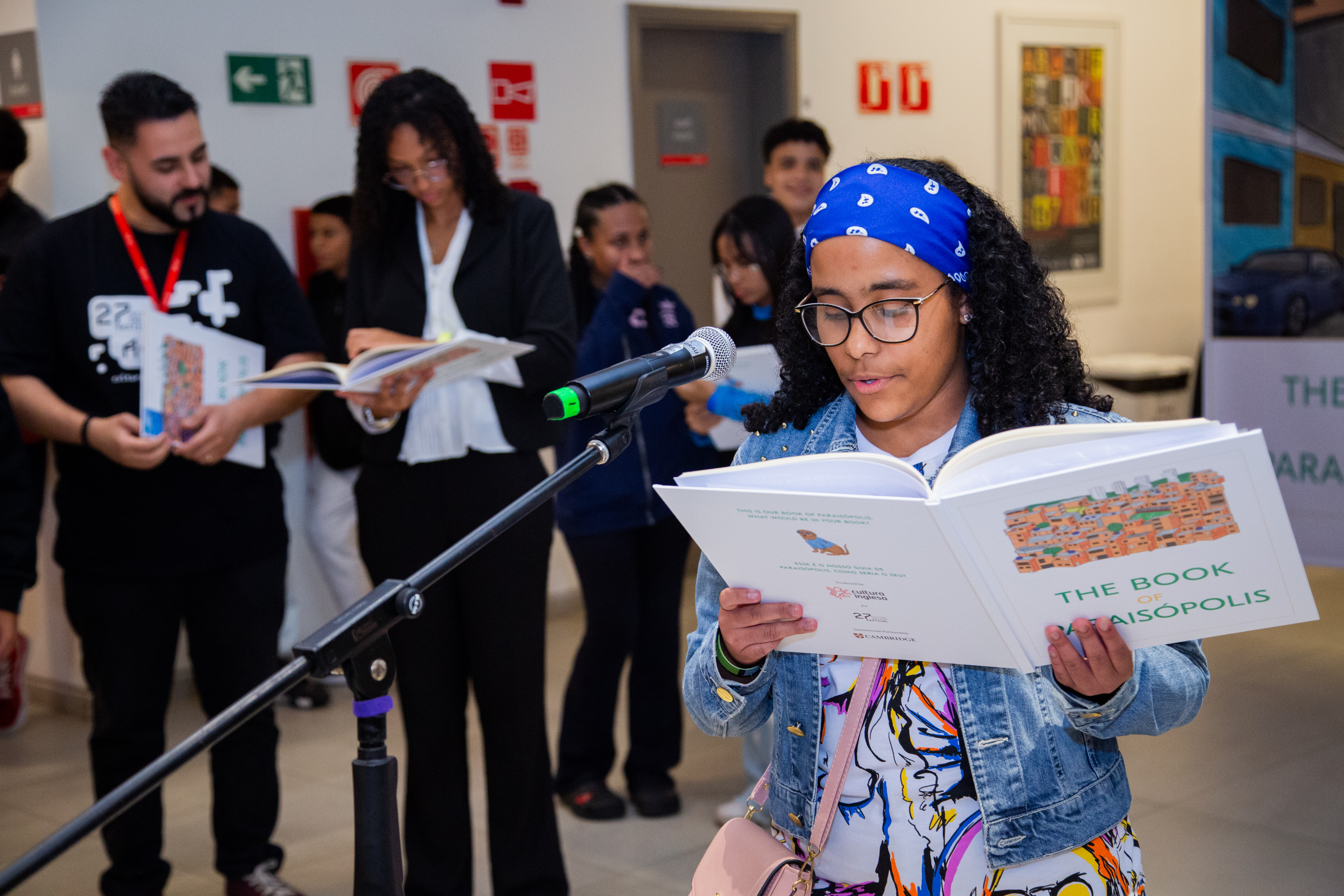
Located in the heart of the Paraisópolis community, our 100% free socio-environmental hub transforms lives through high-quality English education and art. By empowering 800 students and local leaders, we turn local talent into global voices. From Basquiat-inspired murals to urban gardens, we bridge the gap between local identity and global opportunity
Brazil
Local
São Paulo, SP, Brazil
Mainly urban
It involves other types of transformations (soft investment)
Yes
2019-03-19
No
No
No
Organisation
Cultura Inglesa Paraisópolis is a 100% social-impact educational unit located in one of Latin America’s largest urban communities. Operating as a "living laboratory," the project integrates high-quality English language education with art, culture, and sustainability to empower residents and foster social inclusion.Achieved Results (2020–2025)The project has successfully transitioned from a traditional language school into a robust socio-environmental hub. Key milestones include:Educational Access: Currently providing full scholarships to 800 students, including children, youth, and adults, with all learning materials provided free of charge.Leadership Development: A dedicated program for 60 community leaders, selected through open calls to strengthen those already engaged in local social or cultural initiatives.Cultural Identity: Integration of peripheral art into the school’s DNA, highlighted by Basquiat-inspired murals created by local artist Moises Sousa.Environmental Coexistence: Implementation of sustainable daily practices, such as the use of resident guinea fowl for natural pest control, promoting ecological balance within an urban setting.Resilience: Maintained educational continuity for 1,000 students during the 2020-2021 pandemic through digital adaptation and humanitarian support.Long-Term ImpactThe project aims to transform peripheral territories from areas defined by challenges into hubs of global innovation. Long-term impacts include:Global Connectivity: Using English as a tool to amplify local voices, connecting community leaders to international networks and debates.Sustainability Leadership: Future expansion through the "Paraisópolis Living Garden," an educational community garden focusing on hydroponics and food security.Systemic Change: Creating a replicable model that proves how integrating education and sustainability can drive collective urban transformation.
The project began as a transformative mission by Cultura Inglesa to bridge the educational gap in one of Latin America’s largest urban communities. Established in 2004, the Paraisópolis unit was conceived not just as a school, but as a socio-environmental educational hub designed to offer 100% free, high-quality English language instruction to a territory often defined by social challenges. The core belief driving the project is that peripheral territories are fertile ground for innovation, creativity, and collective solutions.Implementation on the Ground
Implementation was achieved through a "living laboratory" model that integrates education with the daily reality of the community. Key steps included:Community Integration: Rather than operating in isolation, the unit built a dense network of partnerships with local organisations like the União dos Moradores de Paraisópolis and G10 Favelas to ensure the project remained rooted in local needs.Broadening Access: The school scaled its operations to support 800 to 1,000 scholarship students annually, providing not only tuition but all necessary didactic books free of charge.Empowering Leadership: A strategic shift was made to select 60 community leaders for specialized training, recognizing that providing them with English skills amplifies the reach of existing local social and cultural initiatives.Physical and Cultural Transformation: The school space was physically transformed to reflect the community’s identity. This included the installation of Basquiat-inspired murals by local artist Moises Sousa and the introduction of guinea fowl in the gardens for natural pest control, blending urban agriculture with ecological balance.Today, the project stands as a consolidated model of how a school can function as a center for social inclusion and sustainable coexistence, connecting local talent to global opportunities
Implementation was achieved through a "living laboratory" model that integrates education with the daily reality of the community. Key steps included:Community Integration: Rather than operating in isolation, the unit built a dense network of partnerships with local organisations like the União dos Moradores de Paraisópolis and G10 Favelas to ensure the project remained rooted in local needs.Broadening Access: The school scaled its operations to support 800 to 1,000 scholarship students annually, providing not only tuition but all necessary didactic books free of charge.Empowering Leadership: A strategic shift was made to select 60 community leaders for specialized training, recognizing that providing them with English skills amplifies the reach of existing local social and cultural initiatives.Physical and Cultural Transformation: The school space was physically transformed to reflect the community’s identity. This included the installation of Basquiat-inspired murals by local artist Moises Sousa and the introduction of guinea fowl in the gardens for natural pest control, blending urban agriculture with ecological balance.Today, the project stands as a consolidated model of how a school can function as a center for social inclusion and sustainable coexistence, connecting local talent to global opportunities
Socio-environmental Education
Social Inclusion
Community Empowerment
Peripheral Arts & Aesthetics
Nature-based Solutions
Cultura Inglesa Paraisópolis addresses the environmental and social challenges of high-density urban territories by functioning as a "living laboratory".Environmental Coexistence: The project implements nature-based solutions, such as the resident guinea fowl that provide natural pest control for insects and venomous animals, promoting ecological balance without chemical intervention.Social & Economic Opportunity: We provide 100% free high-quality education and materials to 800–1,000 scholarship students annually, removing financial barriers to long-term social mobility.Cultural Sustainability: The unit counters the marginalisation of peripheral art by integrating local identity into the architecture through Basquiat-inspired murals created by community artists.Resilient Infrastructure: During the 2020–2021 pandemic, the unit sustained its community through digital adaptation and humanitarian support, proving the longevity of its social impact.An Exemplary Model of SustainabilityThe project is exemplary because it moves beyond traditional schooling to create a participatory ecosystem of care.Circular Community Care: The planned "Paraisópolis Living Garden" will involve students' mothers in co-managing hydroponic systems, directly addressing food security and urban agriculture in vulnerable contexts.Empowering Local Leadership: By training 60 community leaders, we ensure that local social and environmental causes gain the global visibility and networking power needed for systemic change.Scalability: The model demonstrates how peripheral territories can be transformed from areas of "social challenges" into hubs of "innovation and collective solutions"
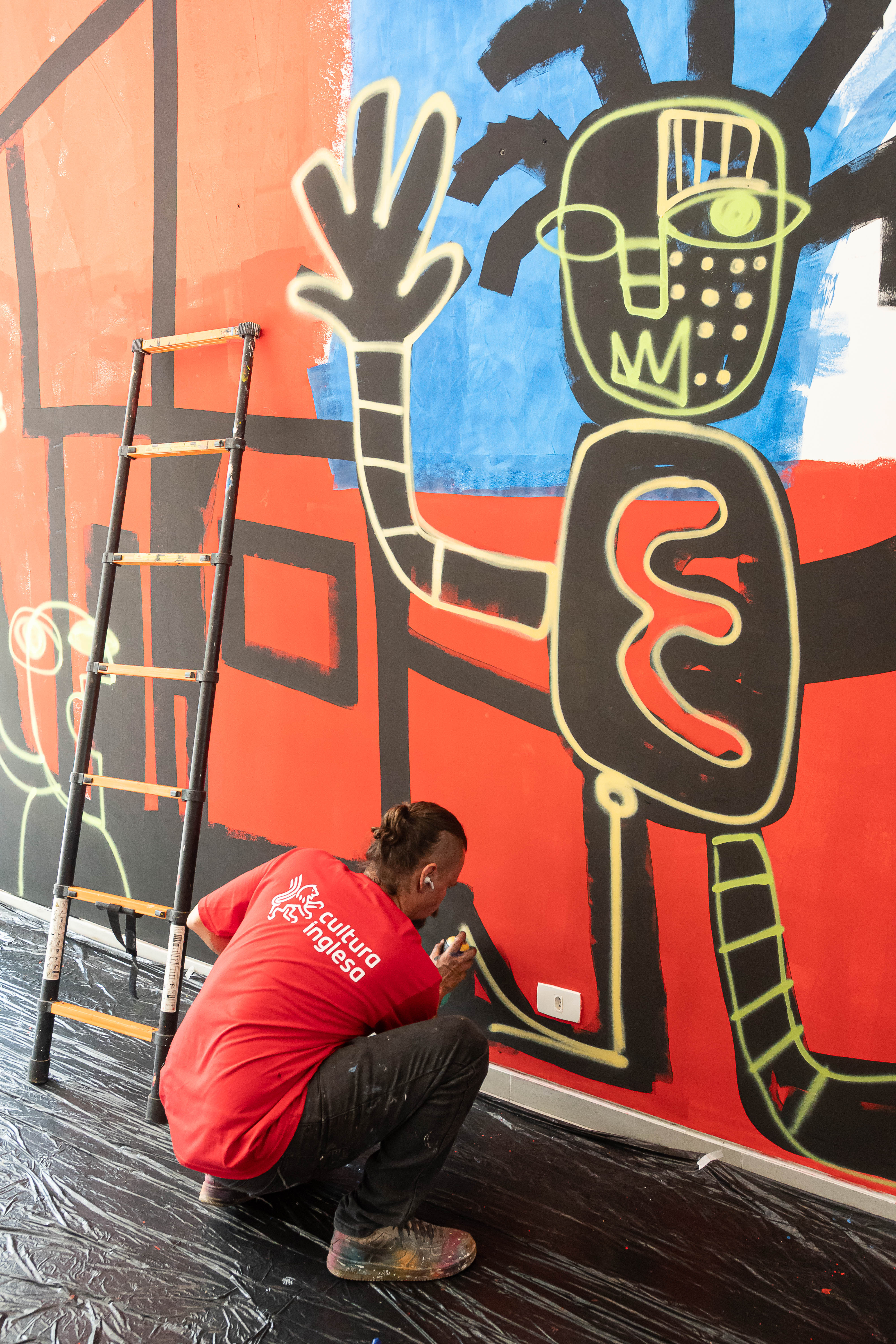
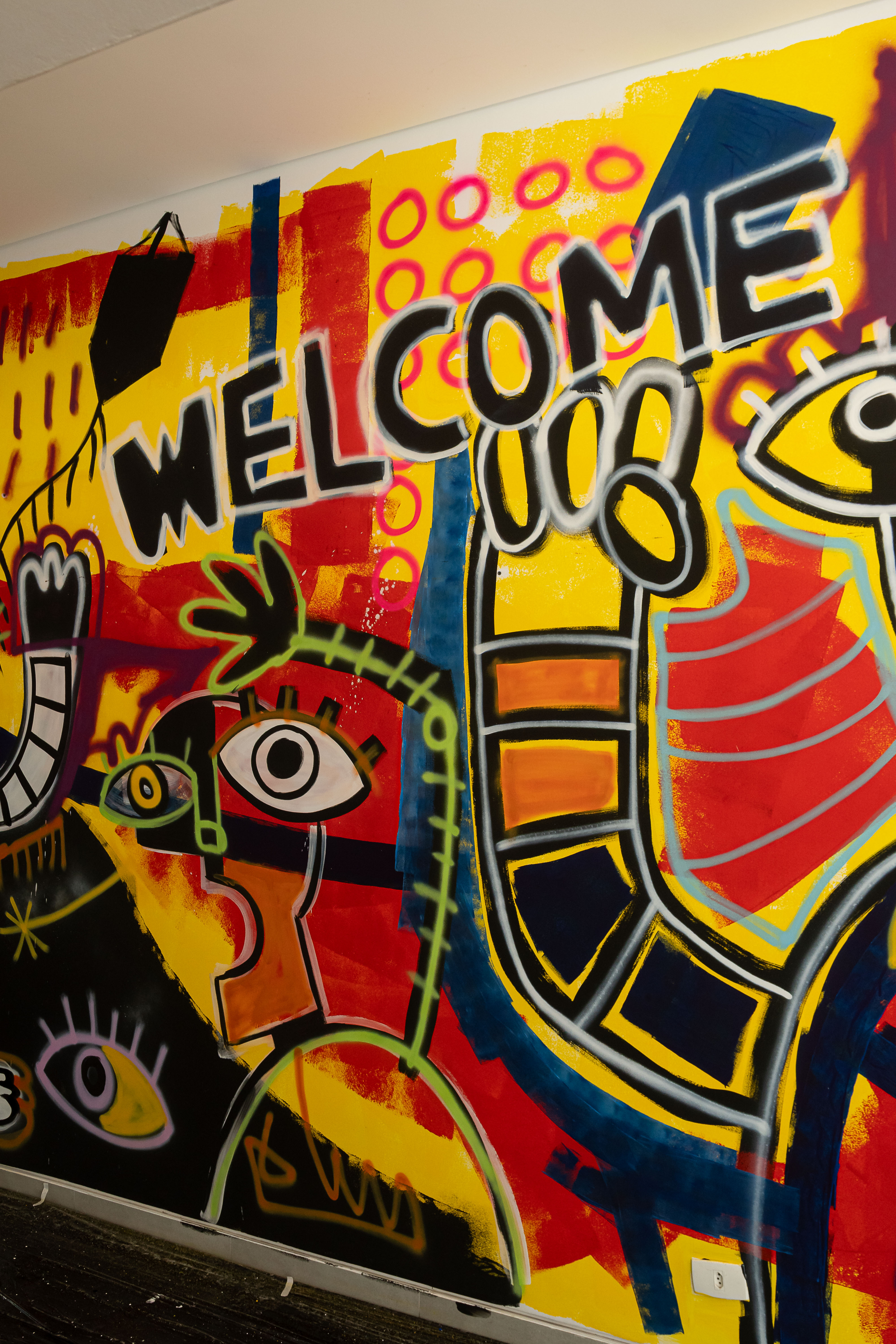
Transforming the Everyday: The school space is integrated with large-scale graffiti murals created by local artist Moises Sousa. These Basquiat-inspired works transform a functional educational building into a vibrant landmark that reflects the community’s own creative voice.Coexistence with Nature: Beauty is also found in the sustainable daily life of the unit, where the presence of resident guinea fowl and green spaces promotes a harmonious relationship between nature and the urban environment.Fostering Care and Belonging: By using the school as a "community gallery," the project encourages residents and students to see their own territory as a space of art and memory. This visibility strengthens the emotional bond between the people and their neighbourhood, turning the unit into a symbol of local pride.An Exemplary Model of AestheticsThe project is considered exemplary because it affirms that peripheral aesthetics are a fundamental part of contemporary culture.Art as a Living Laboratory: Rather than bringing in outside art, the unit functions as a platform for local artists to showcase their work, facilitating encounters between creators and students.Long-term Cultural Impact: The project aims to consolidate the school as a permanent environment for cultural circulation, ensuring that the valuing of "peripheral art" is not a one-off event but a core part of the community’s long-term identity.Inclusive Aesthetics: It proves that a "beautiful" place is one that is inclusive and participatory, where the physical environment from the murals to the future community garden is co-created and cared for by those who live there.
Radical Affordability: The unit provides 100% free English language education, including all didactic books and materials, to approximately 800 to 1,000 scholarship students annually.
Targeted Social Groups: Accessibility is extended to children, young people, and adults from the local community, ensuring that age is not a barrier to learning.
Empowering Leadership: Inclusion is operationalised by selecting 60 community leaders through open calls, providing them with the linguistic tools to connect local social and cultural initiatives with international networks.
Digital and Humanitarian Inclusion: During the 2020-2021 pandemic, the project addressed the "digital divide" by adapting to online classes and providing essential humanitarian support to families in the territory.
Inclusive Governance and Societal Models
The project promotes a "togetherness" model that decentralises influence and fosters collective care.
Collaborative Ecosystem: The unit maintains an active network of over 10 partner organisations, including the União dos Moradores de Paraisópolis and G10 Favelas, ensuring governance is rooted in the community’s actual needs.
Design for All: The school is a "living laboratory" where the physical environment—featuring local art and sustainable practices—is co-created to foster a sense of belonging.
Participatory Sustainability: The "Paraisópolis Living Garden" specifically involves students' mothers in the management of the space, promoting a new societal model of urban agriculture and food security.
An Exemplary Model of Inclusion
The project is exemplary because it treats the "periphery" as a territory of innovation rather than deficit. It demonstrates that by removing financial barriers and integrating local leadership, a school can become a powerful engine for social cohesion and global visibility
The project is rooted in a "networked impact" model, where the community is not merely a beneficiary but a co-creator of the school’s daily life and strategic direction.
Direct Involvement of Local Organizations: We maintain active partnerships with over 10 civil society organisations, including the União dos Moradores de Paraisópolis, G10 Favelas, and the Anglican Institute. These partners act as bridges, ensuring our educational offerings align with the real socio-economic needs of the territory.
Co-design and Open Governance: Since 2025, we replaced traditional waiting lists with public calls (editais). This transparent process was designed to listen to the territory, using criteria that prioritize local belonging (via CadÚnico) and support those already engaged in social or cultural leadership.
Role of Community Leaders: 60 leaders are selected biannually not just as students, but as key stakeholders. Their role is to bring international communication skills back to their local grassroots projects, effectively "globalizing" Paraisópolis from the inside out.
Impact of Community Involvement
The high level of participation has directly shaped the project’s evolution:
Cultural Validation: The decision to integrate Basquiat-inspired graffiti murals was a result of valuing local artistic talent (artist Moises Sousa), ensuring the building is a physical reflection of the neighbourhood’s identity.
Collective Management: The Paraisópolis Living Garden project is designed for participatory management, involving students’ mothers in urban agriculture. This shifts the project from a "school" to a "community hub" for food security and environmental education.
High Satisfaction and Trust: The involvement of the community is reflected in an NPS (Net Promoter Score) of 91, showing that the project is recognized as an authentic and trusted asset by those it serves.
Local Level (Deep Integration): This is the core of our governance. We work in daily collaboration with over 10 local civil society organisations, such as the União dos Moradores de Paraisópolis and G10 Favelas. These stakeholders are active partners in identifying students, co-designing educational access through public calls (editais), and providing the territorial intelligence necessary to adapt our "living laboratory" to the community’s reality.
Regional/State Level (Institutional Alignment): We align our socio-environmental indicators with regional development goals. By requiring the CadÚnico (the Federal/State registry for social programmes) for enrolments, we integrate our project into the official regional safety net, ensuring that our 1,000 annual scholarships reach those most in need of public policy support.
National Level (Data and Policy): The project utilises national tools, such as the Federal Government’s Mapa das Periferias, to guide its territorial expansion and impact mapping. This ensures that our local actions are informed by national data on urban vulnerability and innovation potential.
International Level (Global Networks): Through the "Seeds of Change" framework, we connect local leaders to international debates. By providing English language tools to 60 community leaders, we enable them to participate in global forums, effectively bridging the gap between peripheral innovation and international sustainability networks.
Added Value of Engagement
The primary added value of this multilevel approach is legitimacy and scalability. Local engagement ensures an NPS of 91, reflecting high community trust. Meanwhile, alignment with regional and national frameworks provides the structural rigour (via systems like Bússola Social) needed to transform a local school into a replicable global model for socio-environmental urban transformation.
Education & Pedagogy: The core of the project is high-quality English language instruction. However, this is delivered through a social-interest lens, providing 1,000 annual scholarships and focusing on "expanding opportunities" rather than just language acquisition.
Arts & Humanities: The project treats art as a tool for territorial identity. By collaborating with local artists like Moises Sousa to create Basquiat-inspired murals, we integrate contemporary art and aesthetics into the physical learning environment, validating peripheral culture as a global artistic contribution.
Environmental Sciences & Ecology: The unit applies nature-based solutions to urban management. The use of guinea fowl for biological pest control and the planned Paraisópolis Living Garden (focusing on hydroponics and urban agriculture) demonstrate the practical application of ecological knowledge in a high-density urban context.
Social Sciences & Community Development: The project uses territorial intelligence to map vulnerabilities and leadership. Through the Bússola Social system and the Federal Government’s Mapa das Periferias, we apply sociological data to refine our Individual Development Plans (IDPs) and ensure our social impact is measurable and networked.
Digital Technologies: Implementation includes digital literacy and the use of management platforms to track the trajectories of 800+ students, ensuring transparency and data-driven governance in a complex social ecosystem.
Added Value of the Transdisciplinary Model
The integration of these fields allows the project to move beyond a "language school" model. The synergy between Art, Education, and Sustainability creates a holistic environment where students don’t just learn a new language; they learn to see their community as a space of innovation. This approach ensures that the "Seeds of Change" are planted across multiple dimensions of the students' lives, fostering a fairer and more sustainable future
As a not-for-profit organisation, the institution operates a cross-subsidisation model that ensures the long-term financial sustainability of the Paraisópolis unit.
Revenue Generation & Reinvestment: The primary source of sustainability comes from the sale of English language courses to regular students across Cultura Inglesa’s wider network. 100% of the surplus generated from these commercial activities is reinvested into social impact initiatives. This means the Paraisópolis unit does not depend on erratic external funding; it is sustained by the institution’s core business.
100% Social Unit: This model allows the Paraisópolis unit to operate as a completely free centre for the community. We provide 1,000 annual scholarships, including all high-quality didactic materials and international certification opportunities, at zero cost to the local residents.
Institutional Stability: Because the project is backed by a consolidated, decades-old educational institution, it possesses a high level of financial resilience. This was evidenced during the 2020-2021 pandemic, where the unit maintained its full operations, staff, and student support despite global economic instability.
Strategic Partnerships: While the core operation is self-sustained, the project leverages a network of over 10 local partners (such as G10 Favelas and Instituto Anglicano) to optimise resources, share territorial intelligence, and increase the reach of our public calls (editais).
Long-Term Financial Viability
Our project is exemplary in its financial sustainability because it does not rely on traditional donations or short-term grants. Instead, it is integrated into a circular economic model where the educational market serves as the engine for social equity. By turning commercial revenue into "Seeds of Change" in Paraisópolis, we ensure that the unit remains a permanent, reliable, and evolving fixture in the territory’s landscape.
The "Social Hub" Methodology: The shift from a traditional language school to a socio-environmental unit is a replicable framework. This involves integrating core educational services (like English) with local arts, nature-based solutions (e.g., the guinea fowl pest control), and community leadership training.
Targeted Leadership Enrolment: The process of allocating specific scholarship quotas (60 slots) for community leaders is a tool that can be exported to any social project. It ensures that the educational impact is multiplied as these leaders apply their new skills to their own grassroots organisations.
Transparent Access Processes: The transition from passive waiting lists to active Public Calls (Editais), supported by the CadÚnico (social registry) and the Federal Government’s Mapa das Periferias, provides a data-driven process for ensuring resources reach the most vulnerable in a transparent and fair manner.
Cross-Subsidisation Business Model: The financial structure—where a non-profit’s commercial revenue from a wider network is 100% reinvested into a specific social territory—offers a sustainable alternative to the "grant-seeking" model common in the third sector.
The "Living Laboratory" Tool: The use of the physical space as a community gallery and urban agriculture site (the Living Garden) can be replicated in any high-density area to foster a sense of belonging and "place-based" care.
Contextual Adaptability
What makes this project scalable is its reliance on territorial intelligence. While the specific art (Basquiat-inspired murals) or the specific bird (guinea fowl) are local choices, the process of identifying local talent and local environmental solutions is a universal method. This model proves that "peripheries" globally can be transformed into hubs of innovation when provided with the right institutional bridge