Living Square Modigliana
Living Square Modigliana. Reactivation of public space as transitional cultural infrastructure
Modigliana, recovering from the May 2023 floods, is working towards the regeneration of historic landmarks (Pretorio Palace and Square) and public amenities (Municipal Library funded by NextGenerationEU). The proposal extends these objectives into public space through small, mobile and transformable pavilions of wood and fabric. These provide a one-stop-shop for transparent communication on post-flood reconstruction and the city’s cultural life, fostering new ways of gathering in public spaces.
Italy
Piazza Pretorio 47015, Modigliana (FC) Italy
Early initiative
Yes
Yes
Yes
No
No
40022: Modigliana (IT)
“Living Square Modigliana” is a people-centered initiative aimed at rebuilding social networks post-disaster following the May 2023 floods. It introduces lightweight, movable pavilions that becomes the accessible and visible centre for dissemination regarding the local and regional recovery efforts, and cultural initiatives. The project involves citizens, local institutions, regional authorities, civil protection, and researchers. Specific objectives are: i) create a one-stop-shop for accessible information on the urban renovation of Piazza Pretorio and the Civic Pinacoteca and on the recovery and preparedness strategies after the 2023–2024 flood events, maintaining public awareness over time; ii) host bottom-up activities to co-create and implement a cultural program, that returns Piazza Pretorio to public use, while strengthening connections with the Civic Pinacoteca (piazza Pretorio) and Municipal Library (piazza Garibaldi).
Outcomes:
1. Community Engagement & Info-Point: A physical info-point in Piazza Pretorio will serve as a direct communication hub between citizens, municipal representatives, and experts, counteracting the fragmentation of discussions on social media on post-flood reconstruction.
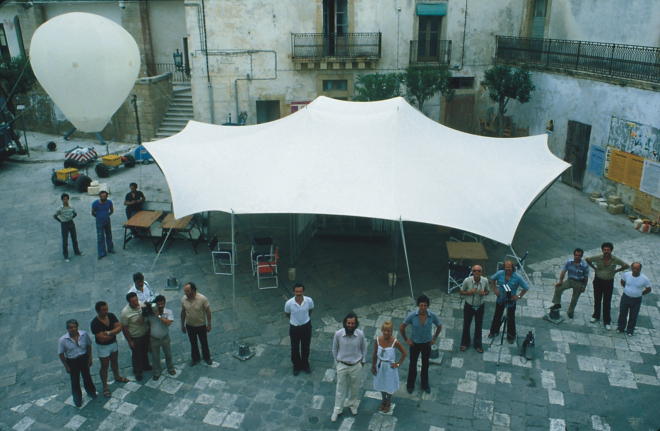
2. Public Meetings & Knowledge Exchange: workshops and discussions, inspired by the Otranto Historic Center Reconstruction Workshop (Renzo Piano, 1979), facilitate co-creation of a cultural program.
3. Scalability & Replication: Mobile pavilions will be adaptable to other flood-affected areas, like Tredozio and Faenza.
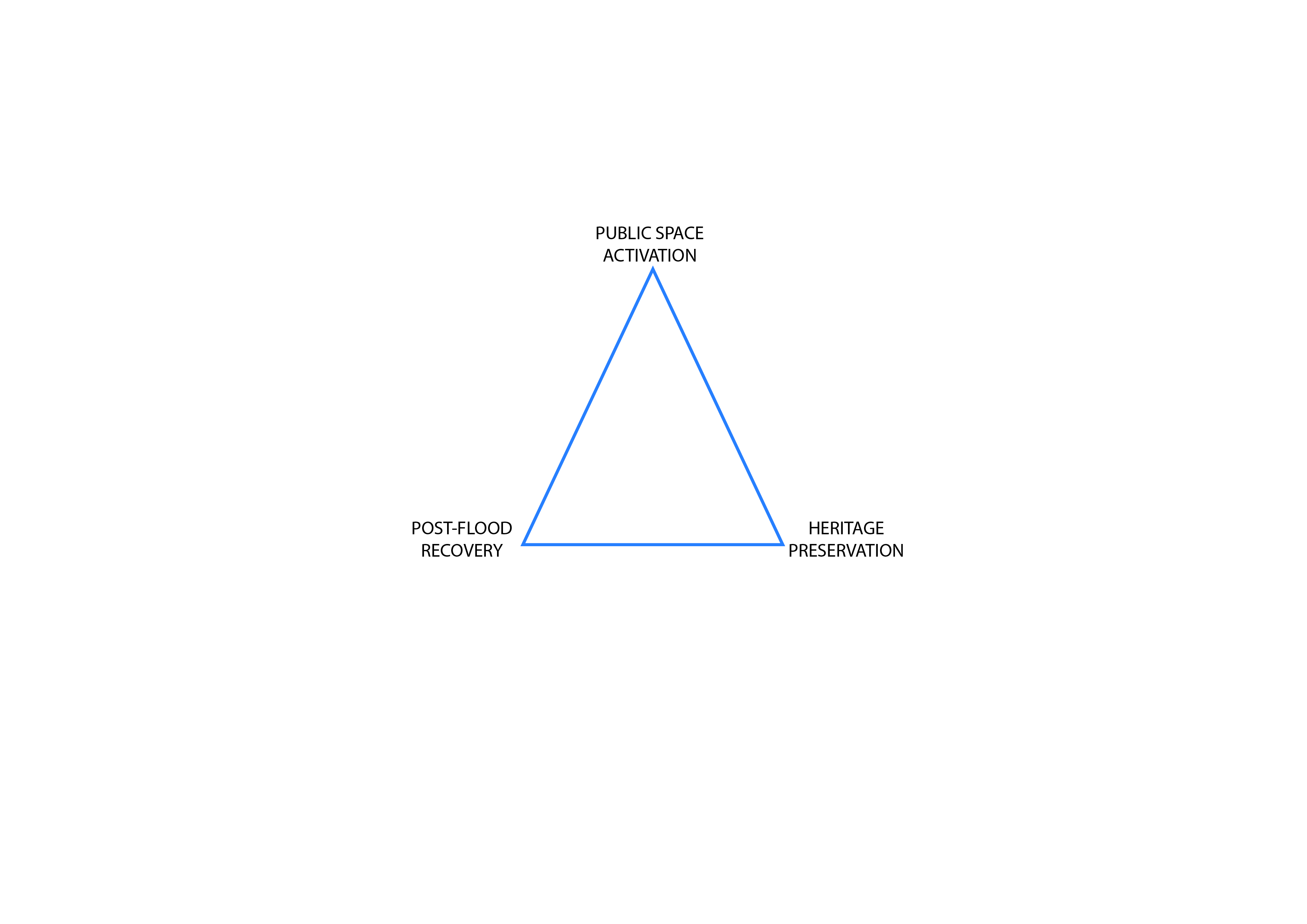
4. Sustainability & Cultural Heritage: the pavilions will be theatre of public activation of Piazza Pretorio, by merging flood prevention and recovery, and heritage preservation.
5. Social Infrastructure Continuity: while the Pinacoteca and the Library are under renovation, the pavilions host exhibitions, readings, and talks. As an outdoor extension, they ensure continuity of cultural services and expand accessibility into public space.
1. Revitalisation of public spaces
2. Collective city
3. Disaster awareness
4. Cultural heritage
5. Transparent communication
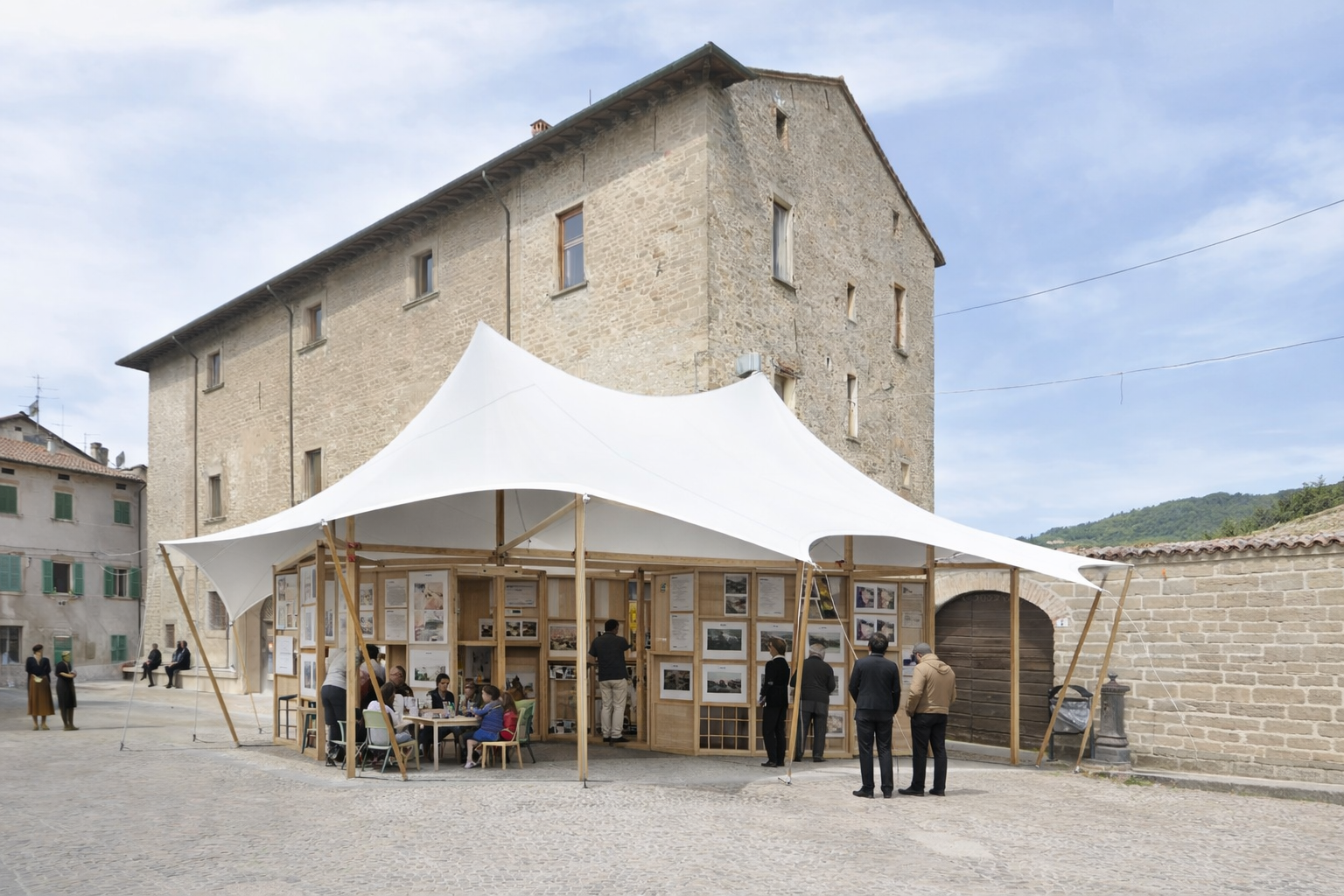
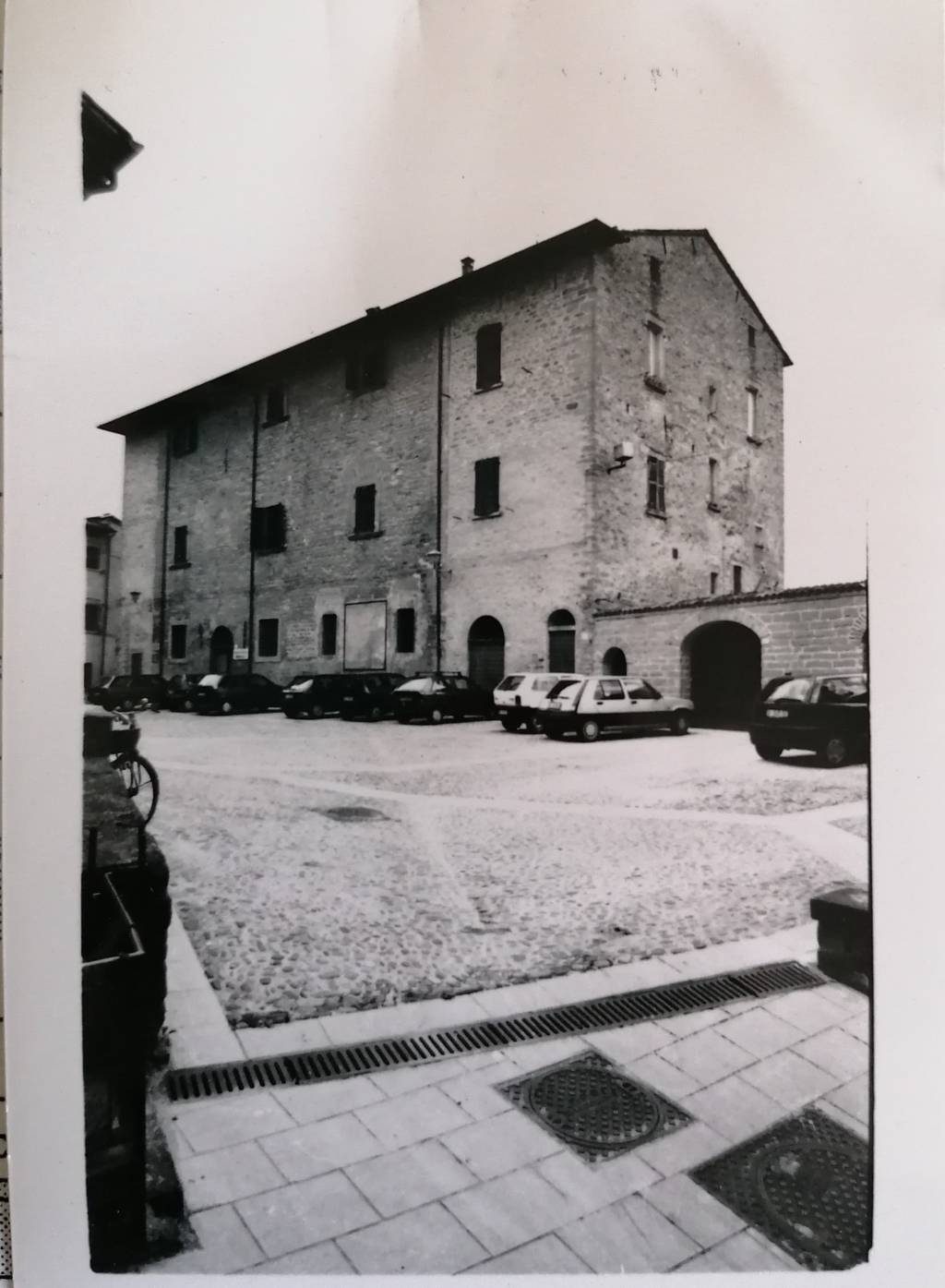
The project proposes the implementation of a set of temporary and movable pavilions in Piazza Pretorio in Modigliana—the town’s oldest and most emblematic public space, currently compromised by the dominance of car traffic. The intervention aligns with the ongoing renovation of Palazzo Pretorio, which houses the Civic Pinacoteca and defines the spatial and cultural edge of the square.
Positioned within such a sensitive historic context, the pavilions are conceived as reversible, lightweight, and adaptive devices, capable of enhancing the cultural value of the site without imposing permanent transformations. Their architectural language—both in appearance and structural concept—aims to provide lightness as a spatial and environmental strategy, minimizing physical impact and enabling new forms of public use of the square. Developed in collaboration with Politecnico di Milano, the project acts as a demonstrator of circular design principles, integrating material research with environmental performance. The structures combine wood profiles, and textile membranes into a modular, demountable system, designed for disassembly, transport, and reconfiguration. In contrast to the conventional “use-and-dispose” logic of temporary installations, the proposal embeds reuse as a core design parameter, extending its lifecycle and reducing environmental impact.
Beyond their physical presence, the pavilions operate as interfaces between heritage, public space, and disaster risk awareness. They provide shaded, flexible spaces for public life while simultaneously communicating the ongoing processes of recovery and regeneration in Modigliana. In doing so, they frame the square not only as a historic artifact, but as an evolving civic platform—where sustainability is not only performed through materials and construction, but enacted through time, reuse, and collective engagement.
The installation of the pavilions operates as a “Trojan horse” to progressively return the square to public life, rebalancing the current car-dominated use in Piazza Pretorio in Modigliana. Through their lightweight and permeable presence, the structures create shaded opportunities for community engagement, while their transparency reveals and enhances the tactile richness of the historic built environment—brick surfaces, pebble pavements, and layered material traces.
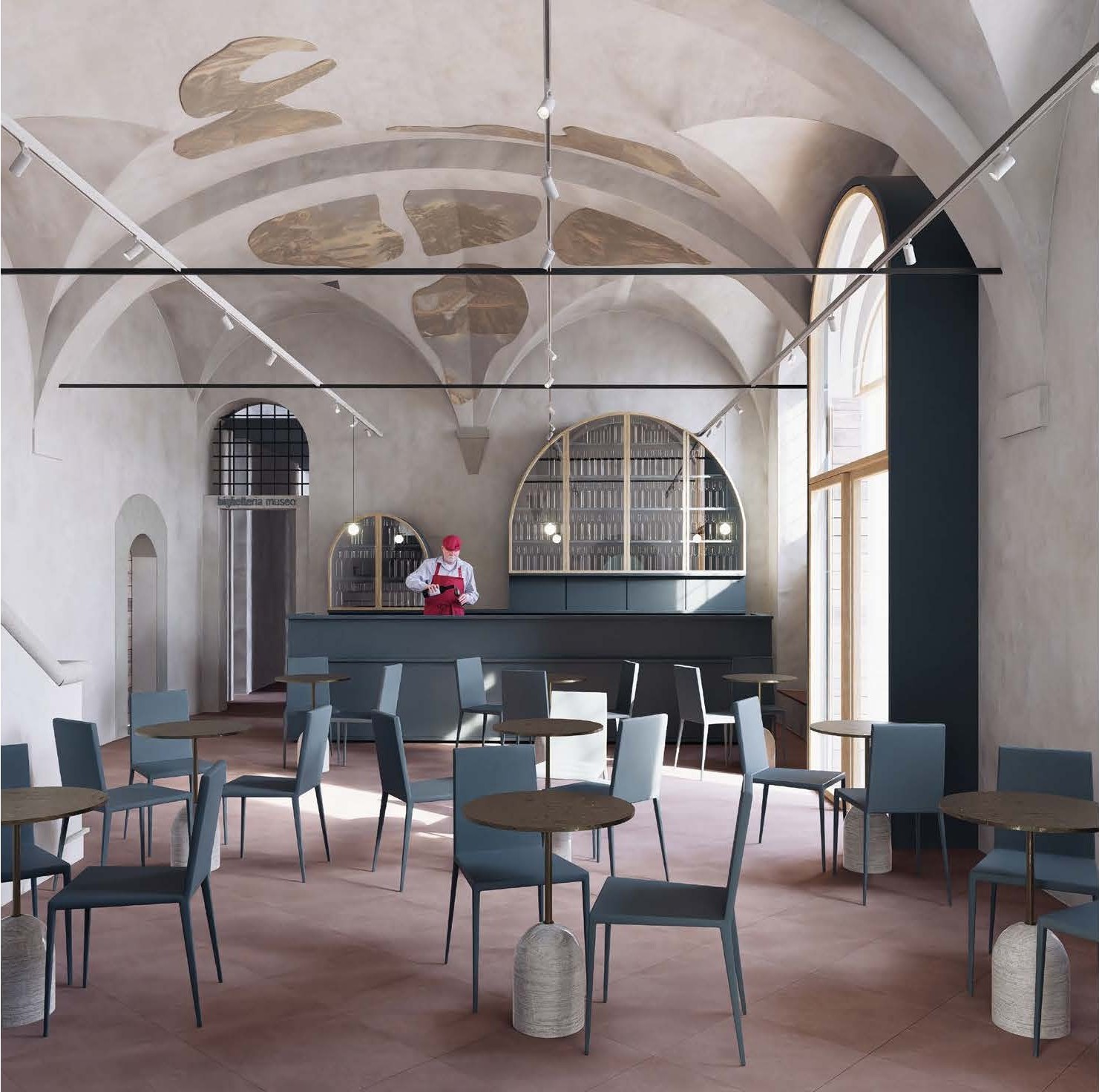
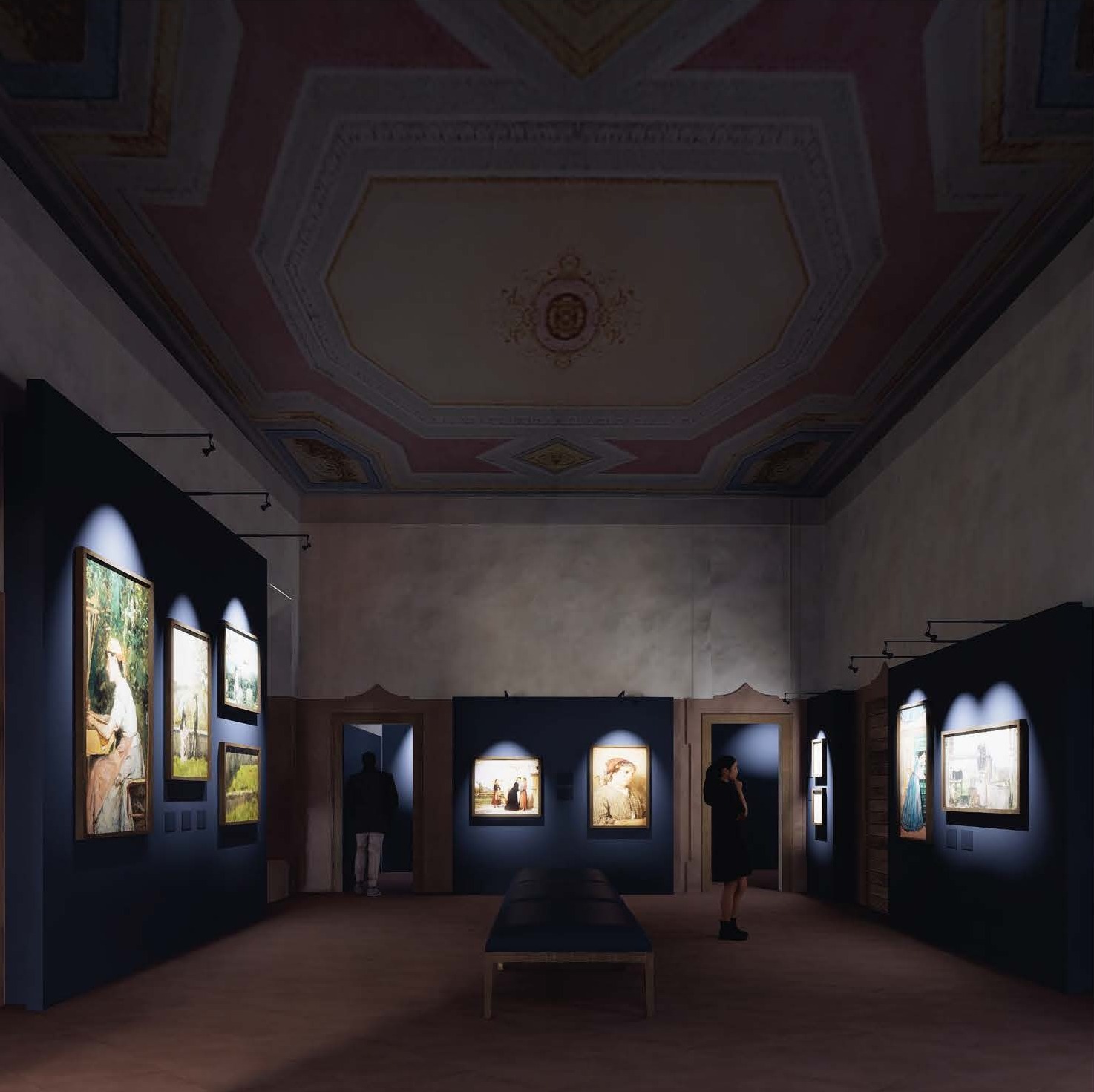
Rather than a single object, the pavilions generate a constellation of urban rooms, a civic catalyst carefully positioned to follow the natural slope of the square, ensure cross-ventilation, and provide climatic comfort (heat refuge). These spaces support a flexible and evolving programme of public uses, including an information one-stop-shop for the reconstruction process—offering updates on critical infrastructures, facilitating dialogue with local and regional authorities, and collecting feedback from residents. Alongside this, the pavilions host public meetings, talks, and cultural events, as well as art exhibitions curated in collaboration with the Civic Pinacoteca at Palazzo Pretorio. This programming can be coordinated with the museum’s and library’s planned renovation, ensuring continuity of activity during the transition phase. Particularly, its role as a center for the preservation of local culture, such as the art of Macchiaioli painter Silvestro Lega can be linked to artistic residency at the Pinacoteca.
By communicating the impacts of the 2023 and 2024 flood events and their ongoing recovery, the installation also acts as a living platform for awareness, keeping attention on disaster risk management in fragile hilly territories—issues that often fade from public discourse once the emergency subsides. The programme itself remains adaptable over time, allowing for both temporary and more permanent uses depending on local needs.
The construction and deployment of the pavilions are grounded in a co-design process that integrates research, local knowledge, and community participation.
In a first phase, the structural and environmental performance of the system is developed and tested through design studios at Politecnico di Milano, where students explore its feasibility, circularity, and sustainability. This phase allows the pavilion to be conceived as a research-driven prototype, informed by Life Cycle thinking and reversible construction principles.
In parallel, a series of workshops with local stakeholders are organized in Modigliana to co-define the public programme, focusing on cultural events and exhibitions; public talks and assemblies; information on post-flood reconstruction and on the renovation of Piazza Pretorio and Palazzo Pretorio. The outcomes of this process directly inform the spatial configuration of the pavilions, designed as a sequence of flexible urban rooms. These spaces integrate essential services, such as seating, shaded areas, and water points for comfort and usability. A key feature is for the pavilion to function during summer as a climate refuge, offering shaded and ventilated spaces mitigating heat stress, as “cool islands”, following the examples of Florence and Bologna.
The design of the pavilion’s uses actively includes diverse social groups—from elderly to youth, artists, and visitors—in programming and spatial layout. The planned removal of architectural barriers in the square and the museum will guarantee full accessibility, particularly benefiting elderly citizens - a significant portion of Modigliana’s population. Physical and cognitive accessibility measures implemented in the library—such as tactile paths, inclusive signage—are extended into the square.
Finally, the transferability of the pavilions enables them to strengthen integration with other Municipalities, part of the same Union of Municipalities, exporting cultural program in the region.
Citizens benefit from the installation in multiple ways. First, it enables the re-appropriation of a public space, transforming Piazza Pretorio into a place for gathering, culture, and everyday use in Modigliana. The pavilions provide shaded and ventilated environments, offering a much-needed space during increasingly hot summers.
The project fosters active participation through co-design processes, strengthening local identity and social cohesion. Citizens are directly involved in defining the public programme hosted in the pavilions, ensuring a strong sense of ownership and long-term engagement. At the same time, the presence of a physical one-stop information point makes reconstruction processes more accessible, especially for non-digital users, elderly residents, and children, by moving information outside formal municipal offices into an open and informal setting.
Collaboration is reinforced through the partnership between the Municipality of Modigliana and Politecnico di Milano. This builds on an existing four-year framework agreement, which underpins the Observatory ReFLOAT-ER, through which the municipality—representing flood-affected territories—has activated participatory processes and accessed scientific and technical support. This ensures that reconstruction, largely managed top-down by the commissioner, can also be addressed through bottom-up, community-driven contributions.
At the same time, Modigliana is undergoing extensive interventions on road infrastructures and river systems following the devastating 2023 floods. The project positions itself at the intersection of these processes: it communicates ongoing urban regeneration—particularly in Piazza Pretorio and Palazzo Pretorio—while keeping citizens continuously informed about reconstruction efforts.
The programme can be updated annually and scaled through the Union of Municipalities, enabling replication in other affected areas.
At the local level, the Municipality of Modigliana plays a central role as an active stakeholder, continuously engaging with regional and national actors since the 2023 floods to enhance the town’s resilience. This commitment is formalized through a four-year framework agreement with Politecnico di Milano, a leading academic institution in Italy, which provides the basis for long-term collaboration on research, design, and community-oriented initiatives.
Building on a series of fieldwork activities and co-design workshops conducted in 2023-2025, the project consolidates an already established network of local actors. Researchers and experts will continue to support the municipality by providing scientific, technical, and design expertise. During Phase 1- Design and installation (see development plan), the project engages the TextilesHUB at POLIMI-DABC for the development of the pavilions, ensuring innovation in materials, circularity, and lightweight construction.
Horizontally, the initiative builds on the strong involvement of a diverse pool of local stakeholders, including citizens, associations, and schools, who have already actively participated in previous workshops and can be further engaged in the co-design and activation of the pavilions (Phase 1 and 2).
Vertically, the project establishes connections with broader institutional frameworks. In Phase 3 – Scale-up, collaboration can be extended to the Union of Municipalities and the Emilia-Romagna Region, enabling the scaling and replication of the initiative in other flood-affected contexts, such as Tredozio and Faenza.
The initiative leverages a broad transdisciplinary framework through the expertise of Politecnico di Milano, engaged in the Observatory ReFLOAT-ER Project with the Municipality of Modigliana. The project brings together competencies in architecture, urban planning, structural and environmental engineering, construction, geotechnics, social sciences, and environmental hygiene, enabling an integrated response to post-disaster recovery and climate adaptation. This collaborative model builds on previous experimentation within the ReFLOAT-ER project, where academic research and local knowledge were combined to support decision-making processes.
In a context where communication is increasingly mediated by digital platforms, the project reintroduces a physical and situated dimension to public communication, fostering direct interaction, trust-building, and shared understanding. The pavilions act as adaptive communication infrastructures, easily movable and reconfigurable to respond to emerging needs. At the same time, the initiative addresses a growing awareness among residents that extreme weather events are becoming more frequent. Despite this perception, there is still a lack of accessible, structured, and widely shared knowledge on how to respond to climate-related risks. The collaboration between the Municipality and Politecnico di Milano aims to bridge this gap by producing and disseminating knowledge on risk, resilience, and adaptation strategies. The project generates both formal knowledge, through research outputs, design solutions, and technical expertise; and informal knowledge, through community engagement, storytelling, and everyday exchanges—complementing and critically rebalancing the role of social media as a communication tool.
In a context where communication is increasingly mediated by digital platforms, the project reintroduces a physical and situated dimension to public communication, fostering direct interaction, trust-building, and shared understanding. The pavilions act as adaptive communication infrastructures, easily movable and reconfigurable to respond to emerging needs. At the same time, the initiative addresses a growing awareness among residents that extreme weather events are becoming more frequent. Despite this perception, there is still a lack of accessible, structured, and widely shared knowledge on how to respond to climate-related risks. The collaboration between the Municipality and Politecnico di Milano aims to bridge this gap by producing and disseminating knowledge on risk, resilience, and adaptation strategies. The project generates both formal knowledge, through research outputs, design solutions, and technical expertise; and informal knowledge, through community engagement, storytelling, and everyday exchanges—complementing and critically rebalancing the role of social media as a communication tool.
The initiative introduces an innovative approach by treating post-disaster recovery as a dynamic, experiential process rather than a static reconstruction task. It is site-specific, following examples such as the Northern Rivers Living Lab shopfront in Lismore, where citizens can access updates and actively contribute to post-flood recovery. In Modigliana, the project transforms the public square into a living platform for civic interaction, cultural activity, and environmental awareness. By combining mobile, lightweight structures with co-designed public programs, it shows how temporary interventions can mediate knowledge, strengthen social cohesion, and respond to changing climate conditions. The pavilions also function as climate refuges, a novel concept in Italy and Europe, specifically addressing small-scale municipalities in dispersed rural areas that are often overlooked. With an emphasis on multi-scalar learning and transdisciplinary collaboration—linking citizens, local authorities, technical experts, and academic researchers—the project establishes a replicable model for integrated resilience, transferable to other flood-affected towns. Beyond physical reconstruction, it fosters a continuous culture of participation, risk awareness, and collective ownership, shifting post-disaster recovery from a purely technical challenge to a holistic, socially embedded, forward-looking process.
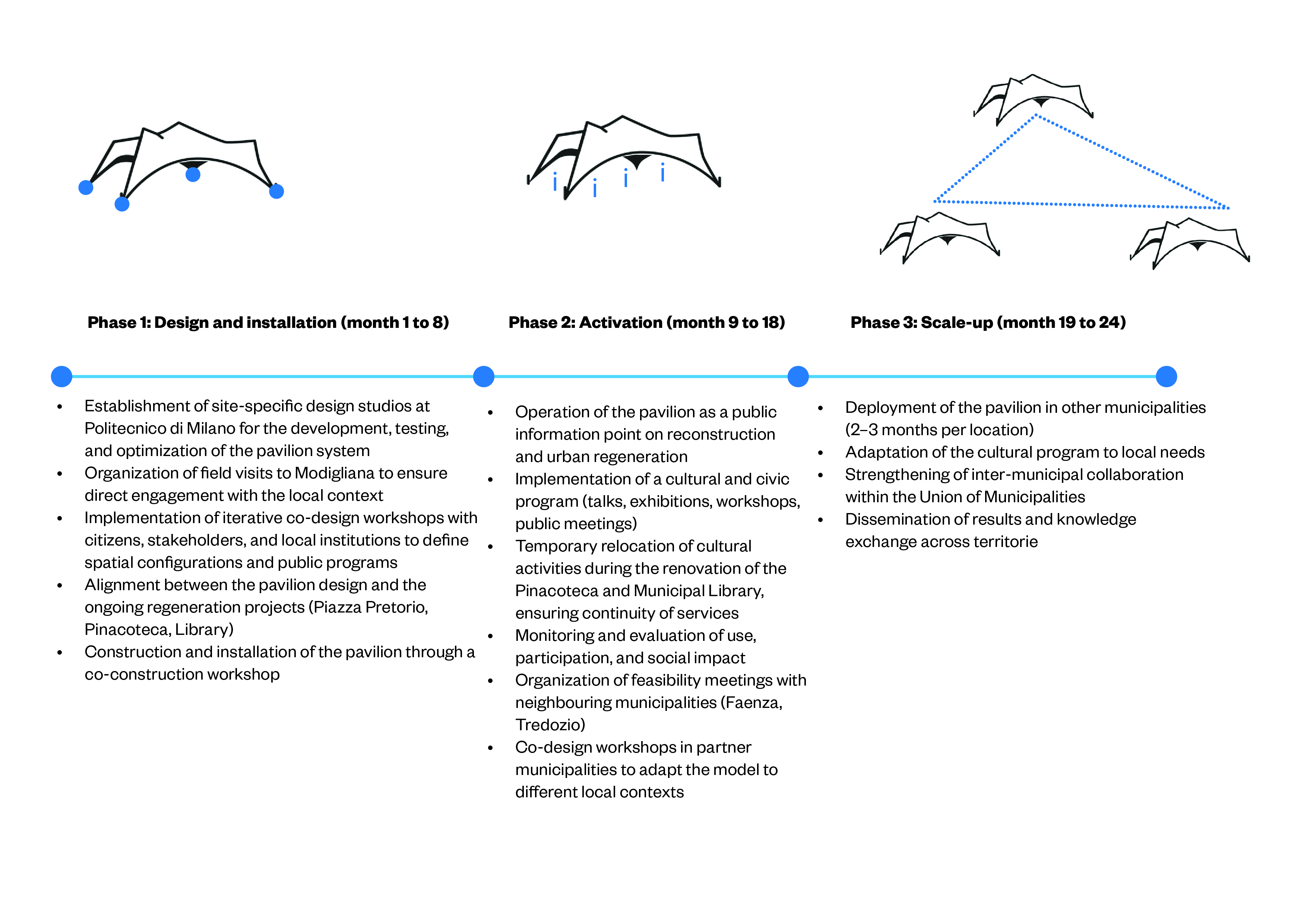
The initiative leverages a broad range of scientific disciplines through the expertise of Politecnico di Milano. The methodology follows a participatory approach, combining field visits, co-design workshops, and co-construction sessions to integrate technical expertise, local knowledge, and community priorities. The methodology aims to synchronize the planned regeneration of Piazza Pretorio and the Municipal Library as a permanent infrastructure, and the activation of public space, to ensure continuity of cultural services during the transition phase. The methodology follows three main steps:
- Phase 1: Design and Installation. Site-specific design studios will be established at Politecnico di Milano to develop and test the pavilion system. In parallel, iterative design and co-design workshops with local stakeholders and citizens will be conducted. A field visit with students will provide direct engagement with the site, while a series of co-design workshops will align the pavilions’ physical configuration with the planned public program, ensuring flexibility, accessibility, and social relevance. The pavilion will be set-up during a co-construction workshop.
- Phase 2: Activation. The pavilions will begin operating as a mobile information point, providing updates on reconstruction and urban regeneration in Modigliana. They will also host a cultural and civic public program. During this phase, feasibility meetings will be held to explore replication in other municipalities, such as Faenza and Tredozio. Additionally, co-design workshops will be conducted in these municipalities to define local public programs adapted to their specific contexts.
- Phase 3: Scale-up. The system will be deployed in other municipalities, with each installation lasting 2–3 months. This phase will focus on replicating the participatory model, adapting the program to new local contexts, and fostering cross-community learning and engagement.
See the timeline for further information.
The “Living Square Modigliana” initiative is committed to transparent, community-driven reconstruction, ensuring sustained dialogue and engagement. By creating a replicable framework, the initiative contributes to resilient recovery in Modigliana and beyond. Development of a mobile info-point model adaptable to other flood-affected areas like Tredozio, and Faenza. The concept of replicability applies not only to the temporary structures but also to the entire citizen engagement model and the interactive framework between public officials, technical experts, and residents. Extending this listening and information-sharing model to other flood-affected areas allows for comparative analysis and knowledge exchange. Regional and provincial representatives will also be invited, creating opportunities for fruitful discussions and comparisons of different operational methodologies. The scale-up phase is particularly important not only for maintaining public attention but also for fostering a shared sense of belonging across flood-prone communities.
The integration between permanent cultural infrastructure and temporary adaptive devices represents a transferable model. This “cultural infrastructure continuum” can be replicated in other small municipalities undergoing renovation or post-disaster recovery.
Additionally, the creation of a site-specific design studio in Modigliana at Politecnico di Milano strengthens the educational dimension, raising students’ awareness and preparedness in addressing post-disaster scenarios while producing context-sensitive design solutions. This integration of research, teaching, and civic engagement reinforces the project’s potential as a transferable and systemic model for resilient urban recovery.
The initiative is promoted by the Municipal Department of Culture, Sports, Youth Activities, and Tourism, with the aim of being replicable and adaptable across different areas of municipal life, including sports, recreation, and tourism. It is designed for implementation in Modigliana and across the Union of Municipalities of Romagna Forlivese, as well as in Faenza (Ravenna province), a key node along the Via Emilia. Replication will begin in Tredozio, followed by Rocca San Casciano, Faenza, and potentially other municipalities. Over a two-year period, further opportunities for expansion and collaboration will be explored to maximize impact.
The four-year framework agreement with Politecnico di Milano, launched in 2024, established the ReFLOAT-ER project—an observatory combining institutional mandate, technical expertise, and community legitimacy to support long-term local action. Collaboration with the Textile Lab builds on its expertise in lightweight and textile construction, while engagement with ReFLOAT-ER draws on the strong participation developed through workshops in 2024–2025. The initiative also aligns with broader strategies implemented by Modigliana to strengthen territorial resilience.
The principles of the New European Bauhaus—Sustainable, Together, Beautiful—are embedded throughout the project, from participatory fieldwork involving experts, academics, artists, and children, to the transformation of public space and post-disaster landscape regeneration. A transparent, continuous, and bottom-up communication process enhances coordination between institutions and technical experts, while empowering citizens and local associations as active contributors to a more sustainable and resilient future.