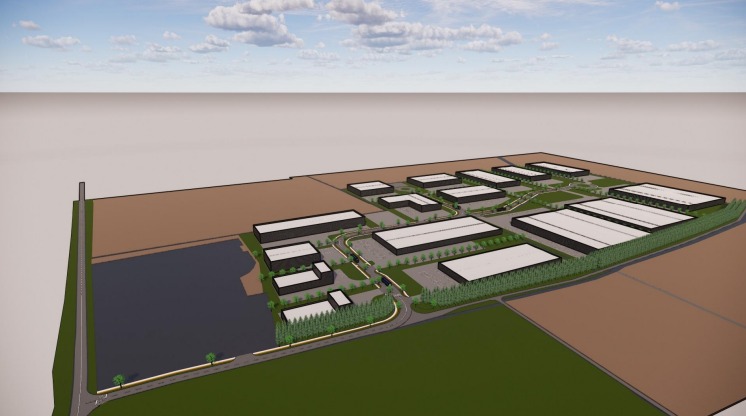
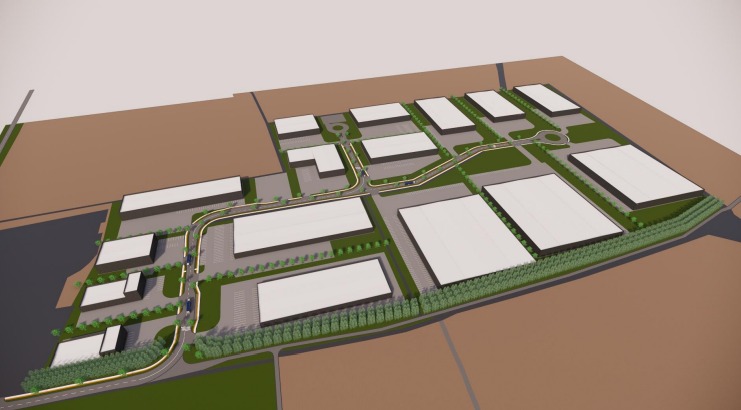
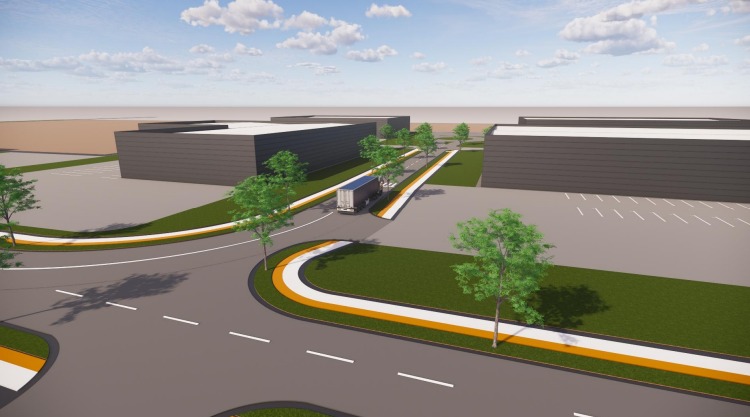
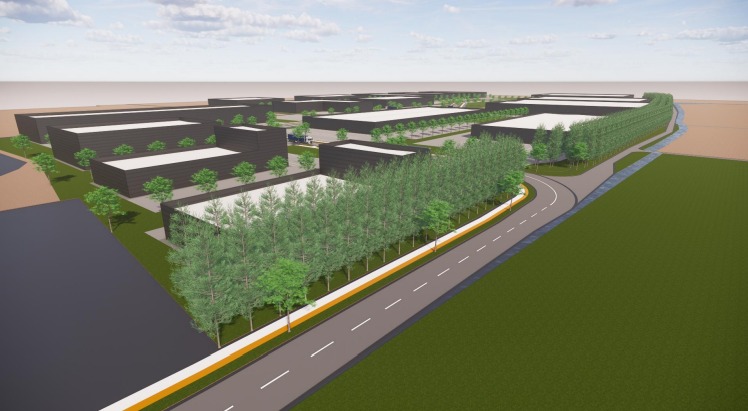
Tășnad Industrial Park
„Tășnad Industrial Park – A Strategic Investment for the Future”
The Tășnad Industrial Park represents a strategic investment dedicated to local and regional economic development, through the creation of modern infrastructure aimed at attracting innovative SMEs. The project will generate new jobs, stimulate investments, and transform the city of Tășnad into a hub of competitiveness and smart specialization, contributing to an improved quality of life for the community.
Romania
Tășnad Town
Early initiative
Yes
Yes
Yes
Yes
ERDF : European Regional Development Fund
For the proposed project, the financing contract no. 285/20.06.2025 has been signed. The funding programme is the North-West Regional Programme 2021–2027, Policy Objective 1: “A more competitive and smarter Europe by promoting innovative and smart economic transformation and regional ICT connectivity”, Priority 1: “A competitive region through innovation, digitalisation and dynamic enterprises”, Specific Objective 1.3: “Enhancing sustainable growth and the competitiveness of SMEs and job creation in SMEs, including through productive investments”, under the call for projects PRNV/2023/132.A.1/1.
No
136642: Oras Tasnad (RO)
The “Tășnad Industrial Park” initiative aims to develop an innovative and sustainable economic ecosystem by creating modern infrastructure dedicated to supporting SMEs and attracting investments in the city of Tășnad. The project seeks to strengthen economic competitiveness at both local and regional levels, in line with the principles of smart specialization.
The target groups consist of innovative SMEs that will operate within the industrial park, as well as the local population and residents of surrounding areas, who will benefit from increased employment opportunities and professional development.
The specific objectives of the project include the development of the infrastructure necessary for the park’s operation (roads, utilities, technical networks), as well as attracting and establishing at least five innovative SMEs within the park.
The expected results include the creation of a functional industrial park, the development of a competitive business environment, the generation of new jobs, the attraction of private investments, and an improved quality of life for the community. Furthermore, the project will contribute to the sustainable development of the area and to fostering innovation and collaboration between the business and research sectors.
• Economic development
• Innovation
• SMEs
• Industrial park
• Job creation
The “Tășnad Industrial Park” initiative integrates the principles of sustainable development from the design phase, aiming to create efficient economic infrastructure with minimal environmental impact and long-term benefits for the community.
In terms of environmental sustainability, the project includes the use of modern technical solutions that reduce environmental impact, such as efficient stormwater management, the development of green spaces, and infrastructure for alternative mobility (sidewalks and bicycle lanes). In addition, circular economy principles will be applied, including the recycling of construction materials and the efficient use of resources, in line with European requirements.
From the perspective of economic sustainability, the project creates a favorable framework for the development of innovative SMEs, contributing to the diversification of the local economy, attracting investments, and generating stable jobs. The infrastructure developed will have a long lifespan and will support long-term economic growth.
Regarding social sustainability, the initiative contributes to improving quality of life by creating employment opportunities, reducing workforce migration, and enhancing local skills development. The project also respects the principles of equal opportunities and accessibility for all population groups.
The initiative can be considered a best practice due to its integrated approach to sustainability—economic, social, and environmental—as well as its alignment with European smart specialization strategies. By combining modern infrastructure with support for innovation and the business environment, the project provides a replicable model for other communities aiming for sustainable development.
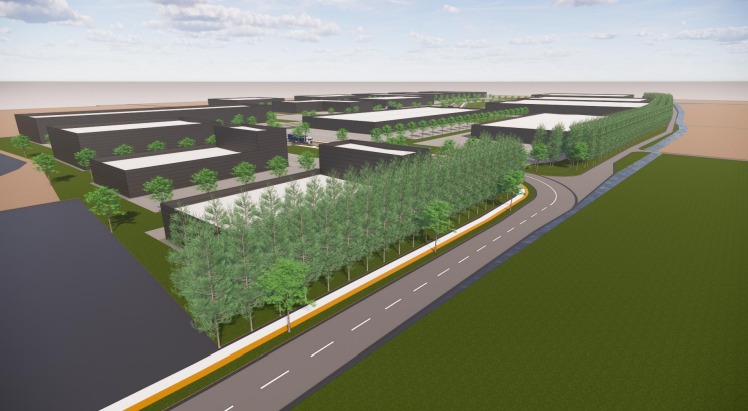
The “Tășnad Industrial Park” initiative aims not only at economic development but also at creating a functional, modern, and aesthetically pleasing space that enhances the quality of experience for users and the local community. The project integrates urban design solutions that ensure a balance between functionality, accessibility, and visual appeal.
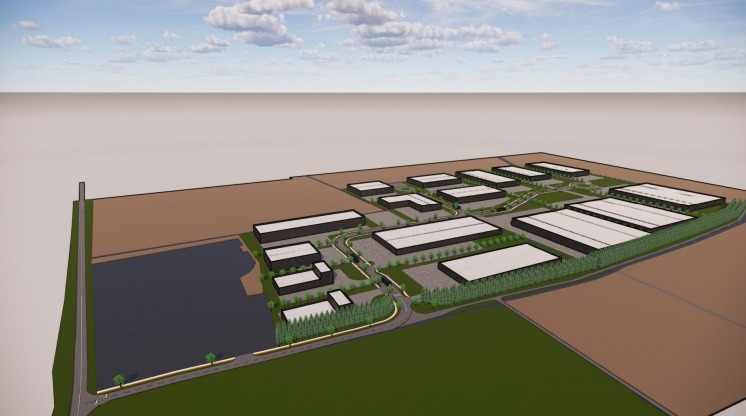
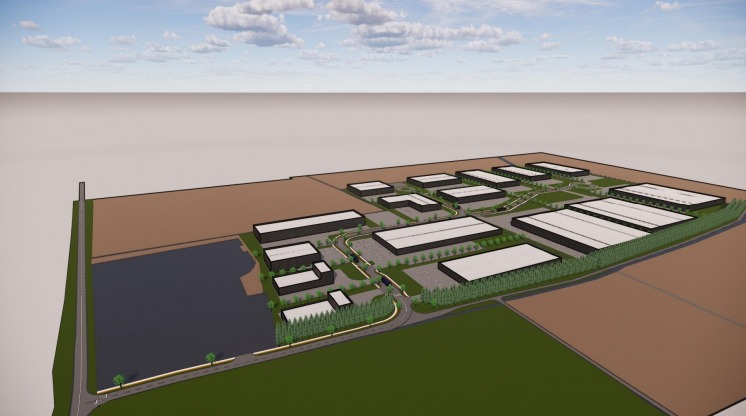
In terms of aesthetics, the project includes a coherent layout of infrastructure, with modern roads, efficient public lighting, and the integration of green spaces, contributing to an attractive and well-organized working environment. The infrastructure elements are designed in a unified manner to provide a professional and competitive image for the industrial area.
The quality of the user experience is supported by improved mobility and accessibility, through the development of pedestrian walkways and bicycle lanes that encourage sustainable and comfortable movement within the park. In addition, the spatial organization allows for efficient and safe use of infrastructure for both employees and economic operators.
From a cultural and social perspective, the project contributes to modernizing the image of the city of Tășnad and to creating an environment that fosters collaboration, innovation, and a sense of community. By developing a well-planned and attractive space, the initiative supports the transformation of the area into a local landmark of development and progress.
The initiative can be considered exemplary through the integration of functional and aesthetic design principles into industrial infrastructure, going beyond the traditional model of purely utilitarian industrial areas. By combining high-quality built environments with modern mobility solutions and green spaces, the project offers a development model that places both economic efficiency and human experience at its core.
The “Tășnad Industrial Park” initiative promotes inclusion by creating an accessible, fair, and open economic environment for all categories of beneficiaries, contributing to reducing social disparities and increasing development opportunities for the community.
From an accessibility perspective, the project integrates “design for all” principles, ensuring infrastructure adapted for use by people with reduced mobility, through the development of sidewalks, safe circulation routes, and accessible spaces. It also complies with requirements regarding the accessibility of the built environment for persons with disabilities, ensuring that the infrastructure is equally usable by all citizens.
In terms of economic inclusion, the initiative facilitates SMEs’ access to modern infrastructure and development opportunities, especially for innovative enterprises that lack the resources to carry out such investments independently. Thus, the project contributes to democratizing access to economic resources and stimulating local entrepreneurship.
From a social perspective, the project creates the conditions for generating diverse and accessible jobs for a wide range of people, supporting labor market integration and reducing workforce migration. At the same time, the initiative respects the principles of equal opportunities and non-discrimination throughout all stages of implementation and operation.
In terms of governance, the project is developed by the local public administration in collaboration with the business environment and other stakeholders, reflecting a participatory model focused on the real needs of the community.
The initiative can be considered exemplary through its integrated approach to inclusion—physical accessibility, economic access, and social participation—demonstrating that economic infrastructure development can be carried out in an equitable and people-centered manner.
Within the “Tășnad Industrial Park” initiative, the involvement of citizens and local stakeholders has played an important role since the project preparation stage, contributing to the definition of an investment tailored to the real needs of the community and the economic environment.
During the project development process, the local public administration organized consultations and meetings with entrepreneurs and potential investors interested in developing economic activities in the area. These actions enabled the identification of relevant fields of activity and the specific needs of SMEs, as well as the shaping of an industrial park concept focused on innovation and smart specialization.
The citizens of Tășnad were indirectly involved by expressing the need for economic development and increased employment opportunities, which formed the basis for the project’s development. The initiative thus responds to a real demand within the community for job diversification and improved living conditions.
During implementation, the continued involvement of local stakeholders is ensured through collaboration with the business environment, research institutions, and other relevant partners, contributing to the development of a functional and sustainable economic ecosystem.
The impact of this involvement is significant: the project is better adapted to local realities, has a higher likelihood of occupancy and efficient operation, and generates greater acceptance and support from the community. Moreover, the early involvement of the private sector enhances the attractiveness of the investment and accelerates local economic development.
The role of citizens and civil society can be characterized as consultative and participatory during the planning phase, and as both direct and indirect beneficiaries during the implementation and operation phases. The initiative thus demonstrates the importance of co-creation.
The “Tășnad Industrial Park” initiative is the result of multi-level collaboration, involving relevant stakeholders at local, regional, national, and European levels, each contributing to the design, financing, and implementation of the project.
At the local level, the Administrative-Territorial Unit of the City of Tășnad plays the main role as initiator and implementer of the project, ensuring coordination of activities, provision of land, and development of the necessary infrastructure. At the same time, the local business environment, represented by SMEs and potential investors, was involved in the planning stage through consultations and by expressing specific needs, contributing to defining the profile of the industrial park.
At the regional level, the North-West Regional Development Agency, acting as the Managing Authority, plays a key role in the evaluation, contracting, financing, and monitoring of the project, ensuring compliance with the strategic objectives of the North-West Regional Programme 2021–2027 and alignment with the region’s Smart Specialisation Strategy.
At the national level, the legislative framework and public policies related to regional development, innovation, and SME support create the conditions necessary for project implementation, while relevant institutions contribute indirectly through regulations and funding mechanisms.
At the European level, the European Union, through the European Regional Development Fund (ERDF), provides the project’s funding and the strategic framework that promotes economic competitiveness, innovation, and sustainable development. The involvement of this level ensures compliance with European principles regarding sustainability, inclusion, and efficient use of resources.
The added value of this multi-level approach lies in integrating local needs with regional and European strategic objectives, ensuring coherence, efficiency, and long-term impact.
The “Tășnad Industrial Park” initiative reflects an interdisciplinary approach that integrates key fields necessary for developing modern and sustainable economic infrastructure. Its design and implementation combine expertise in urban and spatial planning, civil engineering, economics and regional development, project management, environmental protection, and innovation.
Urban planning ensured efficient land use and the coherent integration of infrastructure, while civil engineering supported the development of essential utility networks—water, sewage, energy, gas—as well as road infrastructure. The economic and regional development component substantiated the investment, identified SME needs, and aligned the project with regional smart specialization priorities.
Project management played a crucial role in coordinating activities, ensuring compliance with funding requirements, and implementing the project according to European standards. Environmental considerations were integrated through solutions aimed at reducing impact, including water management, green spaces, and alternative mobility options. At the same time, innovation and collaboration with the research sector contribute to building a knowledge-based economic environment.
The interaction between these fields was achieved through collaboration among technical experts, consultants, public authorities, and the business sector, within an integrated planning process. This ensured alignment between technical solutions and economic and social objectives.
The added value lies in delivering a coherent and efficient investment tailored to real needs, combining quality infrastructure with sustainable development. The initiative stands as a strong example of how interdisciplinary collaboration can successfully support complex development projects.
The innovative character of the “Tășnad Industrial Park” initiative lies in its integrated, smart specialization–oriented approach, which goes beyond the traditional industrial park model. Rather than simply offering land and utilities, the project creates a dedicated ecosystem for innovative SMEs, focused on high value-added activities and strengthened collaboration with the research sector.
A key innovation is the conditional access to the park based on the innovative profile of resident companies. This ensures the development of a competitive, technology-driven environment centered on knowledge and innovation, while supporting the formation of a local innovation cluster aligned with regional smart specialization strategies.
The project also incorporates modern infrastructure and sustainability solutions, including efficient resource management, green infrastructure, and alternative mobility options. These features clearly differentiate it from conventional industrial areas, which are often associated with higher environmental impact.
Compared to standard approaches, the initiative stands out through its strategic focus on innovation, the integration of economic, social, and environmental dimensions into a coherent concept, and the active involvement of businesses and key stakeholders in shaping the project. It also prioritizes the creation of an attractive and functional investment environment, rather than merely providing basic infrastructure.
Overall, its innovative value lies in transforming the industrial park into a dynamic tool for knowledge-based economic development, capable of generating long-term local and regional benefits. As such, it represents a replicable model for communities aiming to transition toward a competitive and sustainable economy.
The methodology applied in the “Tășnad Industrial Park” initiative is based on an integrated, phased, and participatory approach that combines strategic planning, techno-economic analysis, and implementation aligned with European funding standards.
In the conceptual phase, the project relied on assessing local and regional needs, including consultations with the business sector and the identification of smart specialization areas. This stage involved preparing the feasibility study and ensuring alignment with regional and European development strategies.
During the design phase, an integrated technical approach was adopted, covering infrastructure planning—roads, utilities, and technical networks—while incorporating sustainability measures such as efficient resource management and green space development. The design followed high technical and quality standards to ensure long-term functionality and durability.
Implementation is guided by a structured project management methodology, supported by a dedicated team and procedures specific to EU-funded projects. This includes detailed planning, continuous progress monitoring, risk management, and regular reporting. Transparent public procurement processes, compliant with current legislation, are also applied.
The approach remains participatory and collaborative, involving local authorities, the business community, and other relevant stakeholders. This ensures that the investment responds to real needs and supports the effective use and operation of the industrial park.
Overall, the methodology enables efficient, flexible, and results-oriented implementation, ensuring the achievement of objectives and long-term sustainability. By combining strategic planning, technical execution, and effective management, the initiative stands as a model of good practice in economic infrastructure development.
The “Tășnad Industrial Park” initiative incorporates several replicable and transferable elements that can be adapted to different communities and regional contexts, supporting sustainable economic development and innovative SMEs.
A key transferable component is the integrated methodology for developing economic infrastructure, which combines local needs analysis, consultation with the business sector, and alignment with smart specialization strategies. This approach can be applied in other areas to ensure investments are both relevant.
The concept of an innovation-oriented industrial park is another important replicable element. By conditioning access on the innovative profile of SMEs, the model fosters competitive, knowledge-based economic ecosystems and can be successfully adapted in other regions.
Technical aspects of the project—such as the development of complete infrastructure (roads, utilities, integrated networks) and the inclusion of sustainability solutions like efficient resource management, green spaces, and alternative mobility—offer a flexible framework that can be tailored to local conditions while maintaining a high standard of development.
The implementation process, based on structured project management, continuous monitoring, and compliance with European funding requirements, provides a transferable model that ensures transparency, efficiency, and accountability in similar projects.
Equally important is the collaborative approach involving public authorities, the business environment, and research institutions. This partnership model can be replicated to stimulate innovation and strengthen regional development.
Overall, the initiative offers a comprehensive model—from planning to implementation and operation—that can be adapted based on community size, resources, and priorities. It serves as a valuable example for other regions aiming to develop modern industrial parks and enhance long-term economic competitiveness.
The “Tășnad Industrial Park” initiative integrates several replicable and transferable elements that can be adapted to other communities, supporting sustainable development and innovative SMEs.
A key element is the integrated methodology for economic infrastructure development, combining local needs analysis, consultation with the business sector, and alignment with smart specialization strategies. This ensures relevant and efficient investments and can be applied in various regional contexts.
The model of an innovation-oriented industrial park is also transferable. By conditioning access on the innovative profile of SMEs, it promotes competitive, knowledge-based economic ecosystems and supports long-term growth.
Technical components—such as the development of complete infrastructure (roads, utilities, integrated networks) and the inclusion of sustainability measures like efficient resource management, green spaces, and alternative mobility—provide a flexible framework adaptable to local conditions.
The implementation approach, based on project management, continuous monitoring, and compliance with European funding standards, ensures transparency, efficiency, and accountability, offering a reliable model for similar projects.
Collaboration between public administration, businesses, and research institutions is another important element that can be replicated to stimulate innovation and regional development.
Overall, the initiative offers a comprehensive and adaptable model—from planning to operation—that can be tailored to local resources and priorities, contributing to increased competitiveness and sustainable economic growth.