Strengthening Local Democracy and Inclusion
SignLink
SignLink - Multiple Sign Languages Learning
Sign Link is a participatory digital platform that strengthens inclusion and local democracy by enabling deaf and hearing communities to co-create accessible communication. Through collaboration with deaf users, linguists, designers, and educators, the platform is built using co-design methodologies that place citizens at the center of its development.
By combining sign language, visual design, and AI, Sign Link transforms communication into an inclusive public goodexpanding access to education
By combining sign language, visual design, and AI, Sign Link transforms communication into an inclusive public goodexpanding access to education
Brazil
National
Mainly urban
It refers to other types of transformations (soft investment)
Prototype level
No
No
No
Organisation
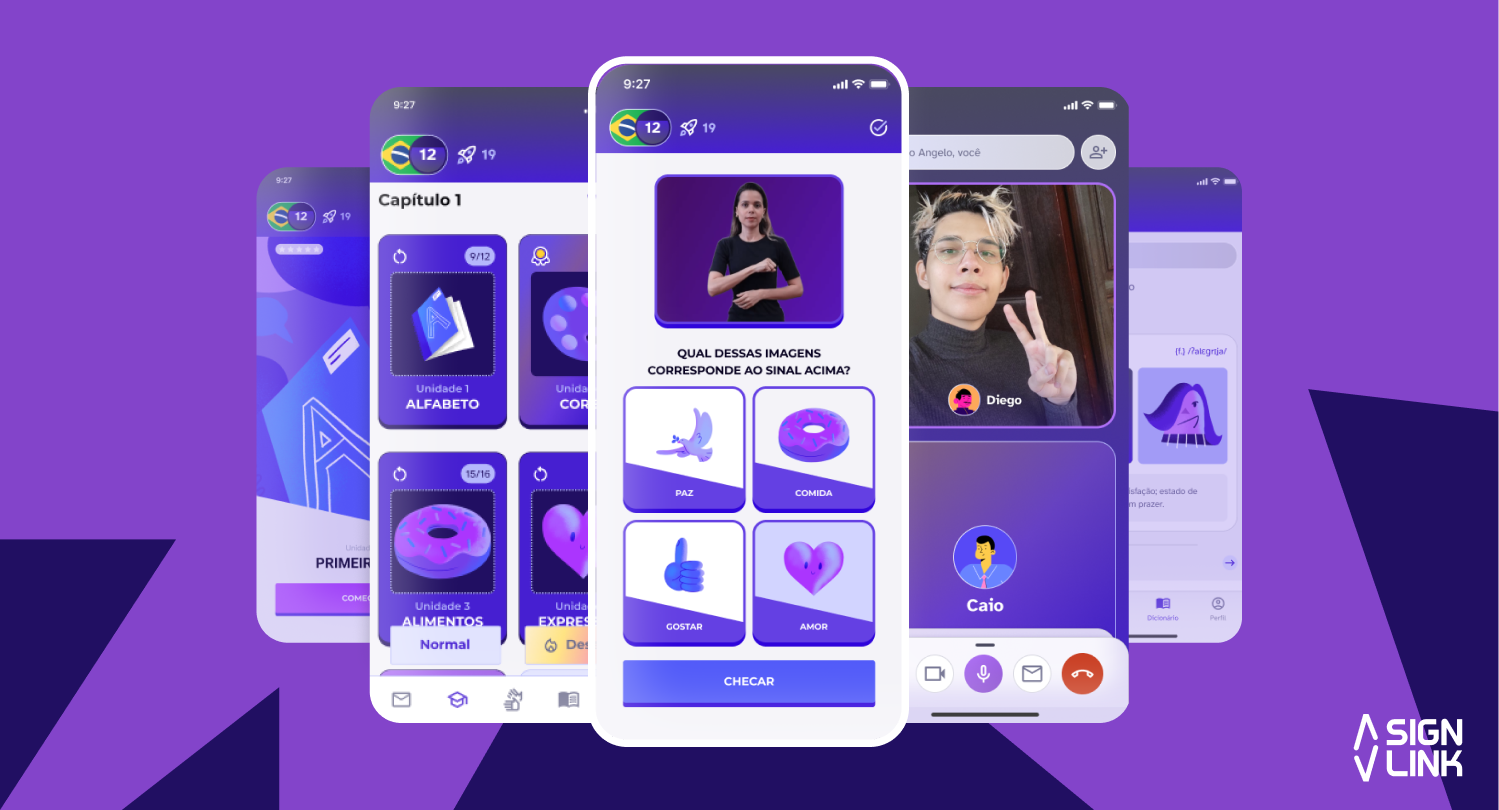
Sign Link is an inclusive digital platform designed to bridge communication between deaf and hearing communities through accessible, intelligent, and human centered design. By combining sign language, visual interaction, and artificial intelligence, it enables users to learn, practice, and apply sign language in real life contexts, expanding access to education, public services, and social participation.
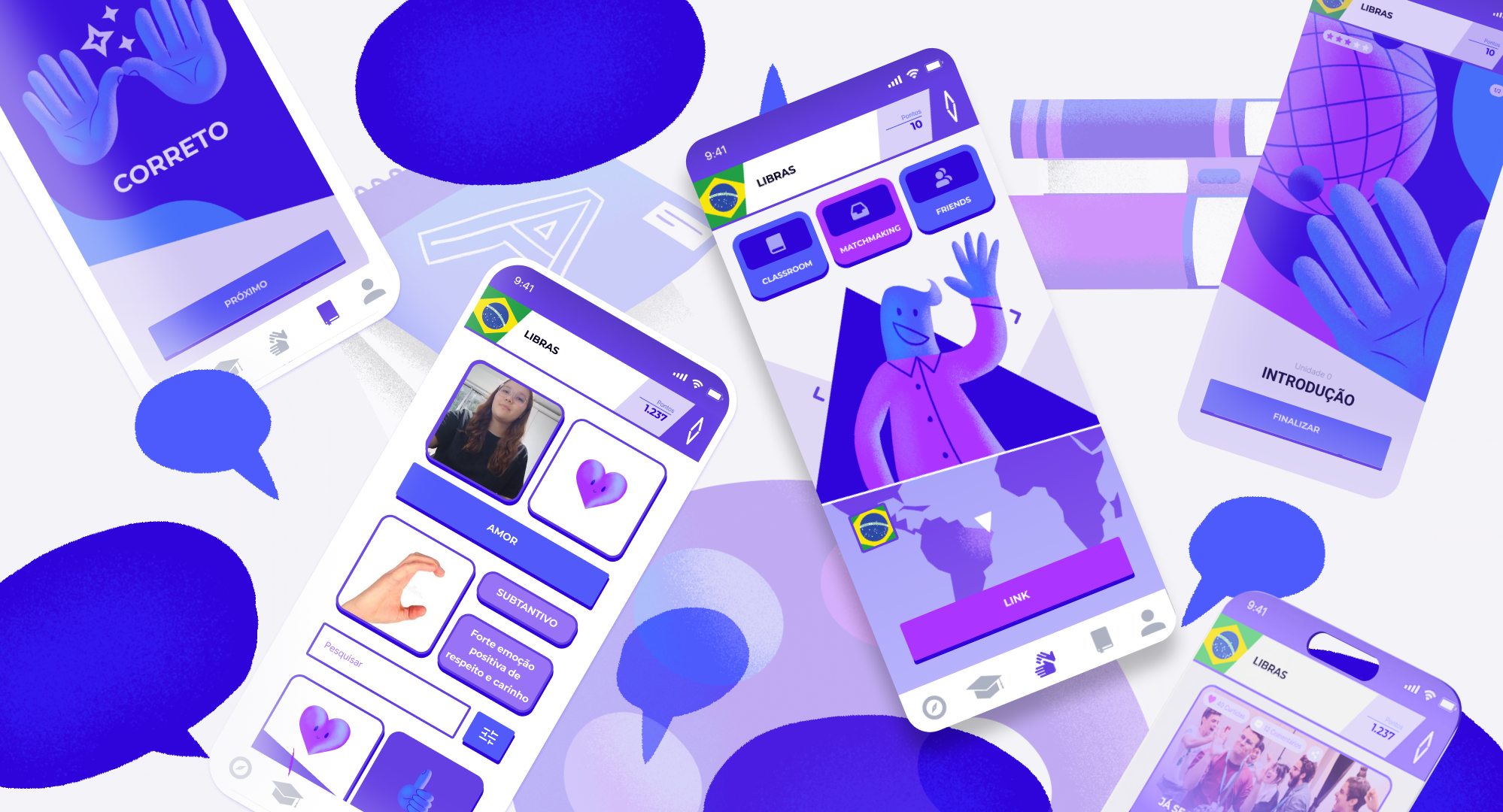
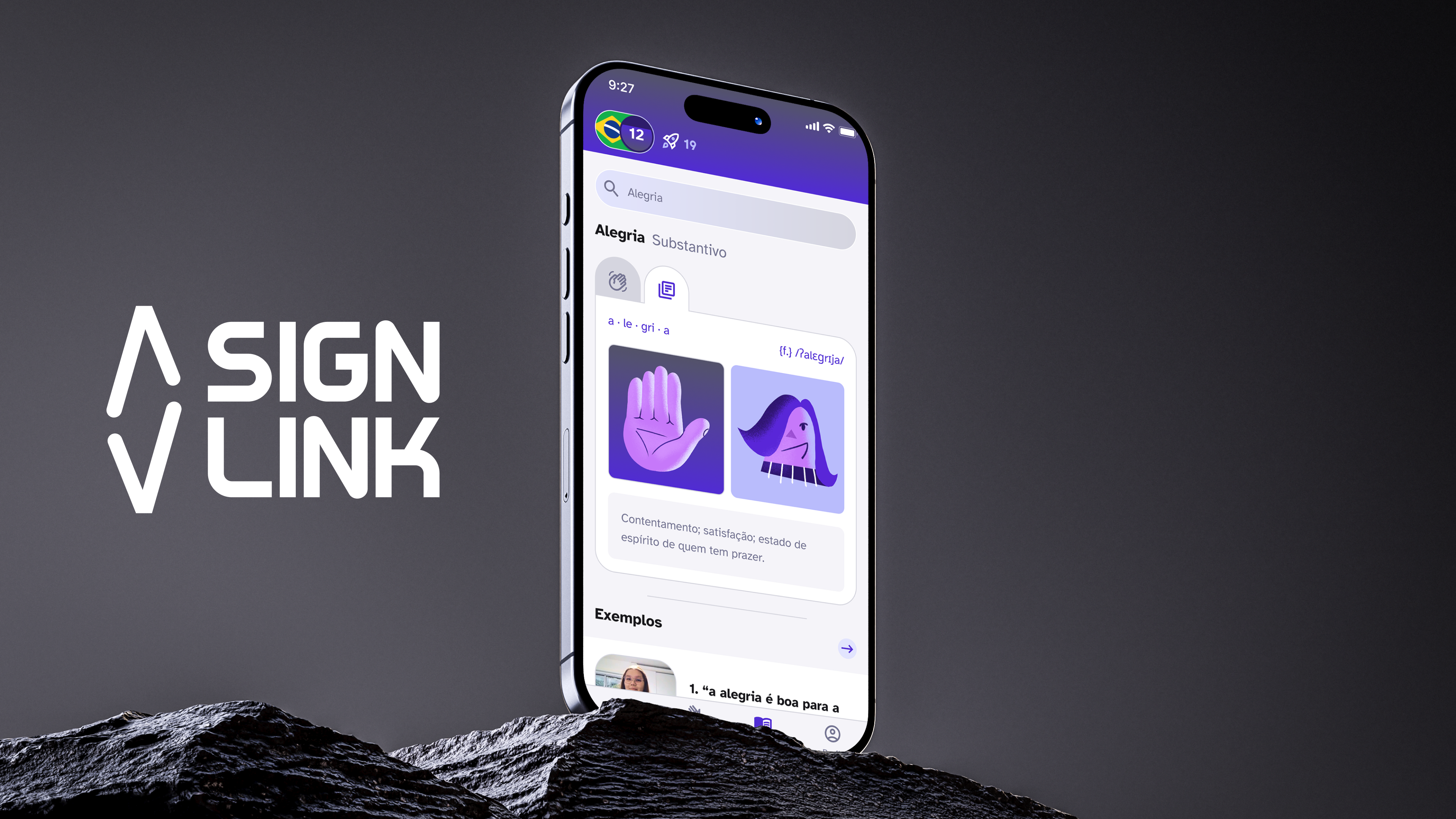
Its core features strengthen accessibility in complementary ways. The learning pathway offers guided and personalized journeys, allowing users to progressively build sign language skills according to their level and goals. The technical and academic dictionary provides curated and reliable content, including specialized vocabulary for educational, institutional, and professional contexts. The matchmaking system connects learners, deaf individuals, interpreters, and institutions, fostering interaction, exchange, and community building. These features are reinforced by integrated AI, which supports adaptive learning, sign recognition, personalized feedback, and more engaging user experiences.
Sign Link has already achieved important results through academic development, prototype validation, and ecosystem recognition. The project has received national and international design awards, as well as recognition in innovation and entrepreneurship programs. It has been developed in collaboration with deaf communities, linguists, designers, and technology specialists, ensuring cultural relevance, accessibility, and real world applicability. The team has also advanced the structuring of curated sign language content and the foundations for broader implementation in educational and institutional environments.
Expected results include wider access to sign language education, improved communication in public and private settings, and greater inclusion of deaf individuals in society. By reducing communication barriers, it contributes to social cohesion and equal opportunities.
Sign Link emerged from the recognition that communication barriers between deaf and hearing communities are not only linguistic, but also structural and social. Worldwide, more than 70 million people are deaf, yet access to sign language education remains extremely limited. It is estimated that only around 2% of deaf people have access to education in sign language, which directly impacts language development, learning, and access to opportunities. In many cases, the main barrier is not deafness itself, but the lack of accessible systems and environments. Sign Link was created in response to this reality, aiming to promote inclusion, autonomy, and equal access to communication.
The concept was developed through a transdisciplinary process combining design, accessibility, education, and sign language. The first stage involved academic research on inclusive learning, communication barriers, and sign language access. From there, early prototypes were developed with a strong focus on visual interaction, usability, and accessibility. The project evolved through continuous dialogue with deaf users, educators, linguists, and specialists, ensuring cultural relevance and practical applicability.
Co design has guided the project from the beginning. Workshops, validation sessions, and collaborative exchanges helped shape its main features, including a learning pathway, a technical and academic dictionary, and a matchmaking system connecting users, institutions, and opportunities. At the same time, the team has been curating and structuring sign language content to support broader educational and institutional implementation.
Through iterative prototyping, feedback cycles, and partnership building, Sign Link has evolved from an identified social challenge into a scalable concept for more inclusive communication, learning, and participation.
Accessible Communication
Social Inclusion
Co-design
Sign Language Education
Digital Innovation
Sign Link addresses sustainability through an integrated approach that combines social, cultural, economic, and environmental dimensions. Socially, it tackles systemic exclusion by reducing communication barriers between deaf and hearing communities, expanding access to education, public services, and employment. By enabling inclusive communication and learning, it supports long term social equity and participation.
Culturally, the platform contributes to the preservation and dissemination of sign languages as essential elements of identity and knowledge. Through the curation and structuring of sign language content, including technical and academic vocabulary, Sign Link supports linguistic diversity and strengthens the visibility and continuity of deaf culture across different contexts.
Economically, Sign Link creates opportunities by improving access to education and professional environments, enabling more inclusive participation in the workforce. It also supports institutions in adopting accessible practices, reducing inefficiencies and long term costs related to exclusion. Its scalable model allows adoption across different regions and systems, increasing its impact over time.
From an environmental perspective, Sign Link operates as a digital first solution that reduces the need for physical materials, printed resources, and fragmented in person services. By centralizing access to knowledge and communication tools in a digital platform, it minimizes resource consumption while maximizing reach and efficiency. Its long term structure enables continuous updates without the waste associated with repeated physical production.
By integrating inclusion, cultural preservation, and resource efficient digital infrastructure, Sign Link demonstrates a sustainable model that addresses present inequalities while building long lasting impact. It exemplifies how design can support systemic transformation toward more resilient, inclusive, and sustainable societies.
Sign Link contributes to aesthetics by transforming how communication and learning are experienced through inclusive and human centered design. Learning a sign language through written or audio based materials, which is still common in traditional education or when accessing a second sign language for contexts such as exchange programs, creates a fragmented and ineffective experience. Sign languages are visual and spatial by nature, and their learning depends on approaches that reflect these qualities. Sign Link responds to this gap by creating a visually driven, intuitive, and engaging environment where language and interaction are aligned.
In everyday life, the platform makes communication more fluid, expressive, and accessible, enabling users to engage with sign language in a natural way. Its interface prioritizes clarity, visual rhythm, and usability, creating a learning experience that is both functional and aesthetically engaging. This reduces frustration, increases motivation, and strengthens user confidence.
At a community level, Sign Link fosters a sense of belonging by connecting deaf and hearing individuals in shared spaces of interaction and learning. By enabling access to multiple sign languages, it supports cultural exchange, mobility, and participation in international contexts, expanding opportunities while reinforcing identity.
Its aesthetic quality has been validated through multiple national and international design awards, demonstrating external recognition of its visual, functional, and experiential value. In the long term, Sign Link contributes to redefining accessibility as a source of beauty, meaning, and inclusion, aligned with the values of the New European Bauhaus.
Sign Link addresses inclusion by tackling one of the most persistent barriers faced by deaf communities: the lack of accessible communication. With more than 70 million deaf people worldwide and only a small percentage having access to education in sign language, the project responds to a systemic gap that affects learning, participation, and access to opportunities. By making sign language learning and communication more accessible, Sign Link promotes equal conditions for social, educational, and professional inclusion.
The platform is designed according to design for all principles, ensuring accessibility for users with different levels of knowledge, backgrounds, and needs. Its learning pathway enables progressive and personalized learning, while the technical and academic dictionary supports access to specialized knowledge in education and work contexts. The matchmaking system connects users, interpreters, and institutions, creating inclusive networks that facilitate real interactions and opportunities.
Affordability and scalability are central to the concept. As a digital platform, Sign Link reduces barriers related to cost, geography, and infrastructure, enabling broader access across different regions and communities. Its model allows institutions and organizations to adopt accessible communication practices more efficiently, expanding its reach and impact.
Inclusive governance is supported through participatory and co design processes. Deaf users, educators, linguists, and professionals are actively involved in the development and validation of the platform, ensuring that it reflects real needs and promotes shared ownership.
By combining accessibility, participation, and scalable design, Sign Link proposes a new model of inclusive communication infrastructure. It can be considered exemplary in terms of inclusion by transforming accessibility into a central value of systems and experiences, enabling more equitable, connected, and participatory societies.
Participation has been a central principle in the development of Sign Link from its earliest stages. The project was shaped through continuous engagement with deaf users, educators, linguists, designers, and institutions, ensuring that the concept responds to real needs and lived experiences rather than assumptions. This approach recognizes deaf individuals not only as beneficiaries, but as active contributors and co creators of the solution.
The development process included feedback sessions, informal workshops, and ongoing exchanges with stakeholders, allowing the team to validate ideas, refine features, and identify gaps in accessibility and usability. These interactions directly influenced the design of key components such as the learning pathway, the technical and academic dictionary, and the matchmaking system, ensuring that they are relevant, intuitive, and aligned with real world contexts.
Participation also played a critical role in shaping the content itself. The structuring and curation of sign language materials have been informed by input from users and specialists, supporting linguistic accuracy, cultural sensitivity, and practical applicability. This collaborative approach strengthens trust and ensures that the platform reflects the diversity within deaf communities.
The impact of this participatory process is visible in the quality, relevance, and adaptability of the concept. It has enabled Sign Link to evolve as a user centered and community driven platform, increasing its potential for adoption and long term sustainability. By embedding participation into its development, the project empowers communities, fosters shared ownership, and reinforces inclusion as a core value, fully aligned with the principles of the New European Bauhaus.
Sign Link is structured as a multilevel initiative, engaging stakeholders across local, national, and international contexts to ensure scalability and systemic impact. At the local level, the project is developed in collaboration with deaf communities, educators, interpreters, and the Universidade Federal de Juiz de Fora, where research, content development, and validation processes take place. Local educators and accessibility agents contribute directly to co design, ensuring alignment with real needs and contexts.
At the national level, the project connects with institutions, innovation ecosystems, and accelerators that support its development and implementation. These actors strengthen the platform’s capacity to integrate into educational systems and expand access to inclusive communication. The project has also received recognition through national and international awards in design, entrepreneurship, and social impact, reinforcing its credibility and validation.
At the international level, Sign Link has engaged with innovation ecosystems in Switzerland and Germany, where the concept was presented and discussed with stakeholders. These experiences enabled the team to understand local contexts, identify opportunities, and build connections. Germany stands out as a key context for future expansion, due to its strong ecosystem in accessibility, education, and social innovation. The project aims to collaborate with local institutions and communities to adapt the platform to different sign languages and systems.
This multilevel approach connects communities, academia, institutions, and international networks, enabling knowledge exchange, strengthening implementation, and supporting replication across contexts.
Sign Link is developed through a transdisciplinary approach that integrates multiple fields of knowledge to address complex challenges related to communication, accessibility, and inclusion. The concept brings together design, linguistics, education, digital technologies, accessibility studies, and social sciences, creating a more holistic framework for sign language learning and interaction.
Design shapes the platform’s visual language, usability, and human centered experience. Linguistics supports the structuring and validation of sign language content, ensuring accuracy, cultural relevance, and alignment with real language use. Education informs the creation of learning pathways, content sequencing, and accessible methods for skill development. Digital technologies support functionality, scalability, and interaction, while social sciences help interpret the structural barriers that deaf communities face in education, work, and public life. Accessibility studies ensure that the platform follows design for all principles and responds to diverse needs.
What makes Sign Link different is the way these fields are combined into one integrated system. Many existing sign language solutions focus on isolated functions such as vocabulary lists, basic lessons, or translation support. Sign Link instead connects a structured learning pathway, a technical and academic dictionary, a matchmaking system, and the possibility of expanding to multiple sign languages within the same platform. This creates a broader ecosystem for learning, autonomy, and connection, rather than a fragmented or single purpose solution.
The concept is also strengthened by experiential knowledge from deaf communities, educators, interpreters, and specialists, whose participation helps shape the platform’s development and validation. This collaboration ensures that Sign Link is not only technically functional, but also socially meaningful, culturally grounded, and educationally effective.
Sign Link adopts a hybrid and scalable business model designed to ensure long term financial sustainability while preserving accessibility and social impact. The platform follows a freemium logic, offering essential features free of charge to broaden access, while generating revenue through premium services for individuals, institutions, and partners.
Its main revenue streams include subscriptions for advanced features, such as specialized learning pathways, technical and academic content, certification, and enhanced matchmaking services. A key part of the model is also based on institutional partnerships with schools, universities, companies, and public organizations that can license the platform and use it for training, inclusion, and accessible communication.
Additional financial sustainability can come from collaborations with governments, NGOs, and social impact organizations, as well as grants, public funding, and impact investment aligned with education, accessibility, and digital inclusion. The project’s participation in acceleration and innovation ecosystems also strengthens its capacity to attract strategic support and expand its implementation potential.
Because Sign Link is a digital platform, it has strong potential for cost efficient scaling across different regions and sign languages. This allows the concept to grow sustainably over time while maintaining a balance between financial viability, broad access, and social impact.
Sign Link has strong potential for transferability and scalability across Europe due to its modular design, digital infrastructure, and adaptable methodology. The platform is designed to be implemented in different countries, supporting multiple sign languages and aligning with diverse educational systems, public services, and accessibility frameworks.
A key transferable element is its methodology for structuring and curating sign language content, which can be adapted to different national sign languages while preserving linguistic and cultural specificities. The learning pathway can also be tailored to different educational contexts, supporting integration into schools, universities, and lifelong learning systems.
The technical and academic dictionary offers a scalable model for integrating specialized vocabulary into sign language learning, particularly relevant for sectors such as education, healthcare, and public administration. The matchmaking system can be applied to connect users, interpreters, and institutions, supporting mobility, inclusion, and access to services across regions.
From a technological perspective, the platform enables cost efficient deployment and scaling, facilitating adoption by public institutions, NGOs, and private organizations. Its usability focused design supports diverse user groups, including multilingual and multicultural populations.
The participatory and co design approach is also transferable, allowing local communities, experts, and institutions in each country to contribute to adaptation and content development. This ensures relevance and local ownership while maintaining a consistent system.
By combining adaptable content, scalable technology, and participatory processes, Sign Link can be replicated across Europe, supporting inclusive communication and cross border interaction.
Over the next 12 months, Sign Link will focus on strengthening its platform and expanding implementation beyond its current university related context. Priority steps include refining the learning pathway, expanding curated sign language content, and consolidating the technical and academic dictionary to support broader real world use.
The project will continue to evolve through co design with deaf communities, educators, interpreters, and institutions. Feedback sessions, workshops, and pilot collaborations will help improve accessibility, usability, and relevance. These activities will also support the validation of features in different contexts and help identify new opportunities for application.
A key goal is to test the platform in new educational and institutional contexts, generating evidence to support wider adoption. The financial support associated with the award would accelerate product development, content expansion, and implementation capacity. It would also help extend the platform’s application beyond its initial users and strengthen the structure needed for future growth.
Receiving the award would also strengthen Sign Link’s visibility and credibility, helping establish partnerships in Europe and support future adaptation to new contexts and additional sign languages. These steps reflect a clear commitment to turning the concept into a scalable and practical solution with long term social impact.